REVIEW · COLOSSEUM TOURS
Rome in A Day Tour: Vatican, Sistine, Colosseum, Trevi & Pantheon
Book on Viator →Operated by Rome City Tours · Bookable on Viator
One day, Rome’s greatest hits. This is a private 6-hour tour built to move you efficiently through the Colosseum, Roman Forum, and the Vatican without trying to map it all yourself. I like that you get a local guide with strong art-and-architecture storytelling (Tommas in one recent group, Sara in another), and I especially like the skip-the-planning approach—you’re going straight into the big sights in a smart order.
Two things I really appreciate: you get expert guidance inside the places that actually matter, and you’re not stuck figuring out where to stand, what to notice, or how to connect the sites. The only real drawback is pace: you’ll be walking a lot, and Vatican areas can close last minute, so what you see may shift, especially in the Sistine Chapel or St. Peter’s Basilica.
In This Review
- Key things to know before you go
- A one-day Rome plan that actually works
- Starting at the Colosseum: straight inside, not stuck outside
- Roman Forum after the Colosseum: the city’s power switch
- Sacred Way to Capitoline Hill and Il Vittoriano
- Trevi Fountain: quick stop, big spectacle
- Pantheon: short visit, but worth it
- Piazza Navona: Bernini’s fountain in a Roman street theater
- Crossing to the Vatican: a big day, planned with care
- Vatican Museums and Sistine Chapel: what you should aim to notice
- St. Peter’s Basilica and Pietà: the “how did they do that?” stop
- Ending at St. Peter’s Square: your exit ramp
- Who this tour fits best (and who might want a different style)
- Price and value: $668.05 for speed, entry, and interpretation
- Practical tips to make your day smoother
- Should you book this Rome in a Day tour?
- FAQ
- How long is the Rome in A Day tour?
- What time does the tour start and where do I meet the guide?
- Is the tour private or shared?
- Which major sights are included in the day?
- Are tickets included?
- What dress code do I need for churches and museums?
- What if parts of the Vatican are closed last minute?
Key things to know before you go
- Private group means only your party, not a random crowd mix.
- 9:00 am start at Piazza del Colosseo keeps the day moving while lines spike later.
- Colosseum + Roman Forum time is ticketed, so you’re not waiting in the wrong place.
- Vatican closures can happen, and your guide may switch to an alternative within the Vatican Museums.
- Dress code is strict: no shorts or sleeveless tops; knees and shoulders must be covered.
- Bring matching ID and full names for Colosseum/Roman Forum entry, or entry can fail.
A one-day Rome plan that actually works
If you only have one full day in Rome, this kind of tour can feel like cheating. But in a good way. The route is built around doing Rome’s most time-expensive sights first, with just enough breathing room to look up, take photos, and still get to the Vatican before the day gets too wild.
You’re also paying for decision-free logistics. The meeting point is fixed (Piazza del Colosseo, 3) and the day ends on the Vatican side (Vatican Museums area). That matters because Rome’s “just take a quick bus” plan usually turns into a long hunt for the right stop, the right line, and the right moment.
You can also read our reviews of more tours and experiences in Rome.



Starting at the Colosseum: straight inside, not stuck outside
The day kicks off at the Colosseum at 9:00 am. You meet your guide at Piazza del Colosseo, 3, then go straight inside to begin your exploration of the Ancient Roman amphitheatre. That straight-to-the-entry start is one of the biggest quality-of-life wins on this tour—especially if you’re trying to avoid the worst of the queue chaos.
Time given here is about 1 hour, and it’s set up so you can do more than just take the classic wide shot. With a guide, you’re more likely to notice why the Colosseum looks the way it does, what the space was designed for, and how to read the structure instead of treating it like a giant postcard.
Practical note: Colosseum entry depends on your paperwork. You’ll need a valid passport or ID document that matches the name provided at booking, and your voucher needs all travelers’ full names presented at the ticket office before entry. This is not the time to wing it.
Roman Forum after the Colosseum: the city’s power switch
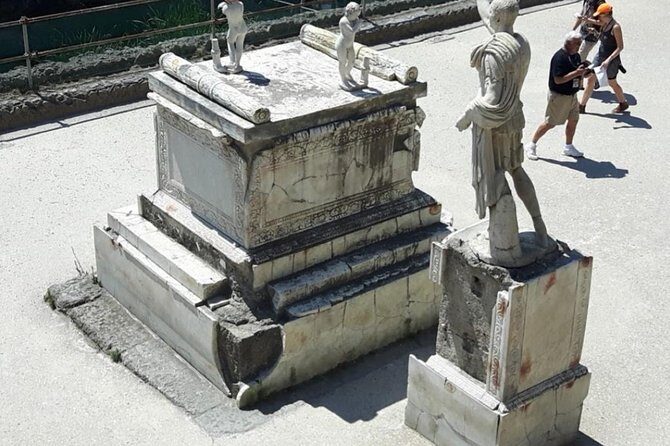
Next you head outside the Colosseum to see the Arch of Constantine, then walk into the Roman Forum area. The Forum was the main square of Ancient Rome—political, religious, and social life rolled into one place. That’s exactly the sort of site where a guide helps you connect buildings that might otherwise look like random stone piles.
You get another about 1 hour here, with key sights called out such as the Arch of Titus, the House of the Vestal Virgins, the Temple of Saturn, the Senate House, and the Arch of Septimius Severus. You’ll also hear how the surrounding structures signal what people used to do there day-to-day—power, ritual, and public conversation in the same neighborhood.
Drawback to expect: you won’t have “wander at your own tempo” freedom. This stop is paced to keep your entire day balanced, which is great if you want coverage fast. If you prefer long, slow roaming, you might feel a little rushed in the Forum.
Sacred Way to Capitoline Hill and Il Vittoriano
After the Forum, you walk up the Sacred Way toward Capitoline Hill and Il Vittoriano. Il Vittoriano is one of Italy’s famous more modern monuments, and that shift from Roman ruins to later monumental Rome helps you keep a bigger picture in your head: Rome isn’t frozen in one era.
Even though this part is described as a walk (not a long museum stop), it’s useful. It gives you a change of scenery and helps you understand how layers of time sit next to each other in a living city. You’ll probably find you take more mental notes here than you expect.
Trevi Fountain: quick stop, big spectacle
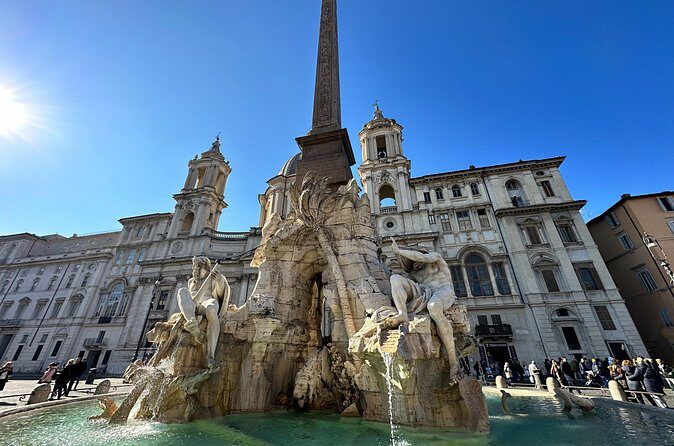
Then it’s onto the Trevi Fountain, with about 30 minutes allotted. This is the Rome scene that turns up in movies, and that’s true—people come for the view and the symbolism as much as the architecture.
The tour includes time to see it up close, plus the famous tradition: if you want to come back to Rome, you toss a coin into the fountain. You don’t need to believe the legend to enjoy the moment. Just remember it’s a magnet for crowds, so your “smart time” is to treat this as a quick look and then move.
Tip for your visit: if you care about photos, stand where your guide points first, then shift. Don’t wait until you’ve already wasted five minutes. Rome crowds punish indecision.



Pantheon: short visit, but worth it
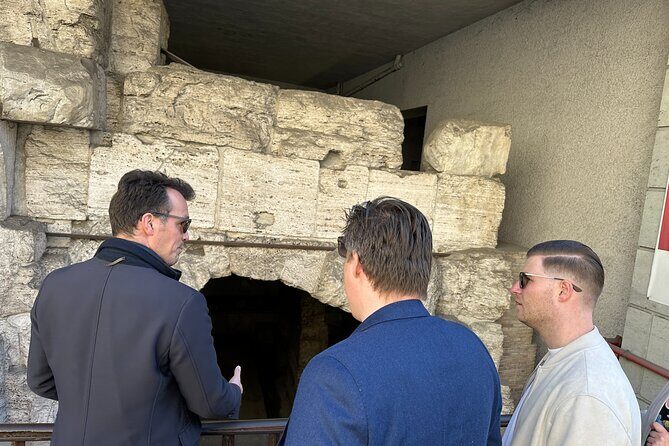
After lunch, you head toward the government district sights, including the Parliament building, the Palace of the Council of Ministers, and the Column of Marcus Aurelius, with the Temple of Hadrian nearby. It’s a mini detour that helps you connect Rome’s ancient and Renaissance/modern civic power.
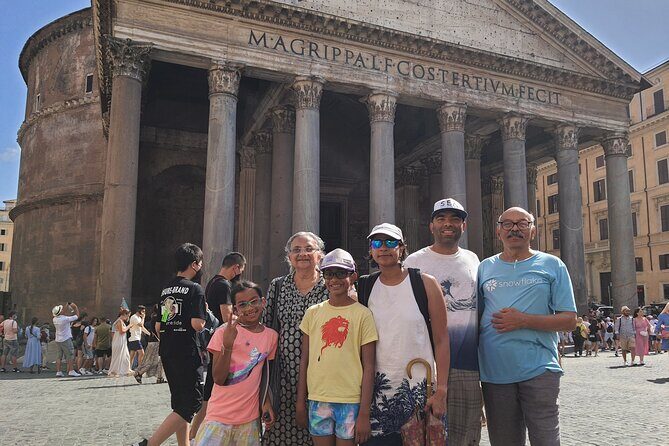
Then you arrive at the Pantheon for about 30 minutes. The Pantheon stop is meaningful for one simple reason: it’s one of the best places in Rome where structure and art overlap. You’ll also hear that Raphael is buried here, which gives the building extra emotional weight beyond its famous dome.
One thing to watch: the tour description indicates Pantheon admission is included, but at least one review complained that Pantheon admission wasn’t included as expected and required asking for a refund. That doesn’t mean it’s always a problem. It does mean you should confirm what’s actually ticketed for your exact booking before you arrive.
Piazza Navona: Bernini’s fountain in a Roman street theater
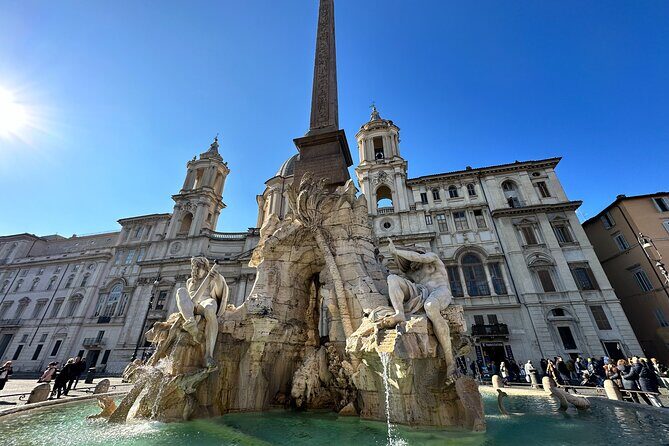
Next comes Piazza Navona, also about 30 minutes. You’ll walk past the ancient Baths of Nero on the way in, then see Bernini’s Fountain of the Four Rivers.
This stop is a nice break because it’s not another “museum interior” situation. It’s more like an outdoor stage—people-watching, architecture spotting, and photos that actually capture how Rome feels at street level.
If you’re tired from the morning walking, this is a good place to reset. You can pause, look around, and still feel like you’re ticking a major Rome box.
Crossing to the Vatican: a big day, planned with care
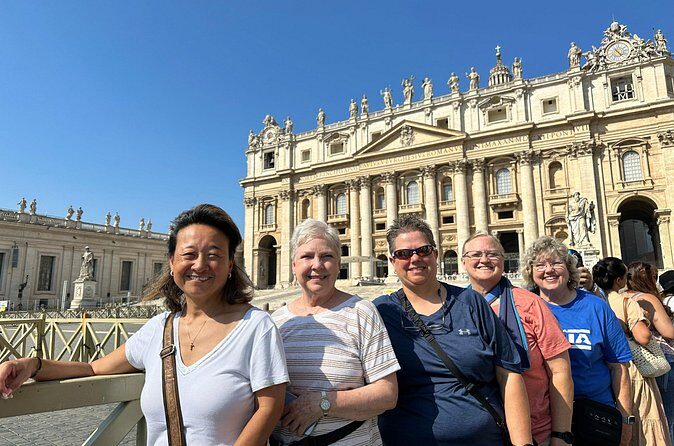
The Vatican portion starts by crossing the Tiber. You enter Vatican Museums and then move to the Sistine Chapel and St. Peter’s Basilica, with time carved out for each. The order matters because Vatican traffic and queue lines can be unpredictable, even when things go smoothly.
One important heads-up from the tour info: areas can close last minute due to events in the Vatican. This has happened before, including potential closure of the Sistine Chapel and/or St. Peter’s Basilica. If that happens, your guide should provide an alternative focusing on the Vatican Museums.
That means your Vatican day is best seen as: you’re buying access and guidance, not a guarantee that every single room will be open exactly as written.
Vatican Museums and Sistine Chapel: what you should aim to notice
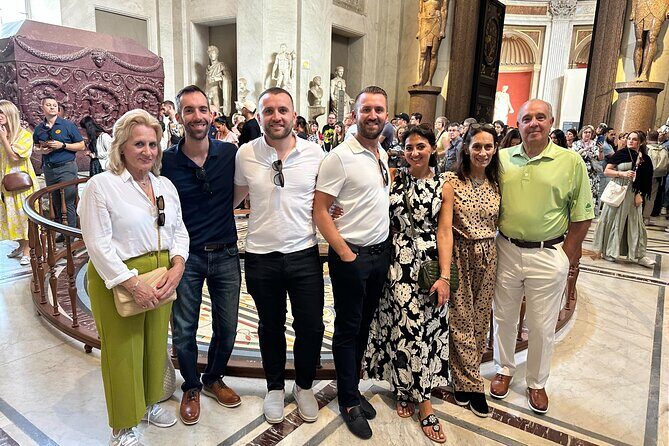
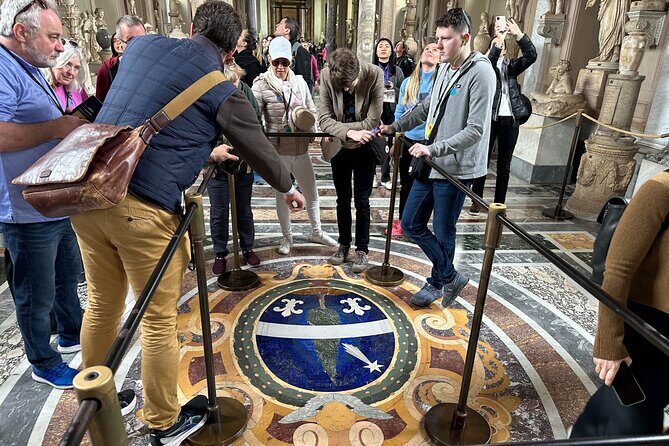
You’ll have time in Vatican Museums (listed as about 30 minutes), then Sistine Chapel for about 1 hour. This is enough time to see the ceiling frescoes people come for—Michelangelo’s famous work—plus other Renaissance art (including Raphael, as mentioned in the tour description).
I like this approach for one-day visitors: you don’t spend the entire day grinding through corridors. You focus on the ceiling and the key works, and you get help reading what you’re looking at. It’s also why you’re bringing an art historian or professional art-focused guide when available.
Important practical bit: dress code again. The Vatican is strict—no shorts, no sleeveless tops, and knees and shoulders must be covered. Plan clothing like you want to be let in, because you will be.
St. Peter’s Basilica and Pietà: the “how did they do that?” stop
After the Sistine Chapel, you tour St. Peter’s Basilica for about 30 minutes. This isn’t a long church crawl, but it’s targeted. You’ll explore side chapels with hidden crypts and see Michelangelo’s Pietà—not just as a famous object, but as an artwork with a story.
The tour also calls out that this is the only work Michelangelo signed, and your guide explains why. You’ll also gain context for Bernini’s altarpiece and how Michelangelo “triumphed” over contemporaries for the honor connected to painting St. Peter’s magnificent dome (as framed by your guide).
This stop can be a show-stopper if you’re even slightly curious about how religious art shaped politics, prestige, and public emotion. Even if you don’t consider yourself a church person, the building is basically designed to move you.
Ending at St. Peter’s Square: your exit ramp
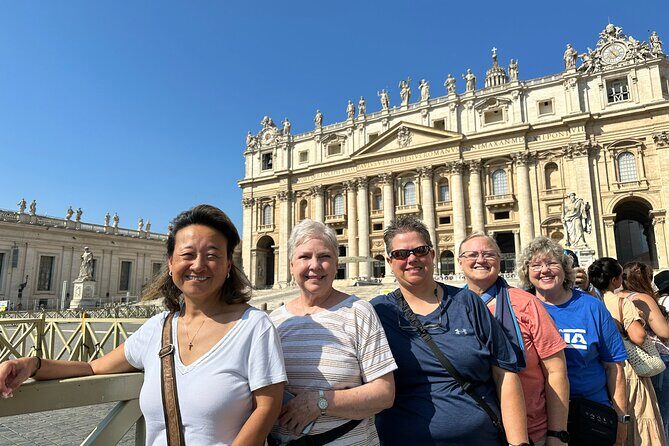
You finish in St. Peter’s Square, about 30 minutes. This is a good place to end because you can stand back, take in the scale, and decide what you want to do next (grab a bite, walk around, or just catch your breath).
The tour ends near the Vatican Museums area, so you’re in the right neighborhood to keep exploring on your own afterward.
Who this tour fits best (and who might want a different style)
This works best for you if:
- You have one day and need to hit Rome’s big icons.
- You want a private experience and clearer guidance than a self-guided route.
- You’re okay with a tight schedule and lots of walking.
It might not be perfect if:
- You hate crowds and want lots of unscheduled wandering.
- You want more time lingering at each stop instead of covering many places in one day.
- You need access to the Sistine Chapel or the Basilica at all costs, since closures can happen last minute.
Price and value: $668.05 for speed, entry, and interpretation
Let’s talk money in a practical way. At $668.05 per person for roughly 6 hours, this isn’t a budget tour. But you’re paying for several value drivers bundled together:
- Private format (you’re not sharing your day with strangers in the same way a standard group tour does).
- Professional guiding with strong emphasis on art and architecture.
- Colosseum reservation and entry components are specifically listed as included (plus a reservation fee).
- Admission items are listed for multiple stops throughout the day.
That said, one review mentioned a Pantheon admission mismatch, and the Vatican portion can change due to closures or Jubilee-related access limitations. So treat this as a “high-coverage” tour where your guide’s flexibility matters as much as ticket inclusions.
For your best value, do two things:
- Confirm what’s ticketed for your exact booking (especially Pantheon).
- Show up on time with the right IDs and dress code ready, so you don’t lose time at the door.
Practical tips to make your day smoother
- Wear clothes you can manage quickly for security and dress-code checks: covered shoulders and knees.
- Bring a real passport/ID and keep it accessible. Name mismatches can cause entry problems.
- Expect a lot of walking. This is listed for moderate physical fitness.
- Plan for weather. Rome in the morning can be fine, and then suddenly you’re moving through heat or rain with a full schedule.
- Bring a small day bag. You’ll be in and out of spaces, and it’s easier if you can grab essentials fast.
Should you book this Rome in a Day tour?
If you’re trying to squeeze Rome into a single day and you want the heavy hitters lined up with a guide doing the explaining, I think this is a solid choice. You get real structure: start at the Colosseum, connect the ancient sites, hit Trevi and the Pantheon, then finish with Vatican Museums, Sistine Chapel, and St. Peter’s Basilica.
Book it if you can handle a fast pace and you’re comfortable with the reality that Vatican access can change last minute. If you want a slower day, or if one specific Vatican room is your one non-negotiable, you’ll need to weigh that risk.
If you want a one-day Rome that feels focused instead of chaotic, this is the kind of tour that can make your day feel surprisingly complete.
FAQ
How long is the Rome in A Day tour?
It runs for about 6 hours (approx.).
What time does the tour start and where do I meet the guide?
The start time is 9:00 am, and the meeting point is Piazza del Colosseo, 3, 00184 Rome, Italy.
Is the tour private or shared?
This is a private tour/activity, so only your group participates.
Which major sights are included in the day?
You visit the Colosseum, Roman Forum, Trevi Fountain, Pantheon, Piazza Navona, Vatican Museums, the Sistine Chapel, St. Peter’s Basilica, and end at St. Peter’s Square.
Are tickets included?
The Colosseum entrance ticket and Colosseum reservation fee are included. Other admissions are listed per stop in the tour description, but you should confirm what’s ticketed for your specific booking (a review raised an issue about Pantheon admission not being included as expected).
What dress code do I need for churches and museums?
You must follow a dress code: no shorts or sleeveless tops. Knees and shoulders must be covered for both men and women.
What if parts of the Vatican are closed last minute?
The tour info warns that some areas might close last minute due to events, and Sistine Chapel and/or St. Peter’s Basilica might not be accessible. If that happens, the guide provides an alternative focusing on the Vatican Museums.