REVIEW · VATICAN CITY
Rome in a day private Tour with Vatican Museums and taxi transfer
Book on Viator →Operated by Rome in tours · Bookable on Viator
One day. Ten top sights. That’s the trick.
This private Vatican-to-Colosseum itinerary is built to keep you moving through Rome’s biggest visual hits without turning your day into a guessing game. I like that you’ll have a professional art historian or archaeologist guide guiding the stories scene-by-scene, and I also like the headsets setup so you can actually hear the explanations (for groups five or more, and the included details note parties of 6+). One possible drawback: it’s a tight, 6 to 7 hour schedule with short stops, so you’ll get depth through commentary, but you won’t have long free time to wander.
You’ll need to plan for practical rules up front: dress code for Vatican and church spaces, and a real pace that skips the slow-burn Rome experience. The payoff is that you’ll cover the Vatican big leagues, then roll straight into central Rome and the imperial ruins, ending inside the Colosseum on ground level and the first tier.
In This Review
- Key things that make this day work
- Entering the Vatican Museums with the right pace
- A quick note on tickets and format
- Sistine Chapel: 30 minutes that’s short but focused
- St. Peter’s Basilica: the must-sees, plus real time to look
- Dress code reality check
- If the Basilica closes for ceremonies
- Piazza Navona, Pantheon, Piazza Di Pietra, Trevi: central Rome in one clean route
- Piazza Navona (about 20 minutes)
- The Pantheon (about 20 minutes, ticket included)
- Piazza Di Pietra (about 3 minutes)
- Trevi Fountain (about 10 minutes, free)
- Piazza Venezia: WWII-era Rome meets classic landmarks
- Roman Forum and the imperial sites: how to read the ruins fast
- What I like about this approach
- Colosseum: ground level and first tier, ending on a high note
- How the taxi transfer changes your day
- Price and value: is $779.83 per person fair?
- Who this tour fits best
- Should you book this Vatican-to-Colosseum day?
- FAQ
- How long is the Rome in a day private tour?
- What’s included in the ticket cost for the main sites?
- Do we get headsets during the tour?
- Is there a taxi transfer?
- What do we need to wear for St. Peter’s Basilica and Vatican spaces?
- What if St. Peter’s Basilica is closed for ceremonies?
- Is lunch included?
- Where does the tour start and end?
- What ID do we need to bring?
- Is the tour private?
Key things that make this day work
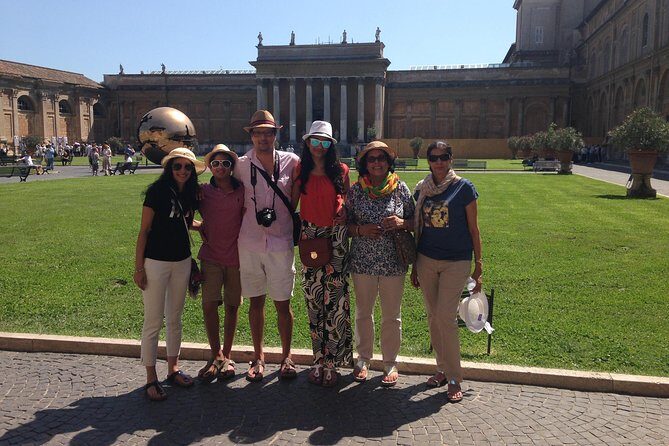
- Headsets for clear listening during crowded sections like Vatican Museums and the Colosseum
- An art historian or archaeologist guide tying the art and ruins to what you’re seeing
- Vatican Museums guided time (1 hour 45 minutes) with key rooms like Raphael’s Rooms
- Sistine Chapel in a 30-minute slot built around the big works you came for
- A taxi transfer to the Colosseum area, so you’re not burning time in traffic and long walks
- Ticketed entrances where it counts: Colosseum entry plus reservation fee, and Pantheon admission
Entering the Vatican Museums with the right pace
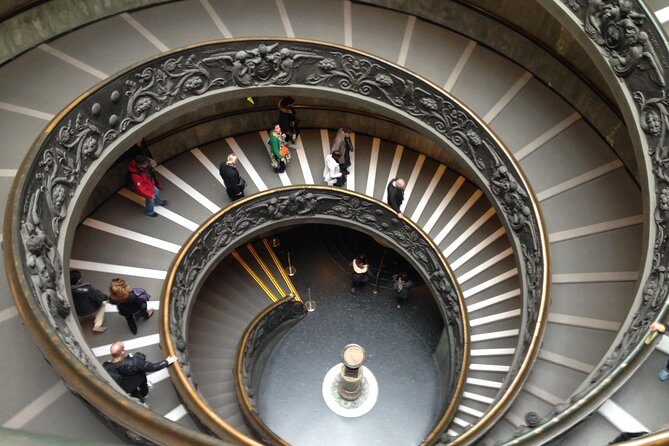
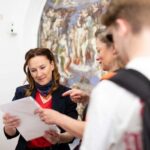
Your day starts at Vatican Museums, where the scale can feel overwhelming fast. The smart part of this tour is that it doesn’t treat the Vatican like one endless hallway. Instead, you get a guided route that hits the headline spaces and the “wait, what am I looking at?” moments.
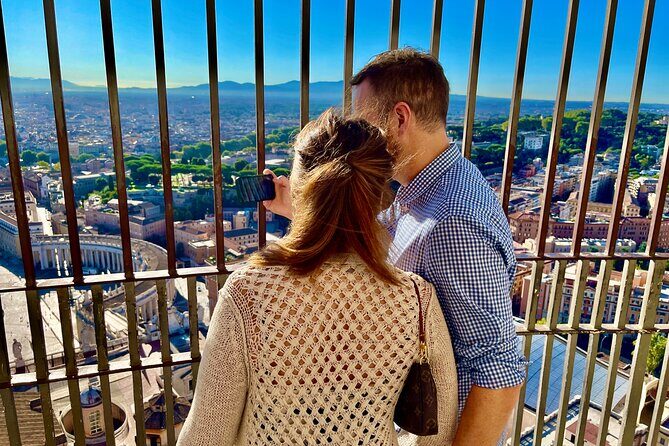
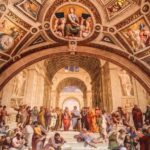
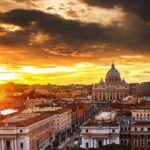
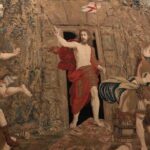
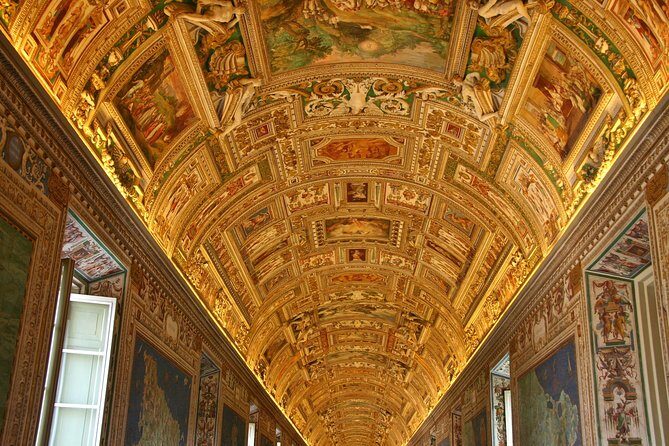
You’ll spend about 1 hour 45 minutes inside the Museums with admission ticket included. The route includes standouts like the Terrace view over St. Peter’s Basilica and the Vatican Gardens, then inside you move through signature areas such as the Court of the Pine Cone and the Gallery of the Candelabras. You’ll also see the Gallery of the geographical maps—a great stop if you want context for how the Vatican displayed the world—and then you’ll get to Raphael’s Rooms, one of the most important artistic clusters in the Vatican complex.
Two things I think you’ll appreciate here:
- The guide’s background helps you connect what you’re seeing to the bigger story, not just random facts.
- You’re getting curated time blocks, not just a checklist. That means you can actually process what the art is doing while you look.
You can also read our reviews of more private tours in Vatican City
A quick note on tickets and format
This tour uses a mobile ticket, and it’s offered in English. It’s also described as private, meaning it’s just your group—no mixed crowds forced into your pace.
Sistine Chapel: 30 minutes that’s short but focused
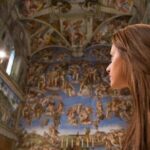
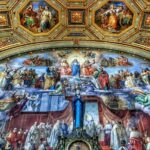
After the Museums, the tour moves you into the Sistine Chapel for about 30 minutes. Admission tickets for this stop are included, and the itinerary doesn’t waste time. You’ll focus on Michelangelo’s frescoes, plus notable areas like the Private Chapel of the Pope and the location of the Conclave.
This is where I’d set expectations clearly: 30 minutes is not a leisurely museum stroll. It’s enough time to see what matters and get oriented, but you won’t have “sit and stare” time. If your priority is absorbing every last detail, you’ll likely want to save a longer Vatican day later. If your priority is seeing the core masterpieces and understanding them, this block is a good match.
St. Peter’s Basilica: the must-sees, plus real time to look
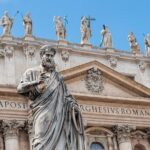
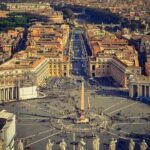
Next comes St. Peter’s Basilica. The stop is listed at about 30 minutes, and admission here is free for the visit portion (the tour includes time, not a ticket price).
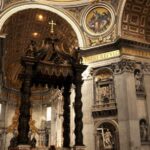
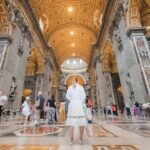
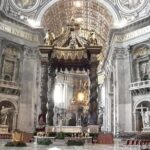
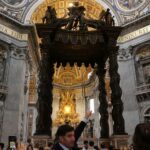
You’ll see key elements like the Bernini canopy, the relics of Saint Peter, Michelangelo’s Pietà, and the tomb of Saint John Paul II. These are big names, but what matters is how they land when you’re there in person.
Dress code reality check
Because this is a church space and the Vatican also enforces rules in museums, you’ll want to plan clothing ahead of time. The requirement is clear: no shorts or sleeveless tops, and knees and shoulders must be covered for both men and women. If you don’t meet the dress code, you risk being refused entry.
This is one place where being prepared keeps your day smooth. A quick scarf or light layer can save the day if you’re caught off guard.
You can also read our reviews of more museum experiences in Vatican City


If the Basilica closes for ceremonies
There’s one rare-but-real wrinkle noted: if St. Peter’s Basilica has closure due to liturgical ceremonies, the time in the Museums will be extended. So even with surprises, the tour is designed to keep you on track.
Piazza Navona, Pantheon, Piazza Di Pietra, Trevi: central Rome in one clean route
After the Vatican, the itinerary shifts to the “Roman postcard” core. These stops are mostly short, which is the point: you get to see the big sights without turning the day into a wandering maze.
Piazza Navona (about 20 minutes)
At Piazza Navona, you’ll see the Fountain of the Four Rivers by Bernini, plus nearby highlights like Church of Sant’Agnese and the fact that this area sits over an earlier stadium built under Emperor Domitian. The tour also points out fountains like the Fountain of the Moro and Fountain of Neptune, and it even notes the movie connection to Angels and Demons.
This is a good stop for orientation. The fountains give you a sense of how Rome’s Baroque style uses drama in public space.
The Pantheon (about 20 minutes, ticket included)
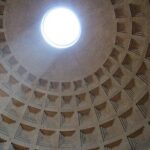
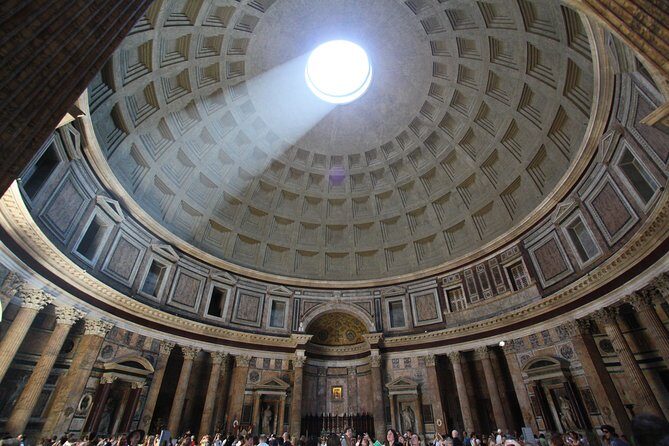
Next up is the Pantheon, one of Rome’s best-preserved monuments. The tour focuses on the biggest wins: the massive unreinforced concrete dome, the fact it’s among the best-preserved pagan structures, and the tomb of Raphael.
You’ll also hear about the oculus and the bull’s-eye effect created by the building’s design. Even if you don’t care about architecture, the proportions hit you the moment you’re inside.
Pantheon admission is included, and this is where a short guided stop saves you money and confusion.
Piazza Di Pietra (about 3 minutes)
At Piazza Di Pietra, you’ll get a quick look at the Temple of the Deified Hadrian. Three minutes sounds tiny, but this kind of brief stop works well in an itinerary like this. You’ll recognize it as soon as you’re there, and then you move on before the day gets slow.
Trevi Fountain (about 10 minutes, free)
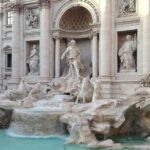
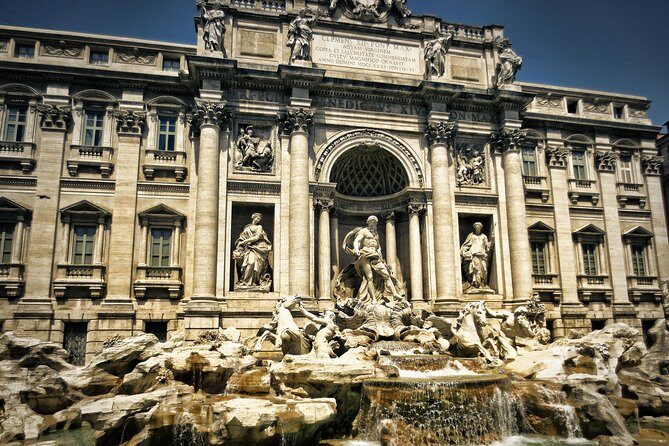
Then comes Trevi Fountain, the famous late Baroque splash where you throw coins. Ten minutes is more than enough to see it from the main angles and take in the scale—just don’t expect time for long, slow photography sessions.
Piazza Venezia: WWII-era Rome meets classic landmarks
From Trevi, the tour goes to Piazza Venezia for about 10 minutes. This stop is more than a view. It’s a “center of modern Rome” moment—described as the geographic center of modern Rome and an intersection of the five major road axes.
You’ll also see the Vittoriano area, including the Altar of the Forefathers and the Monument to the Unknown Soldier from World War I. The itinerary adds a deeper political layer with Palazzo Venezia, including its use as Mussolini’s headquarters during WWII and the balcony where Italy’s entrance into the war was declared.
Plus, you’ll pass by or see references to places like Michelangelo’s house and Palazzo Bonaparte, where Napoleon’s mother lived and died. This is the kind of stop that turns Rome from “pretty streets” into a timeline you can point to.
Roman Forum and the imperial sites: how to read the ruins fast
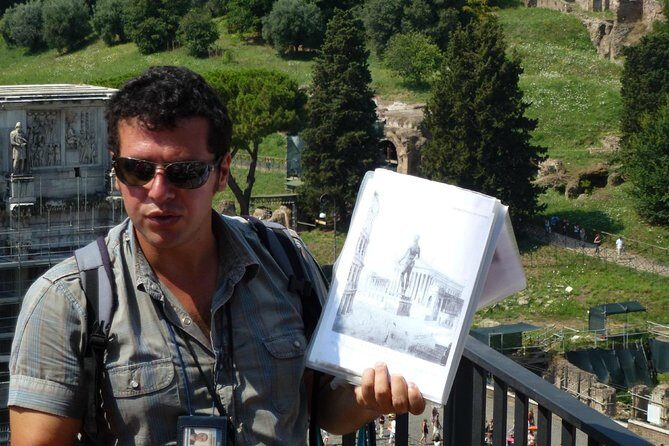
After central Rome, the tour connects you to the imperial heart. There’s a short sequence of stops for Forum of Nerva, Forum of Augustus, Forum of Julius Caesar, and the Forum and Column of Trajan, then you land at the big finish: the Roman Forum itself for about 25 minutes with admission included.
This is the beating heart of the political, social, and religious life of the Romans—at least in the sense that key power centers are packed so tightly that you can’t escape the “this mattered” feeling.
The guide focuses on major pieces you can track as you walk, including:
- the area tied to the cremation of Julius Caesar
- the podium where Mark Antony made his funeral speech
- Sacra Via
- temples like Antoninus and Faustina and Julius Caesar
- the Altar of Julius Caesar
- key basilicas and civic buildings such as Basilica Iulia and Curia Iulia
- the Arch of Septimius Severus
- the Tabularium (ancient state archive)
- multiple temples including those connected to the Vestal Virgins and more
What I like about this approach
The Roman Forum can be confusing if you show up cold. This tour’s value is that you’re not just looking at stones—you’re getting told what each area was used for, which makes the layout click faster.
Colosseum: ground level and first tier, ending on a high note
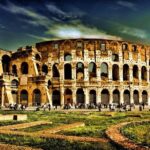
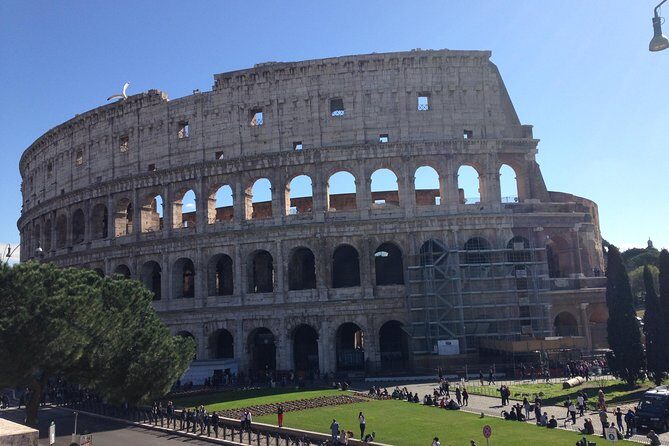
The day finishes with the Colosseum. You’ll have about 45 minutes here, and the tour includes Colosseum entrance ticket plus a reservation fee. The visit includes the ground level and the first tier, and the site is listed as UNESCO.
This is a good finishing move because the Colosseum rewards context. By the time you reach it, you’ve already seen Rome’s political spaces in the Forum and picked up the sense of how power showed itself in buildings.
Also, note the meeting point: the tour ends inside the amphitheater at Piazza del Colosseo. That matters because it keeps you from doing the extra “where do we meet?” scrambling at the busiest hour.
How the taxi transfer changes your day
Rome walking can eat your time. The tour includes one taxi ride, described as a transfer from the city center to the Colosseum. In practice, that can help you avoid the frustrating stretch where you’d otherwise trade sightseeing for traffic stress and long detours.
It’s especially useful in a packed day like this, where you already have tight time blocks at Vatican Museums, the Vatican churches, central Rome, and the ruins.
Price and value: is $779.83 per person fair?
At $779.83 per person, this isn’t a budget day. But it also isn’t just “a guide showing up.” The value case here is built from a few concrete pieces:
- Ticketed entries where the tour says tickets are included (Pantheon, plus Colosseum entrance and reservation fee)
- A professional art historian or archaeologist guide
- Headsets for group listening clarity
- A private format for your group
- A taxi transfer built into the schedule
That said, the price makes more sense if you care about getting through a lot without losing meaning. If you prefer slow wandering and long meals, this may feel like money spent on structure rather than freedom.
So for value, I’d ask you one question: do you want a day where you’re guided through the big names and the “why” behind them? If yes, this price becomes easier to justify.
Who this tour fits best
This works especially well if:
- you want Vatican Museums + Sistine Chapel + St. Peter’s without stitching together separate tours
- you care about understanding art and ruins, not just collecting photos
- you’re traveling as a group where audio support (headsets) and a guide’s route planning make a real difference
- you want to end at the Colosseum with enough time to feel like you truly visited it
It might not be the best choice if:
- your ideal Rome day includes long lunch hours and lots of free-form wandering
- church dress code rules make you uncomfortable (you’ll need to cover shoulders and knees)
Should you book this Vatican-to-Colosseum day?
I’d book it if you want a single organized day that touches Rome’s biggest “seen-in-real-life” moments, with expert explanations and practical help like headsets and a taxi transfer. The schedule is tight, but the stop sizes are designed to keep you oriented: Museums first, Sistine Chapel second, Basilica third, then central Rome classics, then the Forum, then the Colosseum.
I’d skip it if you’re chasing downtime. This is a day with forward motion and rules. Bring clothing that meets the dress code, set your expectations for short, focused viewing blocks, and you’ll get a lot for your money.
FAQ
How long is the Rome in a day private tour?
The duration is listed as about 6 to 7 hours.
What’s included in the ticket cost for the main sites?
The tour includes admission tickets for the Vatican Museums, Sistine Chapel, Pantheon, and Colosseum entry plus a Colosseum reservation fee. St. Peter’s Basilica is listed as admission free for the visit portion.
Do we get headsets during the tour?
Yes. Headsets are included for groups at the level noted by the tour details, so you can hear clearly during guided stops.
Is there a taxi transfer?
Yes. The tour includes 1 taxi ride, described as a transfer from the city center to the Colosseum.
What do we need to wear for St. Peter’s Basilica and Vatican spaces?
You need a dress code: no shorts or sleeveless tops. Knees and shoulders must be covered for both men and women.
What if St. Peter’s Basilica is closed for ceremonies?
In rare cases of closure due to liturgical ceremonies, the tour notes that time in the Museums will be extended.
Is lunch included?
No. Lunch is not included.
Where does the tour start and end?
It starts at Vatican Museums, 00120 Vatican City and ends at Piazza del Colosseo, 00184 Roma RM, Italy, meeting inside the amphitheater.
What ID do we need to bring?
A current valid ID is required for all participants at both the Colosseum and Vatican Museums entrances. The tour also notes a current valid passport for children under 18 and a student card for students under 26.
Is the tour private?
Yes. It’s listed as a private tour/activity, meaning only your group participates.