REVIEW · EVENING EXPERIENCES
Rome Highlights After Sunset – Pantheon,Trevi Fountain and Navona Square
Book on Viator →Operated by Raphael Tours & Events · Bookable on Viator
Rome feels different after dark. This 2-hour city-center stroll links three must-sees—Trevi Fountain and the Pantheon—with a guide who helps you get oriented fast and understand what you’re looking at while you take photos.
I especially like the stop inside the Pantheon to see Raphael’s tomb area, alongside the memorials of important royals. I also like that the route doesn’t feel like a straight line; you’ll pass the kind of monuments you’d otherwise miss, plus you get practical tips for food breaks like coffee and gelato.
One consideration: the pace is efficient and the tour ends in Piazza Navona, so if you want extra time lingering at the Trevi area or the Pantheon afterward, plan to extend on your own.
In This Review
- Key highlights at a glance
- Starting at Campo de’ Fiori: the smart way to get your bearings fast
- An evening walk past fashion, churches, and the city’s big political landmarks
- Trevi Fountain after sunset: coin toss, photo moments, and quick interpretation
- Inside the Pantheon: Raphael’s tomb and royal burials under a giant dome
- The walk to Piazza Navona: Hadrian, ancient ruins, and the city’s classroom effect
- Piazza Navona at night: Bernini fountains over an ancient stadium
- Guides and art history: why this tour feels personal, not generic
- Time, comfort, and what to plan for in your Rome evening
- Price and value: is $227.58 worth it for a 2-hour highlights run?
- Who this tour suits best
- Should you book this Rome Highlights after Sunset tour?
- FAQ
- How long is the Rome Highlights after Sunset tour?
- Where do you meet and where does the tour end?
- Is the tour offered in English?
- Is this a private tour?
- What is included in the tour price?
- What is not included?
- What are the weather requirements?
- Can I cancel for free?
Key highlights at a glance
- Private-group attention with an English-speaking guide and art historian support
- Pantheon visit to see the tomb of Raphael plus royal burials
- Trevi Fountain photo stop right after sunset for a classic moment
- Piazza Navona after dark with Bernini fountains and the ancient stadium setting
- A route that teaches Rome fast, from major columns to standout churches
- Free admission at the key sights listed in the plan
Starting at Campo de’ Fiori: the smart way to get your bearings fast
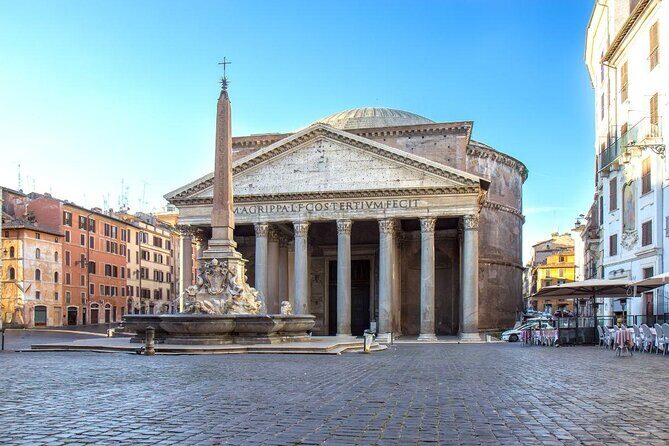
The tour meets at Piazza Campo de’ Fiori, which is a good choice because it puts you right in the thick of Rome’s central streets. From here, you’re not just marching to one landmark after another. You start with a map in your head, built by your guide, before you ever reach the headline sights.
Campo de’ Fiori also sets the tone for an after-sunset walk. Even when crowds are around, the streets feel more human than daytime chaos. You can actually hear what the guide says without yelling over the city. And since the tour is about 2 hours, you’re moving at a pace that works for first-timers who want a lot of impact without running on fumes.
You’ll be walking on mostly flat urban surfaces, but Rome’s historic center can include uneven pavement. Comfortable shoes matter, and you’ll want a phone ready for photos. The guide will point you toward the best angles as you go, rather than hoping you figure it out on the fly.
You can also read our reviews of more evening experiences in Rome



An evening walk past fashion, churches, and the city’s big political landmarks
Once you begin, the route becomes a story of Rome’s layers. You pass through a shopping street that’s tied to the fashion district, with famous brand flagship stores along the way. That matters more than it sounds, because it shows you Rome beyond ruins: the city is still a working capital with modern commerce and modern life in the same frame as ancient stones.
You’ll also get “context stops” along the way. The plan includes landmarks like the Spanish Steps and the Trevi Fountain area as visual anchors, but it also lists major monuments that give you a sense of where power sat and how it stayed.
Expect stops and pass-bys connected to:
- the Column of the Immaculate Conception
- Piazza Colonna and the Column of Marcus Aurelius
- Palazzo Chigi and Palazzo Montecitorio
- the Church of St. Ignatius
- a temple dedicated to Emperor Hadrian
These aren’t just roadside trivia. When you understand what you’re passing, you stop treating Rome like a series of disconnected photos. Instead, you start noticing patterns: who built what, who ruled, where the state meets the sacred.
Trevi Fountain after sunset: coin toss, photo moments, and quick interpretation
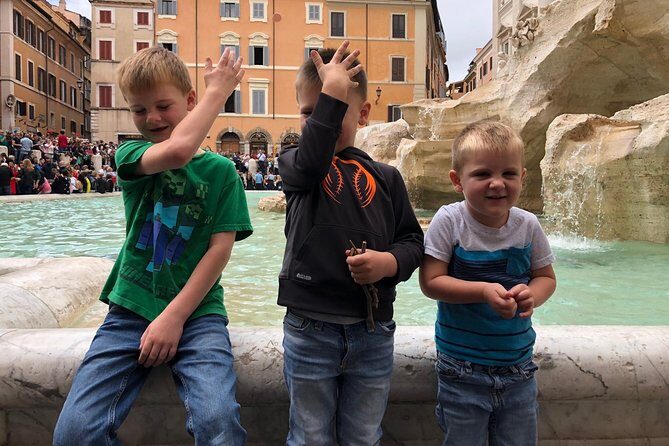
Trevi is the headline. It’s the postcard. It’s also the place where first-timers often get distracted by crowd pressure and miss the structure and symbolism.
Your guide works the timing as part of the experience. Since this is an after-sunset version, the atmosphere tends to feel more relaxed than peak midday. You’ll have a stop for photos by the fountain, and then you’ll throw the coin as the classic ritual goes, with the guide tying it to the fountain’s story so it doesn’t feel like just a tourist habit.
If you like taking pictures, this stop is helpful because you’re not wandering alone. You’re guided toward better positions so you can capture the fountain without spending your entire time stuck behind people. And because the tour is short, you avoid the problem of arriving at Trevi and realizing you have no time left for the Pantheon.
One practical tip: if you plan to stop for drinks or a snack later, do it after Trevi. It’s easier to keep your momentum when you’re moving toward the Pantheon and the walk to Piazza Navona. Food and drinks are not included unless specified, so build in your own gelato or coffee plan.
Inside the Pantheon: Raphael’s tomb and royal burials under a giant dome
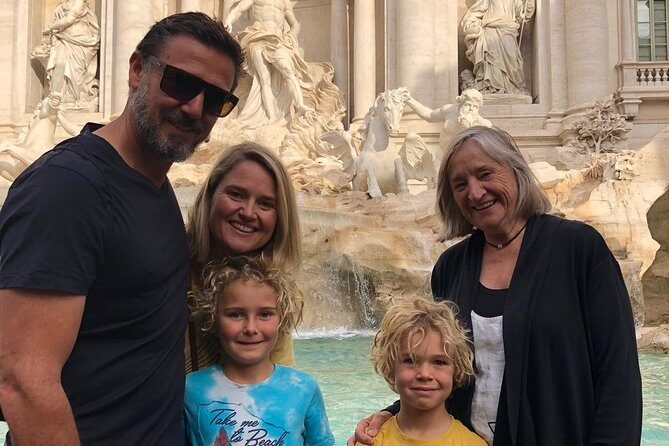
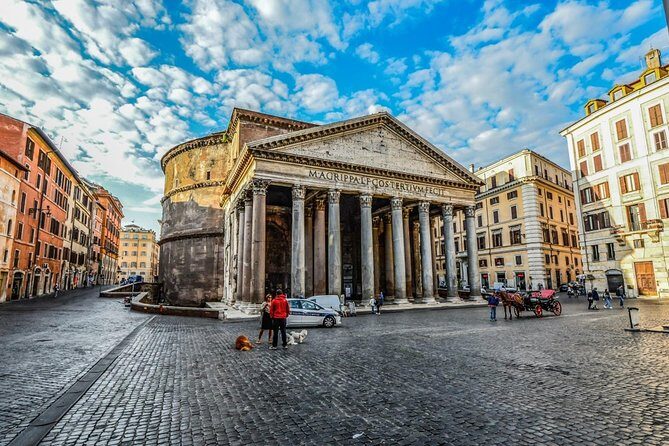
This is the core payoff of the tour. The Pantheon isn’t just famous. It’s famous in a way that still hits you. The space feels engineered for awe.
You’ll enter the Pantheon to see the tomb of Renaissance artist Raphael, along with the memorials of Queen Margherita and King Victor Emmanuel II. That mix matters because it shows how Rome reuses and reinterprets older space. The Pantheon served different eras and different needs, and the guide’s job is to make those connections click.
What I like about this stop in a guided format is simple: the Pantheon can be overwhelming. Without a guide, you may notice the big dome and then drift through the rest without understanding the significance of what’s placed where. With a guide, you get a quick mental map of what you’re seeing and why it matters.
It’s also a smart choice for a short tour. The Pantheon is too important to treat as a rushed roadside stop. This plan ensures you get inside and get oriented, not just a photo from the doorway.
One consideration: the tour is only about 2 hours total, so you’ll want to accept that you’re getting the highlight version of each site. If you’re the type who likes to linger for 45 minutes in one room, you may still want to come back later on your own. For an efficient first introduction, though, this works very well.
The walk to Piazza Navona: Hadrian, ancient ruins, and the city’s classroom effect
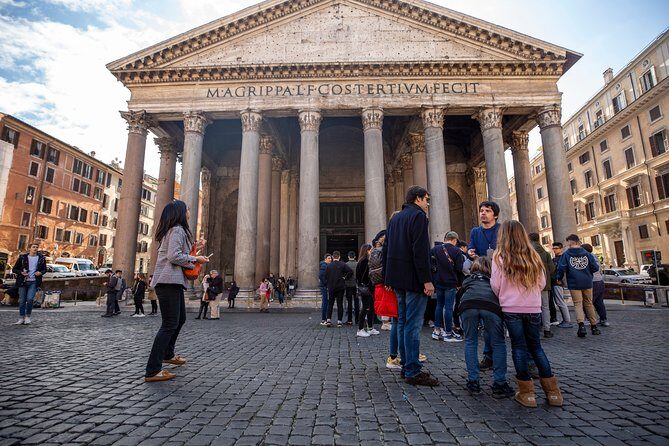
After the Pantheon, you continue toward Piazza Navona and the Bernini fountains. On paper, that’s a simple transfer. In practice, it’s where Rome’s center starts to make more sense.
Along the route, you’ll pass the Senate House, described as Rome’s first university. That detail helps you connect the city to learning, not just empire and churches. You’ll also walk by major historic structures connected to Rome’s past political identity, including the areas already mentioned near Piazza Colonna and the Hadrian-linked temple.
Then you reach Piazza Navona, which used to be the Ancient Stadium built by Emperor Domitian. That’s the kind of fact that feels random until you see the shape of the square and realize why it’s laid out the way it is.
This “walk and explain” style is what makes the tour feel like a real introduction rather than a checklist. You’re not only seeing objects. You’re understanding the logic behind them.






Piazza Navona at night: Bernini fountains over an ancient stadium
Piazza Navona is one of those places that can feel like theatre. The fountains are dramatic, and the square holds energy even when it’s quieter in the evening. Your guide brings you there with the right background, so you understand what you’re looking at before you even raise your camera.
You’ll see the Bernini-designed fountains that decorate Piazza Navona today. And you’ll also understand that you’re standing in the footprint of an ancient stadium. That combination is the magic: you get art and you get archaeology without needing a separate ticketed add-on.
The tour ends at Piazza Navona around the finish time. That’s good because it places you near plenty of places to eat afterward, and near a major area for evening strolling. If you want to extend the night, this ending point makes it easier.
One small pacing note: since the plan is structured to fit a tight timeframe, the Navona portion is typically about reaching the square and seeing the highlights rather than spending an hour deep inside every nook. If you love fountain photography, give yourself extra time after the guide wraps up.
Guides and art history: why this tour feels personal, not generic
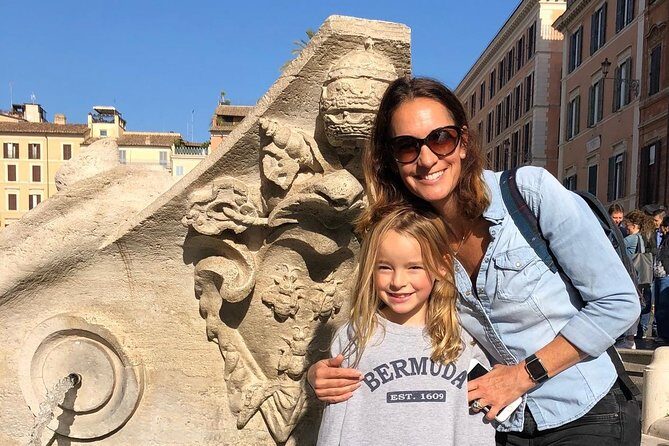
A big part of why this works is the guide team. The experience includes a professional English-speaking guide, a local guide, and a professional art historian guide. Even if you only speak to one person most of the time, that depth tends to show up in the explanations you get at each stop.
This is the kind of tour where names matter because you can get different styles. Guides such as Marco, Claudia, Virginia, and Francesca are specifically mentioned for being patient, informative, and easy to communicate with. You can also feel when a guide enjoys the job. Claudia’s mix of historical stories with social details, or Virginia’s willingness to answer questions, is exactly what makes these sights feel less like facts you memorize and more like things you understand.
Another practical bonus: the guide doesn’t only point at monuments. They also point out where to pause for real life—coffee, gelato, and shops—so your walk turns into an actual evening plan. That’s a big deal on a short itinerary, because Rome can overwhelm you with choices. When someone helps you navigate the “where to stop” moments, you spend less energy guessing.
Time, comfort, and what to plan for in your Rome evening
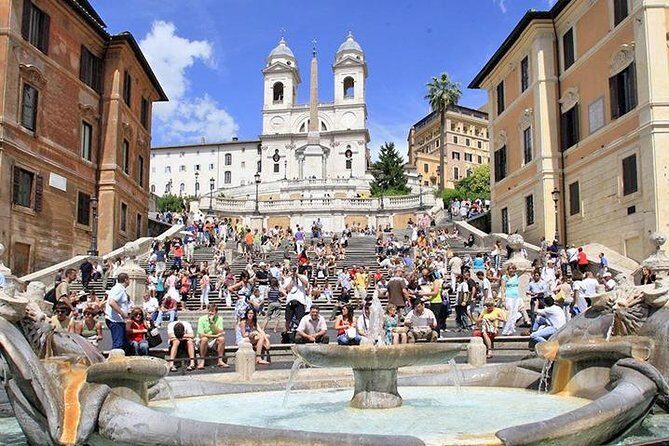
The tour runs about 2 hours and is described as an after-sunset highlights walk. That means it fits well when you’ve already done museums earlier in the day or when you want a lighter agenda that still feels full.
Wear comfortable walking shoes. Rome’s historic center is not designed for long days in stiff, uncomfortable footwear. Also, the tour is a walking experience with moderate physical fitness level recommended, so you’ll want to be ready for steady walking between central landmarks.
You should also be prepared for weather. This experience requires good weather, and if it’s canceled due to poor weather, you’ll be offered a different date or a full refund. If your trip is tight, have a backup plan for another evening in your schedule.
What’s not included is also worth noting. Food and drinks are not included unless specified, and there’s no hotel pickup or drop-off. That’s normal for a city-center walking tour, but it affects planning. Think about how you’ll handle your dinner later, and don’t assume the guide will cover costs.
The tour also uses a mobile ticket, and it’s generally booked in advance, with an average booking window of about 13 days. If your dates are fixed, it’s smart to book ahead so you don’t end up hunting for alternatives when you arrive.
Price and value: is $227.58 worth it for a 2-hour highlights run?
At $227.58 per person, this is not a budget hop-on, hop-off situation. But for what you’re getting, it can represent solid value—especially if you want a private-group feel.
Here’s the value math that matters:
- You’re paying for a guide who actively interprets the sites, including the Pantheon’s tombs and the meaning behind monuments you pass.
- You’re not just buying entry or a route. You’re buying time saved on figuring out what matters and where to look.
- The experience includes multiple guide roles (English-speaking guide, local guide, and professional art historian guide), which tends to reduce the chance you only get surface-level commentary.
- The stops listed are marked as admission ticket free, so you’re not layering big entry costs on top.
Is it still expensive? For sure, yes, compared to cheaper city walks. But if you’re traveling in a group and you want your evening to feel organized, guided, and photo-ready without spending hours planning, the price starts to make sense.
The private nature also changes the experience. With only your group participating, you’re more likely to ask questions and get answers that fit what you care about.
Who this tour suits best
This tour is a great fit if you:
- want a first-time orientation to central Rome
- care about the Pantheon beyond just taking a photo
- like walking with a guide who can answer questions on the spot
- prefer a short itinerary that still hits Trevi, the Pantheon, and Piazza Navona
It’s also a good choice if you’re traveling with someone who needs structure. Rome can feel chaotic. A route with key stops and clear interpretation turns the chaos into something you can enjoy.
If you’re the type who hates crowds and wants quiet, this might be harder. The landmarks on the route are famous, and you should expect at least some buzz. But the after-sunset timing and the guided pacing help.
Should you book this Rome Highlights after Sunset tour?
I’d book it if your goal is a high-impact evening that teaches you what you’re seeing in the middle of Rome, not just where to stand for photos. The Pantheon stop, with Raphael’s tomb and the royal memorials, is worth anchoring your schedule around. Add Trevi and Piazza Navona, and you get a strong trio that covers both ancient and more modern Rome’s layer-cake feel.
I’d skip or reconsider if you’re hoping to spend long, slow hours inside each place. This is efficient. The tradeoff is clarity: you leave knowing what mattered, not just what you passed.
If you’re planning your trip soon, book ahead since it’s commonly reserved with about a 13-day lead time on average. And pack comfortable shoes, a flexible mind, and a plan to grab gelato or coffee after the walking ends in Piazza Navona.
FAQ
How long is the Rome Highlights after Sunset tour?
It runs for about 2 hours (approx.).
Where do you meet and where does the tour end?
You meet at Piazza Campo de’ Fiori and the tour ends at Piazza Navona.
Is the tour offered in English?
Yes, it’s offered in English.
Is this a private tour?
Yes. It’s a private tour/activity, and only your group participates.
What is included in the tour price?
The tour includes a professional English-speaking guide, a local guide, and a professional art historian guide.
What is not included?
Food and drinks are not included unless specified, and there is no hotel pickup and drop-off.
What are the weather requirements?
This experience requires good weather. If it’s canceled due to poor weather, you’ll be offered a different date or a full refund.
Can I cancel for free?
Yes. Free cancellation is available up to 24 hours in advance for a full refund. If you cancel less than 24 hours before the start time, the amount paid is not refunded.