Rome has a second city beneath your feet. This 3-hour walk strings together famous art and places people usually skip, ending with access to the Mithraic temple deep below San Clemente. You’ll get that done in a small group setting, with an English-speaking guide who helps you make sense of how Rome layers over itself.
I love the combo of Michelangelo’s Moses and the stories around the chains said to have bound Saint Peter. I also like the order of stops—San Martino ai Monti brings frescoes above and an underground crypt below, so the idea of Rome “stacking time” doesn’t stay theoretical.
One drawback to plan for: you’re dealing with stairs and uneven surfaces, plus cooler underground rooms. If you have mobility limits, this tour may be harder than it looks on paper.
In This Review
- Key Highlights You’ll Care About
- Starting Under the Arch of Constantine: Where the Story Gets Set
- San Pietro in Vincoli: Michelangelo’s Moses and the Saint Peter Chains
- San Martino ai Monti: Frescoes Above, Crypts Below
- Oppian Hill Stroll: Nero’s Golden House Ruins Along the Route
- Basilica di San Clemente: Medieval Mosaics and the Mithraic Temple Below
- Price and What Makes This $112 Feel Like Value
- Practical Tips: What to Bring for Underground Rome
- Guide Style Matters Here (And It Shows in the Details)
- Who Should Book This Tour
- Should You Book This Underground Treasures Tour?
- FAQ
- Where is the meeting point?
- How long is the tour?
- Is the tour a small group?
- What’s included with the ticket price?
- Can I take photos inside the churches?
- Is this tour wheelchair accessible?
Key Highlights You’ll Care About
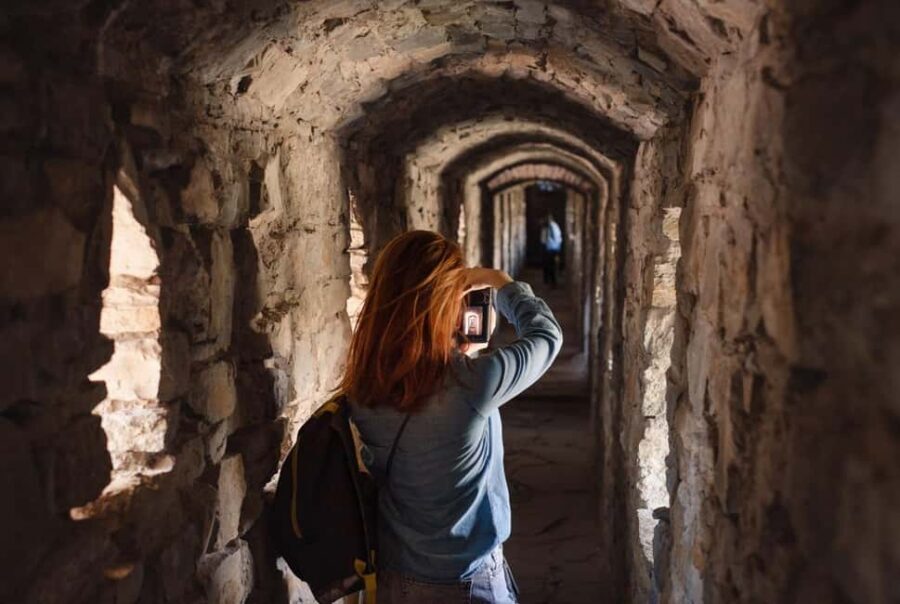
- Meet under the Arch of Constantine right by the Colosseum area, so the tour starts with context.
- Skip the ticket line while still getting admission to the key sites.
- San Pietro in Vincoli pairs Michelangelo’s Moses with the chains story tied to Saint Peter.
- San Martino ai Monti adds frescoes plus an underground crypt reaching back to ancient Rome.
- San Clemente shows multiple eras in one building, including access to the Mithraic temple below.
- English guide storytelling: multiple bookings name Alain, and the guide approach is described as professional, attentive, and not read-from-a-script.
Starting Under the Arch of Constantine: Where the Story Gets Set
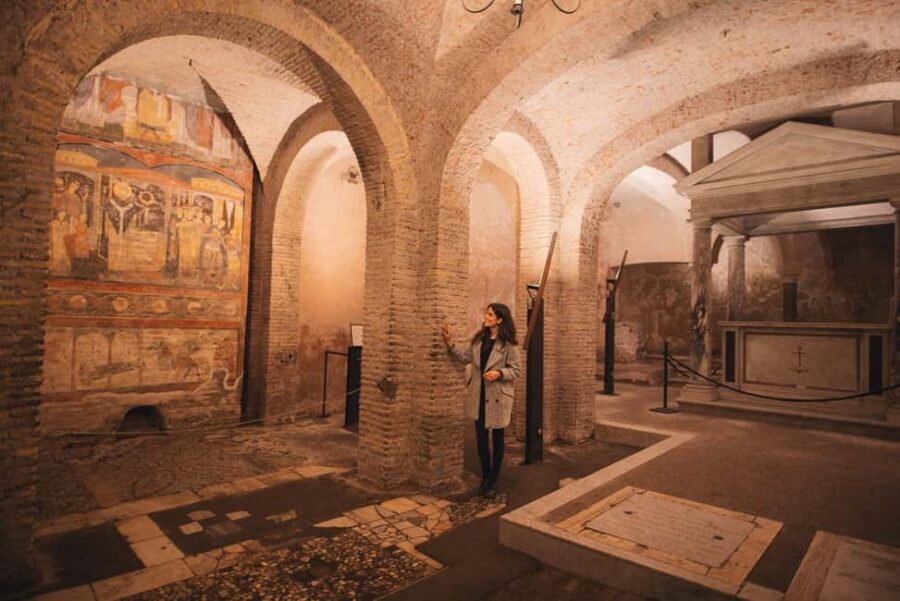
Your tour kicks off at a super easy-to-find spot: right under the Arch of Constantine, next to the Colosseum. That’s a smart move, because you’re not starting in some random side street. You’re starting in the Colosseum zone, with your guide setting the stage and throwing light on the area’s bigger legends—yes, including the Colosseum.
This first stretch also helps you get your bearings. Rome can feel like you’re always moving, but here you’re moving with purpose. You’ll walk a short segment before the first major interior stop, so the rhythm stays calm instead of frantic.
Practical note: it’s still a walking tour. Even if the “headliners” are inside churches, you’ll spend time on sidewalks and connecting paths before you hit the stairs.
You can also read our reviews of more tours and experiences in Rome.



San Pietro in Vincoli: Michelangelo’s Moses and the Saint Peter Chains
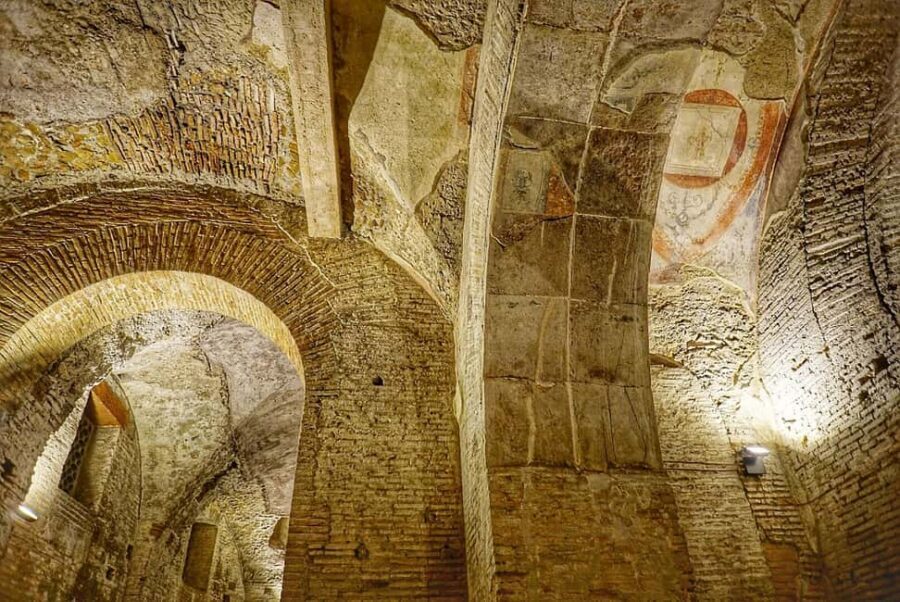
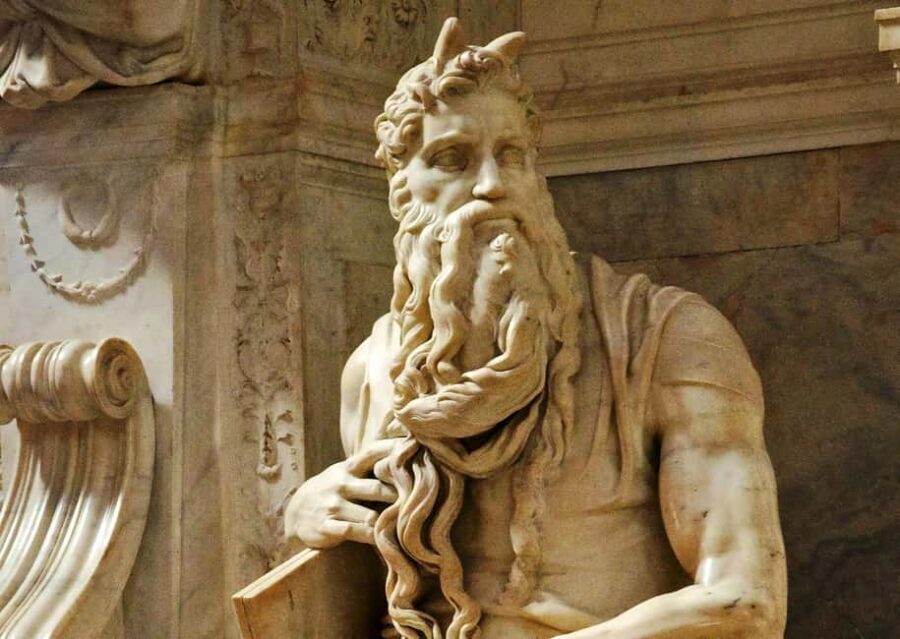
Next comes San Pietro in Vincoli, one of those places where one famous artwork pulls you into a whole web of belief and tradition. The star is Michelangelo’s statue of Moses, housed here—plus the story about the miraculous chains said to have bound Saint Peter.
What I like about starting here is that it’s not just a checklist stop. You’re given a reason to pay attention. Moses is art you can actually focus on, and the chains story gives the guide a path to explain why these objects and legends mattered to people long after their original setting.
Time-wise, this is a 30-minute visit. That’s usually enough to see the main things, absorb the guide’s framing, and ask a question or two without rushing.
Photography heads-up: the tour rules say flash photography isn’t allowed, and some areas may restrict photography. So have your camera ready, but keep it mindful.
San Martino ai Monti: Frescoes Above, Crypts Below
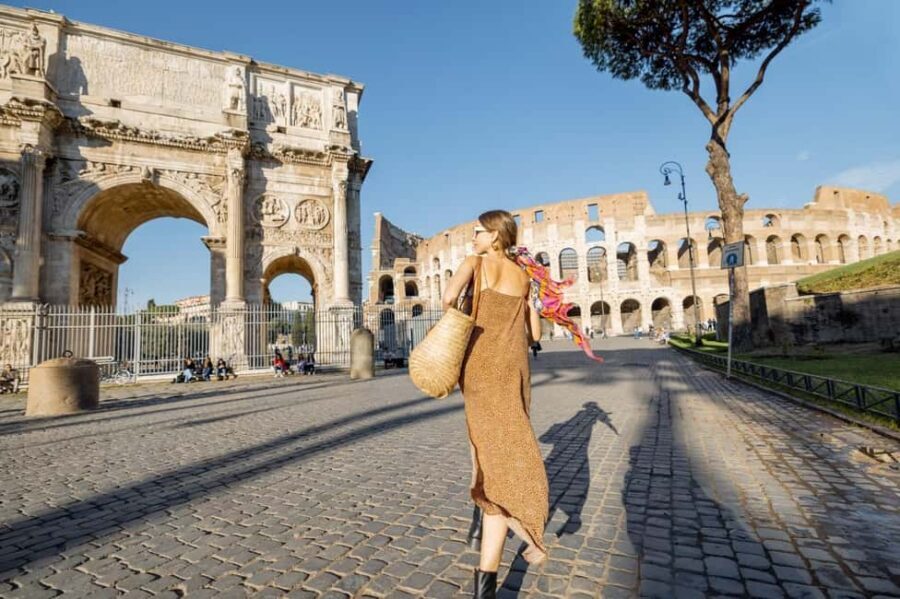
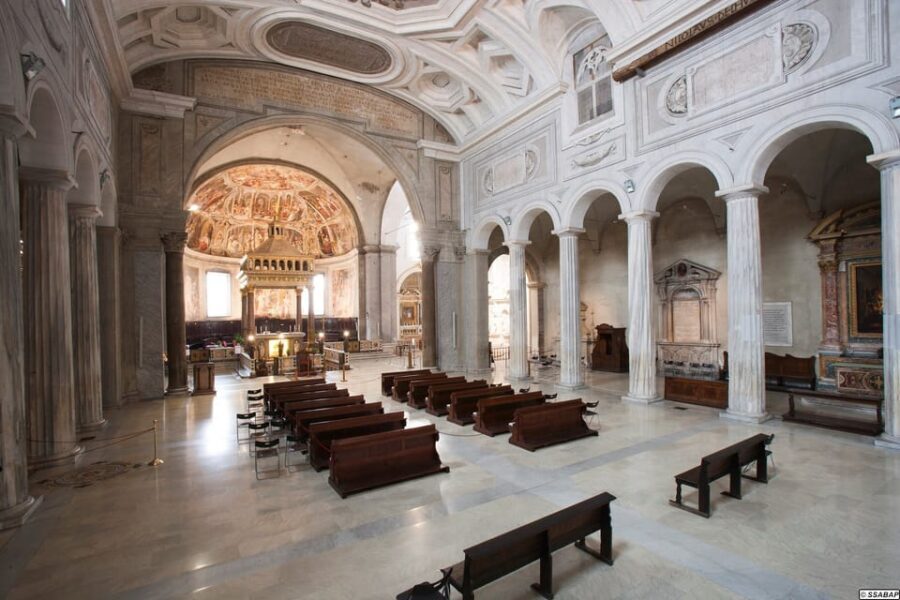
After San Pietro in Vincoli, you’ll move to San Martino ai Monti, a church described as charming and tucked away in a way that makes it feel like you’re finding a side door into the city’s layers.
This is where the tour earns its underground promise. You’ll see frescoes and then hear about (and access) an underground crypt that dates back to ancient Rome.
Here’s the key value for you: you’re not just seeing “a church with a basement.” You’re watching the idea of Rome’s continuity become physical. One building holds different time periods, and the guide helps you understand what you’re looking at in plain terms.
This stop is also a good reminder to plan for comfort. Underground spaces can be cooler than the street, so wearing a light layer can save you from feeling cold halfway through.
Oppian Hill Stroll: Nero’s Golden House Ruins Along the Route
Then you get a break from interiors with a walk through the Parco del Colle Oppio and along Oppian Hill, passing the ruins of the Domus Aurea, known here as Emperor Nero’s opulent Golden House.
This segment is not about a long museum-style stop. It’s about perspective. After crypts and churches, the open-air walking helps you reset your eyes, and it also places you near another anchor point in Rome’s long imperial storyline.
You’re only in this portion for a short walk, so don’t expect a full “ruins lesson.” Expect more of a connecting thread: the guide keeps your understanding stitched together as you transition between sites.
Basilica di San Clemente: Medieval Mosaics and the Mithraic Temple Below
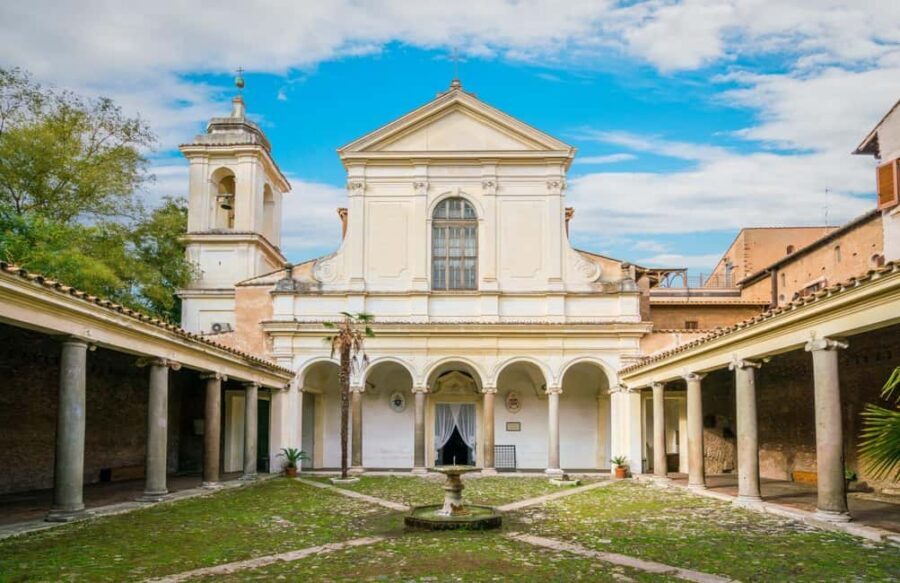
The final (and biggest) payoff is Basilica di San Clemente, where the building becomes the main character. This is described as a layered masterpiece: medieval mosaics up top, and a hidden Mithraic temple deep below.
If you’re the type who likes your history to have structure, this stop delivers. You get a clear visual idea of time moving downward through the same place. And because you have access to the underground areas and the Mithraic temple, you’re not just hearing about Rome—you’re stepping into one part of its stacked past.
This is also your longest visit in the tour: about 1 hour. That extra time matters. Underground spaces and the stairs can slow your pace, and the guide needs room to explain what’s important without rushing you out before you absorb what you’re seeing.
Important rule to remember here: photography restrictions apply in some areas, and flash is not allowed. If you see signs, follow them. It’s usually how the tour stays smooth for everyone.



Price and What Makes This $112 Feel Like Value
At $112 per person for a 3-hour small-group tour, you’re paying for a few concrete advantages that add up fast:
- An English-speaking guide who links the stops into a single story.
- Admission included to the churches that matter most on this route: San Pietro in Vincoli, San Martino ai Monti, and San Clemente.
- Access included to the underground crypts and the Mithraic temple.
- Skip the ticket line, which can save real time in Rome, especially when you’re stacking multiple sites in half a day.
Could you plan this on your own? Sure. But this is the kind of route that’s hard to assemble efficiently—especially if you want the underground parts and you don’t want to spend your time guessing what’s open, where the entrances are, and how to connect the stories.
Also, the group size is capped at 10 participants, which tends to make the experience feel manageable, particularly when you’re moving in and out of stairs and smaller rooms.
Food and drinks are not included, and you can’t bring them inside the historical sites. So do yourself a favor: eat before you meet, and keep water with you for the walk segments.
Practical Tips: What to Bring for Underground Rome
This tour asks you to be comfortable and flexible. The good news is the requirements are simple.
Bring:
- Comfortable shoes (you’ll be on uneven surfaces and stairs)
- Water
- Sunscreen (there’s outdoor walking)
- Camera
- Consider a light jacket for cooler underground areas
Expect:
- Moderate walking across different blocks and connections
- Stairs once you go underground
- A strict no flash photography rule, plus possible extra photo limits where signs are posted
If you’re sensitive to stairs or have trouble with slow footing, this is the one to take seriously. The tour explicitly says it’s not recommended for people with walking disabilities or those using a wheelchair.
Guide Style Matters Here (And It Shows in the Details)
A lot of underground tours fail at one thing: they turn into people trying to follow a script while everyone’s too busy staring at walls. This one aims to avoid that.
Multiple bookings highlight the guide named Alain, describing him as professional, attentive, and driven by real understanding rather than memorized lines. One review even notes that he did extra research on his own time to make the tour more immersive—without turning it into a lecture.
For you, that means you’ll get explanations that connect the famous artwork to the underground spaces, instead of having the stops feel like separate photo ops. And because the group stays small, questions don’t get swallowed by the crowd noise.
Who Should Book This Tour
This tour is a strong fit if:
- You like art that connects to faith and legend, not just art for art’s sake.
- You want Rome’s past to feel layered—famous landmarks above, older spaces below.
- You prefer a guided story to help you understand what you’re seeing once you’re underground.
It may not be the right fit if:
- You need a step-free route or you’re unable to handle stairs and uneven flooring.
- You hate churches or religious sites in general (because multiple stops are inside churches with rules about food/drink and photography).
One more thought: children under 6 may find the walking challenging. If you’re traveling with kids, plan accordingly.
Should You Book This Underground Treasures Tour?
If you want a focused half-day that mixes Michelangelo, church art, crypts, and the Mithraic temple experience at San Clemente, this is a great way to spend your time. The pricing makes sense because admission and underground access are bundled, and the small group format helps keep it from feeling chaotic.
I’d book it if underground spaces sound fun and you can handle stairs. I’d skip it (or swap to something more accessible) if mobility is a concern.
Bottom line: this is Rome with its top layer peeled back—organized, guided, and timed so you actually get the story, not just the locations.
FAQ
Where is the meeting point?
You’ll meet right under the Arch of Constantine, next to the Colosseum.
How long is the tour?
The tour lasts 3 hours.
Is the tour a small group?
Yes. It’s limited to 10 participants.
What’s included with the ticket price?
Admission is included for San Pietro in Vincoli, San Martino ai Monti, and San Clemente, including access to the underground crypts and the Mithraic temple.
Can I take photos inside the churches?
Flash photography is not allowed. Also, photography isn’t permitted in certain areas, so follow the signs and your guide’s instructions.
Is this tour wheelchair accessible?
No. It isn’t recommended for people with walking disabilities and it’s not suitable for wheelchair users due to uneven surfaces and stairs.