REVIEW · COLOSSEUM TOURS
Rome: Guided Tour of Colosseum, Palatine Hill and Roman Forum
Book on Viator →Operated by Rome Adventures · Bookable on Viator
Rome’s power trio in three hours. This guided route strings together the Colosseum with the Roman Forum and Palatine Hill, so the sights feel connected instead of like random stones. I like that you get real commentary while you’re inside, not just photo stops. One consideration: it’s still a fair amount of walking and climbing, and summer heat can make those photo moments feel like a workout.
The tour uses a mobile ticket and a group size capped at 24, which usually keeps things manageable. I also like the structure of short, clear time blocks across three key areas, so you don’t feel lost between landmarks. Still, you’ll want to double-check the meeting spot details on your voucher, because a few people reported confusion when the meeting location wasn’t obvious.
What really sells this experience is how it turns famous ruins into a story you can follow on the ground. Expect panoramic views from Palatine Hill, a walk tied to the Via Sacra route, and Forum highlights paced to keep you moving. Bring your ID, because admission depends on names matching your booking.
In This Review
- Key highlights you’ll actually notice
- Stop 1 at the Arch of Constantine: quick start, instant context
- Entering the Colosseum with timed access and real interpretation
- Palatine Hill: imperial residences and the best Rome photo angle
- Via Sacra and the Roman Forum: the civic center you can navigate
- How the 3-hour format holds up in real life
- Price and value: what you’re really paying for
- What to bring so entry doesn’t turn into stress
- Choosing this tour if you want guidance, not just landmarks
- Should you book Rome Adventures’ Colosseum, Palatine Hill and Roman Forum tour?
- FAQ
- How long is the Colosseum, Palatine Hill and Roman Forum guided tour?
- Is Colosseum entry included?
- What about Arena access?
- What language is the tour offered in?
- How big is the group?
- What ID do I need to bring?
- Can I get a refund if I cancel?
Key highlights you’ll actually notice
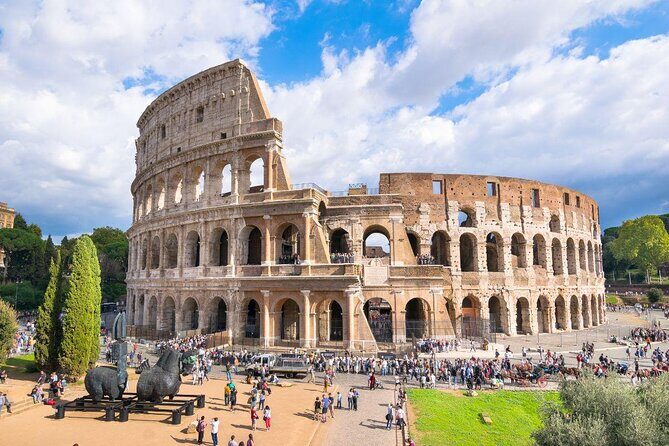
- Inside the Colosseum with a licensed guide, plus time to roam the first and second levels for photos
- Palatine Hill viewpoints over the Circus Maximus and Roman Forum area
- Roman Forum focus on temples, basilicas, arches, and civic life, then free time to keep exploring
- Skip-the-line style entry and organized access, saving you from getting stuck in the wrong queue
- Small-group feel (up to 24) with guidance on where to stand and when to move
Stop 1 at the Arch of Constantine: quick start, instant context
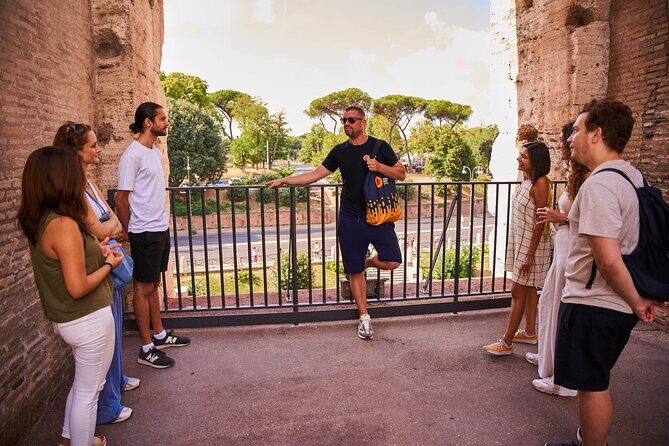
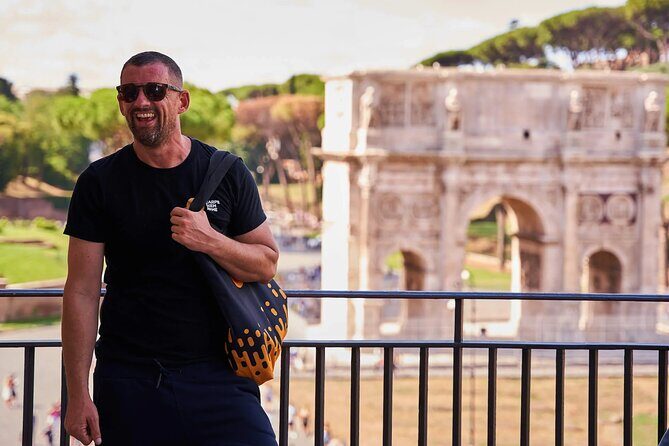
You kick things off at the Arch of Constantine, not deep inside the Colosseum area. It’s a smart way to begin because the arch sets a “power and propaganda” frame for what you’re about to see. You also get a short buffer before the main site, which helps if you’re managing arrival time or trying to find the group without stress.
From there, the tour flows into the Colosseum with an organized rhythm. That matters in Rome, where crowds can make even a simple walk feel chaotic. Starting with an outside landmark also gives you a chance to meet your guide, confirm you have the right tickets in hand, and settle into the group pace.
You can also read our reviews of more guided tours in Rome



Entering the Colosseum with timed access and real interpretation
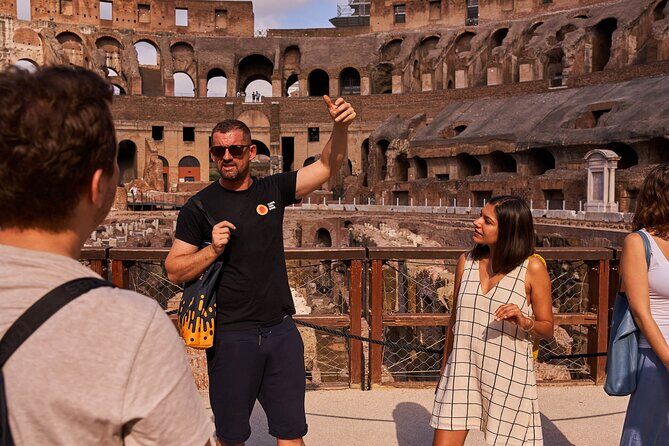
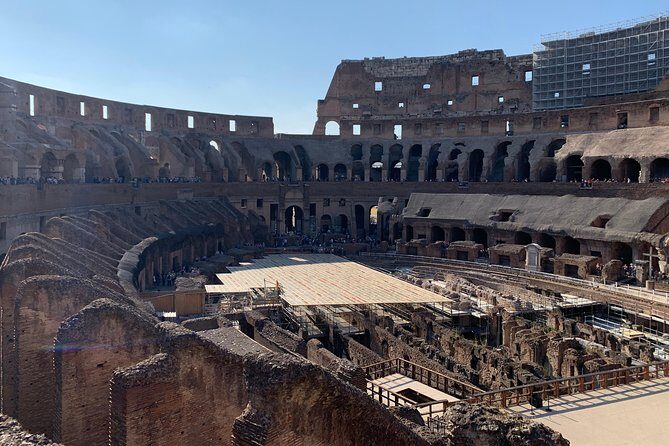
This is the big ticket moment: you go inside the Colosseum with a licensed guide. The tour description emphasizes speedier access, and that lines up with why people choose this format instead of ticketing on their own. In practice, the value isn’t just saving minutes. It’s that you’re guided to the most important parts so you don’t get stuck staring at details without understanding what they meant.
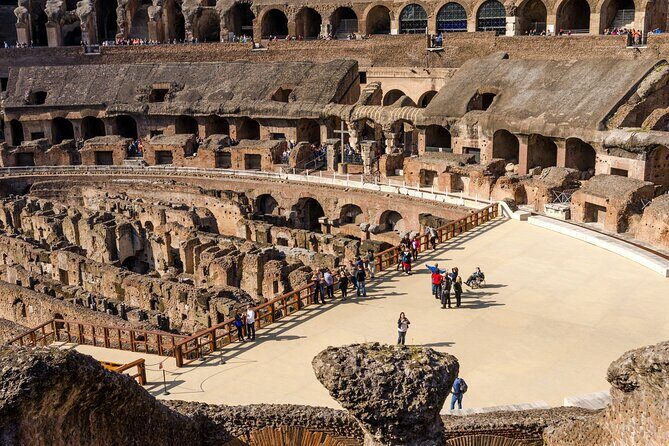
You’ll spend about 1 hour in the Colosseum, and the itinerary is designed around exploring the first and second levels at your own pace after the guided points. That “guided + roam” mix is ideal for a place like this. A guide can explain gladiators, beast hunts, and the engineering behind the building. Then you can slow down where your interests pull you—whether that’s arches, sightlines, or the sheer scale.
If you want more, there’s an Arena access option. It’s not included in the standard plan, and it typically costs extra (the info provided lists the higher Colosseum ticket as the €24 option). If you’re the type who wants to stand where spectacle once happened, that upgrade can be worth considering. If you’re mainly after the story and the main structure, the standard interior access is already strong.
A few guide styles show up in reviews, and that can affect your experience. Some guides are praised for being clear and loud over crowds, while others add interactive moments like re-enactments. Names that came up include Selena, Fee, Paulo, Massimo, and Selene. You won’t know in advance who you’ll get, but it’s reassuring that multiple guides have been recognized for making the site feel alive.
Palatine Hill: imperial residences and the best Rome photo angle
After the Colosseum, you head to Palatine Hill, roughly 1 hour. This stop is where Rome stops being a stadium and turns into a lived-in world of imperial power. The hill is tied to the legendary founding story of Rome through Romulus, but the real hook is how the ruins connect to how emperors built their status—through palaces, monumental spaces, and control of the city’s narrative.
Here’s what makes Palatine Hill worth your time: the panoramic views. The route is described as giving overlooks toward the Circus Maximus and Roman Forum. That’s useful even if you’ve seen Rome photos online. Once you look down from the hill, the Roman city layout stops being abstract. Suddenly the Forum isn’t just another ruin field; it becomes the civic center of a much bigger system.
You’ll also get room to wander through ruins and architecture cues rather than being herded nonstop. The pacing is meant to keep it enjoyable, not just educational. Even so, plan for sun and uneven ground. If you’re someone who gets tired quickly, consider bringing a light, packable hat and taking the short rest moments seriously.
Via Sacra and the Roman Forum: the civic center you can navigate
Next comes the Roman Forum, introduced as the central hub of political and social life in the Roman Empire. Before you enter the Forum itself, the tour includes a walk along the Via Sacra, the route victorious generals and legions took. That detail matters because it turns the Forum from a list of “important buildings” into a place where events unfolded in sequence.
You’ll spend about 50 minutes with guided focus on key structures like temples, basilicas, and arches. Then the tour gives you time to continue at your own pace afterward. That free time is important. The Forum is easy to underestimate until you’re there—there’s so much surface-level detail that only a chunk of it will make sense while you’re listening. The guided portion helps you know what you’re looking at. The extra time lets you pick what you want to linger on.
This is also where a good guide can make Rome feel practical instead of overwhelming. One reviewer praised Paulo for re-enactment-style teaching that helped people imagine what an event might have felt like. Another noted guides pointing out small but meaningful cues, including architectural details that are easy to miss when you’re on your own. You don’t need to hunt for significance; your guide’s job is to point you toward it.
How the 3-hour format holds up in real life
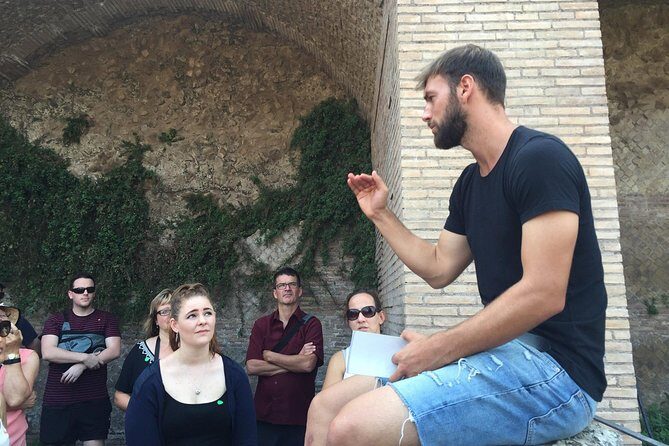
This tour runs about 3 hours, covering three major sites. That’s fast, but it’s not random. It’s built around the reality that the Colosseum, Palatine Hill, and Forum all eat time, and you don’t want to lose your whole day just trying to get oriented.
The group size limit of 24 is a real factor here. Smaller groups tend to move more smoothly through tight spaces. You also get enough time for photos because you’re not sprinting nonstop. Still, it’s not a sit-down experience. Expect steps, uneven ground, and stretches where you stand while listening.
One recurring practical theme in reviews: heat and crowding can be intense. A few guides were praised for pausing in shade and keeping the group together so people didn’t get separated in the crush. That’s the kind of “soft service” you want. It’s not flashy, but it makes the difference between enjoying Rome and just surviving a schedule.
A potential snag to know about: the audio system can vary. One review mentioned a speaker system with static that made it harder to hear at times. If that happens, it’s still manageable, but don’t assume every guide moment will be crystal-clear.



Price and value: what you’re really paying for
The price shown is $30.17 per person for an approximately 3-hour guided experience. That can feel surprisingly low for three landmark sites, so it’s worth looking at what the tour is actually bundling.
Your ticket package includes entrance to the Colosseum, described as €18 per person for standard access, with €24 if you choose the Arena access option. It also includes organized entry and a guided group tour through Ancient Rome’s main highlights. In other words, the value isn’t just “a guide.” It’s also the time you save by being routed into the right entry flow and the structure that helps you understand what you’re seeing while you’re there.
The tour does not include transportation, food, or drinks. So if you’re budgeting, plan on buying water and snacks separately. The plus: the itinerary length is short enough that a quick meal later usually fits your day without rushing.
One more price-related detail that changes the equation: there’s an option described as walking tour (external visit) where you do not get Colosseum entry and sights are viewed from outside. If your goal is to go inside, pick the version that includes Colosseum admission. Otherwise, you’re paying for a different experience.
What to bring so entry doesn’t turn into stress
This tour is strict about identity matching your booking. You must provide full names for all participants at booking time. At the Colosseum and Forum ticket offices, a voucher with all travelers’ full names must be presented. You also need a valid passport or government-issued ID that matches the name used for your tickets.
That matters because if your name doesn’t line up, you can lose time or get denied entry. Even though the ID issue might not be the tour operator’s fault, it’s the type of problem that ruins a morning fast.
For comfort, pack like it’s summer in Rome, because it often is. A review with high praise for guide Selene specifically recommended bringing a hat, sunscreen, an umbrella, and water bottles, noting that refill stations are available on site. I agree with the logic. Even if your weather is mild, you’ll spend time outdoors and you’ll want shade breaks to feel like a treat, not a requirement.
Also, show up a bit early. One low-star review described delays and frustration around late arrival. You don’t want your day to depend on whether you can run fast through crowds.
Choosing this tour if you want guidance, not just landmarks
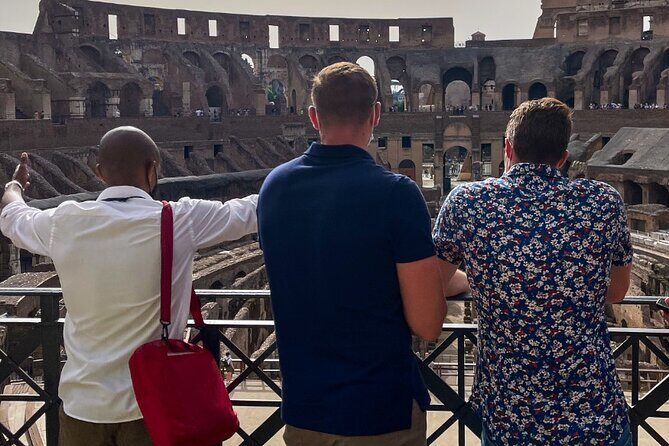
This is a strong fit if you want your Rome to have a storyline. You’re not just checking off sites; you’re learning how the Roman Empire acted out power through architecture, events, and public space. If you like asking questions, this format is built for that. Multiple guides in the reviews were praised for answering questions and keeping communication clear.
It’s also a good choice if you’d rather avoid guessing where to go inside mega-sites. The Colosseum and Forum are huge. Even motivated DIY visitors can lose momentum in entry points and crowded circulation. Here, the guide helps you get oriented fast.
If you’re sensitive to walking, this may be a harder day. It’s not an all-stairs marathon, but it is movement across multiple sites with standing time while you listen. Consider whether you can handle a warm, crowded route for about three hours.
Should you book Rome Adventures’ Colosseum, Palatine Hill and Roman Forum tour?
If your goal is to see the big three with the right context, I think this tour is a good booking. You get Colosseum entry, guided storytelling, a structured route that includes Via Sacra, and a meaningful Roman Forum focus without trying to decode everything alone. The guide factor seems to matter a lot, and the names mentioned in reviews—like Selena, Fee, Paulo, Massimo, Selene, and Giulia—suggest you’re likely to hear explanations that make the ruins feel readable.
Book it if:
- you want a clear plan for three major sites in about 3 hours
- you prefer guided interpretation over wandering
- you’d like speedier access and fewer queue headaches
Skip it (or pick a different option) if:
- you’re looking for a low-walk, mostly relaxed outing
- you might accidentally book the external Colosseum option and realize too late you wanted to go inside
FAQ
How long is the Colosseum, Palatine Hill and Roman Forum guided tour?
It runs for about 3 hours.
Is Colosseum entry included?
Yes, the tour includes entrance to the Colosseum in the standard option. There is also an external-visit option that does not include Colosseum entry.
What about Arena access?
Arena access is not included in the standard option. The higher €24 Colosseum ticket is the one that includes Arena access.
What language is the tour offered in?
The tour is offered in English, and other language options may be available depending on the choice you make.
How big is the group?
The tour has a maximum group size of 24 travelers.
What ID do I need to bring?
You need a valid passport or government-issued ID that matches the name provided at booking. You’ll also need a voucher with all participants’ full names to present at the Colosseum and Roman Forum ticket office.
Can I get a refund if I cancel?
You can cancel up to 3 days in advance for a full refund. If you cancel less than 3 full days before the experience’s start time, the amount paid is not refunded.