REVIEW · ROME
Rome Golf Cart Tour: Highlights & Must See
Book on Viator →Operated by GOLF CART TOUR ROME · Bookable on Viator
Rome can punish your feet fast. This golf cart loop is built to help you see the big sights in about three hours without wearing out your legs. You’ll ride in an open-sided cart with a hard top for sun and rain, then stop at each landmark for closer looks and photos.
Two things I’d prioritize: the route is time-saving (so you’re not stuck doing point-to-point taxi arithmetic), and the guide storytelling tends to be the main attraction. I’ve seen praise for guides like Eugenio (born and raised in Rome) and Eduardo, who bring history and culture to the stop-by-stop ride.
One consideration before you book: some of the headline stops are listed as outside viewing only. The Pantheon and the Colosseum are both presented without the entrance being included, so if you want interiors, plan a separate ticket for that.
In This Review
- Key things to know before you ride
- Why a golf cart tour works in sprawling Rome
- The cart setup: open views with a hard top for weather
- Where the tour starts (and why it’s easier than you think)
- Pantheon area looks without the entrance ticket
- Piazza Navona: a classic square stop with admission included
- A market pause, then Piazza del Popolo and Roman finds
- Villa Borghese park time with history explanations
- Trevi Fountain: the iconic stop with a photo-friendly window
- Piazza Venezia: the Unknown Soldier square moment
- Piazza del Colosseo: Colosseum views without entrance
- Price and value: $179.97 for a private 3-hour ride
- Guide quality: why the stories keep showing up
- Timing and comfort realities: rain, charging, and expectations
- Who this Rome golf cart tour fits best
- Should you book this Rome golf cart tour?
- FAQ
- How long is the Rome golf cart tour?
- How much does the tour cost?
- Is this tour private?
- Where does the tour start and end?
- Are the Pantheon entrance tickets included?
- Is Colosseum admission included?
- Which stops have admission tickets included?
- Is the golf cart protected from rain and sun?
- What if the tour is canceled due to weather or minimum travelers?
Key things to know before you ride
- Hard top comfort: open cart views, with protection from sun and rain
- Stop-and-photo pacing: short visits at each highlight, with time to get pictures
- Mix of ticketed and outside-only stops: some admissions are included; Pantheon and Colosseum entrances are not
- Private by default: only your group rides with the driver/guide
- Guide flexibility shows up in real life: when weather hits, the guide may pivot to keep the experience moving
- Not a food tour: snack isn’t included, so plan on grabbing something nearby
Why a golf cart tour works in sprawling Rome
Rome is a city where “just walking across town” can turn into a half-day project. This tour is designed for the reality that you’ll want views, photos, and explanations, not blisters. In roughly three hours, you hit a tight cluster of major sights that otherwise require lots of transit time and street crossings.
The golf cart also changes your rhythm. Instead of arriving tired and rushing through, you get a short guided stop, then a ride that lets you reset. That matters when you’re bouncing between famous squares and monuments that can get crowded and noisy on foot.
And because it’s private, you can move at your group’s pace rather than getting swept along in a larger crowd. That alone can make the whole experience feel calmer, especially if you’ve already walked museums earlier in your trip.
You can also read our reviews of more tours and experiences in Rome.



The cart setup: open views with a hard top for weather
You get the best of both worlds: you’re not trapped inside a van, but you’re not fully exposed either. The cart has open sides for the classic Rome photos from above street level, plus a hard top that helps with sun and rain.
That protection is more than comfort—it’s a sanity saver. Rome weather can switch quickly, and even a light drizzle can put a wrench in sightseeing plans. In the reviews, I saw examples of guides pivoting when rain hit mid-tour, keeping the experience going instead of grinding to a halt.
Still, don’t assume the tour becomes a magic shield. If the sky is truly miserable, the operator says it can be canceled due to poor weather, with a different date or a full refund offered. So pack for flexibility either way.
Where the tour starts (and why it’s easier than you think)
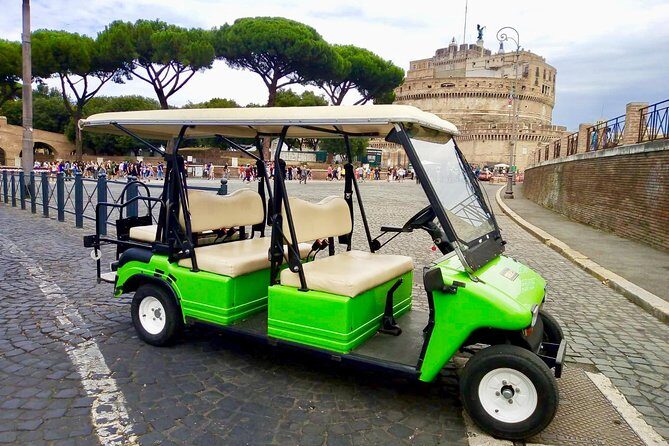
The meeting point is Piazza di Santa Caterina della Rota, 00186 Roma RM. The tour ends back at the same meeting point, so you’re not left playing transit Tetris at the end.
It’s also described as being near public transportation. That’s a big deal in Rome. If your hotel isn’t within easy walking distance, you can still plan a simple route to the start without a complicated chain of transfers.
This kind of setup is perfect for travelers who want a “get your bearings fast” experience early in a trip—or a later reset day when you’ve already seen some museums but still want the postcard landmarks.
Pantheon area looks without the entrance ticket
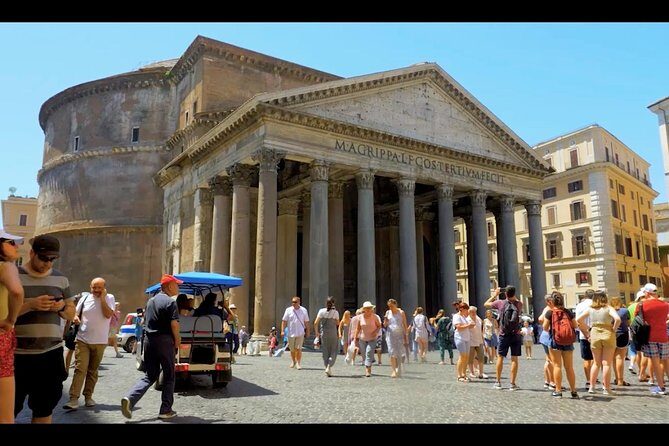
Your first stop is the Pantheon area, specifically Piazza della Rotonda and the Pantheon from the outside. The time on the ground is listed at about 10 minutes, and the entrance is not included.
So what’s the value? Even without going inside, the Pantheon is a full-on visual moment. You’ll get oriented to its location, see the surrounding square, and take photos before the crowd pressure really builds.
This also helps with expectations. If you’re traveling with a group that wants interiors, you’ll need to add that separately. But if you’re after the sights, the setting, and a quick guided explanation, starting here gives you a strong “Rome immediately makes sense” feeling.
Piazza Navona: a classic square stop with admission included
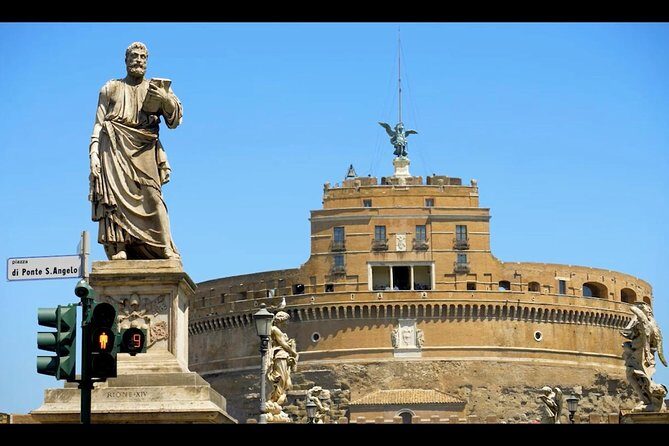
Next up is Piazza Navona. The tour lists about 10 minutes, and the admission ticket is included.
Navona is one of those squares where the architecture does half the explaining for you—long sight lines, dramatic facades, and a layout that makes it easy to understand why it became a gathering place. With a guide, you’ll get the story behind the place rather than just looking at pretty buildings.
A short stop is good here. If you try to do Navona like a museum, you’ll overdo it. In 10 minutes, you can get what you need: key views, photos, and a few facts that connect the square to the city’s evolution.



A market pause, then Piazza del Popolo and Roman finds
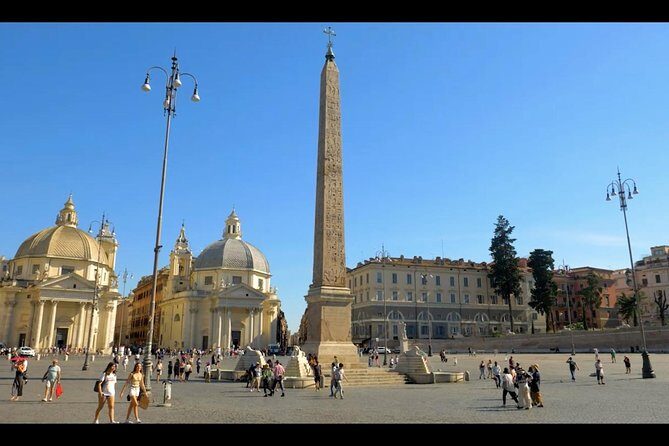
There’s a market stop in the route (the description doesn’t name a specific market), followed by Piazza del Popolo. Piazza del Popolo gets about 20 minutes, and the tour notes admission included.
This pairing is smart because it shifts Rome from “monument mode” to “street life mode.” Even if the time is short, a market stop can give you a feel for the everyday side of the city—colors, energy, and the local pace that famous landmarks alone won’t show.
Then you move into Piazza del Popolo for the explanation of Roman finds. That’s where a good guide matters. In the reviews, guides like Eugenio and others were praised for turning quick stops into meaningful context—so you don’t just see a square, you understand what you’re looking at.
Villa Borghese park time with history explanations
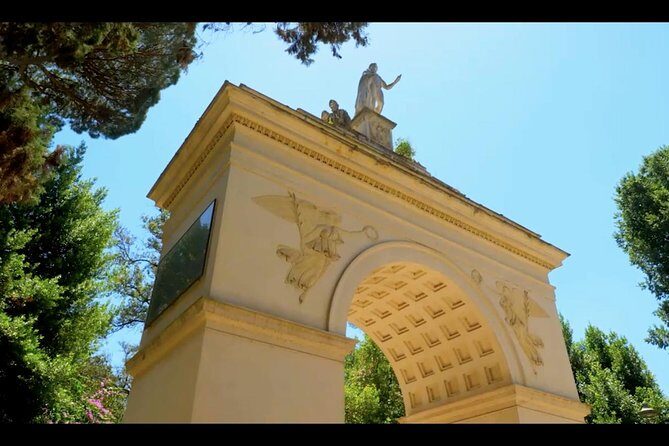
Villa Borghese is next, with about 30 minutes on site and admission included. This stop often feels like a breather compared to the tight squares.
The tour description includes a visit to the villa plus the park, with an explanation of the history of the sites. That kind of guided framing is useful here because Villa Borghese can look like “just a park” if you don’t know what you’re seeing.
In practical terms, 30 minutes is a workable chunk: long enough for a meaningful look and a few photo angles, but short enough to keep the rest of the route on track. If you’re the type who wants to linger, keep in mind this is still a structured 3-hour format.
Trevi Fountain: the iconic stop with a photo-friendly window
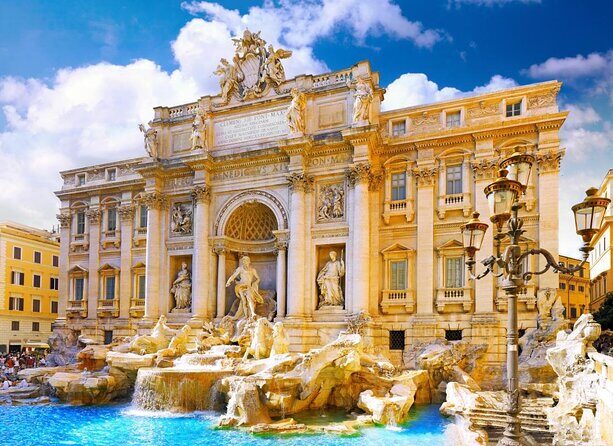
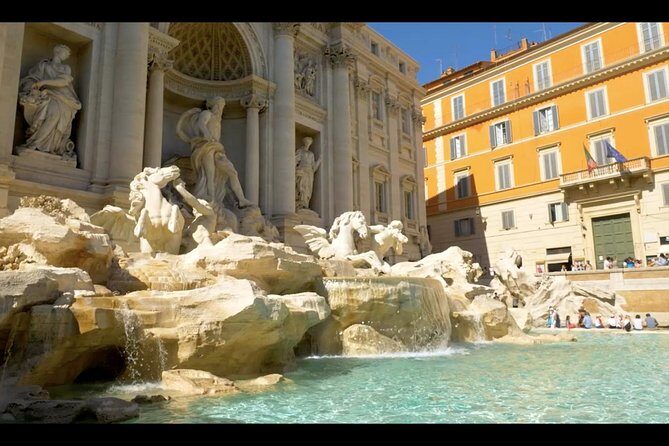
Then it’s Fontana di Trevi, with about 20 minutes and admission included. Trevi is one of those places where arriving with a plan helps. You want the classic view, but you also want to not lose 20 minutes stuck in the crowd shuffle.
This stop-by-stop format gives you a defined amount of time. Your guide can also help with where to stand for better photos and how to move without getting stuck in the worst bottleneck.
One practical note: Trevi is popular, so expect crowds. The short, guided pacing helps you get the moment you came for while still seeing the rest of the route instead of letting the fountain steal your whole day.
Piazza Venezia: the Unknown Soldier square moment
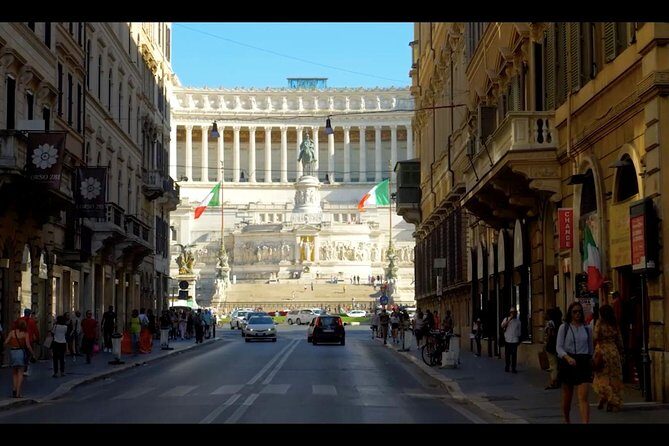
Piazza Venezia comes next, with about 20 minutes and admission included. The highlight is the imposing monument of the Unknown Soldier.
This stop is a good contrast to the earlier “ancient Rome” flavor. Piazza Venezia sits in a different emotional register—big national monument energy—so your brain gets a break from nonstop ancient stones.
With a guide, you should get the explanation that connects the monument to modern Italian identity and how it fits into Rome’s story as a whole. If you’re the kind of traveler who likes your landmarks tied to meaning, this is one of the stops worth paying attention to.
Piazza del Colosseo: Colosseum views without entrance
Finally, you reach Piazza del Colosseo, with about 30 minutes and Colosseum entrance not included.
This is a major one, so expectations matter. You’ll get a Colosseum visit, but the entrance ticket isn’t part of this tour. That means you’re likely there for exterior views and photos, plus guided explanation from the outside.
In the reviews, some people were extremely happy with the guide’s history storytelling and photo stops. Others mentioned timing issues when the Colosseum photo moment didn’t feel as long as they expected. So if the Colosseum is the main headline you care about, I’d treat this as your “get oriented and get pictures” stop—not a substitute for an interior visit.
Price and value: $179.97 for a private 3-hour ride
At $179.97 per person for about three hours, you’re paying for speed, convenience, and a private driver/guide. That’s a different value proposition than a hop-on-hop-off bus or a self-guided day of metro transfers.
Here’s how I’d judge the value:
- If you’re short on time and want multiple top sights grouped efficiently, the pricing starts to make sense.
- If you already planned to pay for separate guided explanations and then also take taxis or transit between scattered landmarks, this can reduce the mental load.
- If you’re the type who enjoys walking and doesn’t mind transit, you might find cheaper ways to get similar views. But you’ll trade off guided context and time.
Also, note the operator says the carts are booked, on average, about 43 days in advance. That hints the service can be in demand around common travel windows—so booking earlier can help lock in a slot that fits your schedule.
Guide quality: why the stories keep showing up
The strongest praise in the reviews revolves around the people driving the cart and guiding the stops. Names that came up include Eugenio, Eduardo, Victor, Manuel, Carlo, Elisa, Sa, and guides like Mario (yes, the world is full of Mario on tours).
What you want to look for is a guide who can do two things in short time:
1) explain what you’re looking at in plain terms
2) connect the sites so it feels like a coherent Rome story, not separate postcards
In multiple reviews, guides were described as passionate about Rome, and one guide was noted as a history teacher who kept the group engaged. I also saw praise for customization—like adjusting the order to your preferences and adding extra photo points.
So your best move? Be clear about what you care about before you roll. Even a small request—like where you’d like to end, or which photos matter most—can shift the ride from nice to memorable.
Timing and comfort realities: rain, charging, and expectations
Rome can disrupt schedules, and this tour uses a cart. That means timing can be affected by two real-world factors mentioned: weather and cart readiness (like charging).
In one example, a guest described the start time shifting due to heavy rain in the forecast and later delay linked to the cart needing to be charged. The big takeaway for you: build a little slack into your day and avoid stacking another timed ticket right after the tour ends.
Comfort-wise, the cart seating can be a factor. One review mentioned that not all seats faced forward, which could matter if you care a lot about looking directly ahead while riding.
None of that means you should skip the tour. It just means you should go in with a flexible mindset. Rome rewards calm. This format works best when you treat it as a guided loop, not a tightly clockwork museum visit.
Who this Rome golf cart tour fits best
This tour makes the most sense if one or more of these are true for you:
- You want a fast introduction to Rome’s top sights without spending your whole day on foot.
- You’ve already walked a lot in museums and want an easier way to see the classics.
- You prefer a guided story to pure self-guided wandering.
- Your group would benefit from a private ride with a driver/guide who can adapt to your preferences.
It may be less ideal if you’re craving interior access at the Pantheon and the Colosseum. Since entrances aren’t included for those, you’ll likely still want separate tickets if those interiors are the main reason you’re in Rome.
If you’re visiting with mobility challenges, the cart itself is a practical help since it reduces walking between distant points. Just keep in mind the stops are still outdoors and involve short ground time at each sight.
Should you book this Rome golf cart tour?
I’d book it if you’re trying to get real value from a limited amount of time. This tour is built to help you see the headline landmarks—Pantheon area, Navona, Popolo, Villa Borghese, Trevi, Piazza Venezia, and the Colosseum area—in one organized ride.
I’d also book it if guide quality matters to you, because the reviews strongly lean toward enthusiastic, story-driven guiding. Names like Eugenio and Eduardo are repeatedly associated with memorable explanations.
But I wouldn’t treat it as your only Colosseum plan. With no entrance ticket included, you may want to add a separate visit for interior access, especially if the Colosseum is your top priority.
FAQ
How long is the Rome golf cart tour?
It runs for about 3 hours.
How much does the tour cost?
The price is listed as $179.97 per person.
Is this tour private?
Yes. It’s a private tour/activity, so only your group participates.
Where does the tour start and end?
It starts at Piazza di Santa Caterina della Rota, 00186 Roma RM, Italy and ends back at the same meeting point.
Are the Pantheon entrance tickets included?
No. You visit the Pantheon from the outside, and entrance is not included.
Is Colosseum admission included?
No. The Colosseum visit is listed as not including admission.
Which stops have admission tickets included?
Admission tickets are listed as included for Piazza Navona, Piazza del Popolo, Villa Borghese, Fontana di Trevi, and Piazza Venezia.
Is the golf cart protected from rain and sun?
Yes. The cart is open-sided but includes a hard top designed to protect from sun and rain.
What if the tour is canceled due to weather or minimum travelers?
The experience requires good weather. If it’s canceled due to poor weather, you’ll be offered a different date or a full refund. It can also be canceled if a minimum number of travelers isn’t met, with an alternative or full refund offered.