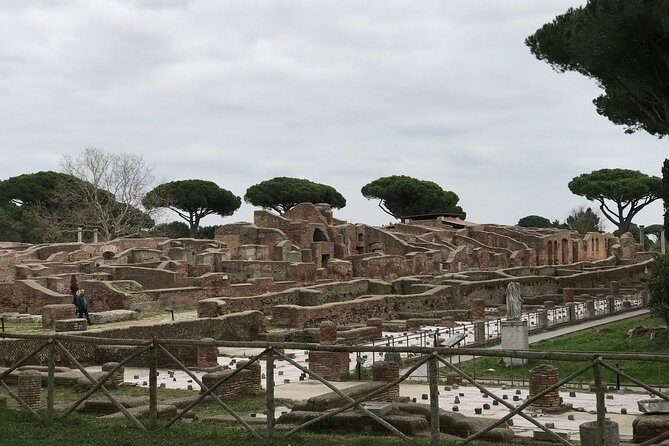
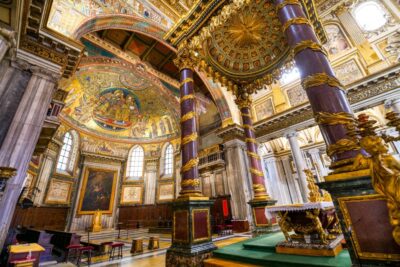
REVIEW · PRIVATE
ROME: Golf-Cart Private Tour
Book on Viator →Operated by Fun Moving Golf cart tour · Bookable on Viator
Rome gets big fast. This tour keeps it manageable.
The smooth part is simple: you see the big-name sights in a short window without spending your day fighting crowds on foot. You pick one of three route styles, then your driver guides you city blocks at a time with commentary and frequent photo pull-offs. When guides like Carlo, Antonio, or Flavio are driving, the whole thing feels like first-class storytelling from the seat of a golf cart.
I especially love the mix of comfort and variety: quick stops for photos at places like the Spanish Steps and Trevi Fountain, plus a deeper architecture/ancient-world moment at the Pantheon. I also like that you can plan for your pace, including an option to handle the short walk near Trevi. One consideration: 3 hours moves quickly, and if a marathon or street changes affect routes, you may miss a few spots or have a slightly adjusted drive.
In This Review
- Key Things I’d Pay Attention To
- Private Golf Cart Touring: Why It Works in Rome
- Choosing Among Three Golf-Cart Routes
- Starting at Piazza del Popolo: The Pilgrims’ Entrance Energy
- Spanish Steps Photo Time Without the Full Sidewalk Fight
- Trevi Fountain and the 1–2 Minute Walk Problem (Plan It)
- Piazza Navona: Four Rivers, Street Life, and Old Stadium Bones
- Pantheon Time: Dome Stares and a Ticket You’ll Need
- Largo di Torre Argentina: Julius Caesar, Then Cats
- How the Driver Commentary Makes It Feel Like More Than Transport
- Getting In and Out: Pickup Range and the End Point
- Value at $185.03: When This Is a Smart Spend
- What Can Go Wrong: Pace, Closures, and Extra Tickets
- Final Call: Should You Book This Private Golf-Cart Tour?
- FAQ
- How long is the Rome golf-cart private tour?
- Is this a private tour?
- Is hotel pickup available?
- What stops are included, and are admissions free?
- Do I need to walk at Trevi Fountain?
- What language is the tour offered in?
- Can I cancel for a full refund?
Key Things I’d Pay Attention To
- Three route choices mean you’re not stuck with one rigid highlights-only loop.
- Photo-friendly get-down stops keep you from speeding past the views.
- Driver storytelling in English adds context while you’re moving between areas.
- Rain and chaos become less annoying because the carts can be covered.
- Trevi has a pedestrian-only pinch point with a short 1–2 minute walk option to plan around.
- Pantheon admission isn’t included, so you’ll budget for that ticket separately.
Private Golf Cart Touring: Why It Works in Rome
Rome punishes time. It also punishes your feet.
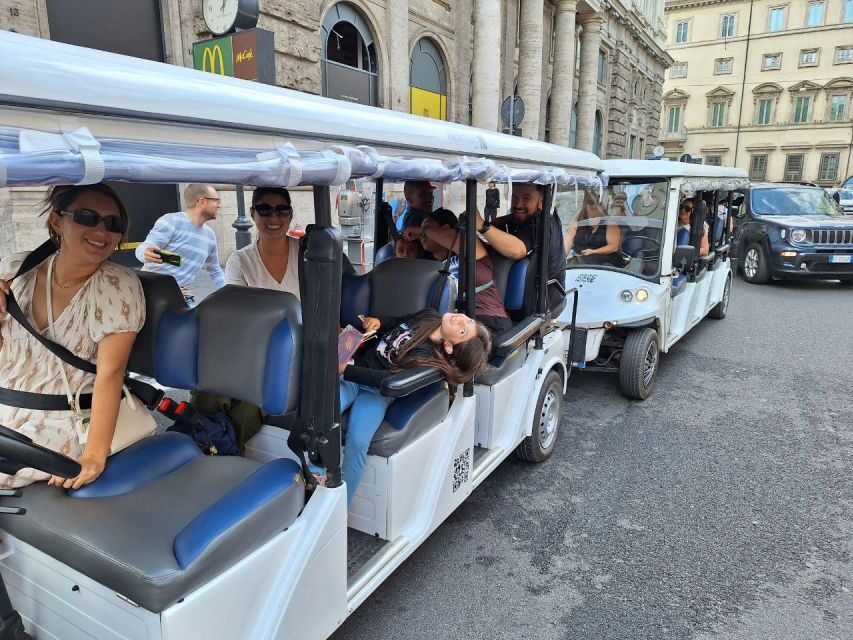
A private golf cart tour is basically the antidote: you get an undivided guide and a vehicle that can slide through traffic patterns that buses and cars can’t. The result is that you cover more ground than you could on foot in the same time slice, without turning the day into a sprint.
This matters most if you’re on a tight schedule. The tour lasts about 3 hours, and it’s designed to hit major visual anchors while still giving you time to stop, look up, and take photos. It also helps if you’d rather not spend your vacation learning the city the hard way—like which blocks are closed, where the crowds pile up, and when the sidewalks become a bottleneck.
One more comfort detail I like: the carts can have transparent rain covers, which makes a rainy day feel less like defeat. In a city where weather can shift quickly, that small protection can be the difference between gritting your teeth and actually enjoying the ride.
You can also read our reviews of more private tours in Rome



Choosing Among Three Golf-Cart Routes

Before the wheels turn, you get to choose among three different route styles. That means you can tailor the day to your priorities instead of just accepting whatever bundle of stops you’re handed.
If you’re a first-time visitor, you’ll probably want a plan that balances the big postcards with at least one heavy-hitter monument. If you’ve already seen some Rome highlights, you can lean into a route that feels less repetitive. And if you want your guide to adapt because you already booked other activities, you’ll likely appreciate the flexibility that comes from having one group and one guide in charge of pacing.
This customization shows up in how guides handle photo timing and how they manage short adjustments. There’s also a clear example of route sensitivity: Trevi includes a short walking requirement due to pedestrian-only access, and the tour offers a way to skip that stop and replace it with another without that walking piece.
Starting at Piazza del Popolo: The Pilgrims’ Entrance Energy
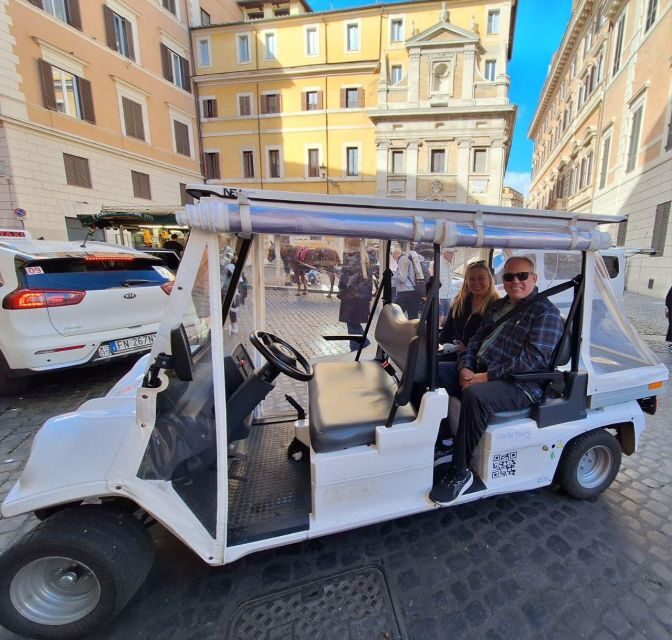
You begin at Piazzale delle Canestre (and if you’re within the golf-cart pickup range, you can be met at your hotel). From there, Piazza del Popolo hits fast.
This square used to be a main entrance for pilgrims heading toward the Vatican, and you can still feel that grand “arrival” vibe when you stand in the middle of it. Your guide points out the famous Egyptian obelisk, which is one of those Rome details that feels way more dramatic in person than in photos.
Your stop time is around 10 minutes—enough to get the key photos and orient yourself for the rest of the day. The good news: there’s no ticket cost for this stop. It’s a straightforward, high-impact opening.
Spanish Steps Photo Time Without the Full Sidewalk Fight
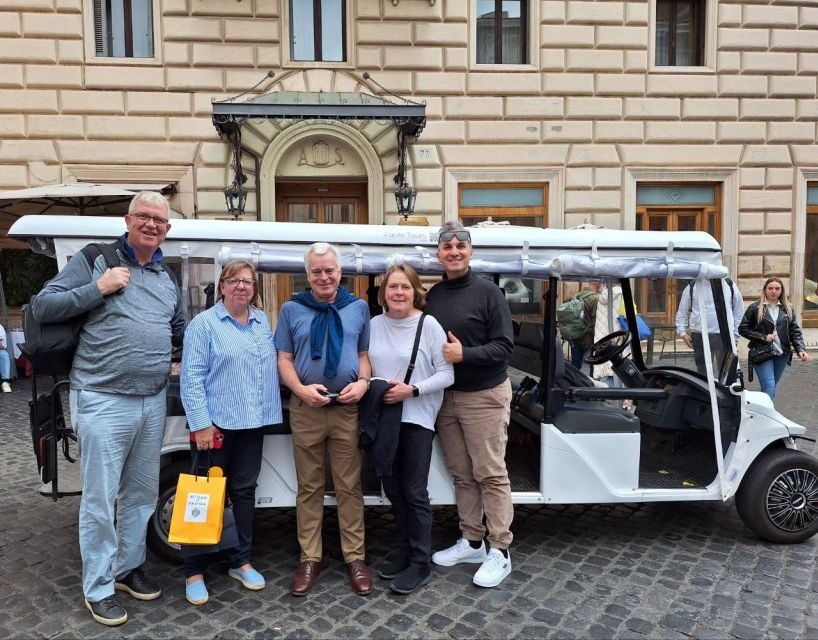
Next up: Piazza di Spagna and the Spanish Steps.
This is one of those places where Rome’s beauty and crowds collide. The benefit of the golf cart approach is that you’re not arriving exhausted and late—you’re starting the stop positioned for a quick look, a few photos, and a view that makes the effort worth it.
You get about 10 minutes here, which is perfect for a first pass. You’ll see the steps, take your shots, and get a city overview that makes it easier to understand where things are as you move on. Like the opening square, this stop doesn’t require an admission ticket.
If you’re the type who likes your “must-see” photos but still wants the day to feel relaxed, this is a good match.
Trevi Fountain and the 1–2 Minute Walk Problem (Plan It)

Trevi Fountain is the stop everyone thinks they’ll handle easily. The city has other ideas.
Trevi is in a pedestrian-only zone, and that means you’ll need to cover a short distance on foot—about 1–2 minutes. The tour openly flags this, and it also gives you an out: if you’d rather skip the walking requirement, you can ask to substitute a different stop that requires no walking.
You’ll get about 15 minutes at Trevi. That time is usually enough to soak in the scene, hear the background from your guide, and do the classic tradition: throw a coin to help ensure your return to Rome.
Admission is free for this stop, which helps keep the day’s cost predictable. The main thing to watch is your comfort level with a quick walk. If mobility is an issue, it’s worth deciding early whether you want Trevi or a no-walk replacement so you don’t end up frustrated at the exact wrong moment.






Piazza Navona: Four Rivers, Street Life, and Old Stadium Bones

Piazza Navona is one of my favorite squares in Rome because it has layers you can feel without needing a lecture.
Here, you’ll spend about 15 minutes, and you’ll see the Fountain of the Four Rivers by Bernini. You’ll also get the context that Navona sits on the ruins of the ancient Stadium of Domitian. That ancient-to-modern connection is part of why the place still works so well: it’s not just a pretty square, it’s a square with a memory.
There’s also a human layer—street artists and the kind of lively presence you can’t recreate elsewhere. Your guide will help you look at the details without turning your time here into a blur.
This stop doesn’t require admission tickets. It’s also a nice breather between larger monuments. You’ll likely leave Navona feeling like you got both the postcard and the meaning.
Pantheon Time: Dome Stares and a Ticket You’ll Need
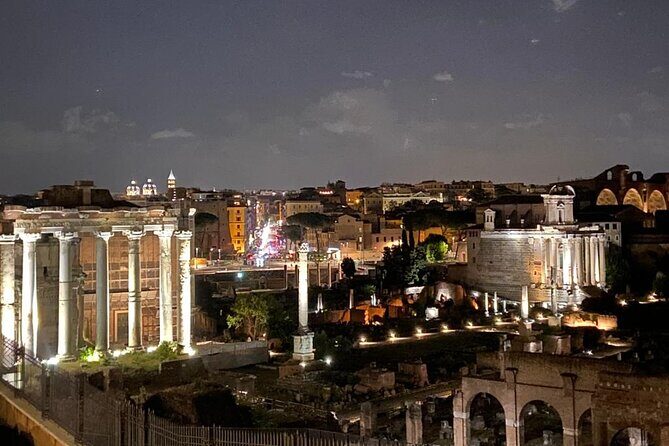
Then comes the Pantheon, and this is where the tour slows down a bit for a bigger payoff.
Your stop time here is about 30 minutes. That’s long enough to stand back, stare up at the massive dome, and take in why Roman engineers were basically showing off with style. It’s also described as still unmatched—one of those Rome statements that you can accept or argue with after you see it in person.
One important budget note: Pantheon admission is not included. So even though several other stops are free, you’ll want to plan for this ticket separately.
If you like architecture, or you want a moment that feels like a “Rome did this on purpose” experience, the Pantheon stop is the anchor of the day. If you don’t care much about monuments and mostly want quick photos, you may feel 30 minutes is more time than you need—but it’s still a stop worth factoring in if you want at least one true architectural highlight.
Largo di Torre Argentina: Julius Caesar, Then Cats

Finally, you’ll hit Largo di Torre Argentina.
This little square is packed with shock and weird charm at the same time. You’ll learn that this is where Julius Caesar was stabbed to death back in 44 BCE. And if that’s not enough, the square now houses Rome’s oldest cat colony.
You’ll spend about 20 minutes here. It’s a great counterpoint to the major “look up at the monument” stops because it puts the spotlight on a specific slice of history and a very Roman present-day twist.
Admission is free, and the stop tends to land well with almost everyone. It’s the kind of moment that feels different from the standard Rome checklist because it mixes ancient politics with something you can actually picture living in the streets.
How the Driver Commentary Makes It Feel Like More Than Transport
The vehicle does a lot of the heavy lifting. But the guide is what turns the ride into a real tour.
You’ll get driver commentary along the route, and you’re not just watching landmarks go by like a slideshow. The best versions of this tour feel like a flowing conversation about what you’re seeing, why it matters, and what to notice next.
Names you might hear associated with this experience include Antonio, Marco, Edoardo, Stefano, Roxanna, Ricardo, Jacob Yashar, Morris, and Carlo. Different guides, same idea: they connect the dots so the day feels less like a list and more like understanding how the city layers time.
Also, guides often adjust on the fly based on what you want. One example from past tours: someone asked for a substitution to make the route more convenient, and the guide accommodated it. That’s a big deal in Rome, where the “perfect plan” can get disrupted by the real plan: traffic, crowds, and street changes.
Getting In and Out: Pickup Range and the End Point
You start at Piazzale delle Canestre, 00197 Roma RM, and you return to the same meeting point at the end.
Hotel pickup is offered if you’re within the golf car range. That’s practical because it saves you from dealing with long pre-dinner walks and dragging bags around busy intersections.
If your hotel is on the edge of the pickup range, make sure you confirm where you’ll meet. Rome can be confusing fast, and a clear meeting spot saves time. The tour also notes mobile tickets, which usually helps you avoid print-paper chaos.
Value at $185.03: When This Is a Smart Spend
At $185.03 per person for about 3 hours, this isn’t a “cheap and cheerful” activity. It’s more like paying for control.
Here’s what you’re buying:
- Private time with only your group.
- Vehicle comfort for long stretches of city viewing.
- Multiple major stops with no admission fees at several of them.
- Driver storytelling and route management instead of just transportation.
You’ll still pay for the Pantheon admission ticket separately, but the rest of the included stops are free. That helps balance the overall cost, especially if you’d otherwise pay entry tickets at multiple sites.
This is also good value when you’re short on time and want the biggest visual hits with minimal effort. If you’re visiting Rome for a day, or you can’t walk long distances comfortably, the golf cart approach turns sightseeing into something you can actually enjoy.
I’ve seen this work particularly well for people with mobility limitations. The big win is that you can keep moving and still see a wide range of places without wearing yourself out before dinner.
What Can Go Wrong: Pace, Closures, and Extra Tickets
No Rome plan is perfect, and this one has a few things you should plan around.
First: the pace. With a 3-hour window, you’ll likely feel the stop times are intentionally efficient. That’s great if you want highlights. It can feel too fast if you’re the type who reads every plaque and wants to linger until the next hour.
Second: special street conditions. If a marathon happens, route access can change. That can shift what you reach and how long you spend where you expected.
Third: Trevi’s walking requirement. It’s short, but it’s still walking. If you don’t want that, ask about skipping Trevi and using a no-walk replacement early.
Fourth: Pantheon admission isn’t included. If you don’t expect that extra cost, it can feel like a surprise at the wrong time. Budget for the ticket and you’ll feel better about it.
Final Call: Should You Book This Private Golf-Cart Tour?
Book it if you want a fast, comfortable overview that still includes real guide commentary and multiple picture stops. It’s a strong choice for first-time visitors, people with limited time, and anyone who’d rather not grind through Rome’s sidewalks for every landmark.
Skip it—or at least ask about your preferences—if you want to slow down and spend long stretches inside major sites. Also consider whether you’re okay with the short walking piece at Trevi, or whether you’d rather swap it for something with no walking.
If you match the tour to your style, you’ll likely come away with that best kind of Rome souvenir: understanding where everything is, how the city layers its eras, and which sights you actually want to revisit on foot later.
FAQ
How long is the Rome golf-cart private tour?
It lasts about 3 hours.
Is this a private tour?
Yes. It’s private, and only your group participates.
Is hotel pickup available?
Pickup is offered for hotels within the golf car range. If not, you meet at Piazzale delle Canestre, 00197 Roma RM, Italy.
What stops are included, and are admissions free?
Several stops are free: Piazza del Popolo, Spanish Steps, Trevi Fountain, Piazza Navona, and Largo di Torre Argentina. Pantheon admission is not included.
Do I need to walk at Trevi Fountain?
Yes. Trevi is in a pedestrian-only area, and you’ll need to cover about 1–2 minutes on foot. You can request skipping Trevi and substituting a different stop that requires no walking.
What language is the tour offered in?
The tour is offered in English.
Can I cancel for a full refund?
You can cancel up to 24 hours in advance for a full refund.