A tiny Fiat. A lot of Rome.
This Rome Fiat 500 Vintage tour turns major sights into a fun drive, not a slog. I love the built-in photo moments—you stop at postcard-worthy places and the guide helps you get great angles for pictures and videos. I also love that you get a Roman local guide style of storytelling, with time for charming streets like Trastevere (plus viewpoints you may not find on your own).
The main tradeoff: each stop is short, so this is best for seeing and photographing highlights—not for long indoor visits or deep-dive museum time.
5 key things you should know before you book
- Photo-and-video focus: you get photos/videos as part of the experience, not just phone snapshots.
- Vintage car factor: a classic Fiat 500 makes the whole route feel like a movie scene.
- Icon sights without the ticket hassle: key viewpoints are listed as free admissions for stops.
- Trastevere time: you spend time in one of Rome’s most character-filled neighborhoods.
- Private tour energy: it’s for your group only, so the pace can stay personal.
In This Review
- The Vintage Fiat 500 Experience That Changes the Pace of Rome
- The Route Mix: Big Landmarks Plus “How Did I Miss This?”
- Getting to the Meeting Point: Do This First
- Stop 1: Circus Maximus for Ancient Racing Stadium Vibes
- Baths of Caracalla: A Brief Look at Rome’s Mega-Bath Culture
- Stop 2: Piramide Cestia for a Wow Monument You Might Miss
- Stop 3: Fontana dell’Acqua Paola and the Fountain-Spotting Game
- Stop 4: Terrazza del Gianicolo for View Time (The Photo Payoff)
- Stop 5: Colosseum Area for a Real-World First Look
- Stop 6: Arco Di Druso Near the Appian Way Route
- Trastevere Streets and the Local Flavor Moment
- Included Gelato or Italian Breakfast: Small Perk, Real Value
- Photos and Videos: The Part People Actually Remember
- Price and Value: Why $155-ish Can Make Sense
- Who This Tour Fits Best (And Who Should Pick Something Else)
- Practical Tips to Get the Most From Your Ride
- Should You Book the Rome Fiat 500 Vintage Tour?
- FAQ
- Is hotel pickup included?
- How long is the Rome Fiat 500 Vintage tour?
- Is admission included for the stops?
- What’s included in the price?
- What language is the tour offered in?
- What happens if the weather is bad?
The Vintage Fiat 500 Experience That Changes the Pace of Rome
Rome can feel like two different cities: the postcard monuments and the working, everyday streets around them. This tour smartly connects both. The vintage Fiat 500 isn’t just transportation—it acts like a moving welcome sign. You get to see Rome’s layout in motion: narrow lanes, quick turns, and that slow, old-city rhythm where you notice textures and street life more than you notice traffic lights.
And yes, the car draws attention. In the best way. You’ll feel like you’re participating in a parade as you roll through neighborhoods, with people turning their heads and smiling. It’s a fun mental shift from “I’m touring” to “I’m actually in Rome.”
The Route Mix: Big Landmarks Plus “How Did I Miss This?”
A big reason people love this tour is the blend. You hit recognizable stops like the Colosseum area, but you don’t spend the entire time standing in one grid of crowds. The route includes ancient sites, viewpoints, and fountain scenery, then flows into the mood of real neighborhoods.
You also get a guide who pays attention to what you want—photos, short explanations, good timing, and the right places to pause. In particular, guides like Luca and Matteo are praised for turning stops into memorable moments, including lots of time for pictures and friendly, upbeat explanations.
You can also read our reviews of more tours and experiences in Rome.



Getting to the Meeting Point: Do This First
No hotel pickup is included. You’ll meet at Via del Circo Massimo, 21, 00153 Roma RM and the tour ends back at the same place. That’s not a dealbreaker, but it does mean you should plan your day around being on time and getting yourself there.
Good news: it’s listed as near public transportation. If you’re already exploring central Rome, this meeting point is workable. If you’re staying far out, give yourself extra buffer time so you’re not sprinting to meet a small vintage car in narrow streets.
Stop 1: Circus Maximus for Ancient Racing Stadium Vibes

The tour starts at Circus Maximus (Circo Massimo). This was an ancient chariot-racing stadium and a major entertainment hub. Today it’s more open space than enclosed arena, which makes it a great first stop: you can absorb the scale without immediately dealing with ticket lines or heavy barriers.
You’ll use this time to get your bearings. It also works as a warm-up because the guide can explain how Rome’s ancient public spaces weren’t quiet—people gathered here for events the way we’d gather for big games today.
Baths of Caracalla: A Brief Look at Rome’s Mega-Bath Culture

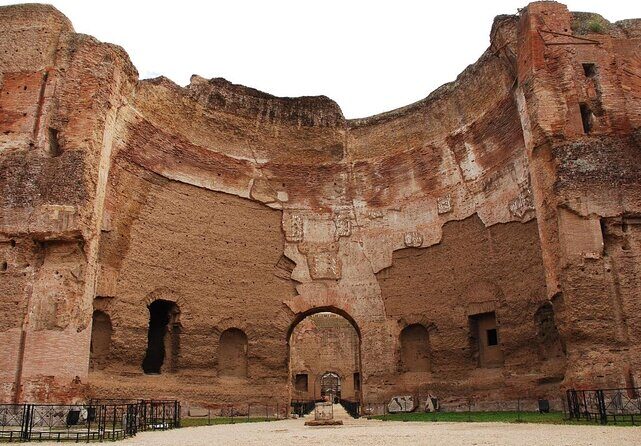
Right after Circus Maximus, you’ll get a chance to see the Baths of Caracalla area. These thermae (public baths) were Rome’s second largest after Diocletian’s. Even if you don’t go deep into the details, the idea matters: Roman bath complexes were social centers, not just places to clean up.
Because the tour time is limited, you shouldn’t expect a museum-style tour of the entire site. Think of it as a visual snapshot that helps you understand why Romans built these huge places in the first place: for gathering, conversation, and status.
Stop 2: Piramide Cestia for a Wow Monument You Might Miss

Next up is the Piramide Cestia (Pyramid of Cestius), an ancient tomb with an Egyptian-style look. It’s near Porta San Paolo and the Protestant Cemetery area. This stop is surprisingly fun because it’s so different from what most people expect in Rome.
The pyramid’s shape makes it an easy photo subject. And it’s also a good reminder that Rome wasn’t isolated—its art and architecture pulled influences from across the Mediterranean world.



Stop 3: Fontana dell’Acqua Paola and the Fountain-Spotting Game
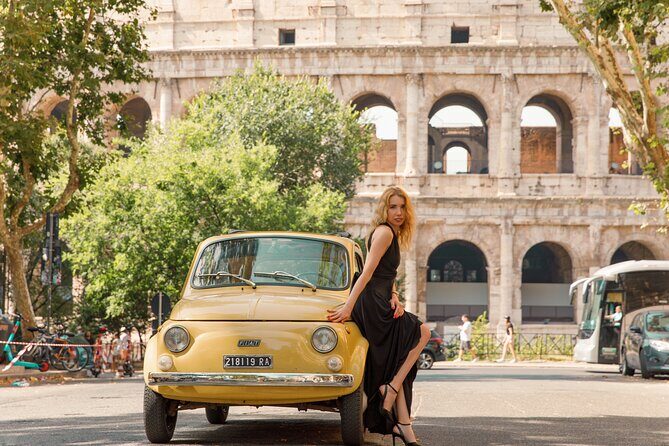
Then comes Fontana dell’Acqua Paola, also known as Il Fontanone. This monumental fountain sits on Janiculum Hill near the church of San Pietro in Montorio.
Fountains in Rome aren’t just decoration. They’re tied to water systems, engineering pride, and the way Rome liked to announce power in public space. This stop is a great one to slow down for a minute, take photos, and let the guide’s explanation connect the visuals to the bigger city story.
Stop 4: Terrazza del Gianicolo for View Time (The Photo Payoff)
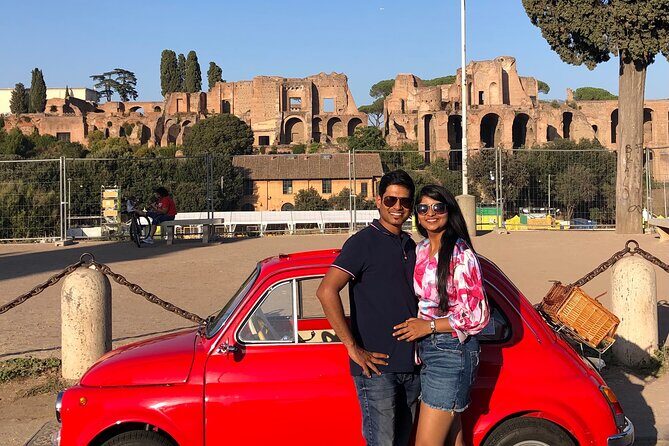
If you care about views—and you will on this tour—this is one of the best moments. You’ll head to Terrazza del Gianicolo, with time to take in the view and get photos in the open air. Even with the short time listed, the goal is clear: a quick refill of perspective after temples and monuments.
The Janiculum Hill area is a classic “Rome from above” moment. It’s also a good spot for a calm pause, especially if you’ve been walking most of the day already.
Stop 5: Colosseum Area for a Real-World First Look
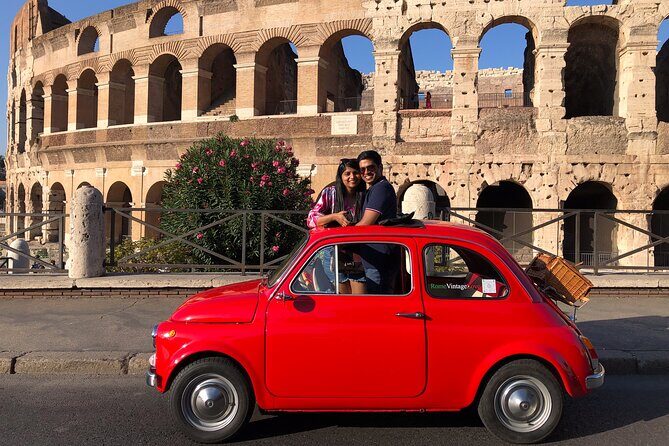
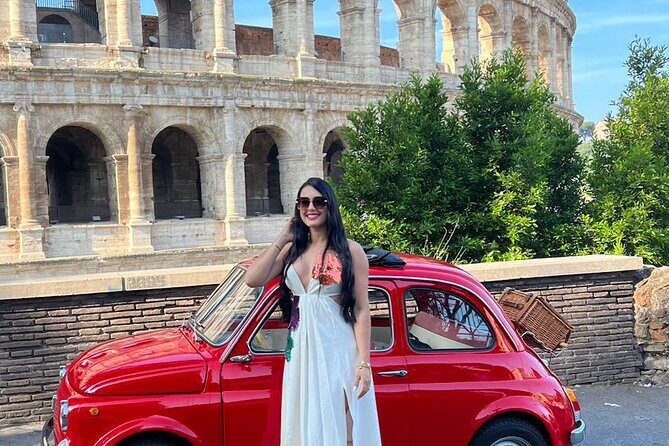
You’ll spend time at the Colosseum area (listed as about 30 minutes, and the stop is marked free). This matters: you get to see the Colosseum as the center of the city’s ancient story without the pressure of ticket entry during a car tour.
Even if you’ve seen photos of the Colosseum for years, seeing it in person hits different. Here you’ll likely focus on the big silhouette and surrounding views rather than a long interior visit. If you want the in-depth interior experience, you can do that on a separate day with a dedicated Colosseum ticket—but this stop is excellent for setting your mental map.
Stop 6: Arco Di Druso Near the Appian Way Route
Near the end, you’ll pass the Arco Di Druso. This ancient arch sits close to the first mile of the Appian Way and by Porta San Sebastiano. Arches like this are the kind of Rome detail that rewards slow attention.
Even with a short stop (about 15 minutes listed), it gives you something different than the biggest crowd magnets. It also reinforces how Rome’s monuments connect: roads, gates, and arches line up like a framework for the whole city.
Trastevere Streets and the Local Flavor Moment
One of the biggest reasons this tour feels special is the neighborhood time in Trastevere, described as colorful and bohemian with strong working-class roots. You’re not just driving past it—you’re getting that slow walk vibe, the kind that makes you stop for one more photo or coffee.
This is also where the tour tends to become more personal. A good guide steers you toward streets and corners that feel like real life, not a theme park. In the best versions of this tour, you also get quick recommendations for where to eat after you’re done.
Included Gelato or Italian Breakfast: Small Perk, Real Value
The tour includes gelato or an Italian breakfast. That’s not just a nice extra. It’s part of the value because it saves you from figuring it out yourself mid-day—and it keeps the tour from feeling like nonstop sightseeing with no payoff.
Gelato stops in Rome can turn into a lot of guesswork. Having a guide point you to a place in the neighborhood you’re visiting is an easy win. If you like food breaks (and you should), this inclusion makes the timing feel more relaxed.
Photos and Videos: The Part People Actually Remember
This tour includes photos and videos, and the guide’s photography skills are a major theme in the feedback. Guides like Luca are praised for taking lots of pictures, using a “right angles” approach, and even adding touches like music during the experience.
There’s also a practical element: you’re not left standing there asking strangers to take photos while you try to smile. The guide handles the process, so you end up with better results—and more photos where you’re actually in them.
Some guides have even been noted for getting photos and videos to guests quickly after the tour (one couple mentioned photos/video arriving on Dropbox soon after). You shouldn’t assume exact delivery times, but it’s a sign that photography is treated seriously here.
Price and Value: Why $155-ish Can Make Sense
At $155.68 per person for about 2 hours 30 minutes, this is not the cheapest way to see Rome. But it’s also not priced like a simple “sit on a bus” tour.
You’re paying for:
- a private group experience
- a vintage Fiat 500 ride
- stops at multiple major sights and viewpoints
- photos/videos included
- gelato or breakfast included
For a short, highlight-driven day, that bundle can feel like good value—especially if you’d otherwise spend extra time (and money) on separate picture guides, car rentals, and food stops.
Who This Tour Fits Best (And Who Should Pick Something Else)
This tour fits best if you want:
- iconic Rome views without spending the whole day in lines
- fun photos as a priority (not an afterthought)
- a personal pace with a local-style guide
- a neighborhood feeling, especially with Trastevere time
It’s less ideal if you want long museum hours, deep inside-the-site explanations, or a day built around tickets. The stops are brief by design, so treat it like a “best of Rome from the street” snapshot.
Practical Tips to Get the Most From Your Ride
A few things will make your experience smoother:
- Wear shoes you can handle on stone streets. Rome doesn’t care if you’re sitting in a tiny car.
- Plan for a fast pace between photo stops. The tour is structured, so stay close to the guide.
- Bring sunglasses and water if it’s hot. One guide recommendation highlighted starting early to beat heat and traffic, which is smart advice in summer.
- Expect good weather to matter. This experience requires good weather, and if it’s canceled due to poor conditions you’ll be offered a different date or a full refund.
Should You Book the Rome Fiat 500 Vintage Tour?
If you want a memorable, picture-friendly way to cover major highlights plus the feel of Rome’s neighborhoods, I’d book it. The included Fiat 500 ride, photo/video attention, Trastevere time, and gelato or breakfast add up quickly, and the guides described—especially Luca and Matteo—clearly focus on making the experience personal.
Don’t book it if your top goal is long indoor sightseeing or you dislike short stops. In that case, pair Rome’s big ticket sights with a separate longer walking tour or Colosseum-specific visit, and use this car tour as your fun “highlights” day.
FAQ
Is hotel pickup included?
No. You meet at Via del Circo Massimo, 21, 00153 Roma RM, Italy, and the activity ends back at the meeting point.
How long is the Rome Fiat 500 Vintage tour?
It’s listed at about 2 hours 30 minutes.
Is admission included for the stops?
The stops listed (such as Circus Maximus, Piramide Cestia, Fontana dell’Acqua Paola, Terrazza del Gianicolo, Colosseum, and Arco Di Druso) are marked as free admission ticket-free.
What’s included in the price?
The tour includes a Fiat 500 ride, photos and videos, and gelato or an Italian breakfast. A mobile ticket is also provided.
What language is the tour offered in?
The tour is offered in English.
What happens if the weather is bad?
The experience requires good weather. If it’s canceled due to poor weather, you’ll be offered a different date or a full refund.