REVIEW · CASTEL SANTANGELO TOURS
Rome: Experience the Magic of Castel Sant’Angelo
Book on GetYourGuide →Operated by Italy Wonders · Bookable on GetYourGuide
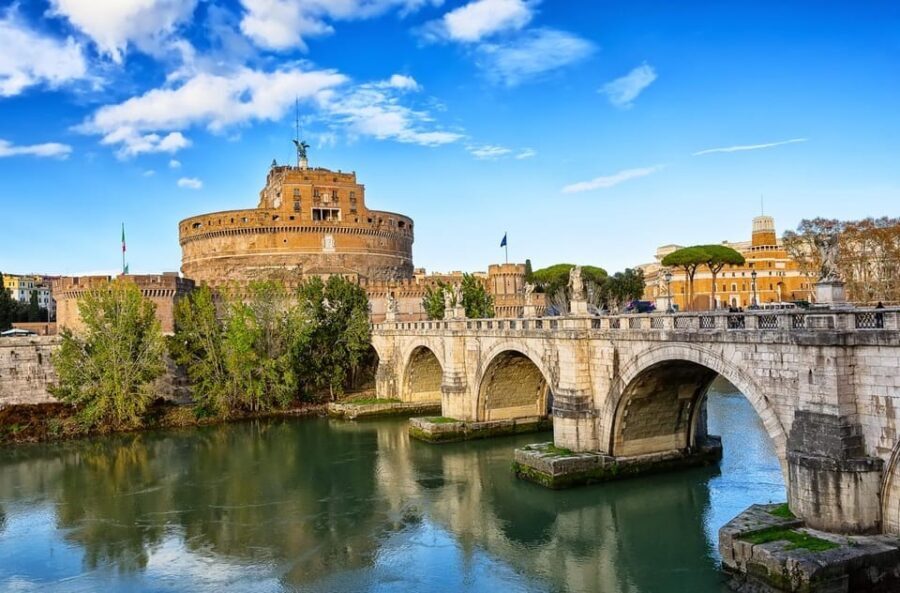
Castel Sant’Angelo feels like a story you can walk through. This visit starts with an imperial tomb and ends high above Rome, where the walls turn into a viewpoint over the Vatican area.
I like the way the Papal Rooms and Spiral Staircase make the whole place easy to follow, even when you’re exploring on your own. I also love finishing at Angel’s Terrace for real 360° views, because it’s the kind of stop that instantly makes the castle feel worth the climb.
One thing to consider: there’s no live guide included. If you want a person to explain the big historical picture as you go, the optional audioguide is the main support, and it may feel more room-focused than lecture-style.
In This Review
- Key things that make this visit work
- Castel Sant’Angelo in plain terms: what you’re really paying for
- From mausoleum to prison-fortress: the story you’ll walk through
- Papal Rooms: the part you’ll want to slow down for
- Spiral Staircase: where the visit becomes physical (and scenic)
- Hall of Emperor Hadrian’s ashes: the emotional pivot
- Angel’s Terrace: the payoff with 360° Rome views
- How the priority tickets and audioguide actually shape your 2 hours
- Location advantage: why Castel Sant’Angelo fits so well near the Vatican
- What to know before you go (so entry doesn’t become a problem)
- Pricing and value: is $39 fair for what you get?
- Who this visit suits best (and who should pick a different style)
- Should you book this Castel Sant’Angelo experience?
- FAQ
- How long is the Castel Sant’Angelo visit?
- Is a live guide included?
- What’s included with the ticket?
- Do I need my own headphones?
- What languages are available for the audio guide?
- What ID do I need for entry?
- Can I cancel my booking?
Key things that make this visit work
- Priority tickets mean less time waiting and more time exploring.
- Hadrian to the Popes: you’ll see how one building changes purpose over centuries.
- Angel’s Terrace 360° views let you orient yourself fast in Rome.
- Audio guide app gives you pace control and multiple languages.
- Nominative tickets + ID match are required, so your booking names matter.
- No live guide means you’ll rely on the audio app for context.
Castel Sant’Angelo in plain terms: what you’re really paying for
For $39 per person, you’re buying a smooth entry and a self-paced route through a heavy-hitter site in the Vatican neighborhood. The ticket setup includes pre-reserved Priority Tickets, and if you choose it, you get an audioguide app. In other words, this isn’t a hands-on guided tour. It’s a well-supported way to tour a famous fortress on your own schedule.
That format can be a win. Rome moves fast. If you’re the kind of person who likes to stop, look longer, and cut out early when your feet are done, this kind of visit makes sense. You also get a strong “route arc,” from underground-emperor vibes up to a sky-level viewpoint.
You can also read our reviews of more tours and experiences in Rome.



From mausoleum to prison-fortress: the story you’ll walk through

Castel Sant’Angelo began as Emperor Hadrian’s mausoleum. Later it became a papal fortress, a prison, and a refuge for popes. You’ll feel this shift in the building itself—thicker walls, defensive design, and the sense that people used it to protect important lives and secrets.
A key detail worth remembering while you walk: it’s connected to the Vatican by a secret passage. Even if you don’t see the passage itself up close, that connection explains why the castle mattered so much and why it was worth turning from a final resting place into a power-and-safety hub.
If you like history that’s tied to architecture, this place delivers. It’s not just rooms and statues. It’s a building that repeatedly got repurposed, and you can sense those changes as you move.
Papal Rooms: the part you’ll want to slow down for

The route includes the Papal Rooms, and this is where you’ll start noticing the castle’s “court” side. Think of it as the stage where the papacy left its mark—settings meant for authority, administration, and day-to-day life within a fortress.
When you’re touring on your own, these rooms are ideal for using your audio guide thoughtfully. Instead of rushing from one wall to the next, pause and let the audioguide give you a reason to care about what you’re seeing.
The big drawback for this style of visit? If you’re expecting a live guide to connect everything with a single clear narrative, you might wish for more of that. Still, for many people, the tradeoff is worth it: you control the pace, and you can spend extra time where your curiosity pulls you in.
Spiral Staircase: where the visit becomes physical (and scenic)
You’ll also see the Spiral Staircase. This isn’t just a passage—it’s part of the experience design. Climbing in tight turns makes you look around more, and it naturally slows your movement, which helps when you’re trying to take in multiple sections in about two hours.
There’s also something practical here. In a self-paced visit, you need “built-in structure.” A spiral staircase does that. You don’t have to constantly decide what’s next; you just follow the route upward and inward.
If you’re someone who gets tired easily, plan your energy. The route is manageable, but it’s still a climb in a stone structure.
Hall of Emperor Hadrian’s ashes: the emotional pivot
The visit includes the Hall of Emperor Hadrian’s Ashes. This is a major pivot point in the story: from papal roles and fortress life back to the imperial origin that started it all.
Even if you’re not the type to memorize dates, this hall helps you understand why the building is more than a defensive tower. It was created for one emperor, and later it became something else for powerful people who needed protection.
I’d treat this stop as your “reframe” moment. After this, the castle’s papal purpose makes more sense because you know what it replaced.



Angel’s Terrace: the payoff with 360° Rome views
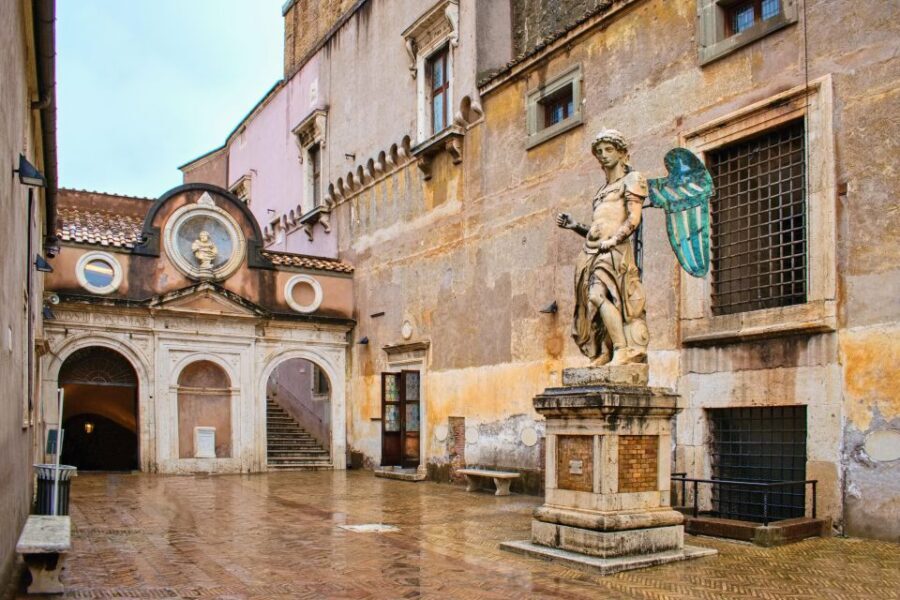
Then comes the high point: Angel’s Terrace with 360° views of Rome. This is the part that turns a historical visit into a Rome orientation experience. From up there, you can often pick out the feeling of the city—where the Vatican sits in relation to everything else, and how the river bends the city’s shape.
This is also where you’ll feel why the castle is such a good stop for first-timers. You’re not just looking at Rome. You’re using the castle as a way to understand it.
Tip for your timing: don’t sprint to the terrace. If you’re only seeing it from the corner of your eye, you’re missing the payoff. Take a few minutes to circle your attention—walk a short loop, scan the skyline, and then come back to the view you like best.
How the priority tickets and audioguide actually shape your 2 hours
The experience is listed as 2 hours, and that time usually works best when you treat it as a “steady cruise,” not a race. Your visit includes priority entry, which is a big deal at major Roman sites where lines and timed access can turn into frustration.
With the audioguide app option, you get guidance through the Papal Rooms, the staircase route, and the terrace area. You choose the pacing, and you’re not tied to a group’s speed. That freedom is a real quality-of-life feature in Rome.
A practical note: you’ll need a smartphone and your own headphones. Also, you’ll want the app downloaded before you start, using Wi‑Fi at the point where staff tell you to do it. Once downloaded, it works without Wi‑Fi, which is helpful once you’re inside.
One more thing to keep in mind: this is not a live guide. If you’re the type who likes a human to answer quick questions or explain symbolism on the spot, you may feel the limitation. If you’re okay with audio guidance, and you like exploring at your pace, the setup makes sense.
Location advantage: why Castel Sant’Angelo fits so well near the Vatican

This visit is described as being right next to the Vatican and the city center. That location matters because you’re pairing it with other walks you’ll likely already want to do—so the castle becomes part of your broader Rome loop rather than a separate logistical mission.
If your days are packed, being near major sights saves you time and stress. You can build a route that flows: Vatican-area energy, then a fortress climb, then terrace views, then back down into the streets.
What to know before you go (so entry doesn’t become a problem)
I’d treat the entry rules as part of the trip, not paperwork. Here’s what you must plan for:
- You need a passport or ID card, and the name you book with has to match your ID. Entry without the correct ID matching the booking name isn’t guaranteed.
- The ticket is nominative, so include full names for everyone in your group.
- For Fast Track Tickets, they must be booked at least one day before your visit.
- You’ll need accurate contact info because the staff send entrance tickets and the audioguide (if selected) by SMS, email, or WhatsApp.
- You’re expected to use a smartphone with your own headphones for the audio.
Inside the castle, you also should plan around restrictions: no pets, no weapons or sharp objects, no baby strollers, and no luggage or large bags. If you show up with a bulky bag, it can slow you down fast.
If you’re booking close to your travel dates, I’d also double-check your download plan for the audioguide. Downloading with Wi‑Fi first avoids the common problem of arriving ready to go, only to discover your phone can’t play the audio.
Pricing and value: is $39 fair for what you get?
At $39 per person, you’re not paying for a live guide. You’re paying for priority access and a self-paced route through the big sections: Papal Rooms, the Spiral Staircase, Hadrian’s Ashes, and Angel’s Terrace. For many people, that’s exactly the value equation they want.
Here’s how I’d judge it:
- If you’ll spend time on the terrace and actually enjoy the views, the price feels justified because that stop is your visual reward.
- If you like structure but not a group schedule, the priority tickets plus audio app is a strong combo.
- If you wanted a full human-led history lecture, you may feel like you paid for access rather than storytelling.
There are also hints in the feedback that the audioguide expectation matters. Some people want more history framing; others are happy with the room-by-room guidance. If you’re in the first group, I’d plan to read a short intro about the mausoleum-to-fortress transformation before you go, so the audio has a bigger context to land in.
Who this visit suits best (and who should pick a different style)
This is a good fit if you:
- Want priority entry and less waiting.
- Prefer a self-paced visit with an app-based audioguide in multiple languages.
- Enjoy viewpoint rewards like 360° terrace panoramas.
- Are pairing the castle with the Vatican area and want something that fits into a two-hour block.
You might want a different option if you:
- Strongly prefer a live guide for history and Q&A.
- Know you won’t use a smartphone or headphones for audio.
- Need to bring large bags or baby strollers (restrictions apply).
Should you book this Castel Sant’Angelo experience?
Yes—if you’re comfortable touring on your own and you’re motivated by the terrace views and the building’s shift from Hadrian’s tomb to papal fortress. The priority tickets reduce friction, and the audio option gives you enough structure to understand what you’re seeing without being tethered to a group.
Before you book, do two quick checks: confirm everyone’s names match IDs, and decide whether you’ll really use the audioguide app. If you’re going to rely on audio, downloading ahead and packing your own headphones will make the experience run smoothly.
FAQ
How long is the Castel Sant’Angelo visit?
The duration is listed as 2 hours. Check availability for specific starting times.
Is a live guide included?
No. A live guide is not included. If you want guidance, you can select the optional audio guide app.
What’s included with the ticket?
Included items are pre-reserved Priority Tickets. If you choose the audio option, the Audioguide APP is included.
Do I need my own headphones?
Yes. You’ll need a smartphone and your own headphones to use the audioguide.
What languages are available for the audio guide?
The audio guide option lists English, Spanish, French, Italian, German, and Chinese.
What ID do I need for entry?
You should bring a passport or ID card, and your valid ID must match the booking name for entry.
Can I cancel my booking?
Yes. Free cancellation is available up to 24 hours in advance for a full refund.