REVIEW · COLOSSEUM TOURS
Rome: Colosseum, Roman Forum & Palatine Hill Guided Tour
Book on GetYourGuide →Operated by Carpe Diem Tours · Bookable on GetYourGuide
Rome is louder than you think.
The big win here is arena-floor access plus skip-the-wait timed entry, so you spend more time looking at Rome and less time standing in lines. I also like the small-group feel with headsets, which makes it easier to hear your guide even when the crowd noise spikes. One thing to consider: finding your guide at a busy meeting point can take patience, so arrive early and don’t cut it close.
If you want the highlights of Ancient Rome in one efficient stretch, this guided loop hits the right notes: Colosseum engineering and gladiator stories, Palatine Hill’s imperial panoramas, and the Forum’s political pulse—all with a guide who keeps the whole visit moving.
In This Review
- Key Points You’ll Care About
- Planning Your Visit: Is $93 a Smart Use of Time?
- Meeting Point at the Arch of Constantine: Find the Yellow Flag Early
- Entering the Colosseum Arena Floor: The View From Where History Happens
- Palatine Hill: Where Imperial Homes Make the View Make Sense
- The Roman Forum: Turning Ruins Into a Working City
- Guides Who Actually Keep You Engaged
- Price and Logistics: What You’re Paying For (and What You Can Skip)
- Best Time to Go: Daylight, Crowd Control, and Night Options
- Who This Tour Fits Best
- Should You Book This Colosseum, Roman Forum & Palatine Hill Tour?
- FAQ
- What does the tour include?
- How long is the tour?
- Where do I meet the guide?
- What languages are the guides?
- Does the tour have priority or timed entry?
- Do I get access to the Colosseum arena floor?
- Where does the tour end?
- What should I bring?
- How early should I arrive at the meeting point?
- Is free cancellation available?
- Will the tour always start at the Colosseum?
Key Points You’ll Care About
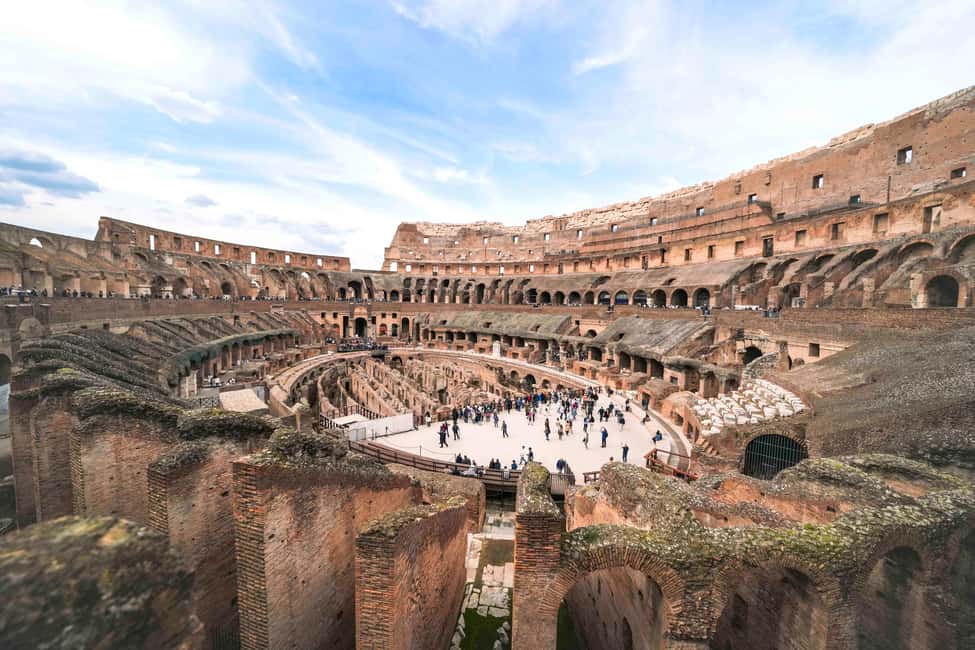
- Arena-floor access gives you a closer look at the Colosseum than the usual viewing routes
- Timed entry helps you get in faster at multiple stops, not just one
- Headsets mean you can actually follow the explanations while crowds swirl around you
- Palatine Hill viewpoints show why people kept building mansions up there
- Roman Forum walking context helps you make sense of ruins that can look like random stone without guidance
- English and Spanish guides keep the tour clear without feeling watered down
Planning Your Visit: Is $93 a Smart Use of Time?
At $93 per person for about 1.5 to 3 hours, you’re paying for three things that matter in Rome: timed entry, a guided interpretation, and the best-access portion of the Colosseum. Without a tour, you can absolutely visit these sites on your own—but you’ll likely burn time in ticket lines and lose the “what am I looking at?” factor, especially in the Forum and Palatine Hill.
This kind of tour is best viewed as a time-saver with a payoff. Timed entry is the obvious part, but the real value is that you’re also getting a guided path that connects the dots between sites. When you stand on the Colosseum floor, then look out over the Forum, it’s easier to understand how Rome’s power worked day-to-day and how spectacle reinforced authority.
One practical note: the Colosseum is huge, the Forum is wide, and Palatine Hill is spread out. So that “1.5 to 3 hours” range matters. Your experience will feel more relaxed on the shorter end, and more detailed on the longer end—if your start time and ticket timing allow it.
You can also read our reviews of more guided tours in Rome



Meeting Point at the Arch of Constantine: Find the Yellow Flag Early
You meet in front of the Arch of Constantine, and your guide will be holding a yellow Carpe Diem Tours flag or sign. The recommendation is simple: arrive at least 10 minutes early. Late arrivals can’t be refunded, which tells you how strict the timing is.
Why does this matter? Because this area gets crowded fast. Even with clear signage, you’ll want a minute to locate your group before the guide starts moving. If you’re traveling with kids or anyone who tends to take a long time to get ready, build in extra cushion. You’ll enjoy the tour more when you start calm instead of stressed.
Also keep an ID or passport handy. The tour info specifically flags bringing valid identification, especially if minors are in your group.
Entering the Colosseum Arena Floor: The View From Where History Happens
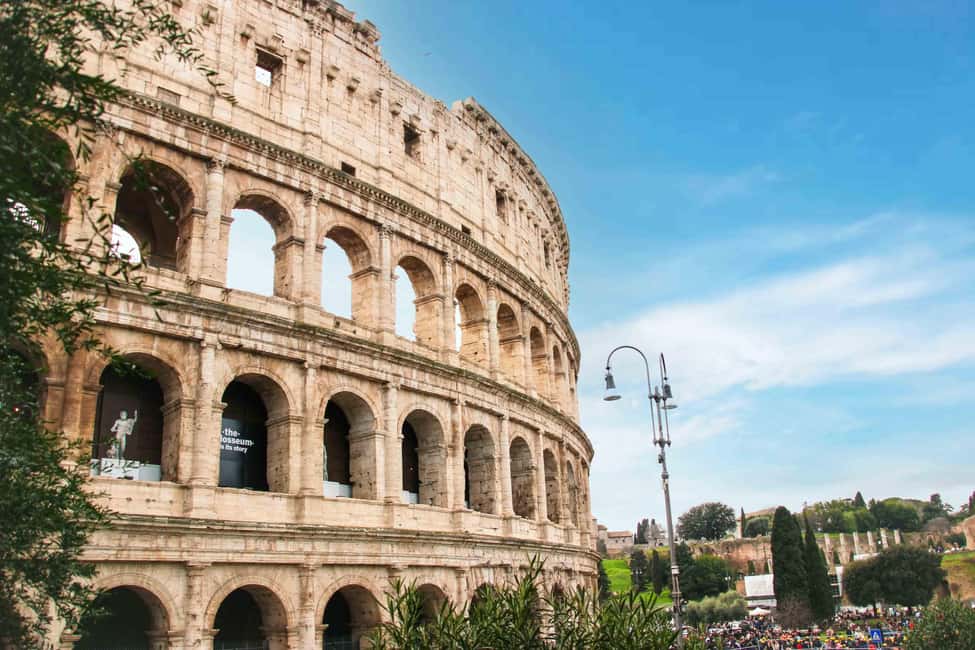
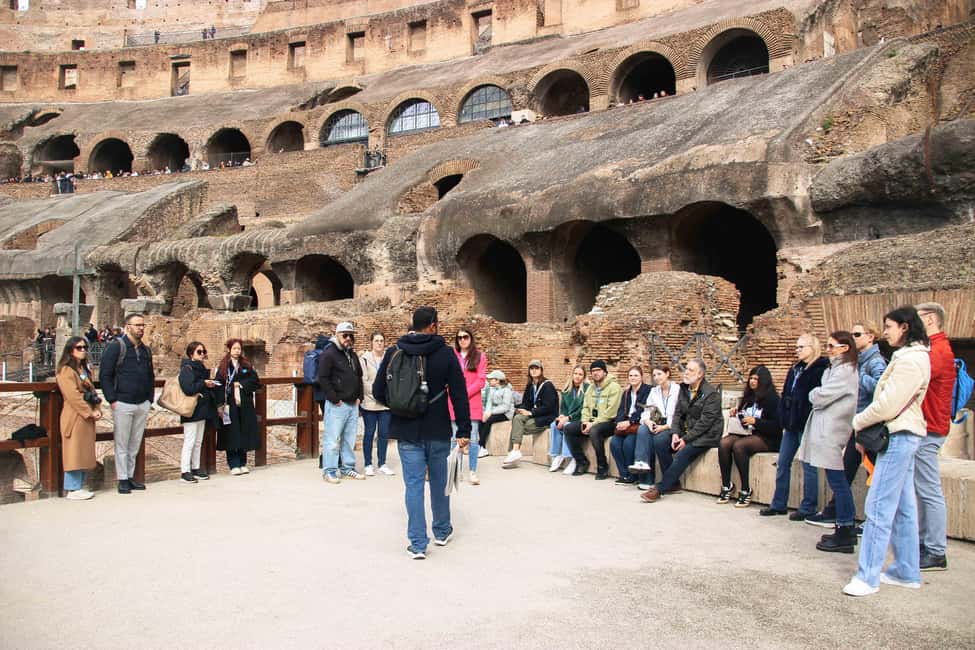
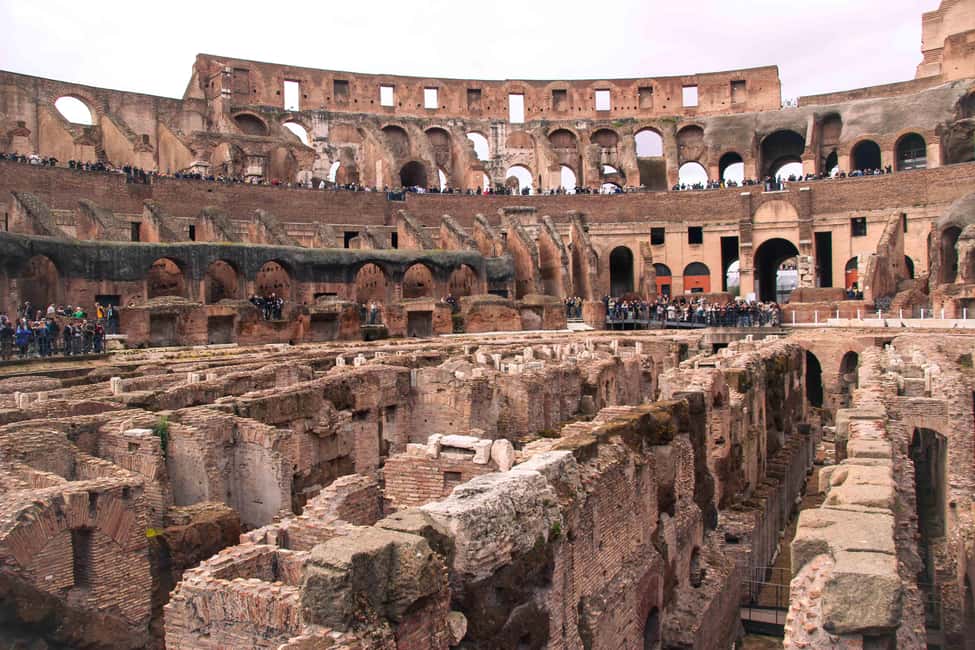
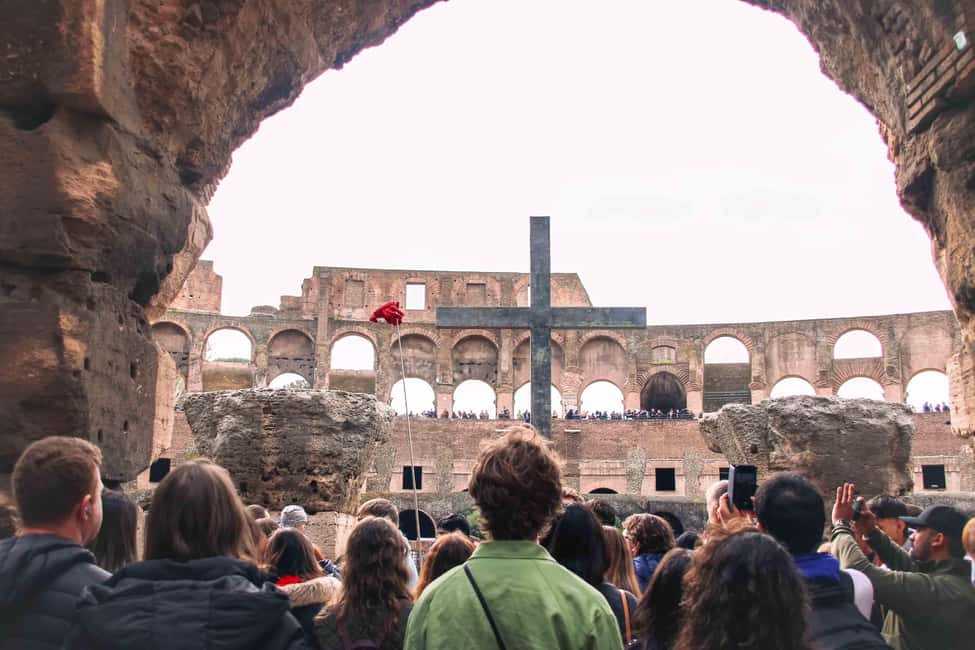
The Colosseum visit is built around the one experience most people don’t get: stepping onto the arena floor. That changes your perspective immediately. From the stands, the building looks like an impressive ruin. From the arena, you feel the scale differently—like you’re inside the mechanism, not just outside the museum.
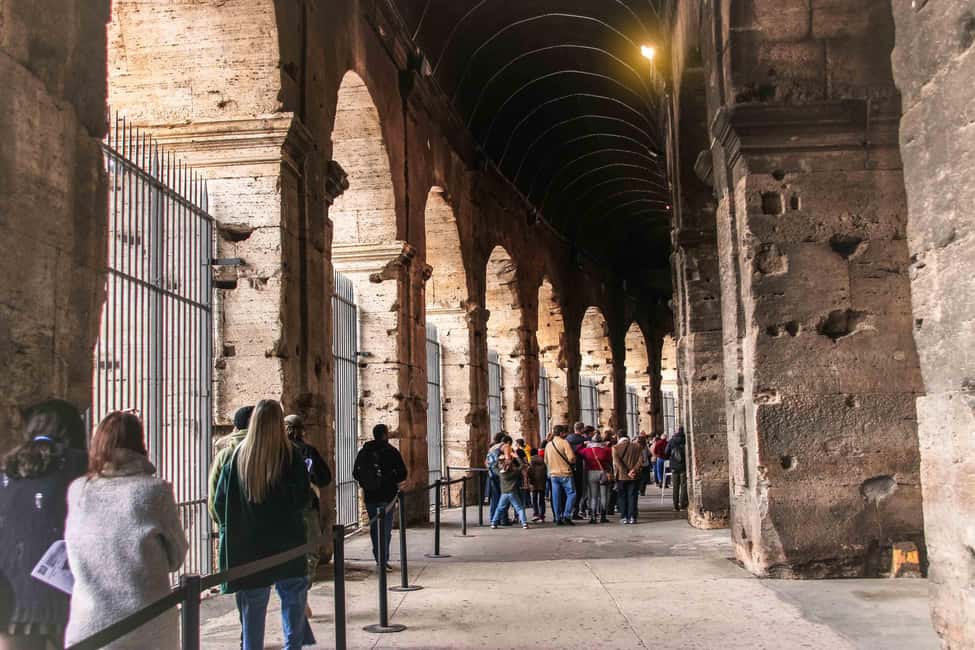
The tour includes timed-entry tickets and priority access to the Colosseum. That means you’re more likely to avoid the slow shuffle that happens when you’re just trying to get tickets and enter with everyone else. Less waiting makes a huge difference here because the Colosseum area keeps filling up.
Once inside, your guide turns the Colosseum from stone into a story. You’ll hear about emperors, gladiators, and Roman life, and you’ll get engineering context you can’t easily pick up from a quick self-guided walk. The guide isn’t just pointing at plaques; they’re connecting details to why the arena was designed the way it was.
And yes, your feet will be on the same kind of ground gladiators once faced—at least in the sense that you’re in the arena space the visitors rarely reach. You also get time for views from inside the Colosseum that many people miss because they don’t go to the right spots or they’re too busy managing crowds and photos.
Practical tip: if you care about photos, wear shoes you can walk in comfortably. You may be moving through different levels and angles to get the best views and to stay with the group.
Palatine Hill: Where Imperial Homes Make the View Make Sense
After the arena, you’ll head to Palatine Hill, which is famous as the legendary birthplace of Rome and also the place where Roman elites built their most impressive homes. Even if you’re not a hardcore architecture person, Palatine has a “now I get it” quality.
What makes it work on a guided tour is that ruins are easier to understand when someone gives them a role. On Palatine Hill, your guide explains why the location mattered—power, prestige, and control of sightlines. And the sweeping views over the city help you connect the dots between what you’re standing on and how Rome functioned as a real landscape, not just a collection of monuments.
You’ll also get a clearer sense of the imperial scale. Palatine isn’t just pretty scenery; it’s the physical reminder that Rome’s top families were building political statements into daily life.
One consideration: Palatine Hill can feel more spread out than you expect. If you prefer very short walking segments, ask the guide how much ground you’ll cover and pace yourself. With a guide and headsets, you’ll usually find the route manageable—but you’ll still want comfortable footwear.
The Roman Forum: Turning Ruins Into a Working City
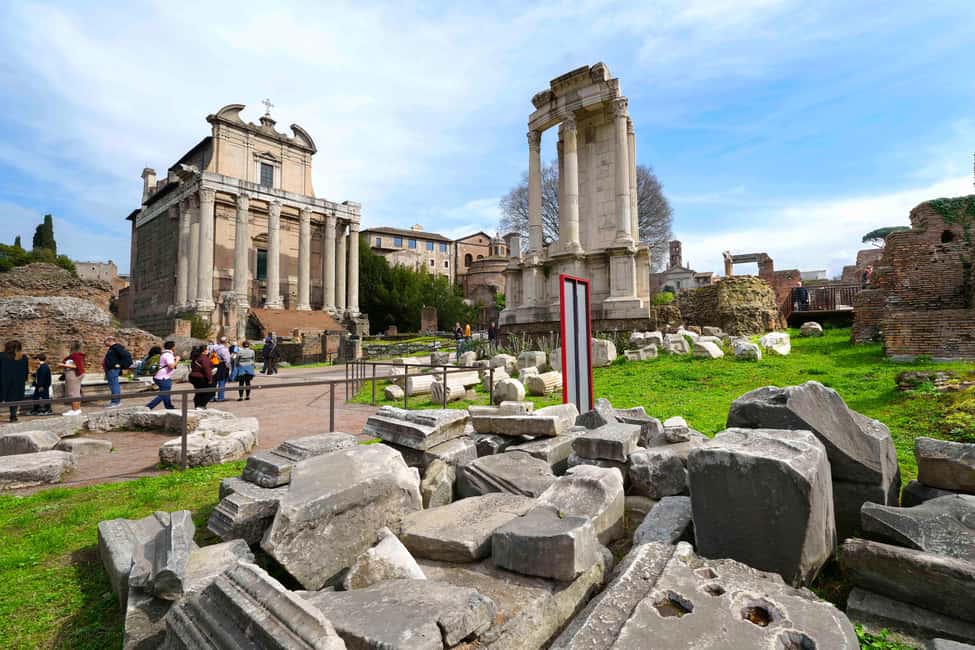
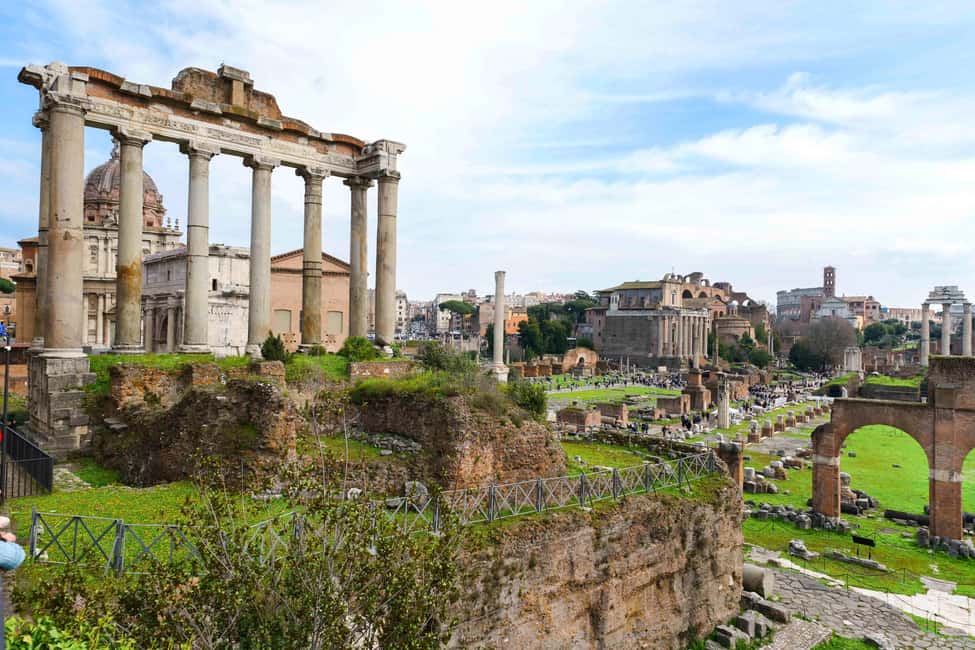
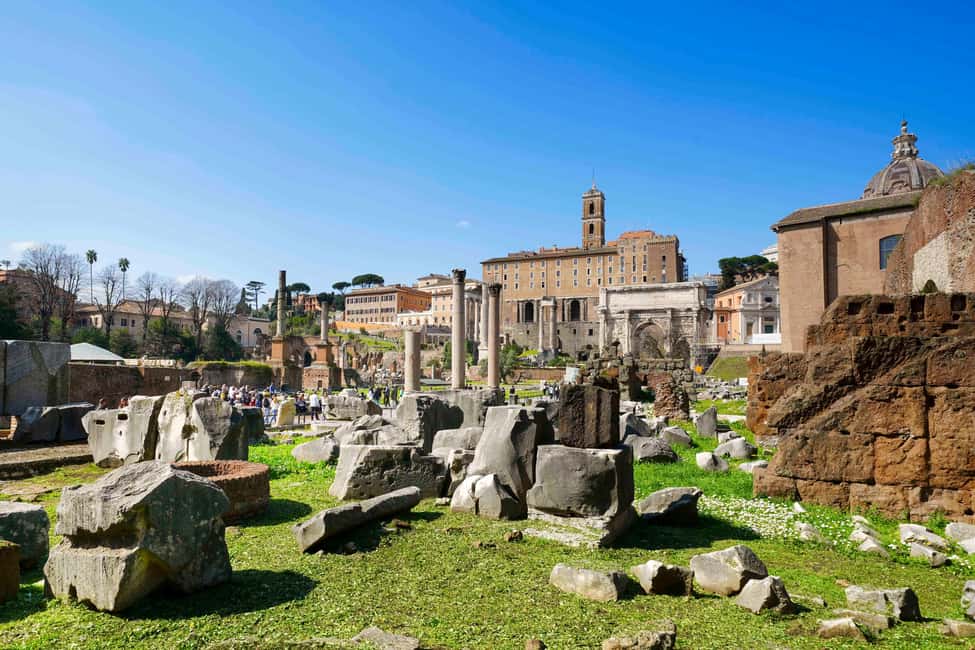
The Roman Forum is where Rome’s public life comes into focus. Without context, it can look like lots of broken walls and scattered columns. With a guide, it becomes a layout of power: the kind of place where politics, announcements, and daily activity all collided.
On this tour, your guide walks you through what the Forum meant, not just what it looks like. You’ll learn about the center of Roman political and social life, and you’ll start spotting how different areas connect. That context matters because the Forum is large and layered—your eyes will naturally want to wander, but the guide helps you see the structure of the city.
You also finish at the Forum. So if you want to keep exploring afterward on your own, you’ll likely be positioned well for it, rather than being dropped far away from everything.
Practical tip: bring water if you’re going during warmer hours. Even in a short tour, you’re absorbing a lot—sun, stone, and walking.



Guides Who Actually Keep You Engaged
A good guide can make or break ancient-site tours, and this one leans heavily on guide quality. From the guide names you’ll see associated with the experience—Tsion, Ragu, Ivana, and Fe—the common thread is staying lively and answering questions in a way that keeps people interested.
You can expect a style that mixes factual explanation with real delivery. One guide stood out for humor and presentation, another was praised for being open to questions. That’s not just “nice personality.” It affects how much you remember once you’re back in your hotel, because you’re not just listening—you’re mentally organizing what you’re seeing.
Also, the tour provides headsets, which helps a lot. In these spaces, sound can disappear under crowd noise, so it’s a relief when you can hear the details without yelling at your own guide.
If you’re someone who likes to ask questions—about everyday life, not just rulers—this tour format tends to fit well. You’re not stuck staring at a map alone.
Price and Logistics: What You’re Paying For (and What You Can Skip)
Let’s talk value like a grown-up.
You’re paying $93 for:
- Timed entry that speeds up access
- Arena-floor access at the Colosseum
- Guided interpretation through Colosseum, Palatine Hill, and the Forum
- Headsets so you can hear the guide clearly
- A guide available in English and Spanish
Could you DIY it? Sure. If you already have a good plan for ticket timing and you’re the kind of person who reads a lot of signage, you might save money. But you’d still miss arena-floor access if you don’t book the right option, and you’d likely spend more time working out where to go next.
The tour makes the biggest difference when:
- You’re short on time in Rome
- You want the best portion of the Colosseum, not just the quick overview
- You’d like someone to connect the Forum and Palatine Hill to the big story of Rome’s power
As for logistics, the start time can shift. The tour notes that the tour may begin at either the Colosseum or the Roman Forum/Palatine Hill depending on ticket timing purchased by the guide. That flexibility is useful, but it also means you should double-check your exact meeting and start expectations when you book.
Best Time to Go: Daylight, Crowd Control, and Night Options
Rome’s major sites can get intense. Even with timed entry, the Colosseum area can be crowded, and the Forum is always busy at peak hours.
One tip from experience with this tour: there’s a specific suggestion to consider a night slot. If your schedule allows it, later visits can feel better in terms of heat and pacing. Also, if you like atmosphere—shadowed stone, softer light for photos—night can help.
What I’d do: if you’re choosing between time slots, pick the one that matches your energy. If mornings feel rough, go later. If you want cooler conditions and you’re an early-bird, go earlier. Either way, keep your plan realistic: timed entry helps, but you still need to expect crowds at these three sites.
Who This Tour Fits Best
This tour is a great fit if you’re:
- Visiting Rome for the first time and want a smart sweep of the top sites
- Interested in how spectacle, politics, and daily life connected in Ancient Rome
- Short on time but not interested in a rushed photo-only visit
- Traveling in a small group setting where headsets keep everyone together and informed
It also works well for families because the guided pacing can be adjusted to keep kids engaged and adults from getting bored. One group even included children, and the tour was described as tailored to their needs while still leaving time for photos and atmosphere.
If you’re the type who wants total freedom to linger alone, you may feel a little boxed in. But if you’re okay trading some independence for better flow and context, you’ll likely appreciate the structure.
Should You Book This Colosseum, Roman Forum & Palatine Hill Tour?
Book it if you want arena-floor access plus an organized, guided connection between the Colosseum, Palatine Hill, and the Roman Forum. The timed entry and headsets make it feel like a practical upgrade, not just a guided history lecture.
Skip it (or compare options) if:
- You have plenty of time and don’t mind slow ticket lines
- You only care about sweeping views and don’t want guided interpretation
- You prefer fully independent pacing with no group timing
If you’re trying to get the most meaning out of your Rome visit without spending your day in queues, this is a strong choice—especially because the Colosseum arena access is the kind of detail that stays with you long after the photos fade.
FAQ
What does the tour include?
It includes timed-entry tickets to the Colosseum, access to the arena floor, a guided visit of Palatine Hill, and a guided visit of the Roman Forum, ending at the Roman Forum.
How long is the tour?
The duration is listed as 1.5 to 3 hours, depending on the starting time you book.
Where do I meet the guide?
Meet your guide in front of the Arch of Constantine. The guide will be holding a yellow Carpe Diem Tours flag or sign.
What languages are the guides?
The tour is offered with a live guide in English and Spanish.
Does the tour have priority or timed entry?
Yes. You get timed-entry tickets and priority access to three of Rome’s most sought-after sites.
Do I get access to the Colosseum arena floor?
Yes. The tour includes arena floor access.
Where does the tour end?
The tour finishes at the Roman Forum.
What should I bring?
Bring a passport or ID card.
How early should I arrive at the meeting point?
Arrive at least 10 minutes before the tour start time. Late arrivals cannot be refunded.
Is free cancellation available?
Yes. You can cancel up to 3 days in advance for a full refund.
Will the tour always start at the Colosseum?
Not always. The tour may begin at either the Colosseum or Roman Forum/Palatine Hill, depending on the ticket timing purchased by your guide.