REVIEW · AUDIO TOURS
Rome Colosseum, Roman Forum & Palatine Hill Audio Tour
Book on Viator →Bookable on Viator
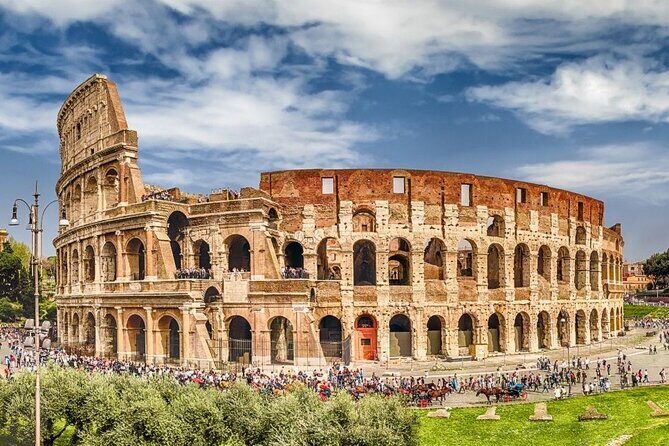
Ancient Rome hits fast here. This self-paced audio tour strings together the Colosseum, Roman Forum, and Palatine Hill so you can linger where you care most, helped by timed entry slots and an English audio guide app. With a small group (up to 8), it also feels easier to manage than the big cattle-call tours.
Two things I like: you get direct time in the Colosseum’s arena area (including a look toward the Underground/hypogeum from above) and you walk the Forum’s most important building blocks—temples, the Senate House, and the public-speaking spots—so it clicks into a real place, not just scattered ruins. And yes, Palatine Hill delivers the kind of photo views that make you stop talking for a moment.
One possible drawback is tech and timing. Because the experience relies on your audio app, phone or browser hiccups can slow you down, and entry instructions may not feel super clear if you arrive stressed.
In This Review
- Key things to know before you go
- A timed-entry circuit for the Colosseum, Forum, and Palatine Hill
- Entering the Colosseum: arena views, hypogeum story, and best-photo levels
- Roman Forum walking stop: temples, Senate House, and public speaking sites
- Palatine Hill: imperial palaces, Romulus and Remus, and Farnese Gardens
- The audio guide app: how to use it smoothly (and avoid getting stuck)
- Price value: what $47.82 covers and why the reservation matters
- Best fit: who will love this and who should choose a different style
- Before you book: the one thing I’d verify in your confirmation
- Should you book this Colosseum Forum Palatine audio tour?
- FAQ
- How long is the Rome Colosseum, Roman Forum & Palatine Hill audio tour?
- Where does the tour start?
- Where does the tour end?
- Is the audio guide available in English?
- Do I get a personal guide?
- Are radio and headphones included?
- Which sites are included in the tour?
- What admission items are included?
- How many people are in a group?
- What happens if the weather is poor?
Key things to know before you go
- Timed entry helps you dodge the worst bottlenecks and makes the 3-site circuit actually feel doable in about 3 hours.
- The Colosseum experience includes arena time plus the hypogeum story from the viewing areas, so you understand what’s underfoot.
- Roman Forum stops are focused on power and daily life—religion, politics, and where people gathered to speak.
- Palatine Hill combines views with imperial residences and a stop in the Farnese Gardens for a calmer pace.
- You’ll be managing the audio app yourself, and on-the-spot re-login can be annoying if your phone browser times out.
A timed-entry circuit for the Colosseum, Forum, and Palatine Hill
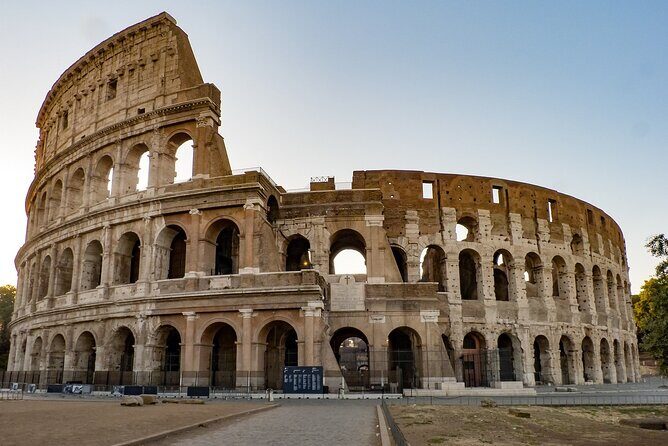
This tour is built like a smart walking loop through the center of ancient Rome: Colosseum first, then the Roman Forum, then Palatine Hill. The advertised duration is about 3 hours, and the big reason it works is the use of timed entry slots—so you’re not spending half your day standing around waiting for the next site’s gates to open.
The group size is small, with a maximum of 8 travelers. That matters in Rome, where crowds can flatten your day. Smaller groups typically mean you can keep your pace without feeling pushed along every two minutes.
You’re also choosing a format that’s different from the typical guided tour with a live guide. There’s no personal guide and no radio/headphones provided—so the audio is on you (your phone, your setup, your battery). If you like having control over what you linger on, it’s a good fit. If you want someone else to handle everything, this might feel a bit too DIY.
You can also read our reviews of more tours and experiences in Rome
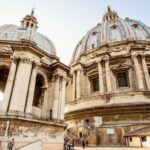


Entering the Colosseum: arena views, hypogeum story, and best-photo levels
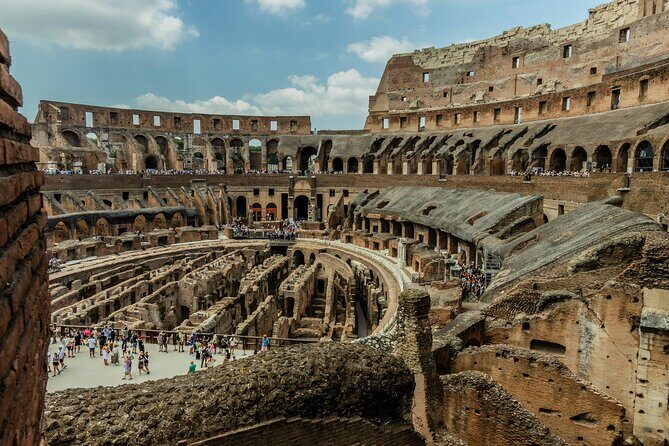
The Colosseum is always the headline, but what makes this stop more than a quick photo is how the audio guide shapes what you look for. You start with entrance that takes you into the Colosseum area focused on the arena—the spot where thousands once watched gladiator battles and public spectacles.
In practical terms, you’re not just staring at stone walls. The audio helps you stand in the right places mentally: the arena views are explained with the drama and scale of what happened there. Even if you already know the basics, you’ll likely notice architectural details that read like design choices once you hear the context.
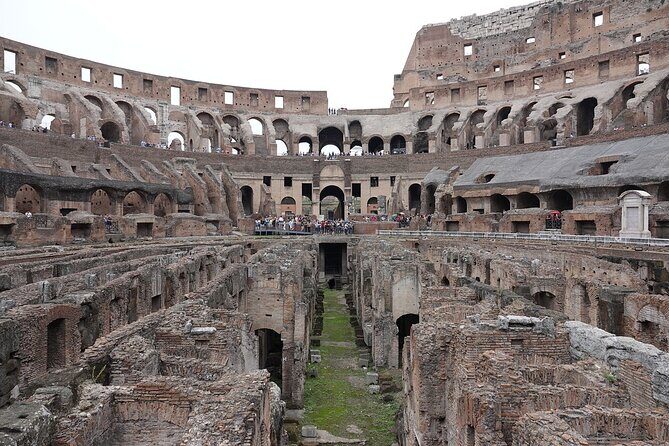
One of the most interesting parts is the Underground/hypogeum angle. You won’t go down there as a separate stop based on the info given, but you can see the hypogeum from above and learn what it was: the tunnels where fighters and animals waited before entering the arena. That staging detail is the kind of thing that makes the Colosseum feel like a working machine, not just a monument.
Architecturally, the Colosseum is layered. Your audio tour guides you through the grand arches, multiple levels, and the practical crowd logic Rome built into the structure. There’s also a story arc of survival and change—how the site evolved from entertainment into later uses, and how it became a symbol that still defines Rome today.
And don’t skip the view opportunities built into the route. The audio points you toward city views of the Roman Forum from higher levels, which is a great transition moment: you get your bearings, then you walk straight into the Forum’s ruins.
Roman Forum walking stop: temples, Senate House, and public speaking sites
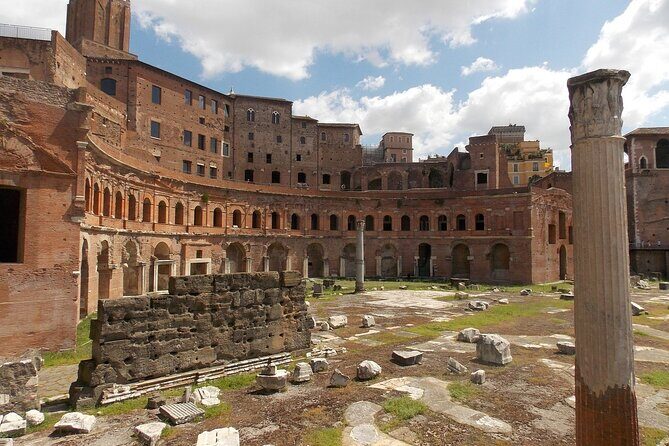
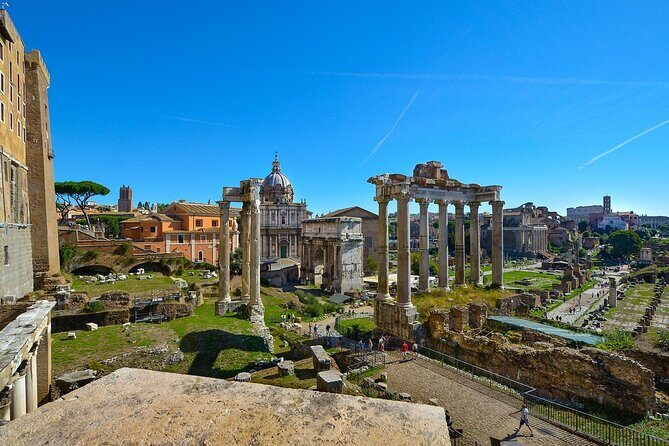
After the Colosseum, you move into the Roman Forum, which is where the day can either feel like ruins-or-bust or like an actual story. This stop is framed around three big categories: religion, politics, and commerce/public life. The audio guide helps connect the dots while you walk.
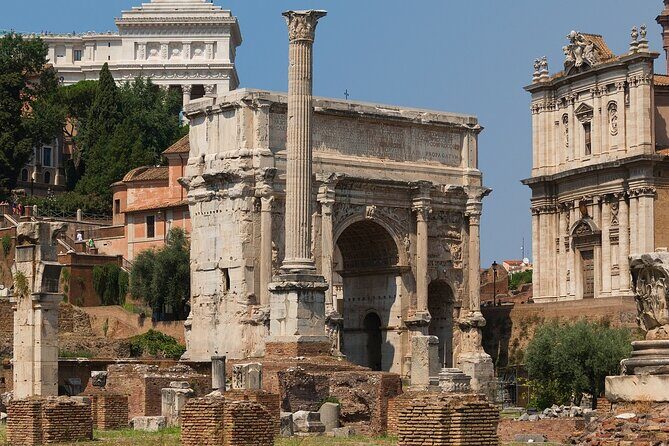
You’ll see standout remains, including the Temple of Saturn and the Temple of Vesta, plus other key ruins that once represented Roman power and belief. Even if you’re not memorizing names, hearing what each place meant helps you read the site. Otherwise it’s easy to see lots of columns and forget why any one mattered.
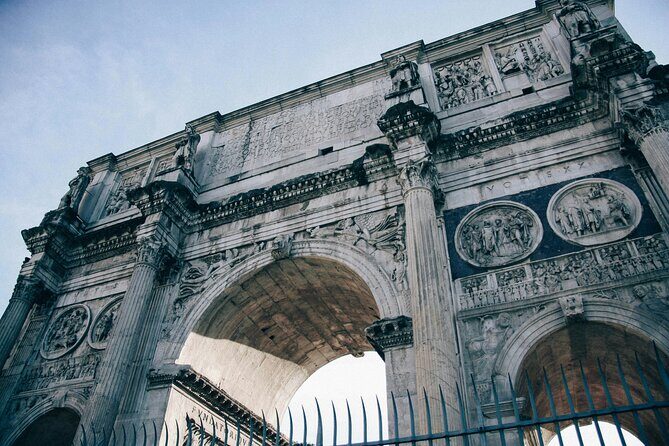
One of the best-preserved monuments in the Forum area is the Arch of Septimius Severus. The audio puts it into the broader idea of triumph and military victory, so it doesn’t just look “old and cool.” It starts to feel like a message laid into the landscape.
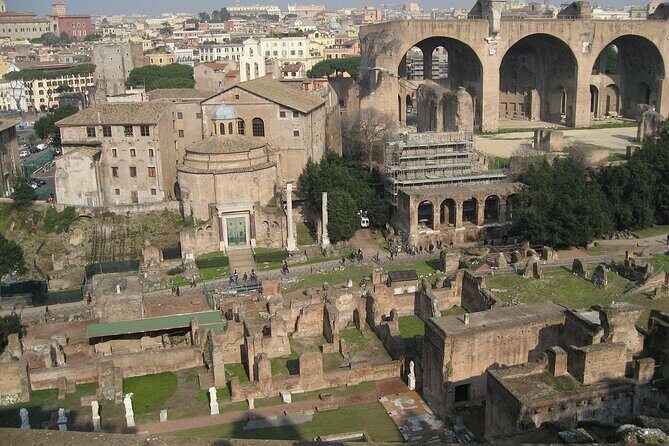
Then comes the power room: the Curia, often described as the Senate House. You step into the Curia area (where laws were debated and major decisions made in the Roman Republic). That’s an important shift from the spectacle of the Colosseum. Here, the Forum is about rules, argument, and governance.
The tour also calls out the Rostra and public life—places tied to famous speeches, including Caesar. This is where you can mentally replay the daily pulse of Rome: markets, parades, arguments, speeches. If you’ve ever visited a Roman site and felt like it was frozen, this kind of guidance is what gets the imagination moving again.
Finally, the sacred layer matters. You’ll hear about places like the House of the Vestal Virgins and the Regia—both central to Roman spiritual life. That religious context can make the Forum feel more coherent, especially when you connect it back to what you saw in the Colosseum.
Palatine Hill: imperial palaces, Romulus and Remus, and Farnese Gardens
Palatine Hill is where the tour turns from public Rome to the origins-and-emperors side of the story. The birthplace of Rome is the headline concept, but the audio guide structures the walk with a few specific beats, so you don’t just drift through viewpoints.
First up is the panoramic view. From Palatine Hill, you can look over the Roman Forum and toward the Circus Maximus area. This is one of the best moments to reset your brain and take photos with context: you’re not photographing random ruins, you’re photographing the stage where Rome ran.
Then you walk among the remains of imperial palaces, including areas referenced as the Domus Flavia and Domus Augustana. If you’re picturing emperors in luxury, the audio helps translate what you see into a believable layout—rooms, scale, and the idea that this wasn’t humble housing.
The tour also brings in Rome’s legendary origins. Your audio guide covers the story of Romulus and Remus, which helps explain why Palatine is more than a scenic hill. It’s tied to myth, identity, and power.
One of the nicest pacing choices is the mention of the Farnese Gardens. Gardens aren’t always the focus in archaeological tours, but terraces and shaded paths can offer a breather. That matters because you’ve already walked Colosseum and the Forum; Palatine can feel like one last climb before you’re ready to be done.
Palatine is also a timeline you can feel under your feet. The audio guide frames the walk from earlier huts to imperial residences, so the hill reads like layers of time. You end the tour back at the meeting point location, and the structure helps you close the loop on the three sites as a single “ancient Rome core.”
The audio guide app: how to use it smoothly (and avoid getting stuck)
This experience is audio-led, so it lives or dies by your phone setup. There’s no personal guide, and you’re not getting a radio and headphones as part of the experience. That means you’ll likely be listening through whatever device you’re using and how you access the audio.
The upside is clear: the audio guide brings you to specific details you might otherwise miss. You’ll hear about the arena drama, the hypogeum staging, the meaning of Forum buildings, and the stories tied to Palatine Hill. Instead of treating these sites as disconnected stops, you get a guided thread you can follow at your own pace.
The downside is also clear from real-world friction points. Some people reported trouble when their browser timed out. In those cases, they had to re-login and then figure out where they were in the audio file. If that happens to you, your timing can slip.
Here’s what I’d do to reduce the risk:
- Charge your phone fully before you go and keep it in your pocket to avoid accidental brightness/power-saving surprises.
- Arrive a little early so you’re not trying to start the audio while you’re rushing.
- If you prefer clearer audio, plan for headphones you already have since none are included.
Also, if you’re the type who hates interruptions, give yourself breathing room. This tour is designed to help you plan around crowds, but it still depends on you keeping your place in the audio. That’s the trade for self-paced flexibility.
You can also read our reviews of more tours and experiences in Rome
Price value: what $47.82 covers and why the reservation matters
The price is listed at $47.82 per person for about 3 hours, and the breakdown matters because it tells you what you’re paying for beyond the attraction itself. The included admissions have an estimated value: Colosseum entrance ticket valued at €18 per person, plus a Colosseum reservation fee valued at €2 per person. The remaining cost covers services tied to organizing your entry and running the audio-guided experience.
At the Colosseum and Forum level, reservation and timed entry can be a bigger deal than people expect. These sites can be chaotic, and the cost of buying tickets at the last minute (or missing your slot) can eat your time. Paying for a streamlined reservation structure is a form of convenience, and convenience is real value when you only have a few hours.
You do need to weigh that value against one risk: technical and entry problems can ruin the day. There have been accounts of last-minute cancellations and ticket/entry refusal issues due to voucher or technical troubles. In at least one case, a refund was processed after the inconvenience. That’s not something you can fully control, but it’s worth recognizing when you decide how tightly you’re scheduling your Rome day.
If you’re someone who can handle a small hiccup calmly, the value is likely there. If you’re traveling with zero buffer time and hate uncertainty, it may be better to plan a more forgiving itinerary.
Best fit: who will love this and who should choose a different style
This tour fits best if you want an audio-guided, self-paced way to hit the three major sites without being stuck behind a live guide’s pace. The small group cap of 8 helps too.
You’ll likely enjoy it if:
- You want to spend time in the Colosseum arena area and then connect what you learn to the Forum.
- You like walking and learning by place—temples, arches, Senate House, and Palatine palaces—rather than just taking quick photos.
- You’re comfortable managing a phone-based audio guide and keeping your spot if technology acts up.
You might want a different option if:
- You prefer someone leading you step-by-step with no dependence on an app.
- You dislike troubleshooting your phone or re-logging into audio.
- You’re hoping for printed materials. One person specifically wished for a printed guide, which hints that this style is mostly digital.
The good news: this is marketed as something most travelers can participate in, and it’s near public transportation, so it’s easy to fit into your larger Rome plan. The key is physical pacing. You’ll be walking through uneven, archaeological terrain across multiple sites, so comfortable shoes matter.
Before you book: the one thing I’d verify in your confirmation
If you book, I’d treat your confirmation details seriously and take a screenshot before you leave for the day. There have been issues reported around cancellations and vouchers/entry acceptance, and those problems—when they happen—can turn a historic morning into a frustrating scramble.
Also, plan your day with a bit of slack. Even though the tour is about 3 hours, the real-world rhythm in Rome changes based on crowds, security lines, and how quickly you can start your audio app. Give yourself time afterward for a calm lunch and a wander, not just another ticket with zero margin.
If you like flexibility and learning at your own pace, this tour has a strong value proposition: you hit three heavy-hitters with audio storytelling that helps you see past the obvious.
Should you book this Colosseum Forum Palatine audio tour?
I’d book it if you want a practical, timed-entry way to cover the big three sites in a few focused hours, and you’re comfortable driving the audio app yourself. The Colosseum arena time, the hypogeum staging story from above, the Forum’s political and sacred anchors, and Palatine Hill’s views plus Farnese Gardens make it a well-rounded arc.
I’d skip it or choose a different format if you’re fragile about technology, you need a fully guided experience with zero phone dependence, or your schedule is so tight that a minor app or entry snag would wreck your day.
In Rome, the best tour is the one that keeps your brain calm and your feet moving. This one can do that, as long as you come prepared for the audio-on-your-phone reality.
FAQ
How long is the Rome Colosseum, Roman Forum & Palatine Hill audio tour?
It’s listed as approximately 3 hours.
Where does the tour start?
The meeting point is Colosseum, Piazza del Colosseo, 1, 00184 Roma RM, Italy.
Where does the tour end?
The activity ends back at the meeting point.
Is the audio guide available in English?
Yes, the audio guide is offered in English.
Do I get a personal guide?
No, there is no personal guide. The experience uses an audio guide.
Are radio and headphones included?
No. The tour does not include radio and headphones.
Which sites are included in the tour?
You visit the Colosseum, the Roman Forum, and Palatine Hill.
What admission items are included?
Entrance to Palatine Hill and the Roman Forum are included, and the Colosseum includes an entrance ticket plus a reservation fee.
How many people are in a group?
The maximum group size is 8 travelers.
What happens if the weather is poor?
This experience requires good weather. If it’s canceled due to poor weather, you’ll be offered a different date or a full refund.