REVIEW · COLOSSEUM TOURS
Rome: Colosseum, Roman Forum, and Palatine Hill Experience
Book on GetYourGuide →Operated by CAF Tour & Travel · Bookable on GetYourGuide
The Colosseum is loud even when it’s quiet. This ticket strings together three of the most important sites in Rome—Colosseum, Roman Forum, and Palatine Hill—so you don’t just see ruins. You follow a self-audio guide through the stories behind the stones, with access to both levels of the Colosseum and major museum areas.
I especially like the freedom here: your ticket is pre-booked, and you can explore at your own speed without waiting for a live guide to translate every stop. I also like that you get a structured audio experience (plus an interactive 3D map) instead of wandering randomly. One drawback to plan for: there’s no live guide and no true meeting point, so you need to show up on time and use the right entrance lines.
In This Review
- Key points at a glance
- Your one-ticket plan: Colosseum, Forum, Palatine in a day
- Entering the Colosseum at your fixed time
- The self-audio guide that turns ruins into a story
- Roman Forum: the empire’s crossroads in stone fragments
- Palatine Hill and the Imperial Fora walk
- Pacing tips so you don’t feel rushed
- Price and value: what $41 buys (and what it doesn’t)
- Logistics you should get right before you go
- Who this experience fits best
- Should you book this Colosseum, Roman Forum, and Palatine Hill audio experience?
- FAQ
- What does the ticket include?
- Do I need a live guide?
- Where do I enter for the Colosseum?
- Do I need headphones?
- What time should I arrive?
- What entrances can I use for the Roman Forum and Palatine Hill?
- Which languages is the audio available in?
Key points at a glance
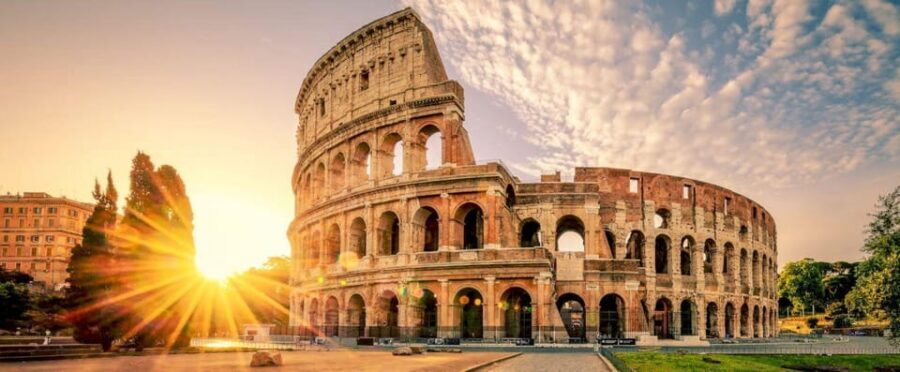
- Timed Colosseum entry: you join the reserved line and get in with less line stress
- Two levels + museum access: you’re not limited to just the arena floor view
- Roman Forum + Palatine in one flow: political, religious, and residential Rome in connected walking
- Multilingual audio with a 3D map: helpful prompts instead of guessing where to look next
- Phone assistance: you’re not totally on your own if something goes sideways
- Plan around the date and seasonal hours: your ticket is tied to a specific visit window
Your one-ticket plan: Colosseum, Forum, Palatine in a day
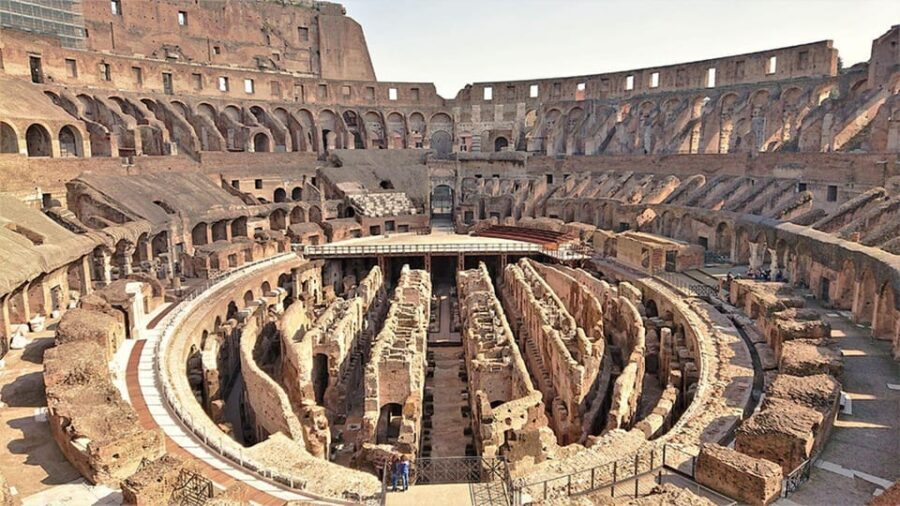
This experience is designed around one big goal: compressing the core of Ancient Rome into a single visit that’s easy to navigate on your own. You start at the Colosseum, then move into the Roman Forum and Palatine Hill area, including the Imperial Fora zone. That means you’re seeing Rome in layers—entertainment and spectacle first, then politics and religion, then the imperial residential landscape.
The value for many people is that the ticket isn’t just an entry pass. It’s paired with a multilingual self-audio tour (with interactive 3D map and icons). That matters because these sites can feel like “pretty ruins” if you don’t have something to anchor the view. The audio nudges you toward what to notice, when to look up, and why a certain wall or column matters.
The timing also fits real-world travel. You have a full-day window to work with, but you also have a fixed entrance time for the Colosseum. That combination is ideal if you want structure at the start and flexibility after.
You can also read our reviews of more tours and experiences in Rome.



Entering the Colosseum at your fixed time
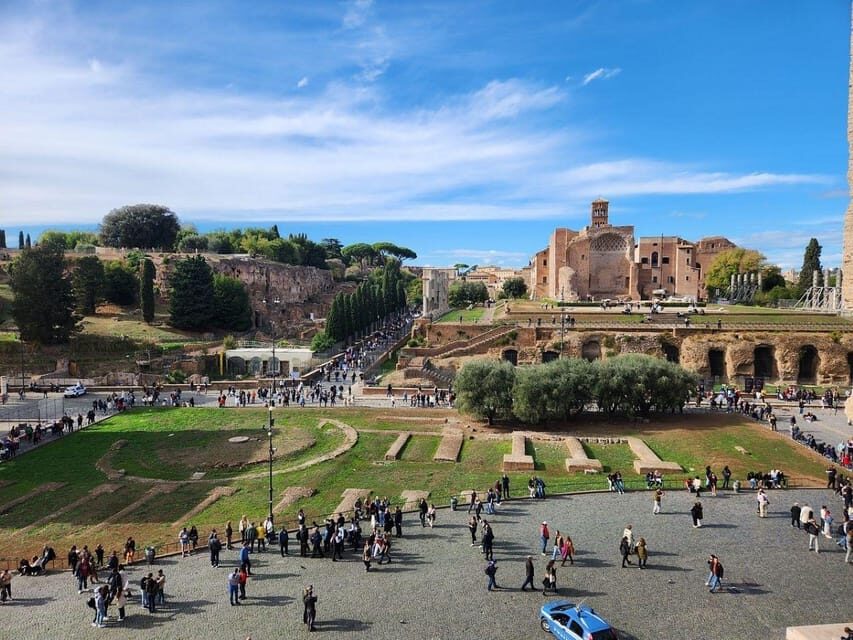
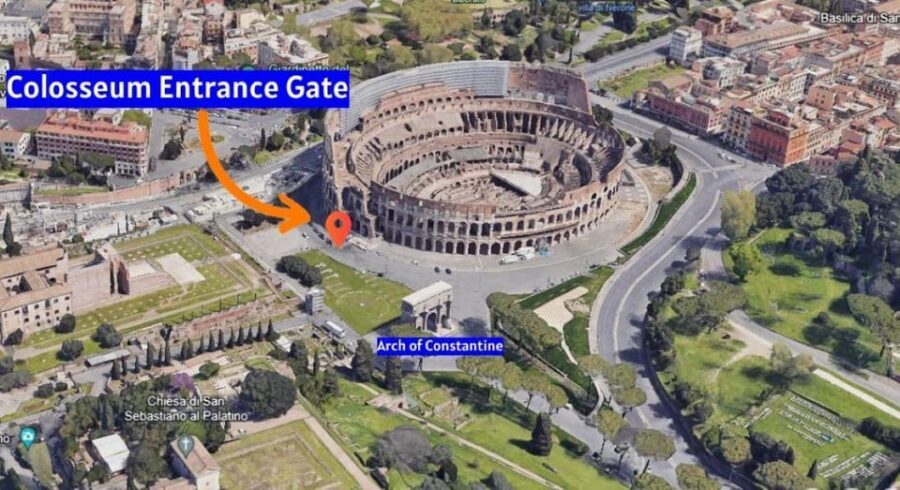
The Colosseum is the only place where you must respect a fixed entry time. You should arrive about 10 minutes before your scheduled slot and join the Visitors with Reservations line at the entrance near the Arch of Constantine, close to the “Valadier Terrace.”
This is one of the biggest practical wins of the whole booking. Pre-booking helps you avoid the most painful part of the visit: the long, slow, uncertain queue. And once you’re inside, you’re not stuck waiting for a group to amble forward.
What you can access here is also more than basic. Your digital ticket includes:
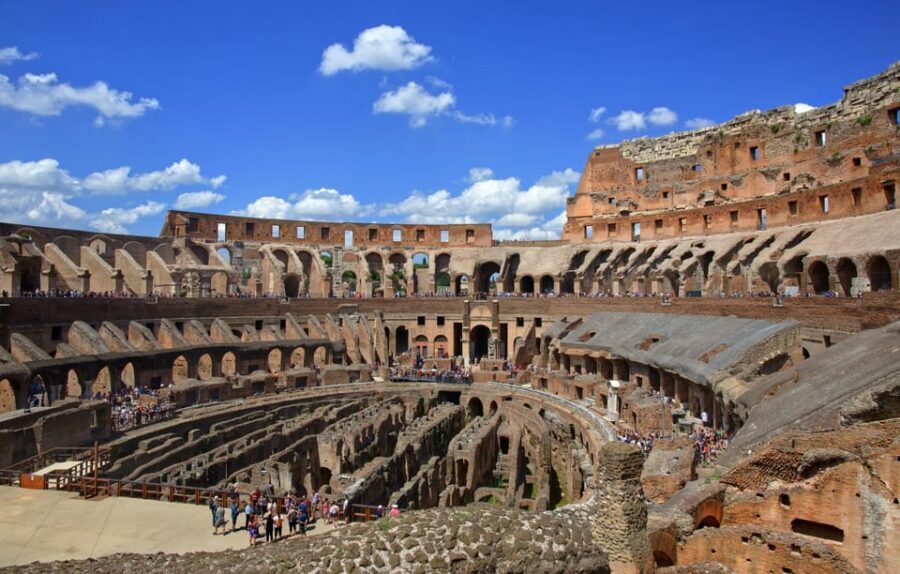
- The first level of the Colosseum
- The second level with panoramic terraces
- The Colosseum Museum
That’s important because views and context change as you climb. From higher up, you tend to see the arena space in relation to the outer structure. And the museum stops can help you connect the modern look with the original design and purpose.
One small but meaningful note: there’s no designated meeting point and there’s no live guide waiting for you. So your “meeting” is essentially the entrance line. If you like clear instructions and a human checkpoint, you’ll want to read your email details carefully and follow them exactly.
The self-audio guide that turns ruins into a story
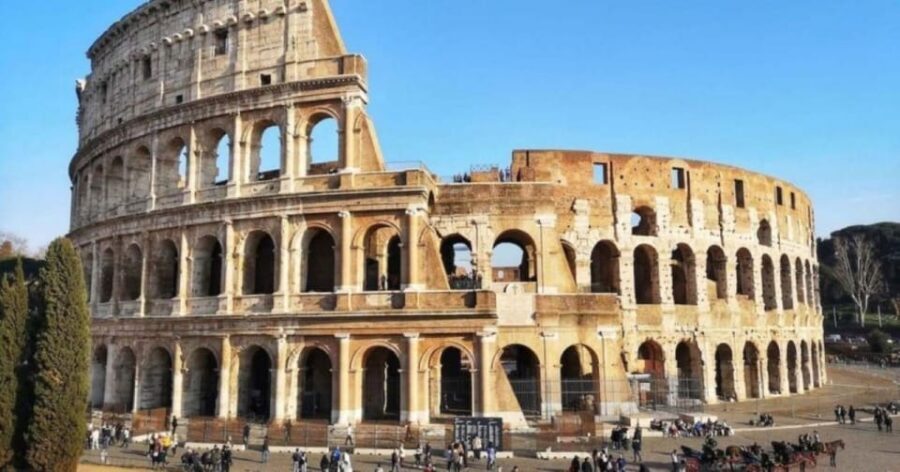
The audio guide is where this experience becomes more than a photo stop. You get a multi-language self audio-guided tour in English, Spanish, German, Italian, and Chinese, plus interactive 3D map and icons for the points of interest you can visit.
In a place like the Colosseum, the building’s scale is obvious, but the meaning isn’t always. The guide helps you connect what you see—gladiator contests, naval battles, and theatrical performances—with what the site was built to do. You’re basically watching the space through a second set of eyes: not just “what’s left,” but what the Romans were trying to achieve.
I also like the format for independent travelers. You can pause, backtrack a little, and spend extra time at the spots you care about (especially if you’re the type who reads every panel and then stays too long near one column). You’re not punished for moving at your pace.
Practical tip: bring headphones. This is an audio experience, and your phone battery matters too. The instructions call out having a charged smartphone, because you’ll be using the QR-code access method tied to the emailed ticket documents.
Roman Forum: the empire’s crossroads in stone fragments
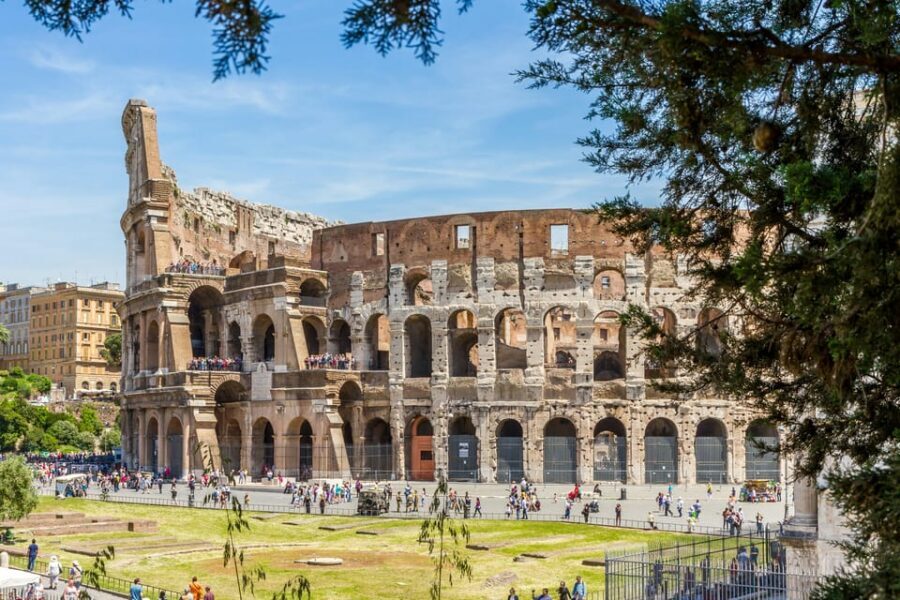
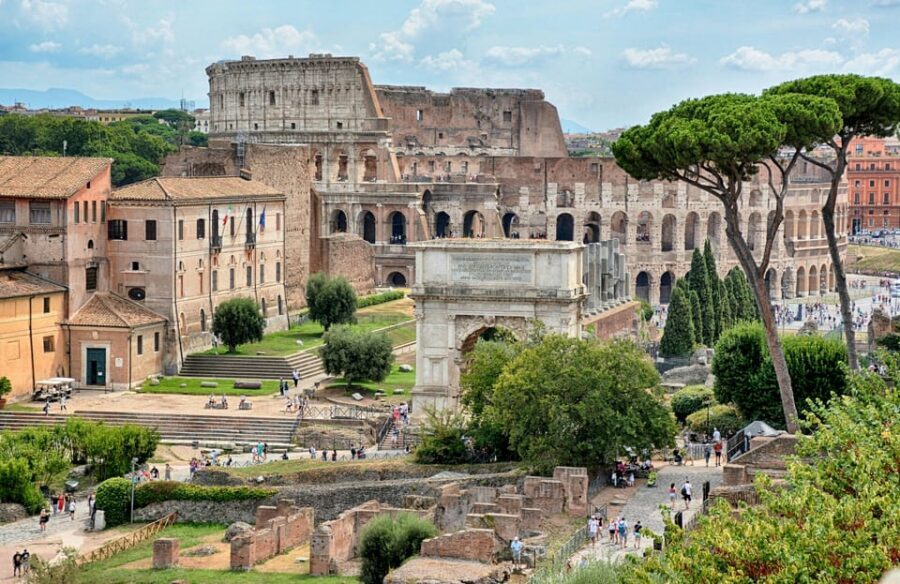
After the Colosseum, you step into the Roman Forum–Palatine Hill area, which served as a kind of ancient Rome headquarters for politics, religion, and commerce. This is where the mood shifts. The Colosseum is about spectacle and crowds; the Forum is about decisions, status, and power.
Your ticket includes access to the Roman Forum Museum, which helps you slow the pace and understand what you’re looking at. Then you can wander through the open-air ruins—temples, basilicas, and palaces are referenced in the audio narrative—while you listen to the stories of emperors, commanders, and citizens who shaped Rome.
This is also where you’ll feel the difference between “seeing” and “understanding.” The Forum looks like scattered structures until you place them in context. The audio guide gives you that context as you move along the main spaces, so you’re not just photographing arches and hoping for the best.
A good way to use your time here is to pick a few themes and stick with them:
- Leadership and authority (who ruled and where they acted)
- Public life (commerce and daily movement)
- Religion and civic rituals (how belief and governance mixed)
If you jump randomly from one spot to another, you’ll still enjoy it—but the stories won’t connect as cleanly.
Palatine Hill and the Imperial Fora walk
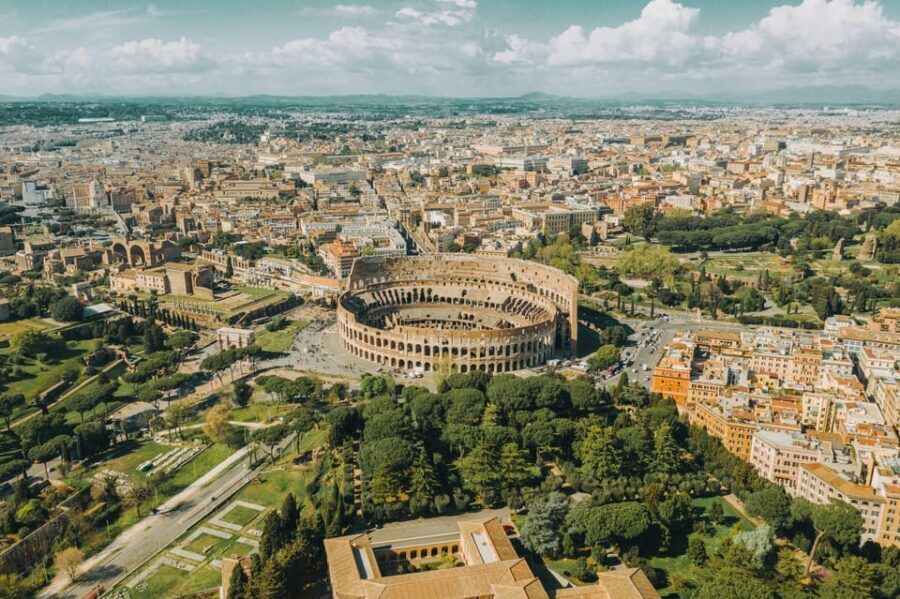
Palatine Hill is the other half of the feeling: the sense of where power lived, not just where power was displayed. Your ticket includes Palatine access and also the Imperial Fora.
The Imperial Fora area is especially worth your attention because it’s not just “another set of ruins.” It’s where Rome’s biggest leaders left their mark, and the audio guide is geared toward helping you understand what you’re seeing as you walk among columns and remains.
This section can also be physically tiring, because you’re covering a lot of ground on uneven surfaces. The audio format helps again here: instead of racing to “finish,” you can let the story guide your pace. That’s the real benefit of self-guided audio. You can stop when something grabs you and move on when you feel ready.
If you’re traveling with limited time in Rome, this is the moment where you’ll either feel satisfied or slightly rushed. The sights are close enough to do in a day, but not so close that you can treat it like a drive-by. If you’re the kind of traveler who likes to linger, start early at the Colosseum so you don’t hit the Forum portion with a time crunch.



Pacing tips so you don’t feel rushed
Because you’re self-guided, your biggest risk is not getting the “right order.” It’s letting the day run you. A few practical choices make a big difference:
First, respect that Colosseum entry time. Arriving 10 minutes early isn’t theater—it’s how you avoid stress at the exact moment you need confidence.
Second, use your energy where the audio has the most payoff. The Colosseum structure is complex, and the audio is built to make it make sense. The Forum and Imperial Fora are sprawling, but the narration helps you keep your bearings and connect the ruins to specific kinds of Roman life.
Third, headphones and phone battery are your real “gear.” A charged phone is called out in the instructions, and headphones are explicitly recommended. If your battery dies mid-visit, you’ll still be able to walk the sites—but you’ll lose a chunk of what makes this ticket special.
Price and value: what $41 buys (and what it doesn’t)
At about $41 per person, this booking sits in a sweet spot for Rome’s top landmarks. You’re paying for more than entry. Your ticket package includes an 18 euro entrance ticket plus an agency fee, and it bundles:
- Colosseum access (including first and second levels with panoramic terraces)
- Colosseum Museum
- Roman Forum and Roman Forum Museum
- Palatine Hill and Imperial Fora
- A multilingual self-audio tour with interactive 3D map/icons
- Multilingual phone assistance
What you don’t get is a live guide. If you want someone standing beside you answering questions in real time, you’ll miss that human layer. But for many travelers, that’s exactly why this works: you trade a live guide for flexibility and a structured audio track you can control.
Also, the “save time in line” benefit is real here. Pre-booked tickets help you get through the hardest parts faster. One of the strongest signals from real-world satisfaction is that skipping some of the waiting makes the whole day feel smoother.
Just don’t assume the experience will run like a guided group. You’re responsible for showing up, joining the correct reserved lines, and working through the audio yourself.
Logistics you should get right before you go
This experience has a very specific rhythm, and it hinges on three things.
1) Your emailed ticket
You should expect a PDF with your Colosseum entry ticket and QR-code access sent to your email 3 days before the tour date. The instructions even suggest confirming receipt by email.
2) Your date matters
Your ticket is valid only for the date shown on it and during the park’s listed opening hours. For the season noted (March 31 to September 30, 2024), it’s 8:30am to 7:15pm, and the Colosseum has a fixed entrance time. If your travel plans shift, don’t improvise—adjustments need to match what the ticket allows.
3) You need ID
Bring your passport or ID card. This isn’t a “nice-to-have” detail; you’re told to have it with you.
Finally, the meeting-point setup is unusual for a tour product: there isn’t one. You simply join the reserved line at the Colosseum entrance and use the appropriate entrances for the Forum and Palatine areas.
Who this experience fits best
I think this booking is a great fit if you:
- Want a top-3 Ancient Rome combo in one day without paying for three separate guided tours
- Like exploring at your own pace but still want the audio guide to keep you oriented
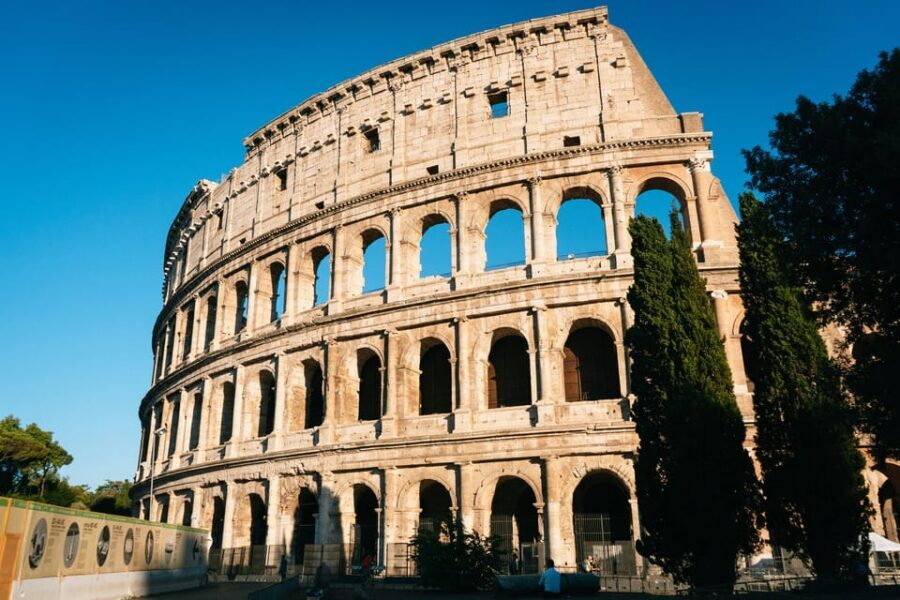
- Appreciate views from multiple levels inside the Colosseum (not just the ground-level route)
- Prefer phone support over waiting for a live guide who might control your pace
It may be less ideal if you:
- Need a fully guided experience with a person correcting your route in real time
- Get overwhelmed by self-navigation and audio tech
- Have mobility needs that require wheelchair access (this one is noted as not suitable for wheelchair users)
And if you’re the type who gets fixated on small details, this works well because the audio gives you permission to slow down. If you’re a fast walker who wants to “see everything” quickly, you can still do it—but you’ll want to plan a calm pace so the Forum portion doesn’t feel like a sprint.
Should you book this Colosseum, Roman Forum, and Palatine Hill audio experience?
Yes, you should book it if you want the biggest Rome hits with a structure that keeps you from wandering aimlessly. The combination of timed entry, access to multiple Colosseum levels (including panoramic terraces), and the multilingual audio with 3D map is strong value for the price.
I’d say skip it or consider an alternative if you want a live guide’s constant context and Q&A, or if you know you struggle with self-guided instructions. This is not that kind of tour. It’s a do-it-yourself experience powered by audio and support when needed.
If you’re organized enough to arrive on time, bring your headphones and ID, and follow the reserved-line approach, this ticket turns a tough-to-plan day into a smoother, more meaningful one.
FAQ
What does the ticket include?
You get digital entry to the first and second levels of the Colosseum (including panoramic terraces), the Colosseum Museum, the Roman Forum and Roman Forum Museum, Palatine Hill, and the Imperial Fora. It also includes a multi-language self audio-guided tour with an interactive 3D map and icons, plus multilingual phone assistance.
Do I need a live guide?
No. This experience is self audio-guided, and there is no live guide included.
Where do I enter for the Colosseum?
The Colosseum entrance is near the Arch of Constantine, close to Valadier Terrace. You should join the Visitors with Reservations line at the Colosseum entrance.
Do I need headphones?
Yes. Headphones are listed as something to bring.
What time should I arrive?
Arrive at the Colosseum entrance about 10 minutes before your scheduled entry time. Your ticket for the Colosseum has a fixed entrance time.
What entrances can I use for the Roman Forum and Palatine Hill?
You can use any of these entrances: Arch of Titus; Largo della Salara; Via del Tulliano; Via di San Gregorio.
Which languages is the audio available in?
The audio tour is available in English, Spanish, German, Italian, and Chinese.