REVIEW · COLOSSEUM TOURS
Rome: Colosseum, Circus Maximus, Forum & Ancient Rome Tour
Book on GetYourGuide →Operated by Pink Umbrella Tours · Bookable on GetYourGuide
Rome’s best monuments are often just side streets away.
This 2-hour guided walking tour strings together the big name sites with the smaller, oddly specific ones that make the whole story feel real. I like how it starts in the Jewish Ghetto area at Piazza Cinque Scole, then moves step-by-step into the administrative and religious heart of ancient Rome—without turning it into one long lecture.
Two things I particularly like: first, the guide factor. Depending on your group, you might get Bruno, Gabriel, Francesco, or Sam, and the common thread is clear: humor, easy explanations, and plenty of time for questions. Second, you get Roman highlights outside the usual Colosseum-only storyline—like the Theatre of Marcellus and the Capitoline Hill climb—so the city feels layered, not just monumental.
One consideration: this tour does not include entrance to the Colosseum, so if your main goal is to go inside and explore the interior, you’ll want to plan separate tickets.
In This Review
- Key reasons this tour works so well
- Where you meet, how the tour moves, and what to expect in 2 hours
- Piazza Cinque Scole and Portico d’Ottavia: the route begins with the human city
- Ponte Fabricius to the Theatre of Marcellus: why this stop is so memorable
- Temple of Apollo and the Capitoline Hill climb: moving from ruins to viewpoint
- Via dei Fori Imperiali: the Forum area as a single storyline
- Circus Maximus and the Colosseum outside: the “big name” finish without the entry line
- Guides make the difference: Bruno, Gabriel, Francesco, and Sam
- Price and value: what $243.56 buys you (and what it doesn’t)
- Who should book this tour
- Should you book the Rome: Colosseum, Circus Maximus, Forum & Ancient Rome Tour?
- FAQ
- How long is the tour?
- Where does the tour start and end?
- Is the tour in English?
- Is the Colosseum entrance included?
- What should I bring?
- What if it rains?
- Is it possible to join after the tour starts?
- Is the tour suitable for wheelchair users?
Key reasons this tour works so well
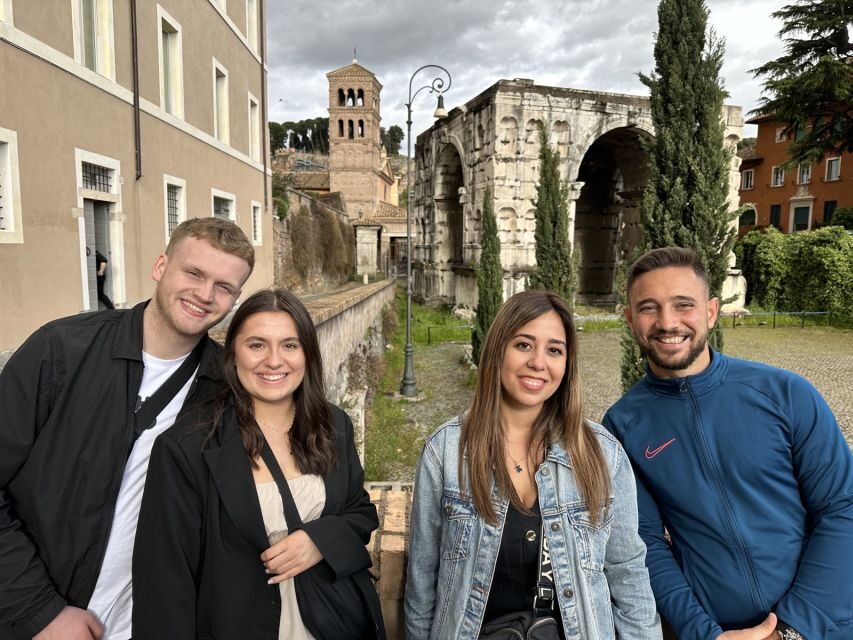
- Major sites from street level: you’ll see the Colosseum area from the outside, plus Circus Maximus without waiting for entry lines.
- Capitoline Hill views and Michelangelo’s square: the climb pays off with a strong Rome panorama and a clear “power center” feel.
- Forum corridor sightseeing: you get eyes-on context for the Forum of Augustus, Caesar, and Nerva, plus the Roman Forum.
- Side-step history: stops like Piazza Cinque Scole and the Theatre of Marcellus keep it from becoming one-note.
- Small experience rhythm: a tight 2-hour route means you get a focused overview without dragging.
Where you meet, how the tour moves, and what to expect in 2 hours
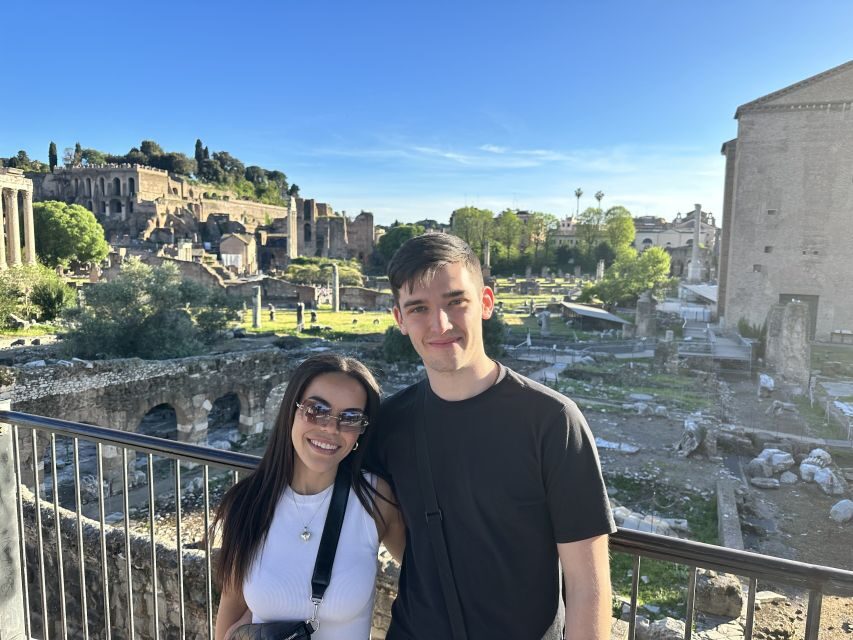
This English-language tour starts at the Basilica of Sant’Anastasia al Palatino. You’ll meet your guide there and then walk through Rome’s center on a route that’s designed for maximum visual payoff in a short time.
You should arrive 15 minutes early. Once the tour starts, it isn’t possible to join mid-stream, and the guide only waits for up to 10 minutes past the starting time. It ends back at the same meeting point, so you’re not left figuring out a second pickup or a late transfer.
The plan is intentionally outdoor and rain or shine, so dress for weather and wear shoes you can trust on uneven historic paving. This is not a sit-and-watch kind of tour—your job is to keep moving and keep looking up.
You can also read our reviews of more tours and experiences in Rome.



Piazza Cinque Scole and Portico d’Ottavia: the route begins with the human city
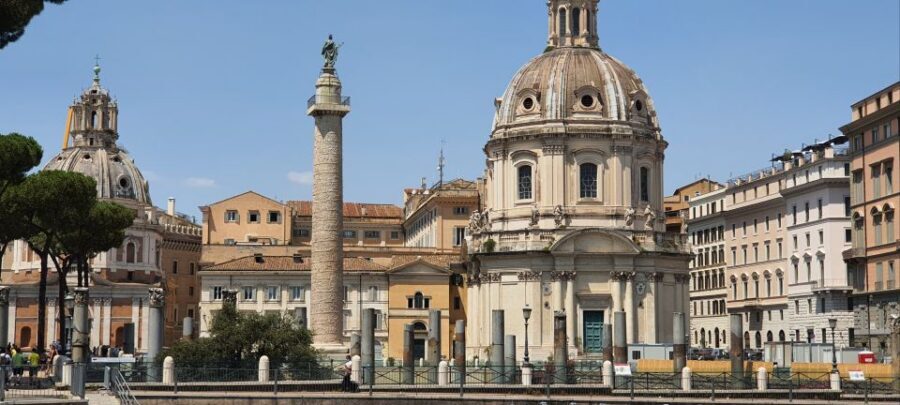
Most Rome tours rush straight to the “must-sees.” This one starts with Piazza Cinque Scole, right in the atmosphere of the Jewish Ghetto area. I love how that sets your mindset: you’re not only visiting ruins; you’re walking through a part of Rome where communities have lived through centuries of change.
From there, you head toward the Portico d’Ottavia, described as a majestic ancient structure that once marked an entrance to a busy market. Even from the outside, this kind of stop matters because it shows you the everyday engine of ancient Rome, not just the stage props for emperors.
If you’re the type who likes context—what ordinary people did, where they gathered, and how space functioned—this opening will feel like someone gave you a map of Roman life, not just Roman monuments.
Ponte Fabricius to the Theatre of Marcellus: why this stop is so memorable
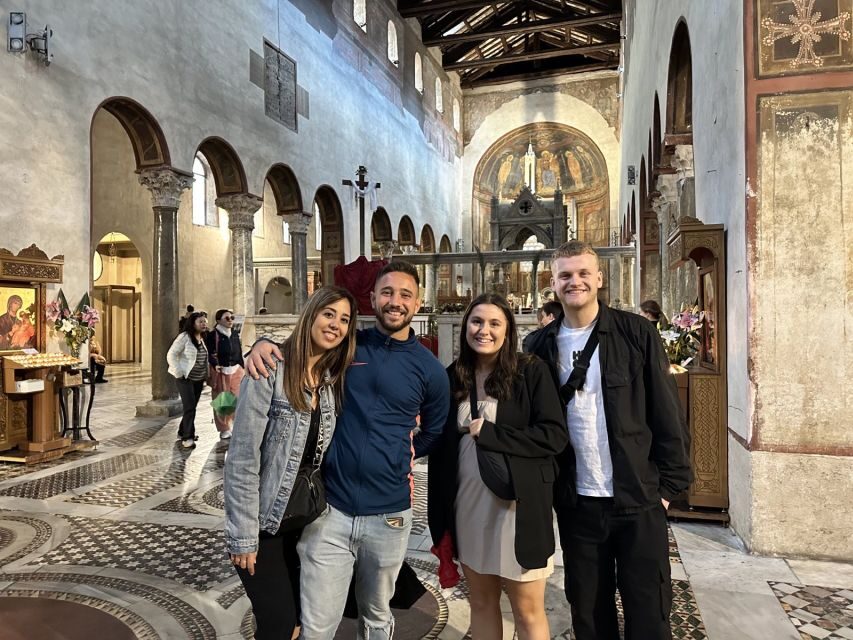
Next comes a classic Roman connector: Ponte Fabricius, noted as the oldest bridge in Rome. You cross toward Tiber Island (and yes, it’s the kind of place where Rome suddenly feels extra “postcard” even though you’re still in real city traffic rhythms).
Then the tour shifts to the Theatre of Marcellus—an ancient theater that’s often mistaken for the Colosseum. I like this moment because it corrects a common mental shortcut: Rome’s monuments can be visually similar from the wrong angle, and your guide’s job is to help you learn what you’re actually looking at.
Why it’s worth your attention: theaters were where Roman culture moved in public space—performances, ideas, crowds. Seeing this site in the flow of the day makes it easier to understand why the Romans built so many large public venues, not just arenas.
Temple of Apollo and the Capitoline Hill climb: moving from ruins to viewpoint
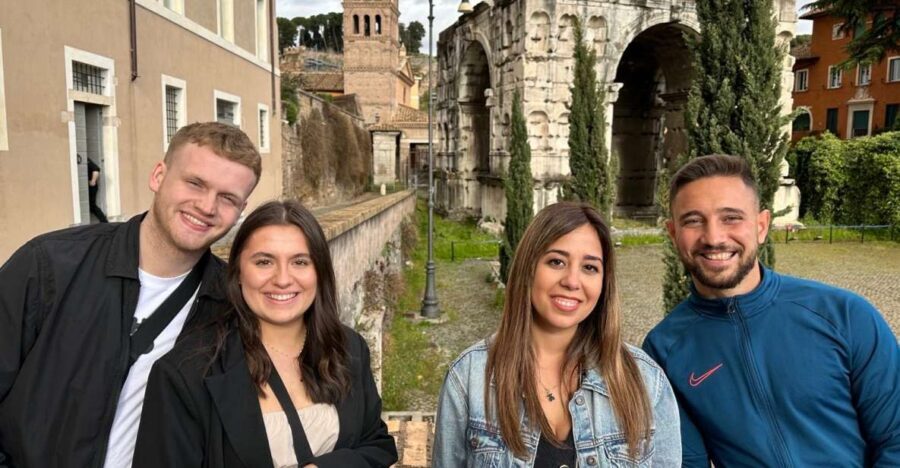
After the theatre, you’ll reach the Temple of Apollo, where the ruins give you the sense of Roman prestige and religious life. This is one of those stops where the building’s scale (even as fragments) helps you picture how seriously Romans took ceremony and status.
Then it’s time for the Capitoline Hill climb. The tour doesn’t treat this as a workout for its own sake; it’s a historical viewing strategy. From the hill, you’ll see the square designed by Michelangelo (the famous showpiece on the Capitoline). That contrast—Renaissance design over ancient power ground—helps you grasp that Rome isn’t frozen. It gets re-used, re-shaped, and reinterpreted.
Practical tip: pacing matters on hills. If you’re prone to getting winded, go slow early. You’ll have a better experience if you arrive at the viewpoint with time to look around instead of catching your breath and moving on.
Via dei Fori Imperiali: the Forum area as a single storyline
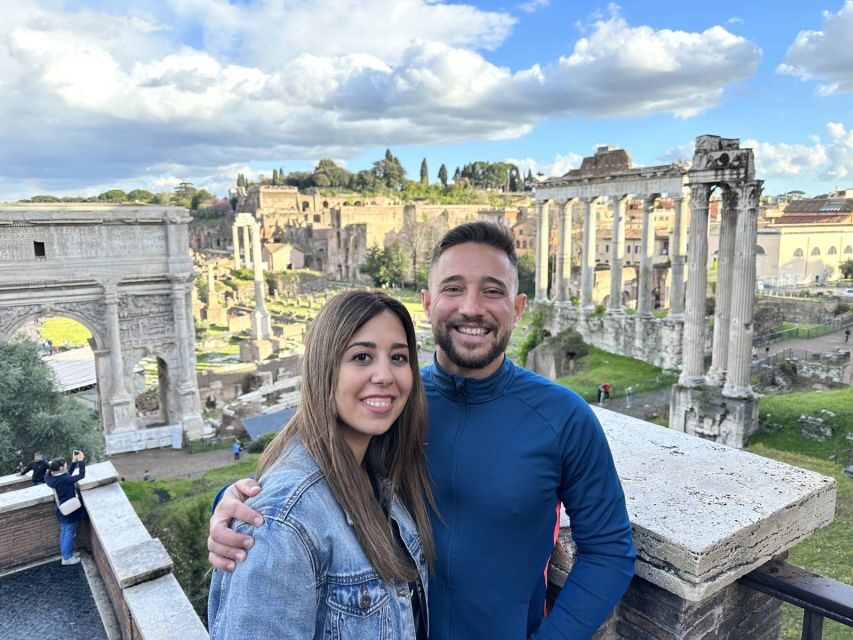
Once you reach Via dei Fori Imperiali, your route becomes a straight line into the political backbone of ancient Rome. This stretch is valuable because it helps you understand the Forums as connected space, not scattered postcards.
You’ll get opportunities to see and orient yourself to:
- the Roman Forum
- the Forum of Augustus
- the Forum of Caesar
- the Forum of Nerva
Even if you’ve heard the names before, walking this corridor helps the story stick. You start noticing how power centers were layered over time—successive leaders built, reworked, and branded the same “place to be seen” energy.
One more smart thing your guide likely does here: compare what each Forum represents in practical terms. That’s where the tour stops feeling like a list of ancient proper nouns and starts becoming a timeline you can picture.



Circus Maximus and the Colosseum outside: the “big name” finish without the entry line
No Rome tour of this type would be complete without Circus Maximus, the famed chariot-racing stadium. Seeing it outside (rather than spending all your time waiting for entry anywhere) can be a big win. You get a sense of scale and setting while keeping the day’s momentum.
Then you finish with the Colosseum from the outside—worth it even without entry, especially because you’ve already built context with the Forum and Capitoline Hill. When you reach it, you’ll likely understand the Colosseum as one part of a larger Roman “public life” system: spectacle, politics, and social hierarchy all in the same neighborhood.
If your main goal is the inside view—levels, museum-style details, and the full interior experience—this tour won’t give you that. But if your goal is to get your bearings fast and learn the meaning behind what you’re seeing, finishing outside the Colosseum can be a strong primer before you decide whether to add a ticket later.
Guides make the difference: Bruno, Gabriel, Francesco, and Sam
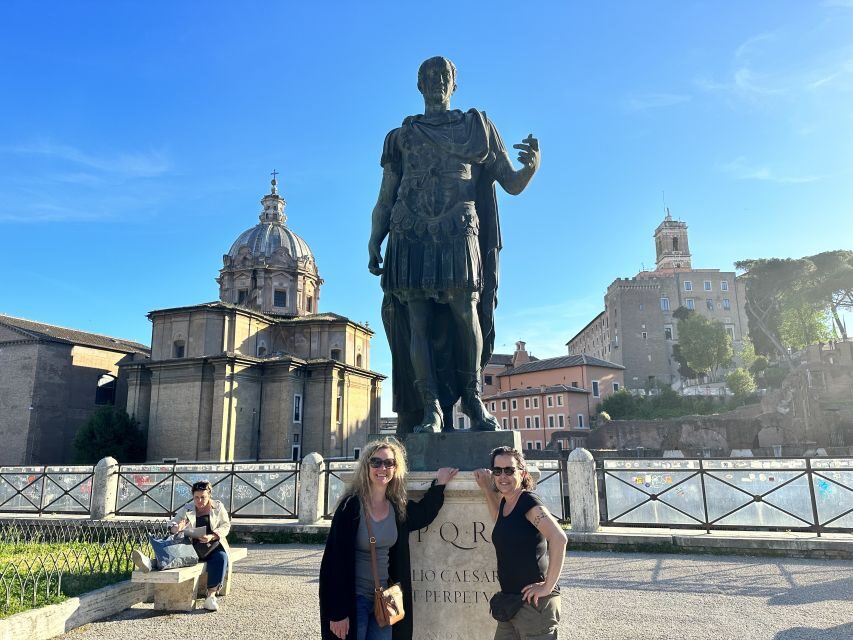
The reviews point to a consistent strength: the guides don’t just recite facts. They explain in a way that sticks, and they’re friendly about questions.
- Bruno is praised for warm, humorous teaching style and for making the information easy to absorb.
- Gabriel is singled out as excellent and informative.
- Francesco is praised for answering lots of questions with ease.
- Sam is noted for being personable and strong at explaining what you’re looking at.
I’d treat guide skill as part of the “value” you’re paying for here. With only 2 hours, you don’t have time for a dry, slow tour. Your best case is a guide who helps you see patterns—why one ruin fits next to another and what the Romans were trying to do in each space.
Price and value: what $243.56 buys you (and what it doesn’t)
At $243.56 per person for about 2 hours, you’re paying for a guided, structured route through multiple major historical zones in Rome’s center. You’re also paying for the guide’s ability to keep the day flowing and help you interpret what you’re seeing without needing to hunt for explanations yourself.
What’s not included matters:
- Entrance tickets and fees
- Colosseum visit is not included
So the “value” depends on your priorities. If you want a guided overview that helps you understand the Forum corridor, Capitoline Hill, and the Colosseum area quickly, this price can make sense because you’re buying time and interpretation.
If your priority is the Colosseum interior specifically, budget separately for an entry ticket plan, because this itinerary is built around street-level viewing and orientation.
Who should book this tour
This tour is a great fit if:
- you want a high-impact overview of Ancient Rome’s power zones without committing to a full-day plan
- you enjoy a guide who can answer questions and keep explanations clear
- you want more than just the Colosseum, including the Theatre of Marcellus and the start in the Ghetto area
It’s less ideal if:
- you want Colosseum entry as part of the experience (you’ll need a different ticket plan)
- you have mobility constraints, since it’s an outdoor walk and is listed as not suitable for people with mobility impairments or wheelchair users
Should you book the Rome: Colosseum, Circus Maximus, Forum & Ancient Rome Tour?
I’d book it if you want a guided “Rome center starter kit” that connects the Forum, Capitoline Hill, and the Colosseum area into one understandable route. The price is easier to justify when you consider that you’re getting a guided walk with smart stops—especially the less-obvious ones like Theatre of Marcellus and the start at Piazza Cinque Scole—and you’re not spending your limited time trapped by entrance logistics.
Skip it or plan differently if the Colosseum interior is your top goal. This tour is built for orientation and interpretation, not for an inside-the-Colosseum deep visit.
FAQ
How long is the tour?
The tour duration is listed as 2 hours.
Where does the tour start and end?
It starts at the Basilica of Sant’Anastasia al Palatino and ends back at the same meeting point.
Is the tour in English?
Yes, the live tour guide is in English.
Is the Colosseum entrance included?
No. Entrance tickets and fees are not included, and the Colosseum visit is not included.
What should I bring?
You should bring comfortable shoes.
What if it rains?
The tour takes place rain or shine.
Is it possible to join after the tour starts?
No. You need to arrive about 15 minutes before the starting time, and it isn’t possible to join once the activity has started.
Is the tour suitable for wheelchair users?
No. It is listed as not suitable for wheelchair users.