REVIEW · GUIDED
Best of Rome With Local Guide
Book on Viator →Operated by E & D Guided Tours · Bookable on Viator
Rome’s best hits, fast.
This is a tight, well-paced stroll through central Rome, built around the sights you’re picturing already: the Spanish Steps, the Trevi Fountain, and the Pantheon area—plus a handful of church and plaza stops that add texture. I like that it’s small-group (max 10) and that the guide’s storytelling style makes the walk feel like a guided history lesson, not a checklist. The one drawback to plan for: the time on each stop is short, so you’ll get big highlights, not lingering alone time.
I also like the practical format. You get a central meeting spot at Babington’s tea room by Piazza di Spagna, and the walk ends at Piazza Navona, where you can roll right into a meal. Most of the stops are outdoors and free to view; the Pantheon entry is the only major item called out as not included, so you’ll want to be ready for a separate ticket there.
One more thing to keep in mind: during the Jubilee, some monuments may be under restoration, and the operator may message you if something changes. That said, a good guide helps you still make sense of what you’re seeing, even when a facade is wrapped.
In This Review
- Key things to know before you go
- Piazza di Spagna to Piazza Navona: the routing logic that saves time
- Spanish Steps: La Dolce Vita energy, explained at street level
- The Colonna dell’Immacolata and the Piazza di Spagna corridor
- Trevi Fountain: making the coin moment more than a photo
- Chiesa di Sant’Ignazio di Loyola: Jesuit clues on the ceiling
- Pantheon: a must-see with a key logistics note (ticket not included)
- Coffee at Piazza della Rotonda: a break that teaches local habits
- Santa Maria Sopra Minerva: the elephant statue detail that sticks
- Church of St. Louis of the French: Caravaggio on the spot
- Piazza Navona: Baroque fountains and the payoff finish
- Price and value: what $40 gets you in central Rome
- The best fit: who this tour suits (and who might want a different pace)
- A note on guides and the storytelling style that matters
- Should you book this Best of Rome walk?
- FAQ
- How long is the Best of Rome with Local Guide tour?
- What’s the group size for this tour?
- Where do I meet the guide?
- Where does the tour end?
- What time does the tour start?
- Is the ticket mobile?
- Is the Pantheon admission included?
- Is coffee included in the tour price?
- Do you offer pick-up or drop-off?
- Is free cancellation available?
Key things to know before you go
- Small-group size (max 10): more time for questions and less crowd-pressure at each photo moment
- Central starting point: meet near Piazza di Spagna at Babington’s tea room
- Icon-first route: Spanish Steps → Trevi Fountain → Pantheon area → Piazza Navona
- Smart “Roman coffee” pause: a scheduled break with local-style ordering guidance
- Pantheon not included: plan for separate entry so the timeline stays smooth
- Jubilee restoration updates possible: you may get messages if sights are affected
Piazza di Spagna to Piazza Navona: the routing logic that saves time
This tour is designed for people who want Rome’s headline sights without spending the whole day commuting or guessing where to go next. You start at Babington’s tea room on Piazza di Spagna (Piazza di Spagna, 23), and you finish at Piazza Navona. That end point matters: Navona is packed with great places to eat and easy to keep exploring on foot after the tour.
It runs about 90 minutes, and the stops are roughly timed so you get quick orientation first, then story. Think of it like getting your Rome bearings set while someone points out what you’d miss if you showed up on your own: the small symbols, the famous buildings’ less-obvious context, and the way religious power and political power kept trading roles over centuries.
You’ll also appreciate the setup for meeting and finding your group. You receive the guide’s name and number, and you’ll use a mobile ticket. No complicated transfers, no hunting for a van in traffic—just a walk in the old core.
You can also read our reviews of more guided tours in Rome



Spanish Steps: La Dolce Vita energy, explained at street level
Your first stop is the Spanish Steps, met right at the bottom. This is one of those Rome scenes where your photos come out better when you understand what you’re looking at. The tour frames the steps as a symbol of La Dolce Vita, which is helpful because it’s not just architecture—it’s theater.
What makes this stop work on a guided walk is pacing and positioning. A guide can help you get the classic views quickly, then steer you to a calmer angle for photos. You also get context on the area’s long-running cultural buzz, so the steps feel less like a monument and more like a meeting place that shaped how people traveled, shopped, and socialized.
How long you’ll spend here is about 10 minutes, so don’t expect an extended climb and photo marathon. If you want extra time on the steps, save it for after the tour when you’re not on a schedule.
The Colonna dell’Immacolata and the Piazza di Spagna corridor
Between the Spanish Steps and the next sights, you pass the Column of Immaculate Conception. The tour calls out its connection to the Christmas festivities, including the way the Pope opens those celebrations.
This kind of stop is valuable because it teaches you how to read Rome as a system. A column like this isn’t just decoration; it’s a signal—religious messaging placed in a public, highly visible corridor. When you’re walking, those quick “spotting lessons” add up fast, and they make later sights feel less random.
This part is also handy for anyone who’s a little travel-fatigued. It keeps your momentum while giving you something meaningful to look at besides crowds and street noise.
Trevi Fountain: making the coin moment more than a photo
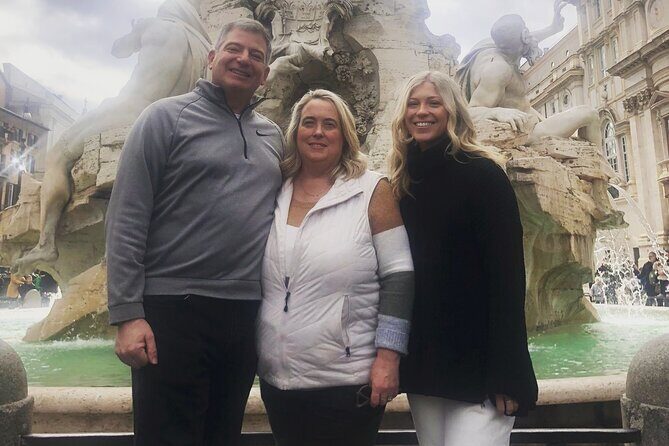
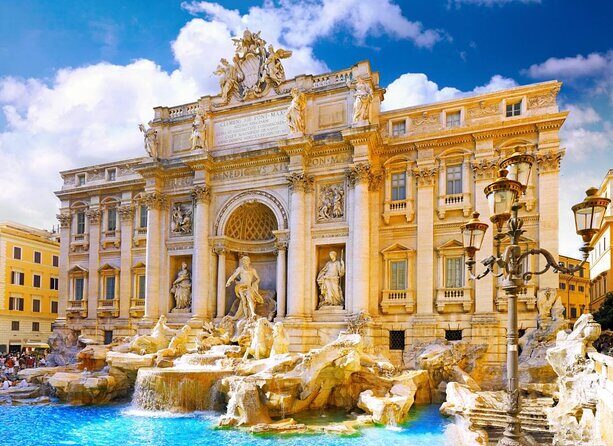
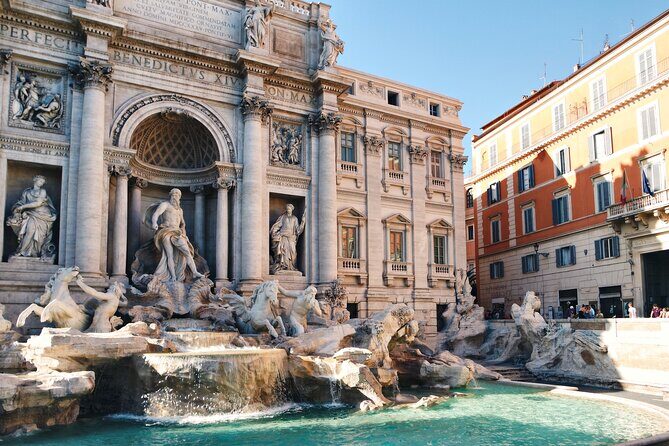
Then comes Trevi Fountain—one of the most recognizable Baroque fountains in the world. The tour frames it as a must-see, and yes, you’ll get the classic coin moment: make a wish and throw the coin into the water.
Here’s what I like about this stop with a guide: they don’t treat Trevi as pure spectacle. They tell you the fountain’s story so the details feel intentional instead of random flourishes. Baroque art can be hard to read when you’re standing in front of it quickly. Guidance helps you notice symbolism and composition—why certain elements are arranged the way they are.
Time is short, about 10 minutes, which is realistic. Trevi can be crowded and slow-moving. Having someone who can point out the best way to approach the scene, where to stand, and how to get a good shot without blocking others makes the experience feel smoother.
Practical tip: treat this as your quick orientation moment. If you want a second, quieter pass later, plan to return outside your tour schedule—then you’ll get the best of both worlds.
Chiesa di Sant’Ignazio di Loyola: Jesuit clues on the ceiling
Next is Chiesa di Sant’Ignazio di Loyola. This is described as the oldest of all Jesuit churches in Rome, and the guide specifically flags a pretty interesting secret on the ceiling.
That’s exactly the kind of stop that turns a “highlights” walk into something more personal. Churches can look similar if you only skim the facades. A guide nudges your eyes upward and shows you where the building starts telling its story.
Because the stop is time-limited, I’d approach this with a mindset of “spot one thing well.” Don’t worry about absorbing everything at once. You’re getting a guided pointer to look for, and that’s enough to make the ceiling stand out later when you walk by on your own.



Pantheon: a must-see with a key logistics note (ticket not included)
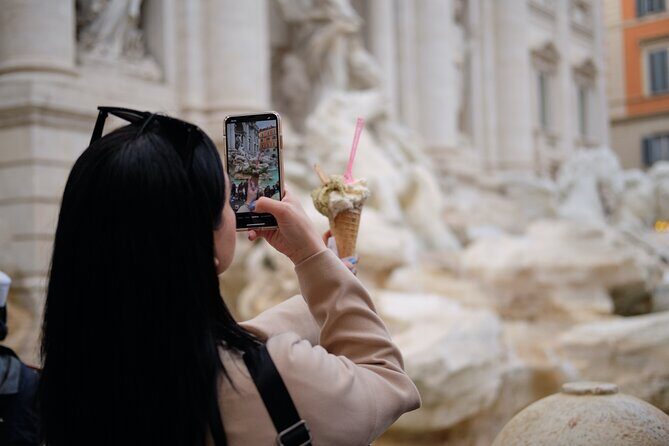
The Pantheon is on the route next, and it’s placed here for a reason: it’s one of the easiest “wow” buildings to understand when someone gives you the big idea.
The tour highlights that it’s over 1900 years old and that it held a record for the largest concrete dome in the world with no support. That kind of detail matters because it explains why the space feels so dramatic when you’re inside or looking up: the engineering is the message.
One important consideration: Pantheon admission is not included. So you need to be ready to buy or have the right entry planned so you don’t lose time. If you’re the type who hates last-minute ticket stress, do yourself a favor and plan your Pantheon entry separately ahead of the walk if possible.
Time here is about 10 minutes in the itinerary, so your guide will likely focus on key viewpoints and the core story. If you want a deeper visit, schedule a longer Pantheon stop on a different day.
Coffee at Piazza della Rotonda: a break that teaches local habits
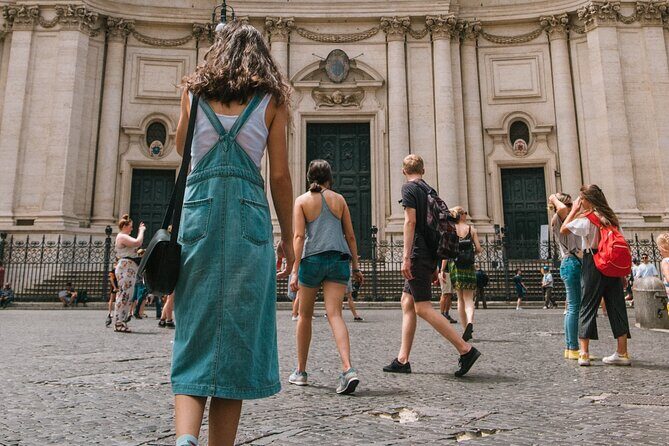
Halfway through, you get a coffee break at Piazza della Rotonda. Your guide takes you to one of the oldest and best coffee shops in Rome and teaches you how to order and drink coffee like a local.
That sounds simple, but it’s a big quality-of-life upgrade. Coffee ordering in Italy can be different than what you expect, and the “how” is often more important than the “where.” On a guided walk, that instruction comes with timing: you get a pause before the second half of the route, plus directions and context so the next stops feel easier to follow.
Restrooms are available. Drinks are at your expense, so you control your budget. But the benefit is that you’re not standing around searching for a place while the rest of the group moves on.
Santa Maria Sopra Minerva: the elephant statue detail that sticks
After coffee, you’ll reach Chiesa di Santa Maria Sopra Minerva. The tour pairs this church with an “amazing square” feel, and it adds a specific detail: there are plenty of statues of animals in Rome, but there’s only one statue of an elephant.
That’s the kind of quirky fact that turns a photo stop into a memory. Even if you only catch a quick view, you’ll know what to look for, and that helps you notice the church’s character rather than just its name.
This is also a reminder that Rome isn’t only monuments and fountains. Small churches and plazas can be just as visually rewarding, especially when your guide makes a point of them.
Church of St. Louis of the French: Caravaggio on the spot
Next is the Church of St. Louis of the French, described as a treat for art lovers. It houses three paintings by Michelangelo Merisi, also known as Caravaggio.
If you’re trying to balance art and iconic Rome, this is a smart inclusion. Caravaggio is hard to ignore once you know his style, and the tour gives you a clear reason to stop: you’re not just passing a church; you’re connecting the building to specific artwork.
Because the stop is about 10 minutes, you won’t get a full art-history lecture here. But you’ll come away knowing exactly why the church matters, and that knowledge makes any later independent visit feel more rewarding.
Piazza Navona: Baroque fountains and the payoff finish
The last stop is Piazza Navona, built over an ancient stadium and now a pedestrian square filled with energy. The tour points to the Fountain of Four Rivers as one of the most impressive Baroque fountains in the area.
What makes Navona work as a tour ending is location and mood. You finish in the middle of places you’ll want to explore after. Your guide will also stick around to answer questions and offer suggestions for restaurants and other landmarks near Navona.
This is where your guide’s earlier storytelling pays off. By the time you reach Navona, you’re not just seeing another square—you understand how Rome layers eras on top of each other: ancient structure, religious power, and the Baroque style that turned public space into a visual statement.
Price and value: what $40 gets you in central Rome
At $40 for about 90 minutes, this is priced in the value zone for a guided Rome walk. The big reason is simple: you’re paying for direction and interpretation, not just someone leading you from point A to point B.
You get:
- a licensed local guide with an upbeat, fun approach
- a small group capped at 10, which usually means fewer distractions
- multiple major landmarks plus several smaller religious/cultural stops
- a planned coffee break with guidance on ordering
- a convenient start/end location for a same-day sightseeing plan
You should treat it like a fast primer that helps you enjoy the rest of your trip more. If you do Rome “alone,” you can still hit these sights, but you’d need to spend time researching what each place symbolizes, and you’d spend more time figuring out the next step. Here, that brainwork is handled for you.
The main cost caveat is Pantheon entry not included. That doesn’t erase the value—Rome tours often need separate entry fees—but it does mean your total day cost depends on how you plan Pantheon.
The best fit: who this tour suits (and who might want a different pace)
This tour is a great match if you:
- want Rome highlights in one morning
- like walking with a guide who explains context, not just directions
- prefer small groups over large bus crowds
- want a scheduled coffee break so your day stays relaxed
It may be less ideal if you:
- want long indoor time at big sites
- hate the idea of managing a separate Pantheon ticket
- need a slower pace with lots of free time per stop
Also, it’s worth noting that service animals are allowed, and most travelers can participate. The itinerary is built for a walking experience rather than a seated one.
A note on guides and the storytelling style that matters
The guides are a core part of why this tour earns top marks. Sarah and Antonina are mentioned in a positive way for being friendly, well paced, and able to connect different parts of European history across the years—conflict, ownership, and cultural influence. That kind of storytelling makes the Spanish Steps and Navona feel like part of the same bigger story rather than disconnected photo spots.
The best guides also give you navigation points—direction on what to do next, where to go for food, and how to keep exploring without getting lost.
Should you book this Best of Rome walk?
If you’re short on time and you want the spine of central Rome explained in a small group, I’d book this. It’s efficient without feeling rushed in a chaotic way, and it balances the “famous” sights with a few stops that add real flavor.
I’d skip it or look for another option if you’re hoping for deep, unhurried museum-style time at indoor landmarks. This is a highlights walk with context, not a full-day immersion.
Finally, if you’re traveling during the Jubilee, keep an eye out for messages about restoration. You might still get a great version of the route, but it’s smart to expect minor shifts.
FAQ
How long is the Best of Rome with Local Guide tour?
It’s approximately 1 hour 30 minutes.
What’s the group size for this tour?
The tour has a maximum of 10 travelers.
Where do I meet the guide?
The meeting point is Babington’s tea room, Piazza di Spagna, 23, 00187 Roma RM, Italy.
Where does the tour end?
The tour ends at Piazza Navona, 00186 Roma RM, Italy.
What time does the tour start?
Start time is 10:30 am.
Is the ticket mobile?
Yes, you’ll receive a mobile ticket.
Is the Pantheon admission included?
No. Pantheon admission is not included.
Is coffee included in the tour price?
A coffee break is included in the itinerary, but drinks are at your expense.
Do you offer pick-up or drop-off?
No pick-up or drop-off services are offered.
Is free cancellation available?
Yes. You can cancel up to 24 hours in advance for a full refund, and cancellations within 24 hours are not refunded.