REVIEW · ROME
Rome: Catacombs Tour with Private Transfer and Tickets (3h)
Book on GetYourGuide →Operated by bestlimosinrome · Bookable on GetYourGuide
Rome’s underground side is real.
This tour works because it pairs a skip-the-line ticket with an easy, comfortable ride out of the center. You start with pickup and a private vehicle, then glide along the Appian Way while your guide (and driver, en route) points out landmarks and history. You’ll love the private transfer for the stress it removes, and the fact that you’re not trying to figure out public transport to a site that sits outside the walls.
My second big win is the underground visit itself: you get a guided tour of one of Rome’s most important Christian cemeteries, paced for a small group and run under strict access rules. The catacombs portion is only about an hour, so it feels focused, not dragged out. One drawback: it’s not built for everyone—there’s no photography inside, and the walk includes uneven ground and staircases. If you have mobility issues or claustrophobia, this may be a tough fit.
In This Review
- Key points to know before you go
- Why the Catacombs of St. Callixtus feel different from the usual sights
- Private transfer and the Appian Way drive: the real “buy” in the experience
- The “wall-to-underground” route: Aurelian Walls and the Caius Cestius Pyramid
- Janiculum Hill and il Fontanone: the scenic breath before or after the catacombs
- The 1-hour guided tour inside the Catacombs: what you’ll actually see
- Catacombs rules and small-group access: why your group size matters
- Dress code, temperature, and getting comfortable underground
- Price and value: is $181 per person a good deal?
- Who should book this Rome catacombs tour (and who shouldn’t)
- The small details that make it feel well-run
- Should you book this Rome Catacombs Tour with Private Transfer?
- FAQ
- How long is the Rome Catacombs tour with private transfer?
- Which catacombs are visited: St. Callixtus or St. Sebastian?
- What’s included besides the catacombs entry and guide?
- Is there photography inside the catacombs?
- What should I wear and bring for the visit?
- Is this tour suitable for everyone with mobility or claustrophobia concerns?
Key points to know before you go
- Private round-trip transfer so you’re not wrestling with buses or taxis to reach the catacombs
- Skip-the-line entry to the Catacombs of St. Callixtus (or St. Sebastian on Wednesdays/special holidays)
- Small group size with a live English-speaking guide, capped for Vatican access rules
- Appian Way views on the drive, plus passes by the Aurelian Walls and Caius Cestius Pyramid
- Janiculum Hill photo stop at Fontana dell’Acqua Paola (il Fontanone)
- Catacombs conditions: around 15°C/60°F with high humidity, plus a dress code
Why the Catacombs of St. Callixtus feel different from the usual sights
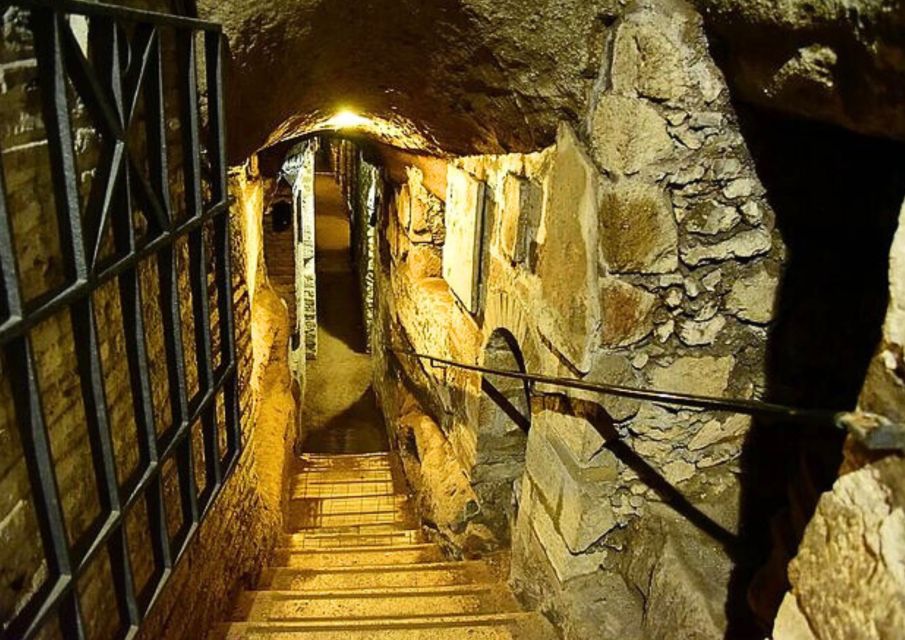
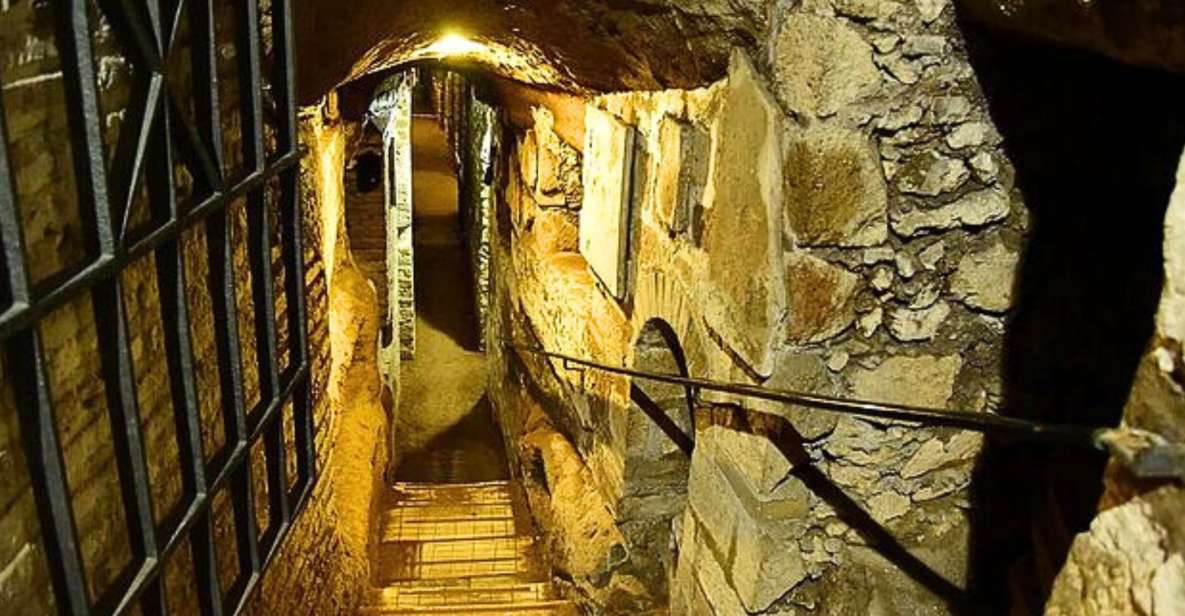
Most Rome plans are all about ruins above ground. Here, you go underground to see how early Christians used burial spaces as both memorial and community space. The Catacombs of St. Callixtus were the official cemetery of the Church of Rome in the 3rd century AD, and they became a major resting place for martyrs and popes. You’re talking about a site where around half a million Christians were buried there over time—so the scale is not small, even if your tour time is.
What makes this experience click is the way the tour connects Rome you see to Rome you don’t. On the surface you’re still in the city’s orbit, passing the layers of walls and monuments that define the capital. Then you step into a temperature-controlled, humid underground world with basilicas, crypts, and named areas tied to real people and periods. It’s the kind of contrast that makes Rome feel bigger than your photo feed.
You can also read our reviews of more tours and experiences in Rome.



Private transfer and the Appian Way drive: the real “buy” in the experience
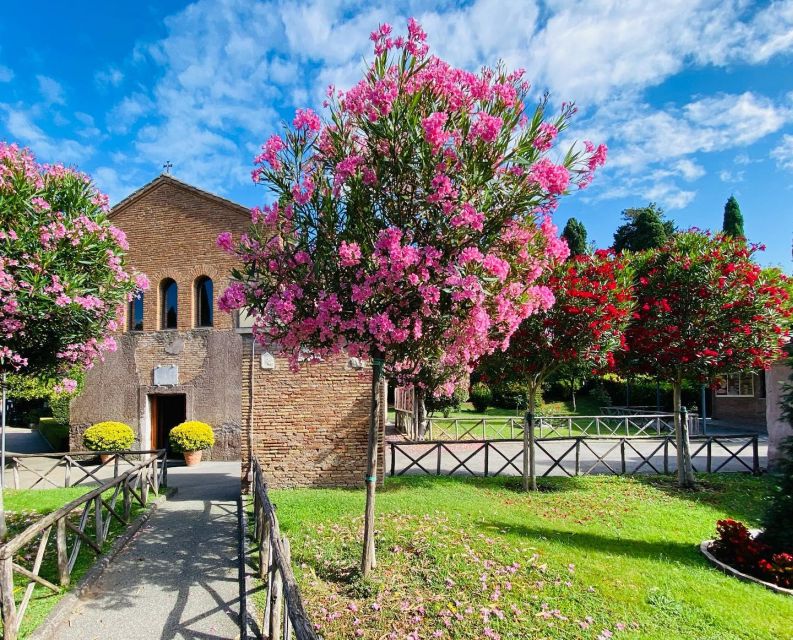
This is a 3-hour experience, and most of the value sits in the pacing. The catacombs are difficult to reach without a private vehicle, so the round-trip plan matters. Instead of guessing schedules, splitting taxis, or walking long distances, you get picked up directly from your hotel area and placed into a comfortable private vehicle.
The drive is not filler. You ride along the Appian Way (Via Appia Antica), one of the most famous ancient roads in Italy. Even from the car, it helps you get oriented. Rome becomes a city of routes, not just monuments. And the tour experience is designed so you don’t arrive frazzled or late.
Your transfer also buys you mental energy. You’re focused on the story when you’re on the move—then the underground portion feels like the main event, not an obstacle.
The “wall-to-underground” route: Aurelian Walls and the Caius Cestius Pyramid
On the way in and out, you pass major reminders of how Rome defended itself and how the city marked status through architecture. The tour includes a drive with views of the Aurelian Walls—the defensive ring that signals how late Roman power organized space. You also pass by the Pyramid of Caius Cestius, a curious standalone monument that looks out of place in a best-of-both-worlds way: part ancient surprise, part unmistakable Roman presence.
These moments help you understand why the catacombs are where they are. Early burial spaces had to sit outside the busiest zones, near routes that made access possible. The drive makes that logic easier to “see,” even if you’re not reading it off a map.
Janiculum Hill and il Fontanone: the scenic breath before or after the catacombs
Not every underground tour gives you a satisfying surface moment. This one includes a stop at Janiculum Hill (Colle del Gianicolo) with a view of Rome and the Fontana dell’Acqua Paola, known locally as il Fontanone. It’s a classic “pause” spot with dramatic sightlines across the city.
Why it’s worth mentioning: after a humid, low-ceiling underground visit, your brain appreciates open space. It also gives you a landmark to anchor your day. If you’ve been collecting Rome images all week, this is the kind of point where the whole city layout starts making sense.
The 1-hour guided tour inside the Catacombs: what you’ll actually see
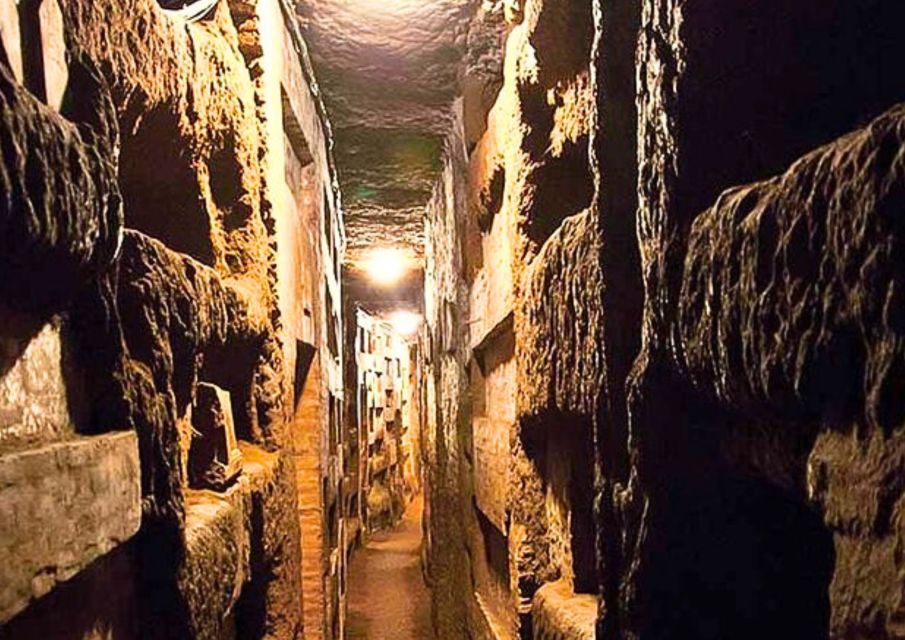
The catacombs visit itself is about an hour of guided touring, focused on major areas and key burial spaces. The tour is described as a guided route through the sprawling network of tunnels, with an expert guide who explains the history and the meaning of what you’re seeing.
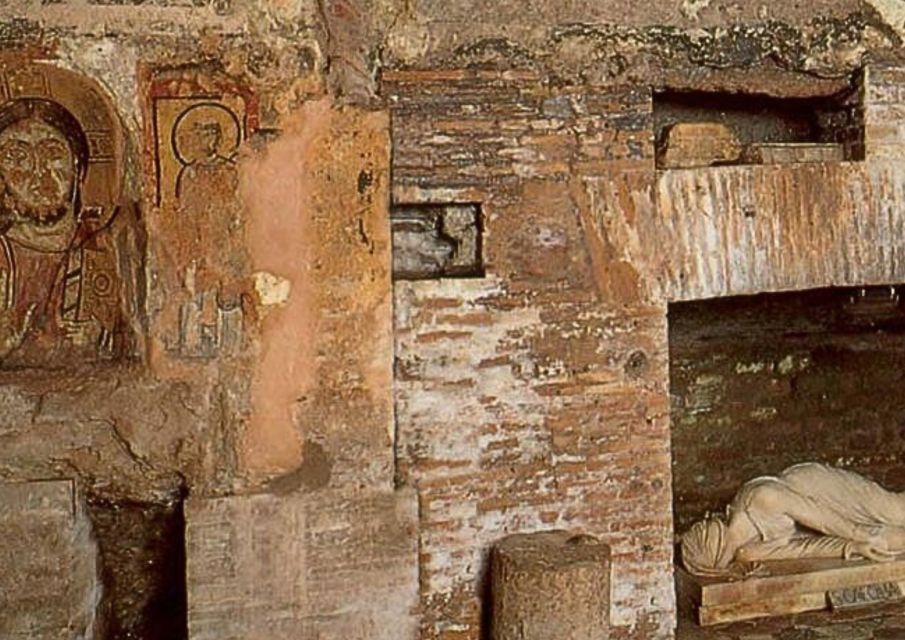
The Catacombs of St. Callixtus include two small basilicas with three apses, known as the Trichorae. This is one of those details that sounds technical until you’re standing near it and realize this wasn’t just a tunnel system. It was designed space—organized, reused, and shaped for worship and memory.
You’ll also be taken through named sections tied to dates and figures, including:
- The Crypts of Lucina and the area of the Popes (2nd century AD)
- The Crypt of St. Cecilia (2nd century AD)
- The area of Pope St. Miltiades (half of the 3rd century)
- The Crypts of St. Gaius and St. Eusebius (end of the 3rd century)
- The Western Area (first half of the 4th century) and the Liberian Area (second half of the 4th century)
A quick practical note: photography is not allowed inside, so don’t plan your “souvenir shots” down there. Go for memory, not camera roll.
And pace matters. Because you have only about an hour underground, you’ll likely feel like you’re seeing the highlights rather than marching through every corridor. That works for most people—especially those who don’t want a long, exhausting crawl.



Catacombs rules and small-group access: why your group size matters
This tour works within access limits set by the Vatican. Catacombs sites are only accessible in groups of a minimum of 2 and a maximum of 15 persons. On top of that, the experience is offered as a small group format limited to 5 participants.
What that means for you in real life: you get a more manageable tour flow. Smaller groups tend to move together through tight spaces without the “herding” feeling that can happen in bigger parties. It also makes the guide’s explanations easier to follow. In a place where the physical environment is already dense and dark, clarity beats volume.
Also, plan your expectations. This is not a DIY wander. You’re with a live guide, and the route follows what’s accessible and designed for visitors.
Dress code, temperature, and getting comfortable underground
The catacombs have a constant temperature around 15°C / 60°F with high humidity. Even in May or September, you’ll feel it. Bring this reality forward in your outfit choices.
You also need to follow the dress code because the catacombs are a sacred place. Aim to cover:
- Knees and upper arms for both men and women
Avoid shorts that show too much leg, skirts above the knee, sleeveless tops, and low-cut shirts.
Closed-toe shoes are important. Uneven terrain and staircases are part of the experience. Comfort matters more than style here. If your footwear is “cute but slippery,” you’ll regret it.
One more reality check: this tour is not recommended for travelers with heart problems or serious medical conditions, and it’s not suitable for wheelchair users or people with mobility impairments. If you’re claustrophobic, the tunnel environment may feel too tight or closed.
Price and value: is $181 per person a good deal?
At $181.26 per person for about 3 hours, the cost can look steep—until you break down what’s included.
You’re paying for:
- Private round-trip transportation (the biggest practical value)
- Skip-the-line tickets to the catacombs
- A live English-speaking guided tour
- Scenic drives and included sightseeing stops: Appian Way views, Aurelian Walls and Pyramid of Caius Cestius passing by, plus Janiculum Hill and il Fontanone
The private transfer is the part many people underestimate. The catacombs are outside where you can easily pop in by foot or quick tram. If you tried to piece it together on your own, you’d likely spend money on transport anyway—and you’d lose the time efficiency and comfort you get here.
So is it worth it? For couples, small families, or anyone who wants a calm, organized experience without logistical hassle, this is a strong value. If you’re a budget-only traveler who loves long walks and planning from scratch, you might prefer cheaper public transport options—though the smoothness of this plan is the point.
Who should book this Rome catacombs tour (and who shouldn’t)
This tour fits best if you want:
- A low-stress trip to a site outside the center
- Skip-the-line entry and guided context
- Small-group pacing with room to hear the guide
- A day plan that includes surface sightseeing too (Appian Way drive, Janiculum Hill view)
It’s less ideal if:
- You need wheelchair access or have significant mobility limits
- You’re claustrophobic
- You’re not comfortable with dress code rules for sacred spaces
- You want to take lots of photos inside the catacombs (photography is not allowed)
One more tip: wear layers. You’ll go from Rome street warmth to underground humidity and back again. A light jacket you can remove works well.
The small details that make it feel well-run
The most praised parts of this experience aren’t just the “big” sights. The day is structured so you feel guided even before you reach the entrance.
You’ll start with pickup by driver in a comfortable vehicle, then you’ll pass key landmarks along the way while getting historical explanations. Once you’re underground, your guide leads a focused route through the most important named areas. Organization is part of the comfort here—so you spend less time worrying about timing and more time absorbing what you’re seeing.
And after the catacombs, the Janiculum Hill stop helps end the day on a brighter note, not a return-to-hotel crawl with tired legs.
Should you book this Rome Catacombs Tour with Private Transfer?
If you want the catacombs without the logistical headache, I’d book it. The private transfer is the backbone of the experience, and the skip-the-line entry plus guided route turns a potentially frustrating outing into something you can actually enjoy in 3 hours.
I’d also say yes if you like guided explanations and want a small-group feel. The combination of underground history and above-ground Rome viewpoints (Appian Way, Aurelian Walls passing by, and Janiculum Hill) gives your day shape.
Skip it only if you know you’ll struggle with tunnels, stairs, or the sacred-site dress code. Otherwise, this is a smart, efficient way to see a side of Rome most first-timers never manage.
FAQ
How long is the Rome Catacombs tour with private transfer?
The total duration is 3 hours, including the round-trip drive and time for the guided visit in the catacombs.
Which catacombs are visited: St. Callixtus or St. Sebastian?
The tour is for the Catacombs of St. Callixtus, but on Wednesdays or special holidays it uses the Catacombs of St. Sebastian instead.
What’s included besides the catacombs entry and guide?
You get a private round-trip transfer, skip-the-line tickets, a guided visit in English, and scenic sightseeing stops including views along the Appian Way, passing the Aurelian Walls and Pyramid of Caius Cestius, plus a stop at Janiculum Hill for il Fontanone.
Is there photography inside the catacombs?
No. Photography is not allowed inside the catacombs.
What should I wear and bring for the visit?
Wear comfortable shoes and appropriate clothing. You should cover knees and upper arms, and avoid shorts that show too much leg, sleeveless tops, and low-cut shirts. The underground temperature is around 15°C / 60°F with high humidity, so dress accordingly.
Is this tour suitable for everyone with mobility or claustrophobia concerns?
No. It is not suitable for wheelchair users or travelers with mobility impairments, and it is also not suitable for people with claustrophobia. It’s also not recommended for those with heart problems or serious medical conditions.