REVIEW · COLOSSEUM TOURS
Best of Colosseum Experience: Exclusive Tour in 40 Languages
Book on Viator →Operated by Veditalia · Bookable on Viator
Three big Roman icons. One guided sweep.
This 3-hour tour strings together the Colosseum, Palatine Hill, and the Roman Forum so you’re not juggling separate tickets and guides. The best part for international visitors is the real-time AI translation, which turns the guide’s spoken commentary into your language with a short delay.
Two things I really like about it are the all-in-one structure and the small-group feel. I like that admission tickets are included across the stops, so you’re not scrambling for entry while everyone else is stretching their patience. I also like that group size is kept tight (maximum 25), with audio headsets when the group is larger than 6.
One thing to consider: 3 hours can feel like a fast pace. If you want to linger slowly at every corner, you may find the schedule a bit tight, especially if the weather or crowds add waiting time.
In This Review
- Key highlights at a glance
- A tight 3-stop plan for Rome’s biggest ancient stages
- Entering the Colosseum with tickets handled and context in your ear
- The practical win: you don’t have to manage entry
- Palatine Hill: imperial palaces, garden ruins, and the view back down
- Watch for a common snag
- Roman Forum: the civic heart where temples and politics lined up
- AI translation in 40 languages: how it helps without killing the vibe
- How to make it work smoothly
- A real bonus for mixed groups
- Group size, pacing, and the meeting spot at Piazza del Colosseo
- What to bring for a smooth day
- Price and value: why $45.86 can make sense here
- The main cost you’ll add yourself
- Who should book this Colosseum + Forum + Palatine tour
- Should you book this exclusive Colosseum experience?
- FAQ
- How long is the tour?
- What attractions are included?
- Is admission included?
- Do I need passport or ID?
- Is there translation support?
- Where does the tour start?
Key highlights at a glance
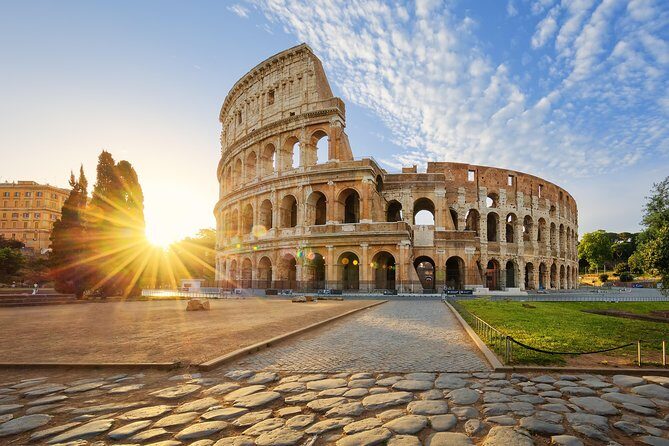
- Colosseum, Palatine Hill, and Roman Forum together in one guided loop
- Real-time AI translation with guide speech delivered to your earphones in seconds
- Small group size (max 25) with headsets if needed
- Admission tickets included so you can focus on the story instead of paperwork
- Passport/ID required for Colosseum access
- Mobile ticket for a simpler check-in flow
A tight 3-stop plan for Rome’s biggest ancient stages
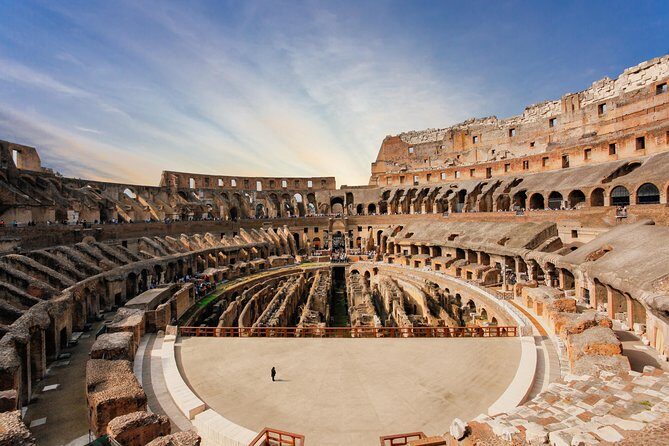
Rome can bully your schedule. One day, it’s “quick photo.” The next, it’s long lines and “wait, which ticket is for which site?” This tour is built for people who want three heavyweight stops without spending the day bouncing between tour operators.
You start at the Colosseum, then move up to Palatine Hill, and finish at the Roman Forum. The order matters. It helps you see how Rome’s power machine worked: the spectacle at the Colosseum, the elite residence zone on Palatine Hill, and then the civic center in the Forum.
The pace is focused. Each stop gives you about an hour, which is usually perfect for a first visit. You won’t get “wander for hours” time, but you will get a clean overview fast—and that’s what most first timers actually need.
You can also read our reviews of more tours and experiences in Rome.



Entering the Colosseum with tickets handled and context in your ear
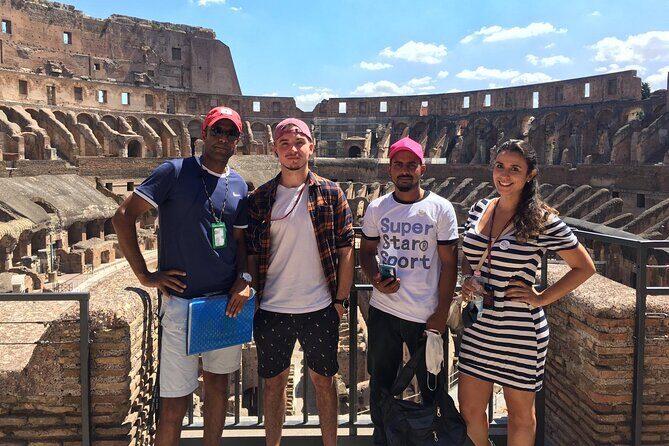
The Colosseum is the big one. It’s the largest amphitheater ever built and it shows off Roman engineering at a grand scale. The tour approach makes it easier to connect the physical building to what happened inside it.
Here’s what you’ll learn to look for while you’re there:
- The Colosseum was completed around 80 AD under Emperor Titus.
- It could hold up to 80,000 spectators.
- It wasn’t only for gladiators. It also hosted animal hunts and even mock naval battles.
And because Rome has scars, you’ll hear why it looks the way it does today. Centuries of damage from earthquakes and looting left visible marks on the structure. That’s part of the story too. You’re seeing a monument that has survived long enough to feel like a living ruin, not just a postcard.
The practical win: you don’t have to manage entry
Admission is included, and your ticket is mobile, which typically means less time dealing with paper. Still, do not treat this as “I’ll just show up.” You must bring a passport or ID for access to the Colosseum.
Also, arrive early. If you’re late and you miss the departure, there’s no refund. For Rome tours, that’s a rule worth respecting even if it seems strict.
Palatine Hill: imperial palaces, garden ruins, and the view back down
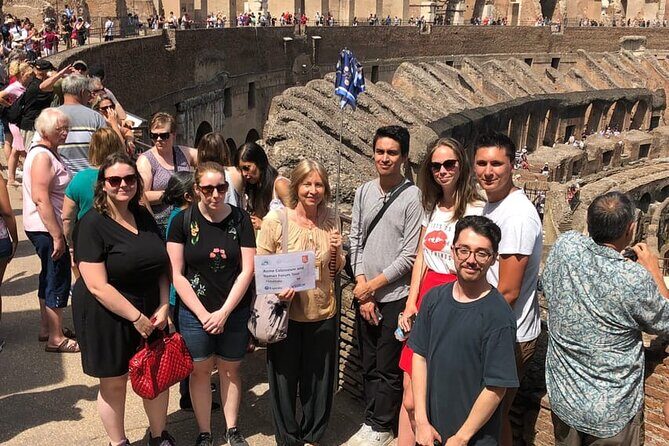
Palatine Hill is where Rome’s origin stories and power vibes meet. It’s one of Rome’s seven hills, and it’s strongly linked to the city’s earliest legends—Romulus and Remus are tied to this area. But the tour keeps it grounded in what you can actually walk through today.
You’ll spend about an hour here, and the focus is on what Palatine Hill represented:
- The hill held imperial palaces, including the lavish residence associated with Emperor Augustus.
- You’ll see the remains of gardens and temples.
- The views help you connect the hill to the sights below, including the Roman Forum and the Colosseum.
This is the moment when the tour shifts from “big arena” to “big influence.” It’s one thing to stand in a stadium-sized ruin. It’s another to understand that the people who planned politics and public life lived close to the center of it all.
Watch for a common snag
Palatine Hill can be more “ruin reading” than “single landmark.” If you hate trying to imagine what you’re looking at, you’ll want the guide’s commentary more than ever. That’s where the translation system (if you select it) really pays off.



Roman Forum: the civic heart where temples and politics lined up
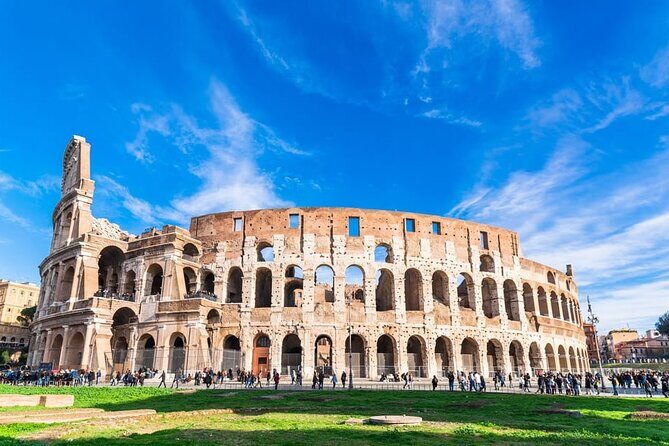
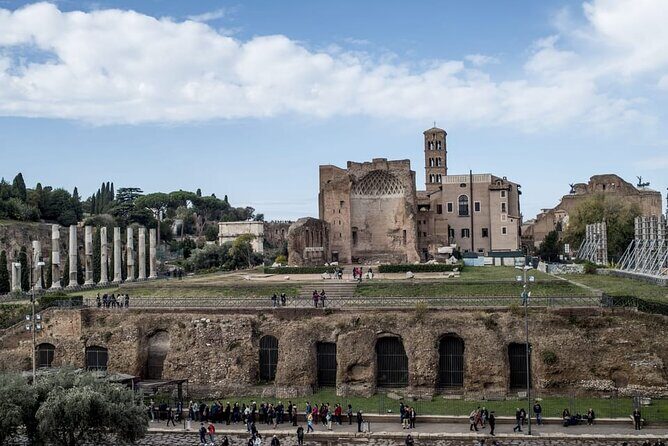
After Palatine Hill, you step into the Roman Forum—Rome’s old meeting room for politics, religion, and public life. This is where you get the sense of the city as a machine, not just a collection of monuments.
You’ll be guided through what made the Forum central:
- It sat between the Capitoline and Palatine hills.
- It flourished from the Republic era through the Empire.
- You’ll hear about important remains like the Senate House, temples, and the Rostra, where public orators spoke.
The tour’s value here is interpretation. If you’ve ever stared at a pile of stones and wondered what mattered, the guide’s narration helps you map the Forum’s layout in your head. You start to see the line from Via Sacra temples to public speech points—how power moved from buildings to people.
One note: the Forum is outdoor and open. Even if it’s “only” an hour, it can feel longer if the ground is busy, you’re checking details constantly, or the light is changing.
AI translation in 40 languages: how it helps without killing the vibe
This is one of the most distinctive parts of the experience. The tour title promises 40 languages, and the system is designed for real-time listening.
What I like about this model is that it doesn’t force you to stare at subtitles or read a screen. The guide speaks in their native language, and the translation is delivered to your earphones. You get the narration with a delay of about 5 to 15 seconds.
The system is also built for accuracy. The provided testing range is 90% to 100% across multiple languages. That’s important because the Forum and Colosseum are full of names, dates, and roles. If translation drops words at random, you lose the plot.
How to make it work smoothly
You’ll want to listen the way you would on any guided tour: head up, ears open. If you’re constantly checking your phone or you’ve got one ear covered, it becomes harder to follow.
If you’re using the AI option, the process is straightforward: you rent the device/app through the tour experience, listen during the commentary, and return it at the end.
A real bonus for mixed groups
This kind of setup is especially helpful when you’re with people who don’t all speak the same language. The translation is meant to keep the whole group together as one conversation, not split into separate tours of varying quality.
Group size, pacing, and the meeting spot at Piazza del Colosseo
This is a max 25-person tour, and smaller groups are used for interaction (up to 20/25). If the group is bigger than 6 people, audio headsets are provided. That matters at the Colosseum and Forum, where wind, crowd noise, and echoes can make it hard to hear a guide clearly.
The start point is simple and central: Piazza del Colosseo, 1a, 00184 Roma RM, Italy. The tour ends back at the meeting point, which helps with planning the rest of your day.
The timing runs about 3 hours total. You’ll get roughly an hour at each major site. That’s enough time to learn the core story and still feel like you saw the place—not just the entrance.
What to bring for a smooth day
- Passport or ID (mandatory for Colosseum access)
- Something rain-ready if the sky decides to act up. One guide example from this experience showed calm professionalism even with monsoon rain, which is a good sign the process holds up when it gets messy.
- Comfortable shoes. Even when the stops are timed, these are ancient sites with uneven footing.
Price and value: why $45.86 can make sense here
At $45.86 per person, you’re paying for three major attractions, guided storytelling, and (if selected) the AI translation tech.
The big value driver is that admission tickets are included for each stop, while you also get a licensed guide and headsets when needed. Many “cheap” tours in Rome are really just a guide escort without built-in entry—so you end up spending time later. Here, you’re bundling entry into the tour plan.
Also, because this is a small-group style experience, you’re paying for more than access. You’re paying for someone to help you understand what you’re looking at right then—especially at the Forum, where the layout can feel confusing if you’re on your own.
The main cost you’ll add yourself
Food and drinks are not included. Build time for lunch after the tour, not during it. You’ll enjoy the sites more if you’re not hunting for snacks while everyone else is listening.
Who should book this Colosseum + Forum + Palatine tour
I’d steer you toward this tour if:
- You want the “Rome top trio” without building a whole day around ticket logistics.
- You care about context while you’re standing in the ruins, not hours later with a phone in your lap.
- You need translation support and don’t want your visit split into language gaps.
- You prefer small-group pacing over a huge bus-crowd experience.
This tour may be less ideal if:
- You want to spend long stretches on your own at each site. The schedule is structured, and 3 hours is not designed for slow wandering.
- You’re not into device-based listening. The translation is a core selling point, and the experience works best when you lean into it.
Should you book this exclusive Colosseum experience?
If your goal is a smart first pass at Rome’s ancient core, I think this is a strong pick. You get three top sites in one guided run, admission included, and a translation system that keeps you connected to the story even if your language isn’t Italian.
Book it if you like structure, you want clear explanations at each stop, and you’d rather spend your energy looking at the ruins than managing tickets.
Skip it if you’re the type who wants hours of quiet exploring, or if you’re allergic to using a headset or translation device. For many visitors, though, this is exactly the kind of time-saving plan that turns “I’ll see it someday” into “I got the story in my head.”
FAQ
How long is the tour?
The tour runs about 3 hours.
What attractions are included?
It covers three stops: the Colosseum, Palatine Hill, and the Roman Forum.
Is admission included?
Yes. Admission tickets are included for each of the three stops.
Do I need passport or ID?
Yes. You must bring a passport or ID for access to the Colosseum.
Is there translation support?
If you select the option, there is AI real-time multilingual translation through a smartphone app/device. The guide speaks naturally and the translation is delivered to your earphones with a 5 to 15 second delay.
Where does the tour start?
The tour starts at Piazza del Colosseo, 1a, 00184 Roma RM, Italy, and ends back at the meeting point.