REVIEW · PRIVATE
Rome Caravaggio and Baroque Masterpieces Private Guided Tour
Book on Viator →Operated by Tour In Rome by Tour in the City · Bookable on Viator
Caravaggio in Rome, without the maze. This private guided experience is designed to make sense of Rome’s noise fast, taking you through major landmarks with an art historian explaining what you’re actually looking at. Two standout reasons it works so well: you get your own pace and focus, and you see Caravaggio’s themes in context rather than as random famous paintings.
One thing to plan for: you’ll visit several churches where knees and shoulders must be covered, and the Pantheon is viewed from the outside since Pantheon entry tickets aren’t included.
In This Review
- Key things to know before you go
- Why this Caravaggio and Baroque private route is a smart use of time
- Start at Piazza del Popolo and end near Parliament life
- Chiesa di Santa Maria del Popolo: Caravaggio’s Saint Peter and Paul scenes
- Ara Pacis and Augustus’s tomb remains: when power becomes stone fragments
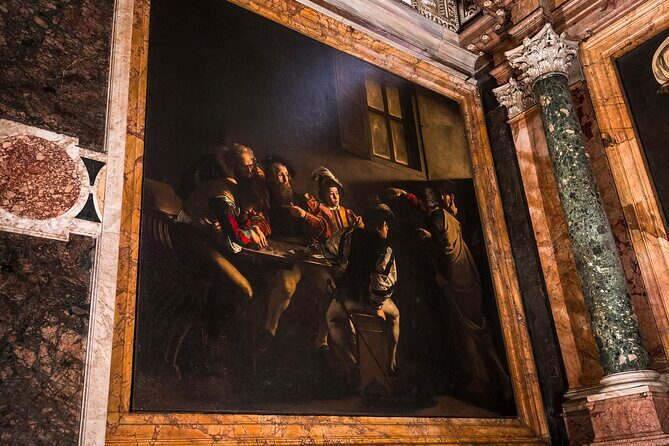
- Church of St. Louis of the French: three Caravaggio works for Saint Matthew
- Piazza Navona: Baroque drama in one iconic square
- A Caravaggio connection through Cardinal del Monte’s home
- Pantheon outside view: what you miss if you skip entry tickets
- The Gesù (St. Ignatius) and Baroque Rome’s religious power
- Palazzo di Montecitorio: Bernini’s impact on modern civic life
- Guides who make the art feel personal
- Price and value: what you’re paying for in 3 hours
- Practical tips so your churches stay comfortable
- Should you book this private Caravaggio tour?
- FAQ
- How long is the Rome Caravaggio and Baroque Masterpieces private tour?
- Is this tour private or shared with other people?
- Where does the tour start and end?
- Is the Pantheon included inside the tour?
- What’s the dress code for visiting churches?
- Can I cancel for a full refund?
Key things to know before you go
- Private pacing in just 3 hours: your guide can slow down where your questions are.
- Caravaggio in multiple churches: Santa Maria del Popolo and St. Louis of the French put his religious storytelling front and center.
- Baroque landmarks on the same route: Piazza Navona, Bernini, and Borromini show up in a single flow.
- Aussie and imperial Rome moments: you’ll also spot the Ara Pacis and Augustus’s monumental tomb remains along the way.
- Smart arrival choices: starting at Piazza del Popolo and ending at Piazza di Montecitorio keeps you near transit.
Why this Caravaggio and Baroque private route is a smart use of time
Rome can overwhelm you in minutes. Streets loop, churches look similar at first glance, and the most famous art can feel like a photo-op instead of a story. What I like about this tour is how it trims the confusion down to something manageable: three hours, a private format, and a clear theme—Caravaggio and the Baroque world he helped define.
You also get a “guided meaning” layer. Instead of simply entering a church and hoping you can interpret the scene, you’re shown how the details link to Caravaggio’s approach—dramatic subject matter, stark realism, and intense religious emotion. That turns famous works into something you can actually read.
And because it’s private, you’re not stuck in a single pace. If you want to spend extra time on one painting or ask why a church facade looks the way it does, you can. That flexibility matters in Rome, where crowds and lines can make strict sightseeing feel like rushing.
Finally, the route doesn’t ignore big-name Rome. You’ll connect Caravaggio to Baroque Rome’s stagecraft and civic presence—Bernini’s fountains, Borromini’s architecture, and monumental civic buildings that still run the city’s government life today.
You can also read our reviews of more guided tours in Rome



Start at Piazza del Popolo and end near Parliament life
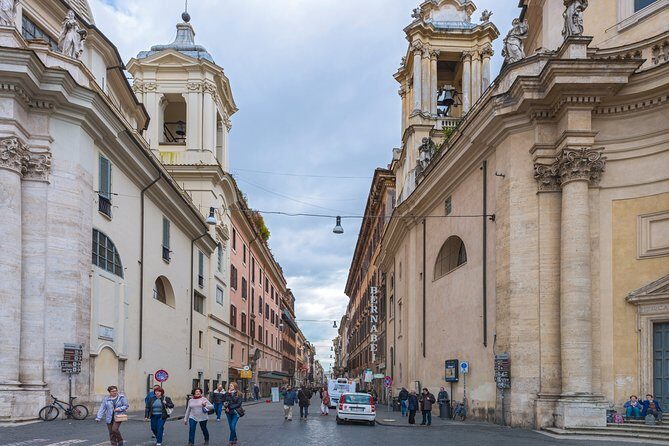
Your tour begins at Piazza del Popolo and ends at Piazza di Montecitorio. That may sound like mere logistics, but it’s actually a practical gift. Piazza del Popolo is a strong starting point for orientation, and Montecitorio is right where the modern city meets grand Rome.
Expect an English-speaking professional art historian guide. That’s important here because the tour is about interpretation, not just location. You’ll spend time inside churches where the art is physically present, and you’ll also spend time outdoors where the guide ties buildings to specific people, patrons, and artistic movements.
Departure can be morning or afternoon, and the order of sites can shift. That means you should plan your day with a little slack, especially if you have other timed tickets. Still, the stops themselves are stable enough that you’ll know what kind of experience you’re getting: churches with Caravaggio, plus major Baroque landmarks.
Also note the tour doesn’t include pickup/drop-off. Since the meeting point is near public transportation, it’s easiest to arrive on foot from nearby transit rather than expecting someone to drive you to the exact door.
Chiesa di Santa Maria del Popolo: Caravaggio’s Saint Peter and Paul scenes
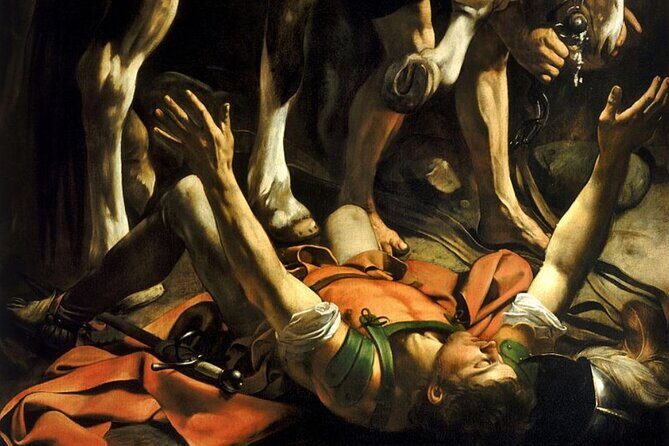
This is one of the stops that makes the whole theme click. Santa Maria del Popolo is where you can see Caravaggio’s works tied directly to two major apostolic figures—Saint Peter and Saint Paul. The tour time here is short but focused, about 20 minutes, which is ideal when you want concentrated attention without turning the church into a long endurance test.
Inside, you’re not just looking at paintings. You’re learning what’s going on in the compositions and why these subjects mattered so much in the religious atmosphere of the time. Caravaggio’s approach is often described in terms of drama and realism, but the real takeaway is this: you’re trained to look at the story being told with the lighting, the gestures, and the way the scene directs your eye.
Practical tip: churches can feel cool and dim. If you’re filming, give your phone a moment to adjust exposure so the images aren’t washed out. And since the tour is smart casual but church rules apply, bring a layer that covers your shoulders easily if you get hot in the sun before entering.
Ara Pacis and Augustus’s tomb remains: when power becomes stone fragments
Between the big church stops, you get a dose of imperial Rome. You’ll admire the remains of Augustus’s monumental tomb and the Ara Pacis, the Altar dedicated to Peace. This matters because Caravaggio’s Rome didn’t appear from nowhere. It grew inside a city already full of monumental political messaging.
What you’re seeing is a reminder that Rome constantly recycles itself. Even when the view is reduced to fragments, those fragments still tell you where authority was displayed. The Ara Pacis is especially useful as a concept guide: Baroque Rome loved to borrow the feeling of grandeur and seriousness, even when the materials and style changed.
This stop also breaks up the church-heavy rhythm. If you’ve been doing museum after museum, it refreshes the senses to look at open-air stone—even if the forms are worn by time.
Church of St. Louis of the French: three Caravaggio works for Saint Matthew
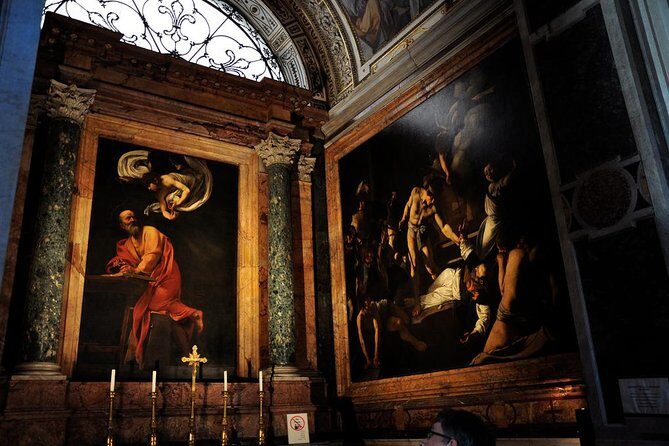
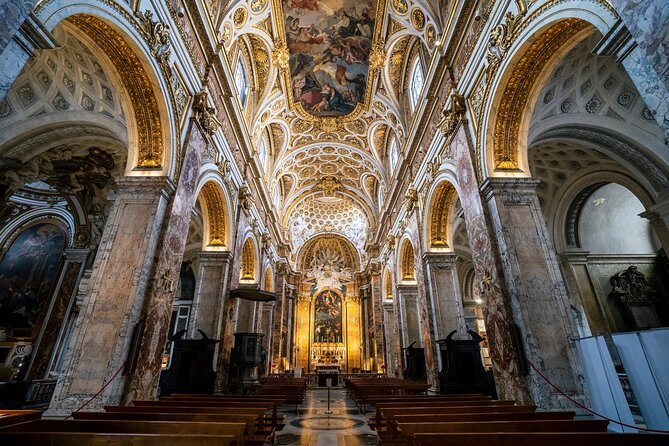
If your main interest is Caravaggio, this is the other anchor stop. At the Church of St. Louis of the French, you’ll enter to see three paintings by Caravaggio dedicated to Saint Matthew and scenes from his life.
This part is valuable because it lets you compare how one artist treats related themes. You don’t just get one famous work. You get a small cluster that reinforces patterns: the same intense emotional focus, the same sense of sacred drama, and the same knack for turning religious history into something that looks immediate.
The tour time here is about 15 minutes. That sounds brief, but the guide’s job is to help you see what matters quickly. You’ll likely be looking for specifics—how figures relate to each other, how narrative is staged, and why patrons would want this kind of visual storytelling.
A small travel reality: churches often have low light and uneven footing. If you wear shoes that grip well, you’ll enjoy the time more. And if there’s a moment where you want to step back to take in a wider view, don’t be shy. Better to look well than to stare too close.
You can also read our reviews of more private tours in Rome

Piazza Navona: Baroque drama in one iconic square
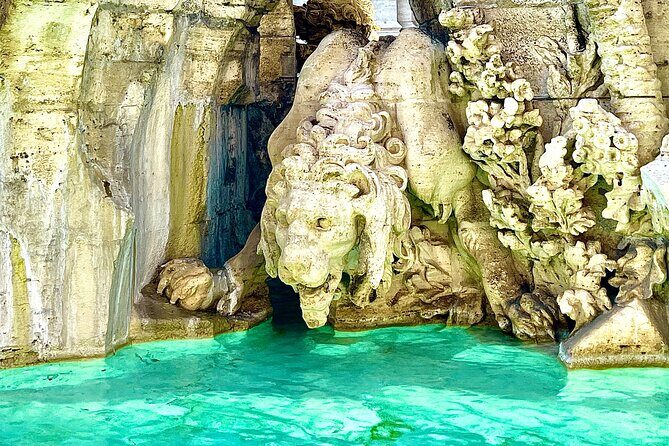
Next comes one of Rome’s most recognizable stages: Piazza Navona. This square is a strong symbol of Baroque style, and it’s also the kind of place where architecture and public art work together like a set.
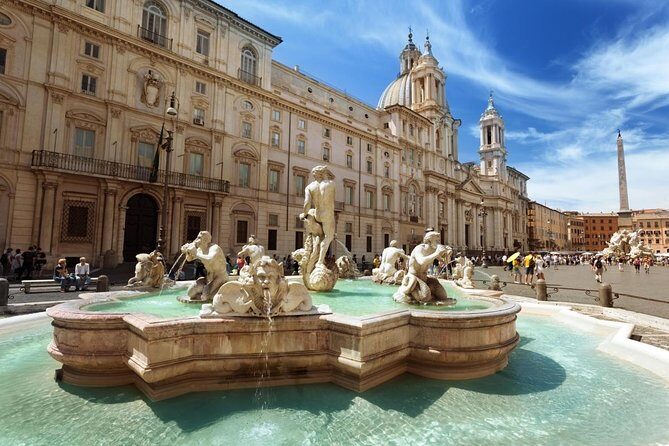
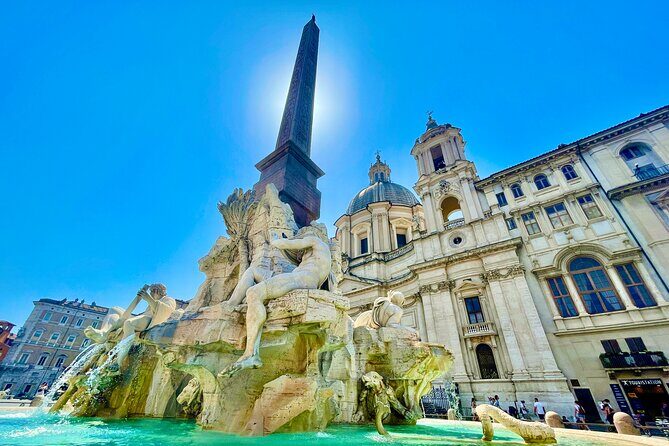
You’ll spend time admiring the Church of Saint Agnes, projected by Borromini, and the famous Fountain of Four Rivers, sculpted by Bernini. Here the guide helps you make sense of Baroque choices: dramatic movement, theatrical balance, and a sense that the city wants you to feel something right away.
Even if you’ve seen photos of the fountain, it reads differently in person. The scale is bigger, and the characters feel more alive when you see them from the right angle. If you want a practical tip, take one minute to look all the way around the fountain rather than just snapping the front view. The way the figures are arranged is part of the point.
This stop also keeps the tour moving. With only 15 minutes here, you’re not meant to linger for a long break. Think of it as a quick “see it right now with an expert lens” moment.
A Caravaggio connection through Cardinal del Monte’s home
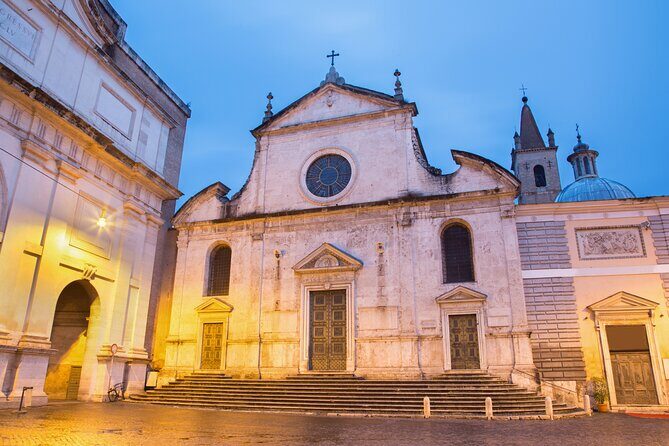
Then you’ll pause to admire the building connected to Cardinal del Monte, where Caravaggio lived when he first arrived in Rome. This isn’t just trivia. It gives you a human map for the art.
Caravaggio didn’t arrive as a floating genius. He entered a social and patronage world. When you understand that context—even briefly—the paintings start to feel less like distant masterpieces and more like works made for real people and real settings.
If you’re the type who likes to connect art to where it was commissioned or lived, this part can be especially satisfying. It also helps explain why certain subjects and styles show up again and again in Baroque Rome.
Pantheon outside view: what you miss if you skip entry tickets
The Pantheon stop is done from the outside, and that’s a key detail. Pantheon entry tickets aren’t included, so you’ll take in the exterior and the big story it carries—then keep walking.
You’ll hear how the temple was dedicated to all gods by Agrippa in the 1st century BC, how it became a church in early medieval times, and how in the 19th century it hosted the tombs of the kings of Italy after unification in 1870. Those time layers matter because they explain why this building feels different from a standard ancient ruin.
Here’s the tradeoff: outside-only is still worth it for the architecture and the overall context, but you won’t see the interior space that people come for. If the Pantheon interior is a must for you, you can plan to add your own ticket outside the tour.
Time here is about 15 minutes, so don’t expect an in-depth interior explanation. Instead, treat it as the big “anchor moment” where the guide connects Rome’s ancient, medieval, and modern use of sacred space.
The Gesù (St. Ignatius) and Baroque Rome’s religious power
From the Pantheon, you’ll pass and look at the church dedicated to St. Ignatius of Loyola, founder of the Jesuit Order. The square in front is described as a great example of Baroque Roman style, and that fits the Jesuits’ broader visual style: direct, persuasive, and built for public impact.
You won’t be spending long here, and that’s fine. The aim is recognition and context, not a long stop.
In practice, this is a good reminder to look up and notice the facade and how the space funnels movement. Baroque cities weren’t built only for living rooms and churches. They were built to guide crowds.
Palazzo di Montecitorio: Bernini’s impact on modern civic life
The final landmark you’ll see is Palazzo di Montecitorio, today the headquarters of the Parliament. The facade is linked to a Bernini project, which is a neat example of how Baroque design didn’t stay stuck in the 1600s—it kept shaping what Rome looks like while it modernized.
You’ll spend only about 10 minutes here. Use that time to notice the building presence. It’s easy to ignore civic architecture while focusing on churches and museums, but this kind of stop helps you understand Rome as a living capital rather than a stage set.
Ending here also makes sense if you want to continue your day nearby, whether that means a meal, more walking, or a quick return to transit.
Guides who make the art feel personal
The biggest praised aspect of this tour is the guide. Names like Emilio and Martin show up in excellent feedback for their passion for Caravaggio and Roman art and history. What you should look for is not just facts, but the way the guide ties paintings to places and people—so the church walls start to feel like part of the same story.
One extra bonus mentioned is that some guides may add a quick surprise stop connected to Rome’s first public library, including a look at a 16th-century book. That’s not something you should count on every time, but it’s a strong sign that these guides like to go beyond the bare minimum and bring the city’s paper history into the art conversation.
If you like asking questions and you don’t want an off-the-shelf script, private format helps a lot. It also helps you adjust the pace if a church is crowded or lighting is poor.
Price and value: what you’re paying for in 3 hours
At $237.09 per person for about 3 hours, this isn’t a budget add-on. You’re paying for two things: a private art historian guide and an efficient, themed route that gets you into multiple churches focused on the same artist and period.
What helps justify the cost is that the tour is not only outdoor sightseeing. You get time inside two key churches for Caravaggio works, plus time in other major Baroque spaces. It’s hard to recreate that value on your own unless you already know where the right works are and how to interpret them quickly.
Also, most entries are described as free for the listed stops, but Pantheon entry tickets are not included. That means your real total might be a little higher if you want to add Pantheon interior access. Still, the tour is designed so you can see the most important elements even without that ticket.
If you’re traveling with another person and you want private attention rather than group pacing, the value can feel stronger. If you’re solo, it can feel pricier—so ask yourself whether you want the guide’s interpretive help enough to justify the private format.
Practical tips so your churches stay comfortable
Dress code is smart casual, and in churches knees and shoulders must be covered for both men and women. That’s the one rule most people remember too late, right before entering the first church. Plan your outfit so it covers you without fighting your clothing.
A few more practical moves:
- Bring a light layer or scarf for shoulders, even in warm weather.
- Wear shoes that don’t slip on stone floors.
- Keep water in your day pack since food and drinks aren’t included.
- If you’re sensitive to low light, give your eyes a moment when you enter churches so details snap into view.
Also, the order of stops can vary. That’s normal for Rome routes. You’ll still get the same major pieces: Caravaggio churches, key Baroque squares, and the Rome context that connects them.
Should you book this private Caravaggio tour?
I’d book it if you want Caravaggio-focused time with real explanation and you’d rather spend 3 hours learning in person than hopping between stops on your own. It’s especially good if you like art stories that tie paintings to patrons, locations, and the Baroque “stage” of Rome.
I would hesitate if you’re mainly chasing the Pantheon interior experience, because this tour looks from the outside and Pantheon entry tickets aren’t included. You’d need to add that separately if it’s a top priority.
Overall, this is a strong choice for anyone who wants their Rome to feel organized and meaningful—without turning the city into a checklist.
FAQ
How long is the Rome Caravaggio and Baroque Masterpieces private tour?
It lasts approximately 3 hours.
Is this tour private or shared with other people?
It’s a private tour/activity, and only your group participates.
Where does the tour start and end?
It starts at Piazza del Popolo in Rome and ends at Piazza di Monte Citorio in Rome.
Is the Pantheon included inside the tour?
No. You’ll view the Pantheon from the outside, and Pantheon entry tickets are not included.
What’s the dress code for visiting churches?
Smart casual is required, and in churches knees and shoulders must be covered for both men and women.
Can I cancel for a full refund?
Yes. You can cancel up to 24 hours in advance for a full refund.