REVIEW · CATACOMBS TOURS
Rome: Appian Way & Catacombs Golf Cart Shared Tour
Book on GetYourGuide →Operated by EcoBike Roma - Parco Appia Antica · Bookable on GetYourGuide
The Appian Way can feel like time travel. This 3-hour shared tour takes you out of the city rush and into a protected stretch of ancient roads and tombs, using a golf cart to keep the pace easy while the history stays intense. You’ll hit the famous Appian Way, then go underground for the Catacombs, with major stops like the Circus of Maxentius along the way.
Two things I really like are how the Catacombs get explained clearly and how the guide connects the sites to real human stories. Another standout is the mix of “big Rome” monuments (like the circus) with quieter corners of the Appian landscape, so it doesn’t feel like a checklist. The small group size (limited to 5) also helps you ask questions and stay on schedule.
One drawback to plan for: the Catacombs involve a lot of stairs and no wheelchair access. You should also expect a bit of cold underground (around 16°), and the tour does not include the aqueducts area.
In This Review
- Key highlights you’ll actually feel
- Riding the Appian Way by golf cart (and why it’s a smart choice)
- Domine Quo Vadis: a church stop with a purpose
- Catacombs of Rome: law and faith, plus the detail you’ll remember
- Circus of Maxentius: the scale hit (and why Ben Hur helps)
- Tomb of Cecilia Metella and Capo di Bove: power on display
- Villa dei Quintili and the Commodus thread
- Price, time, and what’s actually included (so you don’t get surprised)
- Who should book this (and who should skip it)
- Should you book this Appian Way and Catacombs golf cart tour?
- FAQ
- How long is the Rome: Appian Way & Catacombs golf cart shared tour?
- Where is the meeting point?
- How big is the group?
- What’s included in the price?
- Are the Catacombs wheelchair accessible?
- What restrictions should I know about?
- What if my plans change?
Key highlights you’ll actually feel

- Skip the heavy line vibe by starting on Via Appia Antica and moving by golf cart instead of constant walking
- Catacombs guided tour lasting about 50 minutes, with a focus on how law and faith intersected underground
- Domine Quo Vadis church and the Christ–Saint Peter encounter story that sets the tone for the day
- Circus of Maxentius gets real context, including its pop-culture fame tied to Ben Hur
- Cecilia Metella’s tomb and Quintili’s Villa add power-and-plot drama, including tensions around Commodus
Riding the Appian Way by golf cart (and why it’s a smart choice)
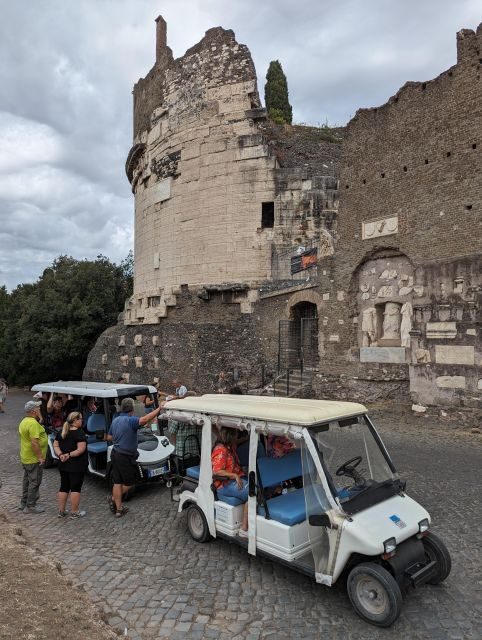
This tour is built for people who want the Appian Way experience without turning the day into an all-day hike. You start at Via Appia Antica, 60, and you’ll spend part of the morning gliding along the road on a golf cart while your guide talks. That simple setup changes everything: you get views, stops, and stories without getting worn out before the underground part.
The Appian Way area matters because it’s not just one monument. You’re moving through a protected park space tied to thousands of years of Rome, and the tour gives you enough time to notice the variety: open roadway, tomb territory, and big architectural remains. At around 3 hours total, the pacing is tight but not rushed.
You also won’t be bouncing around the most crowded core of Rome. The tour is designed to get you away from the mass-tourism crush, and that makes it easier to appreciate things like the scale of the ancient road and the quiet mood around tombs and ruins. If you’ve ever done the “Colosseum plus one more thing” day, this feels like a reset.
You can also read our reviews of more tours and experiences in Rome.



Domine Quo Vadis: a church stop with a purpose
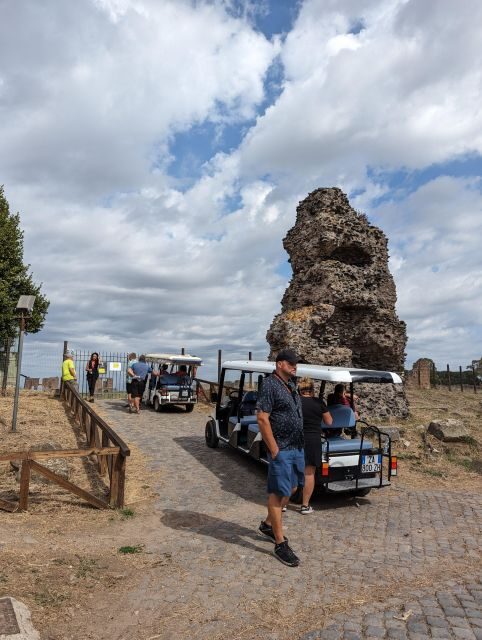
The tour’s highlight list includes the Domine Quo Vadis church, built around the encounter between Christ and Saint Peter. Even if you’re not the type who seeks out religious sites, this stop works because it changes how you read the rest of the day.
The Catacombs aren’t presented as spooky caves. They’re presented as a parallel world where law, faith, and community logic played out underground. A story like Domine Quo Vadis helps you understand why people would risk everything to keep hope alive in places meant for hiding. It’s not just scenery.
In practical terms, this stop also helps you get your bearings. After the cart ride starts rolling, you’ll have a clearer sense of time period and theme: public power above ground, private belief below it. That framing makes the underground portion feel less random and more connected.
Catacombs of Rome: law and faith, plus the detail you’ll remember
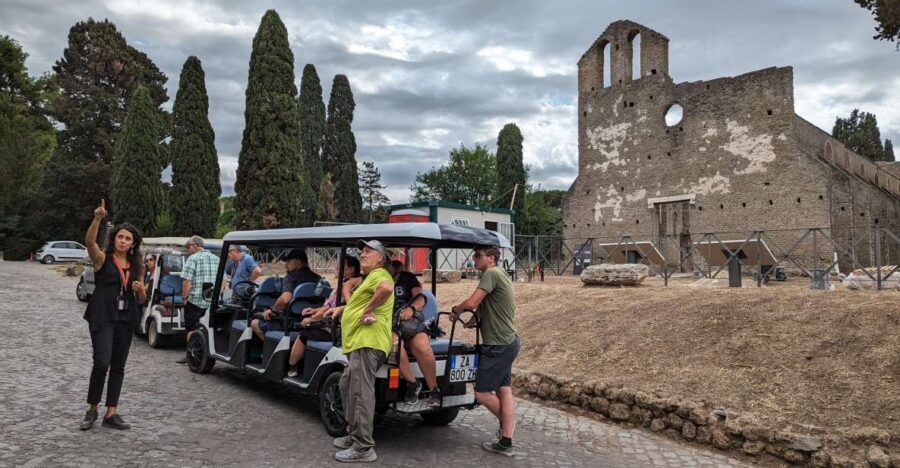
The Catacombs portion is the heart of the tour, with a guided visit that lasts about 50 minutes. You’re not just walking through dark corridors. Your guide is there to explain what the underground spaces meant, and how the mix of law and faith shaped what people did and why they did it.
One of the best details I’ve heard from this tour style: the guide may point out small but unforgettable things, like trilobites in the marble floor. That kind of observation is exactly why a live guide matters here. It turns the visit from a single gloomy room into a layered story where even materials and stonework carry meaning.
Now, here’s the part you need to respect: the Catacombs are stair-heavy. Wheelchairs are not permitted, and the route includes about 50 irregular steps down and 50 irregular steps up, with no lift and no chance to sit along the way. It’s also cold underground, around 16°, so plan for that temperature, not for the sunny Roman weather you might step in from above.
If you’re comfortable with stairs and you like explanation that brings people back to life, this is where the tour earns its reputation. If stairs are a problem for you, this may be the wrong fit.
Circus of Maxentius: the scale hit (and why Ben Hur helps)
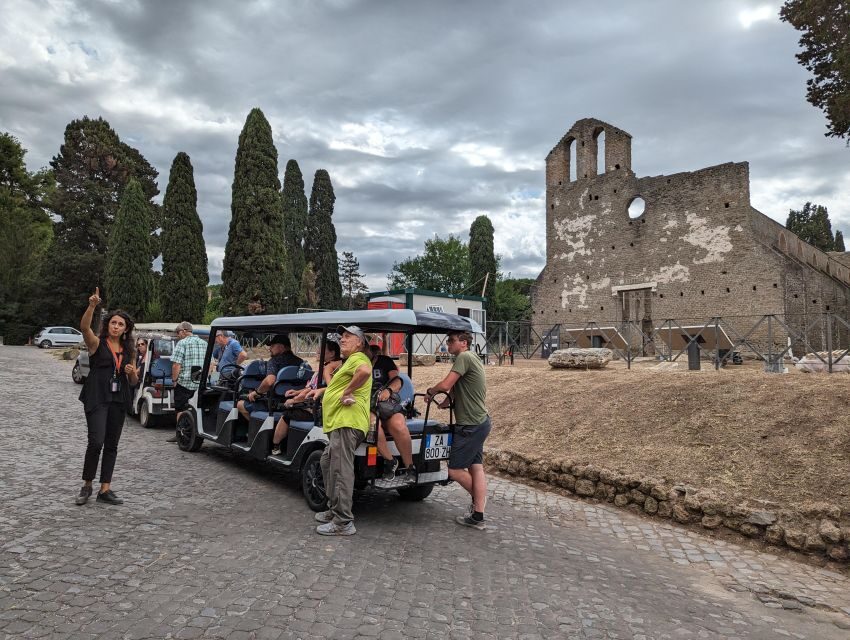
Next up is the Circus of Maxentius, guided on the tour route. This is one of those Rome remains that feels enormous even when you’re looking at ruins. The guide’s job is to help you visualize what it once was, not just point at broken walls.
The highlight description connects it to Ben Hur, which gives you a quick pop-culture reference point if you’ve seen the film. More importantly, it’s a shortcut to understanding why these spaces mattered: they were built for spectacle, crowd movement, and political display. When you hear the story of who needed events like this and why, the ruins start making sense as a machine for public life.
You’ll also likely notice how the tour design supports this stop. Because you’re in a golf cart-based format, you arrive ready to pay attention, not already tired. That matters when you’re trying to understand the geometry of old arenas and the sheer number of people they could pull in.
If you like ancient entertainment and power politics, this stop usually lands well. And if you don’t, the guide’s job is still to make the circus understandable as a Roman system, not just an impressive pile of stone.
Tomb of Cecilia Metella and Capo di Bove: power on display
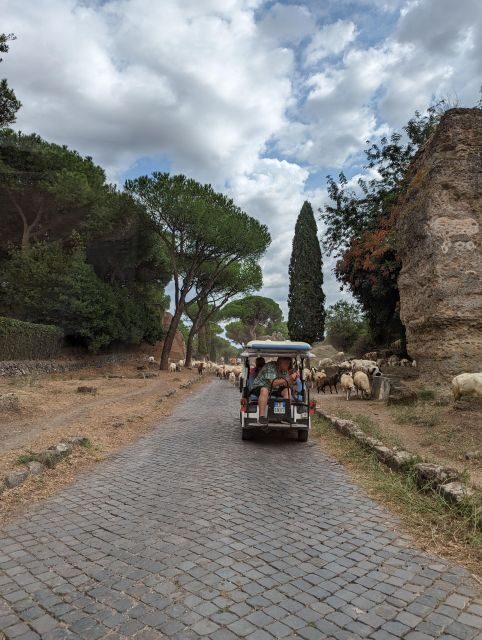
The itinerary includes a pass-by of the Tomb of Cecilia Metella, plus a guided stop at Capo di Bove. The tomb is positioned as the story of an “unknown woman” related to the richest man of Rome. Even without turning it into a soap opera, that framing helps you see why tombs were so public: they weren’t only memorials, they were branding.
Cecilia Metella’s tomb helps explain how Rome used architecture to signal status. On the Appian Way, tombs line the road, so you walk through someone else’s claim to importance. That’s an important lesson: this isn’t just where Romans died. It’s where Romans told the living who mattered.
Capo di Bove, on the other hand, is guided. That’s useful because these areas can feel more “open” than the big headline monuments. A guide can point out the logic of the landscape and what it connects to in broader history, so you don’t just take photos and move on. You’re meant to understand why this spot is part of the network of power and conflict.



Villa dei Quintili and the Commodus thread
The tour also includes a pass-by at Villa dei Quintili, tied to the plots against emperor Commodus. This is the kind of stop that rewards even a few minutes of attention, because it helps you connect the day’s theme: power struggles weren’t only in palaces. They played out through people, property, and public memory.
Quintili’s Villa isn’t presented as a full deep-dive architectural tour, but you still get the key context: this was a place connected to the risks of standing close to power in Rome. When you pair that with the circus and the tombs, the day feels less random. You start to see the Appian Way like a political corridor as much as a scenic road.
Also, this tour’s structure matters. You get “heavy” guided time underground, guided time at the circus and Capo di Bove, and shorter time where the guide gives you a story while you pass key sites. It’s a smart way to cover more without turning everything into long walking.
Price, time, and what’s actually included (so you don’t get surprised)
At $95 per person for a 3-hour small-group tour, the value comes down to three things: transportation, expert guidance, and paid access to the underground portion. You’re not just being led around; you’re getting a golf cart tour of the Appian Way plus an English-speaking local guide, along with the entrance fee to the Catacombs for the guided visit. You also get 1/2 liter of water per person.
What’s not included is also worth noting. The aqueducts area is not included, and food and drinks are not included either. There’s only so much time in three hours, so the tour chooses specific sites with strong storytelling potential.
If you’re trying to plan a day, think of this as a focused history outing, not a complete Appian Way museum route. It gives you major stops and themes, but it doesn’t promise every category of ancient engineering you might want, like aqueduct walks.
One more practical note: it’s limited to 5 participants, and the meeting point is Via Appia Antica, 60. This kind of small group format helps the guide keep the pace controlled and the explanations clear.
Who should book this (and who should skip it)
This tour is a great match if you want real guided context and you enjoy walking away with names, themes, and connections. The tour format suits people who hate long lineups and prefer getting out into open air quickly. It’s also ideal for couples and small groups who want an active, not exhausting, history experience.
It’s not suitable for everyone. The tour is not suitable for children under 2, pregnant women, or wheelchair users. If you’re unsure because of the stairs, take that seriously: the Catacombs are a big physical commitment due to the irregular steps down and up, and wheelchairs aren’t allowed inside.
If you like strong narration, this tour’s reviews pattern matters. Guides such as Federico/Frederico and Shannon have been highlighted for clear English and for making it feel possible to imagine what the past looked like. That’s the main payoff here: you’re not just looking at stone and tunnels, you’re building a mental movie of Roman life.
If you’re sensitive to how a guide speaks, one note to keep in mind is that guides can have very different styles. If you’re picky about tone and storytelling energy, look for reviews that match how you like to learn.
Should you book this Appian Way and Catacombs golf cart tour?
I’d book it if you want a 3-hour plan that balances major sites with real explanation, and you care more about understanding than collecting stamps on your phone. The Catacombs are the big reason to do this, especially if you’re the type who enjoys guided interpretation and small details like the trilobites in marble.
Skip it if stairs are a dealbreaker or if you’re expecting aqueducts coverage. Also, if you need food built into the schedule, plan ahead since meals and drinks are not included.
For the right person, this is one of those Rome tours that feels like it belongs to the city’s quieter side: ancient roads, underground stories, and a guide who keeps the thread from stop to stop.
FAQ
How long is the Rome: Appian Way & Catacombs golf cart shared tour?
It lasts 3 hours.
Where is the meeting point?
You meet at Via Appia Antica, 60, and you should arrive about 10 minutes early to check in at the desk.
How big is the group?
It’s limited to 5 participants.
What’s included in the price?
Included are an expert English-speaking local guide, the golf cart tour of the Appian Way, 1/2 liter of water per person, and catacombs entrance fee with the guided tour.
Are the Catacombs wheelchair accessible?
No. Wheelchairs are not permitted in the Catacombs due to architectural barriers, including irregular steps and no lift.
What restrictions should I know about?
Pets are not allowed. The tour is also not suitable for children under 2, pregnant women, or wheelchair users.
What if my plans change?
The tour offers free cancellation up to 24 hours in advance for a full refund.