REVIEW · ROME
Rome: Ancient Rome Nighttime Sightseeing Tour
Book on GetYourGuide →Operated by Romes Ultimate · Bookable on GetYourGuide
Rome looks different after dark.
This 3-hour nighttime walk strings together some of Rome’s most important ancient and landmark piazzas, with a live guide and small groups. I like how the route starts in Rione Monti, the city’s oldest residential area, then keeps moving through places tied to Roman power—from elite quarters to imperial Rome to Italian government.
Two things I really like: the stop at Trajan’s Forum (with its big “world’s first shopping mall” claim), and the chance to see Michelangelo’s work in Piazza Campidoglio as part of a guided circuit. The one thing to keep in mind is practical: it’s rain or shine and it’s not suitable for people with mobility impairments, so you’ll want comfortable shoes and a steady pace.
In This Review
- Key Highlights You’ll Feel in This 3-Hour Walk
- A Night Walk Through Rome’s Power Centers
- Starting in Rione Monti: Rome’s Old Residential Footprint
- Piazza Quirinale After Dark: Elite Rome in a Single View
- Trajan’s Forum: The “First Shopping Mall” Moment
- Piazza Campidoglio and Michelangelo’s Design
- Palazzo Venezia, Vittorio Emanuele II, and Modern Rome’s Axis
- Piazza Colonna: Ending at Italy’s Government Seat
- The Highlander Pub Nightcap: A Simple Finish That Works
- Group Size, Guide Style, and What “Small Group” Really Means
- Price and Value: Is $82 Worth It?
- What I’d Pack and Plan Around
- Who This Tour Fits Best
- Should You Book This Rome Night Tour?
- FAQ
- FAQ
- How long is the Rome: Ancient Rome Nighttime Sightseeing Tour?
- What is the price per person?
- What areas will the tour cover?
- Is the tour guided or self-guided?
- What languages are offered?
- Is the tour offered in rain or shine?
- Is a drink included?
- What should I bring?
- Is the tour suitable for people with mobility impairments?
- What are the cancellation and payment options?
Key Highlights You’ll Feel in This 3-Hour Walk
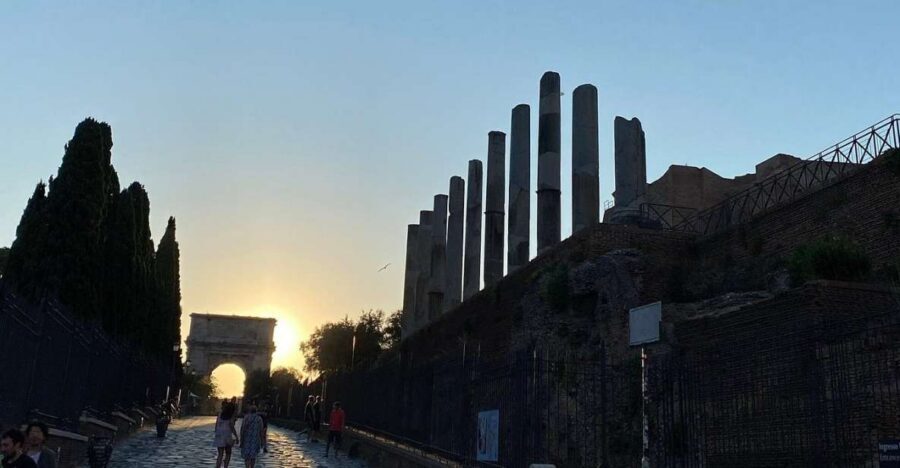
- Rione Monti start: You begin in Rome’s oldest residential area and ease into the night.
- Piazza Quirinale: A guided look at the seat of the Roman elite through the ages.
- Trajan’s Forum stop: A standout moment built around the idea of the first shopping mall.
- Piazza Campidoglio with Michelangelo: You get Michelangelo’s famous design as a main visual anchor.
- Palazzo Venezia and Vittorio Emanuele II: You pass a central hub of Rome facing the Unification Monument.
- Finish at Piazza Colonna, then a drink: You end in the seat of Italy’s government, with a complimentary nightcap.
A Night Walk Through Rome’s Power Centers
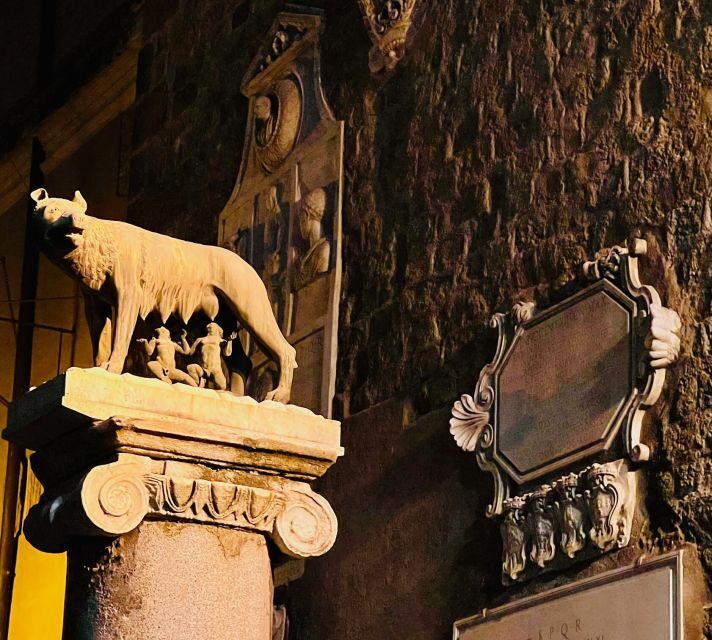
I’m a big fan of nighttime tours because they let you see the city as a connected set of spaces, not just a checklist. This one is built as an evening stroll through Rome’s major squares, with your guide explaining how the city’s roles have changed over time—without turning it into a lecture marathon.
You also get a classic “you’re walking, you’re watching, you’re learning” pace. The tour is 3 hours long, and it’s designed around moving from piazza to piazza rather than getting stuck in one monument for too long. That matters in Rome, where the distances can feel longer than you expect when you’re staring up at buildings and taking photos.
You can also read our reviews of more tours and experiences in Rome.



Starting in Rione Monti: Rome’s Old Residential Footprint
The tour kicks off from the oldest residential area of Rome: Rione Monti. This is a smart starting point. Before you hit the big political and imperial stages, you’re set in a part of the city that feels grounded in everyday life rather than just ceremonial grandeur.
From there, you’re guided toward Piazza Quirinale, which the tour positions as the seat of Roman elite across different eras. I like this setup because it frames what you’re about to see. You’re not just arriving at a square; you’re being told what kind of power and social status the place carried, then you look at the space with that context in mind.
If you’re the type who likes to understand how the city worked—who lived where, and where authority showed up—this first segment is a good match.
Piazza Quirinale After Dark: Elite Rome in a Single View
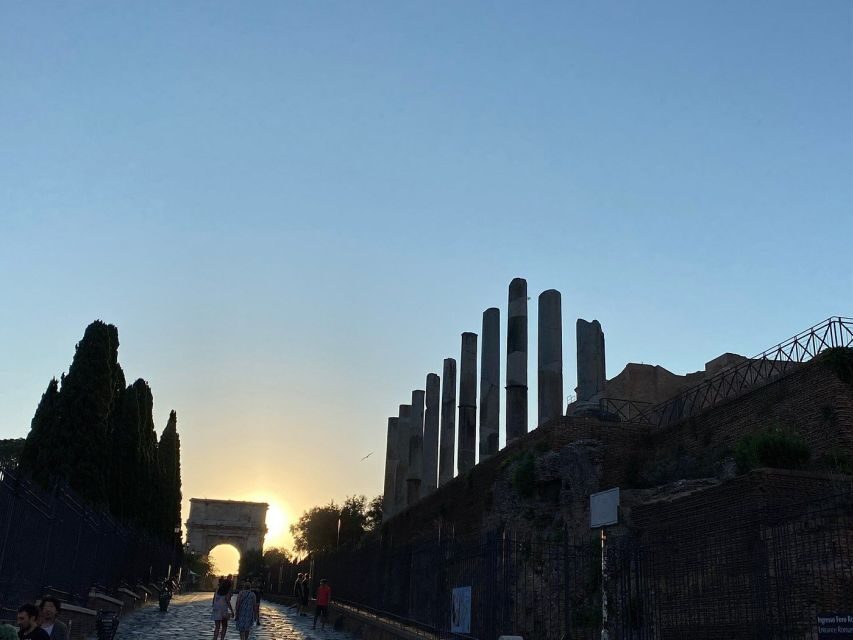
Piazza Quirinale is the next major stop on the route. The tour describes it as the seat of Roman elite throughout history, which is exactly the sort of idea that helps you notice details as you walk around.
At night, you can focus more on the overall composition—how the square is shaped and how the buildings frame the public space. Your guide’s job here is to connect the architecture and urban layout to the human story: power concentrated, status displayed, Rome organized around its leaders.
I also like that the tour keeps the pacing friendly. You’re out with a live guide and small groups, which makes it easier to ask questions while the city is right in front of you.
Trajan’s Forum: The “First Shopping Mall” Moment
One of the most interesting stops is Trajan’s Forum. The tour presents it as the largest and last Imperial Forum built in Rome, and it also calls it the site of the world’s first shopping mall. Even if you’ve heard versions of that idea before, it lands differently when you’re walking through a place framed as both politics and commerce.
This is a valuable stop because it cuts against the common “ancient Rome = temples and speeches” mental image. You’re reminded that Roman public spaces also served everyday needs—shopping, moving through crowds, gathering, getting things done. When the guide ties it together, the forum starts to make sense as a system, not just a ruin.
Practical note: this is an outdoor walking tour segment. Wear shoes you trust. You’ll be standing and moving for long stretches.
Piazza Campidoglio and Michelangelo’s Design
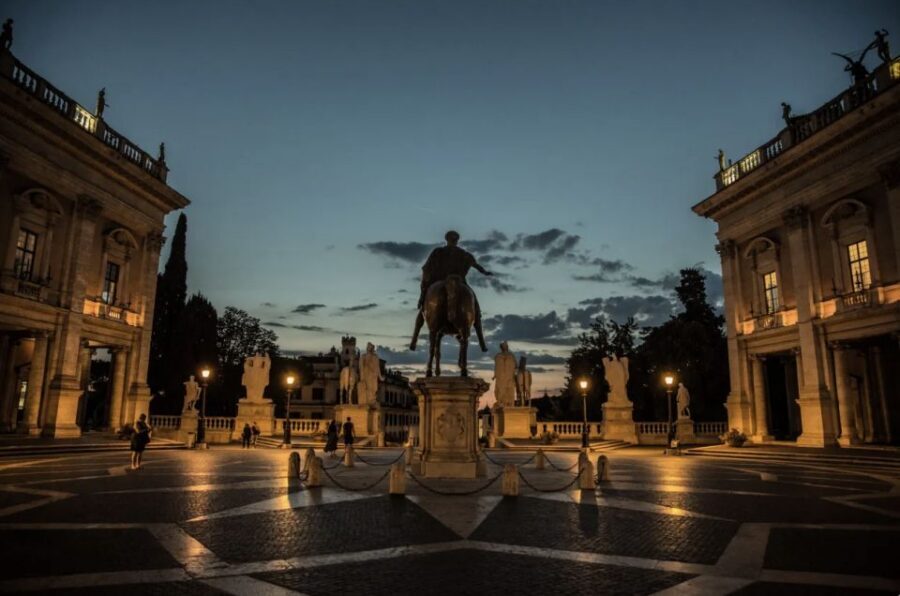
Then you hit Piazza Campidoglio, highlighted by Michelangelo’s famous design. This is one of those places where the layout itself is the point—your guide leads you to look at the square as a planned visual experience, not just a pretty backdrop.
What I love about including Michelangelo here is that it bridges eras. You’re not stuck only on ancient Rome. You’re also seeing how later artists and architects treated the space, continuing the conversation between old and new Rome.
If you enjoy “design thinking” in cities—how a square guides movement and sightlines—this stop will feel satisfying. You’ll likely find yourself walking slower just to take in how the space frames the rest of the scene.



Palazzo Venezia, Vittorio Emanuele II, and Modern Rome’s Axis
Next up: Palazzo Venezia, described as a central hub of Rome, facing the Unification Monument of Vittorio Emanuele II. This segment is especially useful if you want to understand Rome as a layered capital: you can’t separate ancient, medieval, Renaissance, and modern identity here. The city keeps updating itself while still referencing what came before.
I like that the tour doesn’t treat this as a random photo stop. It’s part of the route’s bigger theme: “Rome keeps changing, but the key spaces keep mattering.”
Since this is a walking tour, you’ll be learning while you move. That’s often more memorable than reading a plaque after you’ve already finished sightseeing.
Piazza Colonna: Ending at Italy’s Government Seat
The tour concludes at Piazza Colonna, described as the seat of the government of Italy. Ending here is a clever final beat because it brings the story forward. You start with Rome’s elite and imperial centers, and you finish in a place tied to modern state power.
This ending helps you connect the dots. When you’ve been walking through squares with different roles—elite, imperial, Renaissance, national—you start to see the city as a set of stages. Different eras, similar logic: public spaces where authority becomes visible.
You’ll wrap up the night at a nearby place for a calmer final moment.
The Highlander Pub Nightcap: A Simple Finish That Works
You end with a complimentary drink at the Highlander Pub. The tour includes a nightcap—either a glass of wine or a cocktail—so you get a built-in decompression moment without having to hunt for a bar on your own.
The value here is practical. After a few hours of walking and looking up, it’s nice to have a low-effort finish. And according to one of the verified review experiences, the guide even took their group to the pub afterward, making it feel like a real local hang rather than just a token stop.
If you don’t drink, you might still want to check what your options are at the pub, since the included choices are specifically listed as wine or cocktail.
Group Size, Guide Style, and What “Small Group” Really Means
The tour is built for small groups and includes a live English or Spanish guide. That setup matters more than people think. In a compact, 3-hour tour, you’re not just passively receiving information—you’re actively moving through Rome’s spaces. A small group makes it easier to keep up and easier to ask questions.
One review highlighted an interactive approach with guide Dimitri, including the way he added humor in between facts and gave extra time for questions. I can’t promise every guide will run it the exact same way, but it’s a good sign: the tour clearly has room for conversation, not just a scripted route.
Price and Value: Is $82 Worth It?
At $82 per person for a 3-hour nighttime guided walk, you’re paying for three things: (1) a trained guide, (2) a tightly planned route through multiple major sites, and (3) a included drink.
For me, the value comes from the density of the experience. In one evening, you’re guided through multiple major squares and landmark stops—Rione Monti, Piazza Quirinale, Trajan’s Forum, Piazza Campidoglio, Palazzo Venezia, Piazza Colonna—instead of piecing it together on your own. That’s the difference between seeing Rome in fragments and seeing it as a connected route.
Also, because the tour runs rain or shine, you’re buying certainty for your evening plan. Weather can ruin an unsupervised walking day; a guided plan gives you structure.
What I’d Pack and Plan Around
This is a straightforward “walk and learn” tour. Here’s what you should prepare for based on the details provided:
- Comfortable shoes are a must (and not the cute kind you regret later).
- The tour operates rain or shine, so you’ll want to be ready for changing weather.
- It’s not suitable for people with mobility impairments, so if that’s you, look for an alternative that better matches your needs.
Also, the “meeting point” field in the details I have is blank, so when you book, check your confirmation message for the actual address or exact location.
Who This Tour Fits Best
This is a great match if you want:
- A nighttime introduction to Roman public spaces and architecture
- A route that links ancient to Renaissance to modern Italy in a single evening
- A guided explanation you can actually keep up with during walking
- A small-group feel instead of a big bus vibe
It’s especially good for first-timers who don’t want to guess their way between sites. If you already know Rome well and want deep, museum-level time, you may find this too light. But for most visitors, it’s a smart “evening orientation with big-name stops” choice.
Should You Book This Rome Night Tour?
If you’re curious about Rome beyond the obvious photos, I’d book it. The itinerary is built around the city’s most meaningful squares and power zones, and the inclusion of a nightcap makes it feel like an actual evening plan, not just a paid stroll.
Book it if you value:
- a guided route with explanations at each stop
- small groups and a chance to ask questions
- seeing Trajan’s Forum and Michelangelo’s Piazza Campidoglio as core highlights
- ending in Piazza Colonna with a relaxing drink
Skip it if you need mobility-friendly options, or if you hate walking in weather. And if you’re the type who wants museum tickets and long indoor time, you might prefer a different style of tour.
FAQ
FAQ
How long is the Rome: Ancient Rome Nighttime Sightseeing Tour?
The tour lasts 3 hours.
What is the price per person?
The price is $82 per person.
What areas will the tour cover?
You’ll visit major piazzas and Roman landmarks, including Rione Monti, Piazza Quirinale, Trajan’s Forum, Piazza Campidoglio, Palazzo Venezia, and Piazza Colonna.
Is the tour guided or self-guided?
It’s a live guided tour with a tour guide.
What languages are offered?
The tour guide is available in English and Spanish.
Is the tour offered in rain or shine?
Yes, the tour runs rain or shine.
Is a drink included?
Yes. A nightcap is included, either a glass of wine or a cocktail.
What should I bring?
You should bring comfortable shoes.
Is the tour suitable for people with mobility impairments?
No. It is not suitable for people with mobility impairments.
What are the cancellation and payment options?
You can cancel up to 24 hours in advance for a full refund, and you can reserve now and pay later (pay nothing today).