REVIEW · ROME
Rome: Ancient Jubilee in the 4 Major Basilicas
Book on GetYourGuide →Operated by Roman Vacations · Bookable on GetYourGuide
Rome’s Jubilee days feel personal.
This tour is built around a simple, powerful idea: visit the four Papal Major Basilicas and go in through their Holy Doors, the way pilgrims have done since the Jubilee began in 1300 under Pope Boniface VIII. I love that the visits are structured like a real pilgrimage, not a checklist. I also like that you get a focused, 1-hour guided look inside each basilica, with a guide who explains what you’re standing in front of—people like Stefano and Daniel have been singled out for being very strong at guiding the experience. One thing to consider: you’re moving on a tight timeline across Rome, and inside some churches you may have trouble hearing your guide clearly.
You’ll start near Vatican’s river edge and work your way through some of the most important Christian sites in the world. The “only 4 Major Basilicas” detail isn’t a trivia flex—it changes how you experience the day, because each stop has a specific role in Rome’s religious story, from the cathedral of the Church (St. John Lateran) to Mary’s most treasured spaces (Santa Maria Maggiore). Bring respectful church clothing, and plan to stay patient if plans shift due to traffic or access.
In This Review
- Key points at a glance (Holy Door route, real highlights)
- Rome’s Jubilee: Why these four basilicas matter
- Starting point at Piazza Giovanni XXIII: where the day begins
- St. Peter’s Holy Door: Pietà, relics, and the High Altar
- St. Paul Outside the Walls: chains, sarcophagus, and the ancient basilica
- St. John Lateran: Rome’s cathedral and the 1300 altar
- Santa Maria Maggiore: golden interior, nativity relics, and Salus Populi Romani
- How the 5-hour route stays on track (and what you should do)
- Dress code and rules: simple, strict, and worth planning for
- Transport, hearing, and guide style: getting the most out of your hours
- Is $283.21 good value for this Jubilee day?
- Who should book this tour (and who might not)
- Should you book: my practical take
- FAQ
- What are the four basilicas included in the Jubilee tour?
- How long does the tour last?
- Are Holy Door entries included?
- What is included in the price?
- Do I need to pay for food?
- What should I wear to enter the basilicas?
- Where do I meet the guide, and how do I find them?
Key points at a glance (Holy Door route, real highlights)
- 4 Holy Doors, 4 Papal Major Basilicas in one 5-hour circuit
- St. Peter’s includes Michelangelo’s Pietà plus the High Altar area over St. Peter’s resting place
- St. Paul Outside the Walls includes Paul’s chains and a look at his newly excavated sarcophagus
- St. John Lateran focuses on the Mother Church of Rome, including the heads of Sts. Peter and Paul placed above the altar in 1300
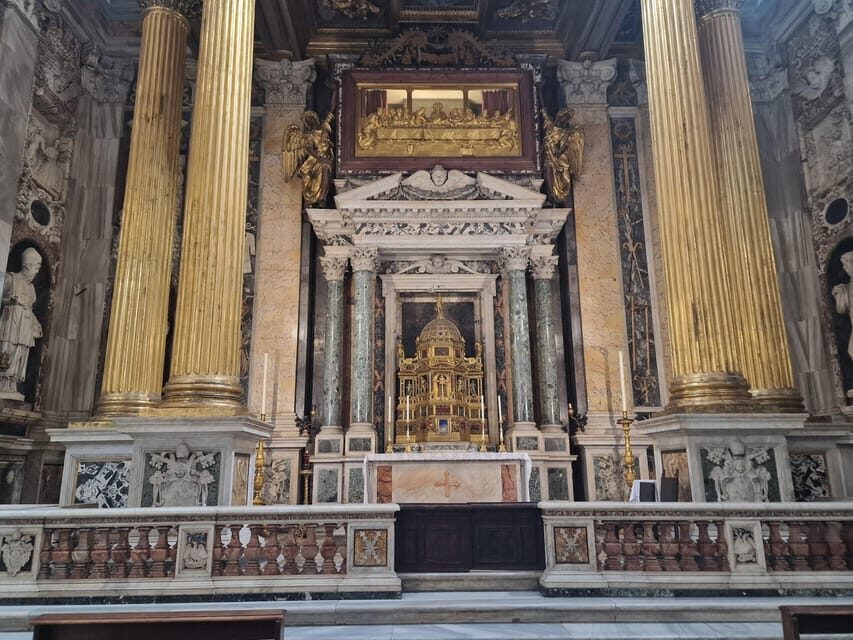
- Santa Maria Maggiore is all about Mary’s treasures, including Salus Populi Romani and relics connected to the Nativity
- Private air-conditioned transport keeps the day moving between distant basilicas
Rome’s Jubilee: Why these four basilicas matter
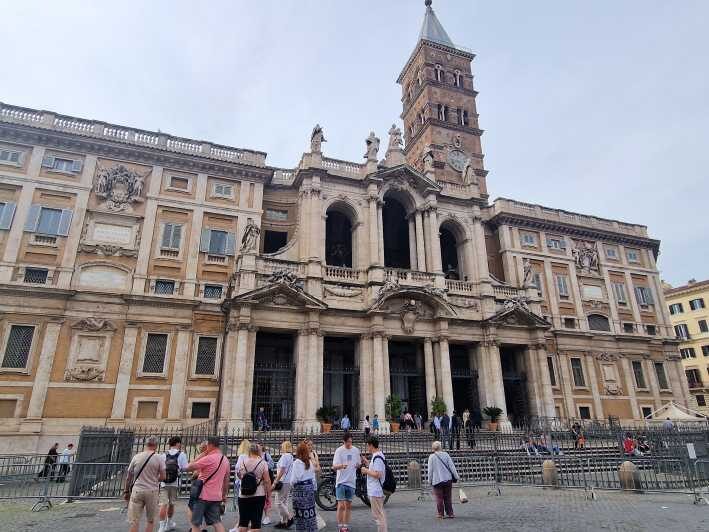
Jubilees in Rome aren’t just about seeing famous buildings. They’re about stepping into a long chain of devotion. The Jubilee tradition dates to 1300, when Pope Boniface VIII invited pilgrims to come to the Major Basilicas and pass through their Holy Doors. On this tour, you’re doing that in a guided, organized way—so you’re not left trying to decode the meaning of each stop on your own.
The big framing point here is that Rome’s Major Basilicas are treated as the highest-ranking churches in the Catholic world, and all four are in Rome. The order of the day naturally highlights the “who’s who”:
- St. Peter’s anchors the Vatican story through the tradition connected to St. Peter.
- St. Paul Outside the Walls keeps Paul central, including the relics associated with his imprisonment.
- St. John Lateran is the cathedral of Rome and described as the Mother Church of the entire world.
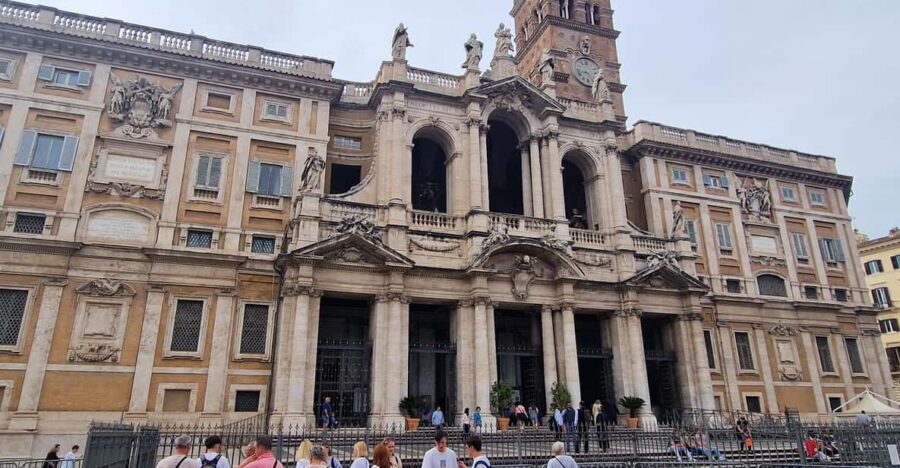
- Santa Maria Maggiore makes Mary’s role visible through its famous golden interior and key relics.
That’s why the Holy Door element matters. You’re not just entering churches—you’re entering as a pilgrim, guided in a way meant to lead you toward the indulgences connected with this Jubilee practice.
You can also read our reviews of more tours and experiences in Rome.



Starting point at Piazza Giovanni XXIII: where the day begins
Your morning begins at the fountain on the wall of Piazza Giovanni XXIII, near Lungotevere Vaticano. The meeting looks simple, but Rome can be easy to misread if you arrive late or wander.
Plan to arrive 15 minutes early. You’ll look for the guide holding an orange sign with a lion head. If you’re picky about not missing the group, give yourself extra time to orient. This is a day where the tour departs promptly, and once it moves, it moves.
You’ll also receive follow-up communication after booking with details about the pilgrim’s card and how Holy Door entry works during the tour. Keep an eye on that message—this is the part people tend to overlook, and you want to be ready when you’re standing in the right place.
St. Peter’s Holy Door: Pietà, relics, and the High Altar
Your first major stop is St. Peter’s Basilica for a 1-hour guided visit. This is the Vatican’s emotional center for many visitors, but on this tour the focus isn’t only on scale. It’s on meaning.
Here’s what you can expect during the guided time:
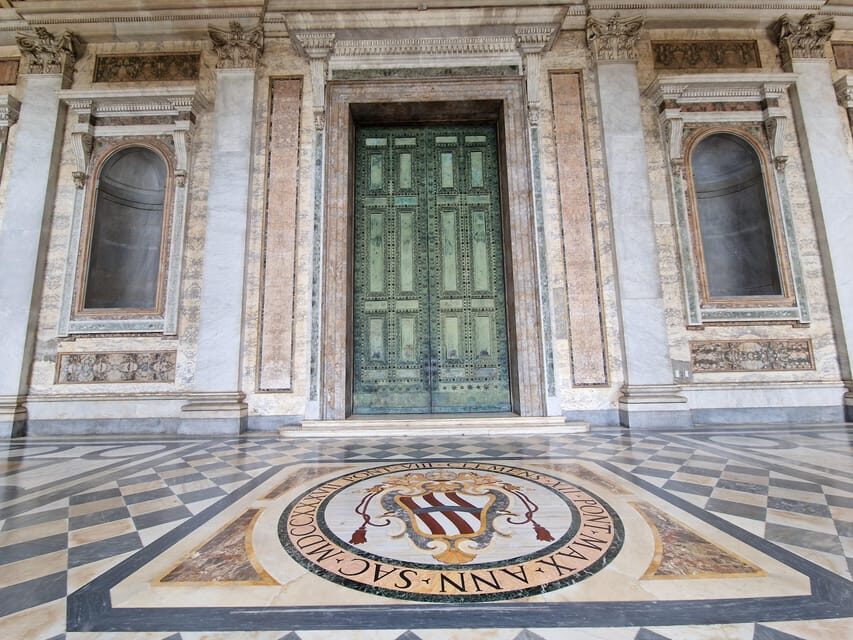
- You enter through the basilica’s Holy Door as part of the Jubilee practice.
- Your guide leads you through key areas inside the basilica, including Michelangelo’s Pietà.
- You’ll hear about relics and altars connected to major saints.
- The tour includes the tradition connected to St. Peter’s body, said to rest beneath the High Altar area.
St. Peter’s is one of those places where your first reaction is usually visual overload—marble, dome, motion, sound. The guide helps you slow down enough to register what you’re seeing. If you’re the kind of traveler who likes knowing why a thing exists (not just that it’s famous), this is the strongest “value per minute” moment early in the day.
One practical note: church acoustics can make it hard to hear instructions clearly, especially when the group is moving. If you want to catch every detail, position yourself where you can hear the guide best and keep your attention tight during doorway and transition moments.
St. Paul Outside the Walls: chains, sarcophagus, and the ancient basilica
Next is St. Paul Outside the Walls. The transfer is done by private air-conditioned car, which is a lifesaver in Rome. You’ll get another 1-hour guided visit here.
This stop leans into a very specific kind of sacred storytelling: Paul’s hardship and his lasting presence in Rome.
- You’ll see the chains that bound St. Paul during imprisonment and house arrest.
- The tour includes a look at his newly excavated sarcophagus (yes, that’s part of what’s highlighted here).
- You’ll also tour the rest of the basilica, described as an ancient Theodosian basilica.
If St. Peter’s feels like the “head” of the Church story for many people, St. Paul adds a different tone: endurance, mission, and the long shadow of apostolic history. Even if you’re not deep into theology, Paul’s story is easy to recognize, and seeing the physical relics helps make it feel real instead of abstract.
St. John Lateran: Rome’s cathedral and the 1300 altar
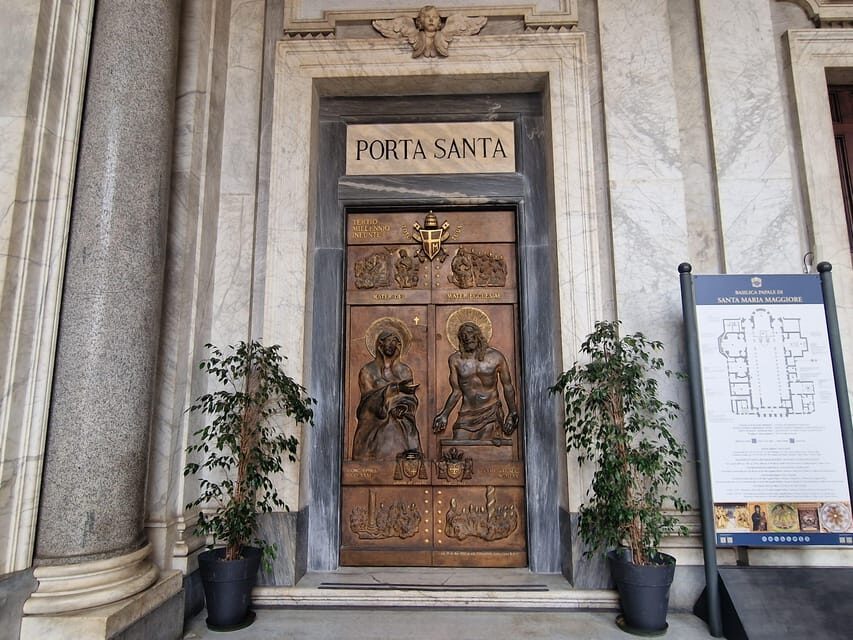
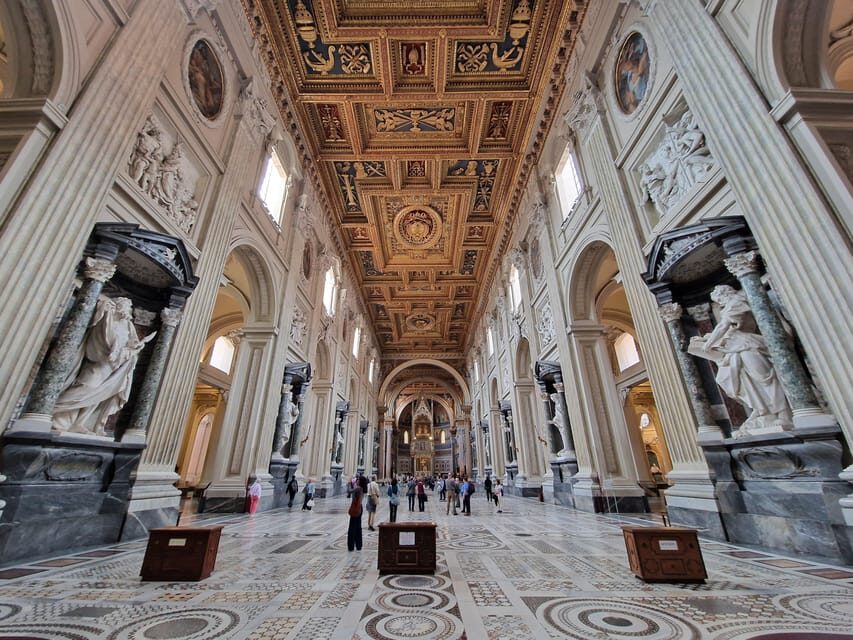
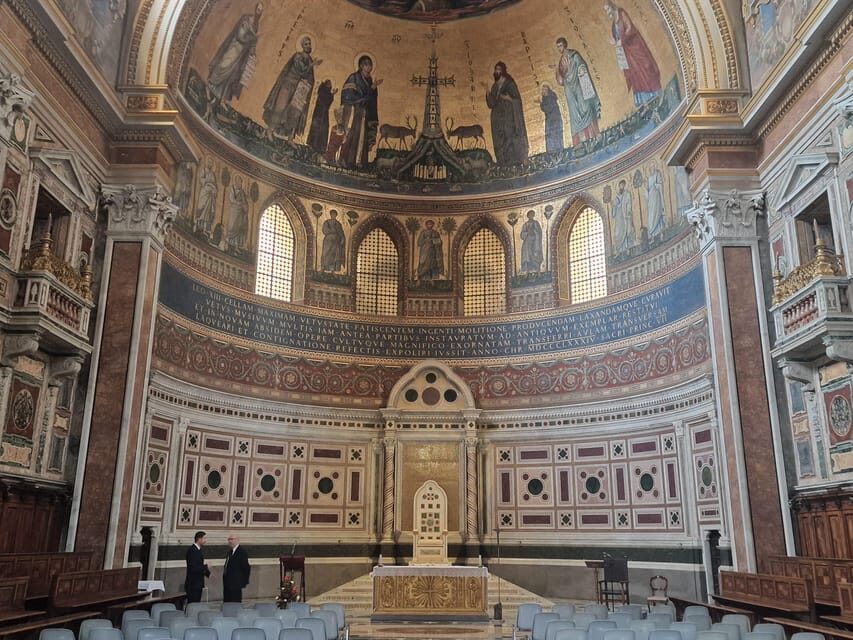
After St. Paul, you’ll head to Basilica di San Giovanni in Laterano (St. John Lateran) by private transport. This is the Arch-Basilica described as the cathedral of Rome—the Mother Church of the entire world.
You’ll get a 1-hour guided tour that includes:
- Holy Door entry as part of the Jubilee route.
- A guided explanation of the basilica’s interior and history.
- Discussion of ancient mosaics.
- A special moment standing before the heads of Sts. Peter and Paul, placed above the altar in the year 1300.
That 1300 detail isn’t just a date. It anchors the basilica to the Jubilee origin story itself. When you’re inside, it helps to remember you’re not only visiting a landmark. You’re visiting a place that’s been used, in Catholic tradition, to center pilgrimage and authority.
Also, because this basilica sits at the heart of the “Rome as Church” idea, it can be the most grounding stop of the day. You may notice the vibe change here: less “Vatican spectacle,” more “cathedral calm” even while the route keeps moving.



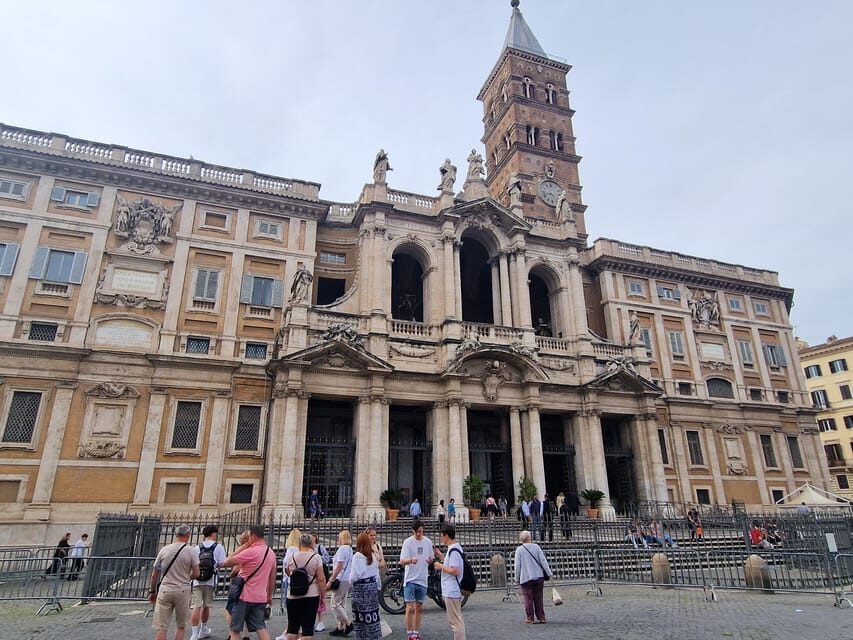
Santa Maria Maggiore: golden interior, nativity relics, and Salus Populi Romani
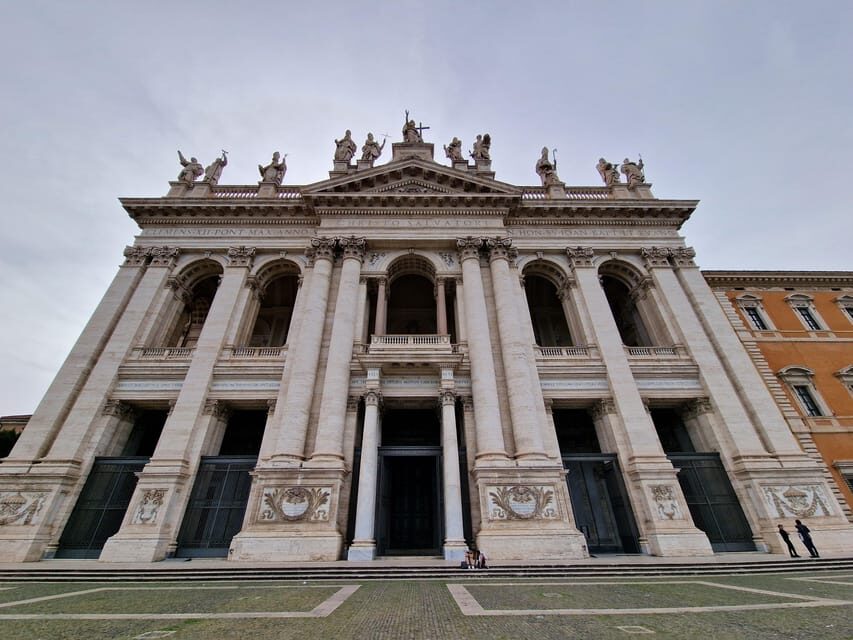
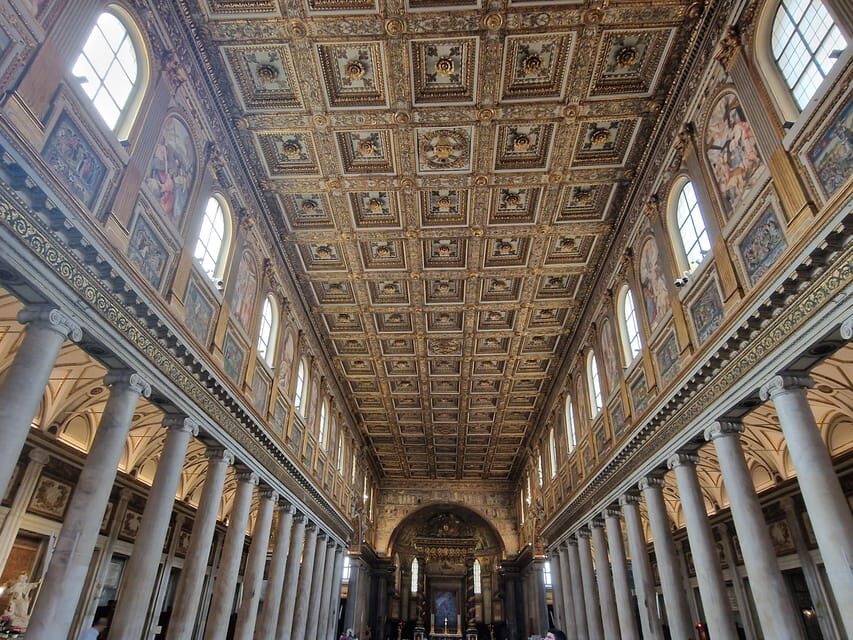
The final basilica is Santa Maria Maggiore. This stop is often where the day feels the most like discovery, because it blends famous art with specific devotional objects.
You’ll get 1 hour guided and learn about:
- The basilica’s golden interior.
- Key features connected to different popes buried here.
- Relics of the crib of the Nativity of Christ.
- The miraculous icon of Salus Populi Romani.
This is a great choice as the closing chapter of your pilgrimage day. If you’ve spent the morning focused on apostles and the Church’s foundations, Mary’s basilica gives you a different lens—maternal, protective, and tied directly to the Christmas story.
One smart move: take a moment here to slow down and look. If you try to rush this stop like the others, you’ll miss what people come for: the way the interior color and devotional objects work together to create a strong sense of place.
How the 5-hour route stays on track (and what you should do)
The tour is 5 hours total, and each of the four basilicas gets about 1 hour with a guide. Transport between stops is included and done in private air-conditioned chauffeur cars. That matters because the basilicas are not all next door to each other, and Rome’s traffic can chew up time fast.
The order can also differ based on traffic or accessibility for unforeseen events or closures. So don’t cling too tightly to a single expectation of sequence. Your goal is the same either way: Holy Door entry at all four.
A realistic way to think about the pacing:
- You’ll spend time inside each basilica listening, moving, and entering through the Holy Doors.
- You’ll switch locations with brief car rides where you can catch your breath and rehydrate.
- You won’t have long free time for browsing beyond the guided scope.
If you care about hearing every explanation, plan to stay close to the guide during quieter moments. One past participant noted that a communication device wasn’t provided and the guide sometimes needed to whisper indoors, which made it harder to catch everything. You can solve part of that by choosing a spot where you can hear, and by keeping your questions ready for the outdoor transitions.
Also, don’t assume restrooms will be announced in a slow, obvious way. It’s a fast-moving route. Before you enter each basilica, take care of basics. Rome visits work best when you’re proactive.
Dress code and rules: simple, strict, and worth planning for
This is one of those tours where the church rules are not optional.
You cannot bring:
- Pets
- Short skirts
- Sleeveless shirts
You should wear clothing with shoulders and knees covered to enter the basilicas. If your outfit is right on the edge, assume you’ll be asked to adjust. It’s easier to dress correctly from the start than to shop or scramble mid-day.
One more thing: proof of identification may be required, so bring a valid photo ID for each guest. That’s especially important if your group has multiple people checking in.
And because the tour happens in all weather conditions unless a site is closed by authorities for safety, pack for comfort. Bring bottled water, sunscreen, a hat, and—if it’s forecasted—an umbrella.
Transport, hearing, and guide style: getting the most out of your hours
This experience lives and dies by the guide. The good news: this tour is built with an expert local guide, and real examples include guides like Stefano and Daniel who are praised for strong ability to lead the Jubilee experience.
The part you should plan around is the church environment itself. Indoors, sound can bounce around, groups can cluster, and the guide may need to speak more softly. That means the “sweet spot” for your attention matters.
My advice to you:
- Stay close during Holy Door entry and at key altars or relic points.
- If you’re hearing-challenged, don’t wait for your group to settle—find your best listening position quickly.
- Ask simple questions during transitions. The outdoor moments are where communication tends to be easiest.
Also, arrive early at the meeting point. One participant had trouble finding the banner at first and only connected after a bit of searching. If you get there on time and keep your eyes on that orange lion sign, the stress drops immediately.
Is $283.21 good value for this Jubilee day?
At $283.21 per person for a 5-hour guided circuit, the price is not “cheap,” but it can be fair value depending on what you want from Rome.
Here’s what you’re paying for, based on what’s included:
- Entry to each site on the route
- An expert local guide for each basilica segment
- Transport during the tour, in private air-conditioned vehicles
If you were to try to do the four basilicas yourself, you’d still spend real money on individual entries, and you’d likely lose time trying to coordinate Holy Door entry procedures and where to be at the right moments. The guide also brings you context so the four stops connect into a single pilgrimage story instead of four disconnected church visits.
So the value angle is this: if you want the Jubilee experience to feel intentional—Holy Doors, guided meaning, and efficient movement—this price can make sense. If you’re the type who wants open-ended exploring at your own pace, you might not fully use what you’re paying for.
Who should book this tour (and who might not)
This is a strong fit if:
- You want to do the Jubilee route in a guided, structured way
- You care about the meaning behind the basilicas, not just photos
- You’d like private transport to reduce Rome’s travel friction
It may be less ideal if:
- You strongly need a lot of free time inside each basilica beyond a guided hour
- You’re very sensitive to hearing difficulties in large indoor spaces
- You prefer to roam slowly without any schedule pressure
Should you book: my practical take
Book it if you want a pilgrimage day with Holy Door entry at all four Papal Major Basilicas, guided explanations, and transport that keeps you from burning half your time in transit. This is the kind of tour where the structure helps you get the point—St. Peter’s, St. Paul, Lateran, then Mary—so you finish feeling like you participated, not just visited.
Skip it if your travel style is mostly spontaneous wandering and you don’t care about Jubilee procedures or guided context. This day works best when you’re ready to follow the plan, dress correctly, and give your guide your attention inside the churches.
FAQ
What are the four basilicas included in the Jubilee tour?
The tour visits St. Peter’s Basilica, St. Paul Outside the Walls, Basilica di San Giovanni in Laterano, and Basilica Papale di Santa Maria Maggiore.
How long does the tour last?
The duration is 5 hours, and you should check availability to see starting times.
Are Holy Door entries included?
Yes. The experience includes entering the basilicas through their Holy Doors, and you will receive additional instructions after booking about the pilgrim card and Holy Door entry.
What is included in the price?
Included items are entry to each site, an expert local guide, and transport during the tour.
Do I need to pay for food?
No. Food and drink are not included.
What should I wear to enter the basilicas?
You must cover shoulders and knees. Short skirts and sleeveless shirts are not allowed.
Where do I meet the guide, and how do I find them?
Meet at the fountain on the wall of Piazza Giovanni XXIII, near Lungotevere Vaticano, and look for the guide holding an orange sign with a lion head. Check in 15 minutes prior to departure.