REVIEW · ROME
Rome: 4 Hour Electric Golf Cart Tour with Hotel Pickup
Book on GetYourGuide →Operated by Rome in Golf Cart · Bookable on GetYourGuide
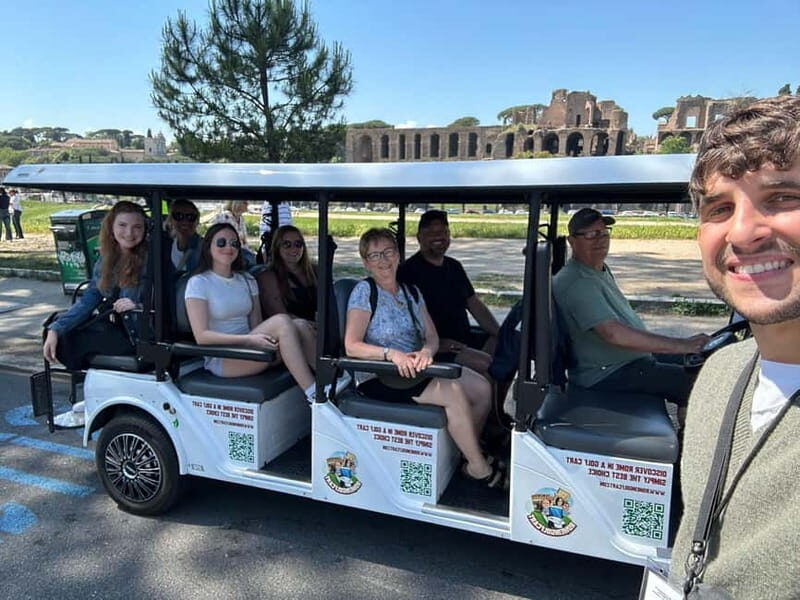
Rome by golf cart makes the city feel manageable. You zip through tight lanes and busy areas without playing dodge-the-traffic game on foot, while your guide points out what matters. The route hits major icons like the Pantheon, Trevi Fountain, and the Colosseum, then keeps going with lively squares and standout viewpoints such as Piazza Navona, Piazza Venezia, Circus Maximus, and the Tiber Island.
I especially like the private hotel pickup option for an easy start, and I like that you get an English-speaking driver/guide who adds context as you go, not just silent transport. One thing to consider: hotel pickup is included only if you’re staying in central Rome; if you’re farther out, you may need to reach the meeting point ahead of time.
In This Review
- Key things to know before you ride
- Rome by Electric Golf Cart: Why this format feels smart
- Hotel pickup and the Trastevere start: getting on board smoothly
- Via Giulia and the first sweeping views: a ride with purpose
- Pantheon stop: architectural wow, without the marathon
- Piazza Navona: Bernini’s influence in a street-level scene
- Trevi Fountain: legends plus the coin toss moment
- Piazza Venezia to the Colosseum: big monument, clear context
- Circus Maximus, Theatre of Marcellus, and the Roman “in-between” stops
- Sant’Ignazio to Giardino degli Aranci: viewpoints and that late-day feeling
- Trastevere finish: ending on medieval palaces and quiet courtyards
- Price and value: is $95.78 per person a fair deal?
- Who this tour suits best (and who might want a different plan)
- Tips to make the most of your 3.5–4 hours
- Should you book this Rome golf cart tour?
- FAQ
- How long is the Rome electric golf cart tour?
- Where does the tour start and where does it end?
- Is hotel pickup included?
- What sights are included on the tour?
- Does the tour include entrance fees?
- What language is the guide/driver speaking?
- Is this tour private or small group?
- Is the tour wheelchair accessible?
- What should I bring?
- Can I get a refund if I cancel?
Key things to know before you ride
- Hotel pickup (central Rome) saves time and keeps your first day low-stress
- Earphones + water at the start help you settle in quickly
- Via Giulia (Michelangelo’s Renaissance-era street design) is part of the drive-by storytelling
- Trevi Fountain coin toss is built into the experience, not an afterthought
- Colosseum viewing from the cart means you get the big-picture history without a long trek
- Trastevere finish gives you a softer landing after the headline sights
Rome by Electric Golf Cart: Why this format feels smart
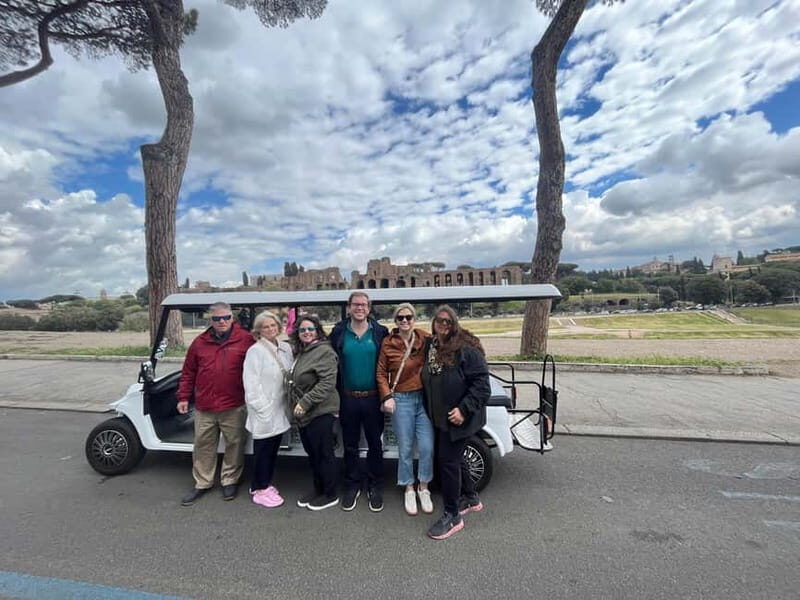
Rome is big, and it can be tiring fast. This tour solves the big problem: how to see a lot of Rome in a short window without spending your whole day walking, waiting for trains, or constantly recalculating routes. The electric golf cart is the “short-cut mindset,” but still grounded in sightseeing. You’re not just passing by famous spots from a distance. You’re moving through streets at a pace where the guide can actually explain what you’re looking at.
Because it’s only about 3.5 to 4 hours, it works best as a first-day orientation, or as a “we still want to see everything, but our legs need a break” option. You’ll cross from one side of the river into the denser heart of the city, then work through classic squares and monuments in a logical loop. The payoff is that you leave with a better map in your head—where things are and how they connect—so the rest of your trip feels easier.
You can also read our reviews of more tours and experiences in Rome.



Hotel pickup and the Trastevere start: getting on board smoothly
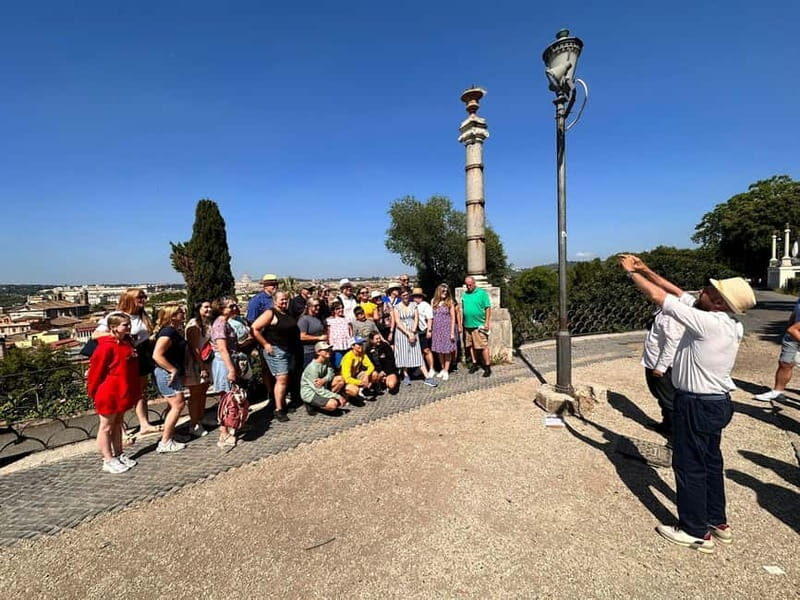
The experience begins at the provider’s Trastevere office area, where you’re welcomed with earphones and a refreshing bottle of water. That’s a small detail, but it matters. The headset setup makes it easier to hear your guide over city noise, and it’s one less thing you have to manage while you’re trying to get oriented.
Then you hop into your golf cart and cross the Tiber River into central Rome. If you picked the pickup option, the tour can come to you—again, with an important boundary. Hotel pickup is included if your hotel is located in the center of Rome. If it’s not, you’ll need to come to the meeting point prior to departure.
Why that matters: people often book these to avoid logistics. If you’re outside central Rome, factor in that short transfer so your day doesn’t start with a scramble.
Via Giulia and the first sweeping views: a ride with purpose
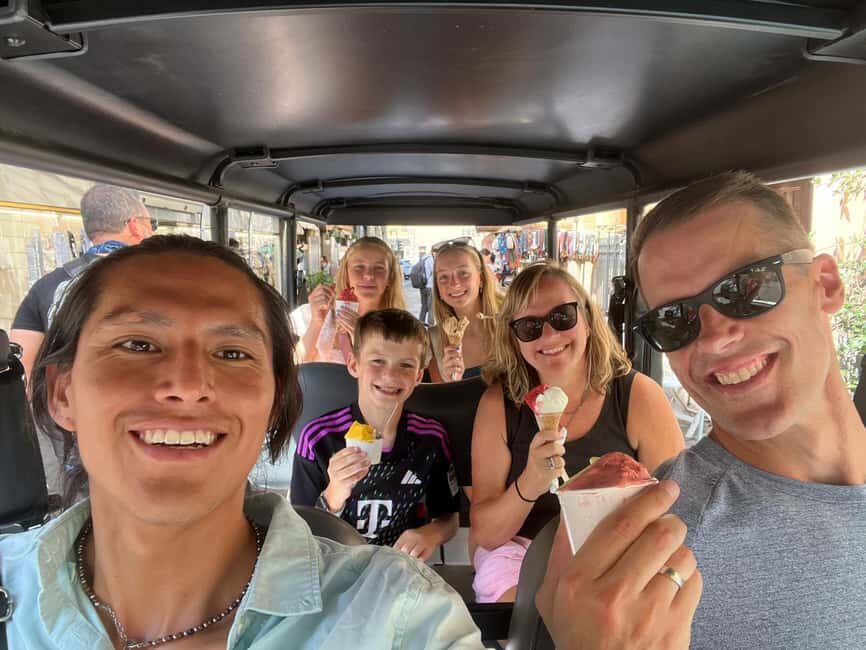
One of the more memorable “drive-by” moments is the route down Via Giulia, a street designed by Michelangelo in the 1500s. This is the kind of place where you might normally walk for a bit, then get distracted by side streets and forget to look up. From the cart, the guide can keep you moving while pointing out the Renaissance-era feel of the area.
As you travel, you also start stacking viewpoints: you’re not only collecting monuments, you’re seeing how Rome’s streets and sightlines work. That’s especially useful if you’re the type of traveler who likes to come back later and explore on your own.
Pantheon stop: architectural wow, without the marathon
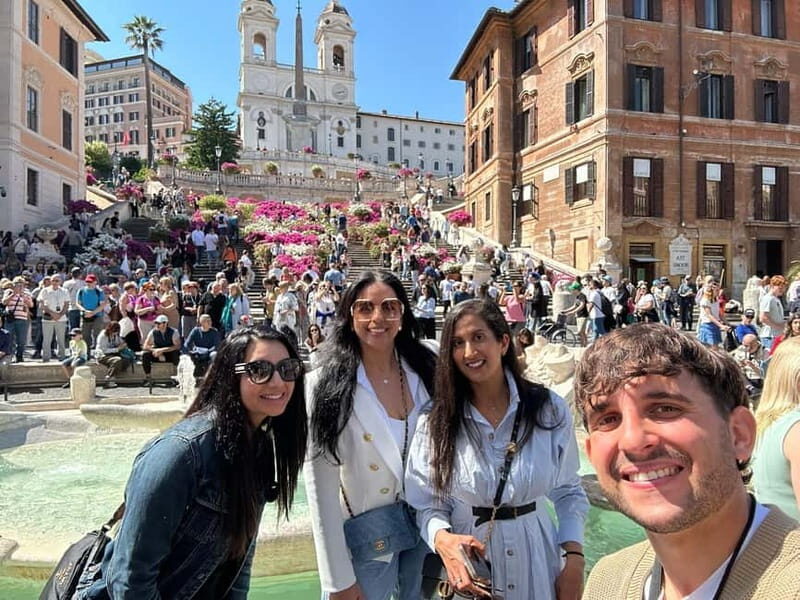
The tour includes a stop at the Pantheon, Rome, with a pause to admire the architecture while your guide shares insights. The Pantheon is famous, but it’s also one of those places where your brain understands it better after someone tells you what you’re looking at—materials, proportions, and why the building still feels so “impossible” today.
From the golf cart format, the stop is designed to keep momentum. You’re getting the core experience—how it looks and why it matters—without turning your day into a full museum outing. If you want to go inside, plan for the possibility that entrance fees are not included, so tickets would be extra.
Practical thought: treat this stop as a visual and storytelling moment. If you want a deeper follow-up, you’ll know what to prioritize later.
Piazza Navona: Bernini’s influence in a street-level scene

Next up is Piazza Navona, a square known for its elegant shape tied to Bernini’s genius. This is one of those areas where you can instantly feel how Rome “performs” in public space—street life, fountains, architecture around the edges, and people lingering because it’s beautiful.
On the tour, the experience includes guided elements and sightseeing time. Even if you don’t linger for hours (because you’re working through a route), you’ll get enough context to recognize what you’re seeing. If you’re traveling with kids or someone who doesn’t want to walk much, Piazza Navona is a smart stop: it’s visually rewarding even from short pauses.



Trevi Fountain: legends plus the coin toss moment
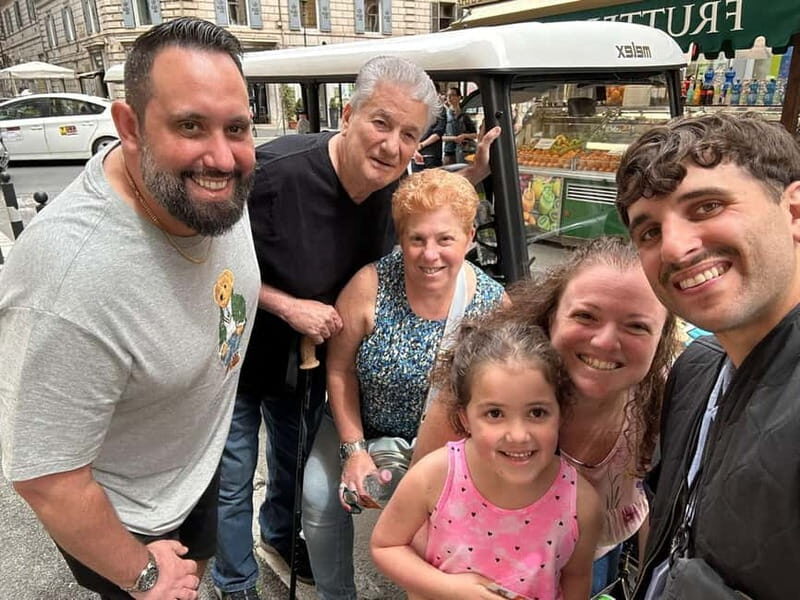
Then comes the Trevi Fountain, where you’ll hear legends and get a chance to toss a coin into the water to help ensure your return to Rome. This is a classic activity, but what makes it work on this tour is that the coin toss isn’t random free time. It’s timed and explained so it feels like part of the story rather than just a tourist photo-op.
Fountains in Rome can be crowded, and waiting around can eat your schedule. The guided approach helps you move through at a pace that keeps the day on track.
If you’re thinking about photos: you’ll want to be ready for quick moments. The best shot at Trevi often comes when you’re willing to accept that the tour timeline controls the timing more than the crowd does.
Piazza Venezia to the Colosseum: big monument, clear context
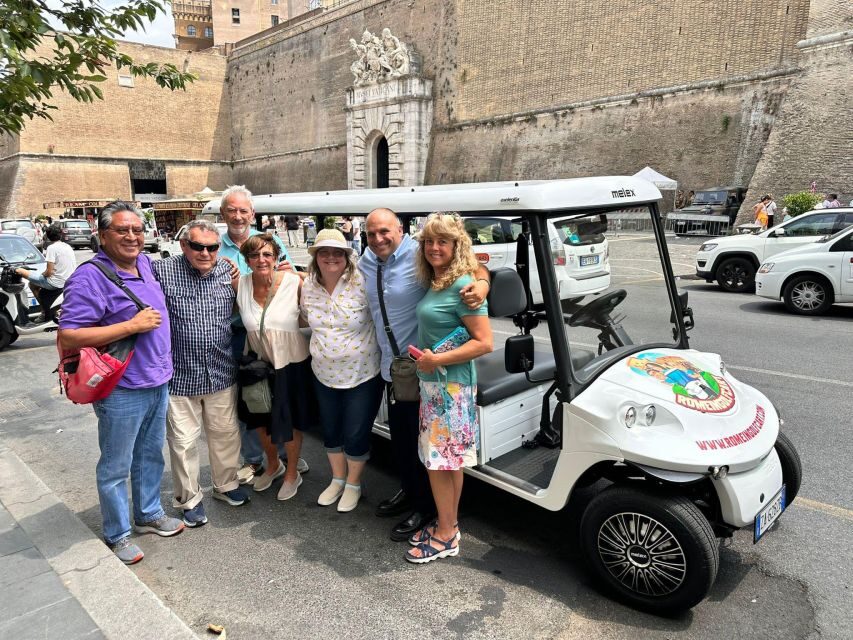
The tour goes to Piazza Venezia, including a guided pass with sightseeing. This is a major “arrive and reorient” type of place. It’s not only about one viewpoint; it’s about understanding how the monument area anchors the rest of central Rome.
From there, the route brings you toward the Colosseum, with a photo stop and guided sightseeing/pass-by time. What I like about this setup is the viewpoint from the elevated perspective of the cart. You’re not doing a long slog to get your first look. You’re getting the dramatic scale right away, and your guide brings the history to life with vivid stories of gladiators and emperors—plus visuals that show the Colosseum then and now.
Two helpful things to remember:
- The entrance fees are not included, so this is best treated as an exterior-and-context moment unless you choose to add an on-site visit separately.
- A cart-based viewing plan is ideal if you’re mixing Rome classics with limited time.
Circus Maximus, Theatre of Marcellus, and the Roman “in-between” stops
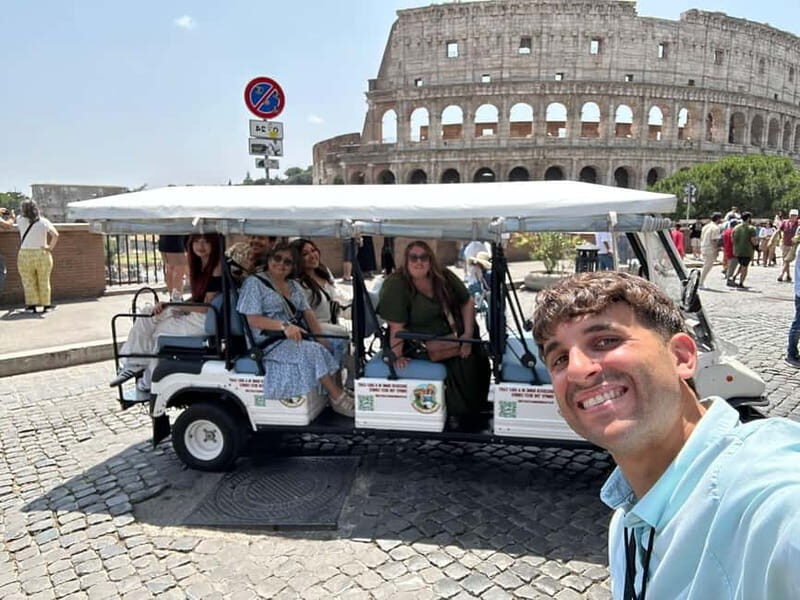
Rome has a habit of making you walk past interesting things without noticing. This tour keeps nudging your attention toward those in-between highlights.
On the route, you’ll pass Circus Maximus, with a photo stop and guided pass-by time. This is where chariot races once happened, and even if you just look at open space and feel modern Rome, the stories help your brain rebuild the past.
You’ll also see or pass by the ancient Theatre of Marcellus, plus references to the temples of Hercules and Juno, and the grand Opera House in the broader area. The vibe here is different from the “must-see landmark” energy of Trevi or the Pantheon. It’s more about connecting Rome’s entertainment history—public spectacles, grand architecture, and crowds—across time.
And then there’s Church of Sant’Ignazio di Loyola, included as a photo stop with guided context/pass-by time. Small stops like this keep the tour from feeling like a checklist-only day.
Sant’Ignazio to Giardino degli Aranci: viewpoints and that late-day feeling
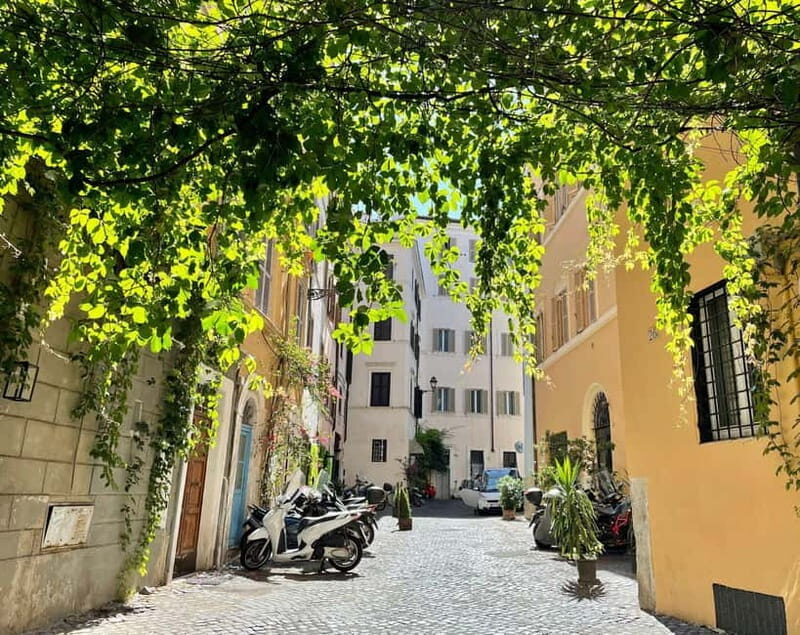
After the busier sightseeing stretches, the tour weaves through gentler scenery and viewpoints, including Piazza Margana and Via Giulia again as part of the guided drive-through experience.
One standout included stop is Giardino degli Aranci, Rome, with a guided element and pass-by time. Gardens like this are where Rome slows down a notch—especially helpful if your group includes kids, seniors, or anyone who needs short breaks without losing the view.
From the cart, you can take in the atmosphere without building up too much fatigue. That matters because Rome sightseeing can hit like a wave: bright and exciting, then suddenly you’re tired. This helps keep the energy steady.
Trastevere finish: ending on medieval palaces and quiet courtyards
The tour concludes back in the Trastevere area, weaving through quaint streets and admiring medieval palaces and hidden courtyards. This ending is smart because it shifts the mood from “top monuments” to “real neighborhoods.” Even if you’re not doing a full Trastevere wandering session afterward, you’ll have a feel for the area’s character.
The tour wraps at the office location, and the meeting point/end details center around Piazza della Trinità dei Monti. Depending on the pickup option and drop-off arrangement, you may end back at that meeting point.
Price and value: is $95.78 per person a fair deal?
At $95.78 per person for a roughly 3.5 to 4-hour private or small-group cart tour, the big question is value: what are you buying beyond transport?
You’re paying for:
- Time saved with pickup (when you’re in central Rome)
- Less walking while still hitting Rome’s biggest visuals
- A guide who provides English and Italian live narration
- A route designed for icon sights plus story stops, including legends at Trevi and historical context around the Colosseum
Is it the cheapest way to see Rome? No. But it’s a strong value if you’re trying to stack sights efficiently, especially if your group includes kids, older relatives, or anyone who wants to avoid blisters. If your plan is mostly to casually stroll and only hit a couple of monuments, then another approach might fit better. If you want a high-impact first overview with minimal fatigue, this price starts to make sense.
Who this tour suits best (and who might want a different plan)
This is a great fit for:
- Families who want big sights without turning the day into a test of stamina
- Couples balancing romance sightseeing with comfort
- First-time Rome visitors who want a fast, guided orientation
- Anyone who prefers to walk after they understand where things are
From the guide quality angle, names like Daniel and Ivano come up in the experience history. Daniel is described as engaging and animated, especially for a mixed group with kids. Ivano is described as friendly and informative, with attention to experience details, including suggesting a local restaurant and even helping with a reservation. That kind of service is the difference between a drive-by and a day with actual payoff.
If your idea of fun is long self-guided wandering and maximum time at each monument, you might find the structured pace limiting. This isn’t a slow art-lovers crawl. It’s a guided “see a lot, learn fast, move comfortably” format.
Tips to make the most of your 3.5–4 hours
A cart tour is efficient, but you still need to help it work.
- Wear comfortable shoes anyway. You’ll still do some steps at photo and guided stops.
- Bring your ID. The tour notes that you should have a passport or ID card.
- Plan for extra tickets if you want interiors. Entrance fees are not included.
- Use the guide’s stories like a map. Listen for what they compare then and now—especially around the Colosseum—so you can recognize details later if you return.
- Go easy on your schedule after. You’ll be mentally full after the major sights, even if your feet feel okay.
Also, if you’re traveling in hot months, remember that sitting and riding helps, but time in Rome sun can still add up. The golf cart approach reduces leg fatigue, not the daylight.
Should you book this Rome golf cart tour?
Book it if you want a smart first-day overview that mixes major icons with less-expected stops, all while walking less. It’s especially worth it when you need comfort, a clear route, and live interpretation in English or Italian.
Skip it or consider a different style if you:
- Only want to see a couple of places
- Prefer spending hours at one monument over covering many
- Are already planning a very detailed, interior-focused itinerary that takes most of your day
If you do book, think of it as your Rome “map with a story.” After your ride, you’ll know where to go next, what to prioritize, and how to make your remaining time feel more like Rome and less like navigating.
FAQ
How long is the Rome electric golf cart tour?
It lasts about 3.5 to 4 hours, depending on the starting time shown when you check availability.
Where does the tour start and where does it end?
The tour meets at Piazza della Trinità dei Monti, 00187 Roma RM, Italy, and ends back at the meeting point.
Is hotel pickup included?
Hotel pickup is included if your hotel is in central Rome. If not, you’ll be required to come to the meeting point prior to departure.
What sights are included on the tour?
The tour includes stops and/or guided sightseeing around major landmarks such as the Pantheon, Trevi Fountain, Colosseum, Piazza Venezia, Piazza Navona, plus Circus Maximus, Theatre of Marcellus, Via Giulia, and Giardino degli Aranci.
Does the tour include entrance fees?
No. Entrance fees are not included.
What language is the guide/driver speaking?
The live tour guide is available in English and Italian.
Is this tour private or small group?
Yes. Private or small groups are available.
Is the tour wheelchair accessible?
Yes, the tour is listed as wheelchair accessible.
What should I bring?
Bring a passport or ID card.
Can I get a refund if I cancel?
Yes. Free cancellation is available up to 24 hours in advance for a full refund.