REVIEW · NAPLES
Private Transfer: Naples to Sorrento with Pompeii Guided Tour
Book on Viator →Operated by IAMME IA! - Gray Line Amalfi Coast · Bookable on Viator
Pompeii, packed into a transfer day. This private Naples-to-Sorrento ride is built for people who want big ancient results without spending the whole day stuck on logistics. You get hotel/airport/train pickup, an air-conditioned vehicle, and an official local guide who leads a walking tour that brings the story of Pompeii to life fast—then you’re dropped at your Sorrento address.
I especially love the skip-the-line advantage (less time waiting at the entrance) and the way the guide helps you see Pompeii’s top spaces in a few hours, including Forum-area highlights, baths, and major houses. One possible drawback: the Pompeii time is tight, and several sights are “stop-and-see” moments, so you won’t have hours to linger over mosaics or read every plaque.
In This Review
- Key Highlights You’ll Actually Feel
- A Private Naples-to-Sorrento Transfer That Starts With Your Schedule
- Luggage: Know the limit before you pack heavy
- What Pompeii Looks Like When You Only Have a Few Hours
- The walking tour pace: good for first-timers
- Forum Stops That Show You How Pompeii Actually Worked
- Foro de Pompeya: the city’s daily core
- Tempio di Giove Capitolino: Jupiter’s temple and the view behind it
- Basilica: the public business space
- A Quick Tour of Pompeii’s Street Life and Bathing Culture
- Via dell’Abbondanza: the main street and the rhythm of trade
- Stabian Baths (Terme Stabiane): a complete bathing routine
- Macellum, Lupanar, and Casa del Fauno: The Stuff You’ll Remember
- Macellum: where food and social power intersected
- Lupanar: the famous brothel and its preserved “menu”
- Casa del Fauno: luxury in the Roman republic
- Teatro Grande and the Basilica Connection: Power in Public Space
- Teatro Grande: where Roman drama took center stage
- Time Management: How to Make a Tight Schedule Feel Good
- What you can do to avoid feeling rushed
- The one thing to watch for: logistics at the start
- Price and Value: When This Private Deal Makes Sense
- Who gets the best deal?
- Practical Tips Before You Go
- Should You Book This Naples to Sorrento Pompeii Transfer?
- FAQ
- How long is the Naples to Sorrento transfer with Pompeii?
- What’s the meeting process in Naples?
- Does this include entrance tickets for Pompeii?
- Is Pompeii guided?
- Is lunch included?
- How does drop-off in Sorrento work?
- What’s the luggage allowance?
- What’s the cancellation window?
Key Highlights You’ll Actually Feel
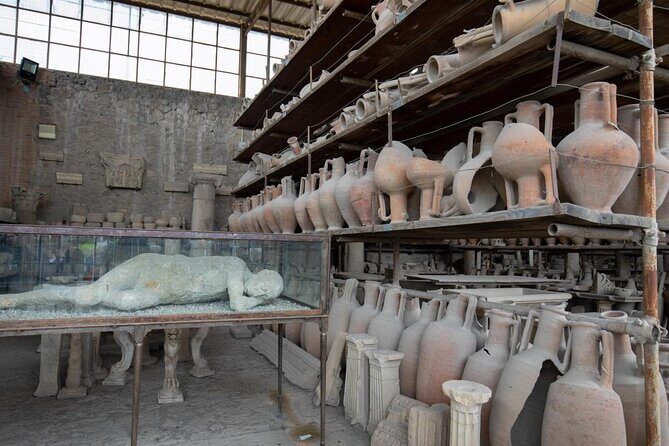
- Door-to-door in Sorrento: you choose the drop-off location, not a distant meeting point.
- Official local guide in Pompeii: you’re not left wandering without context.
- Skip-the-line entry included: it cuts one of the biggest time-wasters.
- Air-conditioned private transport: you travel comfortably with space for luggage.
- A Pompeii “greatest hits” route: Forum, baths, brothel area, a major house, and theater.
- Tight schedule that fits travel days: great when your time in Naples is short.
A Private Naples-to-Sorrento Transfer That Starts With Your Schedule
This is the kind of tour that makes sense when you’re moving between bases—Naples in the morning, Sorrento at the end of the day. Instead of doing Pompeii on a separate day, you roll your sightseeing into the transfer, so you save that extra “travel tax.”
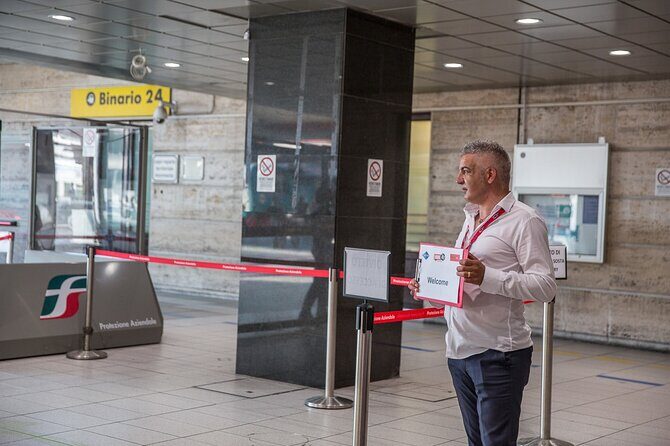
Pickup is flexible. You can be collected from the airport, port, train station, or your Naples hotel, and the driver meets you holding a name board. If you’re arriving by flight or train, you’ll need to provide the number so your driver can track timing and meet you correctly. Then you ride in an air-conditioned vehicle designed for real travel, not cramped commuter chaos.
Drop-off is the other big win. You aren’t deposited somewhere generic—you’re taken to the location you specify in Sorrento. That matters in Sorrento, where walking uphill with bags can drain your energy before your first dinner.
You can also read our reviews of more guided tours in Naples


Luggage: Know the limit before you pack heavy
You can bring 1 medium or large suitcase per passenger seat plus 1 small item (like a camera bag or laptop bag). If you’ve got more than that, it’s smart to double-check vehicle capacity with the supplier so you don’t end up negotiating on the spot.
What Pompeii Looks Like When You Only Have a Few Hours
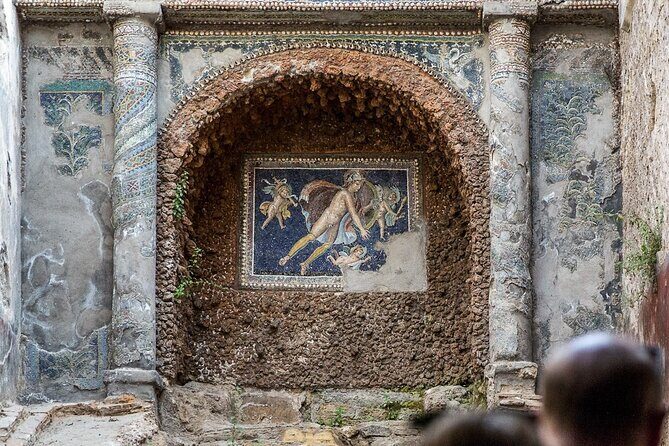
Pompeii is one of those places where “I’ll just see the highlights” isn’t a cop-out—it’s practical. The archaeological park is huge, and time becomes the limiting factor fast. This tour tackles that head-on with a guided walking tour of about 2 hours, followed by short focused stops for the places most people want to photograph and understand.
The key thing is that you’re not arriving with zero context. You start with the core story: after Mount Vesuvius erupted in 79 AD, the city was buried under lapilli and lava. That catastrophe is what preserved streets, storefronts, homes, and public buildings in a way that’s rare anywhere else. The effect is immediate the moment you’re walking among the ruins—this isn’t a pile of stones, it’s a city layout that lets you picture daily routines.
The walking tour pace: good for first-timers
A guided “greatest hits” route works especially well if this is your first time at Pompeii. You’ll get the orientation early, so later stops make more sense. And because the guide is handling the connections—what you’re seeing, why it mattered, and how the areas relate—you’ll spend less time scratching your head and more time noticing details.
Forum Stops That Show You How Pompeii Actually Worked
After the initial guided time, your route focuses on the civil and religious center: the Forum. This is where Pompeii’s public life clustered—administration, justice, trade, markets, and worship. Even with shorter stop times, the Forum area is powerful because it’s dense with meaning: civic power and everyday behavior are built into the layout.
Here’s what you’ll hit, and what to look for:
You can also read our reviews of more private tours in Naples






Foro de Pompeya: the city’s daily core
The Civil Forum is the focal point for public buildings and citizen life. Markets and commerce are part of the story here, not background scenery. As you stand in the space, try to imagine the flow of people moving between business and worship—this was the “center-of-everything” spot.
Tempio di Giove Capitolino: Jupiter’s temple and the view behind it
The Temple of Jupiter dominates the north side of the Forum. What’s interesting is the way the scene was designed: Mount Vesuvius rises behind, and when the colony was founded (80 BC), the temple was radically renovated to become a kind of Capitolium with statues of Jupiter, Juno, and Minerva positioned so they were visible from the Forum square. Even if you don’t linger long here, this stop gives you a strong mental image: politics, religion, and the landscape are framed together.
Basilica: the public business space
The Basilica is huge—about 1,500 square meters—and it’s described as the most sumptuous building in the Forum. It was used for business and administration of justice. When you’re moving quickly, this is one of the stops where your brain can fill in the blanks: people arriving for proceedings, contracts, and official matters.
A Quick Tour of Pompeii’s Street Life and Bathing Culture
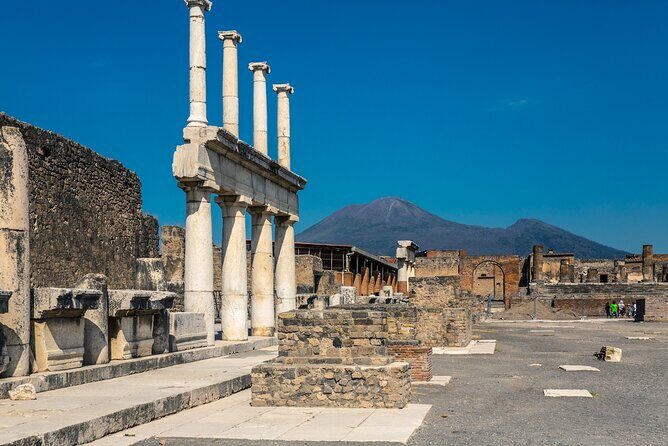
Pompeii wasn’t only temples and big houses. It had streets full of shops, and people spent time in public spaces that mixed routine with social life.
Via dell’Abbondanza: the main street and the rhythm of trade
Via dell’Abbondanza was the ancient main street, the decumanus maximus running east/west from the Forum toward the Porta Sarno. You’ll see why it mattered: it was packed with workshops (officinae), cafes, snack-bars, and restaurants for food and drink. When you walk here, focus on the street’s scale and how commercial buildings line up. You’ll start to feel how noisy and busy this must have been in daily life—exactly the opposite of how it feels now.
Stabian Baths (Terme Stabiane): a complete bathing routine
The Stabian Baths sit behind the Temple of Jupiter and date to just after the colony of veterans was founded. What makes this stop more than a pretty ruin is the bathing system. You’ll learn how the men’s section worked with spaces including:
- an apodyterium (dressing room),
- plus areas used for tepidarium, frigidarium, and calidarium baths.
It also helps to know about the earthquake of 62 AD, which heavily damaged many Pompeian buildings—so some structures you see carry layered history.
If you like “daily life archaeology” instead of just monuments, this is a strong moment in the route.
Macellum, Lupanar, and Casa del Fauno: The Stuff You’ll Remember

These stops are why many people book Pompeii at all. You get contrasts: food and markets, the most famous official brothel in Pompeii, and one of the grand aristocratic homes.
Macellum: where food and social power intersected
The Macellum was a market complex—described as a tuff quadriporticus with an elevated worship hall aligned with the entrance. On top of that, there are clues about identity and status: copies of marble statues in niches and a hint of the imperial cult through an emperor-related fragment. Even in a short stop, it’s worth pausing to orient yourself: this wasn’t just where you bought food. It also signaled social roles and public worship.
Lupanar: the famous brothel and its preserved “menu”
The Lupanar is small, two-story, and purpose-built, with five rooms on the ground floor that have built-in masonry beds. It’s world-renowned for its well-preserved erotic frescoes above the doors—likely functioning like a visual menu of services—plus the graffiti left by visitors. This is an intense stop, and you’ll probably notice how raw it can feel compared with more formal religious sites. If you’re visiting with teens, this is the one place where you may want to prep them.
Casa del Fauno: luxury in the Roman republic
Casa del Fauno (built in the 2nd century BC) is one of Pompeii’s largest and most impressive private residences. It’s described as a major aristocratic home from the Roman republic period, and it’s often cited as reflecting that era better than most evidence even found in Rome itself. In a fast stop, you won’t see everything, but you’ll understand why this house made such an impact: it’s scale, status, and art concentrated in one place.
Teatro Grande and the Basilica Connection: Power in Public Space
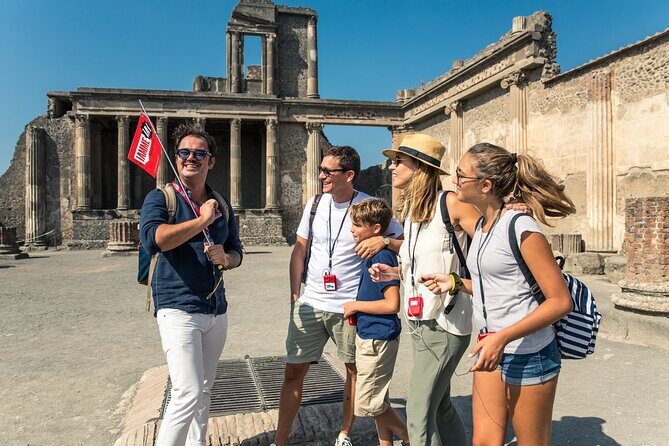
The last big architectural stop in your route is the Theater area, followed by more time in the Forum-space structures if your pace allows.
Teatro Grande: where Roman drama took center stage
The Teatro Grande was built on a hillside and takes advantage of a natural depression to create an auditorium divided into five sectors. It was used for tragedies of Greco-Roman traditions. Even if you only see part of the site, the theater helps you understand how Pompeii’s “public life” included entertainment and performance—another layer beyond commerce and worship.
Time Management: How to Make a Tight Schedule Feel Good
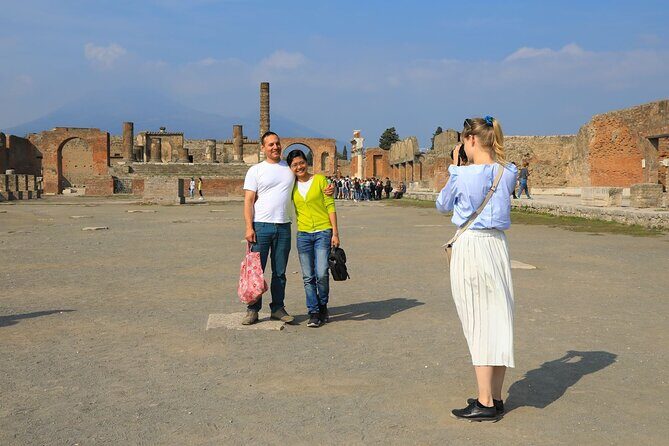
Your total day is about 4 to 5 hours. That’s not a lot of time when you’re starting in Naples, driving to Pompeii, walking uneven ground, then finishing in Sorrento with door-to-door drop-off.
So think of this as an efficient route:
- You’ll get a guided orientation early during the 2-hour walking tour.
- Then you’ll encounter the best-known sites as short stops rather than long museum-style visits.
What you can do to avoid feeling rushed
- Wear comfortable shoes you can walk in for a while on uneven surfaces.
- Bring sunscreen and plan for heat. Pompeii can get brutal in summer.
- Skip packing “time-wasting” extras. If you want a relaxed Pompeii day, you’d choose a longer visit—but if you want it to fit into a transfer, this route is built for that mission.
- Since lunch and beverages aren’t included, plan a simple plan for food after your drop-off. Sorrento is a good place to eat once you’re settled.
The one thing to watch for: logistics at the start
You’ll need to coordinate pickup timing with the driver’s meeting process. Even when everything runs as scheduled, meeting points and entrance lines can create small delays. This tour includes skip-the-line access in Pompeii, which helps a lot, but I still recommend you treat the schedule as time-sensitive and be ready on arrival.
Price and Value: When This Private Deal Makes Sense
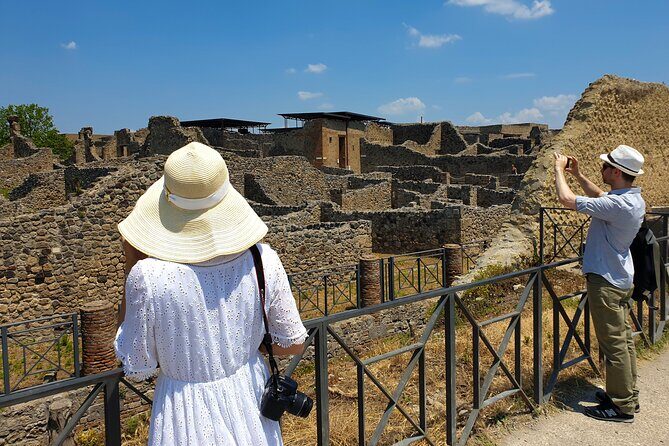
At $492.76 per person, this isn’t a “cheap add-on.” But you’re not only paying for transportation. You’re bundling several costly pieces into one organized day:
- private air-conditioned transfer with luggage space,
- official local guide time in Pompeii,
- admission ticket coverage,
- and skip-the-line entry.
For many people, the best value comes when you’re traveling with someone else and can split the private logistics. The tour also advertises group discounts, which can make a big difference if you’re booking with friends or family.
Who gets the best deal?
This makes the most sense if:
- you’re short on time in Naples,
- you want to avoid a separate Pompeii day,
- you care more about seeing key sites with context than reading every panel at leisure,
- you’re traveling with luggage and want door-to-door drop-off in Sorrento.
If you have an entire day free and you love slow museum pacing, you might feel the Pompeii portion is quick. But if your goal is “see Pompeii without turning your itinerary into a nightmare,” it’s a solid value.
Practical Tips Before You Go
A few things you’ll be glad you considered in advance:
- Choose your Pompeii language setting thoughtfully. The guide works in the selected language, and the driver can speak English or Italian depending on what you selected.
- Plan what you’ll do with your photos. The route is built around stops, so be ready to move promptly when the group shifts.
- Treat Pompeii like walking time, not sightseeing time. You’re in a walking park with real surfaces and real sun.
- Double-check your Sorrento drop-off address when booking. The tour requires that detail so you actually get taken to your door, not just a landmark.
Should You Book This Naples to Sorrento Pompeii Transfer?
Book it if you want Pompeii’s highlights with an official guide while turning a travel day into a sightseeing day. It’s a smart fit for first-timers, time-crunched schedules, and anyone who wants the stress removed from the Naples-to-Sorrento transition.
Skip it (or add a separate Pompeii day) if you plan to spend hours absorbing every detail. This is a structured route, and it prioritizes breadth over deep lingering.
If you’re choosing between doing Pompeii alone and doing it with context, I’d pick this. A guided route is how you leave Pompeii feeling like you understood the city, not just that you visited ruins.
FAQ
How long is the Naples to Sorrento transfer with Pompeii?
It’s approximately 4 to 5 hours total.
What’s the meeting process in Naples?
Your driver will wait at the airport, port, train station, or pickup point in Naples holding a board with the lead passenger’s name.
Does this include entrance tickets for Pompeii?
Yes. Admission ticket fees for the Pompeii stops are included, and skip-the-line entrance fees are included as well.
Is Pompeii guided?
Yes. You’ll join a walking tour of Pompeii with an official guide, and the Pompeii tour runs in the language you select.
Is lunch included?
No. Lunch and beverages aren’t included.
How does drop-off in Sorrento work?
You’ll be dropped off directly at your accommodation or the location you choose in Sorrento. You must provide the drop-off address at booking.
What’s the luggage allowance?
You can bring 1 medium or big suitcase per passenger seat plus 1 small item. If you have special luggage needs, it’s recommended to double-check with the supplier for vehicle capacity.
What’s the cancellation window?
You can cancel up to 24 hours in advance for a full refund.