REVIEW · PRIVATE
Private Tour – Trastevere and Villa Farnesina
Book on Viator →Operated by Rome Guides · Bookable on Viator
Rome hits different when you walk it with a guide.
This private tour threads together Trastevere’s ancient layers and Renaissance art at Villa Farnesina, so you’re not just sightseeing—you’re building a clear picture of how Rome kept reinventing itself. I like that you start with the Raphael connection at Villa Farnesina, then shift straight into two of Trastevere’s most meaningful churches.
Two things I’d bet on: the art-and-architecture storytelling (especially around Raphael and Agostino Chigi’s villa) and the chance to see real mosaics and underground spaces instead of only walking past things. If you don’t have much patience for indoor sites, the pacing might feel a touch church-heavy, but the stops are short and the guide keeps it moving.
One practical consideration: the visit to Santa Cecilia’s crypt and ancient Roman undergrounds is noted as conditional, depending on the nuns managing the building, so you’ll want to stay flexible on what you can access in that moment.
In This Review
- Key highlights you’ll care about
- Starting at Villa Farnesina: the Raphael angle that changes how you see Rome
- Santa Maria in Trastevere: why the mosaics feel like a time machine
- Walking through Trastevere: the district that makes Rome feel real
- Santa Cecilia in Trastevere: the choir fame, plus crypt and Roman undergrounds
- What makes the guide experience feel worth paying for
- Time, distance, and pacing: a 3-hour plan that doesn’t feel rushed
- Price check: why $149.78 can be fair (and when it’s not)
- Who this tour fits best
- Should you book this private Trastevere and Villa Farnesina tour?
- FAQ
- What is the duration of the tour?
- Where does the tour start and end?
- What time does the tour begin?
- Is this tour private, and what language is it in?
- Are tickets included?
- What if the crypt and Roman undergrounds are not accessible?
Key highlights you’ll care about
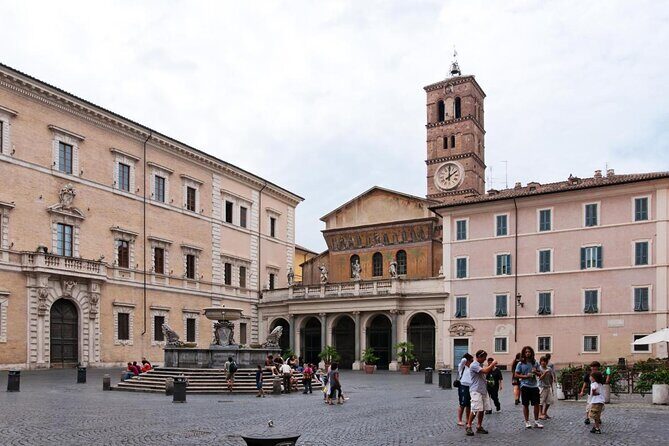
- Raphael at Villa Farnesina: You’ll connect the artwork to who commissioned it—Agostino Chigi—and why it was designed that way.
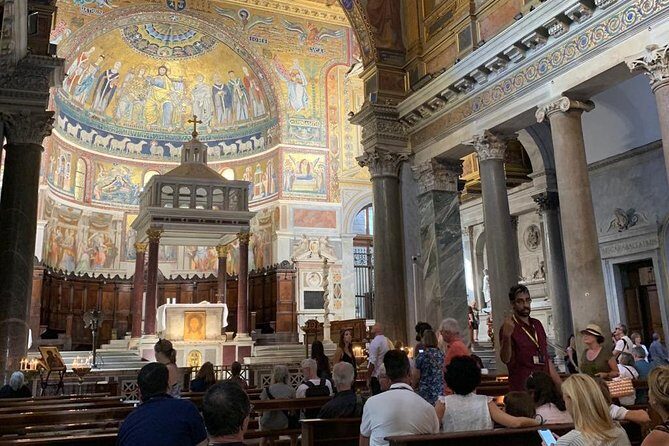
- 13th-century mosaic power at Santa Maria in Trastevere: The church is famous for its mosaics, and your guide helps you see what to look for.
- Trastevere orientation on foot: You get a guided route through a district known for food and tradition, not just a quick photo loop.
- Santa Cecilia’s music legacy plus archaeology: You can get a look at crypt and Roman undergrounds if access is available.
- Private, English-speaking format: Only your group, with a professional guide and included tickets.
Starting at Villa Farnesina: the Raphael angle that changes how you see Rome
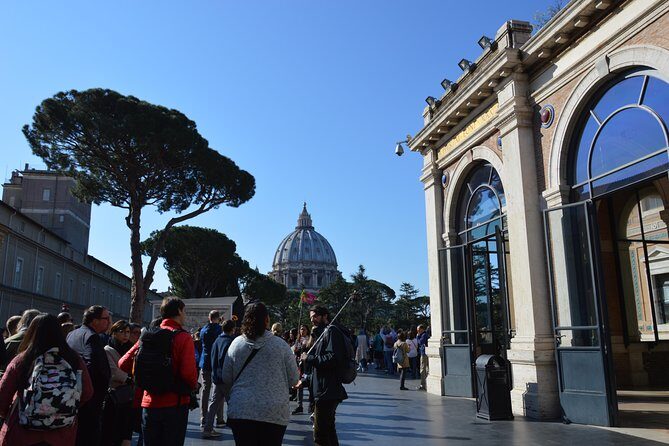
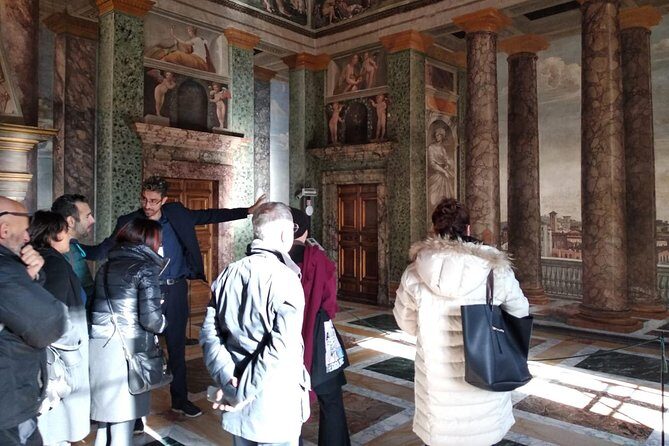
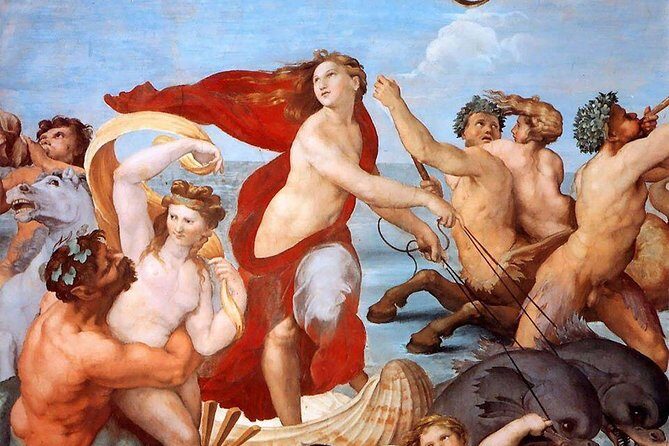
Your tour kicks off at Villa Farnesina on Via della Lungara (near public transport, and an easy meeting point once you’re oriented). This is a 16th-century villa that matters because it’s tied directly to one of the big names you associate with Renaissance Rome: Raphael and the painters connected to him.
What I like about this start is the way it sets the tone. You’re not walking into art like it’s random decoration. The guide explains how the villa was commissioned by Agostino Chigi, a banker who built a grand residence by the river. Then you connect the dots: the paintings and imagery aren’t just pretty—they’re part of a message. The tour focuses on the propaganda-style decoration and what it reveals about the life and status of artists and noble men in that period. That framing is huge. After you hear it, you’ll likely look at the artwork differently when you see it elsewhere in Rome.
The tour description also notes that you’ll have one hour here and that the admission ticket is included. So you’re not making separate plans or hunting down tickets while your brain is still trying to keep up with Roman traffic.
One more practical note: sometimes you might hit a closure or access issue at the villa. In a case like that, a good guide should pivot. In fact, Vincenzo Spina (one of the guides people associate with this experience) has handled an adjustment by shifting the focus to the neighborhood so the time still stays meaningful. The main takeaway for you: don’t panic if something is temporarily unavailable—plan for your guide to adapt.
You can also read our reviews of more private tours in Rome



Santa Maria in Trastevere: why the mosaics feel like a time machine
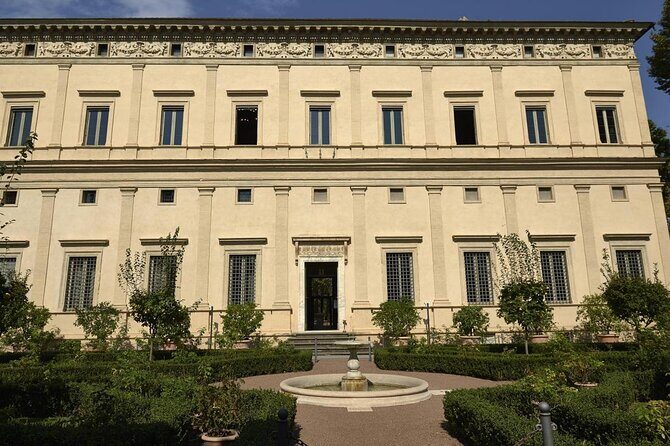
From Villa Farnesina, you head into Trastevere and then toward Basilica di Santa Maria in Trastevere. This part is fast—about 20 minutes—but it’s the kind of stop that can stick with you longer than many longer ones because it’s focused.
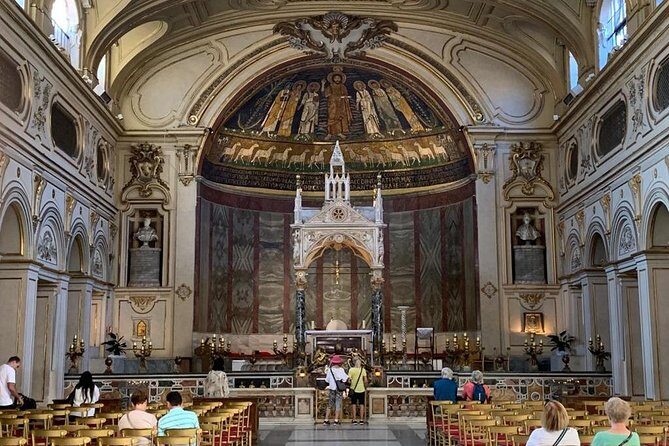
The church is described as the first dedicated to the Virgin Mary in Rome, and the real reason it’s a must-see is the mosaics, dating to the 13th century. That’s a key detail. You’re not just admiring old art; you’re seeing how medieval Rome carried religious storytelling through color, gold, and figures designed to be read by people who may not have had the same access you do today.
Your guide helps you slow down just enough to notice what you otherwise miss. And because the admission ticket is free, you get one of those rare Rome moments where the value is extremely high for the time invested.
If you’re the kind of traveler who thinks, I’ll get my church photos and move on, this stop may change your mind. The mosaics are visually strong even in daylight, but they’re also easier to appreciate with someone pointing out what’s where and why those details mattered.
Walking through Trastevere: the district that makes Rome feel real
After those landmark stops, the pace shifts into neighborhood mode. Trastevere is famous for food, wine, and traditions, and the walking part is more than an in-between stretch. It’s where you start getting your bearings.
Here’s what you’ll gain from a private format: fewer rush moments. With a group tour, it’s easy to be swept along. With a private guide, you can take two steps back, ask why a church façade is shaped a certain way, and still keep the schedule sane.
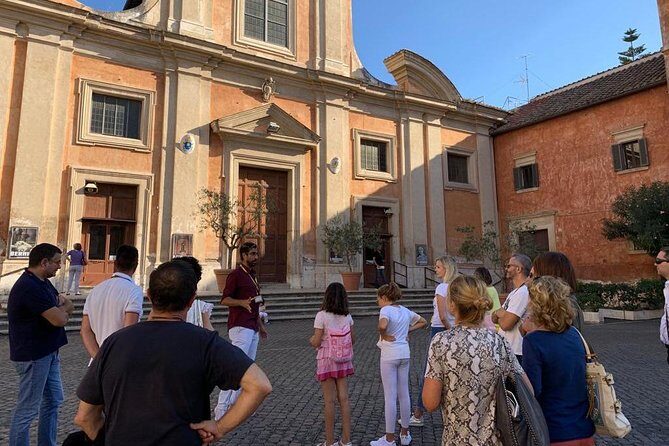
Also, Trastevere rewards attention. Even if you’ve seen Rome photos before, this area tends to feel more like daily life. Narrow lanes, church bells, and everyday rhythm. Your guide’s job is to connect what you see on the street to what you’re learning in the churches—so you’re not collecting separate facts. You’re building one story.
Santa Cecilia in Trastevere: the choir fame, plus crypt and Roman undergrounds
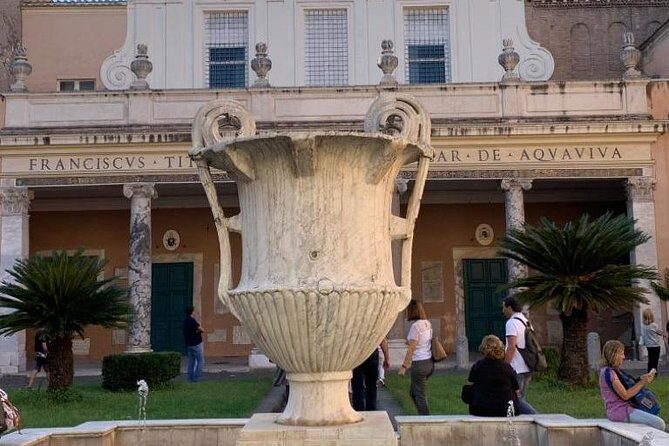
Next comes Santa Cecilia in Trastevere, one of those stops that works well as a final act: it’s tied to a wider fame (Cecilia is known all over the world for her choir legacy), but it also has the kind of layers that make history physical.
This stop is listed as about 30 minutes, and the main reason it’s worth including is the focus on mosaics and the church’s history, plus the possible access to the crypt and ancient Roman undergrounds.
The important detail for you is the one the tour description makes explicit: the visit to the crypt and underground spaces depends on the nuns managing the building. That means you should treat it as a bonus that may or may not be available that day. If it is available, it’s exactly the kind of Rome contrast you want—surface-level worship above, and older structures and passages below.
Even if you only get the parts that are fully accessible, the tour still aims to give you something to look for: the mosaics, the architecture, and the idea that Rome’s sacred sites often sit on top of earlier realities.
You’ll end the experience at Piazza di Santa Cecilia, 22. That’s convenient because you don’t get dumped back into the city center in a random place—you finish in the same district you’re exploring.
What makes the guide experience feel worth paying for
The biggest difference on a private tour isn’t just comfort. It’s how you get your time explained.
Guides associated with this tour—especially Vincent and Vincenzo—are described as energetic, friendly, and intensely story-driven. One of the standout points people make is that the guide doesn’t talk like a textbook. Instead, you get facts, figures, and fun stories threaded together, which keeps the pace from feeling heavy even when the topic is art and religion.
If you’re not an art person, this matters. The tour’s art focus can still work because it’s grounded in practical context: who commissioned the villa, what it was trying to say, and how to spot the kind of design choices that communicate status and power.
And there’s another human touch you might appreciate. Some guides have been noted to finish with a thoughtful parting gift. That’s not something you should plan your day around, but it’s a nice sign that the experience is handled with care rather than treated like a production line.






Time, distance, and pacing: a 3-hour plan that doesn’t feel rushed
This tour runs about 3 hours and starts at 10:00 am. That timing can be smart for two reasons:
First, you get morning light and calmer foot traffic compared with later in the day. Second, the itinerary is balanced so you’re not stuck in one place for too long. The stops themselves are short enough that you stay fresh: one hour for Villa Farnesina, 20 minutes for Santa Maria, and 30 minutes for Santa Cecilia, with walking and orientation in between.
It’s also described as requiring moderate physical fitness. So if you’re managing mobility issues, you’ll want to consider whether you’re comfortable with a walking-focused program of about a few hours. The good news is that it’s a private tour, so your guide can likely adapt the pace to your group. The key word here is moderate, not strenuous.
Price check: why $149.78 can be fair (and when it’s not)
At $149.78 per person for a private 3-hour tour, this isn’t a budget deal. But value-wise, it’s not just paying for a walk and a microphone.
Here’s what you’re getting that affects the math:
- Admission tickets included (Villa Farnesina and Santa Cecilia), plus Santa Maria is free
- A local/professional guide handling the interpretation
- Private tour limited to your group
That’s what makes the price feel reasonable for many people. In Rome, ticketed sites add up fast, and the real cost savings often comes from not having to coordinate time, understand what you’re looking at, and translate the signage with your own effort.
When might it be less ideal? If you’re traveling with a group and you don’t care much about art, mosaics, or underground spaces, you might prefer a cheaper walking route and spend your time at the sites you love most. But if you do care about how Rome layers time—Renaissance power next to medieval mosaic storytelling, then down into older underground reality—this one is built to deliver that.
One more small value tip: this experience is described as being commonly booked around 75 days in advance on average. That doesn’t mean you must book that early, but it does suggest demand. If you’re visiting in peak season or on weekends, plan earlier rather than later.
Who this tour fits best
I’d point this one toward travelers who:
- Want private, English-guided context instead of solo wandering
- Like art plus architecture, not just one or the other
- Enjoy churches when someone helps you read what you’re seeing (especially mosaics)
- Are curious about Roman undergrounds and how sites connect across centuries
- Prefer a walkable district experience in Trastevere
If your focus is strictly food tasting or nightlife, you may find this tour shifts too much toward art and sacred sites. But if you want Trastevere as a meaningful place to explore afterward, this is a strong way to set the stage.
Should you book this private Trastevere and Villa Farnesina tour?
If your goal is to understand Rome instead of just photograph it, I think you should book. Starting at Villa Farnesina gives you the Renaissance hook with Raphael and Agostino Chigi, then you transition into mosaics at Santa Maria in Trastevere, and finish at Santa Cecilia where you may get access to the crypt and ancient undergrounds.
The only reason to hesitate is if you don’t want church and museum time, or if your group isn’t comfortable with a moderate walking itinerary. If you’re okay with that, the format is private, the tickets are handled, and guides like Vincenzo Spina have a track record of keeping the experience engaging—even when access gets tricky.
FAQ
What is the duration of the tour?
The tour is approximately 3 hours.
Where does the tour start and end?
It starts at Villa Farnesina, Via della Lungara, 230, 00165 Roma RM and ends at Basilica di Santa Cecilia in Trastevere, Piazza di Santa Cecilia, 22, 00153 Roma RM.
What time does the tour begin?
The start time is 10:00 am.
Is this tour private, and what language is it in?
Yes. It’s a private tour/activity where only your group participates, and it’s offered in English.
Are tickets included?
Yes. Tickets are included for Villa Farnesina and Santa Cecilia. Santa Maria in Trastevere is listed as free.
What if the crypt and Roman undergrounds are not accessible?
The tour notes that access to the crypt and ancient Roman undergrounds at Santa Cecilia depends on the nuns managing the building, so you may not always be able to see those areas.