REVIEW · PRIVATE
Private Tour of Caracalla Baths and Circus Maximus
Book on Viator →Operated by TOURIKS · Bookable on Viator
Some ruins feel alive fast.
This private tour turns the Caracalla Baths into a real 3rd-century AD day-in-the-life, not just a pile of stone. I like that you get a professional archaeologist guide with clear audio through sterilized headsets, and I also like the mix: bathhouse engineering up close, then a quick stop at the Circus Maximus site for the scale of Roman public entertainment. One thing to keep in mind: you’ll do a moderate amount of walking, so comfortable shoes matter.
You’ll move at a human pace with your own group, and the guide does more than point and explain. You’re guided through how Romans used underfloor heating to control room temperatures, then you stand where huge crowds once gathered. If you hate walking or you’re expecting a long, “show-and-go” stop for photos only, this might feel a bit structured.
In This Review
- Key things to know before you go
- Caracalla Baths tour: a Roman day you can actually picture
- Hypocaust and underfloor heating: the engineering lesson you’ll remember
- Mosaics and geometric motifs: where to look when the ruins blur
- Step-by-step bathhouse life: how the guide makes it feel real
- Circus Maximus in 30 minutes: scale, spectacle, and myth-borne roots
- Private tour feel: sterilized headsets and an archaeologist pace
- Price and value: what $311.87 buys you in Rome
- Timing, meeting point, and what to do after inside the baths
- Weather matters: plan for a smooth day on your feet
- Should you book this Caracalla Baths and Circus Maximus private tour?
- FAQ
- How long is the Private Tour of Caracalla Baths and Circus Maximus?
- What language is the tour offered in?
- Is this tour private?
- Where does the tour start?
- Where does the tour end?
- Are entrance fees included?
- What’s included in the tour besides the guide?
- Is hotel pickup or drop-off included?
- Is there a lot of walking?
- What if the weather is bad?
Key things to know before you go
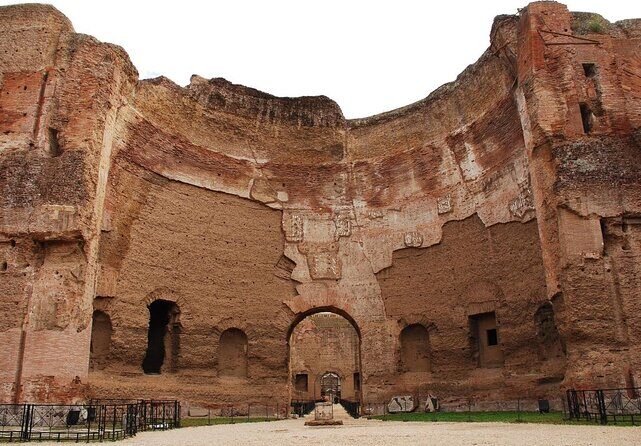
- Archaeologist-led storytelling that links everyday bath routines to what you’re seeing in the ruins
- Sterilized headsets for hearing every word clearly, even in open-air sites
- Roman underfloor heating (hypocaust-style) explained with the “how did they keep it warm?” angle
- Geometric mosaic motifs that reward looking slowly, not speed-walking
- Circus Maximus on the exact arena footprint plus the idea of multi-day Roman ludi
- Private-group focus, so the guide can adapt the pace if someone needs it
Caracalla Baths tour: a Roman day you can actually picture
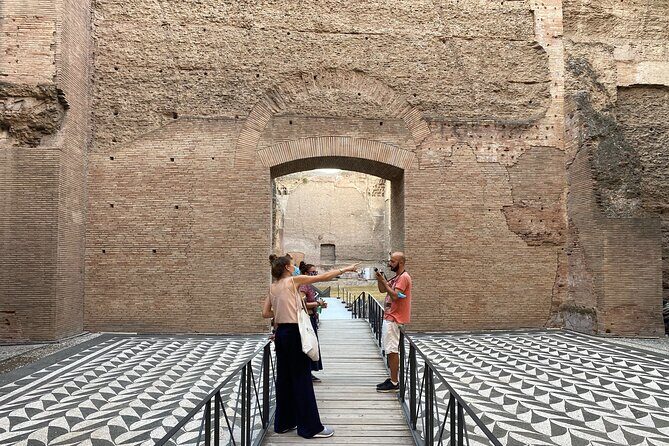
Caracalla Baths are some of the best-preserved ruins in Rome, which matters because you can read the building. Instead of guessing where rooms used to be, you get guided movement through the monumental spaces of the thermal complex. The best part is the way the tour frames it as a typical day at the baths in the 3rd century AD, step by step.
The vibe is part wellness spa, part social machine, part engineering test. You’re not just staring at walls—you’re getting context for the range of services and the idea of caring for body and mind in a public setting. That makes the site feel less like an archaeological chore and more like a story you can follow.
Since the tour is private, you’re not stuck with a “rushed group herd” tempo. You can ask questions and linger at details like mosaics without feeling like you’re slowing everyone down. And you’ll finish inside the Baths of Caracalla, which is handy if you want extra time afterward to wander on your own.
You can also read our reviews of more private tours in Rome



Hypocaust and underfloor heating: the engineering lesson you’ll remember
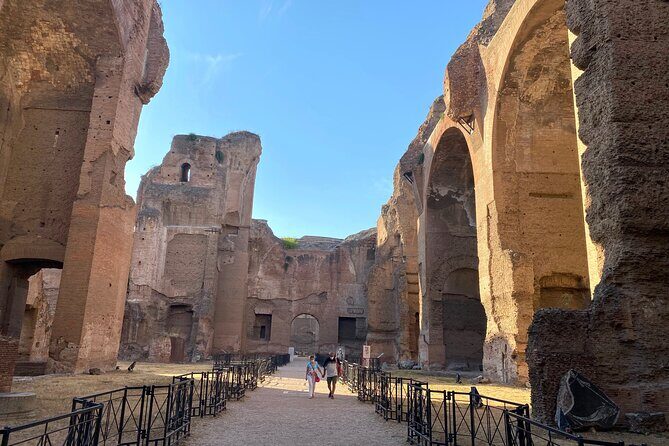
Rome has a lot of impressive buildings, but Caracalla gives you the best kind of lesson: practical engineering that you can see the consequences of. Your guide explains the labor-intensive underfloor heating system and how the Romans used techniques to maintain the desired temperature in different rooms. That focus turns “warmth” from a vague idea into something technical and believable.
Here’s why that’s valuable for you: when you understand how heat could be managed under floors, you stop treating the bath complex as just grand architecture. You start thinking like a builder. How was heat produced? How was it distributed? How would you keep it consistent enough for people to spend time there?
You also get the bigger takeaway about Imperial Rome. These baths weren’t thrown together casually. They were the kind of massive project that depended on planning, labor, and know-how, then required ongoing work to keep everything running. Even if you don’t consider yourself a “history person,” that practical angle tends to click.
Mosaics and geometric motifs: where to look when the ruins blur
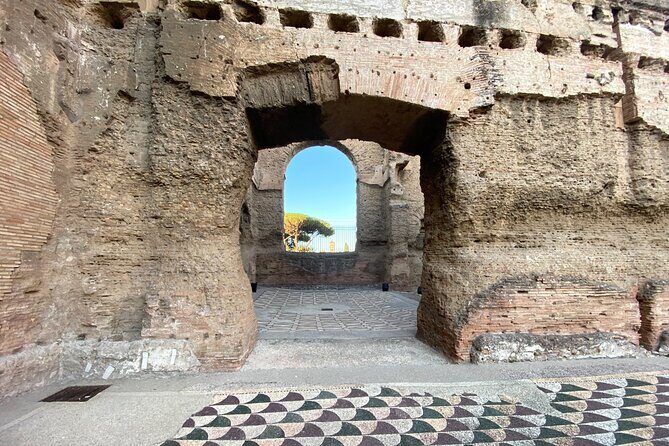
Caracalla includes mosaics with geometric motifs, and this tour nudges you toward the right kind of looking. In Rome, it’s easy to walk past decorative details because you’re busy with the main shapes—arches, walls, big rooms. Here, you’re guided to pay attention to the smaller patterns spread across the complex.
If you’ve ever felt disappointed by photos that don’t match what you saw on the ground, this is the antidote. The tour helps you spot what’s worth a pause: the repetition, the geometry, and how decoration fits the space rather than existing randomly. It’s also a nice change of pace after the engineering talk, because mosaics reward calm, close viewing.
This is also one of those moments where being on a guided route pays off. Without a guide, you might simply move along looking for the “biggest” view. With a guide, you learn how the site’s design language ties together the experience—visual beauty, comfort, and function.
Step-by-step bathhouse life: how the guide makes it feel real
The tour doesn’t treat Caracalla Baths like a museum display. It recreates the rhythm of a typical day at the baths in the 3rd century AD, with your guide walking you through the exact steps. That structure matters because it gives you a framework.
Instead of asking What is this room? you start asking What would people do here? In other words, you build a mental map as you go. You learn about the services offered, and you understand the baths as a wellness routine wrapped in social life.
There’s also a bit of that “wait, Romans really did all this” factor. The tour highlights the bizarre range of services in this ancient-days-SPA, which can be surprising if your mental picture of Roman baths is limited to soaking and splashing. The point is not to turn it into a modern spa comparison—it’s to help you understand how intentional the experience was.
And because your group is private, the guide can keep you on that narrative track without constant crowd interruptions. Past groups have noted that the guide can adapt pacing for someone who struggles with walking, which is good news if you’re not sure how you’ll feel once you’re on your feet.
Circus Maximus in 30 minutes: scale, spectacle, and myth-borne roots
Then it’s time to shift gears to the Circus Maximus area, where your guide takes you onto the spot of one of the largest sports arenas in history. This stop is shorter, but it’s packed: you learn about the Roman “Ludi,” the public games and celebrations that could stretch for days. The idea of multi-day spectacles is a key part of what made Rome feel like Rome—constant events, constant public life.
Standing where the arena once operated changes how you think about the word massive. You’re not viewing a model. You’re standing on the ground and imagining the momentum. Your guide drives your imagination through chariot races, gladiator fights, and the clamor of the public—so the story sticks even if you’re not a hardcore sports fan.
The tour also zooms out further than the arena itself by covering the Circus foundations in early myths and gods. You connect the site to a quasi-legendary era before Rome itself, which adds an extra layer of meaning. It’s a reminder that Roman entertainment wasn’t only about action—it was tied to identity and belief.
Practical bonus: admission for this portion is included as free, so you’re not paying another ticket to enjoy the guided narrative.






Private tour feel: sterilized headsets and an archaeologist pace
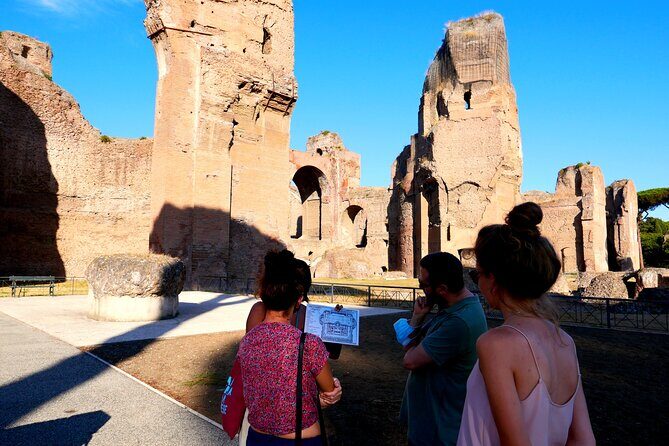
A big part of why this tour works is the audio setup. You get sterilized headsets to hear your guide clearly, which makes a real difference in Rome where ambient noise can swallow casual explanations. It’s especially useful in open ruins where sound carries unpredictably.
You’ll also be with a professional archaeologist guide, not a generic “tour guide voice.” That’s not a small distinction. When you get archaeology-trained interpretation, you tend to get better explanations of what you’re seeing and why it matters.
Because it’s private and only your group participates, you’re not stuck waiting for the slowest or the fastest person. The guide can shape the experience to the needs of your group, and the pace can be adjusted for someone dealing with walking difficulties. That flexibility is a comfort for many people who want the value of a guide without the stress of a strict group schedule.
Price and value: what $311.87 buys you in Rome
At $311.87 per person for about 1 hour 30 minutes, this isn’t a budget “quick look” outing. The value depends on what you want from your day in Rome.
Here’s what you’re paying for, in concrete terms:
- Caracalla Baths entrance fees included, which saves time and avoids ticket friction
- Professional archaeologist guide, which changes the quality of interpretation
- Sterilized headsets, so the experience stays understandable
- Private group format, which usually means less rushing and more time at the good spots
- Group discounts (when applicable), which can soften the cost if you’re traveling with others
For context, short, ticket-included guided tours can cost less, but they often sacrifice the quality of explanation or the “custom fit” of the experience. Here, you’re buying a guided narrative that covers Roman engineering, daily life at the baths, and the Circus’s role in public games. If you’ve already seen Rome’s more famous hits and you want something quieter but more specific, this tends to feel like a smart use of time.
If, on the other hand, you just want to wander ruins independently with minimal guidance, you might feel the price is steep. In that case, the tour is more about interpretation than about access. It’s best for people who learn by having the story told well.
Timing, meeting point, and what to do after inside the baths
The tour starts at Viale Aventino, 3, 00153 Roma RM, Italy. It ends inside the Baths of Caracalla at Viale delle Terme di Caracalla, 00153 Roma RM, Italy, and that matters because you can keep exploring after the guided portion ends.
Wear comfortable shoes. The tour involves a moderate amount of walking, and you’ll be moving between stops and standing in outdoor spaces. If you plan to take photos, bring a plan for rest breaks so your feet don’t dictate your experience.
Also note: hotel pickup and drop-off are not included. You’ll want to use public transportation or plan your own route to the meeting point. The tour is near public transit, which helps.
Weather matters: plan for a smooth day on your feet
This experience needs good weather. That’s common for outdoor ruins, but it’s still worth planning around. Rome can do unexpected things, and standing outside for guided explanations works best when the air is clear and surfaces aren’t slippery.
If you’re traveling in a season where rain is possible, consider scheduling this earlier in your Rome stay. That way you have flexibility if you need a different date offered due to poor weather.
Should you book this Caracalla Baths and Circus Maximus private tour?
Book it if you want Roman life with real explanations, not just sight-seeing. I’d choose this when you’ve already covered the headline attractions and you’re hungry for something more detailed: underfloor heating, bathhouse routines, mosaics, and the scale of Roman public games. The archaeologist-led approach and the headset setup make it easier to enjoy without constantly asking people to repeat themselves.
I’d skip (or at least think hard) if you want a long, slow roaming day with no structure. The tour is about 1 hour 30 minutes total, with a full Caracalla Baths focus and a shorter Circus stop. It’s a guided experience, not an open-ended wander.
One more practical fit check: if you’re traveling with someone who has trouble with walking pace, the tour has shown it can adapt. Still, it’s smart to wear good shoes and plan for a moderate amount of walking.
If your goal is to walk away understanding the Roman bath system and the arena culture with clarity, this is a strong use of time.
FAQ
How long is the Private Tour of Caracalla Baths and Circus Maximus?
It lasts about 1 hour 30 minutes.
What language is the tour offered in?
The tour is offered in English.
Is this tour private?
Yes. It’s a private tour/activity, and only your group participates.
Where does the tour start?
The start is Viale Aventino, 3, 00153 Roma RM, Italy.
Where does the tour end?
It ends inside the Baths of Caracalla at Viale delle Terme di Caracalla, 00153 Roma RM, Italy.
Are entrance fees included?
Entrance fees for Caracalla Baths are included. The Circus Maximus portion is free.
What’s included in the tour besides the guide?
You get sterilized headsets to hear your guide clearly, a professional archaeologist guide, and full on-site assistance.
Is hotel pickup or drop-off included?
No. Hotel pickup and drop-off are not included.
Is there a lot of walking?
There’s a moderate amount of walking, so wear comfortable shoes.
What if the weather is bad?
The experience requires good weather. If it’s canceled due to poor weather, you’ll be offered a different date or a full refund.