REVIEW · COLOSSEUM TOURS
Private Rome in a Day Tour with Colosseum & Sistine Chapel: Essential Experience
Book on Viator →Operated by Through Eternity Tours · Bookable on Viator
One day, Rome’s biggest hits. This private plan is interesting because it strings together the most in-demand sights with a guide who helps you move efficiently instead of wandering into long lines and wrong turns. I particularly like the way it pairs the Colosseum and Roman Forum so you understand what you’re looking at, not just what you’re crossing off. I also like the Vatican combo—Vatican Museums plus Sistine Chapel plus Raphael Rooms—so you don’t waste your limited hours. The main drawback is simple: it’s a lot of walking and there are steps, so you’ll want solid shoes and a water plan.
This tour works when you want Rome to feel organized. It’s private (only your group), runs with an English-speaking guide, and uses a mobile ticket approach that keeps things smooth at the entry points. If your group has 6 or more people, you’ll get headsets so you can actually hear the guide while you’re on the move.
In This Review
- Key highlights worth anchoring your day
- Why this 7-hour route feels realistic (even when Rome isn’t)
- Getting started at Angelino ai Fori: the day’s tempo begins here
- Entering the Colosseum: more than an exterior photo
- Roman Forum in 90 minutes: reading the ruins with a map in your head
- Trevi Fountain and Piazza Navona: quick classics, not lingering
- Vatican Museums: the long ticketed section that needs structure
- Sistine Chapel (plus Raphael Rooms): planning for concentration
- St. Peter’s Basilica and the Pietà: the air changes inside
- The real value: why private guiding beats solo sprinting
- Price and logistics: what to do with a full-day commitment
- Walking reality check: what the schedule implies for your body
- Should you book this private Rome in a day?
- FAQ
- How long is the private Rome in a Day tour?
- Is the tour in English?
- What’s included in the ticket price?
- Is transportation to and from Rome sites included?
- Do I need to bring ID or a passport?
- Are headsets provided?
- Is this a private tour?
- Is it very walking-heavy?
- Can I cancel for a full refund?
Key highlights worth anchoring your day
- Private timing, private pacing: You’re not sharing the day with strangers.
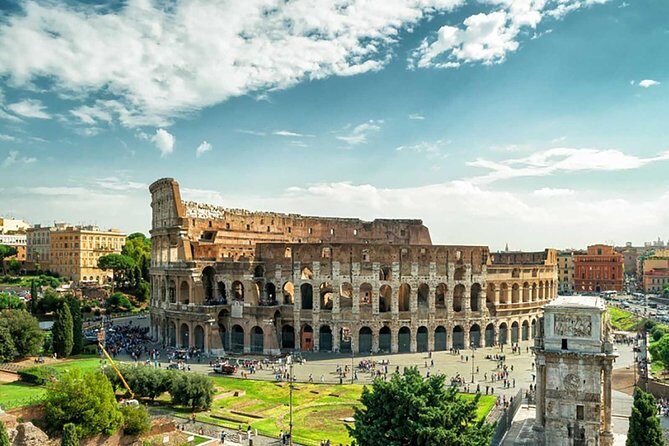
- Colosseum + Roman Forum ticket time built in: Admission and a reservation fee are included for the big entry points.
- Vatican Museums without skipping the essentials: You get time for Sistine Chapel and the Raphael Rooms, not just a quick look.
- Short, high-impact Rome classics: Trevi Fountain and Piazza Navona are built in as quick hits.
- St. Peter’s Basilica highlights included: Michelangelo’s Pietà and major Bernini features are part of the visit.
- Guides who make the facts make sense: Names like Camilla, Guia, Thomas, and Erturk/Urburk show up for clear explanations and keeping the day moving.
Why this 7-hour route feels realistic (even when Rome isn’t)
Rome is a city of crowds, queues, and detours. When you only have one day, your biggest enemy is wasted time—standing still, walking in circles, or missing the window for ticketed sights.
This tour is built around the idea of compression. It strings together ticketed sites in a logical order and keeps the non-ticket moments (like Trevi and Piazza Navona) short, so you don’t burn your whole day on sightseeing that’s mostly photo stops.
Private touring also changes the vibe. You get undivided attention, which matters when you want quick context—why a doorway matters, why a ruin is laid out the way it is, or what you’re actually seeing in the Vatican.
You can also read our reviews of more private tours in Rome

Getting started at Angelino ai Fori: the day’s tempo begins here
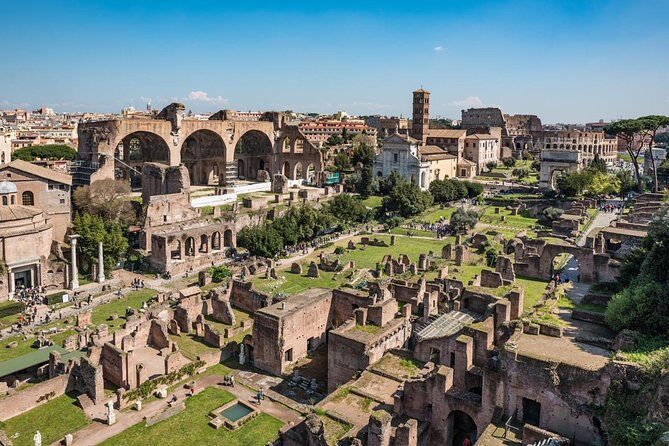
The tour begins near Via dei Fori Imperiali, at Angelino ai Fori dal 1947 (Largo Corrado Ricci area). Ending at St. Peter’s Square makes sense for a one-day arc: you finish the day with the Vatican’s center instead of backtracking.
You’ll also want to plan for one very Rome-specific detail: names and documents matter. You must provide full names for everyone at booking, and at the Colosseum and Roman Forum you’ll need a valid passport or ID that matches those names. If the name on your document doesn’t match what’s on the voucher, entry can fail—an annoying way to lose a day.
Because the Colosseum and Roman Forum are ticketed, your guide’s job starts right away: help you get oriented fast, keep you moving as a group, and direct you to the right place so you don’t waste energy hunting.
Entering the Colosseum: more than an exterior photo
Colosseum time is about 1 hour, and the plan includes admission. You’re not just looking at a famous building—you’re learning how it worked and what parts were designed for spectacle.
Here’s what I find most useful about guided Colosseum visits: the guide turns big stone into an actual system. You’ll get help spotting the difference between what you see today and what once guided crowds, entrances, and views.
There’s also a built-in moment described as a view from the Colosseum. That matters because the Colosseum isn’t flat—your perspective shifts as you move, and those angles are part of why this place feels so dramatic.
One more practical note: the Colosseum area is heavily trafficked and the ground can be uneven. Comfortable shoes are not optional; they’re the difference between enjoying the stories and counting minutes until you sit down.
Roman Forum in 90 minutes: reading the ruins with a map in your head
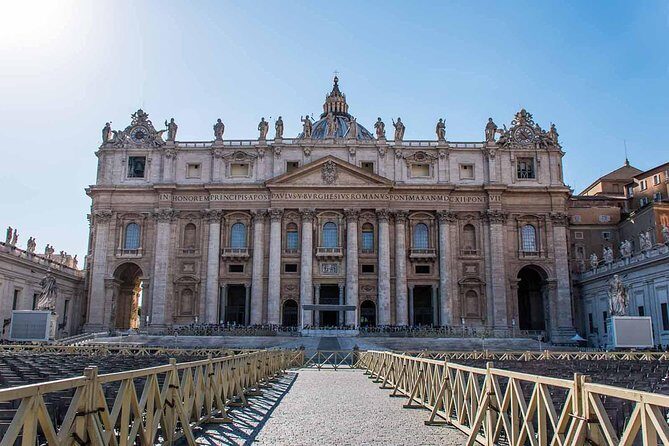
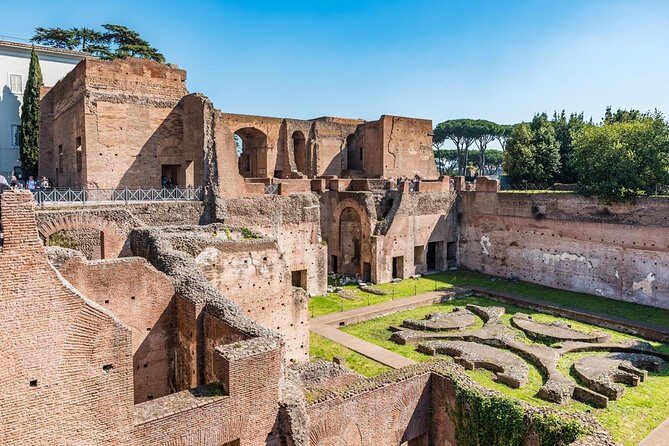
The Roman Forum stop is about 1 hour 30 minutes and includes admission. This section of the day is where the guide’s explanations really pay off, because the Forum can look like “a pile of old stuff” if you haven’t been shown the landmarks.
You’ll hit key named sites such as the Temple of Saturn, the House of the Vestal Virgins, Via Sacra, and the Arch of Titus. Those names are important because they correspond to roles—religion, power, ceremony, and propaganda. With a guide, you start to see why Via Sacra mattered: it wasn’t just a road, it was a stage.
You’ll also get time listed as inside the Roman Forum (and related views). That’s a smart use of time because it connects the big story—how Rome used public space—with the details you can actually stand next to.
The drawback to be honest about: the Forum is not a single flat viewpoint. You’ll likely climb, descend, and walk with ups and downs, so keep your pace steady and expect some “arrival-to-next-stop” speed.
Trevi Fountain and Piazza Navona: quick classics, not lingering
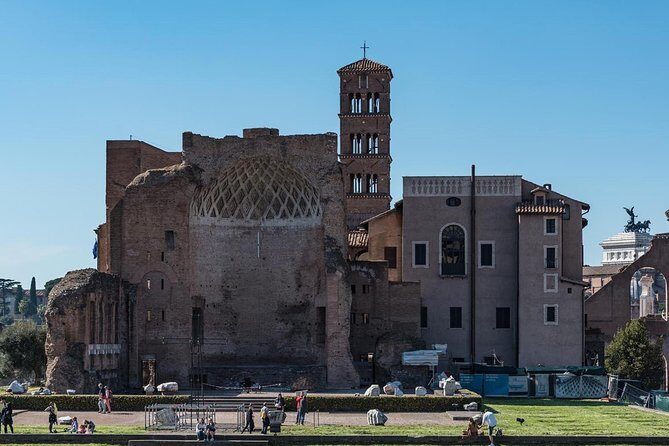
Trevi Fountain is scheduled for about 15 minutes, and Piazza Navona is also about 15 minutes. Both are listed as admission free, which is great—just don’t let the free part trick you into thinking you’ll have calm, quiet time.
Trevi is famous for a reason, but it’s also famous for crowds. For this kind of timebox, your goal should be simple: get a moment in front of the fountain, take a photo, and move on while the guide is still steering you toward the next stop.
Piazza Navona gives you a different kind of payoff: Bernini’s Four Rivers Fountain is right there, and the square’s shape helps you understand why it feels like a stage. A short visit can still work, as long as you don’t aim to “fully explore” every corner in that slot.






Vatican Museums: the long ticketed section that needs structure
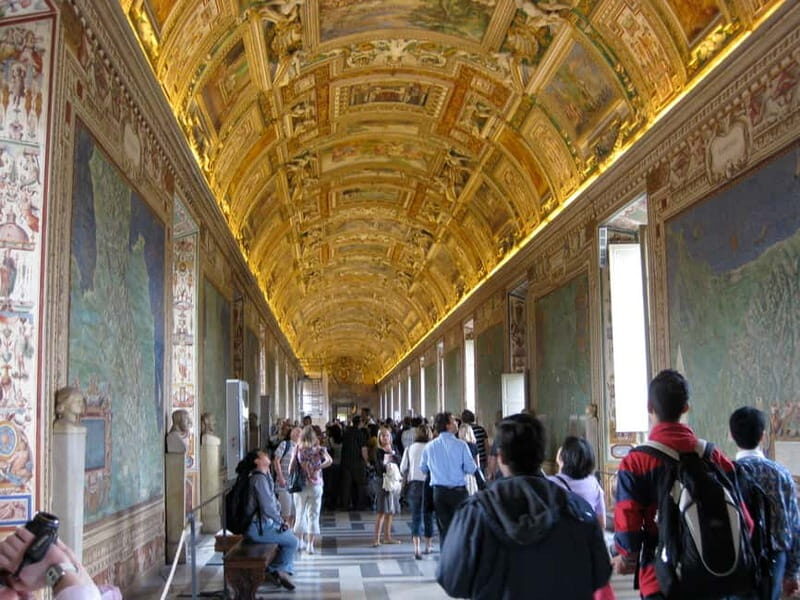
Vatican Museums take about 2 hours in the plan, with admission included. This is usually the part of a Vatican day that can swallow time, so structure is the whole point here.
The itinerary also calls out Cortile della Pigna inside the Vatican Museums (about 15 minutes). That courtyard stop matters because it breaks up the museum flow and gives you a large-scale view that feels very Vatican—classic monumental order rather than tight galleries.
I like this approach for practical reasons. When you have a full-day route, you don’t want to wander until you reach the Sistine Chapel already tired or already running late. A guide helps keep you oriented so the big moments still land.
Sistine Chapel (plus Raphael Rooms): planning for concentration
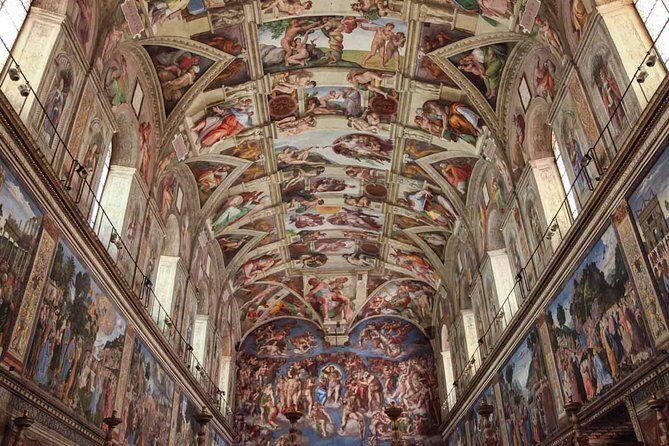
Sistine Chapel is scheduled for about 30 minutes, admission included. This is not the place to rush. The ceiling and the detail can be overwhelming, and the guide’s explanations help you know what you’re seeing without needing to study art textbooks mid-walk.
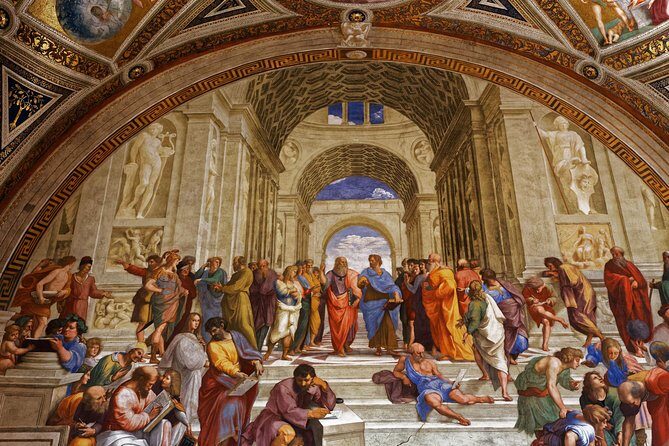
Right after that, you get time for Stanze di Raffaello (Raphael Rooms) for about 20 minutes, admission included. That pairing makes sense because the Raphael Rooms complement the Sistine Chapel in tone and subject—so your brain connects style, symbolism, and storytelling rather than treating each stop like a separate planet.
If you’re the type who loves art, this is one of the best uses of your day. If you’re not, it’s still worthwhile because the guide can point out the big takeaways quickly, so you don’t leave feeling like you just watched a long parade of paintings.
One consideration: the Vatican can bring a certain kind of seriousness—people tend to whisper and move carefully. You’ll enjoy it more if you keep your energy calm and your expectations flexible.
St. Peter’s Basilica and the Pietà: the air changes inside
St. Peter’s Basilica gets about 1 hour, with Michelangelo’s Pieta included as a highlight. Another short stop includes La Pieta inside St Peter’s Basilica (about 10 minutes). I’d treat that as a reminder that the Pietà is the must-see focal point, not an afterthought.
Then you get St. Peter’s Square for about 10 minutes. Even if you keep it quick, the square gives you context: it’s the showpiece that connects the basilica to the Vatican’s bigger public face.
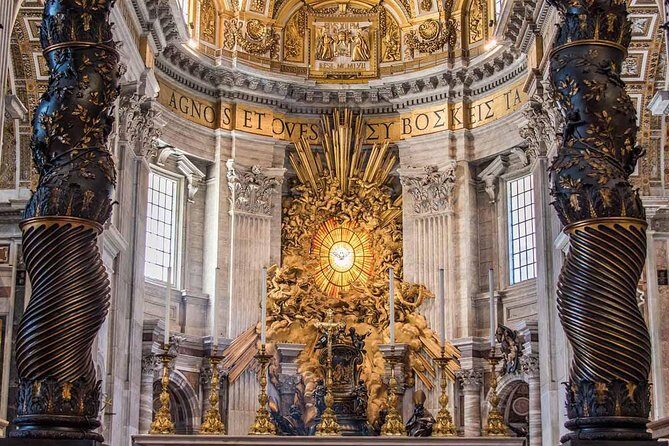
Inside, the plan also includes a view from the Basilica of Saint Peter and a specific Bernini feature: Baldacchino di San Pietro, Di Bernini (about 10 minutes, admission included). Bernini’s work can feel like stagecraft in stone and metal—big, dramatic, and meant to guide your eyes. Having a timed moment for that view helps you actually notice what makes it special.
The real value: why private guiding beats solo sprinting
The price is high at $748.91 per person, so the only fair question is: what does it buy you?
It buys you time discipline. You’re paying for a guide who can move you between ticketed sights while you avoid wasted wandering, and for the inclusion of major entrances like the Colosseum reservation fee and the ticketed Vatican stops.
It also buys you interpretive value. The Forum, Raphael Rooms, and even the Basilica all work better when someone tells you what to look for. Without that, you can end up collecting impressions without collecting meaning—and on a one-day schedule, meaning matters.
The private format makes a difference too. If your group has questions, wants a slightly slower moment at a ruin, or needs a quick bathroom break without slowing down the whole busload, a private guide can adjust.
Price and logistics: what to do with a full-day commitment
Let’s talk money and what you’re really covering. The Colosseum admission and reservation fee are specifically listed as valued amounts, and the rest of the tour cost covers the other services: the guide, the overall coordination across multiple ticketed sites, and getting you from one highlight to the next without the day falling apart.
Transportation is not included, and food and drinks are not included either. That means you should treat this as a plan that runs through you, not around you. Eat before you start, bring water, and decide how you’ll handle lunch on your own without letting it derail the schedule.
Also keep a small flexibility buffer. Due to the Jubilee, some monuments may be under restoration, and the operator notes that changes can happen. If something is closed or altered, your guide will help you keep the rest of the day on track.
Walking reality check: what the schedule implies for your body
This tour is a walking tour with steps and staircases. Comfortable shoes and a bottle of water are strongly recommended, and that’s not a throwaway line.
Expect that your “7 hours” will include frequent transitions—getting from one complex site to the next. If you tend to get sore quickly, this isn’t a “stand and stare” itinerary. It’s more like a guided route march with stops for the big moments.
If you have mobility concerns, you should advise during booking so the team can best accommodate you. With a route this structured, accommodation details matter, and you’ll do better if you communicate early.
Should you book this private Rome in a day?
Book it if you have one day and you want Rome’s headline sights with less friction. This tour fits best if you hate spending precious hours figuring out logistics and you prefer to use a guide to turn monuments into understanding.
Skip it (or adjust your expectations) if you want a slow, wandering day. This plan is designed to cover major sites in a single shot, so it won’t feel like a leisurely stroll through Rome neighborhoods.
Also think about your priorities. If your top interests are ancient Rome plus Vatican art, this route is strong. If you’d rather spend more time in just one place—Colosseum area only, or Vatican only—then splitting your time across two days can feel less rushed.
If you do book: pack smart, wear the right shoes, and go in with a simple mindset. This day is about seeing the big things—and seeing them with context—without letting Rome’s crowds steal your time.
FAQ
How long is the private Rome in a Day tour?
It runs about 7 hours.
Is the tour in English?
Yes. The tour is offered in English with an expert, English-speaking private guide.
What’s included in the ticket price?
Admission tickets are included for the Colosseum, Roman Forum, Vatican Museums, Sistine Chapel, Stanza di Raffaello, St. Peter’s Basilica highlights, and additional specified Vatican interior stops. Trevi Fountain, Piazza Navona, and parts of St. Peter’s Square are listed as free.
Is transportation to and from Rome sites included?
No. Transportation to and from the meeting and end points is not included.
Do I need to bring ID or a passport?
Yes. Each traveler must present a valid passport or ID document that matches the name provided at booking for entry to the Colosseum and Roman Forum.
Are headsets provided?
Headsets are included for groups of 6 or more.
Is this a private tour?
Yes. It’s private, and only your group participates.
Is it very walking-heavy?
Yes. It’s a walking tour with steps and staircases, and comfortable walking shoes plus a bottle of water are strongly recommended.
Can I cancel for a full refund?
Yes. You can cancel up to 24 hours in advance for a full refund.