REVIEW · OSTIA ANTICA TOURS
Private Ostia Antica Tour: The Perfectly Preserved Port of Ancient Rome
Book on Viator →Operated by Through Eternity Tours · Bookable on Viator
Ancient Rome, minus the crush. This private Ostia Antica tour takes you into one of the best-preserved port towns from the Roman Empire, where you can walk the lanes that once held bars, bakeries, baths, and brothels. You’ll also climb for big views from the ancient theatre area, which helps the ruins make sense fast.
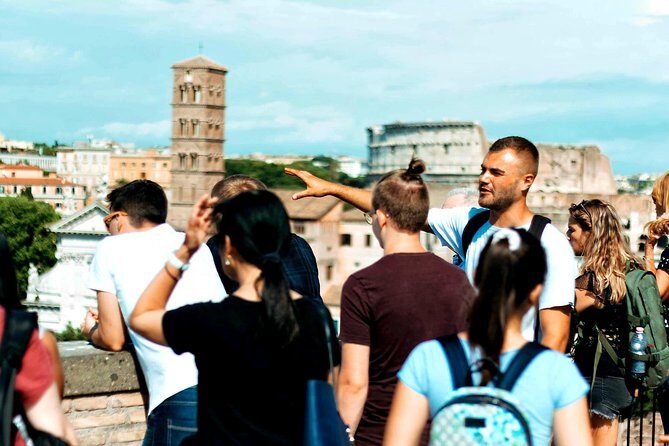
I love the way a guide turns stone into stories. On this tour you’ll get an expert, English-speaking private guide (and headsets if your group is 6 or more), so you don’t waste time guessing what you’re looking at. I also like the practical setup: skip-the-line tickets and a start time that can fit your day, not just the site’s rigid rhythm.
One drawback to plan around: this is a walking archaeological park with steps and uneven surfaces. If you’re sensitive to stairs or long walks, you’ll want sturdy shoes and you should flag mobility needs early.
In This Review
- Key highlights you’ll actually care about
- Why Ostia Antica feels different from Rome’s big sights
- Your private guide experience: what makes this tour work
- House of Diana and the streets of the port
- The Theatre of Ostia: earn your viewpoint
- Synagogue: a community corner, not just a building
- Forum and Temple of Venus: the civic engine
- Baths of Neptune: social Rome in a single block
- Timing your visit: start any time during opening hours
- Price and value: is $494.10 per person worth it?
- What to bring: small items that prevent big annoyances
- Who this private Ostia Antica tour is best for
- Should you book the Private Ostia Antica Tour?
- FAQ
- How long is the private Ostia Antica tour?
- Is this a private tour?
- What’s included in the price?
- What is not included?
- Where do we meet, and where does it end?
- Can I choose my starting time?
- Do I get a ticket on my phone?
- Is it easy to access for people with mobility concerns?
- What’s the cancellation policy?
Key highlights you’ll actually care about
- Private guide pacing that helps the site feel human, not like a checklist
- Skip-the-line entry so you spend less time waiting and more time exploring
- House of Diana, Forum, Temple of Venus, and Neptune’s Baths in one focused route
- Theatre viewpoints that give you a sense of how the ancient port sat and moved
- Synagogue visit that adds real texture to the community here
- Flexible start times during opening hours, so you can dodge the worst crowds
Why Ostia Antica feels different from Rome’s big sights
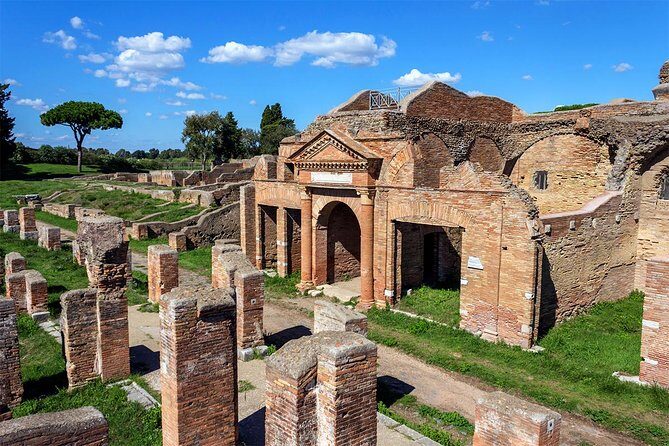
Ostia Antica isn’t just another ruin. It’s the port city side of Roman life—where people came to trade, work, eat, socialize, and sleep within a few blocks of the action. Walking here feels like you’re moving through the daily routine of a real place, not touring an isolated monument.
The “wow” comes from how the spaces connect. You can look at a bath complex and then think about who used it and why. You can stand near the forum and understand it as a social and civic hub. This is Roman history you can walk through on foot, with enough structure that your imagination has somewhere to land.
There’s also a practical advantage: compared with Rome’s headline sites, Ostia can feel calmer. When you have a private guide, that calm becomes part of the experience, because you’re not stuck working around big tour groups.
You can also read our reviews of more private tours in Rome



Your private guide experience: what makes this tour work
This tour is set up so you’re not wandering around guessing. You’ll go with an expert, English-speaking private guide, and you’ll use skip-the-line tickets to enter with less friction. For groups of 6 or more, you’ll get headsets so everyone can hear clearly without shouting over your own footsteps.
The guide quality is a standout. I’d pay attention to the names that come up in excellent feedback—Gracelyn and Brandon are specifically mentioned for turning the ruins into something you can picture. One guide is praised for humor and relatability, which matters here. Ostia Antica rewards curiosity, and a guide who can pace the story makes you look slower and see more.
A small caution from real-world experience: even on a private tour, guide pacing can vary. If you like to linger, stop to take photos, or need a moment to catch your breath, speak up early. That simple step keeps the day feeling like your pace, not a rushed handoff.
House of Diana and the streets of the port
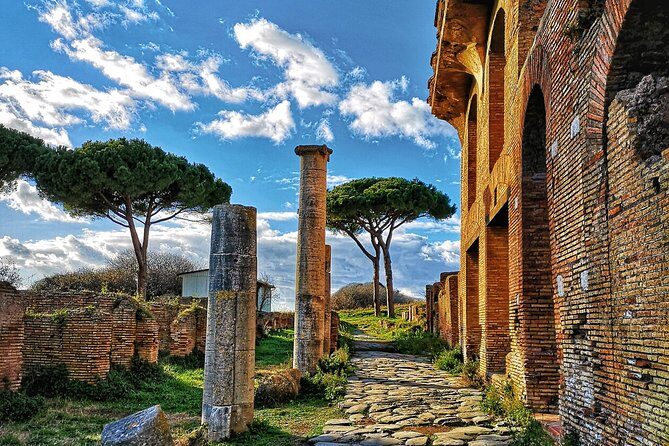
The tour begins inside the Parco Archeologico di Ostia Antica, starting with the residential and civic texture that makes the port city feel real. At the House of Diana, you’re in a setting that helps you understand daily life beyond temples and official buildings.
Think of this as your orientation moment. The guide can help you connect household spaces to the bigger urban layout. Even if you’re not an archaeology nerd, the key is simple: you’re learning how ordinary people moved through ordinary routines here, not just where the leaders posed.
What I like about starting with this kind of space is that it builds context before you hit the bigger monuments. By the time you walk toward forums and religious buildings later, you can already picture how life worked between them.
Practical tip: early in the walk, you’ll want to settle into your comfort rhythm. The site is full of steps and uneven bits, so finding your pace before you reach the theatre area will save your energy for the views.
The Theatre of Ostia: earn your viewpoint
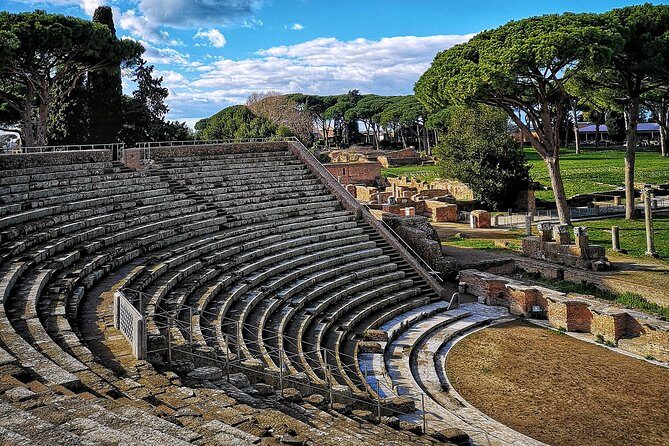
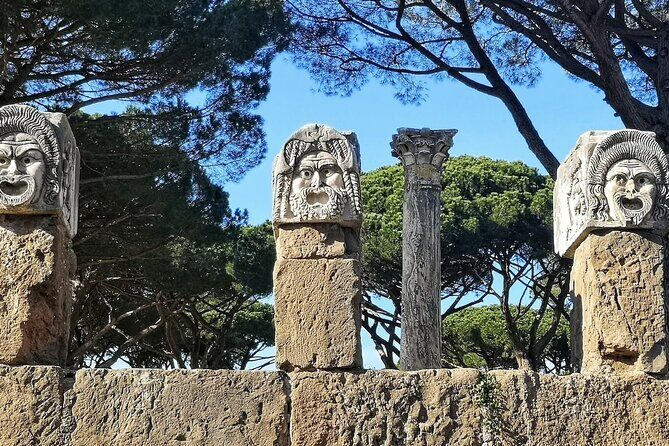
Next comes one of the most dramatic parts of the visit: the Theatre of Ostia. The tour includes time to climb up toward the top areas, where you can enjoy sweeping views from the theatre steps and surrounding ruins.
This is a smart stop because it gives you scale. From higher ground, the site’s layout clicks into place. You start seeing how the port city functioned spatially—what was near what, and how people might have traveled between work, entertainment, and public spaces.
It’s also the part that tends to feel most memorable in photos, but the bigger value is the mental map it creates. You’ll leave with a sense of geography that self-guided visitors often miss, because they don’t get the pacing or explanations that tie everything together.
Wear shoes you trust. This is where tired feet start making decisions for you, so go in with good footwear and plan to slow down as the steps get steeper.
Synagogue: a community corner, not just a building
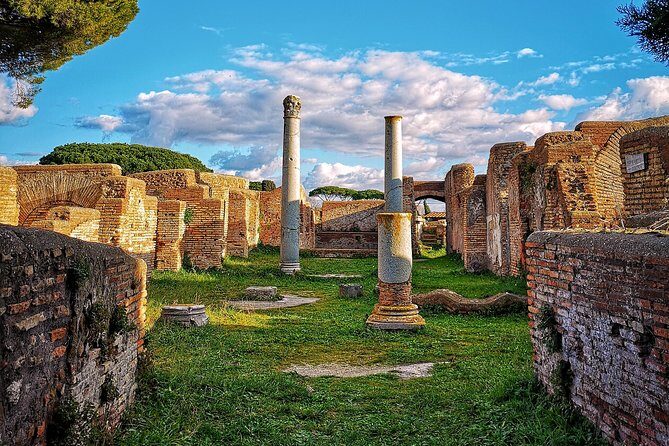
Then you’ll see the Synagogue within the archaeological park. This stop adds a layer that many first-time visitors don’t expect: Ostia Antica wasn’t only Roman civic space; it also held communities with their own traditions and gathering places.
For me, what makes this worthwhile is how it changes your mental picture of the city. You can start connecting the port’s role as a meeting point for people with different backgrounds. A guide can help you read the space so it feels grounded, not like a random detour.
If you enjoy religion and cultural history, this is the moment where you’ll likely slow down. The synagogue stop gives your visit more balance, because it isn’t only entertainment and politics—it’s also identity and community.






Forum and Temple of Venus: the civic engine
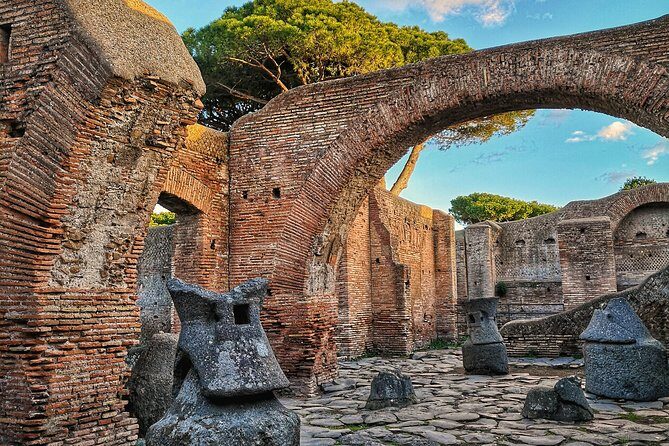
From there, the Forum and the Temple of Venus bring you back to public life. This is where you get a clearer view of how authority and daily social activity tied together. Even if you’ve seen other forums in Italy, the layout and context at Ostia Antica feel especially readable because the surrounding structure helps you follow the rhythm of a working city.
In the forum area, your guide should help you understand what you’re looking at: where people gathered, how public speech and civic decisions shaped the city’s mood, and how temples anchored that world.
The Temple of Venus adds symbolism and a sense of cultural priorities. It’s not just stone to admire from one angle; it’s part of how people understood power, values, and community identity in this port town.
The payoff here is cohesion. When you’ve already seen parts of the city that feel domestic and social, the forum doesn’t feel abstract. It feels like the natural next stop in the flow of life.
Baths of Neptune: social Rome in a single block
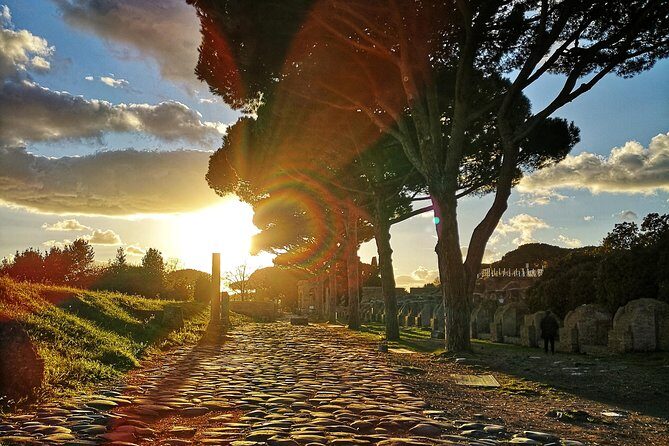
The tour finishes the major highlights at the Baths of Neptune. Roman baths weren’t just for cleaning. They were workout, conversation, relaxation, and news exchange—often all in one visit.
I like this stop because it’s where Roman daily life becomes tangible. You can look at the layout and think about movement through rooms and routines. If you’ve ever wished you could experience the past without a lecture, the bath complex tends to make that easier.
Also, baths fit the port-city vibe. A busy place like Ostia would have constant traffic of workers, traders, and travelers. Baths were built for that kind of schedule—social, practical, and recurring.
If you still have energy after the theatre climb, this stop helps you end on a human note. If you’re running low, it’s still worth it, because the bath complex has enough structure that your eyes will keep finding details even as you slow down.
Timing your visit: start any time during opening hours
One of the genuinely helpful features here is flexibility. This private tour can start at any time during Ostia Antica’s opening hours, and you choose your time during booking. That means you can time it around your other Roman plans and aim for a calmer experience.
If you’re trying to reduce crowd pressure, choose a start time that keeps you away from the busiest hours. The private guide pacing also helps: you can move at your rhythm instead of being pushed forward by a large group schedule.
The tour duration is about 5 hours (approx.), and the admission ticket is included for about 4 hours during your visit. That leaves room for guided explanations, transitions between ruins, and breaks if your guide builds them in naturally.
Price and value: is $494.10 per person worth it?
The price here is $494.10 per person, and it’s not a cheap outing. So you should decide based on what you’re getting, not just the number.
Here’s the value equation that makes this work for the right traveler:
- You get a private guide who explains what you’re seeing, which is the biggest difference between a worthwhile ruins day and a frustrating one.
- You get skip-the-line tickets, which can cut down dead time.
- Your admission is included, and the tour covers multiple major sites in one route.
This can be a strong value if you care about context and interpretation. If you’re the type who likes to understand what a ruin was used for, a guide earns their keep quickly at Ostia.
It can feel less worth it if you only want a quick photo walk. If you’re happy reading a guidebook yourself and moving at a slow, independent pace, you might prefer a self-guided plan and spend your money on another experience in Rome.
Also note there are group discounts, which can make the per-person cost more sensible if you’re traveling with family or friends and can share the group size.
What to bring: small items that prevent big annoyances
This is a walking tour through an archaeological park with steps and uneven surfaces. Comfortable walking shoes are strongly recommended. You’ll also be happier with a bottle of water since you’re out for around five hours.
A few personal comfort ideas:
- Dress in layers, because Rome weather can shift.
- Bring a small day bag for water and essentials.
- If you need rest time, mention it early so the guide can build pauses into the flow.
And if anyone in your group has mobility concerns, advise the team. They note they can accommodate as best as possible with your needs in mind. That’s important because these ruins don’t adjust for anyone’s comfort.
Who this private Ostia Antica tour is best for
I’d recommend it most for:
- Couples or small groups who want a calmer, story-driven visit
- Travelers who like city planning and daily-life context, not only temples and big monuments
- People who want to understand the port city as a functioning place, including public life and social spaces
It’s also a great match if you enjoy guides who bring personality to the day. Specific feedback highlights that guides like Brandon can make Ostia come alive with humor and clarity, while Gracelyn is praised for being congenial and attentive to special needs like rest or extra time at locations.
If you’re the kind of visitor who hates being rushed, just communicate that preference. You’ll get more out of the day if the guide knows you want time to look, not just move.
Should you book the Private Ostia Antica Tour?
Book it if you want a guided, private, skip-the-line day at one of the most readable ancient sites around. Ostia Antica is especially rewarding when you can connect buildings to how people actually lived—shops, baths, entertainment, civic life, and community spaces.
Skip it or reconsider if:
- You want only quick photos and don’t care about explanations.
- You’re not comfortable with steps and uneven surfaces.
- Your budget is tight enough that you’d rather spend on multiple smaller Rome activities.
If you can handle the walking and you enjoy learning while you explore, this is an easy yes.
FAQ
How long is the private Ostia Antica tour?
The tour lasts about 5 hours (approx.). Admission is included for about 4 hours during the visit.
Is this a private tour?
Yes. It’s private, meaning only your group participates.
What’s included in the price?
Included are all fees and taxes, skip-the-line tickets, an expert English-speaking private guide, and admission tickets. Headsets are provided for groups of 6 or more.
What is not included?
Transportation to and from the meeting and end point is not included. Food and beverages aren’t included, and gratuities are optional.
Where do we meet, and where does it end?
You start at Ple Ostiense-Piramide (Mb-Rl)00154 Rome. The tour ends back at the same meeting point.
Can I choose my starting time?
Yes. The tour can start at any time during Ostia Antica opening hours, and you select your preferred starting time during booking.
Do I get a ticket on my phone?
Yes. The tour uses a mobile ticket.
Is it easy to access for people with mobility concerns?
It’s a walking tour through an archaeological park with steps and uneven surfaces, so comfortable walking shoes and a bottle of water are recommended. Service animals are allowed, and you should advise if anyone has mobility concerns so the team can accommodate as best as possible.
What’s the cancellation policy?
You can cancel for free up to 24 hours in advance for a full refund. If you cancel less than 24 hours before the experience starts, the amount paid is not refunded.