REVIEW · NAPLES
Pompeii the Ancient City (Tour+Transfer)
Book on Viator →Operated by Sesto Continente Tours · Bookable on Viator
Pompeii hits different when someone points. This Pompeii Tour+Transfer is designed to get you from your hotel area into a UNESCO site fast, with a licensed guide and a vintage classic van that handles the hard part of logistics. I especially like that the visit is structured around the big visual anchors of the ancient city, so you’re not wandering with zero context. The main consideration: the Pompeii entrance ticket costs extra (and lunch isn’t included), so budget for that before you go.
You’re looking at about four hours total, and the pace is built for first-timers and anyone who wants the highlights without turning it into a full-day marathon. One more thing I’d flag: pickup runs in a shared-shuttle window, so you’ll want to be ready on time rather than waiting for a perfect minute.
In This Review
- Key things I’d lock in before you book
- A Vintage Van, a Guide, and the Big Pompeii Moments
- Getting to Pompeii: Shuttle Pickup Works, Just Not Like a Taxi
- Tour Times: What “9:00 am” Means for Your Schedule
- Entering the Pompeii Archaeological Park With a Real Plan
- The Forum (Foro de Pompeya): Where City Life Had a Front Row Seat
- The Macellum: The Market Building That Shows How People Ate
- Casa del Fauno: Elite Private Life, Not Just Stone
- Teatro Grande: Where Entertainment Was Part of the Daily Rhythm
- Via dell’Abbondanza: The Street That Connects the City’s Big Highlights
- The 4-Hour Reality Check: You’ll See a Lot, Not Everything
- Pricing and Value: What You’re Really Paying For
- Who This Pompeii Tour+Transfer Suits Best
- What to Bring for a Comfortable Pompeii Walk
- Should You Book This Pompeii Tour+Transfer?
- FAQ
- What’s included in the tour price?
- How long is the tour?
- Is Pompeii entrance fee included?
- What time does the tour start?
- Do you pick up from Naples?
- What languages are available for the guide?
- Is the ticket mobile?
- How big are the groups?
- What should I bring?
Key things I’d lock in before you book
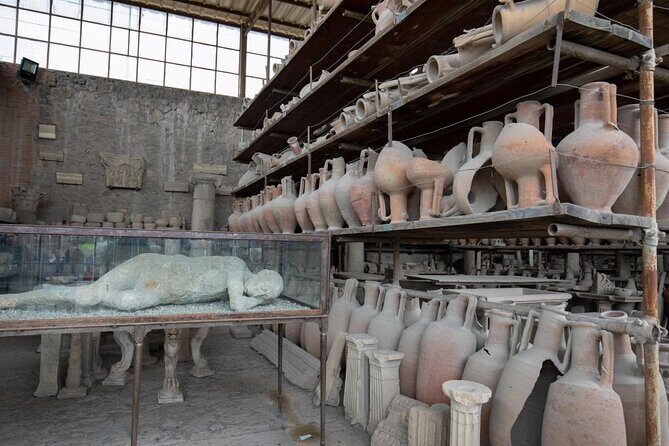
- Round-trip shuttle from multiple towns near the Bay of Naples, including Pompeii and Castellammare di Stabia
- Licensed multilingual guide on-site to connect the ruins to real daily life
- High-impact stops: Forum, Macellum, Casa del Fauno, Teatro Grande, Via dell’Abbondanza
- Small-ish group limit (max 25), which keeps the walk from feeling like a cattle line
- Short, focused time blocks per stop so you cover more without burnout
- Pompeii entry is separate (plan for the €22 ticket when you budget)
A Vintage Van, a Guide, and the Big Pompeii Moments
This tour is a practical way to see Pompeii without turning your day into a transportation puzzle. You start with a vintage classic van ride and private transportation, then meet your licensed tourist guide at the Pompeii Archaeological Park. The format matters: Pompeii can feel like a field of walls and columns unless someone gives you the city’s map in your head.
I also like that the stop list is made of “explainers.” You don’t just stand in front of famous ruins. You walk through places that show how Pompeii worked—public life in the Forum, food and market activity at the Macellum, elite household life in Casa del Fauno, entertainment at Teatro Grande, and the street-level rhythm along Via dell’Abbondanza.
The ticket situation is the only piece that surprises some people. Your tour price covers the guide and transport, but the Pompeii entrance fee is separate at €22 per person. If you’re planning a tight budget, add that to the total early so it doesn’t feel like an extra hit at the gate.
You can also read our reviews of more city tours in Naples



Getting to Pompeii: Shuttle Pickup Works, Just Not Like a Taxi
The biggest reason this works for many people is simple: the tour offers pickup from a defined set of towns, then brings you back at the end. The pickup list includes places like Castellammare di Stabia, Torre Annunziata, Pompei, Scafati, Angri, Gragnano, Agerola, Vico Equense, Seiano, and Meta (coverage varies depending on where you are).
Two practical notes that affect your day:
- There’s no pickup from Naples. If you’re staying in Naples proper, you’ll need another plan.
- Pickup is in sharing mode, meaning the shuttle time is a window. You should treat the confirmed pickup time as a start, plus up to 30 minutes after.
That shared timing isn’t meant to frustrate you—it’s how they keep multiple hotels and guests on the same run. Still, I’d do the conservative thing: be ready early, water on hand, and keep your meeting point easy to access.
If you’re outside the pickup zone, you can reach the provider area by train (Circumvesuviana to Castellammare di Stabia station) and then connect from there. For the Sorrento-area end of the route, there’s a note that some places may use a meeting point on Statale Sorrentina 145, with coverage to be checked before you lock it in.
Tour Times: What “9:00 am” Means for Your Schedule
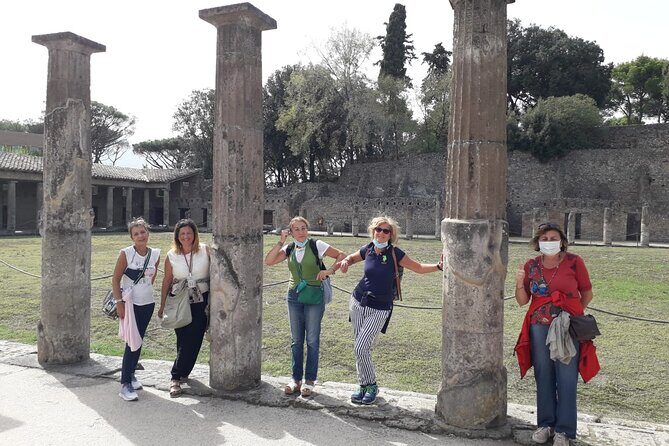
The scheduled start time listed is 9:00 am, and the overall visit is about 4 hours. You’ll also see the idea that several start times are offered, so you can match it to your day—but your specific confirmation will tell you what you’re actually booked for.
Because pickup is shared, the most important part isn’t the exact minute. It’s building slack into the morning. If you’ve got a later reservation or ferry, don’t stack it immediately afterward. Pompeii is popular, and even with a tight plan, you’ll want time buffers in both directions.
Entering the Pompeii Archaeological Park With a Real Plan
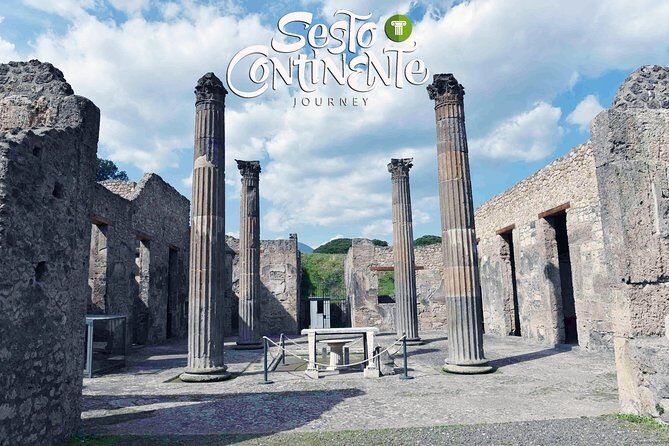
Once you arrive, you’re not just buying a ticket and wandering. Your visit begins at the Pompeii Archaeological Park with a licensed multilingual tourist guide (English/Italian). Admission is not included in the tour price, so you’ll need the €22 entrance ticket separately.
This opening phase is about orientation. Pompeii is huge, and the guide’s job is to help you understand what you’re looking at before you start seeing it everywhere. Think of it as building a mental map: major streets, public spaces, and the kind of buildings that belonged to different parts of society.
A quick practical tip: wear something light but protective. Pompeii is outdoors, and you’ll get more sun than you expect if you’re only thinking about museums.
The Forum (Foro de Pompeya): Where City Life Had a Front Row Seat

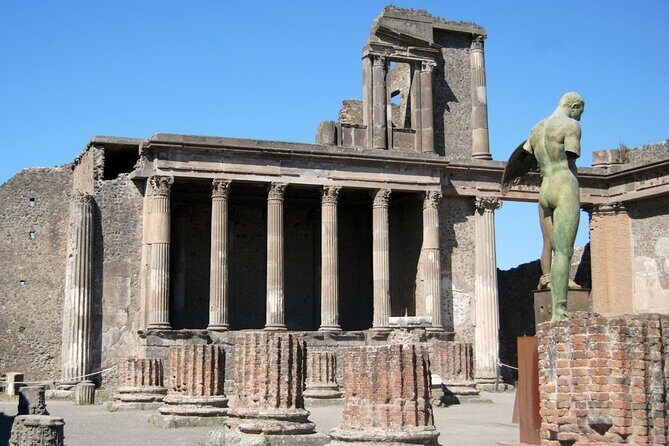
One of the best-value stops here is the Foro de Pompeya, the Roman forum buried after the eruption in 79 AD and rediscovered through excavations. The forum was the city’s main square—political, economic, and religious. It’s where demonstrations happened, trade got negotiated, and debates unfolded.
Why this stop is more than just “ruins with columns”: it gives you a sense of social gravity. In a city like Pompeii, the forum wasn’t background scenery. It was where decisions and commerce braided together, day after day.
You get about 15 minutes at this stop, and that’s enough time to connect the dots without getting trapped at any one corner. If you like history that feels concrete, the forum is one of the places where that happens fast—especially when you remember that people actually walked these routes.
You can also read our reviews of more tours and experiences in Naples





The Macellum: The Market Building That Shows How People Ate
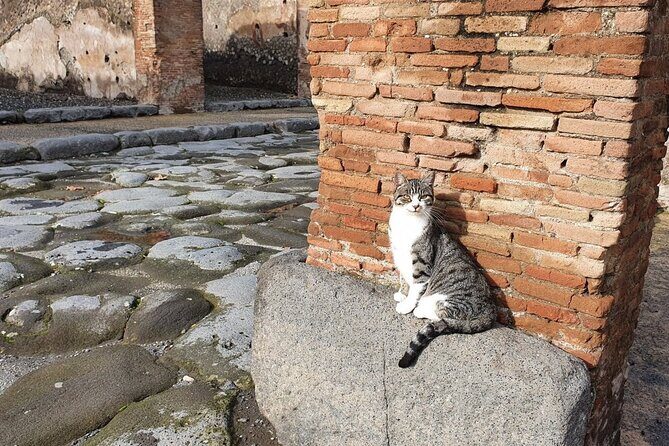
Right from the forum zone, you move to the Macellum, the provision market on the forum. The Macellum is a different kind of lesson. Instead of power and public ritual, you see the infrastructure of daily needs.
This building was constructed in phases, damaged by the earthquake of 62 CE, and still not fully repaired when Mount Vesuvius erupted in 79 AD. That timeline detail matters. Pompeii wasn’t frozen overnight; it was a living city dealing with shocks, repairs, and normal routines.
You’ll also see why the stop is worth your time even if you’re not a “market person.” The market structure helps you understand the city as an economic machine. People didn’t just worship and govern—they shopped, ate, and planned their week around supplies.
Casa del Fauno: Elite Private Life, Not Just Stone
The stop at Casa del Fauno (House of the Faun) is one of the most dramatic contrasts in the whole route. This 2nd-century BC private residence was among the largest and most impressive homes in Pompeii. It also held notable works of art, and it’s described as one of the most luxurious aristocratic houses from the Roman Republic.
The key value here is perspective. When you step from public spaces like the Forum into a wealthy household, you feel the social layers of Pompeii. Pompeii isn’t only streets and temples. It’s also lifestyle—taste, status, and the physical design choices that separated classes.
You get around 15 minutes, so you won’t have time to “study” every corner like a museum visit, but you will get the guide’s framing. That helps you avoid a common mistake: treating the house like one giant room instead of reading it as a space designed for private life.
Teatro Grande: Where Entertainment Was Part of the Daily Rhythm
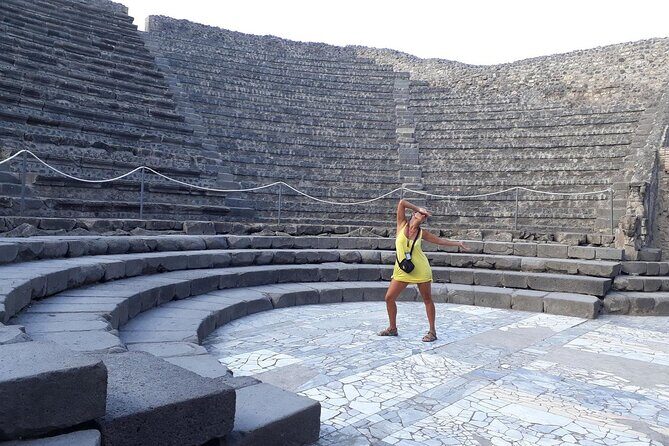
Next up is Teatro Grande, the Roman theater buried by Vesuvius and found again through excavations. In Pompeii, entertainment wasn’t occasional. The theater hosted comedies, mimes, pantomimes, and also the atellane.
This stop gives you a feel for culture as something people practiced, not just something you learn about later. And it’s one of the easier places to picture once you understand the function: this is where stories and performance shaped how the city spent evenings.
Again, you’ll have about 15 minutes. Use it to look for how the theater is set up and where you’d likely sit if you were living in Pompeii. Even with limited time, you’ll end up with a stronger mental movie than you’d get by reading alone.
Via dell’Abbondanza: The Street That Connects the City’s Big Highlights
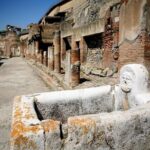
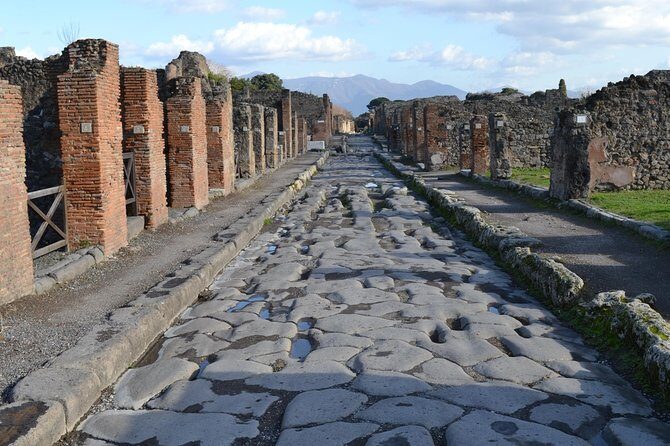
The walk along Via dell’Abbondanza is a smart final “connector” stop because it links multiple key areas. This road was the Lower Decumanus, and its name comes from a bas-relief that adorned a fountain near the Forum.
What you’re really seeing is the city’s main spine between the Forum and Porta Sarno, connecting sites like the Stabian Baths, the Theaters, the Temple of Isis, and the Amphitheater. The route is also described as lively because it has decorations and many of the most beautiful houses, including some two-floor residences of richer Pompeian families.
Even if your favorite part is the guide’s narration, this is the place where your own eyes do the work. It helps you understand Pompeii as a place of movement. People weren’t just standing in fixed locations; they were walking streets that led them between life’s compartments—public meetings, performances, shopping, bathing, and worship.
You’ll have about 15 minutes here. That’s short enough to keep it energetic, but you may want water and sunscreen because this is where you’ll likely be in open air longer than inside spaces.
The 4-Hour Reality Check: You’ll See a Lot, Not Everything
This is a highlights-focused route. It’s built around quick, meaningful time blocks—roughly 15 minutes per stop for the key sites after entry. That structure is a win if you want to understand Pompeii without spending the entire day walking every street.
The trade-off: Pompeii is vast, and there’s no way this itinerary turns into a complete deep museum tour. If you love slow travel and want to spend 45 minutes-plus at a single house or complex, you’ll hit the limits of a four-hour format.
That said, for most people—especially first-timers—this is a strong plan. It helps you avoid the “I saw a lot but I don’t know what I saw” feeling.
Pricing and Value: What You’re Really Paying For
The tour price is $70.89 per person, and the Pompeii entrance ticket is €22 per person not included. Lunch isn’t included either.
So what are you getting for the base price?
- Transport: a ride in a vintage classic van plus private transportation
- Logistics help: round-trip pickup/drop-off from a set of towns
- Time-saving guide framing: a licensed guide leading you through high-impact stops
In other words, you’re paying to reduce friction. You’re not paying only for the sites themselves—you’re paying for the route and the explanations that make those sites click.
If you’re already comfortable navigating Pompeii independently and don’t need the guided framing, you could probably cobble together entry and transit on your own. But if you want your time in Pompeii to feel structured from the start, this format is usually a better fit.
Who This Pompeii Tour+Transfer Suits Best
This tour makes the most sense if:
- you want a first visit that covers the biggest anchors of Pompeii
- you prefer guided context so the ruins connect to real city life
- you don’t want to wrestle with transit and parking around Naples
It may not be perfect if:
- you need Naples-to-Pompeii pickup directly (this tour explicitly lists no pickup from Naples)
- you want a very slow, long-form exploration of a few buildings (this is time-boxed)
- you need a specific language beyond English/Italian; French isn’t listed as a standard option, so check ahead if that matters
What to Bring for a Comfortable Pompeii Walk
The tour suggests bringing hat, water, sunscreen, camera, and wind protective clothing. I agree with all of that. Even on a good day, Pompeii can feel like a sun-and-stone heat trap, and the outdoor walking adds up.
A small planning note: since the stops are short, you won’t have time to scramble for basics mid-day. Pack early, then use the visit time for the ruins.
Should You Book This Pompeii Tour+Transfer?
I’d book it if you want Pompeii to feel understandable fast, and you like the idea of using a guide to connect the big sights into one story of daily life. The combination of shuttle transfer, licensed on-site guidance, and a focused set of stops (Forum, Macellum, Casa del Fauno, Teatro Grande, Via dell’Abbondanza) is a solid value play, especially if you’re coming from the Bay area rather than central Naples.
I’d think twice if you hate “shared timing” setups or you’re staying in Naples and really want door-to-door pickup. In that case, you might find it simpler to build a route on your own so your morning doesn’t depend on a shared shuttle window.
If you’re flexible and want a smooth first day in Pompeii, this tour is the kind that helps you leave with more than photos. You’ll leave with a working sense of how the city functioned.
FAQ
What’s included in the tour price?
The tour price includes a ride on a vintage classic van and private transportation, plus a guided visit through the Pompeii stops. Pompeii entrance is not included.
How long is the tour?
The total duration is about 4 hours (approx.).
Is Pompeii entrance fee included?
No. The Pompeii entrance ticket costs €22.00 per person and is not included.
What time does the tour start?
The start time listed is 9:00 am. Your exact pickup timing is confirmed after booking.
Do you pick up from Naples?
No pickup is offered from Naples. Pickup coverage is from specific nearby towns, and there’s also a note about using the Circumvesuviana train for areas outside the shuttle range.
What languages are available for the guide?
The guide is described as multilingual with English/Italian. If you need French, it’s not listed as a standard option, so you should check before you go.
Is the ticket mobile?
Yes, a mobile ticket is offered.
How big are the groups?
The tour/activity has a maximum of 25 travelers.
What should I bring?
Bring a hat, water, sunscreen, a camera, and wind protective clothing.