This is Pompeii, paced for real understanding. A short 3-hour format means you see the big icons—without the park swallowing your whole day. You also get a guided walk that connects buildings to daily Roman life, from public squares to quieter house details.
I love that the tour keeps things focused on the main sites. You’ll walk the city center around the Forum, plus the theatres, thermal baths, and the street grid that shows how people moved, shopped, and ate. I also like that your guide is an official Campania Region licensed professional, so the explanations stay grounded and specific rather than generic.
One thing to consider: Pompeii is huge, and this is not the kind of tour where you can expect every corner covered. Also, the admission ticket isn’t included, so you’ll need to plan that cost and timing on your own.
In This Review
- Key highlights you’ll care about
- Why a 3-hour Pompeii tour actually works
- The Forum, streets, and squares: the city’s real “center of gravity”
- Theatres and public architecture: where entertainment met society
- Thermal baths: the routine behind the spectacle
- Frescoes, mosaics, and the look of daily life
- How to think about the price (and when it’s a bargain)
- Your guide: what official licensing changes
- Meeting point and timing: keep your day easy
- What you’ll actually do during the walk
- Who this tour fits best
- Should you book Pompeii Ruins Special?
- FAQ
- How long is the Pompeii Ruins Special tour?
- What’s included in the tour price?
- Is this a private tour?
- How many people can be in a group?
- Where do we meet for the tour?
- What ticket type do I receive?
- Is admission included?
Key highlights you’ll care about
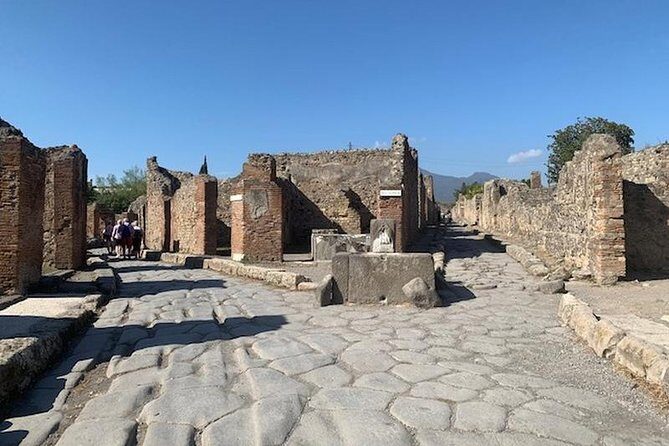
- Forum-centered start that helps you read Pompeii like a city, not a pile of stones
- Three big stop types in one sweep: theatres, thermal baths, and the Forum area
- Street-life details such as fountains, bakeries, shops, and everyday corners
- Visual payoff with frescoes and mosaics featured during the walk
- Private group format (up to 8) with your guide leading the whole time
- Mobile ticket included with the tour, which simplifies entry day logistics
Why a 3-hour Pompeii tour actually works
Pompeii can be overwhelming fast. After an hour, you’re no longer looking at ruins—you’re just trying to not get lost. This 3-hour format is a sweet spot: long enough to learn the layout and rhythms of the ancient city, but short enough to stay curious instead of exhausted.
What makes this one practical is its promise of depth without dragging. You focus on the parts that most people want to understand first, then you get context that helps the buildings click into place. If you like history, you’ll still feel like you got a proper experience, not a rushed highlight reel.
The other real advantage is that this is private. With only your group, you can ask questions and keep the pace where you like it. That matters in Pompeii, where some areas can feel confusing if you don’t know what you’re looking at.
You can also read our reviews of more tours and experiences in Pompeii.



The Forum, streets, and squares: the city’s real “center of gravity”
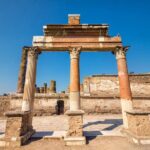
Your tour centers on the Pompeii Archaeological Park with a city-first approach. You begin around the ancient Roman square called the Forum—Pompeii’s civic and social hub. This is where daily life and public life overlapped: politics, announcements, movement, and meet-ups all happened in one gravitational pull.
Here’s what makes the Forum area valuable on a guided walk. When you understand what a Forum is for, suddenly doors, steps, and open spaces stop looking random. You can better imagine how crowds would gather and how people would flow through the area on a normal day.
And then the tour connects that square life to the nearby streets. You see the kinds of details that make Pompeii feel inhabited even when it’s quiet now. Think fountains, bakery-like spaces, quick bites, shops, and household entries—those small urban elements that explain how Romans got through a day without modern conveniences.
Theatres and public architecture: where entertainment met society
Pompeii’s theatres aren’t just impressive because they’re ancient. They’re impressive because they point to how Romans organized leisure and community. A theatre district teaches you that public entertainment wasn’t a separate world—it was woven into the city’s core life.
On this walk, you’ll see the theatres as part of a connected circuit rather than a single stop photo-op. The guide’s job here is to explain how space worked: where people would sit, how the area functioned, and why these structures mattered beyond performance.
If you enjoy history that tells stories instead of listing facts, this part is usually a payoff. Even without going deep into technical architecture details, understanding how a theatre fit into Pompeii’s social structure makes the ruins feel more human.
Thermal baths: the routine behind the spectacle
The thermal baths are one of Pompeii’s best clues to daily Roman habits. Baths weren’t just about cleanliness—they were where social time happened too. In a city like Pompeii, the bath complex helps you understand how public routine shaped everyday life.
During your tour, the baths get their own place in the route. That’s important because bathrooms and exercise spaces can look similar if you’re only skimming. With guidance, you’re more likely to notice what’s functional, what’s communal, and why the bath area would have been a key stop in people’s weeks.
This is also where a licensed guide becomes noticeably valuable. You get interpretations that help you see the difference between surfaces, corridors, rooms, and the flow of the complex. The end result is that you don’t just see the ruins—you understand their purpose.
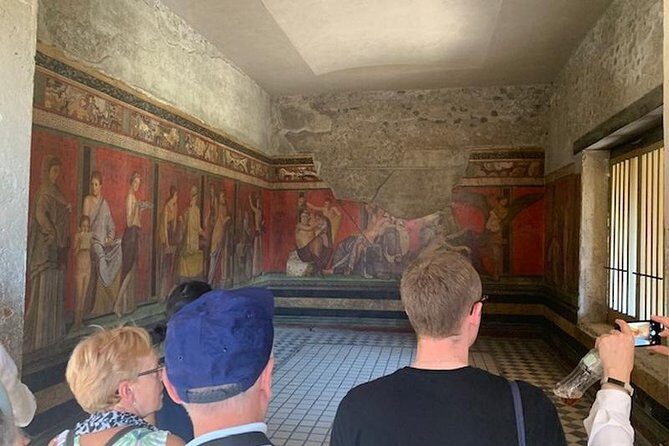
Frescoes, mosaics, and the look of daily life
Pompeii’s most emotional details are often the visual ones. Frescoes and mosaics aren’t just decoration; they’re clues about taste, wealth, and how people wanted their spaces to feel.
This tour includes stops where those visuals are part of what you’re walking toward. That matters because it’s easy to stand in front of artwork and feel stuck thinking, so what. A good guide points you to the human side: what the scenes suggest, how the colors and styles functioned, and how art sat inside real homes and businesses.
Even if your art knowledge is basic, you’ll likely come away with clearer impressions. You start seeing patterns and purpose instead of only age and damage. That’s the difference between watching a ruin and reading a lived-in city.

How to think about the price (and when it’s a bargain)
The price is $335.48 per group, up to 8 people, for about 3 hours. That means the value depends on how many people are sharing the cost.
If you book with a full group of 8, you’re effectively paying about $42 per person for guided time. In that situation, it’s a very workable deal because you’re buying expertise and time-saving direction, not just a walk. If you’re booking as a smaller group, the per-person cost rises, so you should ask yourself what you’re prioritizing.
I’d treat this as best value if you want:
- A guided route that avoids aimless wandering
- Context for the Forum, baths, theatres, and street life
- The option to ask questions and adjust pace
If you’re traveling solo or just two people, you might compare against self-guided entry and audio options. But if you care about understanding the “why” behind the ruins, a private licensed guide can still feel worth it because Pompeii rewards interpretation.
Your guide: what official licensing changes
This tour is led by a licensed guide from the Campania Region. That matters more than it sounds. In Pompeii, details matter: what a space was used for, how areas connect, and what you should be looking at. Licensing is a sign you’re working with someone who’s meant to lead visitors through this kind of site with professional standards.
In the experience, the guide is also known for delivering an engaging style. One review specifically highlighted humor along the way. That’s not just fun—it helps you stay focused, especially in a place where fatigue can set in quickly.
Lucia has shown up in multiple accounts connected to this experience, and those mentions consistently point to someone who can guide you clearly and answer questions. If you prefer explanations that feel like a conversation rather than a lecture, this is the kind of tour that supports that style.
Meeting point and timing: keep your day easy
You meet at Pompei Scavi Villa Dei Misteri, 80045 Pompei and the tour ends back at the same meeting point. It’s also described as near public transportation, which is useful if you’re mixing modes of travel while you’re in the Naples/Pompeii area.
The duration is about 3 hours, so plan your schedule like a proper half-day. This isn’t a quick stop before lunch, and it’s not a full-day “see everything” plan either. If you’re pairing it with other stops in Campania, it’s a good centerpiece activity because it gives you a meaningful chunk of Pompeii without nuking your whole day.
Also note: you’ll have a mobile ticket for the tour component, but Pompeii admission itself is not included. That’s normal for many guided experiences, but it means you’ll want to confirm your ticket situation ahead of time so you don’t lose time on arrival.
What you’ll actually do during the walk
The tour is built around one main loop inside the Pompeii Archaeological Park. You’ll move through the Forum area, the theatres, the thermal baths, and the surrounding streets and features that show everyday urban life.
A helpful way to picture the day is like this:
- You start by learning the city center logic around the Forum
- Then you branch out to public entertainment and civic leisure in the theatre area
- You pivot to routine and social life at the thermal baths
- Finally, you connect those civic spaces to the street-world: fountains, bakeries/quick food, shops, and house fronts
And throughout, you’ll encounter the visual side—frescoes and mosaics—so the city isn’t only about “structures.” It’s also about how people wanted their surroundings to feel.
Because it’s private, the pace is more likely to match your group’s rhythm. If you’re the type who likes time to look closely, you’ll usually be happier than if you’re rushing to check boxes.
Who this tour fits best
This experience is a strong match for people who want the most important Pompeii sights without committing to an all-day plan. It’s also ideal if you love history and archaeology, but you don’t want your whole day to be buried in ruins.
It’s especially good for:
- Couples or small groups who want a private guide
- First-timers who need orientation fast
- Travelers who want Pompeii’s main ideas: public life, routine life, and art inside real neighborhoods
- People who prefer guided interpretation over wandering alone
If you’re already a serious Pompeii scholar and want every site category, you might find 3 hours too tight. But for most visitors, it hits the sweet spot between “enjoyable” and “understood.”
Should you book Pompeii Ruins Special?
Book it if you want Pompeii to make sense quickly. The biggest reason is the balance: main highlights without rushing, plus a guided explanation that helps you read how the city worked. The private format with a licensed Campania guide makes it feel like you’re learning with someone at your side, not herding through a museum.
Skip it only if you’re chasing a full-day, everything-in-one-go strategy. Pompeii is too large for that anyway, and this tour is designed for quality of understanding, not exhaustive coverage.
FAQ
How long is the Pompeii Ruins Special tour?
It runs for about 3 hours.
What’s included in the tour price?
The tour includes a tour guide. Admission ticket to the archaeological site is not included.
Is this a private tour?
Yes. It’s private, and only your group participates.
How many people can be in a group?
The price is per group up to 8 people.
Where do we meet for the tour?
The meeting point is Pompei Scavi Villa Dei Misteri, 80045 Pompei, Metropolitan City of Naples, Italy, and the tour ends back at the same meeting point.
What ticket type do I receive?
The experience includes a mobile ticket.
Is admission included?
No. Admission ticket is not included in the tour.