REVIEW · POMPEII
Pompeii: living with the volcano
Book on Viator →Operated by Michele Arpa · Bookable on Viator
Pompeii feels close enough to breathe. This private 2-hour tour follows the city’s day-to-day life like a movie playing on real streets—amphitheater drama, neighborhood shops, election graffiti, and then that uneasy calm right before the eruption of 79 AD. I especially like the way the guide ties each stop to what Pompeians did, not just dates and names. I also like Michele Arpa’s English and the way he keeps the experience intimate and easy to follow. One possible drawback: entrance tickets aren’t included, and the park involves walking on uneven ancient ground, so it’s not ideal if you have mobility limits.
You get the structure of a guided visit without feeling herded. It’s also scheduled in a morning window (9:30 AM to 11:30 AM, daily), so you’re in Pompeii while the day is still workable. And because it’s a private activity for just your group, you can move at a human pace—more questions, fewer time traps. Just remember: you’re visiting an archaeological park, so expect some surfaces that are not built for wheelchairs or scooters.
In This Review
- Key Points at a Glance
- A One-Day-Before-the-Eruption Story Walk Through Pompeii
- Your Guide Matters: Michele Arpa’s Street-Level English
- Stop by Stop: Amphitheater Noise, Shops, Domus Rooms, and the Forum
- Pompeii Archaeological Park: Living in the Ruins
- The Theater and Amphitheater World
- Eating and Everyday Commerce in 1st-Century BC Spaces
- Elections on the Walls
- Luxurious Domus Rooms for the Rich
- A Stop for Relaxation at the Spa
- The Civil Forum: Civic Life in a Public Square
- Two Hours in Pompeii: How to Get More Out of Less Time
- Price and Tickets: What $33.36 Buys You
- Meeting Point, Morning Hours, and Transit Reality
- Who This Private Tour Fits Best
- Should You Book Pompeii: Living with the Volcano?
- FAQ
- FAQ
- How long is the Pompeii experience?
- Are entrance tickets to Pompeii included?
- What language is the tour offered in?
- Where does the tour start?
- When does the tour run?
- Is this a private tour?
- Is there a guide service included?
- Is it near public transportation?
- Is the tour suitable for people with mobility difficulties?
- Are service animals allowed?
Key Points at a Glance
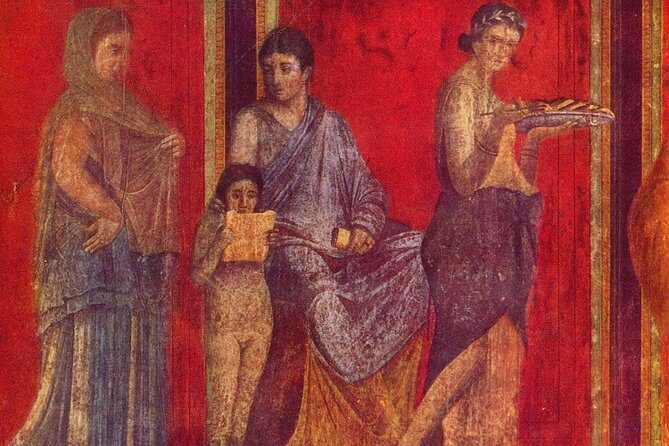
A one-day-before-the-eruption storyline that turns ruins into real routines
Stops that hit both public life and private homes: amphitheater, forum, and domus-style residences
English guidance with a personal touch from Michele Arpa
Entrance ticket not included, so budget for that separately
Early morning timing helps you enjoy Pompeii without frying in the sun
Moderate walking required, and uneven roads can be a challenge
A One-Day-Before-the-Eruption Story Walk Through Pompeii
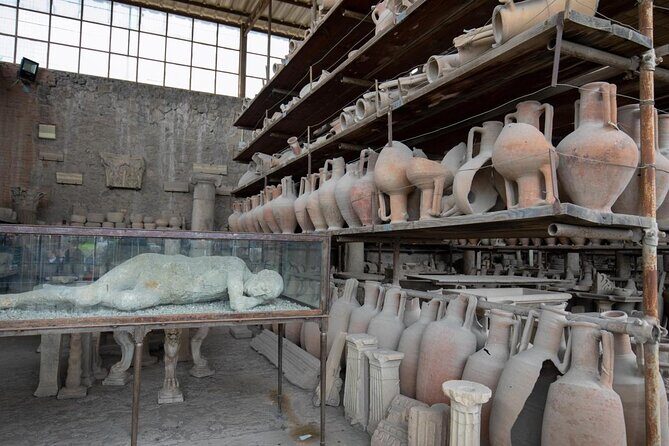
Pompeii is famous for tragedy, but this tour starts by making you feel the everyday first. The big idea is simple: you explore as if you’re walking with Pompeians one day before the eruption of 79 AD. That time shift changes everything. Instead of seeing ruins as a museum display, you start to read them like a living city that had plans, jobs, entertainment, and politics.
You’ll move through key parts of town that represent different sides of Roman life. There’s the public side—where people gathered, watched, argued, and voted. Then there’s the personal side—where wealthier residents lived in larger home spaces, and where you can imagine routines that were suddenly interrupted.
What makes the approach valuable is that it gives your brain something to organize. Pompeii can feel overwhelming fast because it’s big and fragmentary. A story-driven route helps you connect the dots: what you see, what it likely meant, and why that location mattered in daily life. You’re not just looking at stones; you’re learning how a city worked right before it stopped forever.
You can also read our reviews of more tours and experiences in Pompeii.
Your Guide Matters: Michele Arpa’s Street-Level English
This experience is powered by the guide service, and that’s the difference between a quick walk and a visit that sticks. Michele Arpa stands out for how he brings Pompeii to life through clear storytelling. People describe him as passionate about the site, and that shows in the way he explains meanings and symbols, not just facts.
One practical bonus: Michele’s English is strong, so you spend your attention on Pompeii instead of translation headaches. That matters even if you already know a bit of Roman history. The guide also tends to connect physical locations to human behavior—what people likely did in the theater area, how civic spaces functioned, and what daily life looked like on streets lined with shops.
There’s also a “care” factor in how he handles real-world travel issues. In one case, Michele met a group at the Naples train station and rode together to Pompeii, which can take stress out of a short transit day. He also helped with an online payment problem related to a parking ticket when language was an obstacle. That kind of support isn’t something you’d expect from a standard walkthrough, and it’s part of why the tour feels smoother.
The main thing to keep in mind: the experience is only around two hours, so the guide’s job is to prioritize the most meaningful places and keep the storyline coherent.
Stop by Stop: Amphitheater Noise, Shops, Domus Rooms, and the Forum
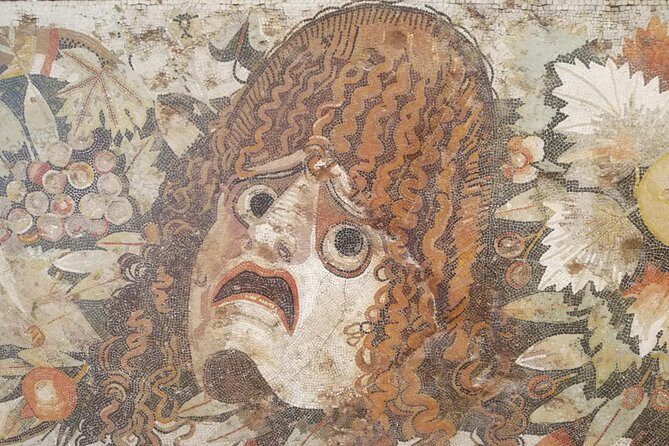
This tour doesn’t just point out famous buildings. It moves you through a sequence that mirrors a day in Pompeii. Here’s what you can expect from the different stop types.
Pompeii Archaeological Park: Living in the Ruins
Your base is the Pompeii Archaeological Park, where the guide leads you through the buildings, shops, and streets. You’re essentially walking the city block by block—except now those blocks are also historical evidence. You’ll look at spaces that show how people lived in a place that was advanced for its time, and you’ll get explanations that help you interpret what you’re seeing.
A key part of the experience is the mix of locations: public entertainment, civic life, and more private home settings. That spread gives you a fuller picture than a single-focus visit.
The Theater and Amphitheater World
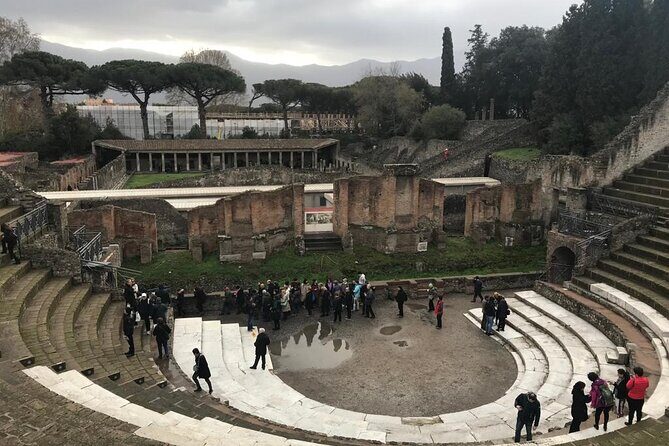
The tour includes time connected to the theater and the amphitheater. This is where Roman public culture becomes loud and visual. Think crowd energy, performance space, and the gladiator-fight atmosphere people associate with Pompeii’s entertainment scene. Even in ruins, the layout helps you picture how spectators moved, sat, and reacted.
Why this stop matters for your experience: once you understand how these entertainment venues worked, you can better imagine who visited them, why they mattered, and how they fit into daily schedules.
Eating and Everyday Commerce in 1st-Century BC Spaces
The tour also touches on how people ate and shopped, including a look at takeaway-style food culture dating to the 1st century BC. That may sound like a small detail, but it’s one of the strongest ways to make ancient life feel real. Food and commerce are daily needs—so when the guide links street layout to eating habits, your mental picture becomes more specific.
You’ll also see references to shops and street life, which helps you understand that Pompeii wasn’t only monuments and temples. It was working neighborhoods, too.
Elections on the Walls
One of the more interesting moments is learning about names written on walls for magistrates’ elections. This kind of detail can change how you view public inscriptions. It stops being graffiti and becomes communication: politics in motion, right at street level.
If you like small clues that reveal how ordinary people thought and acted, this is a good stop type.
Luxurious Domus Rooms for the Rich
You’ll also get a look into the domus world—large, more luxurious homes associated with the richest residents. This contrast helps you compare social layers: where wealth concentrated, how space differed, and how power shaped domestic life.
Even if you don’t care about luxury, these home areas are useful because they show what everyday housing could look like when it wasn’t modest.
A Stop for Relaxation at the Spa
A spa stop adds something many Pompeii visits forget: relaxation and personal routines. Roman-style bathing and spa spaces weren’t just about cleanliness; they were social and part of how people spent time.
On ruins days, this is a welcome palette cleanser. After crowds and civic noise, you get a sense of calm and routine.
The Civil Forum: Civic Life in a Public Square
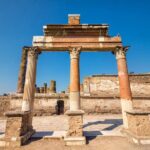
Finally, you’ll end up in the splendid square of the civil forum. This is where you can feel the city’s structure: governance, gatherings, and public identity. It’s a strong closing point because the forum ties together what you’ve seen—entertainment, politics, daily life—into a single civic heartbeat.
If you’ve ever wondered why ancient cities felt so organized, the forum is where the answer starts to appear.
A drawback to plan around: you’re not touring Pompeii like a full independent day. This route is about meaning, so you won’t cover every corner. That’s not a problem—just know what kind of visit you’re booking.
Two Hours in Pompeii: How to Get More Out of Less Time
Two hours sounds short. It is short. But it can work well if you go in with the right mindset.
This tour is built to create connections. In a limited timeframe, the guide prioritizes the spots that tell the clearest story of day-to-day life and civic structure. That means you get less “wandering” and more “understanding what you’re looking at,” which is what most people actually want when they’re standing in a complex archaeological site.
Here’s how you can make those two hours pay off:
- Wear shoes that handle uneven stone and gaps between areas.
- Bring water, even if you think the weather looks mild.
- If you like photos, take them as you go, but leave space for the guide’s explanations. The story matters more than the shot.
Also note: some areas of Pompeii can feel restrictive in practice because ruins are fragile and access can be limited. In the past, Michele has been able to keep the visit worth your time by adjusting when exhibition areas are restricted. The takeaway for you is simple: you’ll be guided, not left to guess.
Price and Tickets: What $33.36 Buys You

At about $33.36 per person, you’re mainly paying for the guide service—human guidance, route control, and interpretation. That’s usually where the value lives in Pompeii. The ruins are stunning, but they can also be confusing. A good guide turns confusion into clarity.
Just be aware of what you pay separately. Entrance tickets to the site are not included, so you should plan for that cost on top of the tour price. The tour price is still reasonable if you compare it to the headache of trying to self-navigate a big archaeological park without a story.
This is also a private activity, meaning it’s only your group. That can be a strong value for families, couples, and small groups who want a tailored pace instead of a large-coordination crowd.
If you’re the type who likes your history with context—what people ate, what they watched, how they voted—this tour format tends to justify the extra guidance cost. If you want to spend all day slowly exploring everything at your own rhythm, you might instead prefer a self-guided ticket and a guidebook. This isn’t that. This is meaning delivered fast.
Meeting Point, Morning Hours, and Transit Reality
The meeting point is at the Pompeii Archaeological Park (80045 Pompei, in the Metropolitan City of Naples). The tour runs daily with an opening window of 9:30 AM to 11:30 AM.
Because it’s near public transportation, you’re not locked into a complicated car plan. That said, once you’re in Pompeii, your feet do the work. The park is walk-heavy and the roads can be uneven.
One practical consideration: the tour isn’t recommended for visitors with mobility difficulties due to the state of the roads. If you’re using a wheelchair or need step-free access, this is the kind of tour where you should look hard at your specific needs before booking.
If you’re deciding between morning tours, the early window can be your friend. You get your most important storytelling moments before the day gets too hot or crowded.
Who This Private Tour Fits Best
This tour is a strong match for people who want Pompeii with structure and explanations, not just sightseeing.
I’d put it especially high for:
- Couples and families who want a shared story while walking.
- First-time Pompeii visitors who don’t want to waste time figuring out what matters most.
- History lovers who care about daily life details—politics, food, public entertainment, and home space.
- Anyone who likes a personable guide who can answer questions in real time.
It’s also a good option if you already did a quick Pompeii overview and now you want the “how did people live here” angle. The route’s focus on ordinary routines makes it feel less like a checklist.
And if you love Michele Arpa’s style, there’s a hint from past experiences: the same guide has been booked for Pompeii plus another major site in the area (Herculaneum) as part of longer days. So if you want to turn a visit into a full itinerary, ask about what other options fit your schedule.
Should You Book Pompeii: Living with the Volcano?
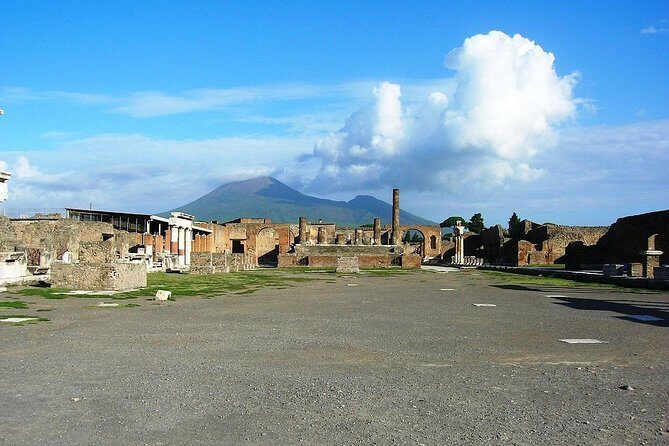
Book it if you want Pompeii to make sense quickly. This is the kind of tour that uses a clear storyline to connect places—amphitheater to forum, spa to domus—so the ruins feel like a city again.
Skip it if:
- You need totally step-free, smooth walking paths.
- You want to roam without guidance for hours.
- You already have a detailed plan and a guidebook approach that you love.
My advice: if you’re paying for one “guided meaning” experience in Pompeii, this is a good contender. Michele Arpa’s approach—English explanations, friendly style, and a focus on how people lived—does the heavy lifting that self-guided visits often miss. Just plan for the site entrance ticket and wear shoes for ancient stone.
FAQ
FAQ
How long is the Pompeii experience?
It’s about 2 hours.
Are entrance tickets to Pompeii included?
No. Admission tickets to the site are not included.
What language is the tour offered in?
It’s offered in English.
Where does the tour start?
The tour starts at the Archaeological Park of Pompeii, 80045 Pompei, Metropolitan City of Naples, Italy.
When does the tour run?
It runs daily with a time window of 9:30 AM to 11:30 AM.
Is this a private tour?
Yes. It’s a private tour/activity, and only your group participates.
Is there a guide service included?
Yes. Guide service is included.
Is it near public transportation?
Yes, it’s near public transportation.
Is the tour suitable for people with mobility difficulties?
It’s not recommended for visitors with mobility difficulties due to the condition of the roads.
Are service animals allowed?
Yes, service animals are allowed.