REVIEW · PANTHEON TOURS
Pantheon: Tour with Archaeologist of the best preserved Roman work
Book on Viator →Operated by OLGA DI CAGNO · Bookable on Viator
The Pantheon is already jaw-dropping. This small-group tour adds the missing layer: why the building looks the way it does, and what that meant to Rome.
I like the small group size (max 15) because you can actually ask questions when the guide points out details. I also love that Olga di Cagno brings an archaeology background and uses a visual approach, with architecture and engineering front and center. One possible drawback: the pacing is fast for only an hour, and if you want a super technical engineering lecture, this is still framed as archaeology and monument interpretation—not a full construction workshop.
In This Review
- What you’ll do (and what you won’t)
- Key points at a glance
- The Pantheon feels personal once you know what to look at
- A practical start at Piazza della Rotonda
- Stop 1: The Pantheon and what makes it architecturally special
- Inside the dome: why the geometry grabs you
- Light, surfaces, and the story your eyes would skip
- The pagan-to-Christian transition and why it still matters
- What Olga di Cagno brings to the tour (beyond facts)
- She connects meaning to structure
- Latin and translation moments
- Interactive pace, with a real-world limitation
- Dress code and etiquette: simple, but don’t skip it
- Price and value: is $64.88 for one hour worth it?
- Who this Pantheon tour suits best
- Booking tips for a smoother day at the Pantheon
- Should you book this Pantheon tour?
- FAQ
- What’s the meeting point for the Pantheon tour?
- How long does the tour take?
- Is admission to the Pantheon included?
- What’s the price per person?
- What language is the tour offered in?
- What’s the group size?
- What dress code is required?
- Is a mobile ticket used?
- Are service animals allowed?
- Can I cancel, and what’s the refund timing?
What you’ll do (and what you won’t)

This is a one-stop experience centered on the Pantheon itself. You meet at Piazza della Rotonda, get your mobile ticket, and spend about an hour there with an archaeologist-led explanation, with your tour ending back at the meeting point.
Plan for the reality of crowds and entry lines. Also, do not expect access into closed-off interior structures beyond what regular visitors can see—some areas are restricted—so your best payoff is what you experience in the open spaces and the story the guide builds around them.
Key points at a glance
- Meet at Piazza della Rotonda and finish right there, no long wandering schedule
- Admission ticket included so you do not have to juggle separate entries
- English tour with a max of 15 people, keeping it interactive
- Olga Di Cagno’s archaeology focus brings context to form, meaning, and later changes
- Lots of architecture and engineering talk, plus Latin and close reading of details you’d miss
You can also read our reviews of more tours and experiences in Rome.



The Pantheon feels personal once you know what to look at
If you’ve only seen photos, the Pantheon can still surprise you in person. The main reason is scale, but the second reason is the illusion of simplicity: it looks like one clean idea, inside a city that loves layers and reinvention.
What the guide adds is a way to read the building like a message. Not just where to stand, but what Roman architects were trying to prove with concrete, geometry, and monument-making.
A recurring theme from the experience description is how the Pantheon survives almost completely intact. That matters, because when a structure endures for nearly 2,000 years, it turns into a rare time capsule—especially in Rome, where many monuments are fragments.
A practical start at Piazza della Rotonda
Your tour starts at Piazza della Rotonda (00186 Roma RM) and ends back at the same point. That’s helpful because you don’t need to solve a second meeting place or re-route yourself after the tour.
Expect to deal with the normal “arrive, find your group, and get in” moment. One of the small but real quality-of-life details: Olga is easy to spot, and the experience notes mention a distinct red umbrella, which helps in a crowd.
Because this is near public transportation, you can fit it into a day without turning your itinerary into a logistics puzzle. And since it’s a mobile-ticket setup, you’re not burning time on paperwork.
Stop 1: The Pantheon and what makes it architecturally special
This one-stop tour keeps your attention where it counts. You’ll focus on the Pantheon’s core features and how they connect to Roman engineering power.
Inside the dome: why the geometry grabs you
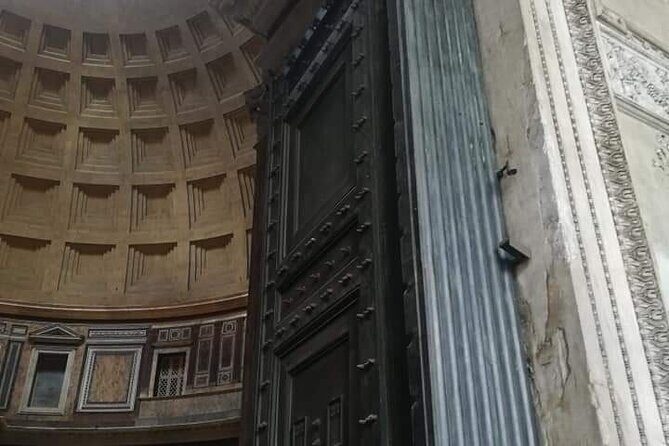
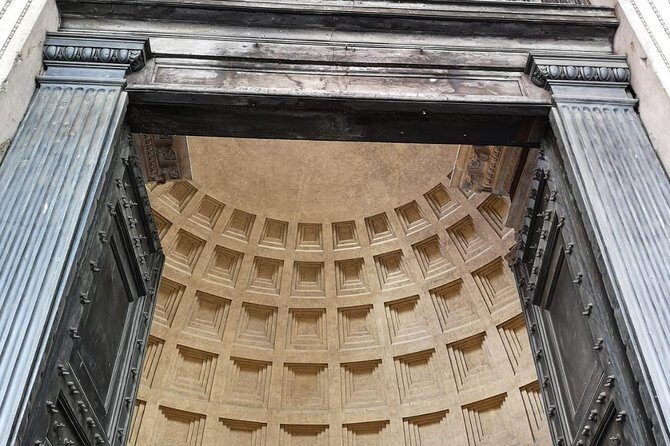
The Pantheon’s dome is the headline, but the guide’s job is to explain why it looks the way it does and what the Romans were doing structurally. When the explanation is done well, you stop treating the dome as a pretty ceiling and start seeing it as a carefully balanced system.
This is where Olga’s approach shines. The experience information and the provider’s explanation point to a presentation style with about 50 slides, most of them aimed at architecture and engineering. Even if you’re not an engineer, that matters because it turns abstract ideas into concrete visual comparisons.



Light, surfaces, and the story your eyes would skip
Once you’re standing inside, you’ll notice details most people ignore—paintings, sculpture, and decorative elements that signal shifts in purpose over time. The strongest praise connected to this tour centers on learning the story behind those elements, not just being told they are there.
You’ll also be guided to understand the Pantheon as a monument of Roman messaging. Think less about individual artwork as trivia, and more about money, power, and branding—Rome’s version of persuasive architecture.
The pagan-to-Christian transition and why it still matters
One of the most memorable angles described for this tour is how the guide connects the Pantheon’s original identity with what it became later. You’re not just inside an ancient building; you’re looking at a place with historical “stamps” from different eras.
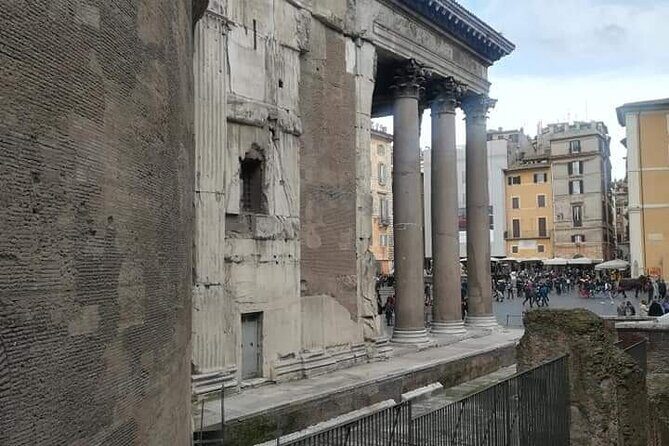
The experience notes include an add-on feeling: Olga may take you outside and around toward the back to show the pagan side and remaining ruins in the surrounding area. Even though the tour is short, that extra movement helps you understand the Pantheon as part of a bigger original complex, not an isolated photo spot.
If you like Rome as a living palimpsest—old layers still influencing what stands today—this interpretation style should land well.
What Olga di Cagno brings to the tour (beyond facts)
The guide is Olga Di Cagno, and the feedback connected to her is very specific. The most repeated themes are her interactive approach, her ability to take time with explanations, and her passion for how monuments work in the real world.
She connects meaning to structure
Some of the comments highlight how Olga explains the Pantheon in a way that changes how you think about what a Roman monument is. Instead of a checklist of features, you get an argument about why Rome built like this and why it still looks impressive.
If you enjoy architecture, engineering, or the logic behind construction, you’ll likely appreciate the way she frames the building. If you want a purely technical lecture, keep expectations tuned: the tour is presented as archaeology-led, not a full engineering course.
Latin and translation moments
One detail that stands out is that Olga may use Latin during the tour and translate meanings. That can be fun even if you do not speak Latin, because it gives you a glimpse of how the texts and inscriptions shaped the identity of sacred and public spaces.
Interactive pace, with a real-world limitation
A short tour always faces timing pressure. The tour is listed as about 1 hour, and the experience can feel tighter if entry lines run long.
Also note: the feedback includes at least one case where the tour ran shorter than expected and ended when the guide’s allotted time was up. That’s a reminder to build in buffer time around your Pantheon visit, especially if you are tying it to a timed plan elsewhere.
Dress code and etiquette: simple, but don’t skip it
This is one of those Rome rules that can quietly ruin your day if you’re not ready. You need to cover shoulders and knees.
So if you’re traveling in warm weather, bring a light layer you can throw on quickly. It’s also smart to wear comfortable shoes, since you’ll likely stand for long stretches and may move slightly around the exterior area depending on what the guide includes.
Service animals are allowed, and the tour is marked as suitable for most participants. The group limit helps keep the experience manageable around the monument’s crowd flow.
Price and value: is $64.88 for one hour worth it?
At $64.88 per person for about an hour (with admission included), you’re paying for more than access. You’re paying for interpretation—someone guiding your attention and explaining how the Pantheon’s design works in real human terms.
Here’s how I’d judge the value:
- Admission is included, so you’re not paying double.
- A real archaeologist guide changes the visit from viewing to understanding.
- Small group size helps you ask questions and keep the experience from turning into a silent walk-through.
- The tour includes mobile ticket convenience, which saves time in a place where time can disappear quickly.
If you’re the type who likes to wander independently and read signs, you may feel you can do it cheaper on your own. But if you want someone to connect the dome, the decoration, and the monument’s changing role into one coherent story, this price starts to make sense.
Who this Pantheon tour suits best
This is a strong pick if you enjoy:
- architecture and construction logic
- Roman history through physical buildings
- asking questions when you spot something you do not understand
- short, focused experiences that fit into a busy Rome schedule
It’s also a good match for students, classics lovers, and people who like details rather than vague highlights.
If your main goal is maximum technical depth or extended time inside the building exploring every engineering nuance, this might feel limited because it’s built as a short guided interpretation.
Booking tips for a smoother day at the Pantheon
A few practical moves will help you get more from the tour time:
- Wear the right outfit for the shoulders and knees requirement before you arrive.
- Plan to arrive a few minutes early at Piazza della Rotonda, since meeting in a crowd can take longer than you think.
- If you care deeply about engineering, come with a couple of specific questions ready. A short tour is best when you can steer the conversation.
You’ll also receive confirmation within 48 hours of booking, subject to availability. And the tour is offered in English, so double-check that your party is comfortable with that.
Should you book this Pantheon tour?
I’d book it if you want a guided visit that treats the Pantheon as more than a bucket-list photo stop. The biggest reason is Olga’s way of connecting archaeology, design, and meaning—plus the small-group format that makes questions feel normal, not rushed.
Skip it or consider another option if you’re chasing a long, highly technical deep session. This one is short, and while it does cover architecture and engineering themes, it’s still structured around interpretation and context, not an extended construction workshop.
If you want your Pantheon time to feel organized and insightful—even when the square is packed—this tour is a solid value.
FAQ
What’s the meeting point for the Pantheon tour?
The tour starts at Piazza della Rotonda, 00186 Roma RM, Italy, and it ends back at the same meeting point.
How long does the tour take?
The duration is listed as approximately 1 hour.
Is admission to the Pantheon included?
Yes. Admission Ticket Included is part of this experience.
What’s the price per person?
The price is $64.88 per person.
What language is the tour offered in?
The tour is offered in English.
What’s the group size?
The tour has a maximum of 15 travelers.
What dress code is required?
You must cover your shoulders and knees.
Is a mobile ticket used?
Yes. The tour includes a mobile ticket.
Are service animals allowed?
Yes, service animals are allowed.
Can I cancel, and what’s the refund timing?
Free cancellation is offered. You can cancel up to 24 hours in advance for a full refund. If you cancel less than 24 hours before the start time, the amount paid will not be refunded.