REVIEW · AUDIO TOURS
Pantheon Audio Guided Tour: Endless Imperial Rome Experience
Book on GetYourGuide →Operated by Open Mind Tours · Bookable on GetYourGuide
The Pantheon hits fast. This Pantheon audio guided tour gets you past express security so you can focus on the architecture right away, then lets you follow a written narrative that explains what you’re seeing as you look up at the dome and the oculus. I especially like the priority access angle because you’re spending your time inside the monument, not in a line outside.
My second favorite part is the way the audio guide ties the building to big ideas: Emperor Hadrian’s rebuild, why the name Pantheon matters, and what the niches (and missing statues) suggest about Roman messaging. The one drawback to watch for is simple: headphones aren’t included, so if you show up without them, your hour goes from great to annoying.
In This Review
- Key highlights you should care about
- Priority Entry at the Pantheon: Less Waiting, More Looking Up
- The Audio Guide Experience: How the Story Works While You Walk
- What You’ll See Under the Dome: Oculus, Spherical Space, and Scale
- The Real Timeline: Augustus, Fire, and Hadrian’s Early 2nd-Century Rebuild
- Pantheon Naming Strategy: All Gods, Then the Niches That Don’t Match
- Columns and Light: Granite at 12 Meters and the Crystal Effect
- Timing and Smooth Entry: Make the One-Hour Visit Work for You
- Price and Value: Is $17 Worth It Here?
- Who This Tour Suits Best (and Who Might Skip It)
- Should You Book This Pantheon Audio Tour?
- FAQ
- How long is the Pantheon Audio Guided Tour?
- What does the tour include?
- Are headphones included?
- Do I need to meet a guide at a specific time?
- Does it include priority access and skip-the-line entry?
- What if I’m late for my starting time?
- Is the tour wheelchair accessible?
- How much does it cost?
- What should I bring?
- What isn’t allowed during the experience?
Key highlights you should care about

- Priority access through express security means less time waiting and more time staring at Rome’s biggest “how did they do that?” dome.
- Audio guide written by archaeologists keeps the story grounded in the monument, not generic facts.
- A clear focus on the oculus (the iconic open eye) and how it shapes light and space.
- Hands-on architectural storytelling about the sphere-like space under the dome.
- A specific historical timeline: Augustus rebuilt after an earlier fire; Hadrian later rebuilt what you see today in the early 2nd century AD.
- Propaganda decoded: the Pantheon’s “all gods” theme vs. the reality of how many major niches are actually there.
Priority Entry at the Pantheon: Less Waiting, More Looking Up
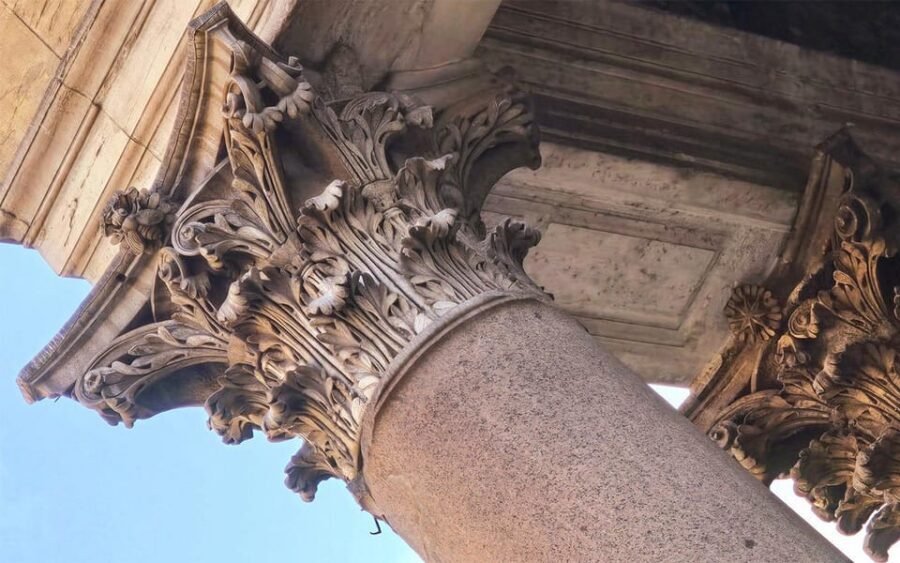
You’ll choose a starting time and enter at that scheduled slot. The big practical win here is the priority access tied to express security, so you’re not trying to squeeze your visit into the least convenient moment. For a site as famous as the Pantheon, that matters. You want your first impression to be the building itself, not the crowd rhythm outside.
When you arrive, you don’t do a check-in-style meet-and-greet where someone escorts you to the door. Your tickets are already in place, and you can enter independently. That also means there’s no time wasted coordinating, but it does put one job on you: be on time. If you drift late, you may miss entry for your time slot.
Once inside, plan to keep your pace steady. This is a 1-hour experience, so it works best if you treat it like a focused guided walk rather than a slow wander with random side quests.
You can also read our reviews of more guided tours in Rome



The Audio Guide Experience: How the Story Works While You Walk
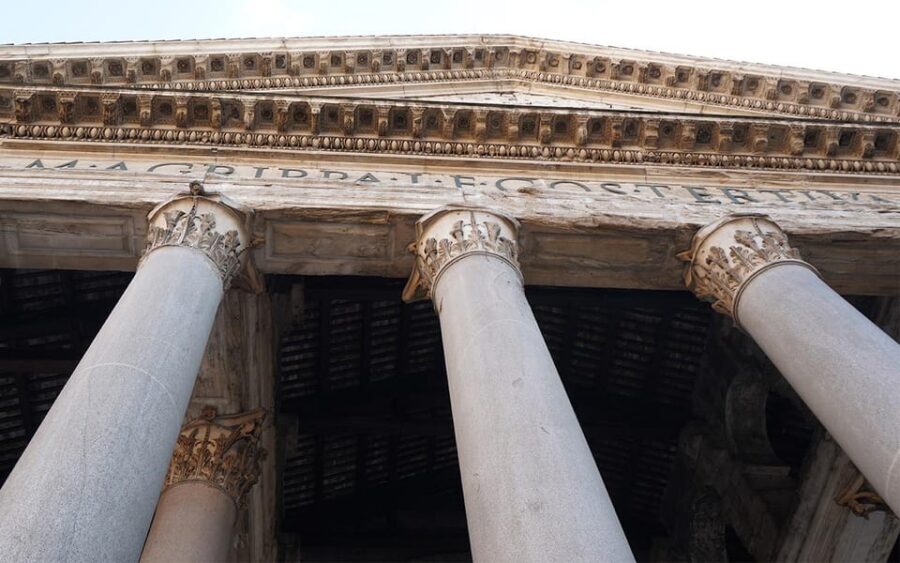
This isn’t just a talking-head recording. The audio guide is written by archaeologists, and it’s designed to connect the dots between form and meaning. In practice, that changes how you experience the Pantheon. Instead of just thinking, wow, a dome, you start noticing why that dome feels the way it does.
What I like about the narration structure is that it doesn’t dump everything up front. It gives you a sequence: look at this; understand why it’s here; then look again with new context. The tour is also available in English and Italian, so you’ll get the same core interpretive approach even if you switch languages.
Also, you get the practical reminder that the Pantheon you see today dates to the early 2nd century AD, after earlier versions were damaged. That time framing keeps the visit from becoming a museum of trivia. It becomes a real story of rebuilding, politics, and architecture layered over centuries.
What You’ll See Under the Dome: Oculus, Spherical Space, and Scale
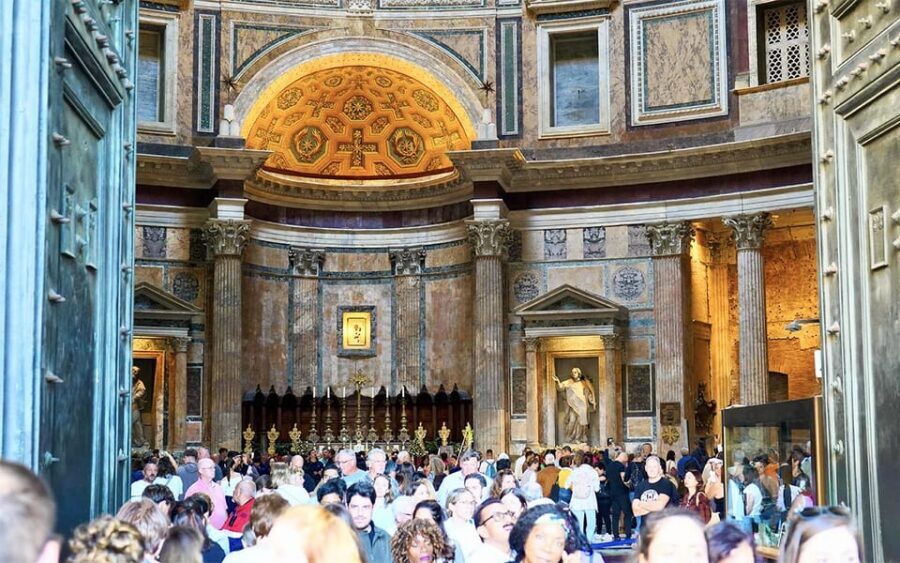
The Pantheon’s dome is famous for one reason: it makes you feel how big a single continuous interior can be. The tour highlights the harmony of the spherical space—how the interior geometry reads like one unified volume. That’s hard to explain until you’re there. Once you’re inside, your brain starts matching the curves to a mental “whole,” even though you’re standing on a flat floor.
Then you hit the oculus, the iconic open eye at the top. The tour calls it out because the oculus isn’t decorative. It’s functional and symbolic at the same time. It’s where daylight enters, shaping what you see below, and it’s also the visual signature everyone remembers.
You’ll also get a sense that the vast interior volume seems to stretch upward forever. That effect is partly the scale, partly the lighting from that open center, and partly the way your position lines up with the dome’s curve. The audio guide nudges you to look up at the right moments so you get the full optical effect.
If you like architecture, this is the kind of site where you can stand in one spot and learn a lot. And if you don’t, the Dome still does the work. Either way, you leave with clear images in your head.
The Real Timeline: Augustus, Fire, and Hadrian’s Early 2nd-Century Rebuild

One of the most useful things the audio guide does is anchor the Pantheon to a clear sequence of events. The monument you visit today traces back to the early 2nd century AD, when Emperor Hadrian rebuilt it.
But Hadrian isn’t starting from scratch. The tour connects it to an earlier Pantheon built by Emperor Augustus more than a century before. That earlier structure was then damaged by a devastating fire, which sets up why rebuilding became necessary.
Why this matters for you, beyond sounding impressive: it helps you read the building as a living project, not a single frozen moment. Rome was constantly adapting monuments to new needs, new rulers, and new political messaging. The Pantheon, even in its final form, carries the fingerprint of that history.
So when you’re standing under the dome, you can hold two thoughts at once. Yes, it’s a masterpiece of engineering. And yes, it’s also a statement shaped by the time that produced it.
Pantheon Naming Strategy: All Gods, Then the Niches That Don’t Match
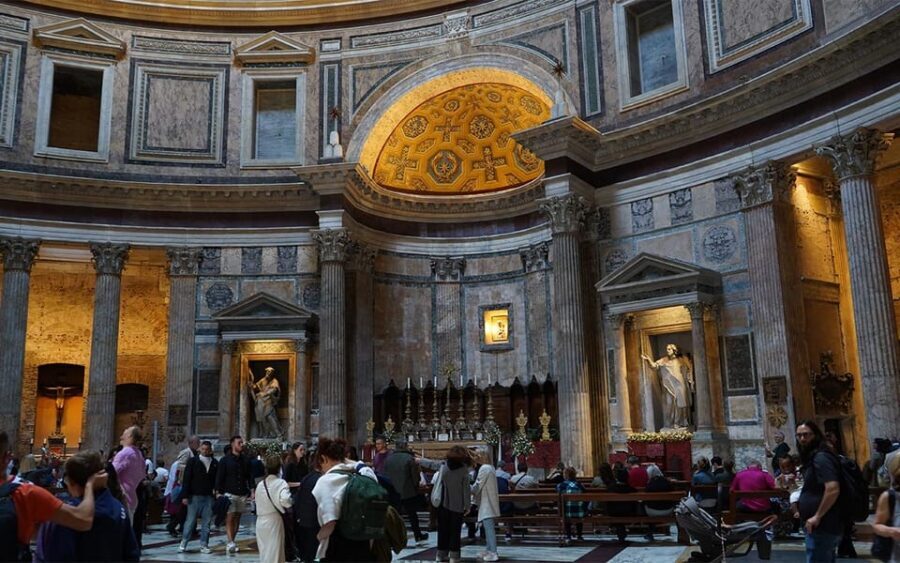
The name Pantheon is Greek for all gods. That sounds straightforward, but the tour pushes you to think like a Roman ruler. Choosing that name is a political move. It broadcasts universal religious inclusiveness—an idea that lands well with a wide population.
Then the audio guide makes it more interesting by pointing out a mismatch. Despite the name suggesting a broad pantheon of divinities, there are only seven large niches for imposing statues of the gods inside the Pantheon. If your brain immediately thinks, Wait, where are all the statues for all those gods, you’re exactly the intended audience.
It also offers a grounded historical angle: historians of the time certainly mention three deities as worshipped under the great dome—Mars, Venus, and Julius Caesar (deified after his death). That detail ties Roman religion to Roman power, and it helps you see the Pantheon as a place where ideology can be made architectural.
In other words, you’re not only learning what the building is. You’re learning what it was trying to do.
You can also read our reviews of more tours and experiences in Rome






Columns and Light: Granite at 12 Meters and the Crystal Effect
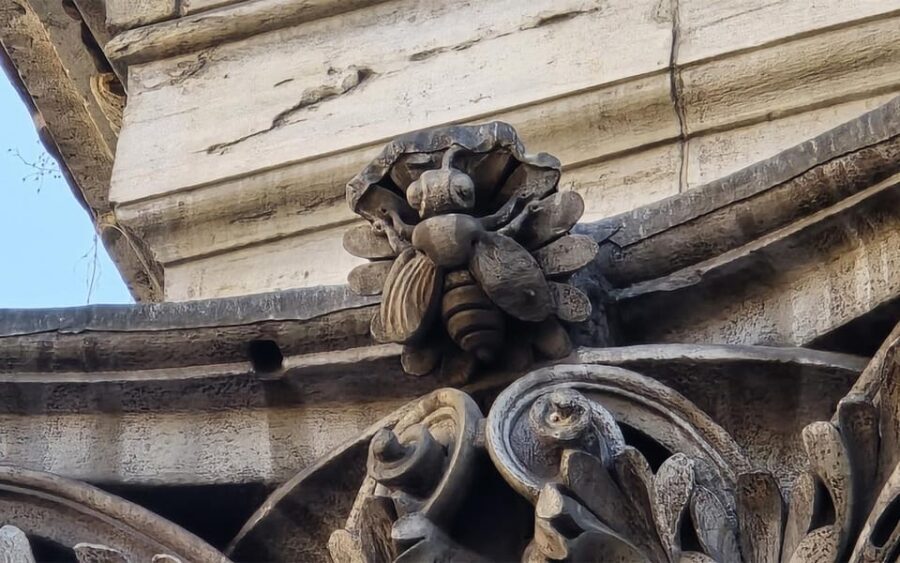
When you look at the Pantheon’s columns, you’re looking at scale you can measure. The tour highlights that the columns stand 12 meters tall and have a circumference of over 4.5 meters. That’s the kind of size that stops being abstract once you’re there.
The columns are also described as granite—rare and indestructible—with a fine grain of colored crystals. The practical payoff of that information is this: you’re encouraged to watch how light behaves on surfaces. Even without specialized equipment, you’ll notice that illumination isn’t uniform. Certain grains can catch and shift visual tones.
That may sound like a small detail, but it’s exactly the sort of thing that makes a short guided visit feel worth it. The Pantheon doesn’t need gimmicks. It rewards observation. And this audio guide gives you the cue on what to observe.
Timing and Smooth Entry: Make the One-Hour Visit Work for You
This experience is 1 hour total. That’s ideal for many people because it respects attention span and avoids turning the Pantheon into a half-day project. But one hour also means you shouldn’t plan distractions—no long rest stops, no wandering into every side nook unless your pace is already fast.
You enter at your chosen starting time, and you must be on time. Here’s the practical tip: arrive a few minutes early so you can settle and start listening before you’re rushed. If you start the audio track while you’re still searching for where to stand, you’ll lose the flow of the story.
One more thing to watch for: ticket validity. The provided feedback includes an issue where tickets were invalid and the visitors had to pay again. I can’t control how your specific ticket is processed, but I can tell you to be cautious. Before you head over, double-check the email/confirmation details and make sure the entry status lines up with your exact date and time. It’s the easiest way to protect your hour.
Price and Value: Is $17 Worth It Here?

At $17 per person, this is a reasonable price for a Pantheon visit that focuses on meaning, not just entry. The core value comes from two places:
- Priority access through express security. This saves time in one of the most crowded, bottlenecked spots in central Rome. Time is the currency you’re spending, and this product spends it better.
- An archaeologist-written audio guide that explains what you’re seeing—construction context, the oculus, and why the name Pantheon wasn’t just a label.
You do have one cost you should factor in: headphones aren’t included. Bring your own. If you already travel with earbuds, it’s a non-issue. If you don’t, plan a quick purchase in Rome or you’ll be forced into the awkward choice of reading lips while the dome does its thing.
For value, this tour fits you best if you want a structured story in a short time window. If you’d rather roam freely without audio, you might decide a cheaper self-guided visit is enough. But if you want your visit to leave you with clear takeaways, $17 buys you that focus.
Who This Tour Suits Best (and Who Might Skip It)
You’ll probably enjoy this if:
- You want to see the Pantheon and still understand the “why,” not just admire the “wow.”
- You like architecture and want a guided way to look upward at the oculus and along the dome’s shape.
- You’re short on time in Rome and want a high-impact experience in about an hour.
You might consider skipping if:
- You’re the type who hates audio tours or refuses to wear headphones.
- You want a long, slow Pantheon experience with lots of stops beyond a one-hour framework.
Either way, you’re going to be impressed by the building. The audio guide just helps you make sense of it quickly.
Should You Book This Pantheon Audio Tour?
If you want an organized, priority-entry Pantheon visit with an archaeologist-backed story, I think it’s a solid pick. The dome and oculus are the headline, but the tour’s real strength is tying what you see to what it meant—Hadrian’s rebuild, the Augustus-to-Hadrian timeline, and the political spin behind the Pantheon name.
Book it if you can bring your own headphones and you’re comfortable sticking to a time slot. Skip it if you want total freedom and don’t plan to listen. And if you do book, give extra attention to your ticket details so you don’t end up paying twice for what should be a smooth entry.
FAQ
How long is the Pantheon Audio Guided Tour?
The duration is 1 hour.
What does the tour include?
It includes priority access to the Pantheon and a professional audio guide written by archaeologists. Audio is available in English and Italian.
Are headphones included?
No. Headphones are not included, so you should bring your own.
Do I need to meet a guide at a specific time?
No special guide meet-up is listed. You enter independently using your tickets at your chosen starting time.
Does it include priority access and skip-the-line entry?
Yes. It offers skip the line through an express security check.
What if I’m late for my starting time?
You enter at your chosen starting time, and you must be on time. If you arrive late, you may not be able to enter.
Is the tour wheelchair accessible?
Yes, it is wheelchair accessible.
How much does it cost?
The price is $17 per person.
What should I bring?
Comfortable shoes and headphones.
What isn’t allowed during the experience?
Weapons or sharp objects are not allowed, and alcohol and drugs are not allowed.
If you want, tell me your travel dates and whether you’re visiting early morning or afternoon—I can suggest the best approach for a smooth 1-hour plan around crowds and lighting.