REVIEW · OSTIA ANTICA TOURS
Ostia Antica: Small group tour from Rome
Book on GetYourGuide →Operated by Estaalia · Bookable on GetYourGuide
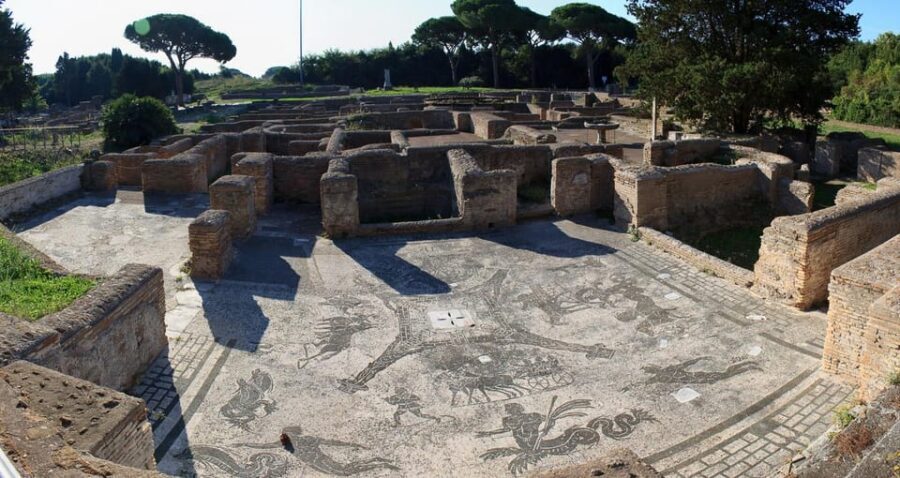
Time-travel, minus the hassle. Ostia Antica was Rome’s port city, later buried in silt and mud when the river shifted, which helped preserve a surprising amount of the town. I like how the ruins connect big-picture Roman life (trade, entertainment, daily routines) to real buildings you can stand inside and around, especially the outdoor theatre.
Two things I really appreciate: you get roundtrip train tickets plus skip-the-line entry, so you spend your time walking the site instead of waiting. The one consideration is that it involves a moderate amount of walking and it is not suitable for wheelchair users or people with mobility impairments.
In This Review
- Key points before you go
- Getting to Ostia Antica by local train from Rome
- 4 hours at Ostia Antica: what that time window really means
- First impressions: seeing an abandoned port city come alive
- The grand outdoor theatre and what Romans came for
- Square of the Guilds: merchants, ship owners, and money talk
- Public baths: where routines, exercise, and cleanup happened
- House of Diana: reading private life in domestic rooms
- Your licensed guide: why this tour feels worth it
- Practical tips that will save your trip
- Value and price: why $113.17 can make sense
- Who should book this Ostia Antica small-group tour
- Should you book this tour?
- FAQ
- Where is the meeting point for the Ostia Antica tour?
- How do we get from Rome to Ostia Antica?
- How long is the tour?
- What’s included in the price?
- Is food included?
- Is this tour suitable for wheelchair users?
Key points before you go

- Roundtrip train included from Roma Ostiense area so you are not figuring out transit mid-trip
- Skip-the-line access to the Ostia archaeological park
- Outdoor theatre you can picture in use for plays and gladiator fights
- Square of the Guilds showing how merchants and ship owners chased business
- Public baths where people worked out, lounged, and cleaned up (with olive oil)
- A licensed small-group guide who explains what you’re seeing and shares practical ideas nearby
Getting to Ostia Antica by local train from Rome
The best part of this tour is that it starts like a normal day in Rome, not a complicated production. You meet in front of the Roma Ostia Lido Train Station at Piazzale Ostiense, 9. From there, you take the local train to the archaeological park area.
Why this matters: Ostia Antica is close enough to make a half-day trip feel easy, but far enough that you benefit from having a guide handle the flow. You also avoid the common headache of deciding which bus or train connection is fastest while you’re already excited about the ruins.
Plan to arrive about 15 minutes early at the meeting point. That buffer makes everything calmer, especially if you’re coming from another part of Rome before your tour begins.
You can also read our reviews of more tours and experiences in Rome.



4 hours at Ostia Antica: what that time window really means
This is a 4-hour guided tour. That duration is long enough to see the big landmarks and also understand what you’re looking at. It’s not so long that you feel trapped or exhausted by the end.
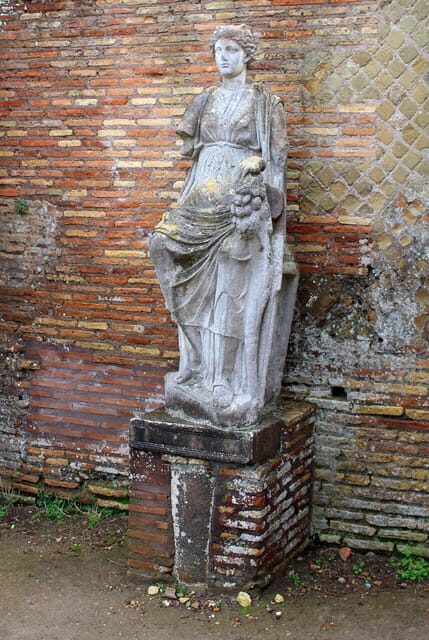
You’ll get a structured walk through the preserved sprawl—temples, houses, and public buildings that belonged to a working Roman town. The skip-the-line tickets help you settle into the site without the usual time sink.
Quick reality check: there is a moderate amount of walking, and it’s outdoors. Bring a water bottle and dress for sun. If the weather is harsh, take your own breaks even if the guide keeps a brisk pace.
First impressions: seeing an abandoned port city come alive
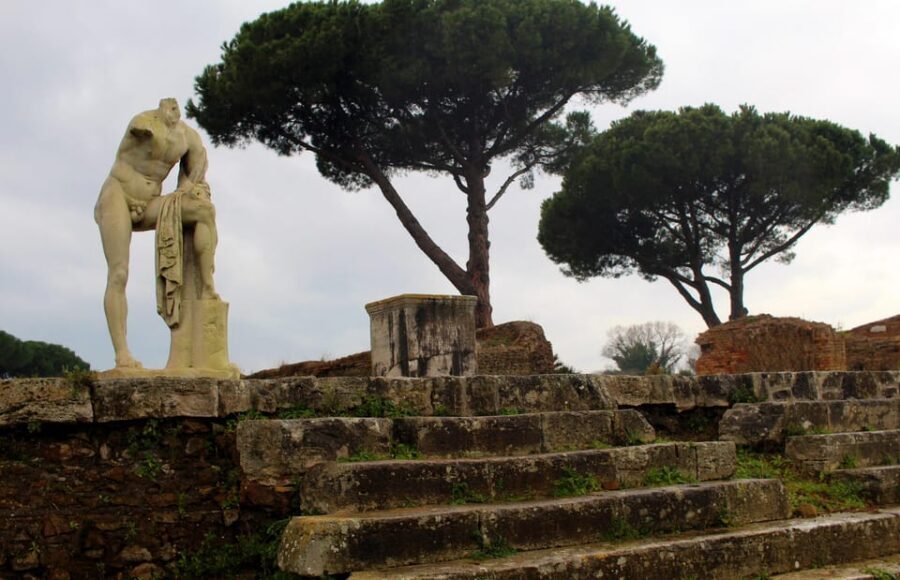
Once you’re at the archaeological park, the site starts telling its story right away. Ostia Antica wasn’t some dusty backwater. It was Rome’s port city and a commercial center, tied to the movement of goods and people.
Then history flips the switch. When the Roman Empire fell and the river changed course, the area was eventually abandoned. Over time, the town was covered in silt and mud. That burial did a favor for you: it helped protect many buildings until later excavation.
You’re walking through the results of that protection. So even though you’re in a ruin, you’re not wandering through randomness. The layout makes sense, and the guide’s job is to help you connect the buildings to daily life.
The grand outdoor theatre and what Romans came for
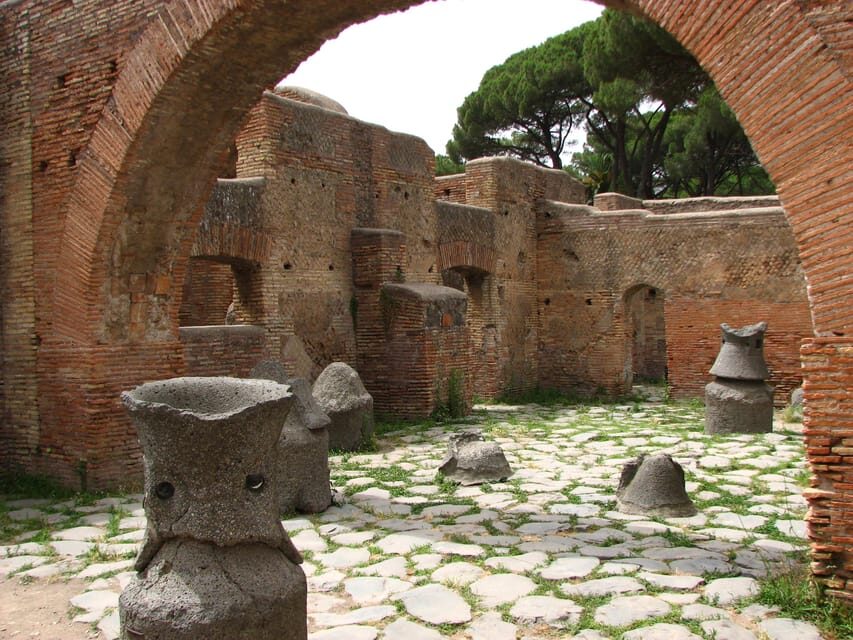
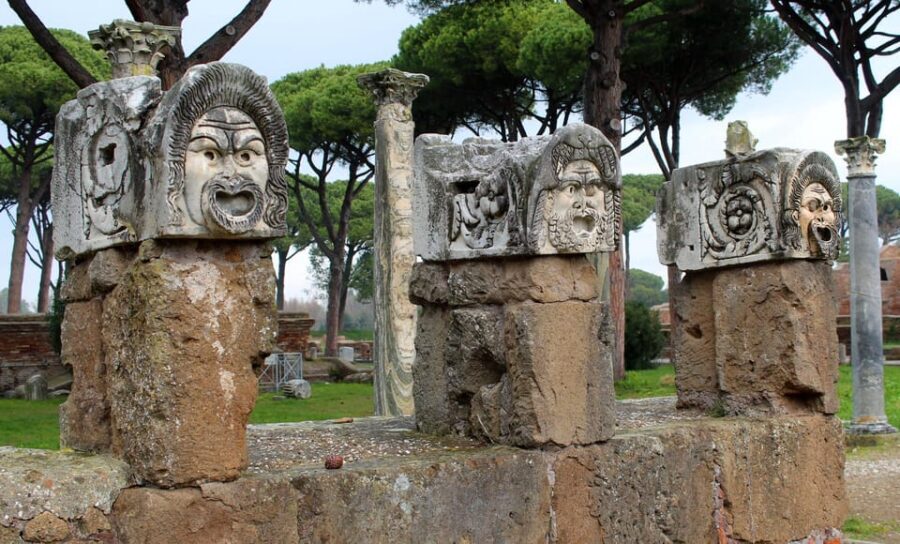
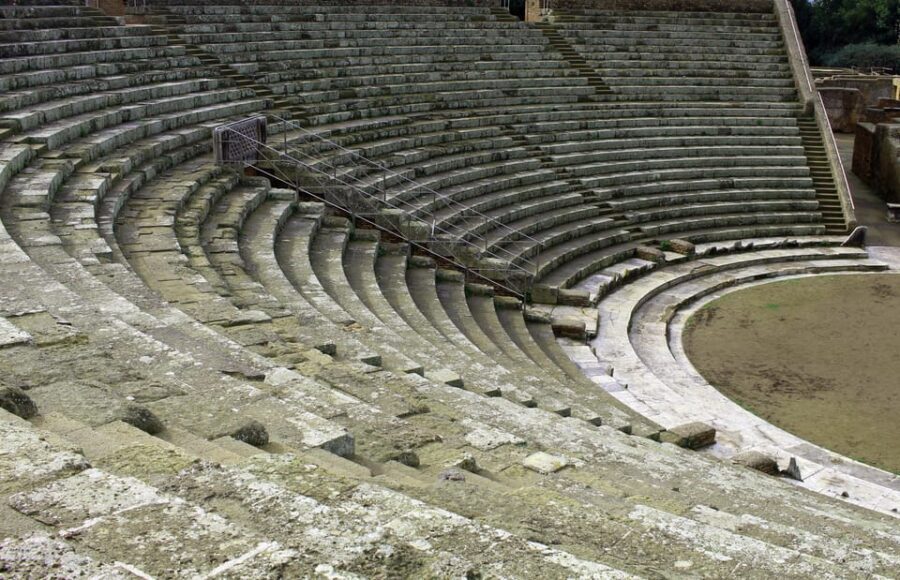
One of the most striking stops is the grand outdoor theatre. This wasn’t only for cultured performances. It hosted plays and even gladiator fights.
Standing near it is a quick lesson in how Romans mixed entertainment with civic life. Food was important, commerce mattered, and public spectacle helped hold a shared identity. The theatre gives you a tangible sense of scale—this wasn’t a private event. This was a public stage.
As you move through the surrounding area, you’ll understand the theatre as part of a bigger street-and-plaza rhythm. It’s not just a single monument. It’s a node in a city where people came to watch, socialize, and be part of the crowd.
Square of the Guilds: merchants, ship owners, and money talk
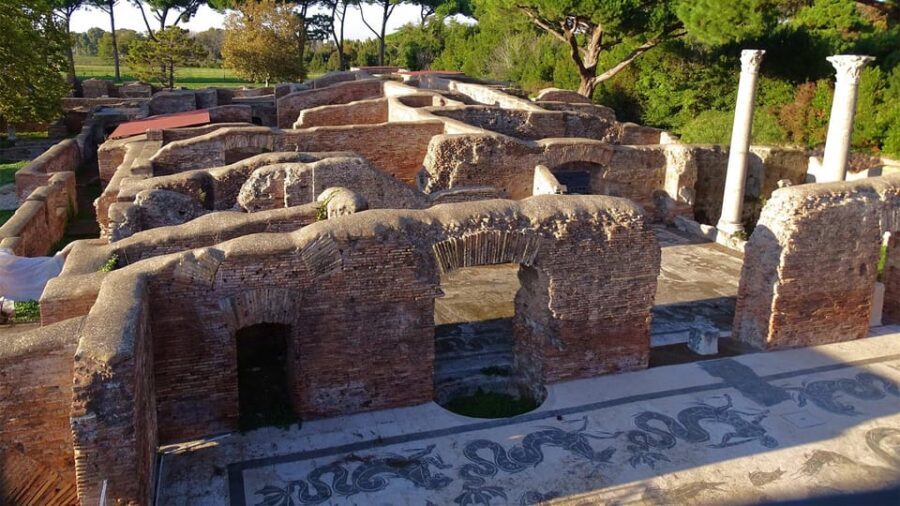
Next up is the Square of the Guilds. This is where you can almost hear the business negotiations from two thousand years ago.
The square is tied to commercial life: ship owners and merchants tried to make their fortune. That detail is more than trivia. It changes how you read the area. Instead of thinking of Ostia as a themed ruin, you start seeing it as an active network—people working, trading, and organizing themselves through guild-like structures.
If you like history that feels practical—who paid whom, who handled goods, and why crowds gathered—this stop will click. It gives context to why the port city mattered so much to Rome’s supply chain.



Public baths: where routines, exercise, and cleanup happened
Just down the street, you’ll see the public baths. In Roman cities, baths weren’t only about washing. They were social hubs and daily routines wrapped into one.
Here’s what you can picture based on what the guide points out: people would lounge in pools, work out, and clean themselves with olive oil. That last bit matters because it signals a whole process of grooming and hygiene—not just jumping into water and calling it a day.
Why this stop is valuable on a walking tour: baths help you slow down and imagine real life. You’re not only looking at walls. You’re looking at spaces built for habits, conversations, and the kind of self-care that kept social status and comfort in balance.
If you tend to zone out during monument tours, baths are a nice reset. They’re human-scale.
House of Diana: reading private life in domestic rooms

Then you walk to the House of Diana. This is where the tour shifts gears from public spaces to a more personal look at home life.
Even if you’re not an art historian, house visits can be surprisingly powerful. They remind you that the same city that staged events and hosted commerce also had everyday bedrooms and family routines.
At the House of Diana, you’ll see where the ancients laid their heads at night. That one detail makes it easier to grasp that Ostia Antica was lived-in. It wasn’t only a factory for entertainment and trade. People slept here, cooked here, and lived their normal routines—right before the city’s later abandonment.
Your licensed guide: why this tour feels worth it
A licensed English tour guide leads the experience, with Spanish and French also available. The guide’s job is not just to name places. It’s to translate how the city worked into something you can understand while you’re walking.
One of the strongest signals from past participants: the guide delivers a lot of information and keeps it useful, not lecture-y. You also get practical side value—like tips for another site you might be planning to visit, plus local transit guidance (bus info) if it fits your route.
That combination is a big deal for a short tour. With only four hours, you need more than photos. You need clear explanations that make each stop connect.
Practical tips that will save your trip
Here’s what to do so the day stays comfortable and easy:
- Wear comfortable walking shoes. There’s moderate walking across uneven ruin terrain.
- Bring a hat, sunscreen, and water. Outdoors sun adds up fast in Lazio.
- Bring your passport or ID card (a copy is accepted).
- Avoid luggage or large bags. The tour has restrictions, so travel light.
- Show up early. Being there 15 minutes before departure keeps the group moving.
Also check the weather forecast. If it’s hot or showery, dress accordingly. A smart outfit beats a tough attitude.
Value and price: why $113.17 can make sense
The listed price is $113.17 per person, and the tour runs about 4 hours. On paper, that can sound pricey compared to a free self-guided stroll. Here’s how it earns its value.
You’re paying for four things you’d otherwise have to manage:
- Roundtrip train ticket
- Skip-the-line entry
- A licensed small-group guide
- A smoother, organized flow across the site in a limited time window
If you’re the type who hates waiting in queues or figuring out transit timing during your precious vacation hours, this package structure is exactly what you’re buying. You don’t just get access. You get context, pacing, and someone to help you interpret what you’re seeing.
If you’re traveling with limited time in Rome or you want a “best of Ostia Antica” route without guesswork, this price can be a fair trade.
Who should book this Ostia Antica small-group tour
This tour is a good match if you want:
- A guided introduction to the most memorable parts of Ostia Antica
- A mix of public life (theatre, baths, guild square) and private life (House of Diana)
- A small-group pace with a guide who explains what matters
It’s not for you if mobility is a concern. The tour is not suitable for wheelchair users or people with mobility impairments, and it involves moderate walking.
Language-wise, you can join in English, with Spanish or French also offered.
Should you book this tour?
Yes, you should consider booking if you want an organized, high-value half-day that turns ruins into real stories—especially the theatre, baths, and the House of Diana. The mix of included roundtrip train + skip-the-line tickets removes the usual friction, and the licensed guide experience is clearly the backbone of what makes the tour feel “complete.”
If you have mobility limits or you prefer slow, solo wandering with zero structure, then this may feel too much. But for most people doing Rome on a busy schedule, this small-group Ostia Antica outing is one of the smartest ways to spend a few hours away from the city rush.
FAQ
Where is the meeting point for the Ostia Antica tour?
You meet in front of the Roma Ostia Lido Train Station at Piazzale Ostiense, 9.
How do we get from Rome to Ostia Antica?
The tour includes a local train ride from the Ostiense area to the archaeological park.
How long is the tour?
The duration is 4 hours (starting times vary, so check availability).
What’s included in the price?
Included are roundtrip train tickets, skip-the-line tickets to the Ostia archaeological park, a licensed English tour guide (with Spanish and French also available), and a small-group tour.
Is food included?
No. Food and beverages are not included.
Is this tour suitable for wheelchair users?
No. It is not suitable for wheelchair users or people with mobility impairments.