REVIEW · NAPLES
Naples Historic Center: Traditions & Folklore Small Group Tour
Book on Viator →Operated by Claudius Tours · Bookable on Viator
Naples has a talent for storytelling. This small group walk stitches together the city’s biggest landmarks and odd local traditions, with expert explanations that turn familiar streets into something you actually remember. I like how you get the Saint Gennaro miracle story at the Duomo, and I like the culture stops that go past the obvious, like the Dolls Hospital. One thing to watch: English can vary by guide, so if you’re picky about clarity, plan to ask questions when you can.
For a smooth experience, wear comfortable walking shoes and bring a light layer to cover your shoulders for the Duomo church stop.
In This Review
- Key highlights at a glance
- Why This 2-Hour Naples Walk Works
- Meeting at the Duomo and the Route’s Pace
- Duomo di Napoli: Saint Gennaro’s Liquefaction Story
- Via Duomo and Jorit’s San Gennaro Street Art
- Spaccanapoli and the Dolls Hospital at Ospedale delle Bambole
- San Gregorio Armeno: Nativity Craftsmanship on Your Doorstep
- Via dei Tribunali and Naples Pizza Culture
- Santa Maria delle Anime del Purgatorio ad Arco and the Skull Legends
- Pulcinella, Santa Chiara, and the Dramatic Side of Naples
- Port’Alba and the Finale at Piazza del Gesù Nuovo
- English Guide Quality: Great When It’s Clear
- What You Get for the Money
- Should You Book This Naples Historic Center Tour?
- FAQ
- What time does the tour start, and where do I meet?
- Where does the tour end?
- How long is the Naples Historic Center walking tour?
- Is the tour offered in English?
- How big is the group?
- Are there admission fees for the sites on this tour?
- What should I wear or bring?
- Can I get a refund if I cancel, and what if the weather is bad?
Key highlights at a glance
- Saint Gennaro at the Duomo: hear the miracle tied to Naples faith and tradition
- Street art stop with Jorit: see the San Gennaro graffiti along Via Duomo
- Spaccanapoli walking segment: one of Naples’ oldest lanes, with artisan shop energy
- Ospedale delle Bambole: a surprisingly human (and doll) story in the Centro Storico
- Skulls and purgatory legends: folklore at Santa Maria delle Anime del Purgatorio ad Arco
- Finish at Gesù Nuovo Square: wrap up with the front-wall history at Gesù Nuovo
Why This 2-Hour Naples Walk Works

This is a classic “get your bearings fast” style tour, done on foot through the historic core. With a duration of about 2 hours and a max group size of 15, you’re not stuck behind a crowd. You also get short pockets of time for photos and for just taking in what’s around you.
The price—$54.01 per person—makes sense when you look at what’s included: an English-speaking guide, a string of major sites, and multiple stops that are listed as free admission. In plain terms, you’re paying for interpretation and local context more than for entry fees.
One reason it works especially well in Naples: the city rewards wandering. You’re walking streets where religion, politics, superstition, and street culture all share the same sidewalk. That can feel random if you do it alone. Here, someone connects the dots.
You can also read our reviews of more historical tours in Naples



Meeting at the Duomo and the Route’s Pace
You start at Duomo di Santa Maria Assunta on Via Duomo (Via Duomo, 147, 80138 Napoli). The tour begins at 4:00 pm and ends at Piazza del Gesù Nuovo.
Timing matters here. Afternoon light helps the stone and facades look their best, and the streets feel active without being fully chaotic. The route is structured enough to keep you moving, but it still leaves breathing room at key stops. That mix of “walk + explain + photo break” is ideal if you’ve only got a small window in Naples.
If you’re the type who likes to ask questions, this format gives you chances. Small group size is the quiet advantage: your guide can actually respond instead of just pushing everyone along.
Duomo di Napoli: Saint Gennaro’s Liquefaction Story
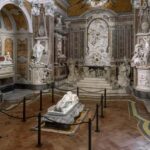
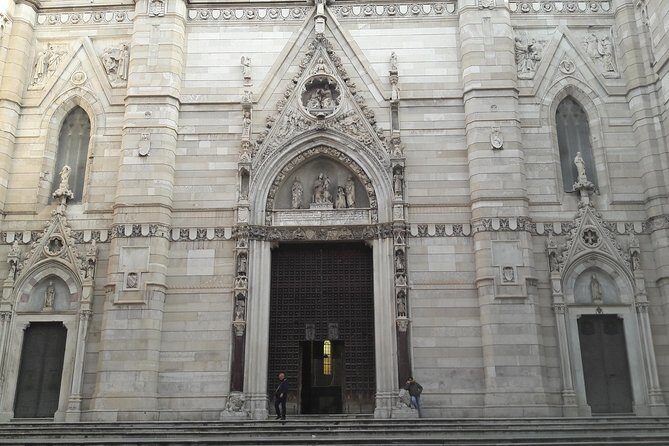
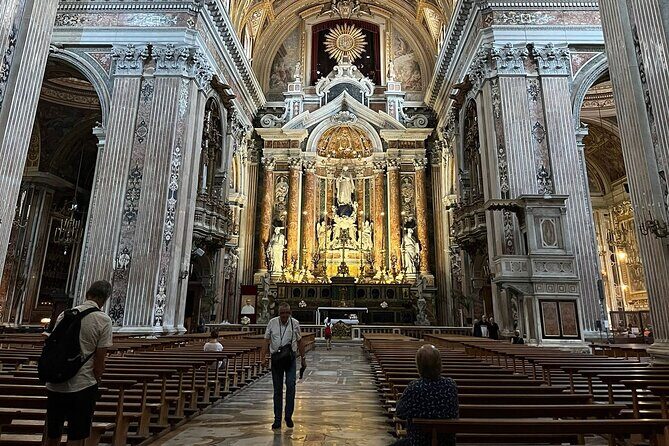
Your first big moment is the Duomo di Napoli, Naples’ main cathedral. Even if you’re not a religious traveler, the Duomo is powerful. It’s also a perfect place to understand Naples, because the city’s identity shows up through ritual.
The highlight here is the miracle of Saint Gennaro’s blood liquefaction—a tradition deeply tied to Naples history and faith. Whether or not you follow every detail, the bigger point is clear: this is a city where belief and public life have always been linked. The guide’s job is to show how a religious event becomes a civic symbol.
Practical note: the tour information asks you to cover your shoulders to enter the Duomo. So bring a scarf, a light cardigan, or anything that lets you comply without wrestling with your outfit mid-line. Wear shoes that can handle cobbles.
Via Duomo and Jorit’s San Gennaro Street Art
Right along Via Duomo, the tour shifts from formal religion to street-level culture—specifically a stop tied to street art by Jorit.
You’ll have a chance to see the famous San Gennaro graffiti and understand why Naples keeps playing with symbols. The point isn’t just that street art exists. It’s how the city recycles saints, stories, and faces into modern language. Naples can look old and new at the same time, and this stop is one of the best ways to notice that on a short walk.
This is also where a good guide makes the difference. If you like culture explained through real-world context, you’ll get it here.
Spaccanapoli and the Dolls Hospital at Ospedale delle Bambole
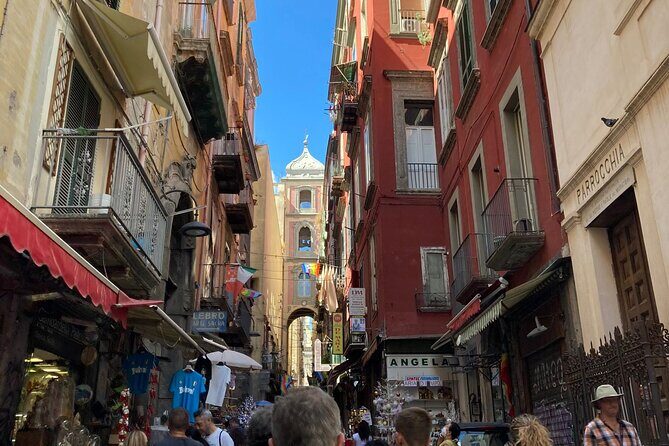
Then you walk into Spaccanapoli, one of the city’s oldest and most atmospheric streets. This lane is narrow, packed with historic buildings, and lined with everyday life—market energy, artisan shops, and the feeling that you’re watching Naples rather than touring it.
The guide includes a pass by the unique Dolls Hospital, also known as Ospedale delle Bambole. That alone tells you the tone of the tour: Naples doesn’t do “museum only.” It does practical, emotional care, even for dolls.
At the Ospedale delle Bambole stop, you’ll get the story behind why this place exists and what it says about local attitudes toward care and community. It’s odd in the best way—fun to look at, but also meaningful once someone connects it to Naples traditions.
If you’re traveling with kids or you like quirky places, this pair of stops often becomes one of the highlights.



San Gregorio Armeno: Nativity Craftsmanship on Your Doorstep
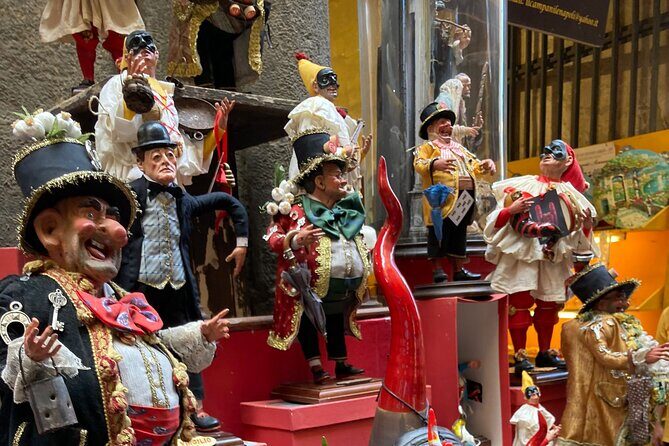
Next up is Via San Gregorio Armeno, the street most associated with artisans who create intricate nativity scenes and related art. This is one of those Naples experiences where you stop thinking of a nativity as a single religious object. You start seeing it as a craft tradition with technical skill and local personality.
You’ll spend enough time here to look at work up close. Even if you don’t buy anything, watching people at their work gives you a better read on the neighborhood. And since this street is known for these workshops, it feels like you’re in the right place for the right subject.
Via dei Tribunali and Naples Pizza Culture
On Via dei Tribunali, the tour steers you toward the food culture side of Naples, especially pizza. Even though you don’t have a meal included, the guide gives you the context to understand why this area’s pizza scene matters so much.
This is a good segment for two types of travelers:
- those who want to taste later on your own
- those who want the quick cultural meaning first, then eat with better instincts
If you’re planning to grab pizza after the tour, you’ll already have a short list in your head by the time you reach the end of the walk.
Santa Maria delle Anime del Purgatorio ad Arco and the Skull Legends
This stop is where the tour gets truly folklore-forward: Complesso Museale Santa Maria delle Anime del Purgatorio ad Arco. You’ll learn legends connected to the skulls—often described with the idea of the souls of purgatory.
It’s not just a spooky photo stop. It’s a window into how Naples mixes religion, fear, humor, and storytelling. The guide explains the meaning behind what you’re seeing, so you understand why the locals treat it as part of their cultural fabric instead of only as a curiosity.
If you like macabre history done in a human way, you’ll appreciate this stop. If you’re sensitive to skull imagery, you may want to mentally prepare.
Pulcinella, Santa Chiara, and the Dramatic Side of Naples
After the purgatory skull stories, the tour brings in Pulcinella through a busto (statue) stop. Pulcinella is tied to Naples’ theatrical tradition, so this isn’t random. It helps you understand how Naples characters and folk traditions keep showing up in everyday conversation.
Then you reach Complesso Monumentale di Santa Chiara, including the church of Santa Chiara. This is a Gothic landmark described as austere yet beautiful. The mood changes here: you go from street narrative to stone atmosphere.
This stop is valuable because it balances the earlier weird-and-wonderful moments. You get architecture you can slow down for, and a sense of continuity—Naples didn’t only “make stuff up.” It built places where stories could live for centuries.
Port’Alba and the Finale at Piazza del Gesù Nuovo
The route concludes with Port’Alba, one of Europe’s noted seventeenth-century gates. The guide points out what’s special about its history and architecture, and it gives the walk a satisfying sense of arrival. Gates and thresholds matter in older cities, and Port’Alba is a perfect last stop before the tour closes.
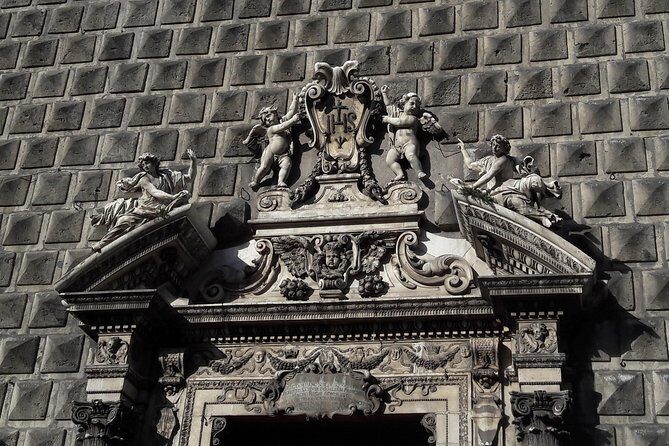
Finally, you end at Piazza del Gesù Nuovo, near Gesù Nuovo. The guide focuses on history behind the front wall of the Church of Gesù Nuovo, including hidden stories and historical nuances.
That ending is smart. It turns your last minutes into a payoff: you finish by understanding a detail you might otherwise overlook while just snapping pictures.
English Guide Quality: Great When It’s Clear
The tour is offered in English and includes an English-speaking guide. In practice, you should know there can be variation by guide. Some groups have had guides like Serena, Ludovica, Gianlucca, or Teresa, and the feedback on their delivery has been excellent—clear explanations, lots of historical facts, and a knack for turning Naples traditions into stories you can repeat at dinner.
One caution: if you’re hoping for perfectly fluent, fast English with zero effort on your part, keep flexibility. If something isn’t clear, ask for repetition. In a small group, your guide can usually adjust.
What You Get for the Money
At $54.01 for about 2 hours, this tour is a strong value if you want:
- an organized route through the Historic Center
- interpretation that connects religion, folklore, and street culture
- multiple stops with free admission as listed
What you should plan for:
- no food is included (food and drinks are not part of the package)
- you may still want to budget for a pizza slice or an espresso afterward
- tips are recommended, so plan to add that cost at the end
Also, this is a walking tour, so heat, uneven pavement, and crowds are real. Naples is walkable, but you’ll enjoy it more with the right shoes.
Should You Book This Naples Historic Center Tour?
Book it if you want a tight, well-paced introduction to Naples that goes beyond the obvious postcards. It’s especially good if you like stories—religious miracles, folklore legends, street art, and theater characters—tied to specific places you can point to.
Skip it (or consider another option) if:
- you need very strong English delivery without any chance of miscommunication
- you prefer longer time at museums or you hate walking
- you don’t want skull-related imagery, even if it’s explained thoughtfully
If you’re in Naples for only a short stay, this tour helps you understand the city’s logic quickly. And once you get that, you’ll enjoy the rest of your wandering much more.
FAQ
What time does the tour start, and where do I meet?
It starts at 4:00 pm. Meet at Duomo di Santa Maria Assunta, Via Duomo, 147, 80138 Napoli.
Where does the tour end?
The tour ends at Piazza del Gesù Nuovo, 80134 Napoli.
How long is the Naples Historic Center walking tour?
The duration is about 2 hours.
Is the tour offered in English?
Yes, it’s offered in English.
How big is the group?
The tour has a maximum group size of 15 travelers.
Are there admission fees for the sites on this tour?
The listed stops include admissions marked as free (including the Duomo di Napoli stop). Food and drinks are not included.
What should I wear or bring?
Wear comfortable walking shoes. Also, you’ll need to cover your shoulders to enter the Duomo.
Can I get a refund if I cancel, and what if the weather is bad?
You can cancel for a full refund if you cancel at least 24 hours before the start time. The tour requires good weather; if it’s canceled due to poor weather, you’ll be offered a different date or a full refund.