REVIEW · NAPLES
Naples behind the scene walking guided tour
Book on GetYourGuide →Operated by TUI Musement · Bookable on GetYourGuide
Naples has a secret life beyond pizza. This 2.5-hour small-group walk pulls you into the city’s superstitions and street folklore, with real stops tied to luck, marriage, and the characters locals swear by. I especially like how the route mixes story with place, so names like Pulcinella and San Gennaro feel practical, not just decorative, and the stop in the underground church is the kind of thing you’d miss on your own. One catch: it’s mostly walking, and it’s not wheelchair accessible.
What I like most is the small group size (up to 16), which keeps the pace human, and you get a guide who can connect the myths to everyday Neapolitan life. A possible drawback is that you’ll be on your feet the whole time, with a few quick church/interior moments and a lot of city-walking in between.
Key things to know
- Piazza Bellini start under the statue of Vincenzo Bellini, with a TUI sign for easy meeting
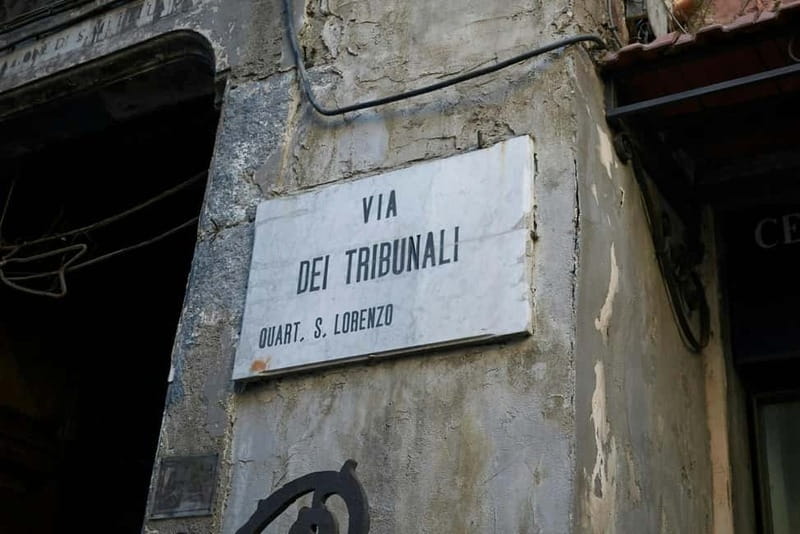
- Via dei Tribunali walk tied to witchcraft, rituals, and old-school superstitions
- Purgatorio ad Arco underground church visit, including Lucia la Sposa and gifts left for marriage luck
- Pulcinella statue stop where a nose rub is the quick luck ritual
- Spaccanapoli + Doll Hospital area for quirky Naples characters and unusual sights
- Gesu Nuovo Church facade details with hidden symbols you’ll learn to spot before you go
In This Review
- Why Naples’ superstitions walk feels more real than a typical tour
- Piazza Bellini: the meeting point that sets the mood fast
- Via dei Tribunali: where witchcraft, rituals, and real street belief take over
- A quick pause at Chiesa di Santa Maria Maggiore
- Chiesa di Purgatorio ad Arco: Lucia la Sposa and luck for marriage
- Pulcinella and Spaccanapoli: rubbing luck and reading the street
- Hospital of Dolls: when an odd sight becomes a real conversation
- San Gennaro stops: patron saint and the “treasures” angle
- Gesù Nuovo Church: the diamond facade and hidden music
- Price, group size, and what you really get for $28
- Who this tour suits best (and who should think twice)
- Practical tips so you enjoy every stop
- Should you book this Naples behind-the-scenes walking tour?
- FAQ
- How long is the Naples behind the scene walking guided tour?
- Where does the tour start, and how do I find the guide?
- What’s included in the tour besides the guided walk?
- Is the tour offered in English?
- Does the tour run when it rains?
- Is this tour wheelchair accessible?
- How much does it cost?
Why Naples’ superstitions walk feels more real than a typical tour
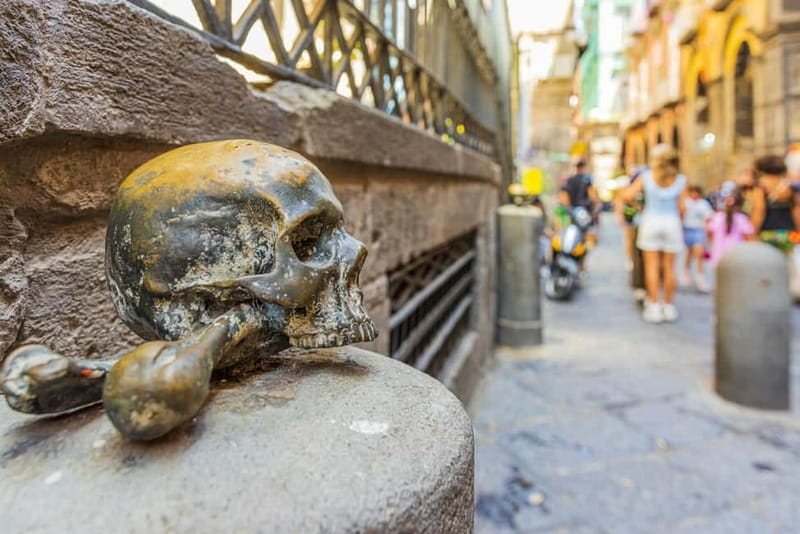
If you’ve only seen Naples through the usual postcard lens, this walk gives you the other half. It’s built around belief systems that show up in daily habits: lucky numbers, protective spirits, and faith expressed through objects and rituals. You’re not just hearing stories. You’re moving through the streets and churches where those stories live.
I like that the tour’s tone stays grounded. You’ll meet characters that Neapolitans treat like part of the city’s living cast, not spooky fiction. Think Munaciello as a mischievous home protector, and Pulcinella as the comic mask tied to good luck and laughter. The guide connects these figures to what they mean locally.
One reason this works so well is the pacing. You get a sequence of short stops, then longer moments where it matters, especially at the underground church. It helps you understand Naples without turning it into a checklist.
Piazza Bellini: the meeting point that sets the mood fast
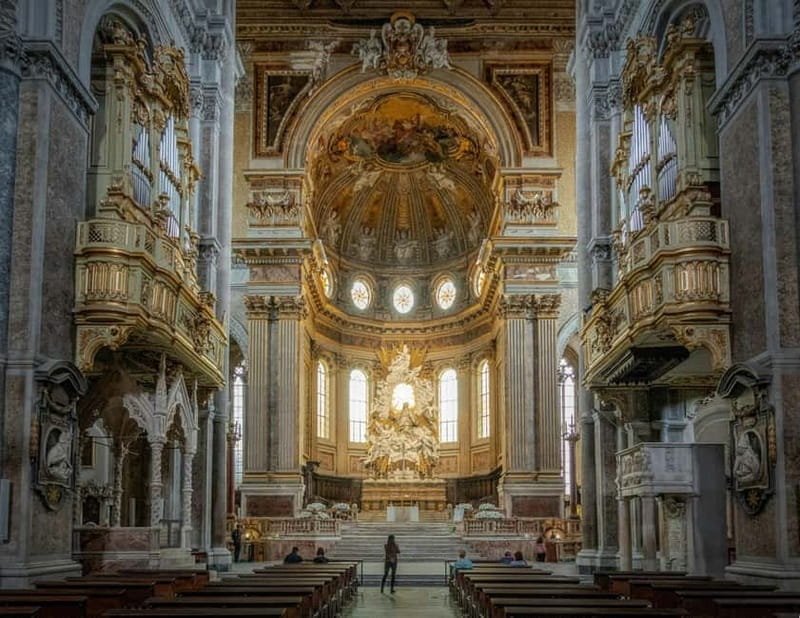
Your tour begins in Piazza Bellini, right in the center of things, under the statue of Vincenzo Bellini. Plan to arrive at least 10 minutes early, because you need time to find the guide holding a TUI sign.
This starting point matters more than you’d think. Piazza Bellini is a good “orientation” space: you can feel the Neapolitan city rhythm before you start threading into the older lanes. And starting here keeps you from arriving flustered, which is half the battle on foot tours.
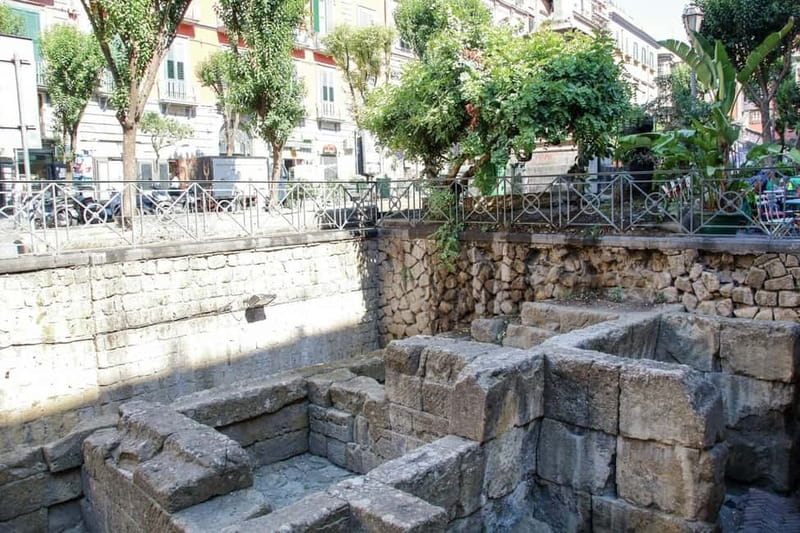
You’ll also get the first hint of why Naples has layered identities. As you begin moving, ancient Greek relics are mentioned as a thread to the city’s origins. You’re not expected to be an archaeologist. You just get a quick sense that Naples wasn’t built in one neat era.
If you’re the type who likes to understand why a place looks the way it does, this start pays off. It’s a fast hook, then the walking begins.
You can also read our reviews of more tours and experiences in Naples.

Via dei Tribunali: where witchcraft, rituals, and real street belief take over
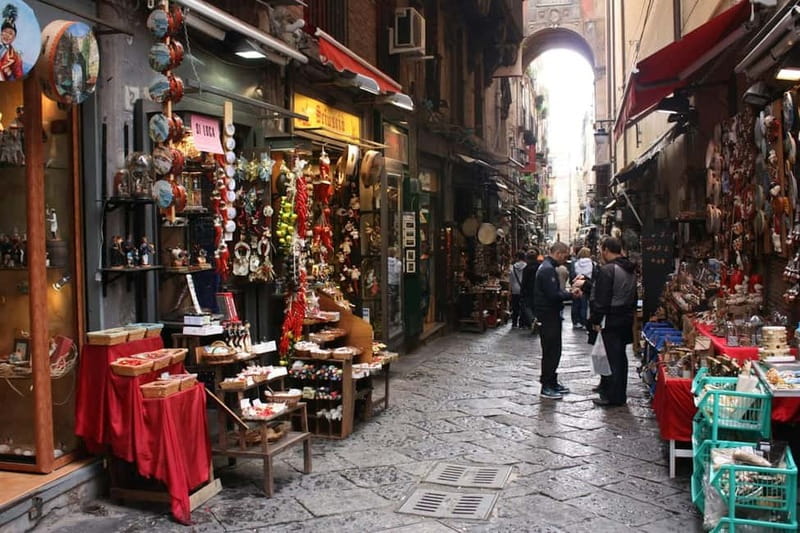
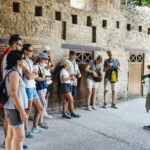
The next stretch is down Via dei Tribunali, one of those historic streets where the walls seem to remember everything. Here, the guide sets up the tour’s core theme: superstition is not an accessory in Naples. It’s a social language.
You’ll hear about witchcraft, rituals, and age-old beliefs that still shape how people interpret luck and bad timing. The guide’s job is to translate the stories into something you can watch for as you walk. That means you’re paying attention to details you would normally skip: symbolic cues, references embedded in the setting, and the way Naples blends humor with faith.
Even if you’re skeptical, the street-level context helps. You start seeing why locals repeat certain patterns. When belief is woven into daily routes, it becomes a map. And you get to follow it.
A quick pause at Chiesa di Santa Maria Maggiore
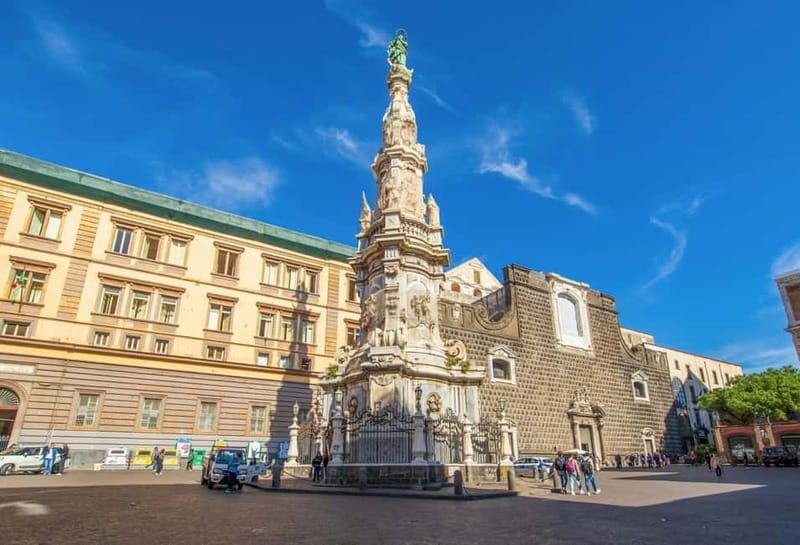
You’ll stop at Chiesa di Santa Maria Maggiore for a brief visit and walk-through. This is one of the shorter segments, so don’t expect a long explanation of one single artwork.
Instead, treat this stop as a rhythm shift. The tour alternates between short “story anchors” and longer moments where you sit with the meaning. This one keeps you moving while still grounding you in the religious architecture that Naples uses as a backdrop for legend.
If you’re someone who hates rushing through churches, keep your expectations realistic. You’ll get a taste, then the tour speeds up toward the bigger, more dramatic stop.
Chiesa di Purgatorio ad Arco: Lucia la Sposa and luck for marriage
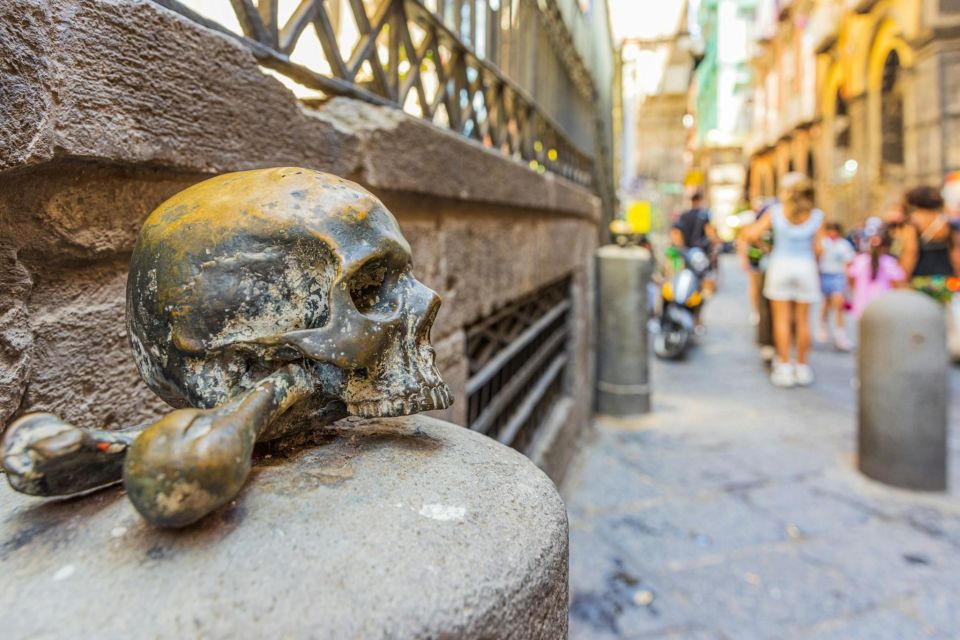
This is the tour’s biggest emotional beat. You reach the Church of Purgatorio ad Arco, and you’ll spend about 50 minutes inside with guided context. If Naples has a signature “belief-in-action” moment, this is one of the most vivid places on the route.
Here’s what makes the stop special: you’ll enter the underground space and learn about Lucia la Sposa, a figure tied to good fortune in marriage. You’ll even climb down the cells connected to the story, and you’ll see gifts left behind by people seeking luck. That changes the whole experience. It turns a legend into something physical—objects in a place, reminders that belief can be seen and touched.
You also get a simple takeaway. In Naples, luck isn’t abstract. It’s offered, repeated, and witnessed. This church experience shows you how faith can function like a community bulletin board.
Practical note: it’s indoor, older spaces. Wear comfortable shoes so you can handle the movement without getting stressed. If you’re the kind of person who likes quiet observation, you’ll appreciate this portion most.
Pulcinella and Spaccanapoli: rubbing luck and reading the street
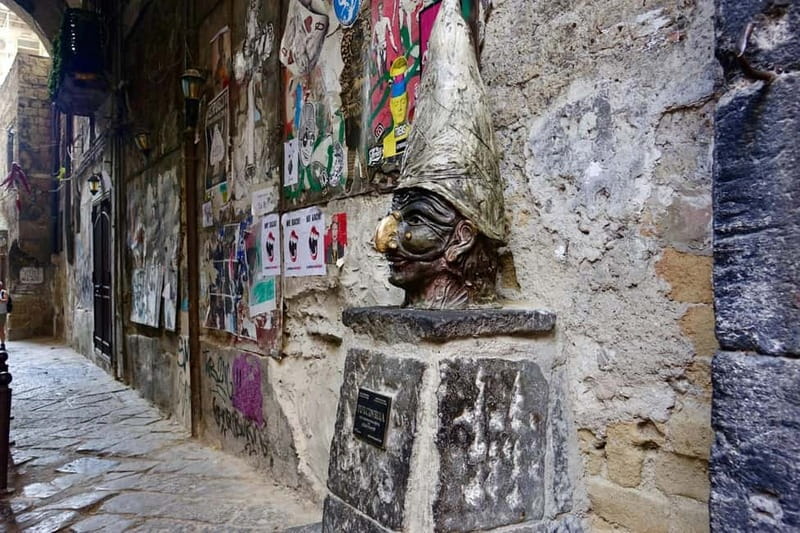
After the underground church, the tour shifts to public symbols and street humor. Next is a stop at the Busto di Pulcinella. You’ll see the statue and take in the ritual: a quick rub of its nose for good luck and laughter.
It’s simple, but it also teaches you something important. Naples mythology isn’t only for “serious” religious spaces. It leaks into comedy and everyday behavior. That’s part of why Pulcinella works so well as a tour character: you can understand the idea even if you don’t memorize every backstory.
Then you move along Spaccanapoli, where you’ll spend about 30 minutes. This stretch is where the city’s texture comes through. You’ll pass notable landmarks tied to the tour’s theme, including Bar Maradonna and the Hospital of Dolls.
You’re not getting a museum lecture here. You’re learning to look at the street as a storyteller. If you like street food energy, Spaccanapoli is the right corridor for it.
Also, keep your eyes open for a Banksy masterpiece mentioned on the route. It’s the kind of add-on that makes a walk feel like a scavenger hunt without needing extra planning.

Hospital of Dolls: when an odd sight becomes a real conversation
The Doll Hospital stop is short, about 10 minutes, but it matters. It’s one of those unusual locations that forces you to slow down and ask why it exists in this part of town.
Here’s the useful way to think about it: Naples absorbs the sentimental and the strange and gives both a place to live. The Doll Hospital fits that pattern. It’s not just quirky; it’s an example of how local culture keeps care, repair, and memory in the spotlight.
Because your time here is brief, don’t try to “solve” it. Instead, treat it as a piece of the larger puzzle of Neapolitan attitudes: even in a city of faith and superstition, everyday devotion can look playful, practical, and a little weird.
If you like photo stops, this is one. If you prefer deeper context, your guide should connect it back to the idea of symbols and belief.
San Gennaro stops: patron saint and the “treasures” angle
After Spaccanapoli, you head toward the San Gennaro-related sequence. You’ll visit a Chapel of San Gennaro, then a stop called San Gennaro di Jorit Agoch. These are short visits, around 10 minutes each.
Even without long speeches, San Gennaro anchors the tour in Naples’ most important religious identity. The guide explains the patron saint connection, including the idea of miraculous blood and treasures. That phrase matters because it tells you how seriously people take this devotion.
A good way to enjoy these stops is to watch how the guide frames them. You’re not just learning a saint’s name. You’re learning how a city’s “center” can be belief-driven and ritual-driven.
Also, these quick segments keep your energy up. It’s better to have several shorter visits than one marathon church session. Your legs get a breather, and the stories still land.
Gesù Nuovo Church: the diamond facade and hidden music
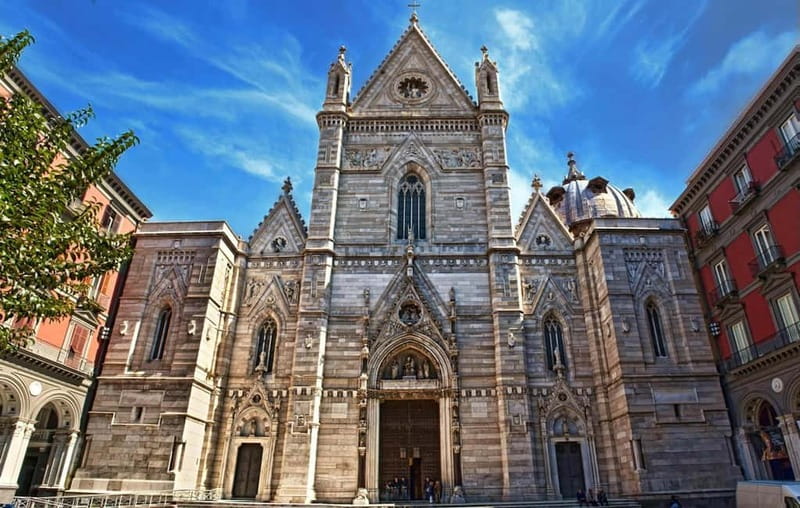
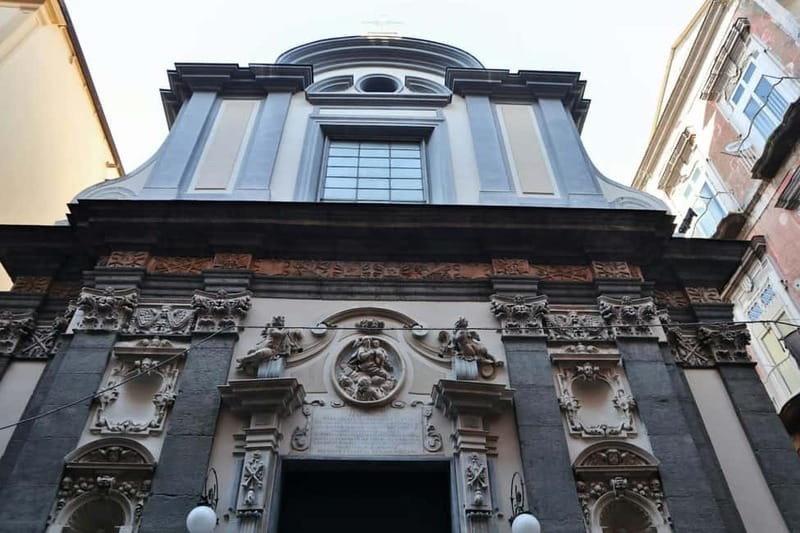
The tour ends at Gesù Nuovo Church after you round the route back through the historic center. This stop is where you’ll get one of the most visual payoffs.
What you’ll learn here: the facade includes symbols tied to music and patterns, specifically described as hidden elements in the diamond design. You’ll see the church as a crafted message rather than just a photo backdrop.
This part is worth paying attention to because it changes how you look at architecture. Instead of treating church fronts like decoration, you start noticing how shapes can act like symbols. The guide helps you see what to look for while you still have the building in front of you.
And you finish with espresso at the end of the tour. It’s a small close, but it fits the theme. Naples ends stories at street level, with coffee and conversation.
Price, group size, and what you really get for $28
At $28 per person, this tour is priced like a value walk, not an all-day “big ticket” production. For that, you get 2.5 hours with a friendly local guide, small-group pacing (up to 16 people), and a headset setup when groups are larger than 7 people.
The biggest value lever is the included ticket to the Church of S.Maria del Purgatorio (the underground church). That’s not a minor perk. It turns the story from “what you would see” into “what you actually can enter and experience.” For many visitors, that alone is the difference between a normal walking tour and a memorable Naples moment.
If you want a compact way to get beyond pizza and volcano views, this is a strong fit. You’ll get Naples as a belief system, not just a sightseeing list.
Who this tour suits best (and who should think twice)
This experience is ideal if you enjoy culture through human habits: stories tied to places, symbols you can spot again later, and characters that explain how people live. If you like walking but don’t want a full-day slog, 2.5 hours hits a sweet spot.
It’s also a good choice if you want an English-language guide and like the small-group dynamic. You’ll have room for questions and a pace that feels more personal.
Who should consider alternatives? If long stairs, underground steps, or steady walking is a problem for you, know that the tour is not wheelchair accessible. Also, it runs in the rain, and it may cancel only in exceptionally heavy weather, so come with weather-ready shoes and gear.
Practical tips so you enjoy every stop
- Wear comfortable shoes. You’ll move through multiple streets and church areas.
- Bring a light rain layer. The tour takes place even when it’s raining.
- Stay alert around the underground church area. Footing is different when you’re going down into older spaces.
- Have your phone ready for Pulcinella and Gesù Nuovo. Those are the moments where a quick photo makes sense.
If you’re the type who likes to repeat rituals you learn on the spot, Pulcinella is your moment. If you prefer quiet observation, plan to slow down most at Purgatorio ad Arco.
Should you book this Naples behind-the-scenes walking tour?
Book it if you want Naples with context, not just highlights. For $28 and 2.5 hours, you get a clear storyline tied to real locations: Piazza Bellini, Via dei Tribunali, the Church of Purgatorio ad Arco with Lucia la Sposa and wedding-luck gifts, then Pulcinella, Spaccanapoli, and the Gesù Nuovo Church facade details.
Skip it if you only want major “big view” attractions or you’re uncomfortable with steady walking and indoor-outdoor church visits. Also, if you hate surprises from street art, keep in mind you’ll be looking for a Banksy mention along the walk, not a guaranteed museum stop.
If you want Naples explained the way locals might talk over espresso, this tour is a smart way to do it.
FAQ
How long is the Naples behind the scene walking guided tour?
The tour lasts 2.5 hours.
Where does the tour start, and how do I find the guide?
You meet in Piazza Bellini, in the center of the square under the statue of Vincenzo Bellini. Be there at least 10 minutes early, and look for the guide holding a TUI sign.
What’s included in the tour besides the guided walk?
The tour includes the guided experience, a headset for groups of more than 7 people, and the ticket to the Church of S.Maria del Purgatorio (the underground church).
Is the tour offered in English?
Yes, the tour is in English.
Does the tour run when it rains?
It takes place even when it is raining. In exceptionally heavy rain, the tour may be cancelled and you would receive a full refund.
Is this tour wheelchair accessible?
No, the tour is not wheelchair accessible.
How much does it cost?
It costs $28 per person, and the tour runs as small group with up to 16 people.