REVIEW · NAPLES
Naples And Campi Flegrei Bike Tour
Book on Viator →Operated by Ride A Bike Naples · Bookable on Viator
Volcanic scenery and seaside stops in one ride. This guided Naples to Campi Flegrei bike tour takes you off the usual city track and into the Phlegraean Fields Regional Park, where you circle crater lakes, cruise coastal roads, and finish at the Solfatara volcanic area. I love how the route mixes big viewpoints with close-up nature effects, not just one type of sightseeing. I also like the small group size and the chance to ask questions as you go, especially when guides bring local stories like Sander’s Napoli anecdotes about Ciro Dries Mertens.
One thing to consider: this is a real bike day with hills and a moderate fitness requirement, and it’s not recommended if you have any injury or limits.
In This Review
- Key things to know before you pedal
- Why Campi Flegrei by Bike Feels Like Naples’ Other Side
- Meeting Spot and Start Time: How to Plan Your Day Without Stress
- Price and Value: What $138.29 Covers (and What You’ll Still Pay For)
- Parco Virgiliano and Pozzuoli Views: Naples From Above, Then Back Through Time
- Lago d’Averno: Where You Bike Around a Crater Lake
- Baia’s Roman Thermal Site and Bacoli’s Sea-Lake Combo
- Monte di Procida: The Climb That Pays Off With Serious Bay Views
- Solfatara at the End: Smoke, Sulfur, and the Real Energy of Campi Flegrei
- Guides, Stories, and Why the Ride Feels Personal in Practice
- Who Should Book This Naples and Campi Flegrei Bike Tour
- Should You Book This Bike Tour or Choose a Different Naples Day?
- FAQ
- How long is the Naples and Campi Flegrei bike tour?
- What time does the tour start, and where do I meet?
- Is the tour group small?
- What’s included in the price?
- Is lunch included?
- What fitness level do I need?
- Does it run in bad weather?
Key things to know before you pedal
- Small group (max 10): easier pacing and more personal attention from your guide
- Geothermal sights on purpose: you see crater activity around Solfatara, plus crater lakes like Lago d’Averno
- Romans-in-the-mix stops: you pause at the Terme di Baia archaeological area for Roman thermal-site context
- Views are built in: Parco Virgiliano gives you a Naples-and-Pozzuoli sweep before you ride on
- Weather-proof plan: it runs in all weather, so pack smart and dress for wind and rain
Why Campi Flegrei by Bike Feels Like Naples’ Other Side
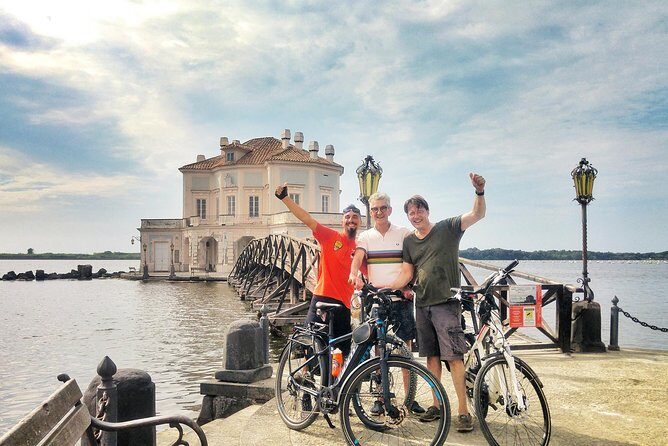
Campi Flegrei is one of those places where it’s hard to believe you’re still near a major city. You’re in a volcanic zone just outside Naples, riding through plains and hills where the ground has a story—literally. You get the mix that makes this tour fun: crater lakes, coastal air, Roman remains, and steam-and-smell energy at Solfatara.
What makes it especially worth your time is the way biking changes your relationship with the area. On foot, you can feel rushed between sights. By bike, you settle into a rhythm: stop, look, listen, pedal again. That’s the difference between seeing landmarks and actually understanding how the region works.
Also, this tour has a practical “day-trip scale.” It’s long enough to feel like you did something substantial, but it’s structured with short breaks so you don’t burn out. The guides run it like a thoughtful walk with wheels.
You can also read our reviews of more cycling tours in Naples

Meeting Spot and Start Time: How to Plan Your Day Without Stress
You meet at Galleria Principe di Napoli, 27, 80135 Napoli and the tour starts at 10:00 am. The activity ends back at the same meeting point, so you’re not stuck figuring out a new drop-off location.
The ride is scheduled for about 7 to 8 hours, which is a full chunk of a day. That matters because you’ll want to time your lunch (since lunch is not included) and avoid booking another heavy activity right afterward. Naples days can move fast—so build in breathing room for dinner later.
The tour is designed to work even if the weather isn’t perfect. It operates in all weather conditions, so plan for that. In practice, I’d show up ready for wind and light rain: a light jacket, comfortable layers, and shoes you trust on mixed surfaces.
Price and Value: What $138.29 Covers (and What You’ll Still Pay For)
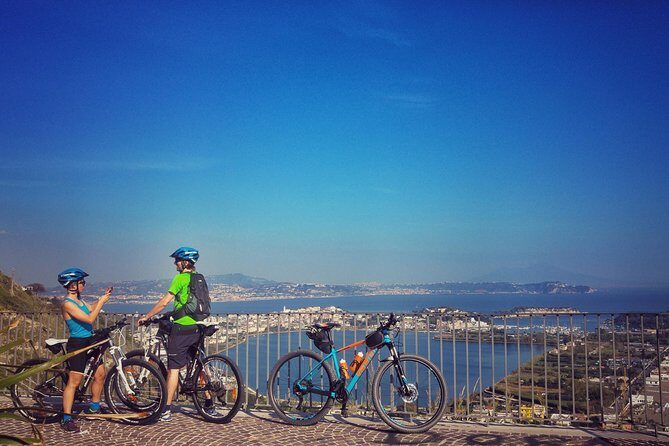
At $138.29 per person, you’re paying for the setup that makes this kind of day smooth: a professional guide, bicycle use, a helmet, plus bottled water and snacks. That’s not a small part of the cost. Bike tours often nickel-and-dime you for equipment and guiding, and here you get the basics handled.
What’s not included: lunch, and transportation to or from the attractions. In real terms, you should budget for a meal during the day (or plan to grab something after). Also, since you start at a specific Naples address, you’ll need to get there on your own—public transport is nearby, but the tour operator isn’t picking you up.
Is it good value? For most people, yes—because you’re not just biking for exercise. You’re getting a guided explanation of geothermal activity, Roman sites, and how the area connects. And because the group is kept small (max 10), the guide can pace things and answer questions instead of rushing you through photos.
Parco Virgiliano and Pozzuoli Views: Naples From Above, Then Back Through Time
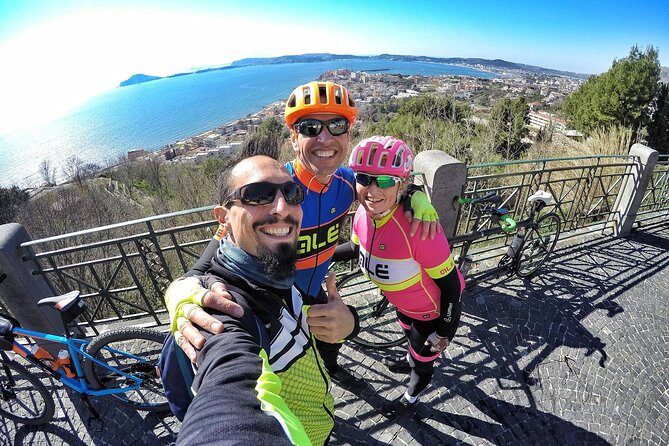
The day begins with a viewpoint stop at Parco Virgiliano. It’s timed for about 20 minutes, and the payoff is big: you get views over two gulfs, Naples and Pozzuoli. This is a great warm-up stop because it sets your bearings fast. Even if you’re new to Naples geography, you’ll start to understand where the coast bends and how the bay area fits together.
Then you head to Pozzuoli (about 30 minutes). Pozzuoli is tied to ancient Puteoli, with Roman-era significance. You’re not just passing through modern suburbs. You’re stopping where the layered past is part of the place. This kind of pause matters because it helps you see the geothermal region as more than scenery—it’s also a long-used zone, shaped by people who lived with volcanic risk and advantage.
A good tip for this section: bring your attention for questions. Guides tend to connect the landscape to the human story—what Romans built, why these areas mattered, and how the coast and fields relate. If your guide is Sander, he’s known for adding local culture and a touch of humor; one trip story includes Napoli football culture and anecdotes like Ciro Dries Mertens.
Lago d’Averno: Where You Bike Around a Crater Lake
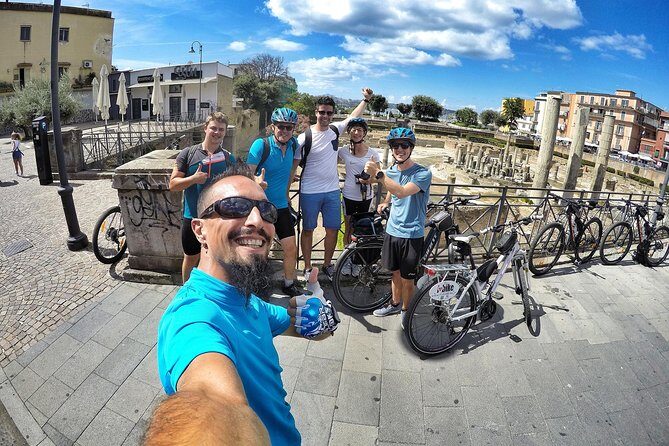
Next is Lago d’Averno (about 20 minutes). This stop is described as an off-road bike loop around the lake. It also includes a laid-on-the-grass moment, which tells you the experience is meant to slow down. You’re not racing past a photo spot. You’re getting time on the ground—literally—with the water and cliffs around you.
Lago d’Averno is one of the tour’s best “feel it” moments because it’s the opposite of a city stop. The lake creates a closed-in atmosphere, and the crater setting makes the geothermal theme click. You start understanding why this region is famous for activity. It’s not abstract once you’re circling the water.
Practical note: since there’s off-road biking and time on grass, wear gear that can handle dust and damp patches. Nothing fancy, just comfortable and not precious.



Baia’s Roman Thermal Site and Bacoli’s Sea-Lake Combo
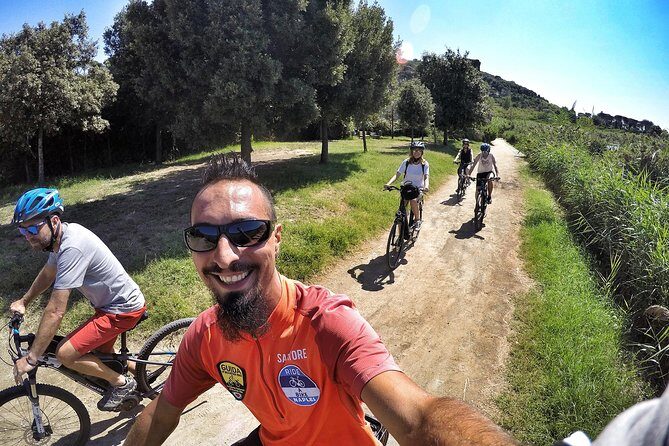
After the crater lake, you go to Parco Archeologico delle Terme di Baia (around 10 minutes). You view the thermal site from outside. That’s important. The tour keeps it quick, so you stay moving, but you still get the Roman context: thermal bathing was not a modern idea, and this area has long been tied to heat and water.
This stop pairs well with the geothermal theme. You’re already thinking about steam and heat, and then you see that Romans were doing their own version of geothermal use—using the natural conditions for their built environment.
Then you head to Bacoli (about 10 minutes). Bacoli is described as a small village near another lake by the sea. This is where the tour gets more emotional in a good way. Between Roman remains and volcanic terrain, the coast brings you back to simple pleasures: salt air, sea views, and a slower village pace.
If you want one “breather” lesson from this part: don’t just look for monuments. Look for how the coast and water shape where people built, traveled, and gathered.
Monte di Procida: The Climb That Pays Off With Serious Bay Views
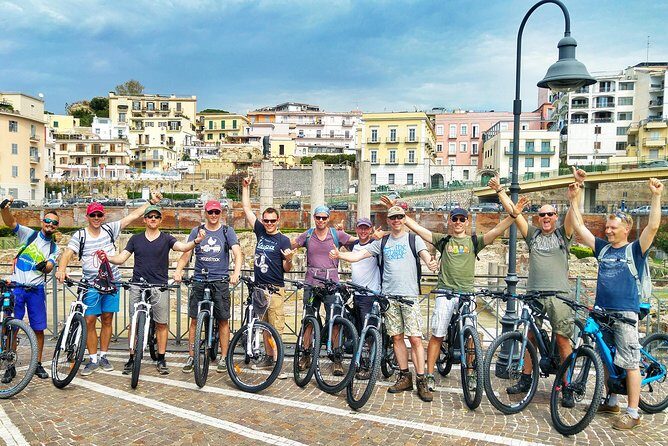
One of the most memorable steps of the ride is the climb to Monte di Procida (about 30 minutes). This is the mountain portion, and it’s built for views. It’s also the stop most likely to make you feel your effort.
The tour doesn’t hide that. It’s explicit that you get high for some of the most beautiful views of your life. Whether that lands as poetic or simply accurate for you, the value is the same: you’re earning the perspective.
This is also the point where the tour’s pacing makes sense. Earlier stops prepare you. You’ve seen Naples and Pozzuoli from Parco Virgiliano, then you’ve been inside the crater-lake world. Monte di Procida gives you the “big picture” view again, so the day doesn’t feel like a chain of separate sights.
A guide can help here, especially with what to look for from the viewpoint. Guides are generally good at pointing out the coastline patterns and what you’re seeing relative to the volcanic fields.
Solfatara at the End: Smoke, Sulfur, and the Real Energy of Campi Flegrei
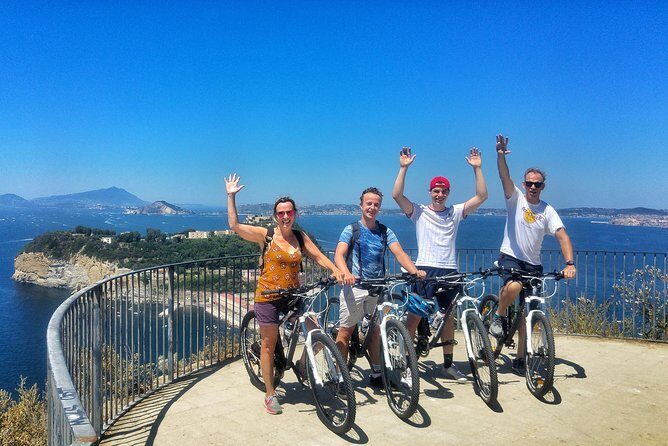
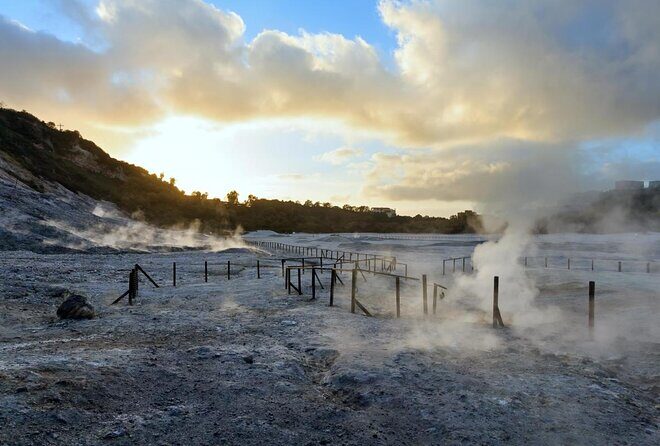
You finish at Solfatara (about 20 minutes). This is the volcanic crater stop where you can see smoke and smell sulfur—so yes, it’s sensory, not just visual. It’s also described as getting up on the volcano area, which signals it’s not a distant overlook.
This is the moment that makes Campi Flegrei feel real. You don’t just learn that it’s geothermal. You get smoke in the air and a sulfur smell that changes your attention instantly. Even if you’re not a geology person, your body understands what’s happening.
The tour’s time here is short by design, which is fine. You’ll see enough to connect the dots: crater lakes earlier in the day, Roman thermal interest at Baia, and then the source activity at Solfatara. It’s a logical progression.
If you’re someone who likes stories with your science, pay attention here. Guides often use the sensory details to explain what you’re looking at and why the area behaves like it does.
Guides, Stories, and Why the Ride Feels Personal in Practice
A bike tour stands or falls on the guide. In this case, the small group size (max 10) gives the guides room to do more than read facts. You’re getting real storytelling energy and local connections as you ride.
From past experiences on this route, guides like Sander and Salvatore are known for enthusiasm and for making the places feel alive with local anecdotes. Michelle has been described as bringing extensive and fun stories at each sight, while Martine has been praised for giving a strong city overview early in a trip. Leny is noted for being warm and for sharing information on churches, plus a personal touch like a book she wrote during lockdown.
What I’d do: if your guide offers conversation, take it. Ask where the best viewpoint is from your exact position, or ask what to notice as you ride. That turns the day from a sequence of stops into a guided understanding of the region.
Who Should Book This Naples and Campi Flegrei Bike Tour
This tour suits you if you want a single-day way to experience Naples beyond the center. It’s great for people who like biking, enjoy stop-and-go sightseeing, and want more than photo ops.
You’ll likely be a good fit if you have moderate fitness. The tour includes hills and at least one off-road segment around Lago d’Averno, plus a climb at Monte di Procida. If you’re comfortable riding for hours and handling uneven ground, you’ll probably enjoy it a lot.
It’s not recommended if you have any injury or physical limitations that could be affected by cycling or uneven surfaces. Also, there’s a minimum age of 16.
Should You Book This Bike Tour or Choose a Different Naples Day?
Book it if you want Campi Flegrei’s highlights in one go: crater lake, Roman thermal-site context, coastal village atmosphere, and the sensory volcanic stop at Solfatara—done with a guide and a small group.
Skip it (or pick another style of tour) if:
- biking for 7 to 8 hours feels like a stretch for you
- you can’t handle hills, off-road sections, or the uneven bits around crater terrain
- you strongly prefer a fully relaxed pace with minimal cycling effort
My bottom line: this is a strong choice for first-timers to Naples who also want something distinctly different from the usual city walk. You get views, Roman echoes, and the geothermal punch at Solfatara, all packaged into a ride that feels built for real understanding, not rushing.
FAQ
How long is the Naples and Campi Flegrei bike tour?
It runs about 7 to 8 hours.
What time does the tour start, and where do I meet?
The tour starts at 10:00 am. You meet at Galleria Principe di Napoli, 27, 80135 Napoli, Italy.
Is the tour group small?
Yes. The tour has a maximum of 10 travelers.
What’s included in the price?
You get bottled water, snacks, a professional guide, bicycle use, and helmet use.
Is lunch included?
No, lunch is not included.
What fitness level do I need?
The tour is for people with moderate physical fitness. It includes cycling, including hills and an off-road segment, and it’s not recommended if you have an injury.
Does it run in bad weather?
Yes. It operates in all weather conditions, so you should dress appropriately.