REVIEW · ROME
Mosaic-Making Workshop in Rome’s Trastevere
Book on GetYourGuide →Operated by Romeing · Bookable on GetYourGuide
Tile dust beats souvenir shopping.
If you like hands-on crafts, this Trastevere mosaic workshop is a smart break from lines and bus rides. I love that you do real work—cutting pieces, laying them into place, and learning why small decisions matter. The location is in a working studio area, near the Botanical Garden, so it feels like you wandered into a local art corner instead of a ticketed attraction.
My other favorite part is the payoff: you end up with a personal souvenir you made with your own hands. The class stays friendly and practical, with a small group (up to 8) and a mentor—listed as Nadia—guiding you step by step. One possible drawback: the teacher’s English level may be limited, so you’ll need to rely on demonstrations, gestures, and patience even if you booked for English support.
In This Review
- Mosaic-Making in Trastevere: Why This Feels Different
- Key points to know before you go
- Finding the Studio in Trastevere, Near the Botanical Garden
- What a 3-Hour Mosaic Workshop Really Covers
- The pace is focused, not rushed
- Choosing Your Design and Getting Tools at Your Station
- Tile Cutting: The Skill That Makes Your Mosaic Look Right
- Cementing, Cleaning, and the Part You Don’t Have to Stress Over
- Taking Your Mosaic Home in a Box (and How to Treat It)
- Group Size, Instructor Support, and the English/Italian Reality
- Cost and Value: Is $147.27 Worth It?
- Who This Mosaic Workshop Suits Best
- Quick Tips for a Smoother Workshop in Trastevere
- Should You Book Mosaic-Making in Rome’s Trastevere?
- FAQ
- FAQ
- How long is the mosaic-making workshop?
- Where is the workshop located?
- How much does the workshop cost?
- Will I make a mosaic I can take home?
- Is the class small?
- Do I need to speak Italian or English?
- Is the studio wheelchair accessible?
- Can children participate?
- What’s included in the workshop price?
- What is not included?
- Is there free cancellation?
Mosaic-Making in Trastevere: Why This Feels Different
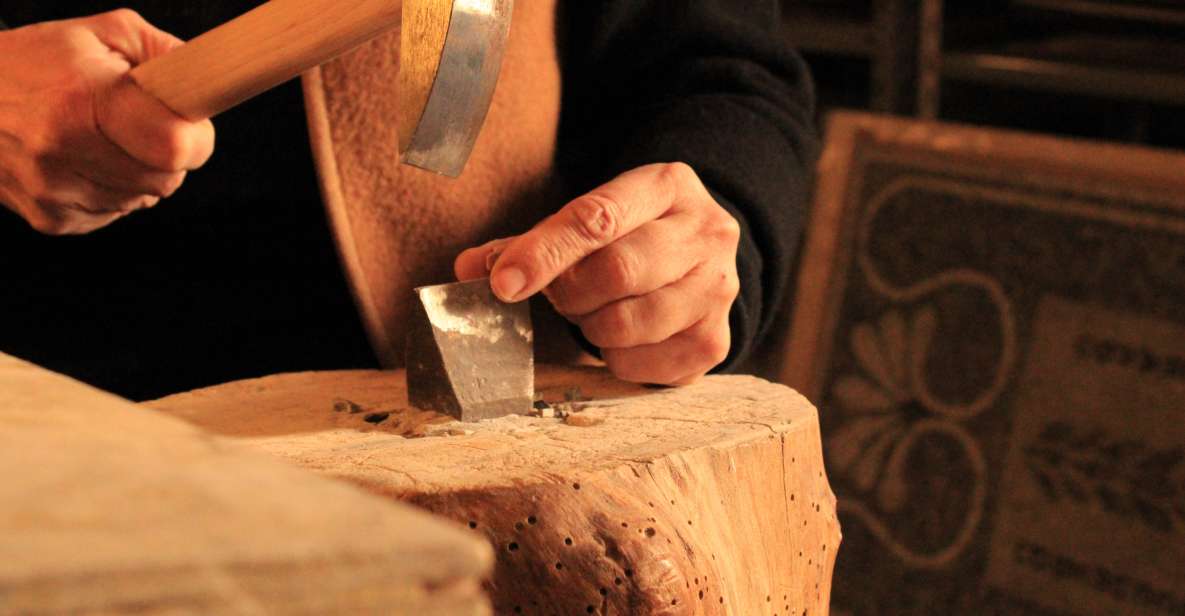
This workshop is built around making, not watching. You’ll choose a design, work at your own station, and get guidance from a mosaic artist throughout. It’s the kind of activity that turns Rome from something you look at into something you can literally take home.
A few practical notes help you decide if it fits your travel style. The session is short—listed around 2/3 hours with the overall duration shown as 3 hours—but the mosaic still needs time to set, which is where the studio packaging comes in. If you expect to finish a delicate craft and immediately toss it in a suitcase like a magnet, plan to treat it gently until it fully cures.
Key points to know before you go
- Small group (up to 8): less waiting, more time with the instructor.
- Choose your own design: you’re making a piece that’s yours, not a mass-produced template.
- Hands-on cutting: you’ll learn why mosaic work takes patience with small angles.
- Set time handled for you: your piece goes into a box to set and travel home.
- Studio-based class: no hotel pickup, so you’ll walk there and soak up the neighborhood.
You can also read our reviews of more tours and experiences in Rome.



Finding the Studio in Trastevere, Near the Botanical Garden
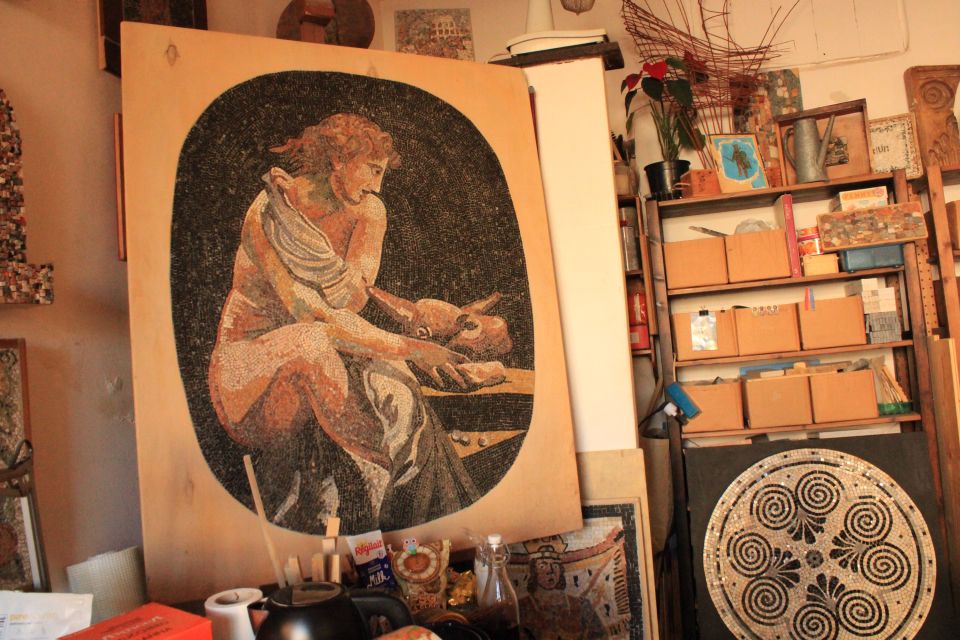
Trastevere is a great place for this kind of activity because the vibe is everyday Rome. You’re not just passing through a scenic square—you’re heading to a working atelier where art materials are part of the scene. The studio is described as being in Trastevere, near the Botanical Garden, which is useful for navigation because it gives you a clear reference point.
No hotel pickup is included, so plan to get there under your own steam. That’s actually a plus: you’ll arrive when you want, take a calming walk beforehand, and avoid the awkward “what time is the van coming” stress.
If you’re using public transit or walking from a nearby stop, give yourself a few extra minutes. Tile work starts with setup, and the studio experience runs smoothly when you’re not rushing at the last second.
What a 3-Hour Mosaic Workshop Really Covers
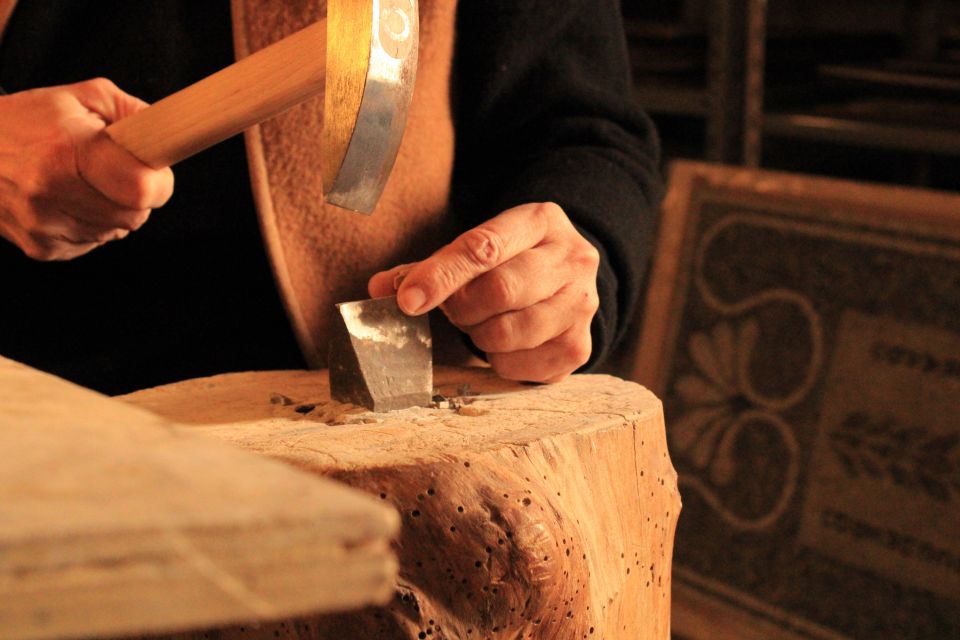
This is a real craft class, not a quick demo. You’ll spend time at your workstation doing the steps involved in making a mosaic: choosing a design, preparing pieces, assembling them, and finishing so it’s ready to be boxed for the setting period.
Here’s the rhythm you should expect:
- You get introduced to the process and the tools.
- You choose a design and begin laying out the pattern.
- You cut tiles to fit the shapes, including small angle pieces.
- You glue pieces into place as the image takes form.
- You finish with the cementing and cleaning steps.
- Your mosaic is then boxed to allow proper setting.
Even though the instruction time is around 2/3 hours, the studio also accounts for the fact that mosaics need time after assembly. They package it so it can set properly (listed as up to 6 hours) and still be convenient for taking home.
The pace is focused, not rushed
In practice, these classes work best if you go in expecting slow craft time. Mosaic-making can be fiddly, and cutting to fit tiny spaces is part of the lesson. The upside is that you leave with a true “I made this” souvenir, not a craft-show copy of something you could buy in a shop.
Choosing Your Design and Getting Tools at Your Station
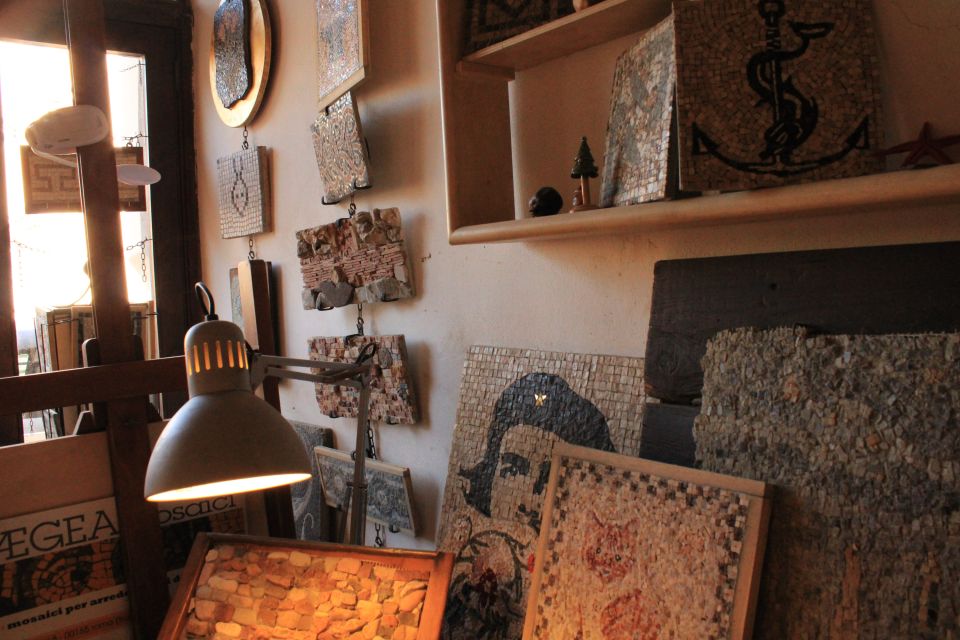
One of the most satisfying parts is that you get to choose your preferred design. That matters because mosaic work looks different depending on pattern size, shapes, and how much precision is required for the lines.
Once you’re seated, you’ll work with tools and materials provided in a fully equipped studio. The setup is designed for beginners. The process is taught step by step, and you’re not expected to know how to cut tiles before you arrive.
Mentor time is part of the value here. Your mosaic artist stays nearby to guide you, and the class format is built around hands-on help—so if you’re unsure, you don’t get stuck staring at a blank spot.



Tile Cutting: The Skill That Makes Your Mosaic Look Right
Tile cutting is where the reality of mosaics hits. It’s also where you learn the craft. You’ll be cutting pieces to fit your pattern, and that includes adjusting for small angles and tight shapes.
This is why the mosaic takes the time it does. Cutting doesn’t feel hard for the first few minutes. Then you hit those little corners where you have to be careful. People often expect mosaics to be like gluing pre-cut shapes, but the real beauty is in the fit—tiny decisions create a clean image.
If you want a low-stress artsy afternoon, don’t assume it will be effortless. It’s still fun. Just go in with the right mindset: you’re learning a skill, not racing to finish.
Cementing, Cleaning, and the Part You Don’t Have to Stress Over
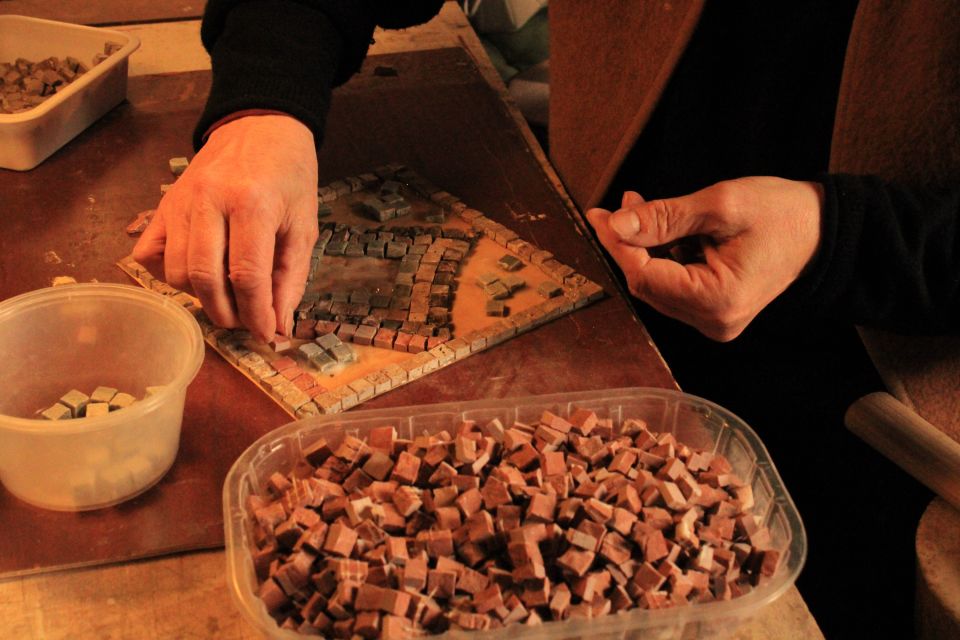
After pieces are placed, the class includes the final steps that make it more than just a collage. The workshop mentions cementing and cleaning, which are key to finishing a mosaic so it’s ready to set.
This is also where you’ll see the difference between a craft activity and actual mosaic technique. Even if your hands are new to the process, the studio’s job is to help you get to a proper finish so the image stays intact and travels well.
Then the studio does something useful: they place your finished mosaic into a box so it can set (up to 6 hours) properly while being easier to bring home. That saves you from having to figure out curing time, protective packaging, or how to transport something fragile.
Taking Your Mosaic Home in a Box (and How to Treat It)
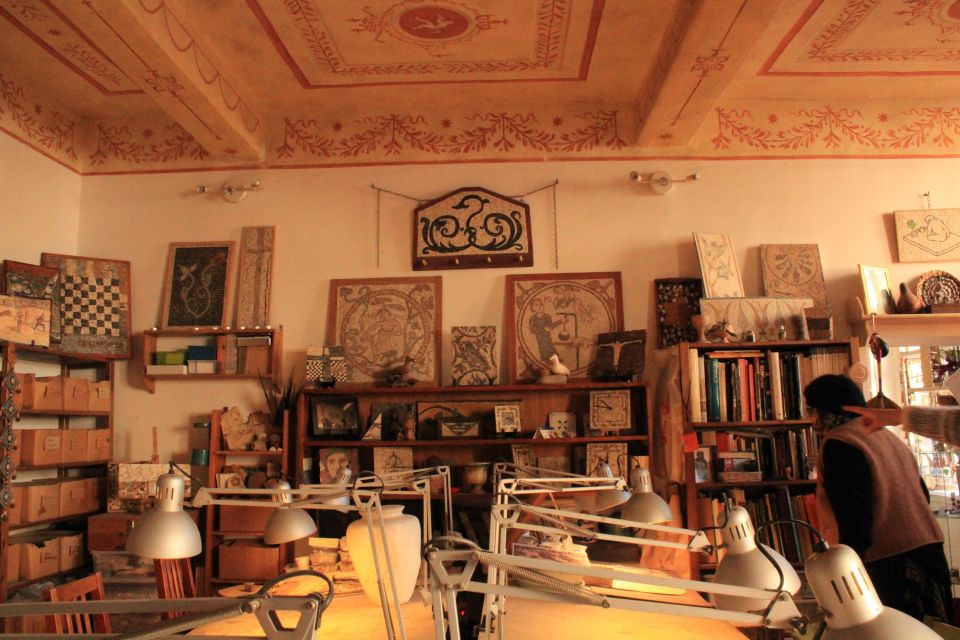
You don’t just leave with a tote bag souvenir. You take home your finished piece, boxed for travel and setting time. That’s a big part of why this workshop is worth considering if you care about value.
Still, treat it like a work in progress for a short while. The mosaic needs time to set, and the class format is designed around that. So once you’re done, you’ll likely want to store the boxed mosaic carefully and avoid rough handling until it has fully finished setting.
Transport-wise, the boxed presentation is your friend. It also means you can plan the rest of your evening around a realistic schedule—mosaic craft time plus a calmer walk back through Trastevere.
Group Size, Instructor Support, and the English/Italian Reality
The class is limited to up to 8 participants, which is exactly the right size for this kind of hands-on work. In a larger class, you’d spend more time waiting. Here, you can actually get feedback when you need it—especially during cutting and fit adjustments.
About language: the mosaic artist/instructor is listed as English, Italian for the class. At the same time, you should know that the instructor teaching you isn’t fully fluent in English, but can still communicate with everyone. In real terms, that means you’ll rely heavily on demonstrations and direct support more than long explanations.
If you’re an English-only speaker, don’t worry. You’re in a studio where hands-on instruction does most of the talking. If you speak a bit of Italian, you’ll likely feel even more relaxed.
One more practical point: children must be accompanied by at least one adult. The workshop can be a great family activity, but it needs adult supervision for the whole experience.
Cost and Value: Is $147.27 Worth It?
At $147.27 per person, this isn’t a “cheap craft you do once” type of activity. But it can be good value if you compare it to:
- bought souvenirs that are decorative but not personal
- pottery/painting experiences that still don’t include the real technical finishing steps
- guided workshops that focus on watching instead of creating
The value is in four places:
- You create a unique mosaic you take home.
- The studio provides a fully equipped setup and guided instruction.
- The class size stays small, so you get real feedback.
- The studio handles the setting time by boxing the finished piece for travel.
You’re paying for time, materials, and a teacher who stays with you through the steps—not just a quick introduction. If you’re the kind of traveler who likes making something with your hands, the cost starts to make sense fast.
Who This Mosaic Workshop Suits Best
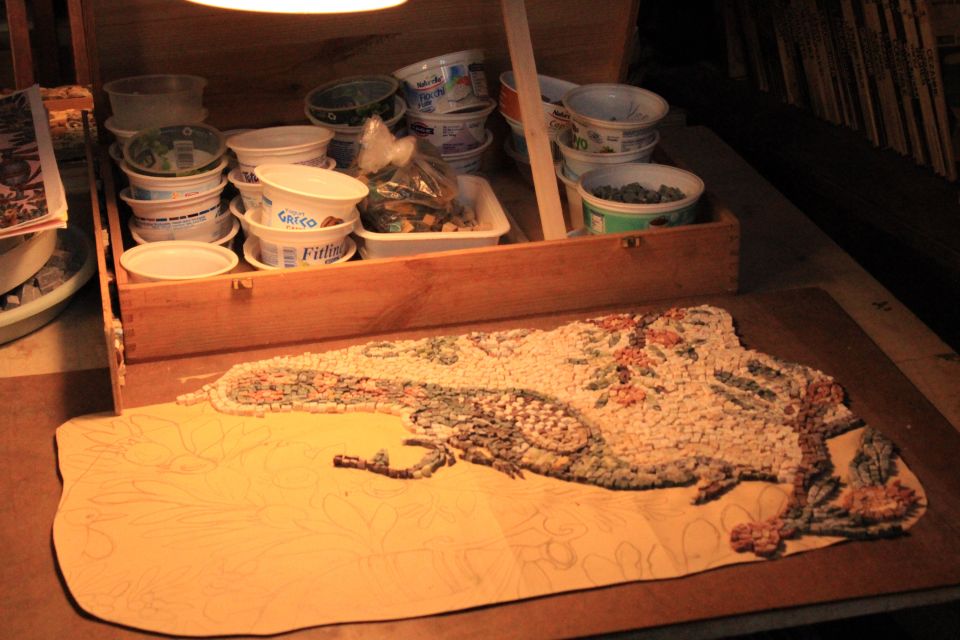
This workshop fits best if you want:
- a break from major sightseeing pace
- a quieter, creative afternoon with a clear start and finish
- a souvenir that feels genuinely connected to your trip
It’s also a solid choice for couples. You’ll do the same craft, but you’ll each end up with your own piece and skill story. For families, it can be rewarding for kids who like hands-on work. One review example mentioned a 9-year-old having a great afternoon and learning the full flow of tracing, cutting, gluing, and the finishing steps—so younger makers can do this, especially with an adult nearby.
If you hate craft mess, tile dust, or precision work, you might find it more tiring than expected. But if you can handle careful, slow making, you’ll probably love the sense of progress.
Quick Tips for a Smoother Workshop in Trastevere
A few practical choices can make the whole experience easier:
- Wear clothes you don’t mind getting small bits of studio dust on. Tile work can get a little messy.
- Expect cutting to take attention. Take your time with corners and tiny angles.
- Plan the rest of your day calmly. You’re making something that needs gentle handling after it’s boxed.
- If you don’t speak Italian, still go in with a positive attitude. The process is taught through doing, not only through speaking.
Also, because the workshop has a small group format, it’s worth arriving with energy. You’ll start faster and enjoy the momentum more.
Should You Book Mosaic-Making in Rome’s Trastevere?
Book it if you want a real, personal craft experience that turns your Rome memories into something physical. The small group size, the hands-on tile cutting, and the fact that you take your mosaic home boxed for setting make this feel like more than a typical tourist activity. And if you’ve been overwhelmed by the sheer volume of sightseeing, this is a reset.
Skip it if you want a purely passive cultural activity, or if you strongly prefer language-heavy instruction. The teacher communicates even without fluent English, but the class is still hands-on and practical—so you’ll learn through action more than lecture.
If you’re on the fence, think about this: in three hours, you can walk away with a souvenir that no one else will have. That’s a rare kind of value in Rome.
FAQ
FAQ
How long is the mosaic-making workshop?
The experience is listed as 3 hours, and the workshop itself is described as 2 to 3 hours. Check availability for the exact starting times.
Where is the workshop located?
It’s in Rome’s Trastevere neighborhood, described as near the Botanical Garden.
How much does the workshop cost?
The price is listed as $147.27 per person.
Will I make a mosaic I can take home?
Yes. You create your own mosaic during the workshop, and you take it home. Your finished piece is boxed so it can set properly after completion.
Is the class small?
Yes. It’s a small group limited to up to 8 participants.
Do I need to speak Italian or English?
The class includes English and Italian instruction. The mosaic artist teaching you may not be fluent in English, but the instruction still works through communication and guidance.
Is the studio wheelchair accessible?
Yes, the workshop is listed as wheelchair accessible.
Can children participate?
Children must be accompanied by at least one adult.
What’s included in the workshop price?
Included are the mosaic-making workshop in the Trastevere studio, hands-on creation of your mosaic to take home, expert guidance throughout, a fully equipped mosaic studio, and the small group experience.
What is not included?
Hotel pickup and drop-off are not included.
Is there free cancellation?
Yes. Free cancellation is available up to 24 hours in advance for a full refund.