REVIEW · ROME
La Traviata The Original Opera by Giuseppe Verdi
Book on Viator →Operated by Opera e Lirica srl · Bookable on Viator
Rome gets romantic with Verdi. This is La Traviata in St. Paul Within the Walls Church, with live opera and music in a space that makes every voice feel close. I love the setting because it turns a famous opera into an intimate, date-night Roman moment, and I love that the show is offered in English so you can follow more easily than you might expect. The main drawback to plan around is that church seating is fixed and your assigned seat can limit your view if you’re not close to the front or placed well.
You’ll also want to know what you’re walking into before you sit down. La Traviata is a three-act Verdi masterpiece, first performed in 1853 at La Fenice in Venice, and it’s based on La dame aux Camélias by Alexandre Dumas fils. Expect a live performance of the opera with orchestra and choir, plus dance/ballet elements, staged inside a historic church where comfort is not the priority—especially in hot or cold weather.
In This Review
- Key things that make this stand out
- La Traviata in a Roman Church: Why This Feels Special
- Verdi’s La Traviata: The Music and Who’s Bringing It to Life
- St. Paul’s Within the Walls: Getting There and Choosing Your Seats
- Seats are assigned by the theater box office
- What You’ll See Inside the Church: Acoustics, Staging, and “Okay, This Is Opera”
- Smart Tips to Follow La Traviata in English (Even If Italian Isn’t Your Thing)
- Temperature and Comfort: The Reality of a Historic Church
- Price and Value: Is $39.54 a Good Deal for La Traviata?
- After the Show: Making It a Smooth Roman Evening
- Should You Book This La Traviata Night?
- FAQ
- Where is the meeting point for La Traviata?
- What time does the performance start?
- How long is the experience?
- Is the performance offered in English?
- What dress code should I wear?
- Are my seats assigned in advance?
- What’s included in the ticket price?
- Is lunch included?
- Can I cancel and get a full refund?
- Are service animals allowed?
Key things that make this stand out
- St. Paul Within the Walls Church acoustics: a classic Roman setting that turns voices into a close-up experience
- Verdi’s La Traviata in three acts: a major, widely performed opera, performed with full live music
- Live orchestra, choir, and soloists: with Opera e Lirica soloists and Maestro Elvin Dhimitri conducting
- Ballet/dance included: it adds motion and spectacle, but sight lines can vary by seat
- English show offering: helpful if you don’t read Italian easily
- Seat assignments aren’t known ahead of time: you’ll need to be comfortable with some uncertainty
La Traviata in a Roman Church: Why This Feels Special
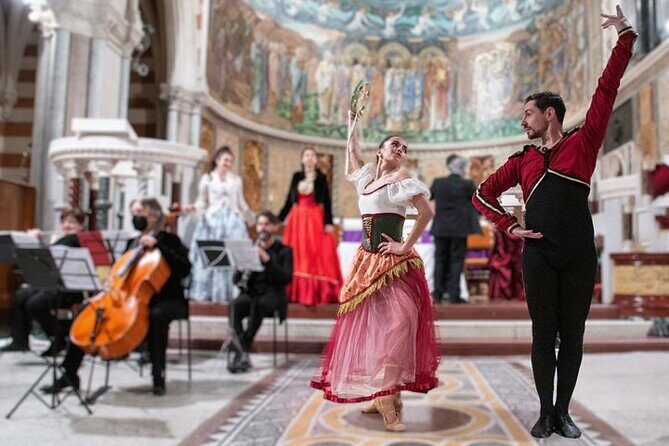
This night is basically opera-house energy, but in an older, quieter, more human place. St. Paul Within the Walls is a real church in central Rome, and that shapes everything. The vibe is intimate and immediate. You’re not watching from the back of a huge auditorium. You’re watching from pews—close enough that small gestures from the performers actually register.
The romance part comes fast. You step into a historic setting, then you get Verdi’s emotional storytelling with live music, choir, and dancers. If you’re trying to do something different from museum-to-market to gelato-to-bed, this is a strong choice. It’s also a good first opera experience if you want the classic title without committing to the formal, very long “dress up and sit quietly for four hours” culture.
It also has practical value. The price point is low for a live opera experience in Rome, and the ticket includes admission to the performance, which removes a lot of hassle from planning your own ticket hunt. For $39.54 per person (at the time of your booking), you’re buying an actual stage event, not a far-flung museum lecture.
One more thing I like: this kind of small-venue opera tends to reward attention. When the staging is more compact, you can watch the performers’ timing and how the orchestra supports them. That’s when opera stops feeling like a distant art form and starts feeling like live drama.
You can also read our reviews of more tours and experiences in Rome.



Verdi’s La Traviata: The Music and Who’s Bringing It to Life
This performance is built on a major name: Giuseppe Verdi’s La Traviata, with an Italian libretto by Francesco Maria Piave. Verdi premiered it on March 6, 1853, at La Fenice in Venice. You don’t need to be a Verdi scholar, but it helps to know the basics so the night feels less random.
Here’s what’s genuinely helpful context before you go:
- The opera was inspired by La dame aux Camélias (1852), a story by Alexandre Dumas fils.
- The original title was Violetta, after the central character.
- It’s a three-act work, which means the evening is structured like a complete arc, not just one long continuous scene.
On the live side, you’re not getting a “background music” performance. The opera uses soloists from Opera e Lirica, pulled from important Italian theaters and music academies. The orchestra and choir are led by Maestro Elvin Dhimitri. That matters because a lot of smaller productions sound thin. With a known conductor and live orchestra/choir, you can expect real musical weight, not just vocal effort.
And yes, there are dance/ballet elements included. That can be a plus if you like movement and variety in staging. It can also change how you see the singers depending on your seat, which I’ll cover next.
St. Paul’s Within the Walls: Getting There and Choosing Your Seats
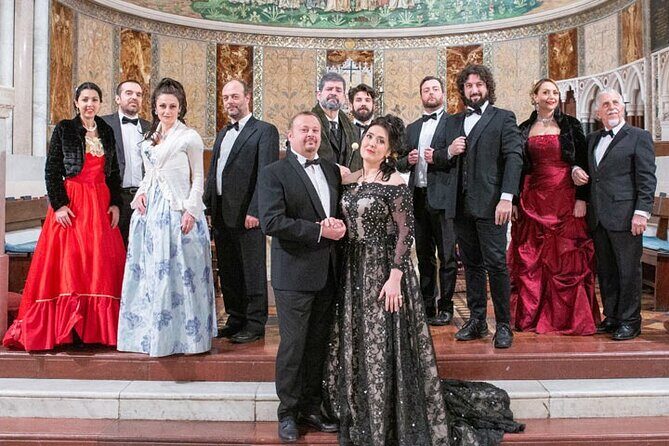
The show starts at 8:30 pm, and the ticket redemption point is St. Paul’s Within the Walls, Via Nazionale 16a, 00184 Roma RM, Italy. Plan on arriving with enough time to settle in. In church venues, you’ll want a few minutes to find your spot, orient yourself, and get comfortable before the lights shift.
Dress code is smart casual. That’s the sweet spot: no need for evening gown formality, but don’t show up in beach sandals and call it a day. If you’re thinking about layers, do it. Church temperatures can surprise you.
Now for the part that makes or breaks your experience: seats.
Seats are assigned by the theater box office
You won’t know your exact seat before the performance date. Even if you pick a section like front/middle/back, the final placement comes from the theater on the day. That’s not unusual for smaller venues, but it does affect your view.
In this church setup, sight lines can be tricky:
- If you’re not near the front, you may have limited lines of sight for singers and dancers.
- Fixed architecture can create partial obstructions from where your eye level lands.
- Church pew seating is not made for comfort. Cushions help if they’re available, but you should expect that your posture will matter.
My practical advice: if you’re seat-selective and this is your only opera night in Rome, aim for the front or closer middle sections. The difference in how much you can see and how “present” the performance feels can be huge in a church venue.
What You’ll See Inside the Church: Acoustics, Staging, and “Okay, This Is Opera”
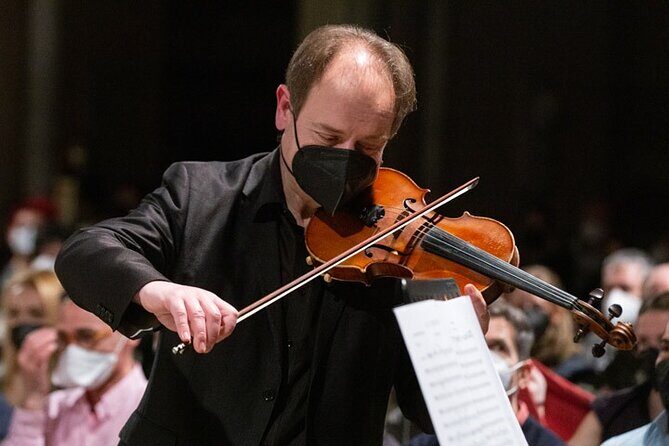
The church itself is part of the production. St. Paul Within the Walls has architecture designed for worship, not for theatrical sight lines. That’s why people who love this experience often talk about sound and intimacy. The acoustics are reported as strong, and with live orchestra plus singers, that can turn into that satisfying “you can hear the details” moment.
But acoustics cut both ways. Churches can throw sound in odd directions. Sometimes that makes voices feel gorgeous. Other times, it can blur a line between orchestra and singers depending on where you sit. If you’re picky about hearing every word perfectly, don’t assume it will behave like a modern opera house.
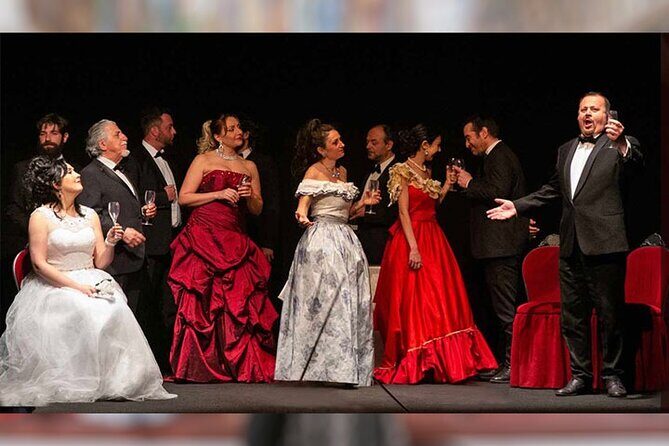
Also, the staging isn’t like a big-department-store grand opera. You’re not getting a huge set with large stage machinery. What you’re getting is more about performance precision—voices, orchestra energy, and the dance elements working in an intimate, constrained space.
Here’s what I’d expect you to notice once you’re seated:
- The orchestra is clearly part of the experience, not hidden behind a wall.
- The dancers can add “visual punctuation” between musical moments.
- Depending on your seat placement, you may spend part of the evening watching around singers—rather than only at them.
So if you’re the type who wants a perfect view of every gesture, choose your seat carefully and be ready to trade off perfection for charm.



Smart Tips to Follow La Traviata in English (Even If Italian Isn’t Your Thing)
This performance is offered in English, which is a real advantage. Still, opera is opera. Language barriers can be smaller than you fear, but they don’t vanish. The biggest trick is preparation: read the synopsis beforehand so you know the emotional shape of the story.
This is especially useful because it’s a three-act opera. When you already know what phase of the story you’re in, you stop getting lost in the moment-by-moment singing and start tracking the big emotional turns.
A good approach:
- Spend a few minutes before you go reading a short outline of the opera.
- Bring that mental map with you so you’re not trying to decode everything at once.
- If you’re on your first opera, treat it like a guided listening experience. Let the music tell you when things shift.
Also, be aware that program materials may not be distributed in the same way you’re used to at large venues. If you want certainty, do your plot prep at home on your phone.
Temperature and Comfort: The Reality of a Historic Church
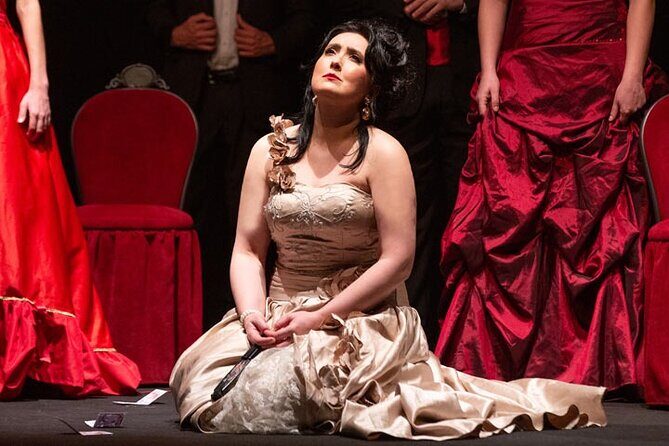
This is the part people don’t always plan for, and it can swing your mood fast.
A historic church environment like this one can’t be treated like a climate-controlled theater. That means:
- In hot weather, it can feel uncomfortably warm.
- In colder months, it can feel cold even if you expected “Rome is warm.”
- Ventilation may be limited. Fans may be present, but you should not assume you’ll get modern airflow.
Your smartest move is to dress for temperature swings. Think smart casual plus a layer you can handle if the room runs warm or cool. If you’re sensitive to heat, consider bringing something personal to help you cope.
And yes, church pews are church pews. Seats are fixed and often not padded the way you’d want for 2 hours. If you’re tall, short, or picky about backs and knees, consider wearing supportive shoes and being ready to adjust your comfort once you’re settled.
Price and Value: Is $39.54 a Good Deal for La Traviata?
At $39.54 per person for admission to a live opera with orchestra, choir, and dancers, this is good value. The big “value question” isn’t whether you get live music—you do. The real question is whether you’re okay with the venue trade-offs: seating comfort and variable sight lines.
If you compare this to a formal opera house ticket, you’re paying less because you’re not paying for:
- a controlled modern stage and seating bowl,
- large-scale theatrical sets and changes,
- the comfort engineering of a typical venue.
But you are paying for the core thing most people actually want: a live performance of one of Verdi’s best-known works, in a truly Roman setting.
So here’s who gets the best deal:
- First-time opera fans who want a “start here” classic in a memorable location
- Couples who want a romantic night out that feels local, not touristy show-and-tell
- Music lovers who care about live orchestra and vocal performance more than perfect staging angles
If you are extremely view-sensitive—like you can’t enjoy anything if you can’t see the performers clearly—this might feel risky because seats are assigned without you knowing the exact placement ahead of time.
After the Show: Making It a Smooth Roman Evening
One of the underrated perks here is the easy evening flow. The venue is central, and it’s near public transportation. After the performance, you can keep your night going without hauling across town.
You might also find it works nicely as a low-pressure plan. You don’t need a long pre-show timeline like you would for some major theater productions. In the real rhythm of Rome, opera at night fits well between a late dinner and a final stroll.
Should You Book This La Traviata Night?
If you want an affordable, romantic, and genuinely memorable way to experience a major Verdi opera, I think you should strongly consider booking. The live orchestra, choir, and soloists, conducted by Maestro Elvin Dhimitri, plus the included ballet elements, make this feel like a real production. And the English offering makes it more approachable than you might assume.
Book it if you:
- want a unique Rome night in a famous church setting
- like live music enough to forgive less-than-perfect theater seating
- are willing to prep the synopsis quickly so you follow the story
I’d pause if you:
- need a perfect view from your seat to enjoy anything
- are very heat- or cold-sensitive and don’t want to plan around historic-venue conditions
- expect opera-house comfort and modern stage sight lines
If you can handle pew seating and you’re okay with some variability in your assigned seat, this is a strong choice for a classic opera night with Roman atmosphere baked in.
FAQ
Where is the meeting point for La Traviata?
The ticket redemption point is St. Paul’s Within the Walls, Via Nazionale 16a, 00184 Roma RM, Italy.
What time does the performance start?
The start time is 8:30 pm.
How long is the experience?
It lasts about 2 hours.
Is the performance offered in English?
Yes, it is offered in English.
What dress code should I wear?
The dress code is smart casual.
Are my seats assigned in advance?
Seats are assigned by the theater box office and will not be known in advance of the performance date.
What’s included in the ticket price?
Admission ticket is included for live entertainment.
Is lunch included?
No, lunch is not included.
Can I cancel and get a full refund?
Yes. You can cancel up to 24 hours in advance for a full refund.
Are service animals allowed?
Yes, service animals are allowed.