REVIEW · ROME
Jewish Ghetto Walking Tour with gelato
Book on GetYourGuide →Operated by Vitus · Bookable on GetYourGuide
History walks at street level here. This guided stroll through Rome’s Jewish Ghetto is one part architecture tour, one part human story, with stops that link Roman-era streets to centuries of Jewish life and survival. I like how the route hits big, recognizable monuments (Theater of Marcellus and Portico d’Ottavia) but keeps steering you back to the neighborhood’s lived history, not just postcard views. I also love the food break: you get homemade kosher gelato as part of the tour, not as an afterthought. One drawback to plan for: you’re on your feet for a full 3 hours in a compact area, so you’ll want solid shoes and a head cover for sacred stops.
Meet your guide at the set meeting point and you’ll work your way through the Ghetto with clear, story-driven pacing. Expect to see the Fontana delle Tartarughe (Turtle Fountain), track the remnants of the old boundary wall, and finish with Tiber Island context, including WWII-era hospital stories and a stop tied to Asclepius (the figure of healing) now connected to a church.
In This Review
- Key things you’ll enjoy on this Jewish Ghetto + gelato walk
- Where the tour starts: finding the guide and getting oriented
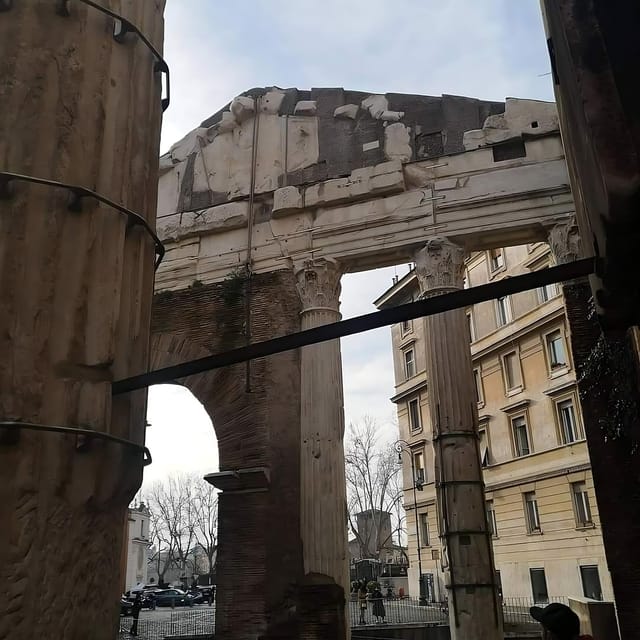
- Theater of Marcellus and Portico d’Ottavia: Roman power, still visible
- The homemade kosher gelato break: included, and worth planning for
- Piazza Mattei and the Turtle Fountain: more than a quick photo
- The Ghetto boundary: walls, the synagogue, and survival stories
- Crossing to Tiber Island: the oldest functioning bridge and WWII hospital stories
- Price and value: is $46 for 3 hours a fair deal?
- What to bring (and what to avoid) so the walk stays pleasant
- Who this tour fits best (and who should think twice)
- Should you book this Jewish Ghetto walking tour with gelato?
- FAQ
- How long is the Jewish Ghetto walking tour with gelato?
- What price should I expect?
- Where does the tour start and where does it end?
- What’s included in the tour price?
- Are entrance fees included?
- Do I need anything for religious or sacred places?
- Is flash photography allowed?
Key things you’ll enjoy on this Jewish Ghetto + gelato walk
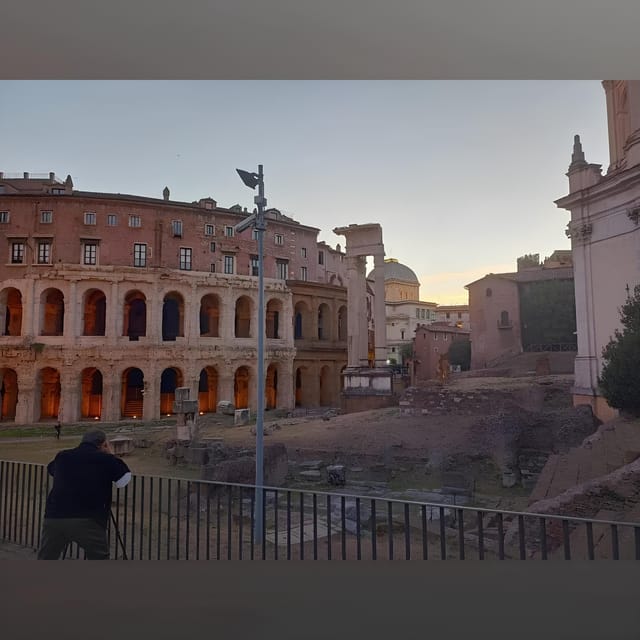
- Roman landmarks with direct Ghetto connections, including Theater of Marcellus and the Portico d’Ottavia
- Turtle Fountain time in Piazza Mattei, with enough context to make the photos mean something
- Homemade kosher gelato included, plus a practical quality tip about raw gelato for better flavor
- A careful walk through the Ghetto boundary history, including a last surviving piece of wall
- Tiber Island stories, including WWII hospital rescues and the Asclepius-to-church thread
- Small-group potential, since on some dates the booking can run very lightly
Where the tour starts: finding the guide and getting oriented

The experience begins with you meeting a professional English-speaking guide at the published meeting location, then moving straight into the Jewish Ghetto story. Your info packet lists the start area as around Piazza S. Bartolomeo All’Isola, 22 (in front of the church), while the tour overview also references Trajan’s Column in central Rome. That mismatch can happen with Rome meeting points, so do yourself a favor: double-check the exact address and meeting instructions in your confirmation.
Don’t overthink it—your goal is to get oriented fast. The guide sets the tone early, explaining what you’ll be looking for while you walk: how places connect to community life, restrictions, and resilience across long stretches of time.
Practical vibe check: this isn’t a “stop in front of a building and read a plaque” kind of tour. The flow is more like walking through a timeline, with the guide guiding your eyes to details you might otherwise miss.
You can also read our reviews of more tours and experiences in Rome.



Theater of Marcellus and Portico d’Ottavia: Roman power, still visible
Early on, you’ll pass the Theater of Marcellus and the Portico d’Ottavia. These aren’t just impressive stone shells; they’re proof that Rome’s layers sit on top of each other. You’ll be looking at architecture that still has purpose today, which helps the Ghetto story feel grounded rather than distant.
What I like about this approach is that it gives you a mental map. When you see major Roman structures alongside later neighborhood history, you stop thinking of the Ghetto as an isolated chapter and start understanding it as part of a city that keeps changing.
A consideration: this is an outdoor walk, and you’ll likely be outside during the warmest parts of the day if you choose a midday slot. Bring sunscreen and water so you can focus on the walk instead of counting down minutes.
The homemade kosher gelato break: included, and worth planning for
At some point, your guide brings you to a local gelateria for homemade kosher gelato. This isn’t just a sweet reward; it’s also a cultural marker. The tour’s focus is Jewish history in Rome, and the gelato stop reinforces how everyday life—food, routine, community spaces—matters just as much as major historical events.
Here’s a useful tip you’ll hear from the guide: pay attention to raw gelato for real flavors. It’s a simple quality tell that can help you understand what you’re tasting beyond the word kosher.
One smart planning note: since the gelato is included, you don’t need to budget for dessert separately. That’s a real value point when you’re comparing Rome tours where food is often extra.
Piazza Mattei and the Turtle Fountain: more than a quick photo
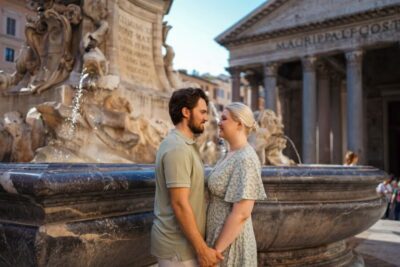
Next up, you’ll head to Piazza Mattei and see the Fontana delle Tartarughe (Turtle Fountain). Yes, it’s a classic photo stop. But the better reason to pause here is the way it anchors you in the neighborhood’s geography.
A fountain in the center of a lived neighborhood becomes a landmark you can relate to the walk. Once you see it, the streets around it feel like parts of a coherent area, not random lanes.
In tours that move too fast, famous sights can feel disconnected. This one tries to avoid that by feeding you context as you go. Still, do yourself a favor: if you’re sensitive to crowds or sudden stops, keep your camera ready but your expectations simple—this is a walking tour first.
The Ghetto boundary: walls, the synagogue, and survival stories
As you continue, you’ll pass the last remaining piece of the wall that once kept the Jewish community in the area for centuries. That’s one of the most sobering parts of the tour, because it turns an idea—confinement—into a physical structure you can actually see.
The guide also brings in the Great Synagogue, tying your walk to the community’s past and resilience. This is where the tour shifts from monuments and landmarks into lived pressure, adaptation, and continuity.
A consideration here: for sacred places, you’ll need a head covering or kippah. The tour explicitly asks you to bring one, so plan ahead rather than hoping you can improvise when you’re already in the street.
This section is also emotionally heavier than the gelato stop, so if you prefer a smoother tempo, pace yourself. Step in, listen, and then keep walking—don’t try to process everything at once.



Crossing to Tiber Island: the oldest functioning bridge and WWII hospital stories
Then comes a turning point: you cross the oldest functioning bridge in Rome to get onto Tiber Island. The walk-over itself matters because it connects separate parts of the city through a literal crossing, not just a transit transfer.
Once on Tiber Island, the tour continues with stories about a hospital saving people during WWII. You’ll also hear about Asclepius and how the temple tradition is now connected to a church. In other words, you’re seeing how places connected to healing and survival evolve across time.
Why this stop works: it reinforces that the Jewish story in Rome isn’t only about one period. You’re seeing continuity through themes—community protection, suffering and rescue, and the way religious and civic spaces can change roles over centuries.
If you’re prone to getting tired late in a walk, save your energy. This tour ends after your island portion, so you don’t want to burn out before the most story-heavy segments land.
Price and value: is $46 for 3 hours a fair deal?
At $46 per person for a 3-hour guided walking tour, the value is mostly about what’s included. You’re not just buying a route—you’re paying for a professional guide and built-in gelato, plus a structured timeline that ties specific sights together.
Entrance fees aren’t included, so if you’re hoping to go in somewhere for extra time, you may need to pay separately (or adjust expectations to focus on what’s visible on the walk). Still, the included gelato is a tangible, immediate benefit, and it usually costs real money in Rome if you add it later.
I’d call this good value if you like guided interpretation and want a curated route that blends major landmarks with neighbor-level history. If you mainly want independent sightseeing and you don’t care about gelato, then you might find cheaper self-guided options—but you’d be trading away the guided storytelling that ties the whole walk together.
What to bring (and what to avoid) so the walk stays pleasant
This tour is straightforward, but Rome can be tough on the small stuff. Bring comfortable shoes (this is a walking tour) and a hat plus sunscreen. You’ll also want water, especially in warmer months.
For sacred-area stops, bring a head covering or kippah. The tour notes that you should have one, so don’t assume you’ll be able to pick one up quickly nearby.
Two things to avoid:
- Flash photography is not allowed.
- Food and drinks are not allowed in certain areas.
If you want the smoothest experience, dress like you’re doing a neighborhood walk, not like you’re going to a museum. Your goal is to stay comfortable enough to listen.
Who this tour fits best (and who should think twice)
This is best for you if you enjoy walking through city history in a guided, story-led way. You’ll like it if you want both recognizable sights and the specific, human-centered history of the Jewish Ghetto—complete with a sit-down dessert break.
It’s less ideal if you’re looking for low-walking effort. The tour is marked as wheelchair accessible, but it also says it’s not suitable for people with mobility impairments and wheelchair users. That contradiction is worth taking seriously. If mobility is a factor for you, ask questions before booking so you’re not surprised by the real-world walking conditions.
Should you book this Jewish Ghetto walking tour with gelato?
I’d book it if you want a guided walk that connects Rome’s major ancient structures to the Ghetto story, rather than treating them as separate attractions. The included homemade kosher gelato adds real value, and the route makes sense if you like your history with clear stops: Theater of Marcellus, Portico d’Ottavia, Turtle Fountain, the remaining Ghetto wall piece, Great Synagogue area context, and then Tiber Island with WWII and Asclepius stories.
If you’re short on time and want one “do it right” walk that hits multiple meaningful points in about 3 hours, this is a strong choice. Just go in prepared for steady walking and the head covering requirement, and you’ll get the best out of the stories.
FAQ
How long is the Jewish Ghetto walking tour with gelato?
It lasts about 3 hours.
What price should I expect?
The price is $46 per person.
Where does the tour start and where does it end?
The start is listed around Piazza S. Bartolomeo All’Isola, 22 (in front of the church), and the tour finishes at Piazza Venezia.
What’s included in the tour price?
Included are a professional guide, a walking tour through the Jewish Ghetto, and homemade kosher gelato.
Are entrance fees included?
No. Entrance fees to any sites are not included.
Do I need anything for religious or sacred places?
Yes. Bring a head covering or kippah for visiting sacred places.
Is flash photography allowed?
No, flash photography is not allowed.