REVIEW · ROME
Gianicolo to Trastevere: Italy’s Independence trail with GELATO
Book on Viator →Operated by Ideas for Travelers · Bookable on Viator
Rome has a dramatic side story.
This walk follows Italy’s independence thread through real neighborhoods that sit above the usual tourist maps. You get sweeping Gianicolo views, plus monuments tied to Giuseppe Garibaldi and Anita Garibaldi, and you finish with time to relax in Trastevere with gelato. I especially like the way the route starts with big ideas (a lighthouse tied to Italians abroad) and ends with everyday life (chatting in a lively area), but the main tradeoff is that Gianicolo is a hill, so expect some uphill walking and stairs.
Two things I really like: the guides (often Chiara and Federico) bring clear English and a calm, friendly pace, and the group stays small with a maximum of six people. That small number matters because you can ask questions without feeling rushed. The one consideration: a short walk still adds up on cobbles and slopes, and the experience depends on decent weather.
You’ll start at Piazzale del Faro at the Faro degli Italiani and end in Trastevere near Porta Settimiana on Via Garibaldi. Expect about 2 hours, a mobile ticket, and a guided route that mixes outside monument viewing with a few key spots where admission is marked as free or included.
In This Review
- Key points that make this tour worth your time
- Starting above Rome: Faro degli Italiani’s independence echo
- Garibaldi and Anita on the slope: monuments tied to 1849
- A terrace made for romance: Garibaldi views from Terrazza del Gianicolo
- Er Fontanone and the 1849 fighters’ memorials
- San Pietro in Montorio: a site built on an old tradition
- Bramante’s Tempietto: Renaissance art without the long lines
- Down to Trastevere: Porta Settimiana and the gelato reset
- How much you’ll walk (and who it suits best)
- Value and price: what $90.22 buys you
- Practical tips so your day goes smoothly
- Should you book this Gianicolo to Trastevere tour with gelato?
- FAQ
- How long is the Gianicolo to Trastevere tour?
- What language is the tour offered in?
- How many people are in the group?
- Where does the tour start and end?
- What is included in the price?
- What happens if the weather is poor?
Key points that make this tour worth your time
- Liberty-style Faro degli Italiani on Gianicolo links Rome to Italian expats in Argentina
- Garibaldi and Anita monuments turn 1849’s Roman revolution into something you can point at
- The Constitution wall gives context for how 19th-century ideas later influenced European democracies
- Gianicolo’s terrace viewpoints are famous for romance, including proposal spots
- Tempietto del Bramante (1502) is a top Renaissance stop without the big-ticket crowds
- Trastevere gelato at the end helps you slow down and enjoy the neighborhood vibe
Starting above Rome: Faro degli Italiani’s independence echo
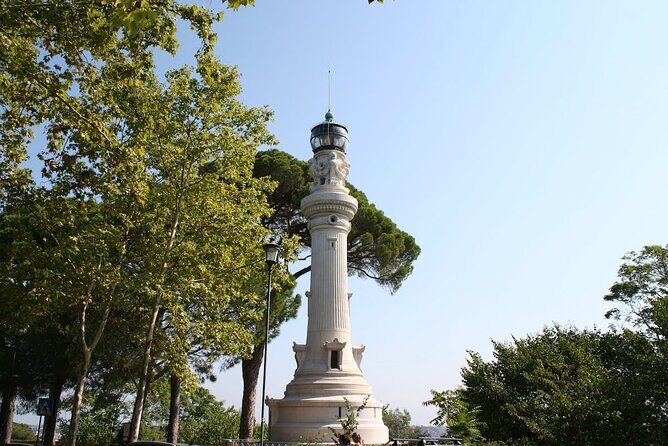
Your walk begins at Piazzale del Faro at the Faro degli Italiani. This is not just a lighthouse for ships—it’s a monument in liberty style, set on Gianicolo, with a mission tied to national pride. The lighthouse was donated by Italian expats in Argentina to honor their connection to Italy, which is a strong opener because it immediately shows independence isn’t only about battles. It’s also about identity, diaspora, and how people carry a country in their hearts.
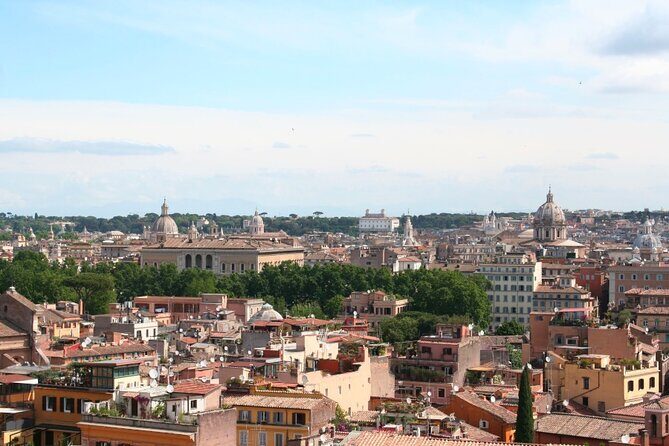
From here, you get your first real sense of Rome’s layout. Gianicolo sits high enough that you can look out toward the city center and start matching what you’ll see later on the route with a bigger picture. It’s a smart way to start because it helps you stop thinking of Rome as a pile of famous buildings and start seeing it as a map of stories.
The stop itself is short—around ten minutes—and the admission is free. That’s good news if you’re on a tight schedule or you just want the explanation without lingering. Quick viewpoint time plus crisp history usually works best early in the day.
You can also read our reviews of more tours and experiences in Rome.



Garibaldi and Anita on the slope: monuments tied to 1849
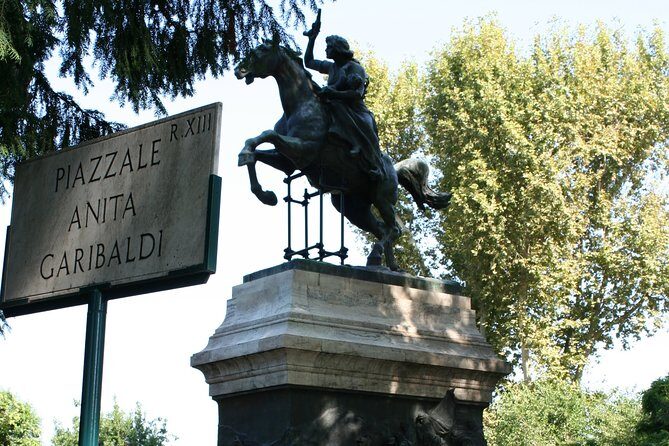
As you move along Gianicolo, the tour focuses on key figures tied to the Roman revolution of 1849. First up is the Monumento ad Anita Garibaldi, an equestrian monument dedicated to Anita herself. The point here is simple and powerful: her role alongside Giuseppe Garibaldi wasn’t background scenery. It mattered to the events that unfolded, and this monument keeps that memory visible.
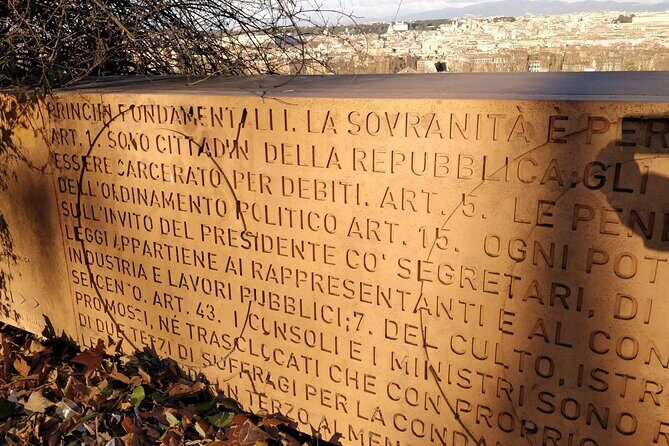
Then you reach Il Muro della Costituzione Romana, a memorial engraved on one of the best outlook points on the hill. This stop is special because it connects political ideals to physical place. The Roman Republic Constitution represented some of the most advanced ideas of its era, and the message on the wall is framed around how those concepts later influenced modern European democracies. Even if you’ve heard snippets of this story before, seeing it laid out on a wall where you can look over Rome makes it feel less abstract.
These two segments give you a tidy arc: people (Anita and the Garibaldi story) and then ideas (a constitution that mattered beyond its time). Admission is marked as included at these stops, so you’re not playing guesswork with tickets while the guide is still building the narrative.
A terrace made for romance: Garibaldi views from Terrazza del Gianicolo
One of the reasons Gianicolo works so well on foot is that the hill offers repeated “pause-and-look” moments. At Terrazza del Gianicolo, you get one of Rome’s most beautiful viewpoints. This is also where the tour leans into an interesting local detail: it’s a spot where many young Romans go to propose. That kind of everyday tradition sounds small, but it’s actually a great reminder. Rome’s history isn’t only museums. It’s also how people use these spaces today.
As you take in the view, you also greet a statue of Giuseppe Garibaldi, the independence hero at the heart of the walk’s theme. The pairing makes sense: you’re not just learning names in order—you’re standing on the same kinds of sightlines that would have mattered to people in earlier eras, when hills, fortifications, and sighting points had real strategic value.
This stop is about fifteen minutes, with admission marked as included. You’ll probably want a few extra seconds here for photos and for just standing there quietly. The hill’s height gives you that “I get it now” feeling, especially if you’ve been overwhelmed by how big Rome looks on first arrival.
Er Fontanone and the 1849 fighters’ memorials
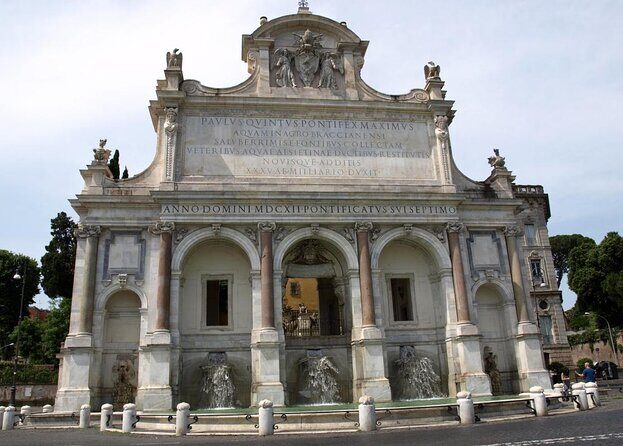
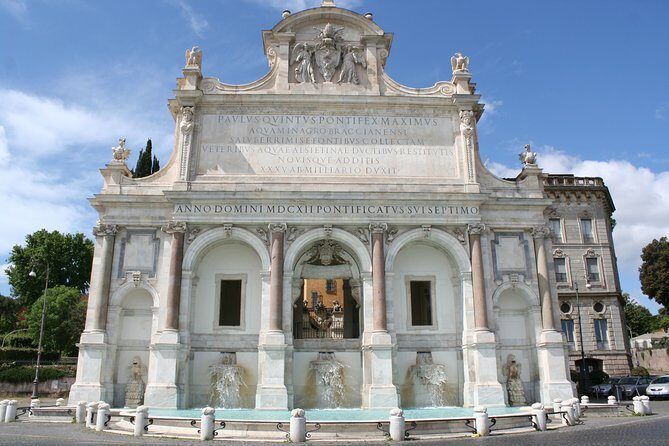
Next comes Fontana dell’Acqua Paola, also known as er Fontanone. This fountain is famous enough that it’s visible from much of the city center, which tells you something about how Romans built landmarks to be seen—not hidden. It’s a visual reset after the monuments and memorial text earlier on the hill. Instead of only reading stone, you’re seeing a larger civic monument with a strong place in the city’s skyline.
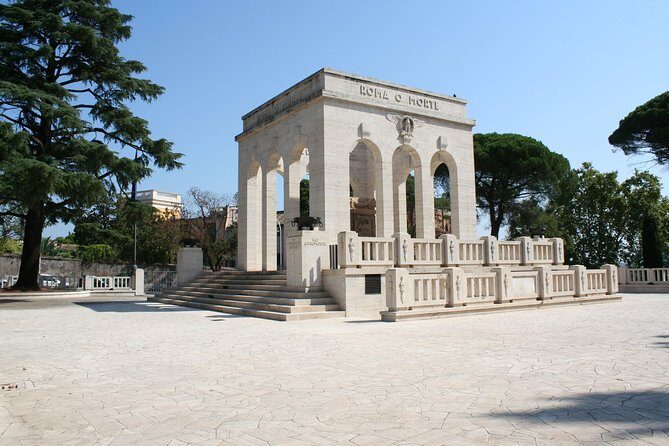
After the fountain, the walk moves toward Il Mausoleo Ossario Gianicolense, dedicated to those who fought alongside Garibaldi during the Roman revolution in 1849. This is the kind of stop where you’ll appreciate the guide’s pacing. Memorial spaces can feel heavy if you rush them, but if you take your time you can understand what the monument is trying to do: protect names and sacrifice from being forgotten once the political headlines fade.
Both of these stops are marked as admission ticket not included. Practically, that usually means you’re paying attention to the site as a visual and interpretive stop, rather than being forced into a paid ticket inside a building. Still, it’s worth planning a little flexibility. If you’re someone who wants to be very sure about entry costs, confirm what’s covered when you book.
San Pietro in Montorio: a site built on an old tradition
From the hilltop monuments, the route keeps pulling you toward recognizable historic Rome, still without the heavy tourist bottleneck. Piazza San Pietro in Montorio is a key example. Here you’ll see a church built on a site tied to tradition: the apostle Peter was crucified upside down on the cross. You might not treat traditions like hard history in the same way you treat dates and documents, but that’s not the point of this stop. The point is how belief, storytelling, and architecture created a layered meaning for the place.
This is also a good “gear shift” moment in the walk. Up to now you’ve been focused on independence-era figures and civic memory. Now you’re looking at a religious landmark that adds depth to what Gianicolo represents in Rome’s longer timeline.
This stop runs about ten minutes, with admission marked as included. If you enjoy architecture or you like to understand why certain sites became pilgrimage targets, this portion tends to land well because it connects location with narrative.



Bramante’s Tempietto: Renaissance art without the long lines
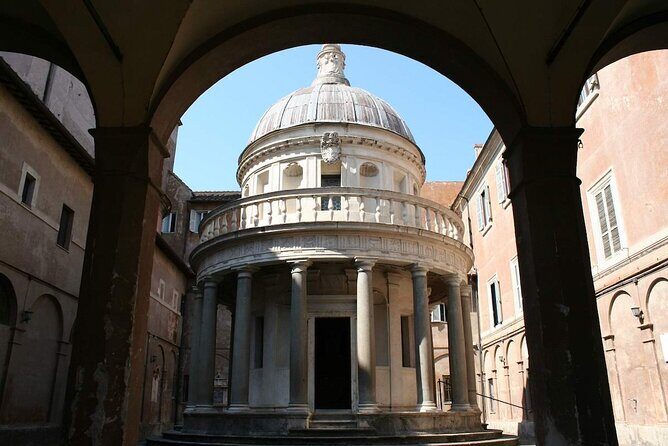
Then you reach Tempietto del Bramante, a highlight in its own right. Built in 1502 by architect Bramante as a commemorative tomb, it’s considered a treasure of Renaissance art. The reason this stop is so satisfying on a walk like this is that the tour theme is about independence and civic ideals—but you get rewarded with pure craft and design too.
You’ll spend about twenty minutes here, and admission is free per the tour details. That’s a rare and welcome combination: a “worth the effort” Renaissance sight with no extra ticket fee. It also helps explain why people rate this tour so highly. In a short walking window, you’re getting a sweeping viewpoint story and then an art stop that feels almost like a mini museum visit.
If you like small-scale masterpieces—buildings where you can study details without getting swallowed by a massive crowd—this is the kind of stop you’ll remember.
Down to Trastevere: Porta Settimiana and the gelato reset
The ending is practical and fun: you finish in Trastevere near Porta Settimiana, at Via Garibaldi 1. The idea is to let the history land, then switch into “Rome mode,” where you slow down and enjoy the neighborhood rhythm.
The tour wraps up with Italian gelato—included as a snack—and that little ritual matters. It gives you an excuse to sit, compare notes with your guide, and enjoy what’s happening around you in Trastevere’s social hub. Even if you’re not planning an evening out, Trastevere gives you that immediate sense of Rome being lived-in rather than staged.
This stop is about ten minutes, but the surrounding area is where you can extend the moment on your own. If you arrived hungry, you’ll be ready for a proper meal right after. If you arrived full, you’ll still appreciate the break.
How much you’ll walk (and who it suits best)
This tour is listed as most travelers can participate, but Gianicolo is still a hill, so plan for some uphill effort. The walk sounds manageable on paper—about two hours—but Rome’s terrain can make “easy” feel real. Expect slopes, uneven surfaces, and a pace that’s relaxed, not fast.
This tour suits you if:
- You want independence-era Italy explained through places, not just dates
- You prefer smaller groups (maximum six) and better guide interaction
- You like viewpoints that help you orient across the city
- You want one standout art stop (Tempietto del Bramante) mixed into a historic route
You might choose something else if you:
- Have mobility issues that make hills and stairs hard
- Want a strictly flat route with no surprises
- Need a tour that spends less time outdoors under varying weather
Value and price: what $90.22 buys you
At $90.22 per person for about two hours, you’re paying for more than a stroll. You’re paying for a guide-led route that compresses three big wins: a distinctive viewpoint starting point, a focused independence theme, and a meaningful art stop.
You also get practical value in the way admissions are handled. Some stops are free (like the lighthouse and Tempietto del Bramante), while others are marked as included. A couple of stops are marked not included, which keeps the price from feeling like you’re being nickel-and-dimed for every step. And because gelato at the end is included, the tour closes in a way that feels like an actual Rome experience, not just a drop-off.
If you’re comparing it to a standard “big sights” walking tour, this one often feels better value because it’s farther off the main track. You see fewer postcard icons and more places that explain how Rome shaped Italian identity.
Practical tips so your day goes smoothly
A few small choices can make this walk more comfortable:
- Wear shoes you trust on slopes and stone streets.
- Bring a light layer. Even in decent weather, Gianicolo can feel cooler and breezier.
- Use the start point as your anchor. Meeting at Piazzale del Faro means you’re starting at the height, not chasing it later.
- If you’re traveling near the Vatican area and you’re tempted to walk toward Gianicolo on your own, be careful with routing. One visitor warned that a street listed on Google Maps (Via Delle Fornaci) can feel unsafe because there’s no sidewalk and traffic runs close. When in doubt, use public transport or safer walking routes.
Most importantly, aim for a day with good visibility. Views are a big part of the payoff here, and the route is designed around that “look, then learn” rhythm.
Should you book this Gianicolo to Trastevere tour with gelato?
Yes, you should book it if you want a guided Rome that’s not centered on the same handful of attractions. The independence theme makes the walk feel purposeful, and the combination of Gianicolo viewpoints plus stops like Tempietto del Bramante is a strong pairing for the time.
Skip or rethink if you dislike hills or you’re traveling in weather that makes outdoor walking unpleasant. The experience requires good weather, and the tour is designed to be outdoors along the way.
If you’re the type who loves asking why a city looks the way it does—and you want that answer connected to the people of 1849—this is a smart, high-value choice.
FAQ
How long is the Gianicolo to Trastevere tour?
It’s about 2 hours (approx.), from the start on Gianicolo to the gelato stop in Trastevere.
What language is the tour offered in?
The tour is offered in English.
How many people are in the group?
The tour has a maximum of 6 travelers.
Where does the tour start and end?
It starts at Faro degli Italiani, Piazzale del Faro, 00165 Roma RM, Italy, and ends near Porta Settimiana in Trastevere at Via Garibaldi, 1, 00153 Roma RM, Italy.
What is included in the price?
The walking tour is included, and you also get snacks Italian gelato. Some admission tickets are marked as included or free depending on the stop.
What happens if the weather is poor?
This experience requires good weather. If it’s canceled due to poor weather, you’ll be offered a different date or a full refund.