REVIEW · ROME
Julius Caesar and the Emperors’ Nighttime Stories
Book on Viator →Operated by Storytelling Rome Tours & Walks · Bookable on Viator
Rome feels different after dark. This 2–3 hour storytelling walk lines up with Caesar, Augustus, and Nero as you move from Largo Argentina to Piazza del Popolo, hearing human-sized tales of betrayals and family drama from guide Massimo. I love the late-afternoon pace that helps you miss the worst crowds, and the way the stories make ancient people feel emotionally real. One thing to consider: it’s mostly outside at night, so you’ll want to dress for the cold.
You’ll get a mobile ticket and a small group (max 20), which keeps the tour from feeling like a lecture. The stops are all free to view, including famous landmarks like the Pantheon’s exterior, so your money goes toward the guide and the craft of the storytelling.
The tour starts at Via Florida 14 and ends at Piazza del Popolo, right where you can grab dinner or hop on the metro. It’s in English, there’s an optional break if you want it, and good weather matters for the experience.
In This Review
- Key things that make this tour worth your evening
- Why Caesar to Nero night stories work so well in Rome
- Meeting point on Via Florida and a smooth finish at Piazza del Popolo
- Largo Argentina: Caesar’s assassination spot and the opening “cold start”
- Pantheon at night: Marcus Agrippa and a power climb you can feel
- Piazza di Pietra ruins: Hadrian’s story in a quieter pocket
- Piazza Colonna’s spiral column: Marcus Aurelius as a lived biography
- Piazza Augusto Imperatore and Augustus’ mausoleum: Julia’s heartbreaking independence
- Piazza del Popolo ending: Nero, Agrippina, and the artist emperor profile
- Price and real value: what you’re paying for at about $47
- Who this tour fits best (and who might want a different plan)
- What to do to get the most out of your nighttime walk
- Should you book Julius Caesar and the Emperors’ Nighttime Stories?
- FAQ
- How long is the Julius Caesar and the Emperors Nighttime Stories tour?
- What is the price per person?
- Is the tour offered in English?
- Where does the tour start and end?
- What sites will we see during the walk?
- Are there any admission fees included for the stops?
- Do I need to print tickets?
- How large is the group?
- What if I want a break during the tour?
- What happens if the weather is bad?
- Is there a convenient transit option near the end?
Key things that make this tour worth your evening
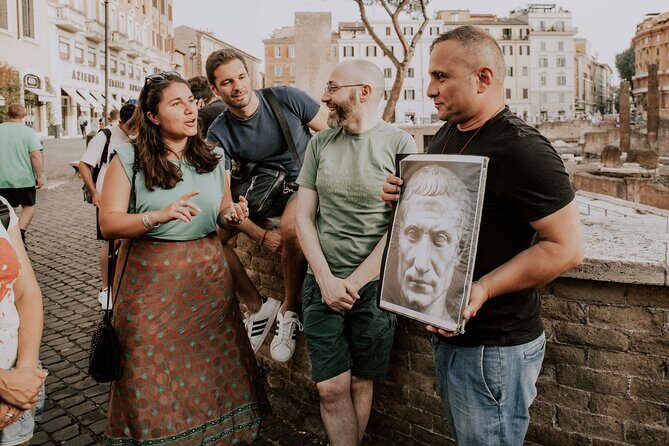
- Massimo’s master storytelling in English turns emperors, family, and scandal into scenes you can actually picture
- A late-afternoon/night route helps you beat daytime crowds and keep the walk comfortable
- All the big names are tied to real stone locations you pass by as the stories unfold
- Free-to-view stops mean you’re not paying extra admission just to see the sights
- A max group size of 20 makes it easier to stay engaged and hear the details
- Easy ending at Piazza del Popolo gives you a practical finish point for dinner and transit
Why Caesar to Nero night stories work so well in Rome
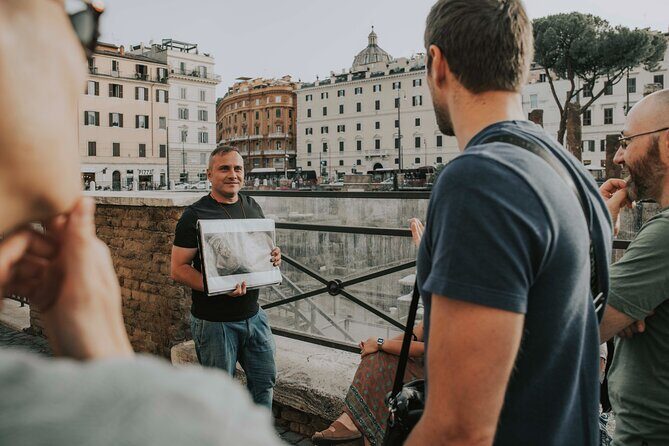
I like history best when it has friction—ambition, fear, love that goes wrong, and choices that cost people everything. This tour leans into that idea by following Rome’s biggest power players as people, not just names on a timeline. You start at the edge of one of the most dramatic turning points in Roman history, then keep moving through the early empire like you’re stepping from one tense chapter to the next.
The nighttime timing also changes how the stones feel. Many of these sites are hard to read in the daytime rush, when everyone is scanning for photos. At night, the guide’s pacing and the darker streets give the stories somewhere to land emotionally, especially when the plot turns to betrayal and forbidden love.
Best of all, Massimo’s style keeps the energy moving without rushing you. The reviews are full of the same theme: he’s funny, he communicates well ahead of time, and he shapes the pace so you’re not just hearing dates and titles.
You can also read our reviews of more tours and experiences in Rome.



Meeting point on Via Florida and a smooth finish at Piazza del Popolo
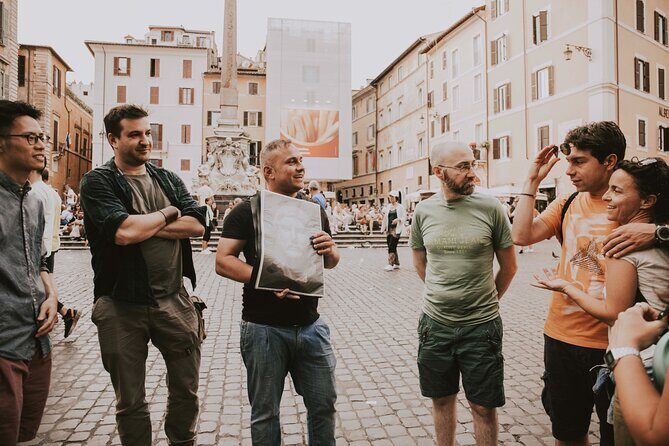
Start at Via Florida 14. If you arrive a few minutes early, you’ll have an easier time finding the group, and Massimo sends directions (and a photo of where to meet) before the tour. That small touch matters more than it sounds—Rome meeting points can be chaotic, and this one is designed to be straightforward.
The tour ends at Piazza del Popolo near the Basilica Parrocchiale di Santa Maria del Popolo. From there, you can grab food right away; the area is packed with restaurant options. If you prefer transit, the metro stop “Flaminio” on the red line A is nearby, which makes it simple to continue your evening.
Duration is about 2 to 3 hours, so plan this as an actual evening activity, not something to squeeze in between dinner and a show. You’ll be walking at a steady pace through central sights.
Largo Argentina: Caesar’s assassination spot and the opening “cold start”
Your first stop is the Area Sacra di Largo Argentina. This is where the tour begins its emotional engine: you’ll be at the site connected with the assassination of Julius Caesar. Opening here is smart, because it frames everything that follows as a chain reaction—Rome’s power shifts don’t stay tidy, and nobody stays safe for long.
From Largo Argentina you continue on foot, passing by other major sights that pull you deeper into the city’s ancient layers. The walking route matters because you’re not just parked at one viewpoint—you’re moving, and each location becomes part of the story’s momentum.
This part of the tour also sets expectations about tone. You’re going to hear about emperors and intrigue, but the guide doesn’t treat them like distant statues. The assassination scene isn’t delivered as a textbook summary; it’s presented as the start of a long struggle for control that stays intensely personal.
Pantheon at night: Marcus Agrippa and a power climb you can feel
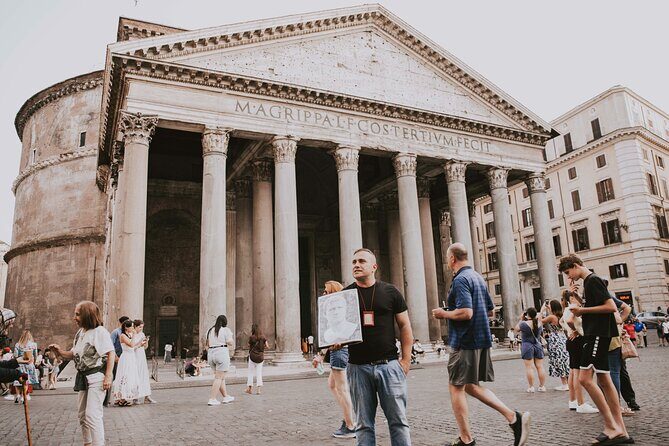
Next you’ll walk by the Pantheon at night, and the story shifts to Marcus Agrippa. The guide explains how, in the 1st century BC, Agrippa rose to become the second most powerful man in the world. Even if you’ve heard the name before, hearing his rise in motion—while you’re standing near one of Rome’s best-known landmarks—makes the ambition easier to grasp.
This stop is also a good example of why the tour isn’t just “see famous things.” You’re not being asked to admire buildings silently. You get a specific human angle: how one person’s position, relationships, and choices can reshape the political atmosphere around them.
Time here is brief (about 20 minutes), so it stays punchy. You don’t lose the evening to long museum-style pacing, and you keep building anticipation for what comes next.
Piazza di Pietra ruins: Hadrian’s story in a quieter pocket
At Piazza Di Pietra you’ll face fascinating 2nd century AD ruins, and the guide connects them to Emperor Hadrian. This is where the night-walk format pays off again. In daylight, ruins can look like a jumble of stone fragments. At night, with the guide narrating the person behind the era, it’s easier to understand why those stones mattered.
The tour’s approach here is simple: you learn about the emperor, then you immediately connect him to a place you can still stand near. That “place-to-story” link is what makes the whole evening feel coherent.
This stop lasts about 20 minutes. It’s not designed to overwhelm you with too many details at once, and that matters because you’re still learning while you’re moving through different squares and streets.



Piazza Colonna’s spiral column: Marcus Aurelius as a lived biography
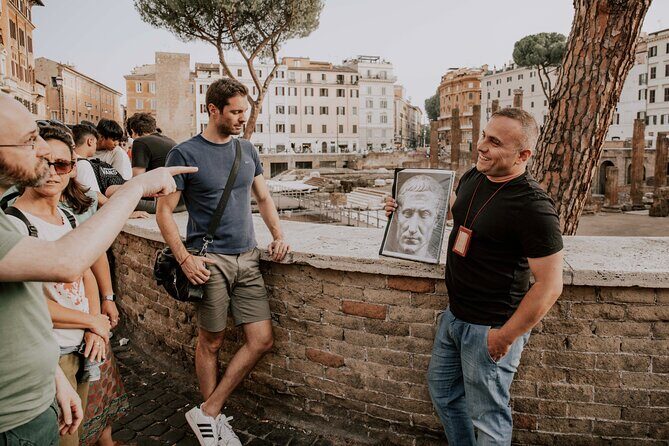
In Piazza Colonna, you’ll see the monumental 2nd century AD spiral column dedicated to Emperor Marcus Aurelius. The guide points out the hand-carved spiral relief that shows significant moments of his life, bottom to top, like a visual biography.
This is one of the best moments for anyone who likes history when it’s built out of specifics. A spiral column could easily become a “look, there it is” stop, but the tour frames it as a timeline you can follow with your eyes while the guide tells you what those moments mean.
Time here is also about 20 minutes, but it feels longer because you’re looking closely. You’re not just hearing; you’re seeing a physical record and then getting a story that helps you interpret what you’re actually seeing.
Piazza Augusto Imperatore and Augustus’ mausoleum: Julia’s heartbreaking independence
At Piazza Augusto Imperatore, you’ll admire the 1st century AD burial site of Emperor Augustus—his mausoleum. This section is a turning point in tone because the guide’s focus goes especially toward Augustus’ only child, Julia.
This is described as the climax of the tour, and it makes sense. Political history often gets told as if it’s only about rulers and armies. Julia’s story brings family, personality, and emotional consequences into the spotlight. You hear about her strong personality and independence for her time, then you feel how high the stakes are when public power collides with private life.
The time at this stop is about 25 minutes, which is longer than the earlier squares. That extra time signals what the tour wants you to remember: this isn’t just a sequence of emperors—it’s about the people caught inside the system.
If you like history with genuine feeling—love, conflict, and consequences—this is the part that will stick with you.
Piazza del Popolo ending: Nero, Agrippina, and the artist emperor profile
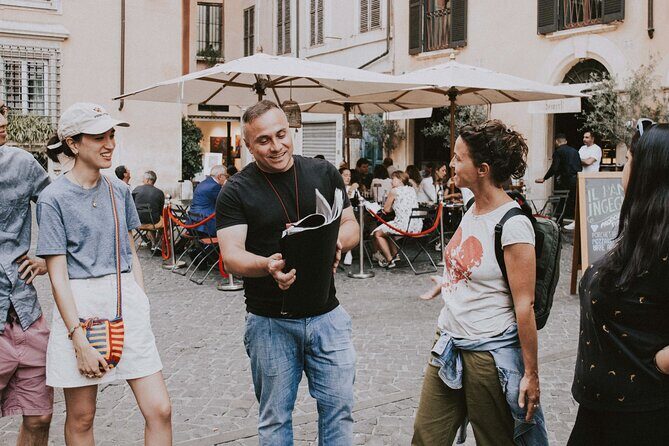
The tour concludes in Piazza del Popolo. Here, the guide tells the story of Emperor Nero, including his psychological profile, his relationship with his mother Agrippina, and how his desire to become an artist put him in the center of world attention.
Ending with Nero is clever because his story carries both scandal and obsession, and it also feels like a natural “last chapter” after Augustus and Julia. By the time you arrive here, you’ve watched Rome’s power move from public ambition to private pressure. The Nero story lands as the complicated payoff of that shift.
This stop runs about 20 minutes. After that, you’re free to continue your evening. The finish location is central and convenient, with taxi access and the Flaminio metro nearby, plus plenty of dinner options.
Price and real value: what you’re paying for at about $47
At $47.06 per person for a 2–3 hour experience, you’re not just paying for walking between sights. You’re paying for a guide who can connect multiple emperors and family stories to specific places, with a pacing style that keeps you engaged without turning it into a rushed speed-run.
The value is boosted by the fact that the tour is built around free-to-view stops. You’re not stacking additional admission costs on top of the ticket, and you still get time at major sites and squares. The group size cap (20) also helps—this format works best when the guide can keep the story flow controlled and clear.
From a practical travel standpoint, it’s also a good way to use an evening efficiently. Rome can be great at night, but it’s easy to spend that time drifting without a plan. This tour gives you structure while still letting you finish whenever you want.
Who this tour fits best (and who might want a different plan)
This experience fits best if you like Roman history told through people—especially emperors, family dynamics, and the messy side of power. If you’re the type who gets something out of scandal-free storytelling that still admits betrayal and intense relationships, you’ll likely enjoy the tone.
It’s also a smart option if you want to see famous locations while avoiding the worst daytime crush. The late-afternoon or evening timing helps, and the route is designed as a night walk across key central sites.
On the other hand, if you prefer quiet monument viewing or strict chronological lectures, you may find this approach more narrative than academic. The tour’s whole purpose is emotional storytelling, not a formal lecture series.
What to do to get the most out of your nighttime walk
I’d treat this as an evening outing that starts strong and continues steadily. The tour is a stroll at night across Rome’s ancient highlights, so you’ll want comfortable shoes and a layer you can handle when the temperature drops.
Massimo specifically advises keeping warm because it can be cold at night, so bring something real, not just a thin jacket. If you want a break, there’s an optional pause built into the experience, but the flow is designed to keep moving.
Also, don’t plan a tight schedule right before the tour. You’ll want to arrive calm and ready to walk, then finish at Piazza del Popolo with enough time to eat without rushing.
Finally, if you’re curious about the “human side” of Rome’s rulers—love, family conflict, ambition, and consequences—lean into that curiosity. The guide’s strength is making you feel like the stones are connected to choices people actually made.
Should you book Julius Caesar and the Emperors’ Nighttime Stories?
Book it if you want a compact, high-impact Roman evening where emperors feel like characters. The tour’s biggest strengths are the storytelling, the nighttime pacing that helps you dodge crowds, and the way the guide ties every major person to a place you can look at right there.
Skip it if you only want self-guided museum time or you’re looking for a strict, date-by-date history lesson. This is for travelers who enjoy plot, psychology, and personal drama as a way to understand the ancient world.
If your schedule allows, I’d choose an evening slot and show up ready for a fun, cold-weather walk with a guide who knows how to keep the story moving.
FAQ
How long is the Julius Caesar and the Emperors Nighttime Stories tour?
It runs about 2 to 3 hours, depending on the pace and timing during the evening.
What is the price per person?
The price is $47.06 per person.
Is the tour offered in English?
Yes, it’s offered in English.
Where does the tour start and end?
It starts at Via Florida 14, 00186 Roma RM, Italy and ends at Piazza del Popolo (Basilica Parrocchiale di Santa Maria del Popolo, Piazza del Popolo, 12, 00187 Roma RM, Italy).
What sites will we see during the walk?
You’ll visit or walk by Area Sacra di Largo Argentina, the Pantheon, Piazza di Pietra, Piazza Colonna, Piazza Augusto Imperatore (Augustus’ mausoleum), and finish in Piazza del Popolo.
Are there any admission fees included for the stops?
The listed admissions for the stops are free, with free admission shown for each segment.
Do I need to print tickets?
No. You receive a mobile ticket.
How large is the group?
The tour has a maximum of 20 travelers.
What if I want a break during the tour?
A break is optional, but the tour is mainly a continuous nighttime stroll.
What happens if the weather is bad?
The experience requires good weather. If it’s canceled due to poor weather, you’ll be offered a different date or a full refund.
Is there a convenient transit option near the end?
Yes. Piazza del Popolo is close to the metro station Flaminio on the red line A, and there’s also a taxi stand nearby.