REVIEW · ROME
German Vom Kapitol bis zum Campo de’ Fiori – Walkingtour
Book on Viator →Operated by Deutsche Römerin · Bookable on Viator
Rome becomes readable on foot.
This is a fun, story-driven German walking tour that links big landmarks with the day-to-day feel of ancient and old Rome. You start at the Marc Aurel statue on the Capitoline Hill, get an eye full of the Forum Romanum looking toward the Colosseum, and then keep moving through quieter streets where the guide brings architecture and Roman life to life with humor and punchy anecdotes.
I especially like the route logic: it doesn’t just tick boxes, it gives you moments to orient yourself—then zooms in on smaller details like the speaking statues topic and what famous figures mean when they show up on Italian money coins. One thing to consider: it’s still a 3-hour walk with limited stops, no snacks included, so plan for comfortable shoes and pace yourself.
In This Review
- Quick highlights you’ll actually use
- Meeting at the Marc Aurel statue on the Capitoline Hill
- From Capitoline viewpoints to Forum Romanum photo territory
- Forum Boarium: the old cattle market meets weekend market life
- Marcellus Theatre: passing a landmark with the right context
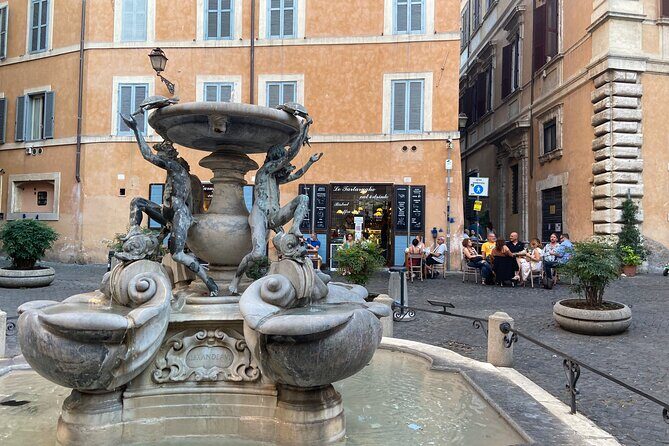
- Jewish Quarter mood: small streets and the Schildkrötenbrunnen
- Largo Argentina: Julius Caesar’s assassination site and ancient temples
- Ending at Campo de’ Fiori: turn the tour into an afternoon or evening
- Guides and the style you should expect (humor, flexibility, and kid-friendly pacing)
- Price and value: is $93.68 worth it?
- Getting the most out of the walk (without overplanning)
- Should you book this German walk from Capitoline to Campo de’ Fiori?
- FAQ
- What language is the tour in?
- How long is the walking tour?
- Where do we meet and where does the tour end?
- How big is the group?
- What’s included in the price?
- Can I cancel for a full refund?
Quick highlights you’ll actually use
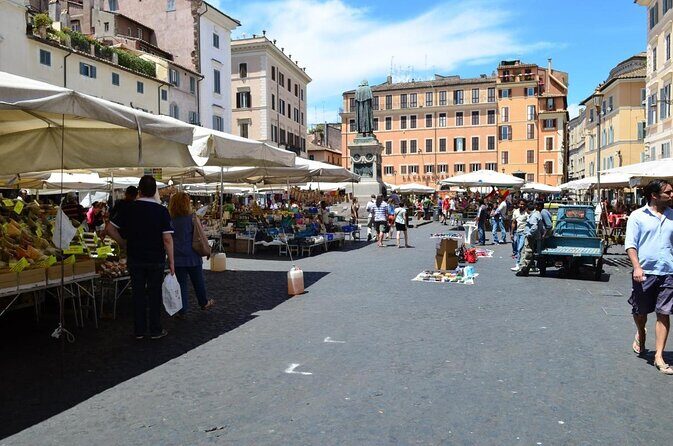
- Capitoline meeting point at the Marc Aurel statue for fast orientation on Rome’s oldest layers
- Forum Romanum to Colosseum viewpoints timed for great photo framing
- Forum Boarium stop at the former cattle market plus pointers for the best farmers market on weekends
- Jewish Quarter corners with the Schildkrötenbrunnen (turtle fountain) for a more intimate Rome mood
- Largo Argentina and Julius Caesar’s assassination site with ancient temples in view
- End at Campo de’ Fiori so you can turn the tour into an afternoon or evening plan
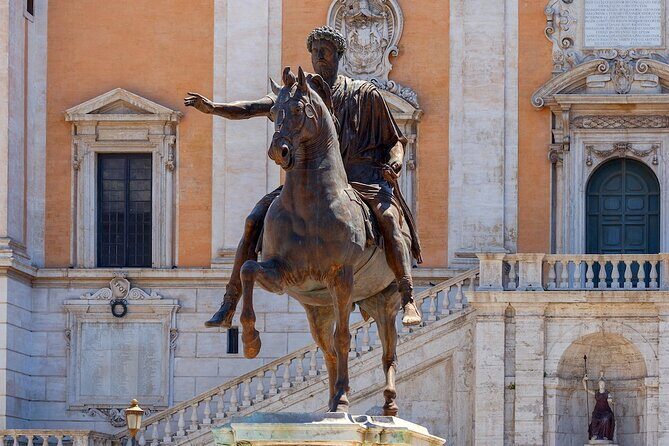
Meeting at the Marc Aurel statue on the Capitoline Hill
The tour kicks off in Piazza del Campidoglio, right by the equestrian statue of Marc Aurel. This is a smart place to start because you’re already on a “thinking” hill. From here, the guide can talk about origins and symbols without you feeling lost or rushed.
You’ll get a blend of big-picture and small detail right away. The starting stories focus on the foundation of Rome and how people used public art and monuments to communicate—so you don’t just see stone, you start reading it. You’ll also hear about the speaking statues theme, and why certain famous monuments show up on Italian money coins.
One nice payoff: by the time you’re done with the first stretch, you usually feel like you’ve got Rome’s layout in your head. That matters, because the rest of the walk covers areas that can feel disconnected if you’re going it alone.
You can also read our reviews of more tours and experiences in Rome.



From Capitoline viewpoints to Forum Romanum photo territory
After the meeting point, you’ll walk toward major views over the Forum Romanum, with the Colosseum in the distance. This is the kind of stop that’s both practical and emotional. Practical because it helps you connect what you’ve read about Rome to what you can see from a real vantage point. Emotional because it makes the ruins feel less random.
This section is built around the idea of looking first, then learning. You’ll get a clear sightline over the Forum landscape and a perfect moment for those memories-photo angles. If you care about photos, this is the part to bring your best patience—slow down for a minute, let your eyes adjust, then shoot.
The guide’s job here is to keep the stories moving. Expect humor, quick connections, and explanations that tie architecture to what people did there.
Forum Boarium: the old cattle market meets weekend market life
Next comes one of my favorite “bridge” moments on this route: Forum Boarium, the former ancient cattle market of Rome. Even if you’ve heard the name before, walking past it gives it texture. It’s not just ruins; it’s a place that still sits near daily life.
The guide points out where the best farmers market happens on weekends. That’s a great tip because it turns your planning from generic to specific. If your travel dates include a weekend, you can adjust your afternoon plans and maybe build a second visit around that local rhythm.
Drawback to keep in mind: this part of Rome can be busy at certain times. A small-group tour helps, but you still want to be flexible. If you’re sensitive to crowds, pick a calm mindset and remember you’re there for the story and the orientation as much as the sight.
Marcellus Theatre: passing a landmark with the right context
From Forum Boarium, you continue past the Marcellus Theatre. You might see it and think, okay, that’s a Roman theatre. The difference on this tour is what the guide teaches you while you’re moving—how Roman entertainment and city spaces fit together, and how buildings reveal priorities from their era.
This is also a transition segment. The guide uses it to steer you from the open-feeling historic core into neighborhoods where the city feels more human-scale. That’s valuable because Rome’s “wow” isn’t only in the museum-class monuments. It’s in the corners and the street life in between.
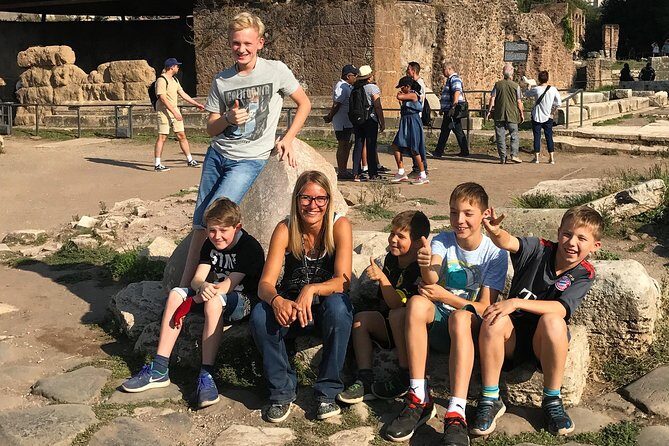
If you’re traveling with kids or teens, this portion helps. The explanations are typically kept engaging and pace-friendly, with a sense that the guide knows how to keep attention from drifting.
Jewish Quarter mood: small streets and the Schildkrötenbrunnen
Then you turn into the Jewish Quarter, where the tone shifts. Instead of big view corridors, you’re looking for small surprises and calmer edges of the city. That’s where the tour earns its nickname in your head: less march, more wandering with purpose.
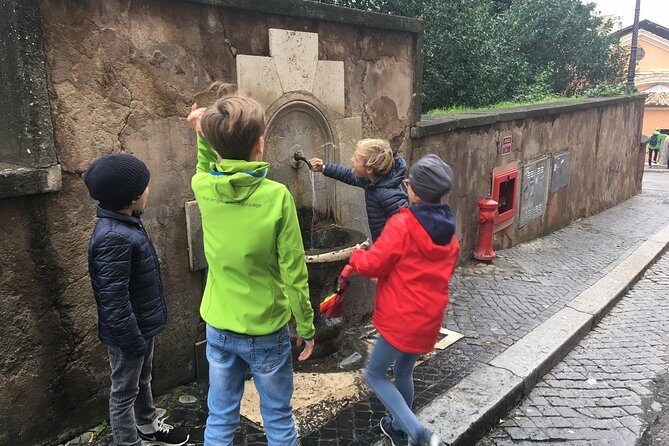
One highlight is the Schildkrötenbrunnen, the turtle fountain. It’s exactly the kind of detail that you could miss on your own. The best part is not just that you see it, but that the guide frames it as a romantic, human-scaled moment—something you can feel in your walk rather than only read in a guidebook.
This is also a section where the group size helps again. With a maximum of 18 people, you’re not stuck waiting for a line to shuffle forward. You can actually pause when something catches your eye and the guide can keep the story coherent.



Largo Argentina: Julius Caesar’s assassination site and ancient temples
Next you reach Largo Argentina, one of Rome’s most dramatic sites. This is where the famous Julius Caesar assassination happened, with ancient temple remains around you. Even if you know the story already, seeing it in context changes the feeling. The guide helps connect the political shock to the physical space.
What I like here is the “why it sticks” approach. The guide doesn’t only drop names. You understand how this area became meaningful in Roman memory and how the ruins reflect that layered importance.
A practical note: this area can feel intense because the site is famous. Take a breath and let the explanations land before you start scanning for photos. If you rush, you’ll miss the connections the guide is making.
Ending at Campo de’ Fiori: turn the tour into an afternoon or evening
The walk finishes at Campo de’ Fiori, a famous square where your guide stops you at the right kind of place. You’re not left at a dead-end or a closed museum. You’re in a hub where it’s easy to keep the day going.
From here, you can shape your time: a long stroll, a café stop, a casual dinner, or just people-watching. The tour doesn’t try to control your whole evening, which I appreciate. It hands you a finish point with options.
This ending also works well for practical logistics. Campo de’ Fiori sits in a part of Rome where you can usually plug into other plans without feeling stranded.
Guides and the style you should expect (humor, flexibility, and kid-friendly pacing)
This tour is in German, and the guide style is a big part of the value. You’ll hear witty anecdotes and enjoy a tone that keeps things light while still covering serious subjects like Rome’s origins and Julius Caesar.
The names that come up for this route include Mira, Giancarlo, Donato, Niels, Susi, Julia, Annett, and Anna. Across these guides, a pattern shows up: strong storytelling, humor, and a way of explaining Rome so it lands for different ages. Some guides tailor to families and keep younger participants engaged without losing the thread for adults.
Flexibility is another theme. One guide even managed rainy weather with creativity, which matters in Rome where plans can change fast. If rain shows up, expect the group to keep moving and the guide to adjust the rhythm rather than cancel the whole experience.
Price and value: is $93.68 worth it?
At $93.68 per person for about 3 hours, this isn’t a budget stroll. The value comes from three things you don’t easily replicate on your own:
First, you’re paying for interpretation. Roman sites don’t label themselves in plain language. The guide connects ruins, symbols, and stories into something you can actually remember.
Second, you get a route that balances major highlights with smaller moments like the turtle fountain and the Jewish Quarter corners. That mix is what makes it feel like more than a checklist.
Third, the group size is capped at 18, which usually keeps the pace human. More space to hear the guide, more freedom to pause, fewer bottlenecks at viewpoints.
What costs extra? Transport to and from attractions (you’re walking as part of the tour), snacks, and tips. No snacks is the one I’d plan around. Bring water, and if you know you get hungry, eat before you start or plan a stop after you finish in Campo de’ Fiori.
Getting the most out of the walk (without overplanning)
Because the tour ends at Campo de’ Fiori, I’d treat the last hour as your “buffer zone.” Don’t schedule a tight train or a hard reservation right after the finish unless you enjoy stress.
Also, dress for Rome’s mood swings. Even if you’re planning a sunny day, bring a layer. And wear shoes you can trust for a long walk on uneven city surfaces.
If you’re going with kids, this is one of the better formats for keeping them interested. The pace and explanations are designed to feel accessible, and the route naturally mixes dramatic landmarks with smaller visual breaks.
Should you book this German walk from Capitoline to Campo de’ Fiori?
Book it if you want a German-guided Rome walking tour that connects viewpoints, famous stories, and quieter street corners into one coherent route. It’s a good choice for first-timers who need orientation, and also for return visitors who want more meaning than a quick photo stop.
Skip it (or be cautious) if you hate walking for 3 hours or you need snacks and breaks more often than a typical route allows. Also think twice if you don’t speak German well—this one is clearly built around a German-speaking guide, not translation.
If you’re the flexible type, you’ll get a lot out of it: start at the Capitoline, watch the Forum unfold toward the Colosseum, step into market-and-neighborhood Rome, and finish in a square where the evening practically writes itself.
FAQ
What language is the tour in?
The tour is offered in German.
How long is the walking tour?
It lasts about 3 hours.
Where do we meet and where does the tour end?
You meet at Piazza del Campidoglio near the Marc Aurel statue, and the tour ends at Campo de’ Fiori.
How big is the group?
The tour has a maximum of 18 travelers.
What’s included in the price?
The price includes the 3-hour guided tour in German. Transportation, tips, and snacks are not included.
Can I cancel for a full refund?
Yes. You can cancel up to 24 hours in advance for a full refund. If you cancel later than that, the amount won’t be refunded.