REVIEW · ROME
Fun Golf Cart Tour with Music and Gelato in Rome
Book on Viator →Operated by Not boring tours · Bookable on Viator
Rome, faster, with gelato included. This golf cart tour lets you skip the driving and enjoy Rome’s highlights at a relaxed pace, with music along the route. The vibe is upbeat, but the guide keeps it grounded in what you’re actually seeing.
I love the way the stops are stitched together like a real story, not a list. You’ll hear guide-led context at major sights with a small-group feel, capped at 14 people, so questions don’t get lost.
One thing to plan around: the tour is weather-dependent, and not everything is ticketed for you (for example, Colosseum admission isn’t included). If you’re coming for deep museum time, you may want add-on plans too.
In This Review
- Key things to know before you roll
- A 2.5-hour Rome sweep by golf cart (and why it’s worth $68.79)
- Morning or afternoon: choosing the timing that makes photos easier
- Your guide turns a route into a story (Salvo, Salvatore, and Gabrielle)
- Stop by stop: from St. Peter’s Basilica to Largo Argentina
- St. Peter’s Basilica: the scale, the location, the meaning
- Castel Sant’Angelo: from mausoleum to pope fortress
- Area Sacra di Largo Argentina: temples, theater ruins, and Caesar’s shadow
- Piazza Venezia / Ancient City: a quick reset point
- Colosseum photos from the perfect spot (tickets not included)
- Moses at San Pietro in Vincoli, then Pincio views and Pantheon gelato
- San Pietro in Vincoli: Michelangelo’s Moses and the chains story
- Terrazza del Pincio: Rome from above Piazza del Popolo
- Pantheon: visit time and the gelato finish
- Santa Maria Sopra Minerva and Campo de’ Fiori: Gothic details to nightlife energy
- Santa Maria Sopra Minerva: Gothic church on older foundations
- Campo de’ Fiori: market square, nightlife, and a grim past
- Where this tour is strongest (and where you might need add-ons)
- Pricing value: what $68.79 really buys you
- Who should book this golf cart tour (and who should choose differently)
- Should you book this tour?
- FAQ
- How long is the Rome golf cart tour?
- How much does the tour cost?
- Does the tour include gelato?
- Is the tour offered in English?
- What is the group size limit?
- Where do we meet and where does the tour end?
- Are tickets to the Colosseum included?
- Is admission included for all other stops?
- Can I choose a morning or afternoon departure?
- What happens if the weather is bad?
Key things to know before you roll
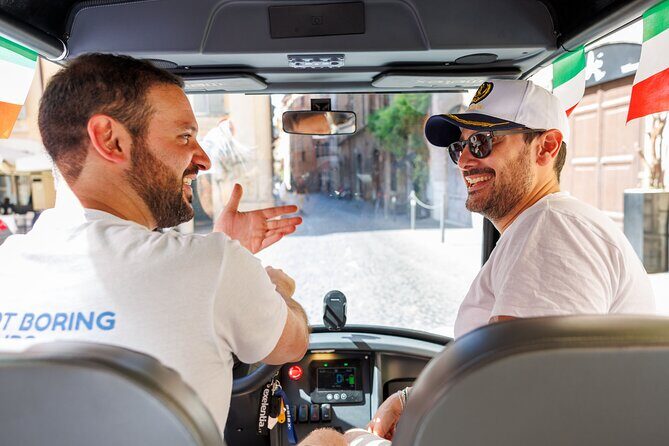
- Small group ride (max 14): more personal, easier to hear your guide while moving between sights
- Music on the cart: a fun soundtrack as you hop from neighborhood to neighborhood
- A practical Vatican-to-center route: St. Peter’s area, Castel Sant’Angelo, Largo Argentina, and beyond
- Gelato after the Pantheon: not just a stop, but a built-in sweet finish
- Quick photo windows: you’ll see a lot fast, but some famous sites aren’t handled with full entry tickets
A 2.5-hour Rome sweep by golf cart (and why it’s worth $68.79)
This is a short tour by design: about 2 hours 30 minutes to cover a lot of Rome without you spending your day in gridlock or wrestling for parking. You’ll meet at Via Santamaura, 12 (00192 Roma) and finish in Campo de’ Fiori (00186 Roma), which is convenient because it drops you near one of Rome’s liveliest areas for a late drink or dinner.
The max 14 travelers limit matters more than you might think. A bigger bus can turn “guided sightseeing” into “listen if you can.” Here, it’s easier for the guide to keep momentum and actually talk. And with the cart format, you’re not constantly starting and stopping on foot across long distances.
Also, the tour is offered in English, and you’ll get a mobile ticket. That’s useful in a city where you may be hopping between apps, confirmations, and ticket offices.
You can also read our reviews of more tours and experiences in Rome.



Morning or afternoon: choosing the timing that makes photos easier
You can pick a morning or afternoon tour. That flexibility helps if you’re doing other Rome priorities the same day, like a museum visit or a longer lunch.
Timing isn’t just about convenience. One stop is Terrazza del Pincio, a famous viewpoint over Piazza del Popolo. If you’re sensitive to crowds and want calmer lighting, an afternoon slot often helps. If you prefer cooler morning walking and earlier rest, go morning.
No matter when you go, keep in mind the pacing: this is a “see a lot, learn the big stories” format. You’ll have short stops and photo windows, not long sit-down time at each landmark.
Your guide turns a route into a story (Salvo, Salvatore, and Gabrielle)
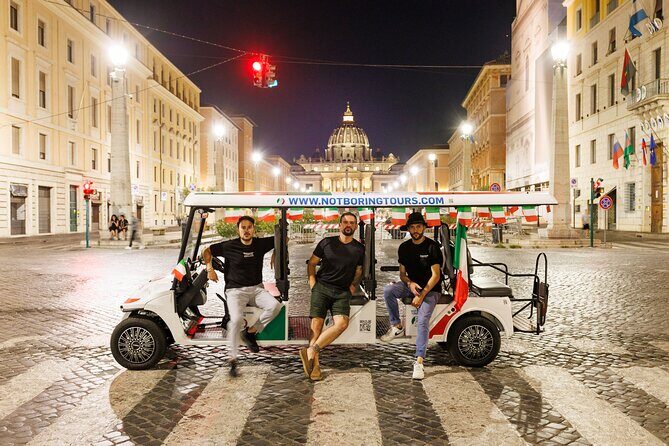
The strongest praise in the experience is about the guides. Names that come up include Salvo/Salvatore and Gabrielle, and the common thread is clear: they combine real context with a playful, fun tone.
That matters because Rome can feel chaotic if you’re just collecting monuments. With a good guide, a stop becomes a moment you understand. For example, when you’re near the Vatican, you’ll connect the landmarks to how power worked through popes, emperors, and the city’s shifting eras.
There’s also a practical side. One of the best signals for a tour like this is flexibility. When travel delays hit, the operator adjusted so the group still got the full experience. If you’re the type who doesn’t want your entire day ruined by an airport delay, this is reassuring.
Stop by stop: from St. Peter’s Basilica to Largo Argentina
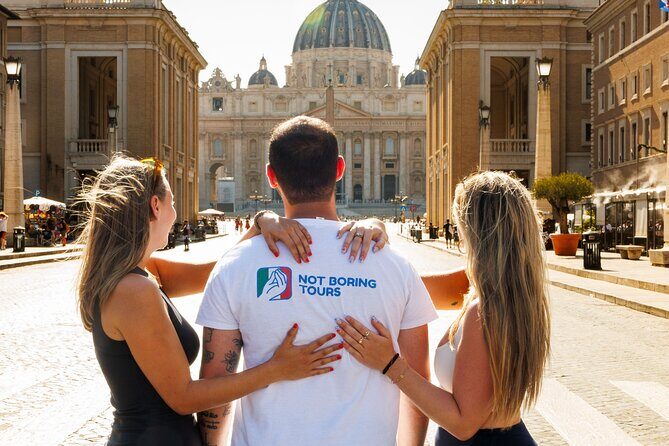
The itinerary moves in a way that feels efficient without turning cold. You’ll start in the Vatican orbit and then cut toward central Rome.
St. Peter’s Basilica: the scale, the location, the meaning
Your first major stop is St. Peter’s Basilica, described as the largest church in the world and a standout Renaissance masterpiece. The big takeaway isn’t just the building itself; it’s that it’s tied to the tomb of Saint Peter, one of Jesus’s apostles and widely regarded as the first pope.
This is the kind of place where size can be a little hard to grasp. Even if your time on-site is brief, your guide can help you “read” what you’re looking at: why it’s here, who it’s connected to, and why Rome made it a focal point of religious power.



Castel Sant’Angelo: from mausoleum to pope fortress
Next is Castel Sant’Angelo, first built as Emperor Hadrian’s mausoleum and later transformed into a fortress for the popes. You’ll also hear about its connection to the Vatican via the Passetto di Borgo, a secret escape route.
This stop is great if you like your Rome with a little tension. It’s not only pretty views and stonework; it’s about protection, control, and escape plans that existed because politics could get dangerous.
Area Sacra di Largo Argentina: temples, theater ruins, and Caesar’s shadow
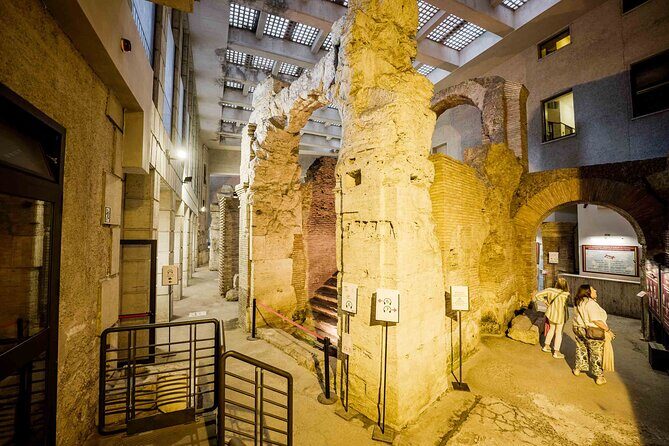
Then you’ll reach Area Sacra di Largo Argentina, also tied to Largo di Torre Argentina. This area includes four ancient Republican temples, plus ruins linked to Pompey’s Theatre. It’s especially famous as the site of Julius Caesar’s assassination.
Expect this stop to feel like a time-jump. Modern Rome and ancient drama sit close together, and a guide helps you notice the layers instead of just moving past them.
Piazza Venezia / Ancient City: a quick reset point
You’ll also make a brief stop at Piazza Venezia / Ancient City. Even with limited minutes, it helps to have a guided pause here because it sets up where you are in Rome’s center and how the city’s “big picture” connects to the next landmarks.
Colosseum photos from the perfect spot (tickets not included)
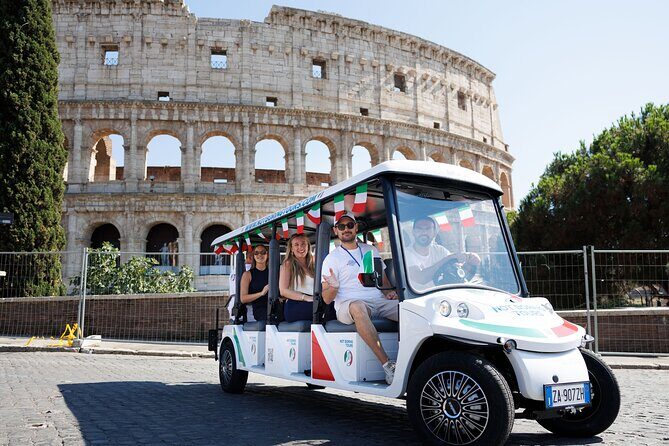
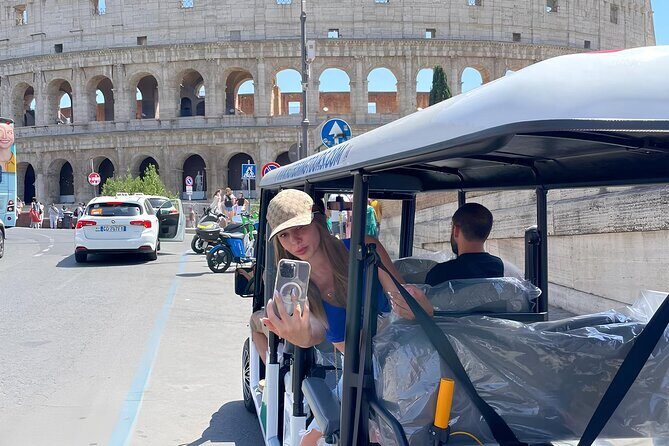
One stop that everybody recognizes is the Colosseum, with about 25 minutes set aside for photographs.
Here’s the practical bit: Colosseum admission isn’t included. So you should think of this as a photo-and-orientation stop, not a full visit with entry. If you want to go inside for the full experience, plan your Colosseum ticket for a different block of time.
Still, a good photo stop can be surprisingly valuable. If it’s your first time in Rome, getting oriented matters. You’ll leave with a clearer sense of what you want to revisit, and that makes any later ticketed visit feel more purposeful.
Moses at San Pietro in Vincoli, then Pincio views and Pantheon gelato
This part of the route has a nice mix: art, religion, and city views, capped with a food payoff.
San Pietro in Vincoli: Michelangelo’s Moses and the chains story
At San Pietro in Vincoli, you’re in the home of Michelangelo’s famous statue of Moses. The church is also noted for preserving chains that are said to have bound Saint Peter in Jerusalem.
That’s an ideal stop if you want Rome to feel personal and human. You’re not just looking at a landmark; you’re meeting a story that connects sculpture to faith tradition and local legend. And the guide can point out what makes this statue special without turning it into an art-lecture.
Terrazza del Pincio: Rome from above Piazza del Popolo
Next comes Terrazza del Pincio, known for one of Rome’s best panoramic overlooks of Piazza del Popolo. There are gardens and statues in the area, so it’s not just a view platform; it’s a pleasant pause where Rome looks like it’s been arranged for a postcard.
If you’re there in late light, it can be a standout moment. Even without a sunset, it’s still useful to see the city laid out so your later walks make more sense.
Pantheon: visit time and the gelato finish
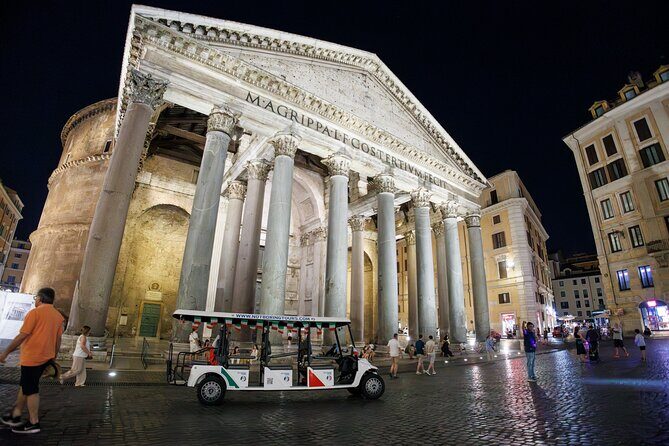
Then you head to the Pantheon. After your time there, you get gelato as a set finish. The itinerary gives about 40 minutes here, and it’s one of the clearest examples of “fun + function” in the tour format.
If the Pantheon is on your must-see list, this stop helps you hit it without waiting in a long day of lines. You’ll leave with a sweet reward and a sense of momentum.
Santa Maria Sopra Minerva and Campo de’ Fiori: Gothic details to nightlife energy
The tour continues with two stops that feel different in tone, which is a smart way to keep the day from flattening.
Santa Maria Sopra Minerva: Gothic church on older foundations
At Chiesa di Santa Maria Sopra Minerva, you’ll see the note that it’s the only major Gothic church in Rome. The site is built over a temple to Minerva, and it also houses Michelangelo’s Christ the Redeemer.
This is a stop where it helps to pay attention to layers. Rome often feels like a museum of reuse, and this church is a great example of the city building new faith spaces on old ones.
Campo de’ Fiori: market square, nightlife, and a grim past
Finally, you end at Campo de’ Fiori, with about 15 minutes included on the route, and admission isn’t included for that stop.
Campo de’ Fiori is known for its daily market and lively nightlife. It also has a darker footnote: it was once the site of public executions, including that of philosopher Giordano Bruno.
This is the kind of contrast that makes Rome feel real. One minute you’re in a square that sells produce and street snacks. The next, you’re reminded that history includes fear, punishment, and ideology, not just art and architecture.
Where this tour is strongest (and where you might need add-ons)
This experience shines if your goal is a fast, guided “big picture” sweep. You’ll cover major names like St. Peter’s Basilica, Castel Sant’Angelo, Largo Argentina, the Colosseum, San Pietro in Vincoli, the Pantheon, and end by Campo de’ Fiori, all without spending the day navigating transport.
It’s also a good fit if you like humor and energy in your guide. The guides named Salvo/Salvatore and Gabrielle are described as fun and lively, not just reciters of facts. That’s what turns a tour from sightseeing into a story you remember.
But here’s the consideration: the tour includes short windows and doesn’t include admission for Colosseum. So if your top priority is standing inside the arena floor, plan that separately.
Also, the tour requires good weather. If it’s canceled due to poor weather, you’ll typically be offered another date or a refund, but you’ll still want to keep your schedule flexible.
Pricing value: what $68.79 really buys you
At $68.79 per person, you’re paying for three things more than just transport:
- Time-saving logistics: you hit a lot of sites in one go, which is hard to replicate cheaply on your own
- Guided context: the route has enough stops that you really need someone to connect the dots
- Included gelato and a fun ride format: the Pantheon-to-gelato finish turns the tour into a full experience, not a checklist
Where the price might feel less “all-in” is where ticketed entry matters. Since Colosseum admission isn’t included, your total Rome day cost may rise if you also want to enter. But for most first-time visitors, an orientation stop plus a separate ticketed visit can be a smart strategy.
Who should book this golf cart tour (and who should choose differently)
This tour is a strong match for:
- First-timers who want to get oriented fast
- Visitors with limited time who prefer a guided overview over constant map-reading
- People who like a small group feel with a fun guide
- Travelers who want a gelato payoff without hunting for it after a long day
It can also work well for someone with mobility limits, because at least one group member with poor mobility was able to join without being excluded, thanks to the way the tour is set up around the cart.
You might choose differently if you want long, quiet, museum-style visits. This is built for movement, viewpoints, and quick historical connections—not for hour-after-hour entry lines.
Should you book this tour?
I’d book it if you want a high-impact overview of Rome with a guide who makes the ride fun and understandable, plus an easy gelato finish. It’s especially useful if you’re trying to fit big-ticket landmarks into a tight schedule.
I’d also book it if you like the idea of doing Colosseum as an orientation moment first, then deciding later whether you want a ticketed inside visit.
Skip it or plan add-ons if Colosseum entry inside is your whole day. And if your travel dates are fragile, keep an eye on conditions since the tour needs good weather to run.
FAQ
How long is the Rome golf cart tour?
It runs about 2 hours 30 minutes.
How much does the tour cost?
The price is $68.79 per person.
Does the tour include gelato?
Yes. Gelato is provided after the Pantheon stop.
Is the tour offered in English?
Yes, it is offered in English.
What is the group size limit?
The tour has a maximum of 14 travelers.
Where do we meet and where does the tour end?
You start at Via Santamaura, 12, 00192 Roma RM, and the tour ends at Campo de’ Fiori, 00186 Roma RM.
Are tickets to the Colosseum included?
No. Colosseum admission is listed as not included.
Is admission included for all other stops?
The itinerary lists admission as free for most other stops. Colosseum and Campo de’ Fiori are listed as not included.
Can I choose a morning or afternoon departure?
Yes. You can choose either a morning or afternoon tour.
What happens if the weather is bad?
The tour requires good weather. If it’s canceled due to poor weather, you’ll be offered a different date or a full refund.