REVIEW · ROME
From Rome: Discover Amalfi Coast and Pompeii, Full Day Tour
Book on GetYourGuide →Operated by Welcome Italy · Bookable on GetYourGuide
One day, two UNESCO worlds. This full-day Pompeii and Amalfi Coast trip is a long, scenic hit of Campania: Pompeii’s preserved streets, then the sea towns of Positano and Amalfi. I love how the Pompeii excavations are handled with a real guided approach, so you know what you’re seeing, not just walking around. I also like that the day runs in an air-conditioned minivan, which matters once the road gets busy and the sun shows up.
One thing to plan for is the 12-hour pace, with real travel time plus stops for photos and breaks. Also, lunch is not included, so you’ll want to budget for the meal stop once you’re in Positano.
In This Review
- Key things I’d pay attention to
- Pompeii and the Amalfi Coast in One Long Day (and why it works)
- Getting from Rome to Campania in an air-conditioned ride
- Pompeii: the parts you should care about (and how the guide helps)
- Positano stop: lunch, pottery shopping, and real free time
- Amalfi town: coffee, photos, and a short but satisfying taste
- Limoncello tasting: when the day’s theme becomes a real memory
- Pace, comfort, and who should book this
- Price and value: is $303.60 a good deal?
- Practical tips so your day feels smoother
- Should you book this Pompeii and Amalfi Coast day trip?
- FAQ
- How long is the tour?
- Where are pickup and drop-off in Rome?
- What languages does the live tour guide speak?
- How many people are in the group?
- How long do you spend at Pompeii, and is it guided?
- Are entrance tickets to Pompeii included?
- Is lunch included, and are there breaks during the drive?
- How much free time do you get in Positano and Amalfi?
- Is limoncello tasting included, and is the tour wheelchair friendly?
Key things I’d pay attention to
- Small-group feel in a deluxe minivan: Limited group size, with air-conditioning and a guide assistant for the whole trip.
- Pompeii with a 2-hour professional visit: You’re not left alone; you get guided highlights to make the site click.
- Positano time that includes lunch and free exploring: You get walking room and shopping time, not just a drive-by.
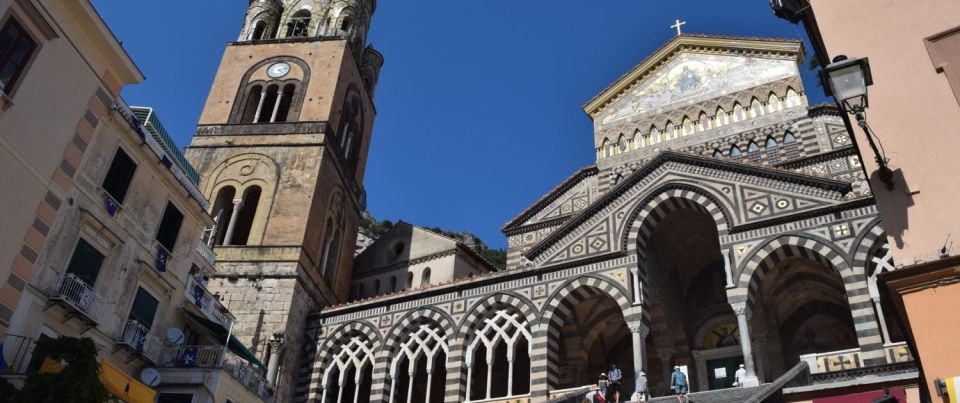
- Amalfi stop for coffee, photos, and a shorter visit: A focused taste of the town before heading back.
- Limoncello tasting included: A sweet local payoff that fits naturally into a lemon-heavy day.
Pompeii and the Amalfi Coast in One Long Day (and why it works)

If you’re short on time in Rome but still want the classic Campania double play, this tour makes sense. You’re packing in two UNESCO experiences that feel completely different: Pompeii is about stillness and sudden survival from another era. The Amalfi Coast is about movement—roads clinging to cliffs, towns stacked for views, and lemon-flavored everything.
The tour is designed to avoid the two biggest day-trip problems: getting stuck without guidance at Pompeii, and roasting on the coast in a vehicle that wasn’t built for comfort. You get a guide during Pompeii and a tour assistant throughout the day, plus the transport runs in an air-conditioned de luxe minivan with a small group size.
The tradeoff is obvious: it’s a full day. Even with efficient stops, you will spend time in transit between Rome, Pompeii, and the coast. If you hate long drives, you might feel it. If you’re okay with a day that’s mostly “go-go-but-not-chaotic,” this itinerary is built for you.
You can also read our reviews of more tours and experiences in Rome.



Getting from Rome to Campania in an air-conditioned ride
Your day starts with pickup inside the Aurelian Walls area. You meet the group in your hotel lobby and you’re asked to be ready about 10 minutes before the scheduled pickup time. That early timing matters because the minivan needs to run cleanly with everyone on board.
After pickup, you’re on the road for about 2.5 hours toward Pompeii, with one break along the way for a mid-morning breakfast or snack. This is a helpful buffer, because Pompeii is a walking-heavy site and you’ll want energy before your guided tour starts.
What I like here is the setup: the tour doesn’t treat transportation like an afterthought. With a small group and an English-speaking tour assistant or driver-guide, you’re not just being transported. You’re also being guided through what’s coming next and where to pay attention—especially useful on a day where you’ll see several places back-to-back.
One practical note: the schedule includes photo stops, which can feel brief, but they’re useful. They give you quick “I’m in the right place” moments without derailing the overall flow.
Pompeii: the parts you should care about (and how the guide helps)
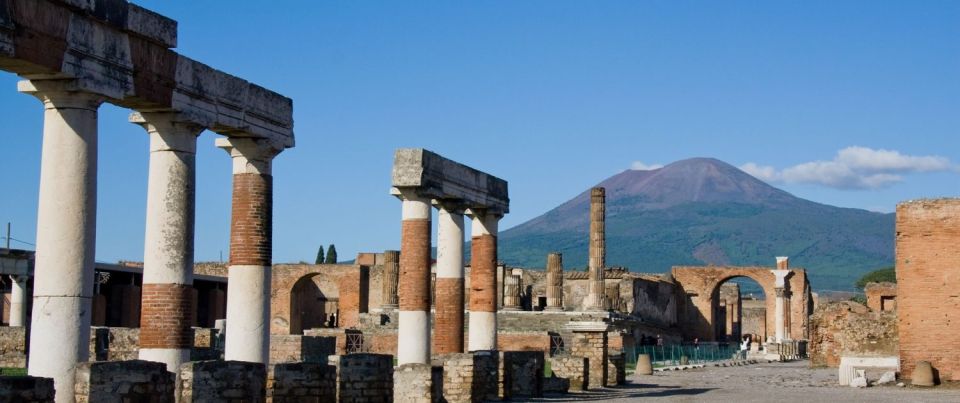
Pompeii can be overwhelming if you walk in cold. The streets are there, the buildings are there, but without context it’s easy to miss what makes the place unforgettable. That’s why the guided portion is the heart of this day.
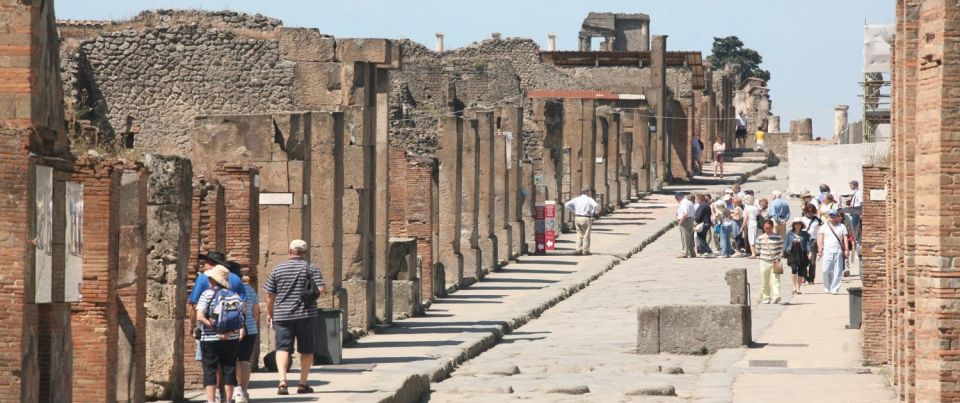
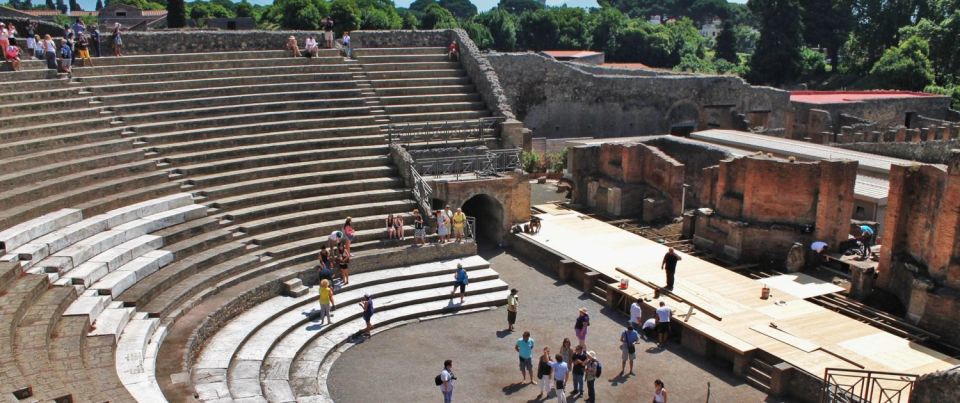
You arrive at the Pompeii archaeological site and you get guided highlights with a professional guide for about 2 hours. You’ll explore major areas of the ancient city, including the Macellum (the food market), the Thermal Baths, and the spaces where Romans gathered for dinner and wine. You’ll also see homes of wealthy citizens—so you get a sense of different social levels, not only temples or public buildings.
Here’s what I find valuable about this approach: it gives you a guided “map” of daily life. Pompeii isn’t just ruins. It’s a place where you can connect food, public routines, bathing culture, social life, and status—all in one compact footprint.
The tour also includes some photo opportunities and walking time. The walking part is important: Pompeii isn’t a drive-through attraction. But because the guide is steering the route, you avoid the common mistake of wandering in circles or only catching the most obvious-looking corners.
You’ll come away with better pattern recognition. Instead of seeing scattered walls, you start noticing what those spaces were used for: where people ate, where they relaxed, and how the city functioned.
Positano stop: lunch, pottery shopping, and real free time
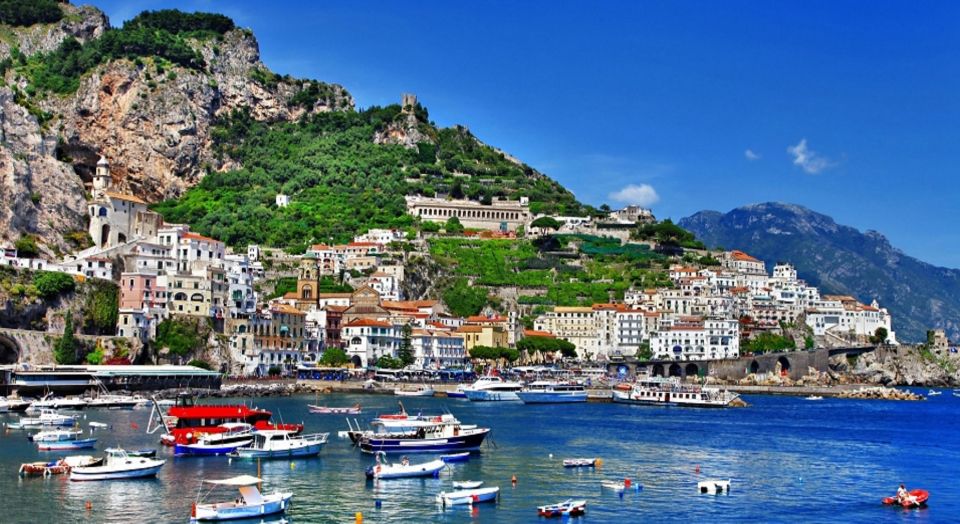
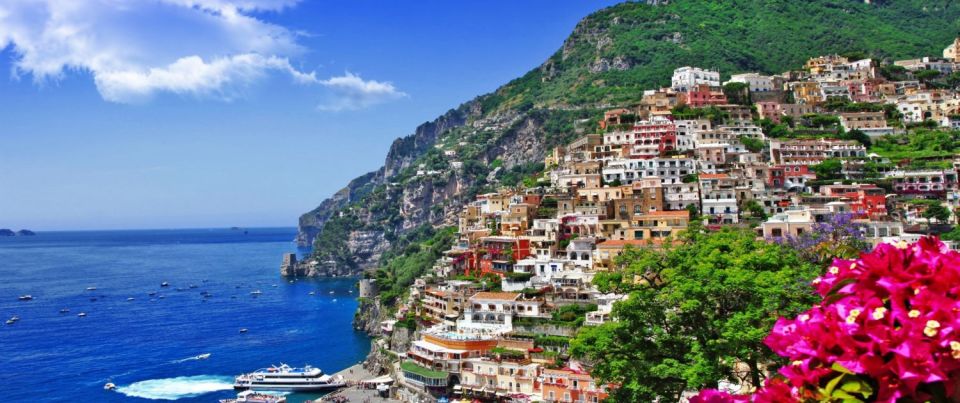
After Pompeii, the drive continues along the way to Positano. There’s a lunch stop here, so you don’t have to guess where to eat once you reach the coast. From there, you get a dedicated Positano block with break time, photo stops, guided visits, and then free time.
Your time in Positano includes:
- Lunch
- Free time to explore and walk
- Shopping time
- Photo stops
This is the part of the day where you’ll feel the Amalfi Coast personality: steep lanes, storefronts, and viewpoints that reward you for slowing down. The tour also builds in time for shopping, specifically around the famous pottery of Positano and Amalfi. If you like ceramics, this is one of the best chances during the day to buy something that feels tied to place—not generic souvenirs.
One more thing I appreciate is that you get guidance before free time. That means you’re not just set loose. You have enough context to choose which streets to wander, and you can aim for viewpoints that actually make sense for your time limit.
If the weather is rough, don’t assume the day is ruined. I’ve seen accounts of groups still enjoying Positano’s beauty even in cold or rainy conditions. The key is to dress for it—layers help—and keep your expectations flexible.
Amalfi town: coffee, photos, and a short but satisfying taste
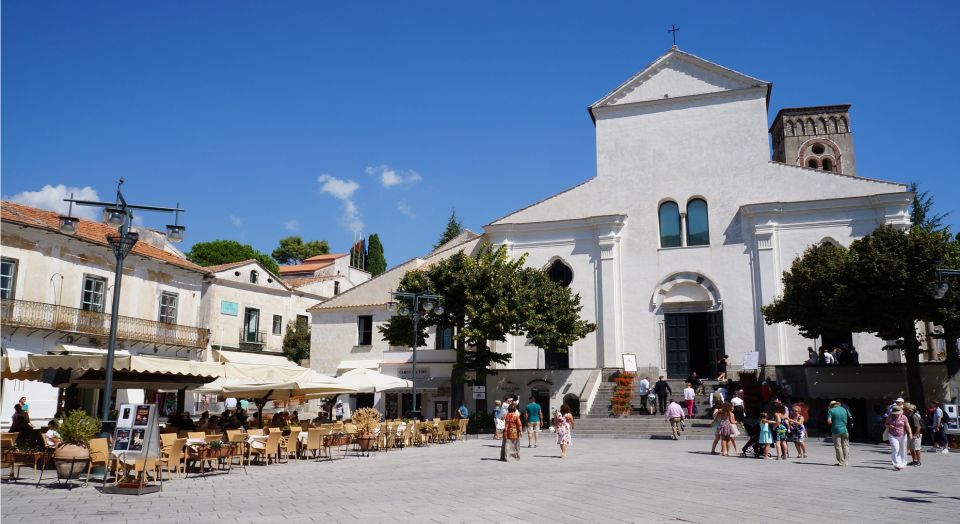
After Positano, the tour continues to Amalfi. This stop is shorter than Positano—about an hour total with break time, photo stops, time to visit, coffee, and a chance to shop.
That shorter timing is intentional. Amalfi is a town you can enjoy in quick bursts: you get the feel of the place, you grab coffee, you take photos, and you still have time to keep the day from dragging.
The tour gives you the basics to orient yourself, then steps back with free time. If you want shopping, you’ll have some time. If you want to slow down and watch the town rhythm, you can do that too.
Also, coffee is included here. It’s a small line in the schedule, but it helps a lot on a day like this—when you’re already managing crowds, walking, and time.
If you love lemon-based flavors, this is the part where your day’s theme keeps showing up. Between the town feel and the later limoncello moment, it becomes an easy-to-follow flavor story.



Limoncello tasting: when the day’s theme becomes a real memory
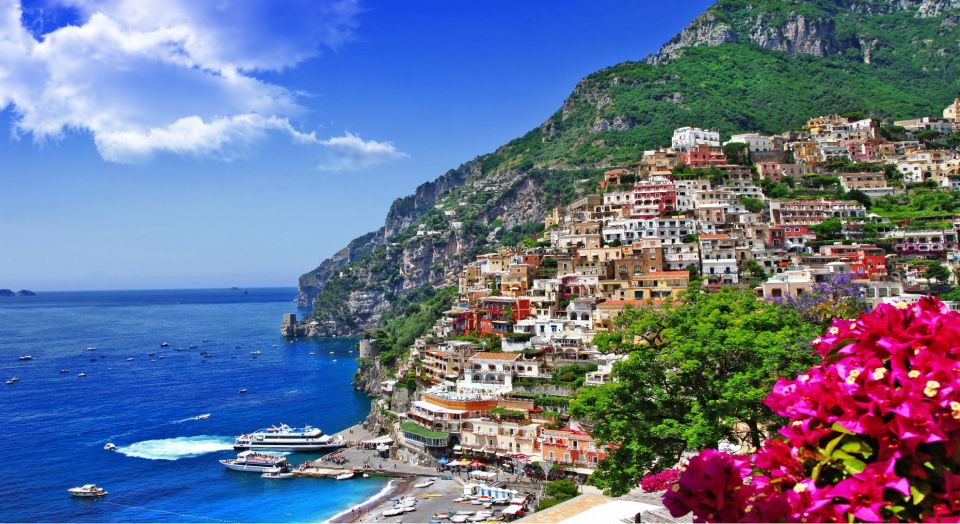
The highlights call out a limoncello tasting, and I’d treat that as more than a checkbox. On a day that moves between ruins and seaside towns, a tasting gives you a sensory anchor.
It’s also a nice pacing tool. Pompeii is heavy in imagery and information. The coast is airy and scenic. Limoncello sits in the middle: it’s local, it’s tied to the region, and it gives you a quick pause without breaking the schedule.
If you’re the kind of traveler who forgets souvenirs but remembers flavors, this matters. You’ll leave with something you can picture later when you think about the coast: lemon first, then sea-road turns, then Pompeii streets.
Pace, comfort, and who should book this
This is not a slow travel day. It’s a “see a lot, with structure” day. The schedule includes:
- Pickup in Rome
- Transit time with a break for breakfast/snack
- Guided Pompeii visit with major sites
- Drive to the Amalfi Coast
- Lunch in Positano
- Free time and shopping in Positano
- Coffee and a visit in Amalfi
- Return drive back to Rome
The comfort piece is strong. The transport is air-conditioned, and the group size is kept small. In the smaller-group context, you’re more likely to actually hear your guide, ask questions, and avoid the “shout over chaos” dynamic.
The drawback is that the day includes a lot of movement—driving, walking at Pompeii, and short town walks. It’s also not suitable for people with mobility impairments or wheelchair users.
Who this tour fits well:
- You want Pompeii + the Amalfi Coast in one day from Rome
- You like guided structure, especially at a complex site like Pompeii
- You’re okay with free time that’s time-limited, not a full independent stay
- You want a small-group experience with a tour assistant present
Who might want a different option:
- You prefer minimal driving or very slow pacing
- You need longer stays in each town rather than quick sampling
Price and value: is $303.60 a good deal?
At about $303.60 per person, you’re paying for a lot of “day-trip logistics” that add up fast if you assemble it yourself. Here’s what’s included based on the tour details:
- Pickup and drop-off inside the Aurelian Walls area
- Tour guide for the whole trip (a guide/assistant presence throughout)
- 2 hours in Pompeii with a professional guide
- Entrance tickets to the Pompeii excavations
- Air-conditioned de luxe minivan transport
- Limoncello tasting
- Time built into Positano (including lunch) and Amalfi (including coffee)
Lunch is not included in the list of included items, even though lunch is part of the Positano block in the day plan. The safe takeaway: plan on paying for meals during the day unless your booking confirmation states otherwise clearly. When I’m evaluating value on a day trip, meal costs are a real part of the budget.
Is it still good value? For most people, yes—because the entrance ticket plus guided Pompeii time plus door-to-door pickup are the expensive bits. If you tried to do this as separate bookings, you’d likely pay for transport anyway, then pay a guide, then pay entrances, and still have to coordinate timing yourself.
So I’d treat this as a “pay for convenience and coverage” option: it gives you the structure to make one day count, without requiring you to be an itinerary manager.
Practical tips so your day feels smoother
- Wear shoes you can walk in for Pompeii. The site isn’t a sit-and-look place.
- Pack layers. The coast can feel colder than you expect, and weather can shift fast.
- Bring some cash or card for pottery purchases. Positano and Amalfi shopping is part of the schedule.
- Don’t over-plan your must-see list. The guide’s route is designed to hit major Pompeii areas and then give you enough time to enjoy the towns.
- If you want photos, take them quickly during stops and then use your free time for a slower look. You’ll get better shots and a calmer pace.
Should you book this Pompeii and Amalfi Coast day trip?
I’d book it if your goal is simple: you want the classic Campania highlights in one guided day, and you like the idea of getting Pompeii right with a real guide. The combination of small-group comfort, guided Pompeii focus, and structured town time in Positano and Amalfi is exactly what most people struggle to coordinate on their own.
I’d hesitate if you hate long days, dislike road travel, or need mobility-friendly access. Also, if meals are a big priority for you, double-check what’s covered in your exact booking so there are no surprises once you’re out of Rome.
If you’re doing Rome-only and you’ve already had your fill of museums, this is the kind of day trip that changes your mental map of Italy fast: Roman streets first, sea towns after, and a lemon-flavored reminder to make the day stick.
FAQ
How long is the tour?
The tour runs for 12 hours.
Where are pickup and drop-off in Rome?
Pickup and drop-off are inside the Aurelian Walls area.
What languages does the live tour guide speak?
The live tour guide can speak Spanish, French, Portuguese, and English.
How many people are in the group?
The tour is a small group limited to 12 participants.
How long do you spend at Pompeii, and is it guided?
You get about 2 hours at the Pompeii archaeological site, and it includes a guided visit.
Are entrance tickets to Pompeii included?
Yes, entrance tickets to the Pompeii excavations are included.
Is lunch included, and are there breaks during the drive?
Lunch is not listed as included, but there is a lunch stop during the Positano portion of the day. There is also one mid-morning breakfast or snack break along the way.
How much free time do you get in Positano and Amalfi?
In Positano, you have free time plus shopping and walking. In Amalfi, you have break time, free time for visiting, coffee, and shopping.
Is limoncello tasting included, and is the tour wheelchair friendly?
Limoncello tasting is included. The tour is not suitable for wheelchair users or people with mobility impairments.