REVIEW · AMALFI COAST DAY TRIPS
From Rome: Amalfi Coast and Pompeii Tour
Book on GetYourGuide →Operated by PAL.MAR.S.R.L. · Bookable on GetYourGuide
Two UNESCO stops, one roller-coaster road trip. I like how this day trip strings together Pompeii and the Amalfi Coast in one long, efficient outing, with hotel pickup inside Rome’s Aurelian Walls and an 8-passenger minivan that keeps the group feeling human-sized. You get a guided look at the remains of an everyday Roman town, then you trade straight-line streets for hairpin views and sea air.
I also love the built-in chance to slow down in Positano, because you get real free time after lunch to wander down toward the water and soak in the town’s stair-and-cliff layout. One possible drawback: the drive along the Amalfi Coast can be tough if you get carsick, especially after Pompeii when the roads start winding more noticeably.
In This Review
- Key things you’ll notice on this trip
- From Rome pickup to Amalfi views: how the day really flows
- Pompeii with a local guide: what you’ll see (and what it means)
- The Roman Republic in your head: clothing, daily life, and the volcano shadow
- Positano lunch and free time: where to spend your minutes
- Amalfi town stop: getting local pointers before you head back
- The long-drive reality: comfort, car sickness, and smart packing
- Small group advantages: why the max 8 (and often smaller) matters
- Price and value: is $303.60 worth a 12-hour day?
- Who should book this Rome to Amalfi + Pompeii tour
- Should you book this Amalfi Coast and Pompeii day trip?
- FAQ
- How long is the Rome to Amalfi Coast and Pompeii tour?
- What’s included, and what’s not included?
- How big is the group?
- Is lunch provided?
- What language is the tour guide?
- What should I bring for the day?
- Are pets allowed?
Key things you’ll notice on this trip
- Small-group minivan ride from Rome, with pickup and drop-off within the Aurelian Walls
- Pompeii guided highlights with a local guide covering key areas like markets, thermal baths, and villas
- UNESCO day-trip rhythm: serious archaeology in the morning, coastline views in the afternoon
- Positano free time after lunch for beach walks, photos, and souvenir browsing
- English-speaking escort guidance in Amalfi so you can plan a self-guided wander before heading back to Rome
From Rome pickup to Amalfi views: how the day really flows
This tour is built for people who want two UNESCO-style experiences without spending the whole day on trains. You start with pickup from hotels within the Aurelian Walls of Rome, which is a big practical win if you don’t want to solve the “where exactly do we meet?” puzzle on your own. Then you roll out in an 8-passenger minivan toward the Mediterranean side of Campania.
The morning ride is part of the show. Before you even hit Pompeii, there’s a stop on the highway for breakfast. It’s not a fancy start, but it matters: once you reach the coast, you’ll be glad you’re not starting the day hungry, and you’ll be better able to handle a long stretch of sightseeing.
As you move south, the scenery changes from Rome’s urban sprawl to the kind of coastline driving that makes you roll down your window just to listen to your own thoughts. You’ll have a local guide for Pompeii, but the minivan escort/driver angle is what keeps the day organized—time moves fast, and the group stays together.
You can also read our reviews of more tours and experiences in Rome.



Pompeii with a local guide: what you’ll see (and what it means)
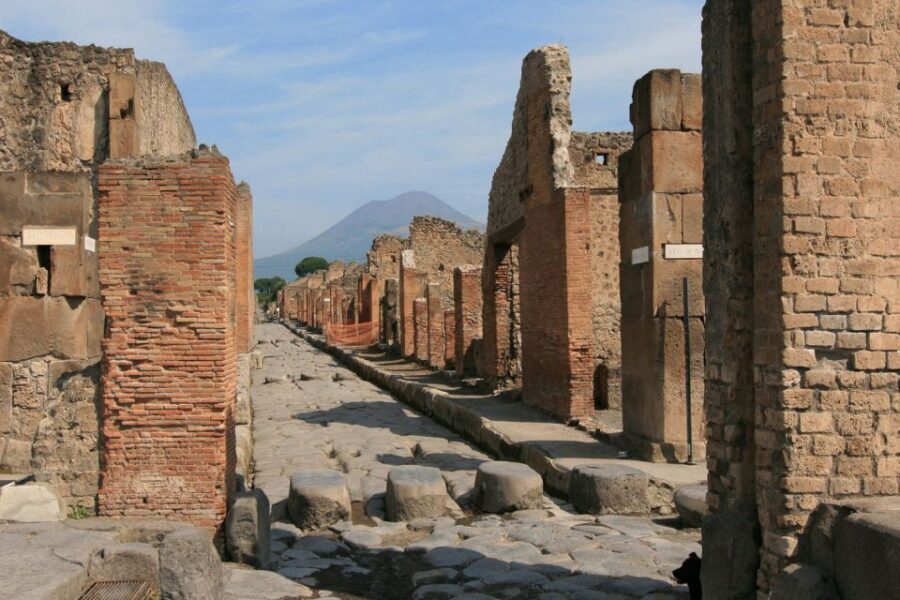
Pompeii is the morning anchor, and the way this trip handles it is smart: you don’t just wander in the open like a lone visitor hoping you picked the right path. You get a local guide who leads you through major parts of the site and helps you connect what you’re looking at to how life worked back then.
Your guide explains how Pompeii was buried when Mount Vesuvius erupted in 79 AD. That detail isn’t trivia. It’s the reason Pompeii feels so startlingly real: you’re not just looking at ruins, you’re seeing a town that froze mid-routine—streets, buildings, and everyday spaces.
You can expect stops in areas such as:
- the food market, so you get a sense of daily trade and crowds
- the thermal baths, which help you picture Roman routines beyond temples and statues
- villas of wealthy citizens, where the layout and luxury explain social rank in a way words can’t
One reason this works well as a day trip is that the guide’s job is to show you the most meaningful pieces first. I like that approach because Pompeii is enormous. With a time-limited outing, you want someone who can help you prioritize instead of asking you to do it alone.
Also, Pompeii guides on this kind of tour can be very hands-on and energetic. In past groups, guides have included names like Sabina and Enza, and the overall feedback pattern is consistent: people leave feeling they understood more than the basics and didn’t just skim the site.
The Roman Republic in your head: clothing, daily life, and the volcano shadow
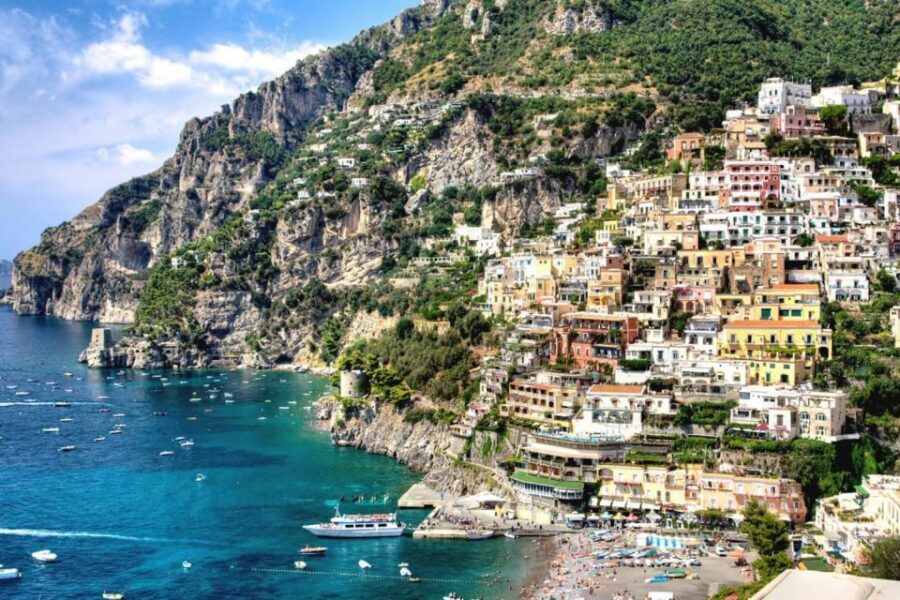
A good Pompeii visit is more than walking between stones. What makes this tour valuable is that your guide doesn’t treat Pompeii like a museum diorama; they help you imagine how people lived under the shadow of an active volcano—and how that life looked in normal moments.
As you walk, you’ll learn things like how daily life worked, what people wore, and how neighborhoods were arranged. That context is what turns “cool ruins” into a trip you remember. You start to notice practical details: where services were, how spaces were used, and how social class shaped architecture.
And yes, the earthquake-and-eruption story is dramatic. But the best part of the tour is the contrast. First, you learn the town as a place where people ate, bathed, shopped, and lived. Then you learn how quickly that everyday rhythm ended. That contrast hits hardest when you’ve got a guide who can keep the timeline clear while you’re standing in the ruins.
Positano lunch and free time: where to spend your minutes
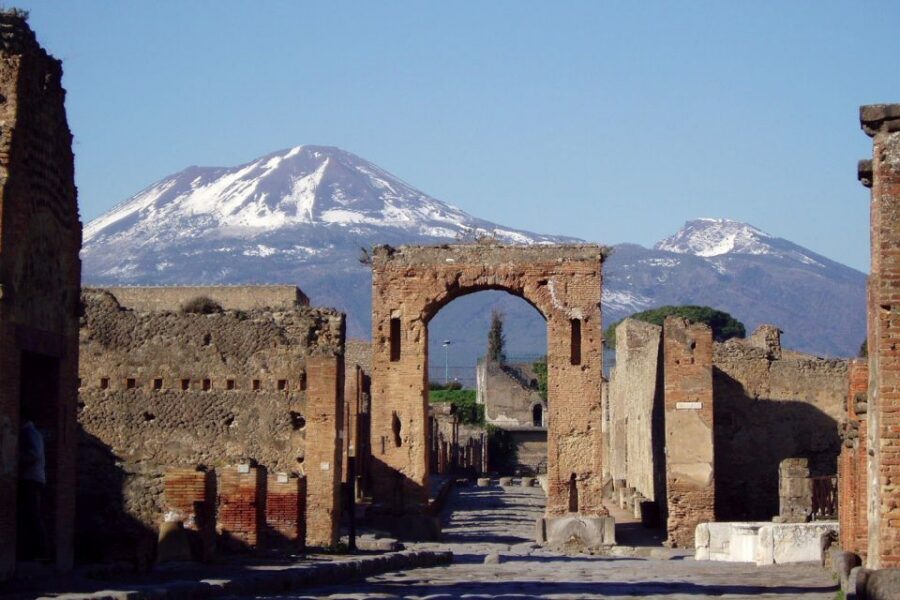
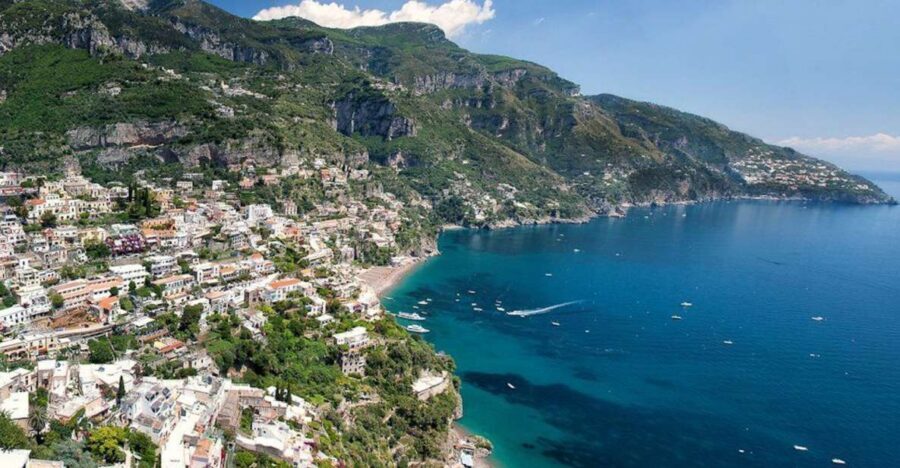
After Pompeii, you head toward the coast and stop in Positano for lunch. Lunch is not included in the tour price, so you’ll be choosing your own meal here. Practically, I treat this as your “reset moment”: sit down, hydrate, and take a breather before the most photogenic walking of the day.
Then comes the best use of your afternoon: free time in Positano. This isn’t a quick photo stop. It’s time to wander down the hillside feel of the town, look back up at the architecture stacked into the cliffs, and decide whether you want a beach walk, a souvenir browse, or just a long look at the water.
What to do with your free time (so you don’t waste it)
- Spend some time near the water for photos where the town’s layers show clearly
- Take a slow walk along the beach area if your energy holds up
- If you like shopping, this is where you’ll find plenty of chances to pick up small gifts
A nice bonus from some departures: guides and escorts have helped groups with restaurant decisions in Positano, including arranging a table or helping with where to eat if you want something by the water. Even if you don’t need that level of help, it’s still a good sign that the escort is paying attention to what will work for your day, not just for the schedule.
Amalfi town stop: getting local pointers before you head back
After lunch time and Positano wandering, you continue on to Amalfi. Here, the tour shifts from guided walking to orientation. Your escort gives you information in English about what to see in Amalfi, so you can plan a more independent stroll either immediately in the area or later on your own schedule.
You get the sense that this stop is meant to help you avoid the common travel mistake: getting to Amalfi and only seeing the first view because you didn’t know where else to look. With a short stop, that kind of guidance can be the difference between “we passed through” and “we understood the town.”
Some groups also pick up extra flavor along the way depending on timing, with notes from drivers like Luca about suggestions for things like limoncello tasting in the wider region around Sorrento and extra viewpoint stops. Those extras aren’t guaranteed to be part of every exact run, but they hint at the general approach: the driver/escort often tries to make the drive feel less like pure transit.



The long-drive reality: comfort, car sickness, and smart packing
Let’s talk about the main practical challenge: you’re doing a lot of road time. You’re in a minivan, which is smaller and more intimate than a big bus, but it still means you’ll feel every turn.
If you get carsick, you should take this seriously. One of the most direct cautions from people who’ve done this trip: Pompeii itself is usually fine, but the winding roads along the Amalfi Coast can be rough afterward. My advice is simple:
- bring motion-sickness medicine or gum if you know you react to curvy roads
- sit where you feel most comfortable (if the vehicle layout allows you to choose)
- keep water handy and try not to read or stare at a screen during the curviest stretches
Comfort-wise, the tour asks you to bring comfortable shoes, plus sunglasses and a sun hat. I’d add one more practical item for this specific day: a light layer. The coast can feel cooler in the shade than you expect, and you’ll be moving in and out of bright sun for hours.
Don’t forget a camera. With a day built around sea views and cliffside towns, you’ll end up glad you can capture the angles you’ll only see from the road and from certain walking spots.
Small group advantages: why the max 8 (and often smaller) matters
This is a small-group experience. The info you’ll see says it can run with up to 8 people, and it also indicates some runs are limited to 6. Either way, the point is the same: you’re not shoved into a crowd.
That matters in two ways. First, it makes Pompeii feel more manageable. Your local guide can actually guide the group instead of repeating themselves over and over to different clusters. Second, it makes the Amalfi Coast drive feel smoother socially. You’re more likely to get practical help if someone needs a bathroom stop, a quick photo pause, or clarification about what to do in Positano.
It also explains why some groups have described getting very personal service from drivers and guides. Names that have come up include Luca as a driver, and in Pompeii Sabina or Enza as guides. The consistent theme isn’t that every guide is famous—it’s that the people leading the day often put effort into making it work for the group’s reality.
Price and value: is $303.60 worth a 12-hour day?
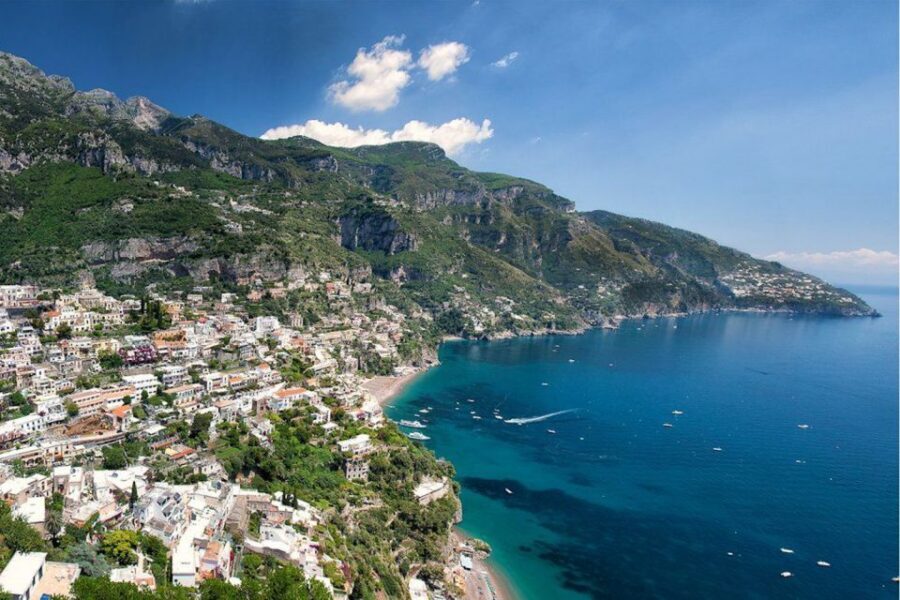
At $303.60 per person for a 12-hour day, you’re paying for three things you’d otherwise have to assemble yourself: transportation, professional guiding at Pompeii, and the convenience of pickup/drop-off from hotels within the Aurelian Walls.
Here’s how I judge the value:
- Transportation: you’re riding a minivan all the way from Rome and back, which is the hardest part to DIY well on a single day
- Guiding at Pompeii: entrance is included, and you get a local guide rather than just an audio app
- Time structure: you’re not guessing how to fit Pompeii + the Amalfi Coast + Positano into one day
Lunch is not included, so that’s the one expense you’ll need to budget separately. But you’re not paying extra for the biggest “must-do” pieces. For many people, the real value is that you’re not spending your limited time in Campania stuck in logistics.
If you already know you want both Pompeii and Positano and you hate the idea of changing plans mid-day, this kind of fixed, escorted route can feel like a bargain—even at a premium over public transit.
Who should book this Rome to Amalfi + Pompeii tour

This is a strong fit if:
- you want Pompeii plus the Amalfi Coast in one shot without extra overnight planning
- you like having a local guide at Pompeii rather than self-routing through a huge site
- you want free time in Positano for walking and photos, not just a quick stop
- you prefer small-group logistics over big bus crowds
It may not be the best fit if:
- you’re very sensitive to motion sickness on twisty roads
- you hate “long day” travel energy and want a slower pace
- you’re expecting everything to be fully guided from start to finish with no free exploration windows
Also, double-check pickup details. One issue that showed up: meeting point details in communications can occasionally be inconsistent with where the guide actually meets you. I’d treat that as a reminder to verify the exact pickup plan the day before your tour.
Should you book this Amalfi Coast and Pompeii day trip?
If you’re balancing limited time in Rome with a strong desire to see both Pompeii and the Amalfi Coast (with Positano time), I think this tour is an efficient way to do it. The best reasons to book are the local guiding at Pompeii, the small-group minivan format, and the chance to actually wander Positano after lunch instead of rushing through.
Just go in with eyes open about the big trade-off: it’s a long day with curvy coastal driving. Pack smart, bring your comfort basics, and if you’re prone to motion sickness, plan for it. Do that, and you’ll walk away with one of those “we did it all in a day” Campania stories that actually makes sense, because the day is structured to help you see the right things in the right order.
FAQ
How long is the Rome to Amalfi Coast and Pompeii tour?
The tour is listed as 12 hours. Starting times vary, so you’ll need to check availability to see the exact departure time for your day.
What’s included, and what’s not included?
Included are round-trip transportation by minivan, a tour escort or driver/guide, a local guide in Pompeii, Pompeii entrance, and hotel pickup/drop-off within the Aurelian Walls of Rome. Lunch is not included.
How big is the group?
This is a small group. The information provided lists a maximum of 8 people, and it also notes limited to 6 participants for some runs.
Is lunch provided?
No. You’ll have lunch stop time in Positano, but lunch itself is not included.
What language is the tour guide?
The experience is described as having an English live guide.
What should I bring for the day?
You should bring comfortable shoes, sunglasses, a sun hat, and a camera.
Are pets allowed?
No. Pets are not allowed, and smoking is not allowed as well.