REVIEW · COLOSSEUM TOURS
From Gladiators to Emperors: Colosseum & Ancient Rome Guided Tour
Book on Viator →Operated by Italy Pass tours · Bookable on Viator
Three stops, one fast ancient payoff.
If you want Rome’s big-name ruins without spending your whole day figuring out tickets and meeting points, this guided run is built for speed and clarity. You cover the Colosseum, the Roman Forum, and Palatine Hill—UNESCO World Heritage sites—using an official local guide plus a headset so you don’t have to strain in the noise.
What I like most is how much you get handled up front: entrance tickets are included (plus the Colosseum reservation fee), so you can focus on walking and listening instead of queuing for paperwork. I also really value the headset format for a guided experience that stays easy to follow, especially when crowds swell.
The main drawback to consider is simple but important: entry depends on your name matching exactly what you provide at booking, and you must show an ID/passport that matches. A few real-world hiccups in prior experiences came down to meeting-point confusion or ticket/name mismatch—so plan to arrive on time and double-check spelling.
In This Review
- Key things to know before you go
- A Fast, Focused Look at Ancient Rome in About 3 Hours
- Start at the Arch of Constantine: Your First Move Matters
- Entering the Colosseum With Reserved Entry and a Real Plan
- Roman Forum: From Marketplace to Power Center in 45 Minutes
- Palatine Hill: Myth, Imperial Residences, and Big Views
- The Guide Experience: Hearing the Story, Not Just the Stones
- Price and Value: What $62.48 Is Really Covering
- Timing, Crowd Sense, and How to Make It Comfortable
- Who Should Book This Tour (and Who Might Skip It)
- Should You Book This Colosseum, Forum & Palatine Hill Tour?
- FAQ
- What’s included in the tour price?
- How long is the guided tour?
- Is the tour offered in English?
- Where does the tour start?
- Do I need to bring identification?
- Is there a group size limit?
- Is food or drinks included?
- Can I cancel and get a full refund?
Key things to know before you go
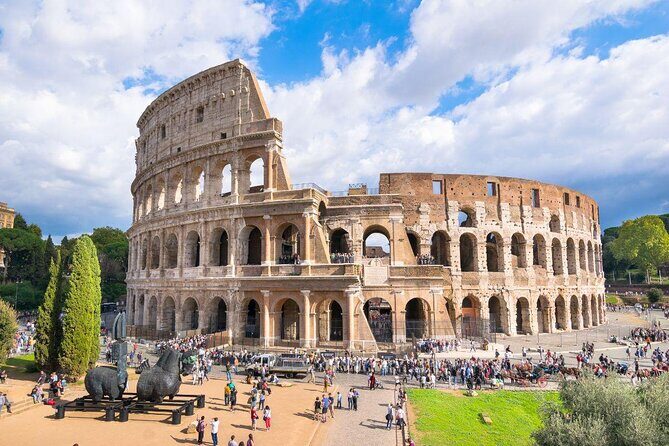
- Reserved Colosseum entry is part of the price, not an optional add-on.
- Three timed stops (about 1 hour at the Colosseum, then 45 minutes each for the Forum and Palatine Hill).
- Headset included, which helps you hear the guide without craning your neck.
- Small group size (max 20), so it feels less like a herd.
- Meeting point is fixed at the Arch of Constantine area, and entry requires exact name/ID matching.
A Fast, Focused Look at Ancient Rome in About 3 Hours
This is the kind of tour you book when Rome has more you want to see than time you have. You’re not trying to “do everything.” You’re trying to hit the core sights and understand what you’re looking at while you’re there—without turning your trip into a spreadsheet.
The big value is the rhythm. About three hours means you get a guided walkthrough, then you still have energy left afterward to wander on your own. The three stops also work together: the Colosseum shows imperial-era spectacle, the Forum shows the political/religious engine of the city, and Palatine Hill gives you the imperial setting plus views back down over the Forum area.
This is also in English, which matters in the Colosseum area where the crowd can be loud and multilingual. And because the group is capped at 20, you’re more likely to get the guide’s attention when questions pop up.
If you’re a first-timer, this is a strong way to get your bearings fast and leave with a mental map, not just photos.
You can also read our reviews of more guided tours in Rome



Start at the Arch of Constantine: Your First Move Matters
The tour starts at the Arch of Constantine, at Piazza del Colosseo (00184 Roma). Then you finish back near the same meeting point.
Because timed entry is involved, I’d treat the start like a train: show up early, not just on time. The most common way people miss tours at major sites is simple—finding the wrong person at the right place, or arriving right as the group is moving.
You’ll also want to take the “admin” part seriously. You must provide the full names of all travelers when booking, and the voucher/ticket must match those names. Entry requires a valid passport or ID document that matches the name used at booking for both the Colosseum and Roman Forum. That’s not a suggestion—it’s how you avoid being turned away at the ticket office.
If you’re traveling with a group, do a quick name check together before you leave the hotel. It’s the easiest safeguard you can do.
Entering the Colosseum With Reserved Entry and a Real Plan
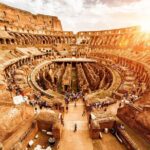
The Colosseum stop is about 1 hour, and the price includes your admission ticket plus the Colosseum reservation fee. That means you’re aiming for an organized entry flow rather than relying on last-minute purchasing on-site.
What you’re really paying for here is time and interpretation. The Colosseum is huge, and without context it’s easy to just walk around and say, wow, that’s big. With a guide, you get the story behind what you’re seeing—how the building worked, why it mattered, and what the visible remains can (and can’t) tell us today.
A smart tip: don’t spend your whole hour staring at one section. Use the guide’s route as your backbone, then circle back briefly afterward if something catches your eye. In a place this popular, that “guided route first, extra exploring after” approach keeps the experience from feeling rushed.
Also, keep your expectations realistic. Even with reserved entry, you might still spend a few minutes moving with the flow of other visitors. The payoff is that you’re not stuck reinventing the day—your time is guided.
Finally, the headset helps a lot in the Colosseum courtyard area, but if your audio is faint, ask quickly for an adjustment. Some past guests reported headset/radio issues, and that’s the kind of thing that’s worth correcting immediately.
Roman Forum: From Marketplace to Power Center in 45 Minutes
Next is the Roman Forum for about 45 minutes. This is where Rome shifts from spectacle to governance. It started as a marketplace area and became the central public space where political, religious, and social life clustered together.
With a guide, you’ll connect the dots between scattered ruins that can look like random stone fragments if you’re only sightseeing. Expect context around the Forum’s major functions and landmarks, including structures like the Senate House (Curia), the Temple of Saturn, the Temple of Vesta, the Basilica Julia, and the Rostra (the platform for public speeches). You’ll also get perspective on how monuments and buildings reflect what Romans valued at different points in their history.
One practical reality: 45 minutes is not enough time to fully absorb every detail. So think of this as a guided orientation. Your goal is to walk out knowing what the Forum was, who used it, and why the space mattered—then you can linger later if you want deeper reading at specific spots.
If you’ve ever felt overwhelmed by the Forum’s size, this stop format helps. You’re given a path, an explanation, and a manageable time window, which makes the ruins feel less chaotic.
Palatine Hill: Myth, Imperial Residences, and Big Views
Palatine Hill is about 45 minutes, and it’s one of the best “wow” stops in this whole sweep because you get both story and sightlines. It sits roughly 40 meters above the Forum area, so it naturally gives you the best perspective for understanding how the city’s core fit together.
The mythology hook matters. Palatine Hill is associated with Romulus, the legendary founder of Rome, and the date often given is 753 BCE. Even if you treat the myth as myth, it helps anchor why Romans connected this hill to the idea of origins and power.
On the ground, you’re dealing with layers—archaeological remains from different periods. You may see references to imperial residences such as the House of Augustus and the House of Livia. And you’ll get panoramic views looking back toward the Forum and Circus Maximus area, which is where many people finally feel the city click into place.
A small warning: Palatine is more exposed than some indoor spaces. Wear solid shoes. Bring a light layer if the weather turns on you. And if the group moves quickly, don’t panic—after the guided portion, you’ll still have the views to slow down for photos and a proper look.



The Guide Experience: Hearing the Story, Not Just the Stones
This tour uses an official local guide and includes a headset. That combination is what turns the stops into a “guided” experience rather than just “tickets plus walking.”
In past feedback, guides like Paola were praised for keeping things entertaining and moving, even on a rainy day. Francesco was singled out for making the experience feel more valuable than you’d get alone. Other names that came up include Olga and Victoria, both described as especially engaging and helpful in shaping how guests understood what they were seeing.
So here’s the takeaway for you: ask yourself what you want out of your Colosseum/Forum/Palatine time. If you want the story behind the stones, you’ll likely enjoy the way the guide connects the sites. If you want only photos and you don’t care about context, you may feel the tour cost more than you expected—especially if you run into delays from crowd flow.
Also, the pace matters. Multiple people praised the pacing as smooth and well-structured, with enough time to see the highlights without dragging. A few other comments flagged that certain moments felt too slow or audio quality was an issue. My advice is to stay flexible: if you get a headset that isn’t clear, request help right away, and if you feel the group is lingering, focus on what the guide is saying so your time doesn’t feel wasted.
Price and Value: What $62.48 Is Really Covering
At $62.48 per person for about 3 hours, the question is value: does this feel fair compared with doing it on your own?
Here’s what’s explicitly baked in:
- Colosseum, Roman Forum, and Palatine Hill entrance ticket value listed at €18 per person
- Colosseum reservation fee listed at €2 per person
- Official local guide
- Headset
That means the cost isn’t only buying entry. You’re paying for the guided interpretation and the organization that helps you show up at the right place and walk a sensible route through three major UNESCO sites.
Where this price tends to feel worth it is exactly where Rome can be annoying: huge crowds, long lines, and lots of confusing ruins. If you’re short on time or you want a clear narrative tying the sites together, a guided format is a practical upgrade.
Where it might not feel worth it is if you’re the type who hates group pacing or you expect perfect audio and zero waiting. A couple of past experiences raised concerns like difficulty locating the meeting point or audio/headset problems. Those are not universal, but they’re good reminders: arrive early, double-check your name/ID, and make sure you can hear your guide once you’re issued a headset.
Timing, Crowd Sense, and How to Make It Comfortable
This is a popular tour, and availability is often tighter than you think—on average it’s booked about 65 days in advance. If your dates are fixed, don’t leave it to the last minute.
In terms of comfort, plan for the reality of Rome:
- you’ll be outside for all major portions
- you’ll walk between clustered monuments
- crowds can slow movement even with reserved entry
Wear shoes you can stand in for a while and bring water if you tend to get thirsty. Food and beverage aren’t included, so think of this as a sightseeing block, not a picnic.
And one more practical note: because the tour ends back at the meeting point, it’s easy to build your next stop nearby—coffee, gelato, or a self-guided loop in the surrounding area—without needing a complicated transit plan right afterward.
Who Should Book This Tour (and Who Might Skip It)
You should strongly consider this guided sweep if:
- you’re visiting Rome for the first time and want a clean overview
- you want a guide to connect Colosseum, Forum, and Palatine Hill
- you prefer a small group (max 20) rather than getting lost in the noise
- you like having tickets and reserved entry handled for you
You might choose a different approach if:
- you’re very budget-focused and already comfortable navigating these sites on your own
- you don’t care about guided storytelling and just want independent wandering
- you’re worried about meeting-point risk and name/ID matching rules (because that part must be exact)
If you’re the planner type, you’ll likely enjoy this. If you hate admin details, do that extra check on names and IDs before you go.
Should You Book This Colosseum, Forum & Palatine Hill Tour?
For most first-timers pressed for time, I think this is a solid booking. It’s built around reserved entry, an official guide, and a headset, and it compresses three major UNESCO sites into a manageable timeline.
My decision checklist for you:
- If you want structure and context, book it.
- If you’re picky about audio, arrive early and verify your headset right away.
- If you’re traveling with multiple people, triple-check that every name matches your booking and every traveler carries matching ID.
If you do those things, you’ll get a smooth route through the sites that matter most—and leave with a clearer sense of how ancient Rome actually worked.
FAQ
What’s included in the tour price?
The tour includes entrance tickets for the Colosseum, Roman Forum, and Palatine Hill, plus the Colosseum reservation fee. You also get an official local guide and a headset.
How long is the guided tour?
It’s approximately 3 hours.
Is the tour offered in English?
Yes. The tour is offered in English.
Where does the tour start?
It starts at the Arch of Constantine, Piazza del Colosseo, 00184 Roma RM, Italy.
Do I need to bring identification?
Yes. Each traveler must present a valid passport or ID document that matches the name provided at booking for entry to the Colosseum and Roman Forum.
Is there a group size limit?
Yes. The tour has a maximum of 20 travelers.
Is food or drinks included?
No. Food and beverage are not included.
Can I cancel and get a full refund?
Yes. You can cancel up to 10 days in advance of the experience for a full refund. If you cancel less than 10 full days before, the amount paid will not be refunded.