REVIEW · ROME
Discover The Ancient Appian Way in confort: a golf cart adventure
Book on Viator →Operated by GOLF CART TOUR ROME · Bookable on Viator
That stretch of road still feels alive.
This golf cart adventure gives you fast access to major Roman sights while keeping you comfortable and moving. I like the private group setup, and I really enjoy how the route strings together the Colosseum, the Baths of Caracalla, and the Appian Way so you get a clear sense of how the empire worked. I also love that you get a guided look underground at the Catacombs of San Callisto, not just photos from the street. One thing to consider: the tour is weather-dependent, so rain can cut the timing short.
You’ll roll past the big names first, then slow down where Rome gets personal.
Stops are short and practical, with time set for Domine Quo Vadis and a guided visit inside the catacombs, while other sights (like the Circus of Maxentius) may require extra attention for entry since some admissions aren’t included. If you want maximum walking or a long indoor museum style visit, this format might feel a bit quick—but for getting the lay of the land, it’s hard to beat.
In This Review
- Key highlights to look forward to
- How the golf cart keeps Rome realistic
- Meeting at Santa Caterina della Rota and rolling toward the Colosseum
- Baths of Caracalla: the big, Roman daily-life world
- Domine Quo Vadis: a short stop with a legend attached
- Catacombs of San Callisto: the underground highlight
- Circus of Maxentius and the Appian Way’s “road poetry”
- Pyramid of Cestius, Circus Maximus, and Mouth of Truth
- Theatre of Marcellus and Piazza Venezia: the emotional finale
- Price and value for a 4.5-hour private golf cart tour
- Who this tour suits best
- Should you book the Ancient Appian Way in comfort?
- FAQ
- How long is the Ancient Appian Way golf cart tour?
- What does the tour cost?
- Is the tour private?
- What language is it offered in?
- What admissions are included?
- Does the catacomb stop change on certain days?
- What if the weather is bad?
Key highlights to look forward to
- Comfort-first golf cart pacing across Rome’s top classics in about 4.5 hours
- Colosseum and Baths of Caracalla drive-bys with stories from your guide
- Domine Quo Vadis stop with a short legend-based visit (free admission)
- Guided Catacombs of San Callisto (and St. Sebastian on Wednesdays) with ticket included
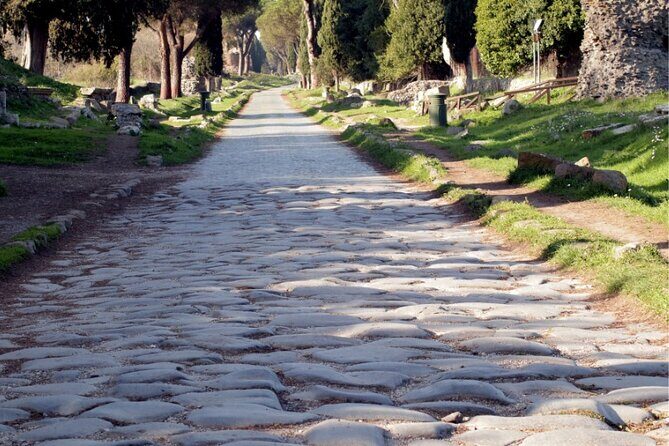
- Appian Way views from the “Queen of Roads,” plus stops at major landmarks
- A well-sequenced finale at Circus Maximus, Mouth of Truth, Theatre of Marcellus, and Piazza Venezia
How the golf cart keeps Rome realistic
Rome can be overwhelming on foot. This is the kind of tour that helps you get your bearings fast—especially if you’ve got limited time or you just don’t want to battle buses, cobblestones, and shoulder-to-shoulder crowds for hours.
The golf cart format also changes the tone of sightseeing. You’re not just rushing to tick off monuments; you’re gliding between them, which makes it easier to understand how they relate to each other.
And since it’s private—only your group—the guide can adjust the pace to what you care about most, from the big set pieces to the quieter corners of ancient Rome.
You can also read our reviews of more tours and experiences in Rome.



Meeting at Santa Caterina della Rota and rolling toward the Colosseum
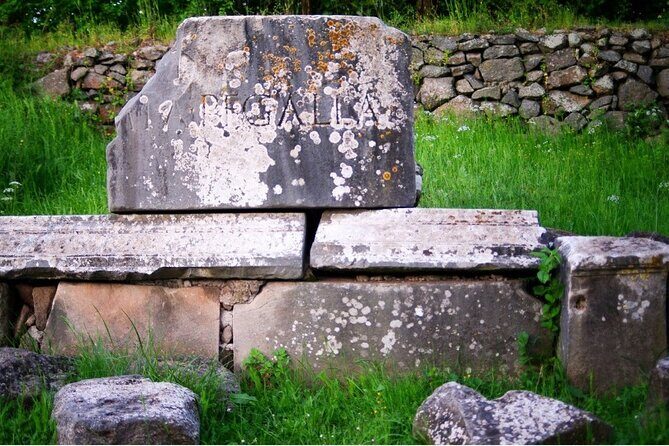
The tour starts at Piazza di Santa Caterina della Rota (00186 Roma), then returns to the same meeting point at the end. It’s listed as near public transportation, which matters because you can plan your day without locking into one single transport plan.
From the start, you’re set up for the classic Roman payoff. You drive by the Colosseum, and your guide talks through its history while you enjoy the view from the comfort of your seat. Even if you’ve seen pictures, the scale hits differently when you’re positioned for a real sightline instead of squeezing around other tour groups.
This early section works well because it primes your brain for what comes next. Once you’ve got the Colosseum in your head, later stops like the Circus Maximus land with more meaning.
Baths of Caracalla: the big, Roman daily-life world
Next you pass the Baths of Caracalla, one of Rome’s strongest reminders that this empire didn’t just build for war and politics. These were places where daily life mixed with status, routine, and social culture.
You won’t be stuck trying to decode ruins from a distance. The guide’s storytelling helps connect what you’re looking at—massive scale, architectural design, and the idea of public bathing as a social hub.
The drawback here is also simple: you’re seeing it as a drive-by. If you’re the type who wants long time inside a ticketed museum, you may want to plan another day for deeper Baths of Caracalla exploration.
Domine Quo Vadis: a short stop with a legend attached
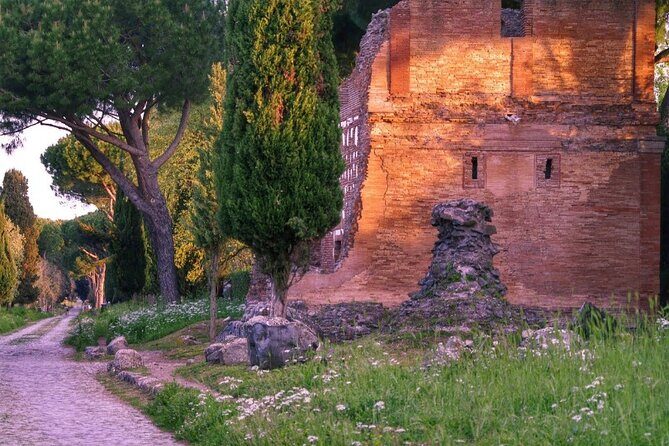
Then comes Chiesa del Domine Quo Vadis, visited for about 15 minutes. It’s a site tied to the legend of Saint Peter encountering a vision of Christ, and the admission is free.
For this kind of stop, 15 minutes is usually enough to do two things: orient yourself with the story and see the space without feeling rushed. If you’re traveling with people who get restless in long churches, this is a good balance point—small, meaningful, and timed.
One practical tip: since the tour is only 4.5 hours total, use this stop to slow down for a moment. It’s one of the easier places on the route to appreciate symbolism and atmosphere.
Catacombs of San Callisto: the underground highlight
The most important block of time is the guided visit to the Catacombe di San Callisto. You’ll spend about 40 minutes underground, and admission is included.
This is the stop that changes your perspective. Catacombs aren’t just “old tunnels.” With a guide, you get context for how early Christians used these spaces, and you also get help seeing the structure and layout beyond the obvious pathways.
One detail that matters for planning: on Wednesdays, the tour visits the Catacombs of St. Sebastian instead of the ones of St. Callixtus. If you’re booking for a Wednesday, don’t worry—you’re still getting the underground experience, but you’ll be in a different complex.
If you get even slightly claustrophobic, take that seriously. You’re underground for a set amount of time, so choose accordingly. The upside is that the experience is guided and timed, which helps keep it from feeling like an endless maze.



Circus of Maxentius and the Appian Way’s “road poetry”
After the catacombs, you continue to the Circus of Maxentius for around 15 minutes. Admission isn’t included, so if you want to enter rather than simply view from outside, you’ll need to factor that into the plan.
This stop works best as a bridge. It leads naturally into the long drive along the Appian Way, the famous “Queen of Roads,” where you can see how Rome laid down infrastructure for movement, power, and display.
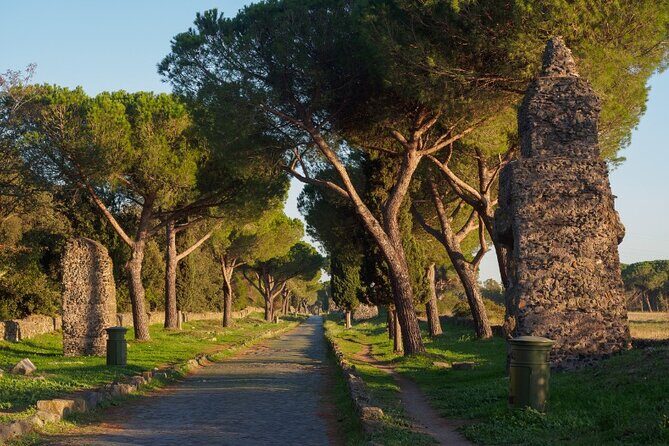
As you drive, you pass ancient ruins, aqueduct structures, and cobblestones that help you picture what travel once looked like here. This is where the golf cart really earns its keep: you get to see a moving stretch without wearing yourself out.
If you’re hoping for a full archaeological walk, this part won’t replace a dedicated guided walk. But as an introduction to the Appian Way corridor, it gives you the right context to know what to pursue next.
Pyramid of Cestius, Circus Maximus, and Mouth of Truth
Your route includes a stop to pass the Pyramid of Cestius, a standout ancient tomb influenced by Egyptian design. It’s the kind of landmark that helps you understand Rome’s reach: ideas and forms traveled far, and Rome picked what it liked.
Then you visit Circus Maximus for about 15 minutes, with free admission. Even when you’re just looking at ruins, Circus Maximus connects directly to the idea of Roman public entertainment—chariot racing, crowds, and a huge stadium culture.
From there you move to Mouth of Truth, a famous symbol of ancient intrigue and mystery. This is one of those moments where the site itself does part of the storytelling for you. Plan for short time here and use the moment for a quick, fun mental snapshot of Roman myth and public superstition.
If you’re the type who likes to read every plaque, you might feel a touch limited by timing. But if you prefer a guided route that keeps Rome moving without turning it into a spreadsheet, this sequence is strong.
Theatre of Marcellus and Piazza Venezia: the emotional finale
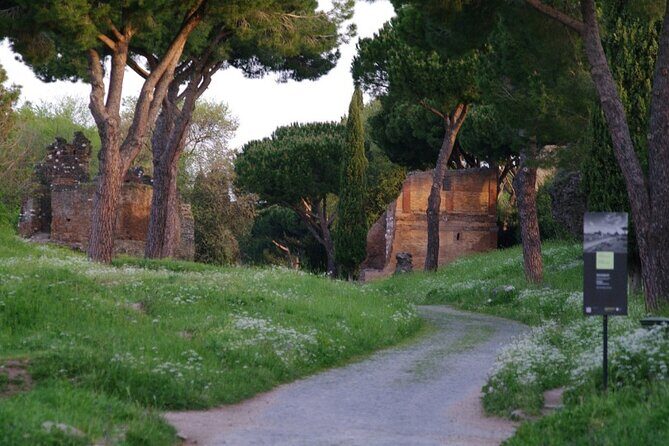
The tour continues to the historic Theatre of Marcellus, where the architecture shows how Roman public spaces were built for drama and scale. From the outside, you can still feel the planning—how the lines and spaces were designed to hold attention.
The final stop is Piazza Venezia, described as the heart of the Eternal City. This last section is useful because it gives you an easy visual anchor for the rest of your Rome day. After you’ve been moving through ancient layers, the square gives you a solid sense of where you are in modern Rome.
For many people, ending here makes it simpler to plan dinner nearby or connect to other sights without starting a brand-new navigation problem.
Price and value for a 4.5-hour private golf cart tour
At $201.10 per person for about 4 hours 30 minutes, you’re paying for convenience plus guidance, not for museum-like depth at every stop.
Here’s how the value works in real terms:
- You get comfort via the golf cart, which matters on Rome’s uneven surfaces.
- You get a private group experience, which is often a big upgrade from crowded mass tours.
- You get guided time in the Catacombs of San Callisto with ticket included, which is the heaviest “extra cost” item on the route.
- Some stops have free admission (like Domine Quo Vadis and Circus Maximus), while others (like Circus of Maxentius) have admission not included.
So the price isn’t just about transportation. It’s also about reducing time waste and helping you see meaning in the route—especially between the Colosseum, the Appian Way corridor, and the sites tied to Roman entertainment and legend.
If your goal is to see major ancient Rome highlights with minimal walking and clear guidance, this can be a good fit. If your goal is maximum time inside monuments with deep ticketed experiences at each stop, you might feel the format is too short and would need to pair it with other activities.
Who this tour suits best
This is a smart pick when you want ancient Rome highlights with less physical grind. I’d especially consider it if you have limited time, want to avoid long lines and crowded transport, or you’d rather spend your energy listening and looking than constantly navigating.
It also fits well for people who appreciate variety: Colosseum and baths above ground, catacombs underground, then entertainment sites and legend spots. The route has a rhythm that helps you understand Roman civilization as more than one famous building.
One caution: because the tour requires good weather, don’t schedule it as your only outdoor plan. If rain shows up, timing can change, and one review noted the tour being cut short due to weather.
Should you book the Ancient Appian Way in comfort?
I think it’s worth booking if you want a high-value orientation tour to Rome’s ancient backbone—fast, guided, and comfortable. The standouts are the drive-past classics (Colosseum and Baths of Caracalla) and the guided underground stop at the Catacombs of San Callisto.
If you hate the idea of short visits and prefer long ticketed time at fewer sites, you may feel a bit rushed. But for most first-time or time-tight visitors, this format is practical and satisfying.
If you book, I’d go in with a simple plan: treat each stop as a chapter, not a whole book. You’ll leave with clear mental connections—and you’ll know what to target on your next day in Rome.
FAQ
How long is the Ancient Appian Way golf cart tour?
It runs for about 4 hours 30 minutes.
What does the tour cost?
The price listed is $201.10 per person.
Is the tour private?
Yes. It’s a private tour/activity, and only your group participates.
What language is it offered in?
The tour is offered in English.
What admissions are included?
The guided visit to the Catacombs of San Callisto includes admission. Domine Quo Vadis and Circus Maximus are listed as free. Admission for Circus of Maxentius is not included.
Does the catacomb stop change on certain days?
Yes. On Wednesdays, the tour visits the Catacombs of St. Sebastian instead of the Catacombs of St. Callixtus.
What if the weather is bad?
The experience requires good weather. If it’s canceled due to poor weather, you’ll be offered a different date or a full refund.