REVIEW · ROME
Crypts and Legends: Exploring the Dark Side of Rome
Book on Viator →Operated by RomAbout Tours · Bookable on Viator
Mysterious Rome starts after dark. This 2-hour evening walk turns iconic sights into storytelling stops, mixing eerie legends with real art and architecture. I especially love that the route is paced for night energy—cooler air and fewer crowds—and that you’re not just looking at buildings from afar.
My other favorite part is the opening ticketed stop: the Capuchin Crypt. You get admission built into the price, plus time to ask questions in a small group (maximum 8). The one thing to consider: this is not a full-on “horror show.” Some guides lean more into history and architecture, so the spooky factor can vary a bit by night.
In This Review
- Key highlights (what I’d plan around)
- A 5:00 pm start: Rome after the rush
- Capuchin Crypt: bones, art, and why it hits at night
- Trevi Fountain at night: legends you can act out
- Pantheon pass-by: the best-preserved temple of antiquity
- Piazza Navona ghost stories in a Baroque square
- Campo de’ Fiori and Giordano Bruno: history with teeth
- Santa Maria dell’Orazione e della Morte: the final mystery
- Price and value: is $72.29 worth your night?
- Who should book this dark-side Rome walk?
- The guide factor: storytelling is the real ingredient
- Should you book this tour?
- FAQ
- How long is the Crypts and Legends: Exploring the Dark Side of Rome tour?
- What is included in the price?
- Is the Capuchin Crypt ticket included?
- Do you enter the Pantheon and other attractions?
- Where does the tour start and end?
- What time does the tour begin?
- Is there free cancellation?
Key highlights (what I’d plan around)
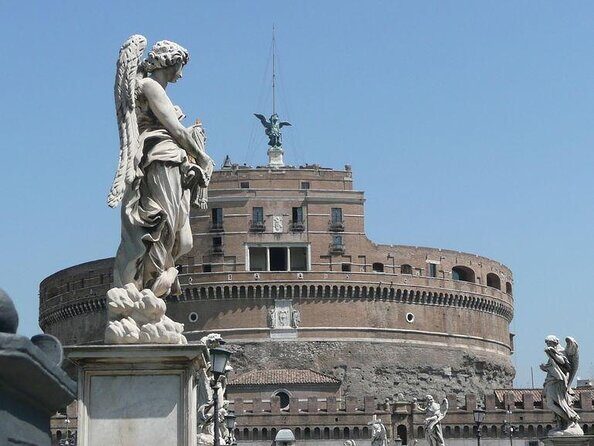
- Capuchin Crypt entry included so you skip the ticket scramble
- Almost 4,000 human remains displayed inside—chilling, but also strikingly artistic
- Small group size (max 8) with time to ask questions
- Night pacing at a 5:00 pm start when Rome feels calmer
- Ghost legends tied to major landmarks like Trevi, Piazza Navona, and more
A 5:00 pm start: Rome after the rush
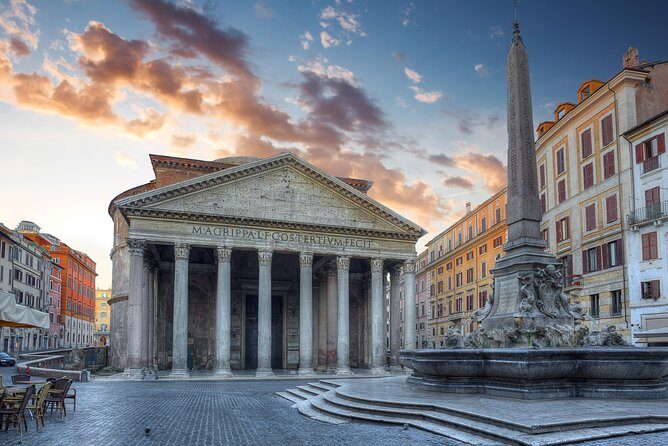
This tour begins at 5:00 pm at Piazza Barberini, 21 and keeps you moving on foot for about 2 hours. That start time matters. In late afternoon into evening, streets that feel packed earlier in the day often loosen up, and you’re not fighting the midday heat.
You also get a practical route rhythm: several stops are outside-the-building moments, so you can watch, listen, and move without long indoor waits. The pacing is built for storytelling—short segments where the guide sets the scene, then you take in the space.
You’ll also be ending a bit off the usual tourist loop. The tour finishes at Via Giulia 262, at Santa Maria dell’Orazione e della Morte, a quieter church that fits the tour’s theme of hidden corners and layered pasts.
You can also read our reviews of more tours and experiences in Rome.



Capuchin Crypt: bones, art, and why it hits at night
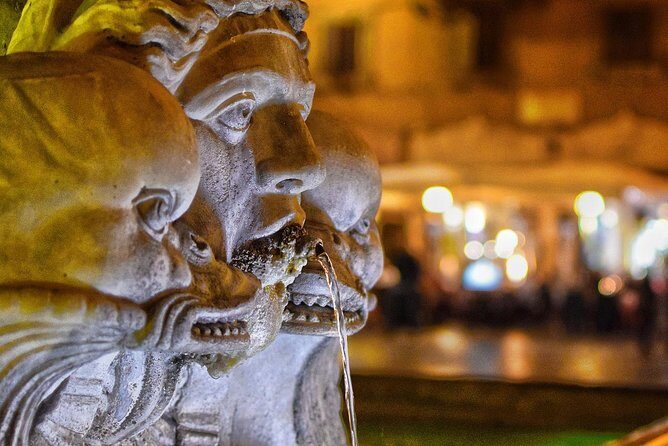
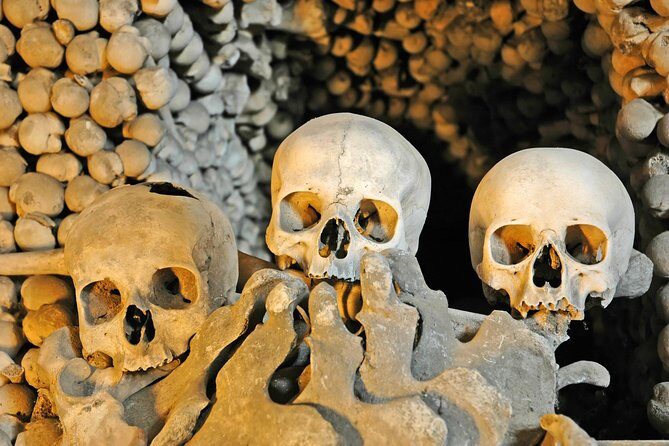
The star of the show is the Museum and Crypt of Capuchins Friars. Plan on about 30 minutes here, with admission included. Inside, you’ll see the remains of almost 4,000 people, most of whom are thought to be Capuchin monks. That’s the part people remember because it’s so unusual.
Here’s why I like this stop in particular: it’s not only about shock. The crypt is also about arrangement and visual impact. Even if you’re not chasing horror stories, you’ll likely leave thinking about how faith, death, and artistic display can intersect in one place.
A practical note from on-the-ground experience: photos aren’t allowed inside the crypt, so don’t rely on your camera as your souvenir. Look with your eyes first. If you’re curious about art history too, there’s also mention of a Caravaggio painting before you enter the crypt—a nice tonal shift right before the main event.
In reviews tied to real guides, names like Sarah and Joe show up often for the same reason: they treat the crypt like a story with context, not just a shock attraction. One guide blend can make the experience feel more like a thoughtful walkthrough than a quick stop.
If you’re squeamish, this can still be a lot. But if you want something memorable and genuinely different from another “see the sights” night, this is the right anchor.
Trevi Fountain at night: legends you can act out
After the crypt, the tour brings you toward Fontana di Trevi for about 20 minutes. Here you shift from dark interiors to a famous outdoor icon with a whole lot of legend glued to it.
You’ll hear the stories tied to the fountain and then—if you want—the classic gesture: toss a coin to encourage your return to Rome. Even if you’ve heard the superstition before, doing it at night changes the vibe. Trevi feels less like a daytime photo factory and more like a living meeting spot.
One small consideration: because Trevi is iconic, it’s still busy at night on some dates. Your guide’s job is to help you listen while you’re not getting swallowed by the crowd. If your group is small (and this tour caps at 8), you’re more likely to keep a workable listening position.
Pantheon pass-by: the best-preserved temple of antiquity
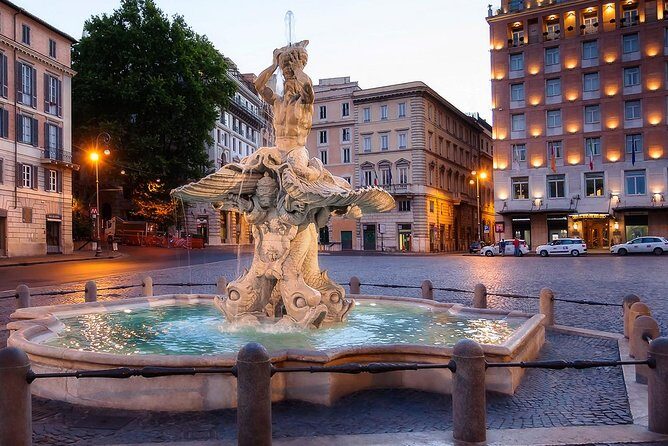
Next, you’ll pass by the Pantheon for about 20 minutes. This stop is more about seeing and understanding than entering. You’ll view it as one of the best-preserved temples of antiquity, then learn how its role shifted over centuries.
What I like here is the contrast with the crypt. You go from death arranged into display to an ancient structure that has survived because it was built well and reused intelligently. It helps the bigger theme: Rome doesn’t erase its past—it layers it.
This stop also gives you an easier moment to regroup. You’re not stuck inside for long, and it’s a good breather between the more intense locations.
Piazza Navona ghost stories in a Baroque square
Then it’s on to Piazza Navona for about 20 minutes. This is a Baroque square, and the tour pairs it with ghost legends tied to the location.
What makes this work for me: the stories attach to a recognizable public space. You’re not sitting in a theater or walking through a dark corridor. You’re standing in one of Rome’s showpiece squares while the guide points out how legends can cling to beauty.
The “haunting” here is story-based, not jump-scare based. You’ll likely enjoy it most if you’re into folklore—urban legends that feel like they belong to the street.



Campo de’ Fiori and Giordano Bruno: history with teeth
At Campo de’ Fiori, you get about 15 minutes. The focus shifts to Giordano Bruno and the weight of his story in this space.
This is the tour’s historical edge. Even if the ghosts are fun, this stop reminds you that “dark side” doesn’t only mean supernatural. Rome’s shadows are also political and intellectual. Bruno’s story is one of those reminders that ideas can get punished as harshly as bodies.
And it’s a smart placement. By the time you reach this stop, you’ve already processed the crypt. So the tone can move from eerie to serious without losing the tour’s momentum.
Santa Maria dell’Orazione e della Morte: the final mystery
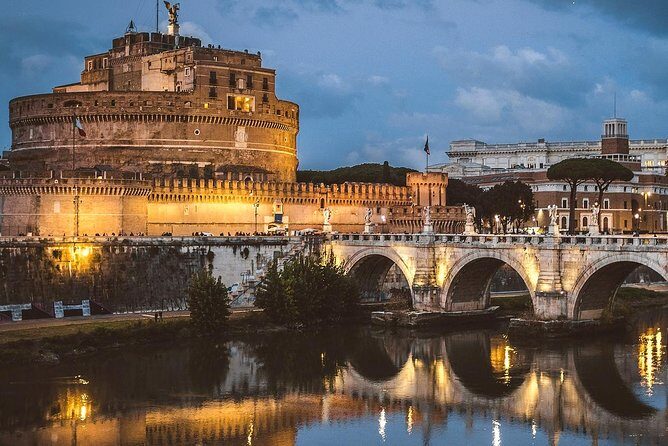
The end point is the church that gives the tour its last layer of meaning: Chiesa di Santa Maria dell’Orazione e Morte for about 15 minutes, and your walking tour ends at Santa Maria dell’Orazione e della Morte (Via Giulia 262 area).
This church is described as steeped in mystery, with enigmatic tales connected to the sacred space. Unlike the more famous landmarks, you’re not just checking a famous facade. You’re finishing in a quieter setting where the theme feels natural.
I like finishing here because it turns the tour from “icon shopping” into “story completion.” You start at a major public square, you pass through Rome’s biggest set pieces, and you close with a place that feels like a secret someone tells you after dinner.
Price and value: is $72.29 worth your night?
At $72.29 per person, this tour is not a throwaway bargain—but it isn’t priced like a luxury show either. The value comes from three things you can actually feel on the ground:
First, Capuchin Crypt admission is included. That alone matters because it removes one of the biggest friction points when visiting in a tight schedule.
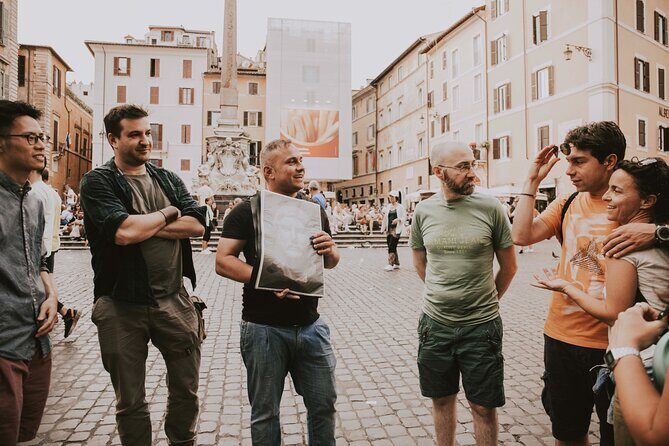
Second, you get a professional guide for the full run. And because the group is kept to a maximum of 8, you’re more likely to hear clearly and get answers instead of listening from the back of a crowd.
Third, the time window is strong. Evening walking tours are often good value because you’re not paying extra for separate transport or long museum tickets at multiple sites. Here, many stops are outside or pass-by, so the guide’s storytelling is the product.
What’s not included? Food and drinks. So treat it like a pre-dinner activity. Also note there’s no hotel pickup/drop-off, so you’ll want to be able to reach Piazza Barberini on your own.
If you want the crypt experience plus a guided night route with legends, this price feels fair for what you get.
Who should book this dark-side Rome walk?
This tour is a good match if you want Rome at night and like your sightseeing with a storyline. I’d especially recommend it for:
- People who love odd historical experiences but still want solid context
- Anyone who wants to learn more than a headline—architecture, funerary symbolism, and how legends stick to places
- Small-group travelers who prefer asking questions over shouting over big crowds
It’s also a nice “wrap-up night” choice. Multiple guides named in feedback—like Alma, Alma/Alma-style energy, Juan, and Gabi—are described as fun storytellers who connect the crypt to the surrounding landmarks. So even if the spooky angle is not your main thing, you’ll still get a focused night of Rome’s darker cultural side.
One caution: if you specifically want nonstop eerie atmosphere, be aware the tour’s tone can tilt between ghost stories and architecture-heavy explanations depending on your guide. That’s not a deal-breaker for most people—it’s just worth knowing.
The guide factor: storytelling is the real ingredient
The best part of the tour experience is how the guide holds the thread. In the feedback you provided, a few names keep showing up as examples of the style that works: Sarah, Juan, Giuseppe, Gabi, and Marinelly. The common theme is energy plus storytelling that explains what you’re seeing.
That matters because several stops are outside and pass-by. Without a good guide, it could feel like “walk, look, move on.” With a strong guide, those same minutes become the best part of your night.
If you’re booking near the start of your trip, you’ll also be better at noticing details the guide points out—how Rome’s old buildings show up in stories, and how symbols repeat across locations.
Should you book this tour?
Yes, if you want an evening that feels different from daytime Rome and you’re curious about the Capuchin Crypt in a guided format. The included ticket, the small group size, and the fact that you’re walking at a calmer hour make it a smart plan.
Hold off if you only want a ghost-tour vibe with heavy scariness. This experience is more “dark legends with real context,” and the spooky intensity can depend on the guide’s approach.
If you’re on a tight schedule, this is also a good use of time because it’s only about 2 hours, starts at 5:00 pm, and ends at a church that keeps the theme going instead of dragging you back to the busiest zones.
FAQ
How long is the Crypts and Legends: Exploring the Dark Side of Rome tour?
It lasts about 2 hours.
What is included in the price?
All fees and taxes are included, along with a professional guide and an entry ticket to the Capuchin Crypt.
Is the Capuchin Crypt ticket included?
Yes. Admission to the Crypt of the Capuchin is included.
Do you enter the Pantheon and other attractions?
The Pantheon and Piazza Navona are described as pass-by/outside experiences in the tour flow. The Capuchin Crypt includes entry.
Where does the tour start and end?
It starts at Piazza Barberini, 21, 00187 Roma RM and ends at Via Giulia, 262, 00186 Roma RM at Santa Maria dell’Orazione e della Morte.
What time does the tour begin?
The start time is 5:00 pm.
Is there free cancellation?
Yes. You can cancel up to 24 hours in advance for a full refund, and weather conditions can also lead to a different date or a full refund.