REVIEW · COLOSSEUM TOURS
Colosseum with Arena Floor & Ancient Rome, Semi-Private Tour
Book on GetYourGuide →Operated by LivTours - We craft tours, you live them · Bookable on GetYourGuide
Rome hits different in the Colosseum.
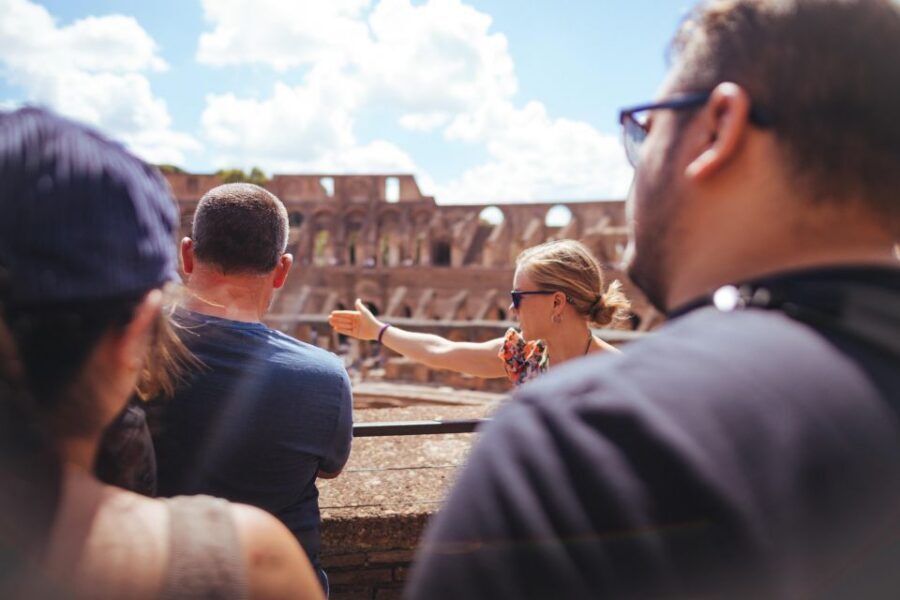
This semi-private tour gives you Arena Floor access plus a guided walk through the Roman Forum area, where you can picture daily life and power plays instead of just looking at stones. I especially like the small group size (limited to 6), which makes the stories feel personal and keeps time for real questions. One drawback: this format is listed as not suitable for wheelchair users, so plan accordingly if mobility is an issue.
I like that the pacing is built around the big bottlenecks. You get priority entry so you spend less time herding through crowds and more time listening to how the place worked. With English live guidance, the experience is also straightforward: you know where you’re going, and you know what to look for when you get there.
You’ll start near the Colosseum Metro and then work outward from major viewpoints and key ruins. Expect a mix of engineering, politics, and spectacle, including underground prison areas connected to Saints Peter and Paul, plus multiple triumphal arches along the way.
In This Review
- Quick hits: what makes this tour worth your time
- Where you start matters: Largo Gaetana Agnesi meet-up
- Skip-the-line entry without losing the story
- Roman Forum and the “day-to-day Rome” feeling
- Victor Emanuel Monument viewpoints: get bearings before the ruins
- Curia streets, Caesar’s cremation altar, and the prison level
- Triumphal arches: Constantine and Septimius Severus
- Palatine Hill: where Rome’s view becomes part of the plot
- Entering the Colosseum: first tier and main floor access
- The moment you step onto the Arena Floor
- How the 3-hour flow feels in real life
- What to wear and bring so you don’t lose time
- Value check: is $168.79 worth it?
- Who this semi-private Colosseum tour is best for
- Should you book it?
- FAQ
- FAQ
- How long is the Colosseum with Arena Floor & Ancient Rome tour?
- What is the group size for this semi-private tour?
- Where do I meet the tour guide?
- Is a passport or ID required?
- Do I need to bring anything specific?
- Is luggage allowed?
- What language is the tour guide?
- What if I have trouble with accessibility or mobility?
Quick hits: what makes this tour worth your time
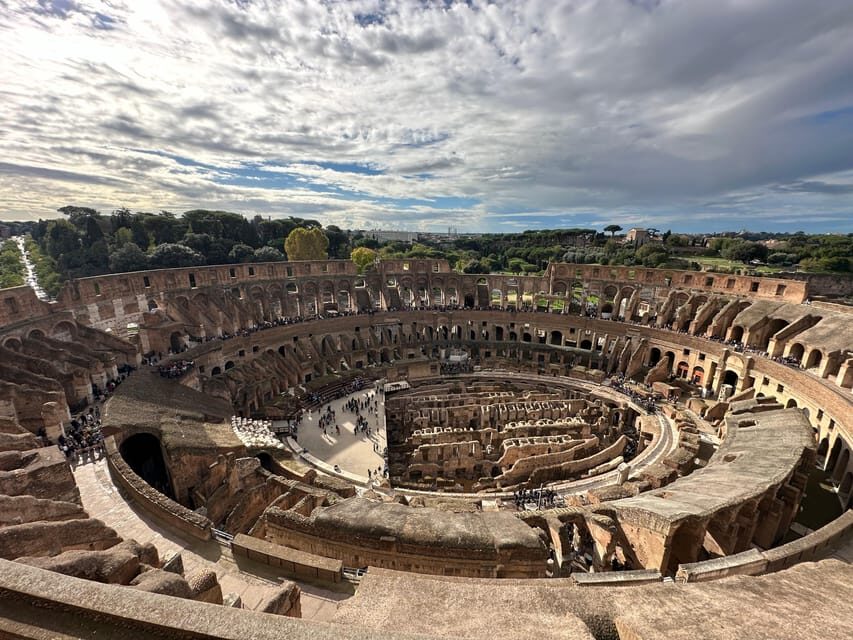
- Arena Floor access so you see the Colosseum from the same human scale as the gladiators
- Small group size (max 6) for questions and a calmer pace than big-group tours
- Skip-the-line tickets that cut down the time you’d otherwise spend waiting outside
- Roman Forum highlights including major monuments and a stop connected to Saints Peter and Paul
- First-floor and 1st tier viewpoints that help you read the Colosseum’s design
Where you start matters: Largo Gaetana Agnesi meet-up
Your tour begins at Largo Gaetana Agnesi, in front of the SOS sign outside the Colosseum Metro station. One detail that can save you stress: the station has an upper and lower entrance, and you want the SOS sign on the upper level.
This part is practical, but it also sets the tone. You’re in the right area to orient yourself before you start moving through ancient streets and major monuments. If you hate sprinting across Rome at the last second, give yourself extra buffer here.
You can also read our reviews of more private tours in Rome


Skip-the-line entry without losing the story
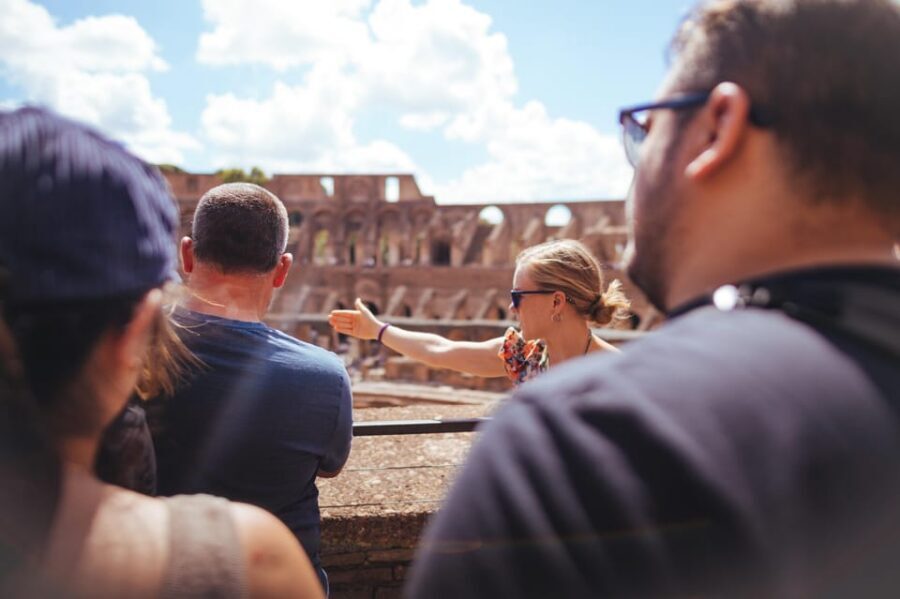
The big win is simple: you don’t waste your morning in the longest ticket lines. The tour includes priority access tickets for the Colosseum and Roman Forum, plus a guided visit that’s meant to keep your attention on what’s actually important.
You’ll also see that the Colosseum visit depends on a timed slot. Starting times can shift based on ticket availability, so check the time you receive before you head out. That flexibility is normal for a site with controlled entry.
This is one of those tours where the guide’s job is to help your eyes focus. Instead of just standing in front of the Colosseum and thinking, Now what, you’ll get a sequence of visuals: arches, forum buildings, and then the arena itself.
Roman Forum and the “day-to-day Rome” feeling
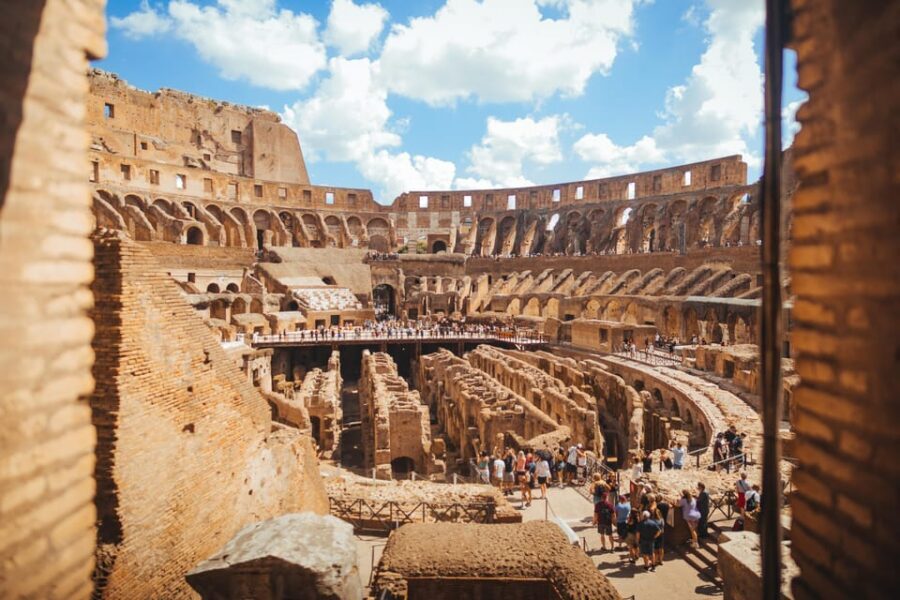
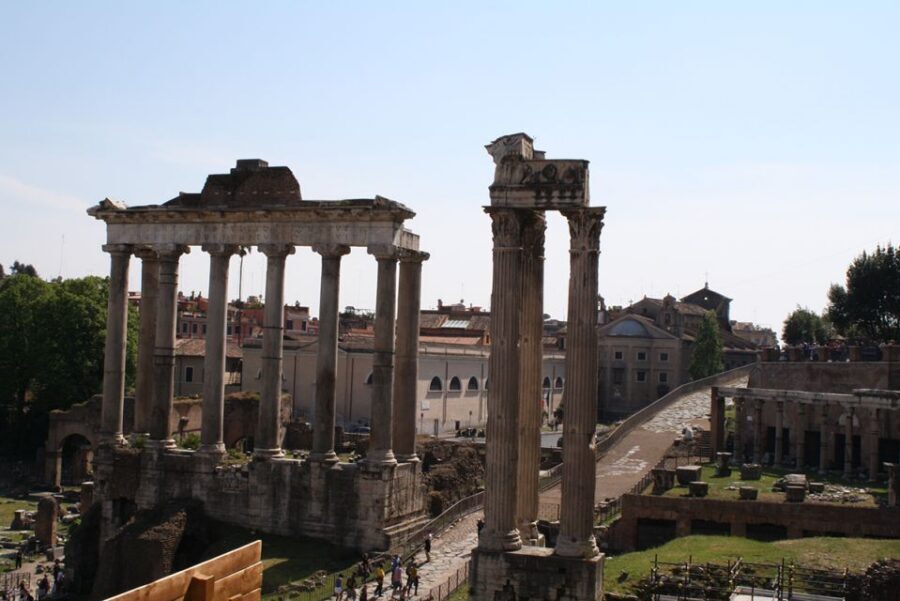
After you begin near the Colosseum area, you’ll head toward the Roman Forum excavation zone, where you can still see major remnants of old public life. You’ll look at the kind of spaces that mattered to the Romans: temples, basilicas, government buildings, and entertainment areas.
A lot of people come to the Forum expecting only dramatic ruins. What makes this tour special is how the route is described so you can mentally place activity into the space. You’re not just walking past rocks; you’re walking past the settings for arguments, decisions, and ceremonies.
One of my favorite parts is the way you’re guided along the cobblestone roads used by the Curia members about 2,000 years ago. The point isn’t that you’ll see exact footmarks from senators. The point is that you’ll recognize how the city’s layout shaped behavior, movement, and power.
Victor Emanuel Monument viewpoints: get bearings before the ruins
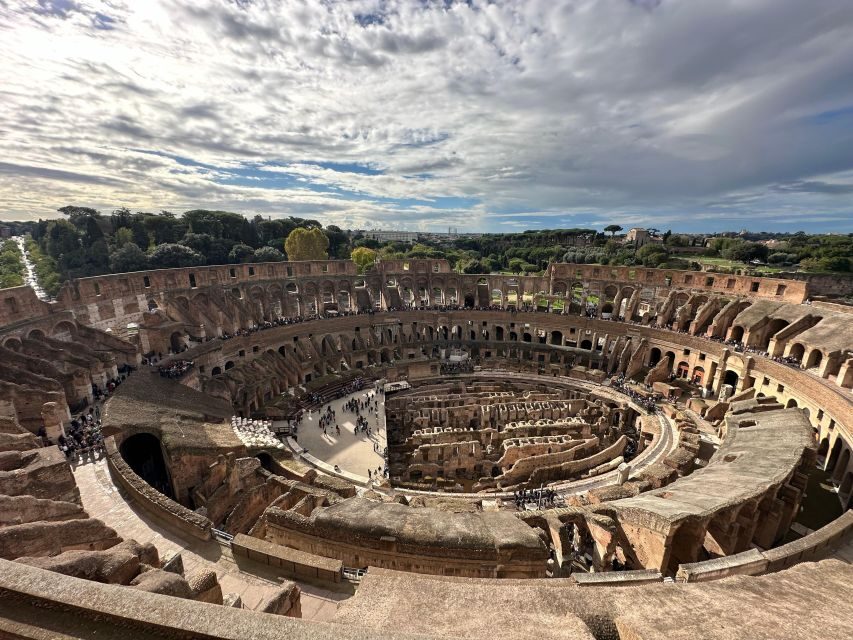
You’ll start with a view over the heart of Ancient Rome, linked to the Victor Emanuel Monument area. I love this kind of orientation stop because it gives you a mental map you can carry into the next hour.
From a viewpoint, the Forum and nearby hills start to make sense as a system, not as separate photo stops. Then when you descend toward the excavation sites, you’re not guessing what’s connected to what.
If you’re a visual learner, this helps a lot. Rome is famous for “wait, is that the same hill?” moments, and a quick overview cuts those moments down.
Curia streets, Caesar’s cremation altar, and the prison level
The tour spends real time on the human side of the city: politics, religion, and public punishment. You’ll stroll the same cobblestone roads where senators would have had heated conversations in the Curia area.
You’ll also get a look at the altar area associated with Julius Caesar’s cremation. It’s the kind of detail that can turn the Forum from ancient background into a timeline you can actually follow.
One of the most striking stops is the underground prison area where Saints Peter and Paul were interned. The tour doesn’t treat it like a quick photo op. It’s more about understanding how Rome handled captivity and authority beneath the surface.






Triumphal arches: Constantine and Septimius Severus
Walking through the Forum region, you’ll see big statements built to broadcast victory. The Arch of Constantine is one of the key sights on the route, and you’ll also view the Arch of Septimius Severus.
Why arches matter on this kind of tour: they aren’t just decoration. They’re visual propaganda, designed to make power feel permanent. When you understand that, you look at the stonework with different eyes.
You’ll hear stories of victory parades by Roman soldiers tied to these monuments. It’s the kind of context that makes an arch feel like a headline from the past rather than just an isolated landmark.
Palatine Hill: where Rome’s view becomes part of the plot
You’ll also include Palatine Hill during the guided route. This is a spot that many visitors only skim or photograph from a distance, but on a guided tour it becomes easier to connect the hill’s importance to the city below.
Even if you’ve seen Palatine Hill in pictures, the live guidance helps you understand why it mattered. The hill isn’t only about scenic views; it’s about status, power, and how the city arranged itself around elite spaces.
The value here is that you’re not stuck only at ground level. You’re getting the sense that the Colosseum and Forum weren’t random attractions. They’re part of the same urban storyline.
Entering the Colosseum: first tier and main floor access
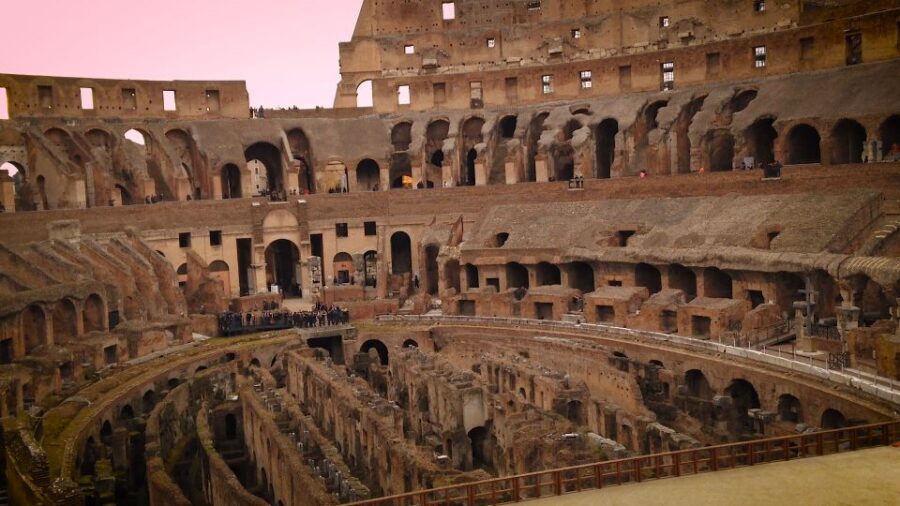
When you arrive at the Colosseum, you’re guided right into the heart of it. The tour includes main floor and 1st tier visits, which is a smart combination for first-timers.
From the main floor areas, you get a close, human-scale feeling for the structure. From the 1st tier, your perspective changes, and you can start reading the building like a machine built for crowds.
Guides also tend to explain the design choices in a way that helps you picture movement. Think: where people would stand, how sightlines work, and how the arena would feel full. You’ll hear vivid stories tied to gladiatorial fights, focused on what the experience meant to imperial Rome.
The moment you step onto the Arena Floor
Now for the part people really book for: Colosseum Arena Floor access. This is where the Colosseum stops being an impressive shell and becomes a space you can understand by standing where events happened.
The arena floor access is valuable because it gives you scale. You’ll look outward and realize how close the spectacle was to the audience. It’s not just about seeing the arena. It’s about feeling the geometry of the place.
This stop also works well for photos, but that’s not the main point. The main point is comprehension. When you’re down at arena level, it becomes easier to picture how the space directed attention and controlled emotion.
If you’re lucky with guide style, this is also where the experience gets extra vivid. I’ve heard stories of guides like Giorgio adding humor and making the arena feel like a living stage. I’ve also seen praise for Francesca for being friendly and highly informative, and for Elena for strong customer service and clear passion for Rome.
How the 3-hour flow feels in real life
This tour runs about 3 hours, which is a good length for a targeted “big hitters” plan without turning into a full-day marathon. The pace is guided and purposeful: you move from orientation to ruins, from arches to hills, and then into the Colosseum experience.
Because the Colosseum slot can shift, the exact order may vary a bit depending on ticket availability. The good news is you’re still covering the same main ingredients, and the guidance helps you keep the story coherent.
Bring comfortable clothes, and plan to keep moving. Also note what’s not allowed: no luggage or large bags. If you’re traveling light, you’ll feel less friction and spend more time enjoying rather than worrying.
What to wear and bring so you don’t lose time
You’ll want the usual Rome basics, but keep them practical. Wear comfortable shoes, because cobblestones and uneven ground are part of the day.
Bring your passport or ID card, since photo ID is required for entry to the Colosseum. If you forget it, you can be denied entry, and you’ll lose your tour time. That requirement is strict, so treat it like a must-do checklist item.
For comfort, consider layering. Weather can change, and you’ll be outside a fair amount before and during the Colosseum portion.
Value check: is $168.79 worth it?
At $168.79 per person, this tour isn’t the cheapest way to see the Colosseum area. But it can be good value if you care about time saved and access.
Here’s what you’re paying for, in plain terms:
- Skip-the-line / priority tickets, which often matter as much as the sightseeing
- Arena Floor access, which is the headline difference versus many Colosseum tours
- A live guide in English, with guided time on the Forum region and the Colosseum
- Small group limits (up to 6), which improves the experience if you like asking questions
If you’re trying to do everything independently, you can. But independent planning usually means more time spent queueing and more effort figuring out what each site “means.” This tour is paying for interpretation and entry efficiency, not just transportation to a landmark.
Who this semi-private Colosseum tour is best for
This tour works well if you want:
- A guided, story-driven Colosseum visit with arena-level access
- A calmer group size where you can actually ask questions
- A mix of Forum sites, arches, Palatine Hill, and underground prison context
It’s not the best match for wheelchair users, since the tour is listed as difficult for wheelchair accessibility. If you need barrier-free routing, you’d want to check with customer support before committing.
If you’re the type who likes structure and hates long lines, you’ll probably enjoy this format. If you prefer to wander without stopping, a semi-private guided plan may feel a bit scheduled.
Should you book it?
I’d lean yes if Arena Floor access is on your must-do list and you want a guide to connect the Forum and monuments into one storyline. The priority entry and small group limit are practical benefits, not just marketing words.
I’d think twice only if you need wheelchair-friendly access, or if you simply want to roam freely at your own pace with no guided interpretation. For most people doing Rome for the first time (or the first time seriously), this is a strong, focused way to see the places you came for.
FAQ
FAQ
How long is the Colosseum with Arena Floor & Ancient Rome tour?
The tour duration is listed as 3 hours.
What is the group size for this semi-private tour?
The group is limited to 6 participants.
Where do I meet the tour guide?
Meet at Largo Gaetana Agnesi, in front of the SOS sign outside the Colosseum Metro station’s upper floor entrance.
Is a passport or ID required?
Yes. Photo ID is required for all participants, and you should bring your passport or ID card.
Do I need to bring anything specific?
You should bring a passport or ID card and wear comfortable clothes.
Is luggage allowed?
No. Luggage or large bags are not allowed.
What language is the tour guide?
The tour guide provides a live English-language tour.
What if I have trouble with accessibility or mobility?
The tour is listed as not suitable for wheelchair users, and alternative routes would need to be inquired about with customer support.