REVIEW · COLOSSEUM TOURS
Colosseum, Vatican Museum, and Sistine Chapel Experience
Book on Viator →Operated by TOURISTATION · Bookable on Viator
Rome hits different with fewer lines. This two-day, English-friendly visit bundles Vatican Museums and Sistine Chapel skip-the-line entry with classic “Rome in one package” ruins and monuments: the Colosseum, Roman Forum, and Palatine Hill. You’re not stuck waiting around with a lecture either—you get a multimedia Rome intro and then you can explore at your own pace.
I especially like that the value isn’t only about big sights. You also get city sightseeing on foot (Piazza Navona, the Pantheon, Trevi Fountain, and Spanish Steps) and on-site assistance from Touristation staff, which helps you get your bearings fast when you’re dealing with busy entrances and security checks.
One consideration: it’s not a traditional guided tour through the museums. You’re self-guided for the core sites, so you’ll want to arrive prepared, pay attention to your entry times, and be ready to navigate crowds without a guide holding your hand.
In This Review
- Key takeaways before you book
- What you’re really buying: timed access + support, not a tour guide
- Meeting points and how to avoid the first-day scramble
- Ancient Rome Warm-Up: multimedia video that actually helps
- Roman Forum: the city’s daily heartbeat
- Palatine Hill: power, views, and the start of Rome
- Vatican Museums and Sistine Chapel: skip the lines, then manage the maze
- Colosseum: big amphitheater energy without the line wall
- Your bonus Rome walk: Piazza Navona, Pantheon, Trevi, Spanish Steps
- Who this experience fits best (and who should reconsider)
- Price and value: $106.94 for access and services
- Should you book this? My no-drama recommendation
- FAQ
- Does this include skip-the-line for all attractions?
- Is there a guided tour?
- What are the meeting and end points?
- Are the Vatican Museums and Sistine Chapel open every day?
- What should I wear for the Vatican?
- What ID do I need for entry?
- Is transportation or food included?
Key takeaways before you book
- Skip-the-line at the Vatican and Sistine Chapel cuts the most painful waiting time.
- Colosseum + Roman Forum + Palatine Hill gives you the full ancient-Rome “big trio” in one plan.
- Ancient Rome multimedia video is a smart warm-up when you want context fast.
- Self-guided pacing lets you move at your speed instead of stopping every few minutes.
- English included, plus a separate city walking tour with major central sights.
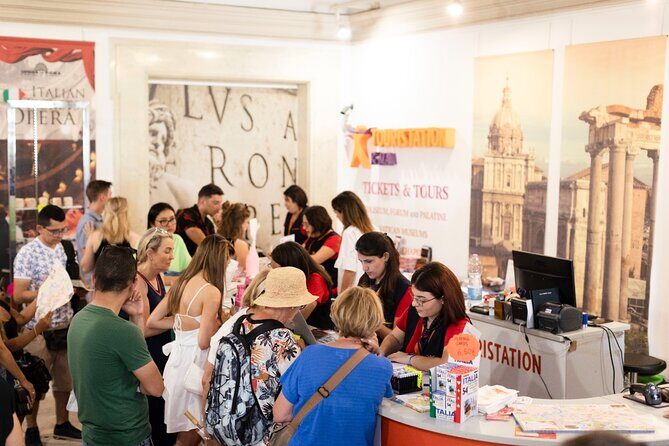
- Touristation on-site assistance helps you locate tickets and resolve common first-day confusion.
What you’re really buying: timed access + support, not a tour guide

This experience is built around access and orientation. You’re paying for skip-the-line entry for the Vatican Museums and Sistine Chapel, plus reserved access for the Colosseum-related areas. That matters because those are the places where time disappears in lines.
You also get practical structure without a full guide leading you through everything. The flow goes like this: you meet at Touristation Aracoeli (Piazza d’Aracoeli, 16), then you work through ancient Rome sites on your schedule, then you shift to the Vatican day. At the end, you finish at Touristation Vaticano (Viale Vaticano, 97). In between, Touristation staff handle the “getting you the right access” piece and you’re left to explore.
Why that’s good: you can spend more time where you care most—tombs and architecture in the Forum, sweeping views on the Palatine Hill, or the art-heavy route in Vatican halls. Why it can feel tricky: you still have to find the right place at the right time, deal with security and crowds, and make choices if your day runs long.
You can also read our reviews of more museum experiences in Rome



Meeting points and how to avoid the first-day scramble
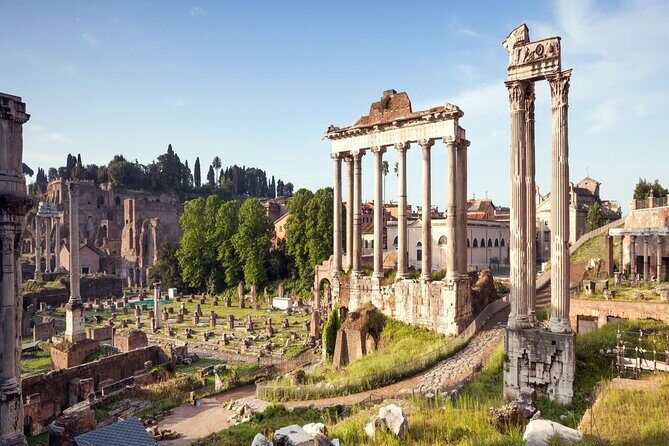
Your start is at Touristation Aracoeli, right by Piazza d’Aracoeli. It’s a convenient anchor point in central Rome, and it’s also the spot where you’ll get your ticket handling sorted (admission included) and any help you need before you begin.
Your ending point is Touristation Vaticano near Viale Vaticano. This is useful because Vatican logistics can be confusing for first-timers, especially if you’re trying to plan your own transportation after the visit. Having a defined end point keeps the day from turning into “where do I go now?”
A small but important takeaway from real-world experience: timing and entry slots can shift depending on what’s available when you check in. Some people found the package felt confusing until they reached the office and got the reservation times clarified. So my advice is simple: plan to arrive early enough to handle questions, and don’t assume every site will land at the first time you guess.
Ancient Rome Warm-Up: multimedia video that actually helps
Before (or during) your ancient Rome portion, you have an Ancient Rome multimedia video as part of the experience. This is one of those add-ons that doesn’t sound thrilling, but it works—especially at the Forum and Palatine Hill, where you’re surrounded by stones that have names you might not know yet.
When you’ve got even a short intro, you’ll recognize more quickly what you’re looking at: why the Forum mattered for daily Roman life, and how Palatine Hill connected to power and prestige. It also makes the ruins less like random ruins and more like a city layout with stories.
Roman Forum: the city’s daily heartbeat
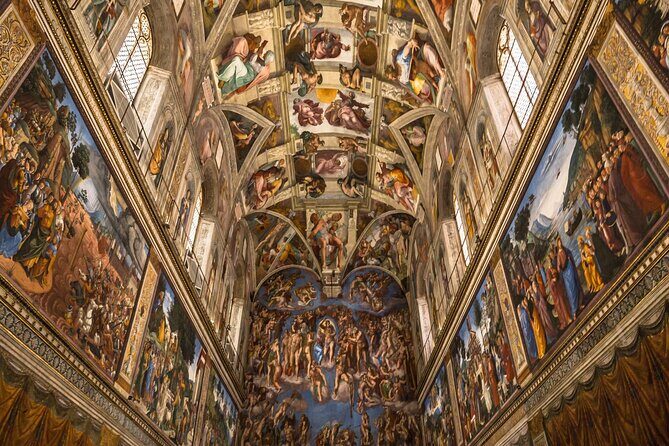
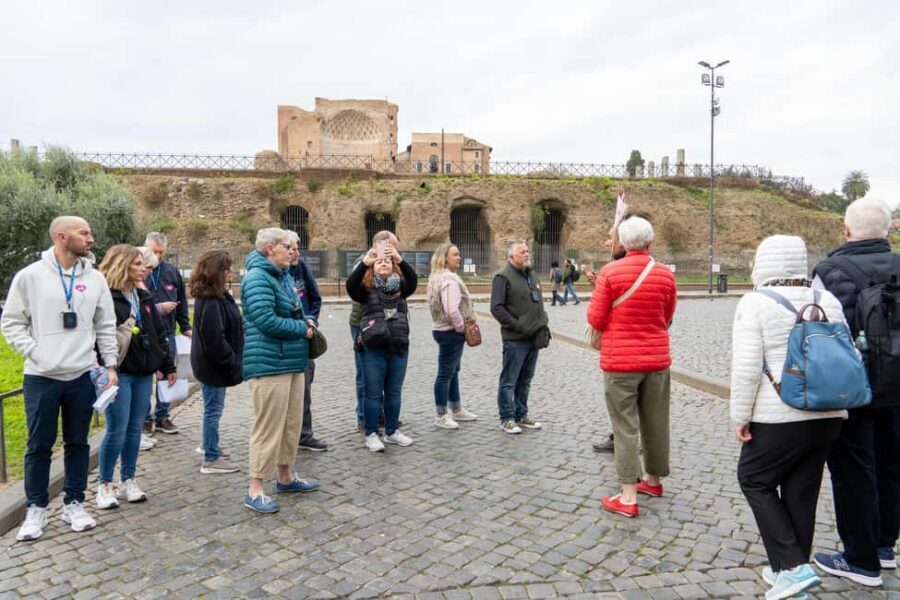
The Roman Forum stop is where you get to walk through a space that once held everyday civic life. It’s also where you can find iconic landmarks like the tomb of Emperor Julius Caesar, plus plenty of ancient ruin areas you can explore at your own pace.
What you’ll like here is the freedom. You’re not forced to march in a single line following someone else’s pace. If you’re the kind of traveler who likes to pause for photos, read a few key plaques, or circle an area twice to understand it, this self-guided format works well.
The trade-off is that the Forum can be tiring if you don’t pace yourself. Plan comfortable walking shoes and give yourself room to drift. Also, since the experience is time-structured across two days, keep an eye on how long you want to linger before you commit your next slot.
Palatine Hill: power, views, and the start of Rome
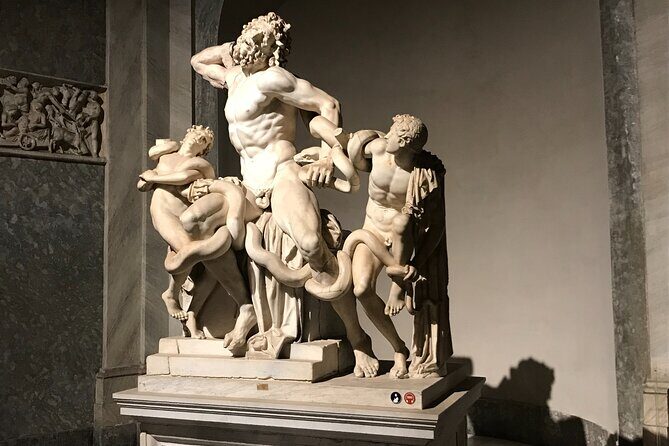
Palatine Hill is the other half of the ancient “foundation” story. It’s described as the site tied to the foundation of Rome and the settlement area where important houses of emperors and kings once stood.
This is the stop that often feels more alive than people expect. Even with ruins, you get scale—wide sight lines and the sense that this wasn’t just where people lived, but where the highest levels of authority lived.
Since the itinerary gives Palatine a very short listed duration, don’t interpret that as “you’ll be done quickly.” Think of it as a window: you can move through fast, but if views and context matter to you, you’ll likely stretch the time a bit. The best plan is to prioritize your own “must-see corners” so you don’t accidentally spend half your visit wandering when you should be looking outward.




Vatican Museums and Sistine Chapel: skip the lines, then manage the maze
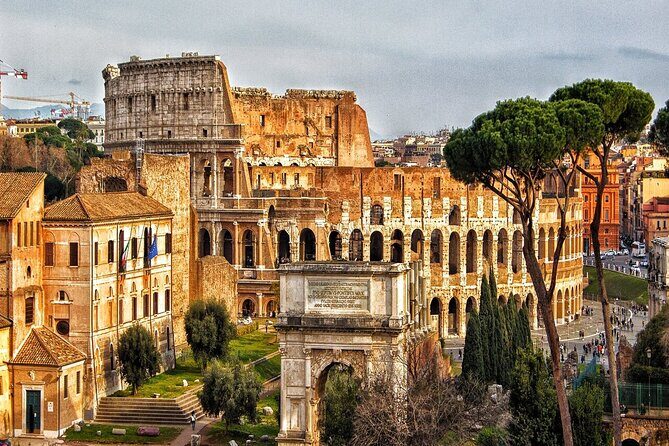
The Vatican Museums and Sistine Chapel are the star of the “skip-the-line” promise. These are places where the line can be the whole experience—unless you cut it.
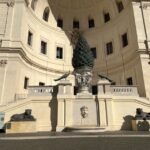
You get an included admission ticket for both, and you’ll have access tied to your entry time. The listing emphasizes that Vatican Museums have more than 20,000 artifacts on display and mentions collections spanning ancient Greece and Egypt, plus works from the Middle Ages and Renaissance. You’ll also see highlights called out in the route: the Pine Cone Courtyard, Egypt and Etruscan collections, tapestries, the Gallery of Maps, painted ceilings, and large-scale frescoes by Raphael.
Then there’s the Sistine Chapel. This is where the experience becomes emotionally sharp: Michelangelo’s frescoes are the headline, and it’s also the seat connected with conclaves. Even if you’re not an art-history person, the scale and attention to detail are hard to ignore.
My practical advice: because this is self-guided, you’ll want a simple plan before you walk in. Pick a few “must-hit” rooms and don’t try to see everything. If you treat it like a checklist marathon, you’ll miss the feeling—and you’ll feel rushed at the end.
Also note two real-life constraints that matter a lot:
- The Vatican Museums and Sistine Chapel are closed on Sunday. If you book for Sunday, you can visit on Monday instead.
- A dress code is required for Vatican Museums. Bring a cover-up strategy if you’re traveling in warm weather.
Colosseum: big amphitheater energy without the line wall
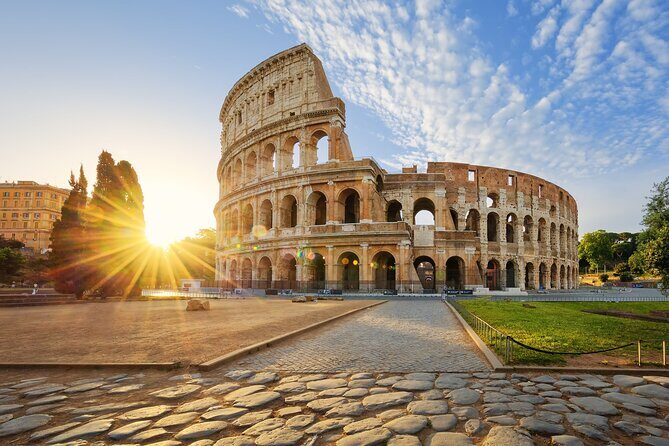
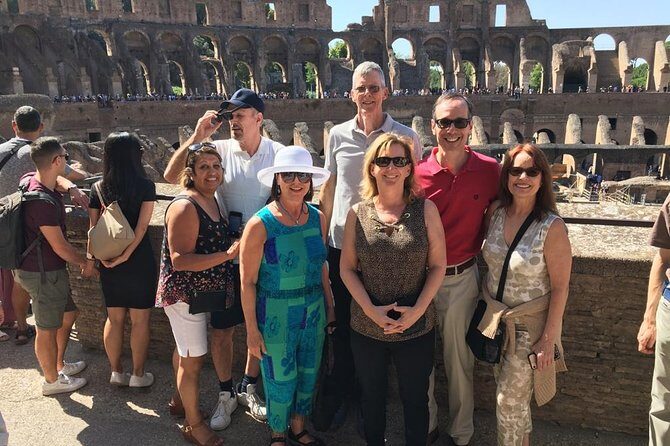
The Colosseum stop is your anchor monument for ancient spectacle. It’s described as the largest amphitheater ever built by the Roman Empire, and this is where you’ll step inside one of the most famous structures in Europe and feel how massive Roman entertainment really was.
You get a Colosseum entrance ticket (with a reservation fee included as part of the package). The stop is listed for about an hour, which is enough time to move through the main areas and absorb the scale without turning your visit into a full-day endurance test.
The biggest “value” piece here is the included reservation and ticket access. The Colosseum is famous, and lines can be unforgiving. When your access is handled ahead of time, you spend your energy looking up instead of standing around.
One thing to watch: the experience overall can take most of your day because your entry times may be scheduled across multiple sites. In real life, people sometimes find that limited time slots at each major site can compress your plans elsewhere. So build your day with buffer, not fantasy.
Your bonus Rome walk: Piazza Navona, Pantheon, Trevi, Spanish Steps
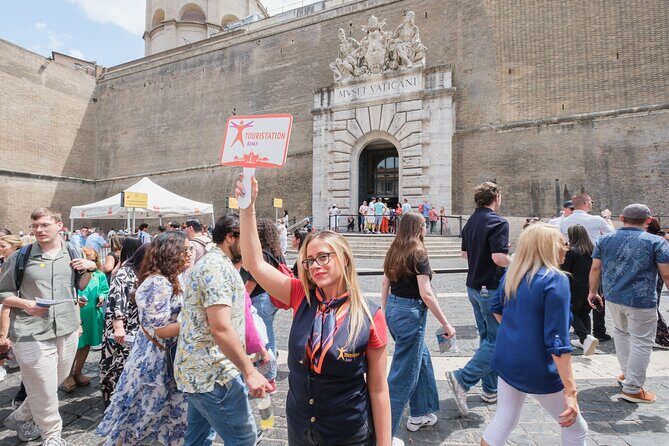
Besides ancient sites and Vatican art, you also get a city walking tour in English. The stops listed include Piazza Navona, the Pantheon, Trevi Fountain, and the Spanish Steps.
This is a smart add because it plugs gaps. Once you’ve handled the “big ticket” monuments, it’s nice to have a guided route that stitches together central Rome. Even if you’re doing the main attractions self-guided, this walk gives you a coherent first impression of how these landmarks connect spatially.
If you’re short on days, this part is especially useful. You get a compact “greatest hits” walk that helps you navigate your remaining hours on your own.
Who this experience fits best (and who should reconsider)
This is a strong pick if:
- You want skip-the-line relief at the Vatican and Sistine Chapel.
- You’re okay being self-guided in big, famous spaces.
- You care about seeing the Colosseum, Forum, and Palatine without piecing together separate tickets.
- You’d like a mix of context (multimedia) plus freedom (you move at your pace).
It may not be ideal if:
- You want a person guiding you minute-by-minute through every exhibit.
- You hate planning around reserved time slots and security queues.
- You prefer a slower, explanatory pace where every room is narrated.
One standout point from feedback: when accessibility and assistance matter, the office support can be a big deal. The package is designed so that the staff can help you get through the Vatican Museums experience, which can be a huge relief if you’re traveling with a disability or mobility needs.
Price and value: $106.94 for access and services
At $106.94 per person, you’re paying for more than just museum tickets. The Colosseum portion includes admission valued at €18 per person, plus a €2 reservation fee. That means the remaining amount covers added services such as the Ancient Rome multimedia video, the city walking tour in English, and on-site assistance from Touristation.
So what’s the “value” logic?
- The skip-the-line feature at the Vatican is exactly the sort of expense that saves real time and frustration.
- The support at the office reduces the “where do I go and what do I do first?” stress.
- The city walk adds coverage of major central landmarks without you needing to map everything from scratch.
If you already know Rome like the back of your hand and you enjoy booking everything solo, the value might feel less obvious. But for most people—especially first-time visitors—saving time at the Vatican and getting a smoother start is worth the price.
Should you book this? My no-drama recommendation
Book it if you want a practical, mostly self-guided Rome itinerary with serious line relief where it counts most: the Vatican Museums and Sistine Chapel. The combo of Colosseum + Forum + Palatine + an English walk in central Rome is a strong way to cover a lot without turning every moment into a long guided lecture.
I’d hesitate if you hate navigating crowds without a guide and you’re the type who needs heavy explanation in every room. In that case, you might feel like you’re paying for access but still doing the hard work yourself.
One last piece of advice that can save your trip: check opening days and plan your schedule with buffers. Sunday closures can shift your visit to Monday, and limited entry slots can change the order of what you do. If you handle that up front, this becomes a smooth, efficient way to see Rome’s biggest hits. If you ignore it, you might end up making rushed choices once you’re already standing in line—or, worse, realizing you picked the wrong day for a key site.
FAQ
Does this include skip-the-line for all attractions?
Skip-the-line is included for Vatican Museums and the Sistine Chapel. The Colosseum access is included via the admission and reservation components, but the skip-the-line wording is specifically tied to the Vatican sites.
Is there a guided tour?
No full guided tour through the main attractions is included. You explore at your own pace, with an Ancient Rome multimedia video and on-site assistance at the Touristation office. There is also a city walking tour in English that covers central sights.
What are the meeting and end points?
You start at Touristation Aracoeli at Piazza d’Aracoeli, 16, 00186 Roma. The experience ends at Touristation Vaticano, Viale Vaticano, 97, 00192 Roma.
Are the Vatican Museums and Sistine Chapel open every day?
No. They are closed on Sunday. If you book on Sunday, you can visit the Vatican Museums and Sistine Chapel on Monday.
What should I wear for the Vatican?
A dress code is required for the Vatican Museums. Plan clothing that follows the Vatican requirement to avoid being turned away.
What ID do I need for entry?
You must present a valid original ID at the entrance. Photos, copies, or photocopies are not accepted. Your name and ticket type must match your identity document exactly.
Is transportation or food included?
Transportation and food/drinks are not included. You’ll handle getting around Rome on your own.
If you cancel or ask for an amendment, the amount paid is not refunded, and the experience cannot be changed for any reason.