REVIEW · COLOSSEUM TOURS
Colosseum, Roman Forum, Palatine Hill Experience
Book on Viator →Operated by Exploria · Bookable on Viator
You can do Rome’s icons in one smooth sweep.
This experience is built for people who want timed entry into the Colosseum and then an at-your-own-pace route through the Roman Forum and Palatine Hill. I like how it pairs major sights with a practical audio guide so you’re not just staring at stones and guessing what they were. You’ll also be working with a small max group size, which helps keep the day calm even when the site is crowded.
Two things I really like here: the convenience of having admission included for all three sites, and the fact that you’re guided by audio while still moving at your own pace. A realistic consideration: this is not a live-lecture tour, and you may run into areas where audio is limited, plus you still have to pass the mandatory security line at the Colosseum.
In This Review
- Key Highlights Worth Knowing
- Roman Forum First: Reading the Center of Ancient Rome
- Palatine Hill Views and Imperial Neighborhood Energy
- Entering the Colosseum: What Timed Tickets Really Change
- Audio Guide Reality: Download, Don’t Trust “It’ll Work”
- Skip-the-Line Reality Check: Priority, Security, and Lines You Can’t Beat
- Timing, Pace, and How to Fit This Into Your Rome Day
- Value for Money: What You’re Really Paying For
- Who Should Book This (and Who Might Want a Different Style)
- Should You Book This Colosseum–Forum–Palatine Experience?
- FAQ
- How long is the experience?
- What languages are offered?
- What’s included with the ticket?
- Do I need my passport or ID?
- Is there security at the Colosseum?
- Can I cancel for a full refund?
Key Highlights Worth Knowing
- Timed access to the Colosseum plus pre-included entry for Roman Forum and Palatine Hill
- English audio guide format meant for self-paced walking (no live guide on site)
- Three major archaeological stops in about 3 hours, so you can fit more of Rome
- Security line reality: skip-the-line is about entry flow, not the metal detector check
- Audio setup matters: download and test access before you arrive
Roman Forum First: Reading the Center of Ancient Rome
Starting at the Roman Forum is a smart move, because it gives you the “who ran the place” context before you look up at grand views from Palatine Hill or face the scale of the Colosseum.
You’ll walk through an open-air archaeological complex filled with temples, basilicas, arches, and remnants of the marketplace. The experience is designed so you can move through it like an ancient city’s public square—politics, religion, and everyday life all layered together in the same footprint. It’s easy to see how decisions were made, how crowds gathered, and how ceremony worked when Rome wanted to flex its power.
I also like that the stop is long enough to actually pick a few anchors and slow down. The Forum has specific landmarks that people tend to search for once they know what they mean, like the Temple of Saturn and the Arch of Titus. Even if you’re not memorizing dates, having those named points helps you connect the ruins to stories you’ve heard before.
Possible drawback: if you’re the type who needs constant narration, this won’t feel like that. It’s self-guided, and the quality of your experience will depend on how well you use the audio and how comfortable you are reading signs and visual cues on your own.
You can also read our reviews of more tours and experiences in Rome.



Palatine Hill Views and Imperial Neighborhood Energy
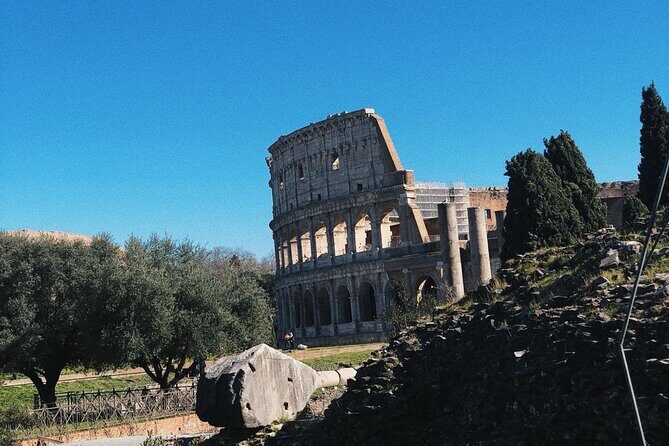
Next comes Palatine Hill, and the big advantage here is the geography. Palatine sits above the Forum, so you get a built-in “top-down” perspective as you move from public spaces below to elite residences and imperial structures above.
Palatine Hill is associated with the people who shaped Rome’s later image—emperors and their world. You’ll see remnants like the House of Augustus, plus other scattered ruins such as the Stadium of Domitian. Even when the structures are fragmentary, it’s the layout that helps: the hill’s slope, the sightlines, and the way the ruins cluster give you a strong sense of where power lived and where events happened.
And yes, the views are a practical payoff. Looking over the Forum area makes it easier to understand why the Romans built there. You can also use this stop as a reset for your feet. Compared with the Colosseum, Palatine is often less of a “human traffic jam” problem, though it can still be busy.
What to consider: because this is self-guided, you’ll get more from Palatine if you’re okay with a little wandering. If you want a strict script and guaranteed narration at every turn, a live guide style tour might suit you better.
Entering the Colosseum: What Timed Tickets Really Change
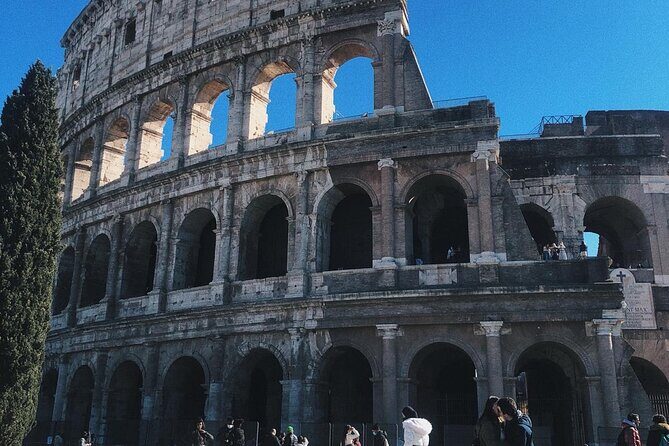
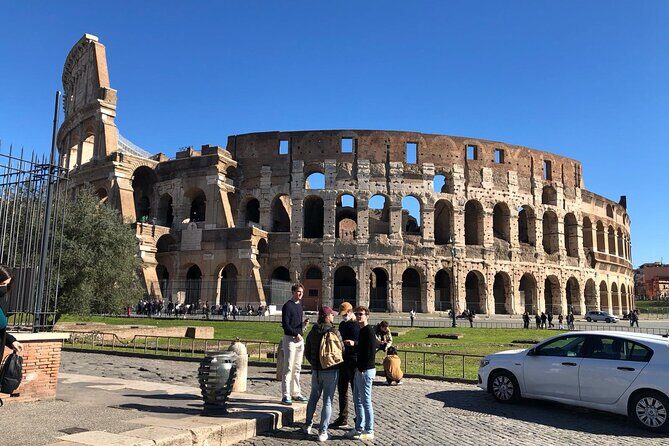
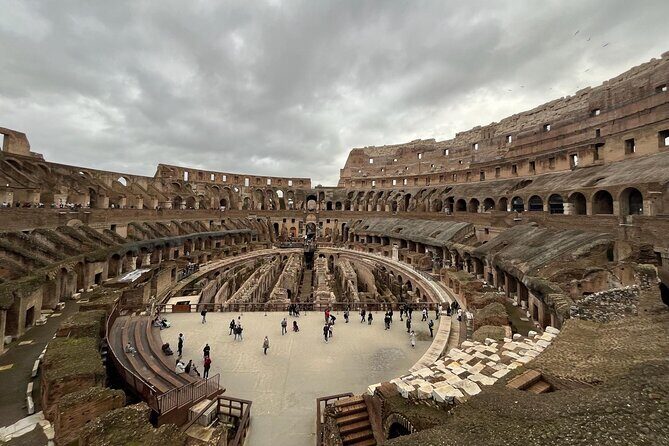
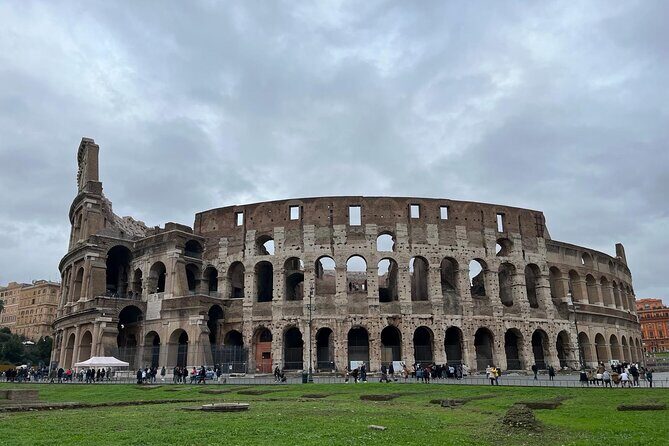
The Colosseum is the headline, of course—an amphitheater that once hosted gladiator contests and public spectacles, built to hold enormous crowds (about 80,000). Here’s the key: you’re not only paying to see the building. You’re paying for access flow—especially during peak hours.
The biggest practical win is that your ticket bundle is designed to help you move in faster than buying on the spot. A number of people specifically praised skipping the line and getting in smoothly. But I want you to go in with a clear expectation: you’ll still face the metal detector security check. That part can create a wait on busy days, even with timed entry.
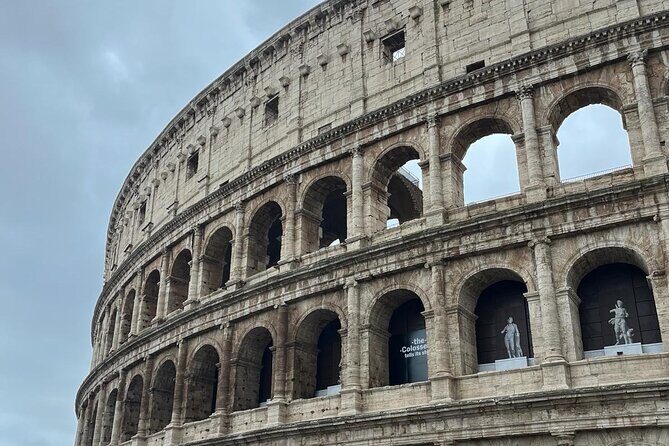
Once inside, this is where the experience can feel more than just exterior sightseeing. You’ll be able to explore areas you’d miss if you only walked around the outside. And if you’re able to slow down for a minute, you can really appreciate details like the distinctive arches and how the architecture supported crowd flow.
Also, there’s the “wow” factor of scale. You don’t need to be a Roman engineering nerd to feel it. The Colosseum is huge, and standing inside it does something photos can’t fully replicate.
Possible drawback: in hot months, the combination of crowds and sun can wear you out. One of the most repeated themes in real-world feedback was that July heat and humidity can feel nearly unbearable, especially if you have kids or you get tired fast. If you can choose your timing, go early and plan water.
Audio Guide Reality: Download, Don’t Trust “It’ll Work”
The audio guide is one of the main value points—when it works smoothly, it turns the ruins into an actual walk-through instead of a “figure it out” scavenger hunt.
Still, here’s what you should know before you show up:
- The audio guide is delivered in a mobile app format.
- You may find audio segments are not available everywhere, and some locations may have little or no commentary.
- Some people ended up frustrated when audio didn’t play or when they expected a live-guide experience.
So your best move is simple: download the content ahead of time and test it on Wi-Fi before you leave your hotel. That avoids the classic Rome problem—spotty data, a dead battery, and an app that needs one more download while you’re standing in the wrong spot.
If you’re the type who likes a structured story, treat the audio guide as your “base layer” and rely on your own quick reading only as backup. If you’re okay being curious without constant narration, the audio approach can be great, because it lets you pause and move at your own pace.
Skip-the-Line Reality Check: Priority, Security, and Lines You Can’t Beat
This is the part that decides whether you’ll feel like you got value.
Your booking is marketed as skip-the-line / priority style entry for the Colosseum. People who timed it well and followed the instructions often said it was worth it, with easier entry. That makes sense: when you’re pre-booked with a reservation, you’re less likely to get stuck in the longest universal queue.
But you still can’t dodge security. The Colosseum requires passing through a metal detector security check, and on busy days it can create queue time. So if your expectation is zero waiting, adjust it now. What you’re aiming for is less waiting and better predictability.
One more thing: it’s easy to get thrown off by meeting points and the fact that self-guided experiences rely on you to show up ready. A few unhappy experiences mentioned missing or delayed tickets, or confusion about where to meet. That’s not the experience you want—so I strongly recommend building in a buffer and double-checking your instructions the day before.
Small tip that saves stress: take a screenshot of your key ticket info and the meeting point address so you’re not hunting for it under pressure.



Timing, Pace, and How to Fit This Into Your Rome Day
This experience runs about 3 hours. That’s not a full-day “Rome crash course.” It’s a targeted hit: Colosseum, Roman Forum, and Palatine Hill in one coherent arc.
That time limit matters. With only a few hours, you’ll benefit most if you set a pace that matches the site style:
- Spend your first minutes orienting yourself inside each area.
- Pick a couple landmarks you care about.
- Use the audio while you walk, not when you stop to fight with your phone.
Max group size is 15, but because it’s self-guided, you’re not stuck in a large herd. Still, you’ll be among other visitors, and crowd flow is part of the experience at all three sites.
If you’re visiting with kids, you’ll want to be extra strategic about heat and energy. Some families mentioned that the pace and crowding made it tougher than expected. Going earlier in the day and keeping water handy is the simplest fix.
Value for Money: What You’re Really Paying For
Even without seeing the full package price, you can still judge value using what’s explicitly included.
Your admission covers:
- Entry to the Colosseum
- Entry to the Roman Forum
- Entry to Palatine Hill
- Audio guide
- Admission to temporary exhibitions
- Fees tied to entry and reservation for the Colosseum
The listing values the Colosseum ticket at €18 per person plus a €2 reservation fee per person. That means your spending isn’t just “buying a ticket.” You’re paying for the bundle service that handles the reservation piece and gives you the audio-guided self-paced format.
So the value question becomes: do you want convenience and smoother entry flow, without paying for a live guide? If yes, this can be a great way to spend a short window in Rome. If you want constant narration, you may end up feeling like you’re doing your own museum tour without enough explanation.
My take: it’s a smart buy if you can handle app-based guidance and you’re comfortable navigating your own path. If you’d rather have someone deliver the story out loud, you might be happier with a live-guided option.
Who Should Book This (and Who Might Want a Different Style)
This fits best if you:
- Want three big sites in about 3 hours
- Prefer self-paced exploration over waiting for a group schedule
- Will actually use the audio guide and download it in advance
- Care about timed entry more than a long commentary
You might want a different approach if you:
- Expect a live tour guide telling the story step by step (this isn’t that)
- Know you get stressed by app tech during travel
- Need guaranteed narration at every single stop, every minute
One more “real Rome” check: your day will be shaped by security lines and weather. If you’re going in peak heat, be ready for a stamina test.
Should You Book This Colosseum–Forum–Palatine Experience?
Book it if you want a practical Rome win: entry covered, audio guidance available, and a plan that hits the three core sites without turning your day into a half-day paperwork exercise.
I’d say don’t book it if you’re hoping to avoid security lines entirely, or if you want a live guide experience. This works best when you treat it like a self-guided route with tools provided—then you bring a bit of flexibility and phone readiness.
If you do book, do these two things and you’ll feel much better about the day:
- Download and test the audio guide content before you arrive.
- Arrive early enough to handle the Colosseum’s security check without panic.
FAQ
How long is the experience?
It’s about 3 hours.
What languages are offered?
The experience is offered in English.
What’s included with the ticket?
Admission is included for the Colosseum, Roman Forum, and Palatine Hill, plus an audio guide and access covering temporary exhibitions.
Do I need my passport or ID?
Yes. Each traveler must present a valid passport or ID document that matches the name provided at booking for entry.
Is there security at the Colosseum?
Yes. You must pass through a metal detector security check, and on busy days there may be a queue.
Can I cancel for a full refund?
You can cancel up to 3 days in advance for a full refund. If you cancel less than 3 full days before the start time, the amount paid is not refunded.